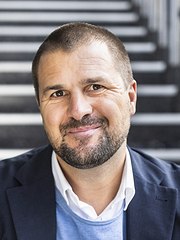
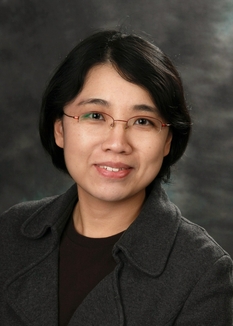
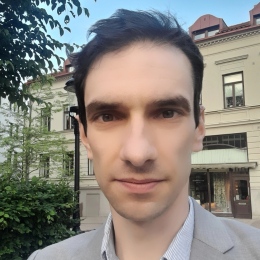
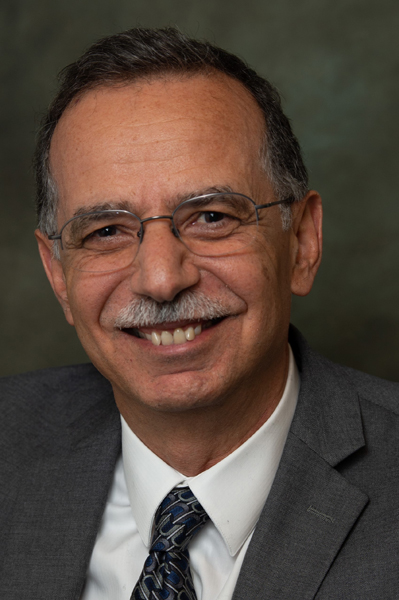
James G. Combs (PhD, Louisiana State University) is the Della Phillips Martha Schenck Chair of American Private Enterprise at the University of Central Florida and a Visiting Professor at the University of Ottawa. His scholarly work focuses on family business , franchising , research synthesis , and corporate governance , with publications in top-tier journals like the Academy of Management Journal, Strategic Management Journal, and Journal of Business Venturing. His research explores critical themes such as: Strategic decision-making in family firms Franchising and organizational routines Corporate governance mechanisms (e.g., shareholder agreements) Meta-analytic techniques in management research His 2025-2023 publications highlight emerging trends in entrepreneurial pivoting , lean startup methodologies , alliance portfolio diversity , and CSR in family businesses . He has served as Associate Editor for multiple journals and held leadership roles in the Academy of Management and Southern Management Association (SMA), including SMA President. Combs ranks among the top 2% of management scholars by citation impact and has received the 2020 SMA Hunt Sustained Outstanding Service Award and the 2021 Rosenberg Center Eminent Franchising Scholar Award. He is a Fellow of the Southern Academy of Management and a 21st Century Entrepreneurship Fellow.
Jan Christof Recker is Nucleus Professor and holder of the chair for Information Systems and Digital Innovation at the University of Hamburg Business School, funded through the Excellence Strategy of the Federal and State Governments. He also holds adjunct professor positions at the University of Agder (Kristiansand, Norway) since 2022 and at the QUT Business School (Brisbane, Australia) since 2018, and has previously served as Professor for Information Systems and Systems Development at the University of Cologne (2018-2021) and Full Professor for Digital Innovation at QUT Business School. Dr. Recker holds bachelor's and master's degrees in information systems from the University of Münster and a PhD in Information Systems from the Queensland University of Technology. His educational background forms the foundation for his expertise in bridging technical and organizational aspects of digital transformation. His research focuses on how organizations deal with digital innovation, digital transformation, and digital entrepreneurship. As a field researcher, he has collaborated with large organizations including Woolworths, SAP, Hilti, Commonwealth Bank, Federal Police, Lufthansa, and Ubisoft, as well as various startups. Dr. Recker employs quantitative, qualitative, and mixed field methods in his research and is also competent in design research. His current research interests include technology analysis and design in the digital age, digital entrepreneurship and new venture creation, digital innovation and transformation in large organizations, digitalization of products, services, and processes, and digital solutions for sustainable development. His work aligns with multiple UN Sustainable Development Goals including Industry, Innovation and Infrastructure (SDG 9), Responsible Consumption and Production (SDG 12), and Reduced Inequalities (SDG 10). Dr. Recker's recent publications demonstrate a sophisticated exploration of the intersection between physical and digital experiences, generative AI development methodologies, societal impacts of crises on business growth patterns, and responsible digital innovation frameworks. His work spans multiple high-impact journals across information systems, management science, and entrepreneurship disciplines, consistently addressing practical organizational challenges with theoretically grounded approaches. His notable awards and honors include: AIS Fellow Award (2018) Outstanding Associate Editor Award by MIS Quarterly (2019) SIGGreen Best Paper Award (2021) Best Paper Award by the Journal of Information Technology Theory and Application (2014) Vice Chancellor's Award for Excellence (2014) Dr. Recker has secured significant research funding for projects related to digital innovation and transformation, including the HIVESOUND start-up scholarship (2024-2025) and research on how digital products are created through hardware-software interactions (2022-2024). As Editor-in-Chief for Communications of the Association for Information Systems (2015-2020) and current Senior Editor for the MIS Quarterly, he has shaped scholarly discourse in the field. His supervision of doctoral students has been recognized with multiple awards, reflecting his commitment to developing the next generation of information systems scholars. His Management Transfer Lab at the University of Hamburg serves as a nexus for academic-industry collaboration, focusing on translating theoretical insights into practical solutions for digital transformation challenges. The lab maintains strong partnerships with major corporations and startups alike, ensuring research relevance while providing students with real-world experience in digital innovation contexts.
Jane Barlow is a Professor of Evidence-Based Intervention and Policy Evaluation at the Department of Social Policy and Intervention, University of Oxford, and Deputy Head of Department (on sabbatical 2025–26). She leads the national evaluation of the A Better Start program and collaborates with organizations like the NSPCC. Her role includes supervision of DPhil students at St Hilda's College and contributions to the Centre for Evidence-Based Intervention. Academic Affiliation: University of Oxford, Department of Social Policy and Intervention Research Groups: Child and family mental health and well-being, Social inequality and poverty, Violence prevention Barlow's research focuses on early parenting's role in child mental health, preventive interventions for child abuse, and pandemic impacts on maternal and infant services. Her work spans global health (e.g., rural Gambia adaptations), domestic abuse policies, and health visiting practice evaluations. Her recent publications address safer sleep practices, video feedback interventions, health visiting models, and pandemic-related anxiety. These studies employ systematic reviews, cross-cultural validations, and administrative data analyses, emphasizing policy implications. Scientific Honors : Fellow of the Faculty of Public Health (Honorary) President of AIMH UK Affiliate Council Representative, WAIMH Executive Board Associate Editor, Infant Mental Health Journal Jane Barlow supervises DPhil students in areas including parental mental health, child protection, and pandemic service adaptations. She leads the Supporting Early Minds Research Network and has developed training courses like Babies in Mind with the NSPCC.
Ahmed Saeed is an Assistant Professor in the School of Computer Science at Georgia Institute of Technology, specializing in scalable computer networks and systems. His research spans congestion control, operating systems, LEO satellite networks, and formal methods, with a strong record of publications and active mentorship. Education: PhD in Computer Science, Georgia Institute of Technology (2019) Bachelor's in Computer and Systems Engineering, Alexandria University (2010) Postdoctoral Associate, MIT (with Prof. Mohammad Alizadeh) Research Interests: Ahmed's work focuses on the theory, design, and implementation of scalable networked systems. Key themes include: Congestion control algorithms for datacenter and WAN traffic Overload control mechanisms for microsecond-scale RPCs Performance debugging tools for datacenter applications LEO satellite network modeling and policy analysis Formal verification of network protocols and resource schedulers Recent Publications Trend: His 2024-2025 papers emphasize LEO satellite resilience and datacenter performance , with contributions to emergency failover modeling, latency debugging tools, and congestion control protocols. These works combine empirical measurement, formal modeling, and policy recommendations. Awards & Funding: NSF CAREER Award (2024) – LEO satellite variability ($600k) NSF CNS Core Awards (2022) – Edge server stacks & formal verification (total $2.38M) Google Research Award (2022) – Scalable edge systems ($80k) DARPA Risers Top 5 Poster (2022) Spec Tech Award (2023) – Nanomodular electronics routing ($40k) Teaching & Service: He regularly teaches Computer Networking I (CS 3251) and Datacenter Networks & Systems (CS 8803) . Service includes PC roles for SIGCOMM, NSDI, CoNEXT, and Networking area co-chair for JSys. Lab & Students: Ahmed leads an active research group with PhD students Peidi Song, Bhaskar Pardeshi, Sherif Abdelrazek; MS students Dhyey Thummar, Pratyush Sahu, Sammy Kapoor; and undergraduate Demi Lei. Alumni have joined industry leaders like Juniper, Microsoft, and Snowflake.
Hiroshi Toyoizumi is a Professor at Waseda University's Faculty of Commerce and Graduate School of Accountancy, with a Ph.D. in Mathematical Physics from Waseda University. His work bridges Applied Probability , Operations Research , and Computational Biology , focusing on stochastic modeling across biological and network systems. Research Interests Stochastic Models in Biology : Analyzing social queues in hover wasps and meiotic DSB regulation using quasi-birth-death processes and survival analysis. Network Security : Modeling computer virus spread on scale-free networks and proposing active defense strategies. Queueing Theory : Developing analytical frameworks for on-demand streaming, quantum merging, and blockchain-based systems. Article Trends Recent work (2020-2024) explores nonlocal diffusion , quantum queueing , and swarm behavior in financial markets . Mid-2010s studies focus on cooperative breeding and DNA recombination dynamics . Early papers (pre-2010) examine computer virus ecology , secure group communication , and deterministic queue analysis . Scientific Awards Biotechno 2013 Best Paper Award IEICE Switching Workshop SSE Research Award (1999) IEICE Young Research Engineer Award (1997) Teaching Activities Graduate-level courses in Operations Research and Financial Engineering . Undergraduate and graduate seminars in Applied Mathematics and Probabilistic Models .
Michael Obersteiner is Professor and Director of the Environmental Change Institute (ECI) at the University of Oxford, where he leads interdisciplinary research on climate change, ecosystems, and sustainability. He previously served as Director of the Ecosystems Services and Management (ESM) Program at the International Institute for Applied Systems Analysis (IIASA), a position he held since 2011. His research focuses on biophysical and economic modeling of terrestrial ecosystems, forestry, agriculture, and integrated assessment, with strong applications in environmental policy. His work supports science-based decision-making for institutions including the European Commission, WWF, and OECD. He has published over 250 scientific papers and is recognized as a Highly Cited Researcher by Clarivate. The recent publications reflect a consistent focus on climate change mitigation, sustainable land use, carbon sequestration, and policy modeling. Key trends include the integration of economic and ecological models, scenario analysis for global change, and the role of land-based solutions in achieving climate targets. His work frequently bridges science and policy, emphasizing actionable insights. Highly Cited Researcher (Top 1% by citations, Clarivate) Professor Obersteiner has advised numerous national and international organizations, translating complex modeling outputs into policy recommendations. While specific grant details are not listed, his leadership of large-scale programs at IIASA and Oxford indicates substantial funding from public and international bodies. He has mentored researchers and led multidisciplinary teams, though formal student advisees are not named in the text. He has led major research units including the ESM Program at IIASA and now directs the Environmental Change Institute at Oxford, fostering collaborative, interdisciplinary teams focused on global environmental challenges.
Dr. Wei Song is a Professor and the Coordinator of Software Engineering at the Faculty of Computer Science, University of New Brunswick (UNB) in Fredericton, New Brunswick, Canada. She has been with UNB since 2009, after completing her postdoctoral studies at UC Berkeley, and has established herself as a leading researcher in mobile networking and wireless communications. Her office is located in room ID419 and she can be reached at wsong@unb.ca. Education Ph.D. in Electrical and Computer Engineering, University of Waterloo (2003-2007) Postdoctoral Fellow, Department of Electrical Engineering and Computer Sciences, University of California, Berkeley (2008-2009) Research Focus Dr. Song's research spans multiple cutting-edge areas in mobile and wireless networking, with a strong emphasis on integrating artificial intelligence and machine learning techniques. Her work addresses fundamental problems in mobile social networks, Internet of Things, vehicular networks, and mobile cloud computing. She explores how cooperative intelligence and distributed AI can enhance network performance while addressing practical constraints such as energy efficiency and user incentives. Her recent work particularly focuses on intelligent edge computing, mobile crowdsensing with deep reinforcement learning, and social-aware data dissemination through device-to-device communications. She investigates how to turn decentralized mobile "crowds" into coherent working groups and how social connections can be leveraged to improve data dissemination efficiency. Publication Trends Dr. Song's recent publications (2016-2023) demonstrate a clear evolution from traditional wireless networking to AI-driven approaches. While her earlier work focused on fundamental problems in device-to-device communications and resource allocation, her recent publications increasingly incorporate deep reinforcement learning, graph neural networks, and other AI techniques to solve complex optimization problems in mobile crowdsensing and edge computing. This shift reflects broader trends in the field toward intelligent, adaptive networking solutions. Scientific Recognition Best Paper Award from IEEE ICC (2018) UNB Merit Award (2014) Best Student Paper Award from IEEE CCNC (2013) Top 10% Award from IEEE MMSP (2009) NSERC postdoctoral fellowship (2008) Best Paper Award from IEEE WCNC (2007) Professional Service and Mentoring Dr. Song serves as Senior Member of IEEE and has held significant leadership roles, including Chair of the Joint Computer and Communications Chapter of IEEE New Brunswick Section (2014-2020). She has chaired symposia at major conferences including IEEE VTC Fall 2023, 2017, and 2016. As a supervisor, she mentors graduate students in areas including intelligent edge computing and deep learning for networking, and is currently recruiting students for Winter 2024 and Fall 2025.
Isaac Taylor is a Lecturer in the Department of Philosophy at Stockholm University. His research intersects political philosophy, ethics, and emerging technologies, with a focus on AI accountability, counterterrorism ethics, and public goods theory. Research Interests: AI ethics and autonomous systems governance Counterterrorism moral frameworks Public goods and distributive justice Security policy and just war theory Recent Publication Trends: His 2025 work explores AI agency and explainability. Earlier studies analyze collective responsibility for autonomous weapons, algorithmic sentencing limits, and minimalist approaches to conflict resolution.
Andrea Appolloni is an Associate Professor at the Department of Management and Law, University of Rome Tor Vergata. His academic career focuses on Management with emphasis on Sustainable Supply Chain Management , Digital Transformation , and Circular Economy . His research explores the intersection of technological innovation and sustainability, particularly through topics like AI in Logistics , Green Procurement , and Policy Optimization . Publications span both theoretical frameworks and empirical studies in China, Italy, and Malaysia, with a strong focus on environmental impact and organizational performance. Recent work includes digital twin applications for human-AI collaboration, blockchain integration in sustainable supply chains, and analyzing barriers to circular economy adoption. His 15 most recent articles (2025-2022) demonstrate a trend toward combining Artificial Intelligence , Operations Management , and Environmental Governance .
David Nipperess is an Honorary Lecturer in the School of Natural Sciences at Macquarie University, where he contributes to research and academic initiatives in biodiversity and ecology. His work spans conservation biology, phylogenetics, and urban ecology, with a strong focus on practical applications for environmental management and policy. His research interests center on biodiversity assessment, phylogenetic and functional diversity, and the impacts of climate change and urbanization on ecological systems. He investigates topics such as species inventory completeness, conservation prioritization, and the ecological integrity of natural and constructed habitats, particularly in urban and riparian environments. The trends in his recent publications reflect a deep engagement with global and regional conservation challenges, integrating decision science, ecosystem services, and biodiversity monitoring. His work frequently addresses the interplay between human activity and ecological resilience, especially in urban forests and wetlands. David Nipperess has been recognized through extensive media coverage, with his research picked up by over 190 news outlets and referenced in policy sources and Wikipedia. His work has also been widely shared on social media and academic platforms like Mendeley. He has been involved in significant research projects such as the Green Cities Fund initiative on urban green space and biodiversity investigations in aquifers. His collaborations span multiple institutions and disciplines, reflecting a networked, interdisciplinary approach to environmental science. David Nipperess is affiliated with Macquarie University’s research ecosystem and contributes to high-impact scientific discourse through publications in journals like Nature Climate Change and Nature Communications . His research outputs include peer-reviewed articles, commissioned reports, and policy-relevant assessments, particularly for the New South Wales government.
Mostafa Ammar is a Regents' Professor and Interim Chair of the School of Computer Science at the Georgia Institute of Technology. He has held leadership roles including Associate Chair (2006–2012) and has been a faculty member since 1985. His research focuses on network architectures, protocols, and services, with contributions to mobile cloud computing, network virtualization, and disruption-tolerant networks. He has advised 39 Ph.D. students and secured funding from agencies like NSF, DARPA, and industry partners such as Cisco and IBM. Education : S.B. and S.M. from MIT, Ph.D. from the University of Waterloo. Research Interests : Network architectures, mobile cloud computing, overlay networks, video streaming, and network simulation. His work bridges theoretical advancements with practical implementations, emphasizing scalable and efficient network solutions. Publications : Over 214 publications with a focus on network virtualization, mobile edge computing, and distributed systems. Recent work explores encrypted traffic analysis and femto-cloud resource sharing. Awards : ACM/IEEE Fellowships (2002–2003), Best Paper Awards (2012, 2018), and multiple teaching excellence recognitions. Service : Editor-in-Chief of IEEE/ACM Transactions on Networking (1999–2003), conference co-chair roles, and steering committee memberships. Advising & Grants : Mentored 39 Ph.D. students and secured multi-million-dollar grants. His research has influenced industry standards and academic curricula. Labs/Teams : Active in Georgia Tech’s networking research groups, contributing to open-source network simulators and collaborative projects with global institutions.
Professor Barbara Singer is a Professor of Neurological Rehabilitation at Edith Cowan University’s School of Medical and Health Sciences. With over 30 years of clinical and academic experience, she previously led a postgraduate program in neurological rehabilitation at the University of Western Australia (2004–2016). She currently teaches in the NRB5112 Translational Science course. Her education includes a Doctor of Philosophy from the University of Western Australia (2003) and a Postgraduate Diploma in Health Sciences from Curtin University (1988). As a Neurological Physiotherapist, she is an Honoured member of the Australian Physiotherapy Association and a Fellow of the Australian College of Physiotherapists. Barbara’s research focuses on spasticity management, stroke rehabilitation, functional neurological disorders, and self-management strategies for neurological conditions. Notable contributions include clinical practice guidelines for lateropulsion management and studies on constraint-induced movement therapy implementation. Her awards include the 2010 WA Branch President’s Award (Australian Physiotherapy Association) and the 2023 Honoured Membership (Australian Physiotherapy Association). She has supervised numerous PhD and master’s students, focusing on topics like lateropulsion in stroke recovery and functional neurological disorders.
Summer Rupper is a Professor at the School of Environment, Society & Sustainability at the University of Utah, where she has held her position since July 2019. Her research focuses on understanding the interactions between climate, glaciers, and water resources, with particular emphasis on high mountain regions including High Mountain Asia, the Himalayas, and polar regions. She leads multiple research projects examining glacier dynamics, hydrological processes, and climate change impacts on water security for downstream populations. BS in Geology from Brigham Young University (2001) MS in Geology from University of Washington (2004) PhD in Earth and Space Sciences from University of Washington (2007) Professor Rupper's research spans physical geography, environmental geoscience, and climate change science, with specific expertise in glaciology, hydrology, and atmospheric sciences. Her work integrates field measurements, remote sensing, and numerical modeling to understand glacier dynamics, snow processes, and water resource availability in mountainous regions. She has particular expertise in High Mountain Asia, where glaciers provide critical water resources for over a billion people. Her research addresses fundamental questions about glacier response to climate change, hydrological partitioning, and the implications for water security in vulnerable regions. Her recent publications demonstrate a consistent focus on understanding glacier dynamics, hydrological processes, and climate interactions in mountainous regions. The work spans multiple methodologies including remote sensing analysis, numerical modeling, statistical approaches, and field-based measurements. Key themes include glacier melt contributions to river systems, precipitation patterns in complex terrain, snow density modeling, and the impacts of climate change on water resources in High Mountain Asia and polar regions. Her research often integrates multiple data sources and approaches to address complex questions about cryospheric processes and their societal implications. Superior Research Award (2024, CSBS, University of Utah) G.K. Gilbert Award for Excellence in Geomorphic Research (2022) Outstanding Utah Higher Education Science Teacher (2021) Top Researcher Award, Celebrate U showcase (2017) Antarctic Service Medal (2010, USAF) Professor Rupper actively mentors graduate students through thesis research courses at both the PhD and Master's levels, as well as individual projects. She has secured significant research funding from multiple federal agencies including NSF, NASA, and USAID, with current projects examining climatic controls on Antarctic ice sheets, glacier dynamics in High Mountain Asia, and historical glacier changes. Her collaborative work extends across international boundaries, working with scientists in Pakistan, Bhutan, and other regions to address shared water security challenges. She also engages in community outreach through workshops with school districts and science teacher associations to communicate climate science to broader audiences. Professor Rupper participates in multiple collaborative research teams including the NASA High Mountain Asia Team (HiMAT), where she contributes expertise in glacier dynamics and hydrology. She serves on several scientific committees including the NSF Ice Core Facility Sample Allocation Committee and the American Geophysical Union Cryosphere Section Fellows Committee. Her research often involves interdisciplinary teams combining expertise in glaciology, hydrology, remote sensing, and climate modeling to address complex questions about mountain water systems under changing climate conditions.
Lisa Botbol is an economist currently serving as a postdoctoral fellow at the University of New South Wales and an Associate Member of the Toulouse School of Economics. She will join Monash University in October 2025 as a Lecturer (Assistant Professor) in the Department of Economics within the Faculty of Business and Economics. Dr. Botbol received her PhD from the Toulouse School of Economics in July 2024, marking the beginning of her transition to a permanent academic position. Her research focuses on industrial economics with specialized expertise in housing markets and education systems. Dr. Botbol employs empirical industrial-organization methodologies to analyze matching policies in social contexts. Her current research agenda centers on two primary areas: social housing allocation mechanisms in France and school admissions processes in Chile. This work examines how institutional design affects outcomes in critical public service sectors where matching algorithms determine resource allocation. As a rising scholar in applied microeconomics, Dr. Botbol maintains active engagement with the international academic community. She will be traveling to Europe during August-September 2025 for academic collaborations and conferences, welcoming opportunities to discuss research developments during this period. Her email contact (lisa.botbol@monash.edu) serves as the primary channel for professional communication regarding her research and academic activities.
Michel Gendreau is a Full Professor in the Department of Mathematics and Industrial Engineering at Polytechnique Montréal. He holds a B.Com. from McGill University, and both an M.Sc. and Ph.D. from the University of Montreal. His research focuses on operational research with applications in logistics, transportation, energy systems, and telecommunications. He is affiliated with several prestigious research centers including the Institute for Data Valorization (IVADO), the Trottier Energy Institute (IET), and the Interuniversity Research Center on Enterprise Networks, Logistics and Transport (CIRRELT). Professor Gendreau's research interests span operational research, with particular emphasis on stochastic optimization methods applied to transportation and logistics problems, energy systems management, and telecommunications. His work often addresses real-world challenges through mathematical modeling and algorithm development, with applications ranging from bike-sharing systems to emergency response planning and electricity grid management. The analysis of his recent publications reveals a strong focus on vehicle routing problems under uncertainty, maintenance optimization, and the integration of stochastic programming with machine learning techniques for improved decision making. Professor Gendreau has received numerous prestigious awards recognizing his contributions to the field of operations research. In 2022, he was named a Fellow of the International Federation of Operational Research Societies (IFORS). In 2010, he was awarded Fellow status by INFORMS (Institute for Operations Research and the Management Sciences). Most notably, in November 2015, he received the Robert M. Herman Lifetime Achievement Award from the Transportation Science and Logistics Society of INFORMS, which is considered the most prestigious distinction for operational researchers working in logistics and transportation. Throughout his career, Professor Gendreau has supervised 25 doctoral students and 18 master's students, contributing significantly to the development of the next generation of operations research experts. His research has been supported by numerous grants from organizations including NSERC (Natural Sciences and Engineering Research Council of Canada), with expertise recognized in Operational Research and Management Science (NSERC subject 1601) and Logistics (NSERC subject 1603). Professor Gendreau is actively involved in several research teams and laboratories, particularly those focused on data valorization, energy systems, and transportation logistics. His current work continues to push the boundaries of stochastic optimization and its applications to complex real-world problems, with recent publications addressing challenges in urban transportation, energy management, and emergency response systems.