Andrew Czajaمشاهده پروفایل
دانشیار
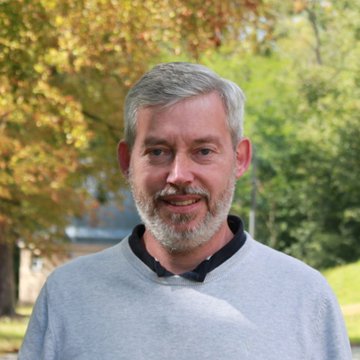
Andrew Czaja is an Associate Professor in the Department of Geology at the University of Cincinnati, where he has been a faculty member since 2012, rising from Assistant Professor to his current position. His research bridges Earth's ancient history with the search for life beyond our planet, focusing on Precambrian paleobiology, astrobiology, and biogeochemistry. Dr. Czaja earned his B.S. in Environmental Science and Biology from the University of Connecticut in 1998, followed by a Ph.D. in Geology with a concentration in Paleobiology from the University of California, Los Angeles in 2006. His academic journey included postdoctoral research at the University of Wisconsin-Madison and lecturing positions at UCLA and California State University, Fullerton. His research investigates the early evolution of life on Earth, with particular focus on the Archean fossil record of South Africa and Australia, the geologic record of microbial metabolic evolution, and Mesoproterozoic terrestrial microbial ecosystems. He specializes in kerogen geochemistry and in situ morphological and geochemical analyses of Precambrian microfossils. His work has increasingly incorporated Mars exploration, particularly through his involvement with the Mars 2020 mission. Dr. Czaja's lab develops advanced analytical techniques for distinguishing true biosignatures from abiotic features in ancient rocks, knowledge directly applicable to the search for life on Mars. Analysis of Dr. Czaja's recent publications reveals a strong focus on Mars exploration and biosignature detection. His work with the Perseverance rover mission centers on analyzing Jezero Crater, an ancient river delta that may contain evidence of past life. His research combines field studies of ancient Earth environments with cutting-edge instrumentation to develop better methods for detecting potential biosignatures on Mars, particularly through the SHERLOC instrument that performs deep ultraviolet Raman spectroscopy. Dr. Czaja has received numerous awards and recognitions throughout his career, including: Lewis and Clark Field Scholar in Astrobiology (2010) Dissertation Year Fellowship from UCLA (2005) Eugene Waggoner Scholarship for Sustained Academic Achievement (2005) Graduate Research Fellowship from the National Science Foundation (2000-2003) Outstanding Undergraduate Researcher of the Year from the University of Connecticut (1999) Dr. Czaja has secured significant research funding, including multiple NASA and NSF grants totaling over $900,000 in active funding. His current projects include 'Life on an oxidizing planet: Microbial ecosystems of a Neoarchean carbonate platform' (NSF, $311,760), 'Searching for morphological and geochemical biosignatures on Mars to return to Earth' (NASA, $91,027), and participation in the Mars 2020 mission as part of the Participating Scientist Program ($439,000). His work often involves interdisciplinary collaborations with researchers across multiple institutions. Dr. Czaja's laboratory focuses on advanced analytical techniques for studying ancient microfossils and potential biosignatures, including Raman spectroscopy, confocal laser scanning microscopy, and geochemical analyses. His research group works at the intersection of geology, biology, and planetary science, developing methods to distinguish true biosignatures from abiotic features in ancient rocks - knowledge that directly informs the search for life on Mars. His team also conducts fieldwork in Precambrian rock formations in South Africa and Australia that serve as analogs for potential Martian environments.