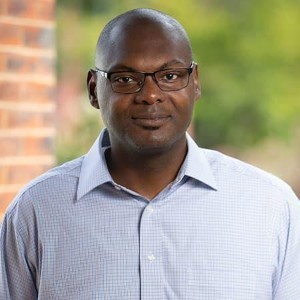
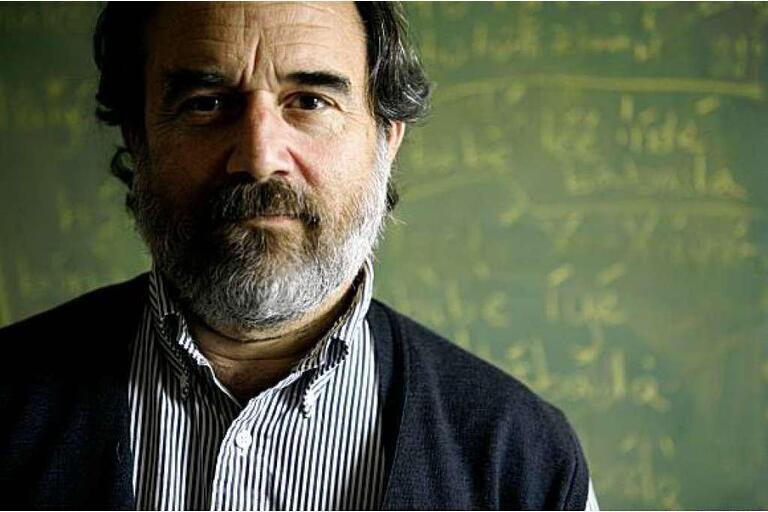
Giovanni Compiani is an Associate Professor at the University of Chicago Booth School of Business, specializing in Marketing. His research bridges industrial organization and quantitative marketing, focusing on advanced econometric methods. PhD, MPhil, MA in Economics from Yale University BSc, MSc in Economics from Bocconi University Previous Assistant Professor at Haas School of Business His work explores unstructured data integration in demand estimation, consumer search behavior on online platforms, risk preferences in cryptocurrency markets, and time perception in behavioral economics. He has published in top journals including Journal of Political Economy , Marketing Science , and Review of Economic Studies . Recent publications emphasize machine learning applications in econometrics, equilibrium modeling of lotteries, and crypto mining's economic impact. His research portfolio spans demand analysis, structural modeling, and behavioral insights. Editor's Choice Award, The Review of Asset Pricing Studies (2024) Developed nonparametric demand estimation frameworks Advances dynamic model identification with instrumental variables Compiani teaches Data Science for Marketing Decision Making at Booth and maintains active collaborations with researchers across econometrics, computer science, and behavioral disciplines.
Rianne Conijn is an assistant professor in the Human-Technology Interaction group at Eindhoven University of Technology (TU/e), Netherlands. Her research bridges data-driven methodologies (machine learning, statistical modeling) with human-centered design to enhance learning analytics, explainable AI, and writing process analysis. She holds a joint PhD (cum laude) from Antwerp University and Tilburg University, and an MSc (cum laude) in Human-Technology Interaction from TU/e. Academic Background: MSc (2015, TU/e, cum laude), PhD (2020, Antwerp University & Tilburg University, cum laude). Research Focus: Learning analytics, keystroke logging, explainable AI for education, data dashboards, and self-regulated learning dynamics. Teaching: Courses in Advanced Research Methods, Human-AI Interaction, Behavioral Research Methods, and AI ethics in education. Her recent publications explore parallel language planning in writing, longitudinal self-regulated learning strategies, and generalizability of academic performance prediction models. She leads an NWO Veni project on Human-Centered AI in education, emphasizing tailored explanations for student-AI collaboration. Scientific awards include cum laude distinctions for her MSc and PhD, and the NWO Veni grant. Collaborative work spans institutions in the Netherlands, Norway, and the U.S., with applications in intelligent tutoring systems and ethical AI deployment in exams. Key trends across her work: integration of machine learning with educational theory, leveraging keystroke data for cognitive process insights, and prioritizing actionable, explainable AI systems for student support. Publications span journals like the Journal of Experimental Psychology: General , Computers and Education , and IEEE Transactions on Learning Technologies . Scientific Awards: NWO Veni grant for Human-Centered AI in education Cum laude for MSc and PhD Grants & Collaborations: National Science Foundation grants (2016868, 2302644) for biometric feedback in writing UK Research and Innovation grant (ES/W011832/1) for real-time AI scaffolding TU/e Boost! Program grant for self-regulated learning analysis Labs & Teams: EAISI Foundational (Eindhoven AI Systems Institute) Human Technology Interaction group at TU/e Collaboration with Norwegian Reading National Center (University of Stavanger) Project teams for Waterproof ITS and ProWrite grants
Austin Bunn is an Associate Professor in the Department of Performing and Media Arts at Cornell University, where he also serves as Director of the Milstein Program in Technology and Humanity. His career bridges academia, filmmaking, and literary arts, with expertise in screenwriting, short film production, and creative nonfiction. Education B.A. in American Studies, Yale University M.F.A. in Fiction & Playwriting, University of Iowa Writers' Workshop Research and Creative Interests: Austin's work spans screenwriting pedagogy, LGBTQ+ narratives in film, and interdisciplinary storytelling. His recent focus includes audio drama development and rural queer representation in documentary media. Selected Scientific Awards: Carpenter Memorial Advising Award (2017) Audie Award for Best Fiction Collection (2017) Michener-Copernicus Fellowship International Days Prize, Venice Film Festival Advising and Professional Impact: He has mentored at the Screenwriters' Colony and Outfest Screenwriting Lab, and won the Carpenter Memorial Advising Award for connecting students with industry professionals. His Milstein Program leadership fosters collaborations between technology and humanities.
Scott Shane is the A. Malachi Mixon III Professor of Entrepreneurial Studies and Professor of Economics at the Weatherhead School of Management, Case Western Reserve University, where he has been faculty since 2003. As the school's most highly cited researcher, his work bridges entrepreneurship, economics, and neuroscience with over 94 scholarly articles and 16 books including award-winning titles like Illusions of Entrepreneurship and Fool's Gold . Education: PhD, University of Pennsylvania (1992) Master of Science, University of Pennsylvania (1991) Master of Science, Georgetown University (1988) AB, Brown University (1986) Research Focus: Shane's work centers on five interconnected domains: (1) opportunity discovery and evaluation processes; (2) university spin-offs and technology commercialization; (3) business format franchising dynamics; (4) angel investment mechanisms; and (5) the genetic and neural underpinnings of entrepreneurial behavior. His research uniquely integrates biological perspectives with traditional entrepreneurship theory, challenging conventional wisdom through rigorous empirical analysis. Publication Trends: Recent work shows increasing interdisciplinary convergence, particularly in neuroscience applications to investor decision-making and founder behavior. His 2020-2025 publications demonstrate heightened focus on pitch dynamics, pandemic economic impacts, and genetic factors, while maintaining his signature critical analysis of entrepreneurship myths. The consistent appearance in top journals like Management Science and Academy of Management Journal underscores his field leadership. Scientific Recognition: Global Award for Entrepreneurship Research (2009) Weatherhead Enduring Impact Award (2015) Case Western Faculty Distinguished Research Award (2017) Multiple Best Business Book Awards for Illusions of Entrepreneurship and Fool's Gold Academy of Management Best Paper Award (2020, 2021) Professional Engagement: Beyond academia, Shane serves as Managing Director of the Comeback Capital Fund (investing in Heartland startups) and previously held board positions at JumpStart Inc. (2008-2009) and NorthCoast Angel Fund (2006-2018). He has consulted globally for organizations seeking innovation strategy guidance and taught executive education programs worldwide, while his classroom instruction focuses on entrepreneurial finance and technology strategy. Research Infrastructure: Shane's work is supported through the Greif Center for Entrepreneurship at Weatherhead, where he has directed major projects on technology commercialization and new venture finance. His current research leverages fMRI technology and genetic data to explore biological foundations of entrepreneurship, collaborating with interdisciplinary teams across economics, psychology, and neuroscience departments.
Derrick R. Spires serves as Associate Professor of English in the College of Arts & Sciences at the University of Delaware, specializing in early Black print culture, citizenship studies, and African American intellectual history. His scholarly mission centers on recovering the rich imaginative worlds African-descended people generated through print media and how these imaginings facilitated material change, spanning from tragicomic expressions to mundane daily practices. Spires' research interrogates how Black writers articulated expansive, practice-based theories of citizenship through robust print networks including newspapers, the Colored Conventions movement, and ephemeral publications. His work reveals the centrality of seriality, pseudonymity, and collaborative performance in Black political thought, demonstrating how print culture enabled Black communities to navigate and reshape citizenship frameworks despite systemic exclusion. He examines how early African American literature cultivated aesthetic sensibilities that sustained resistance and community building. Analysis of his 2016-2024 publications reveals consistent thematic threads: the material conditions of Black bibliography, gendered dimensions of political expression, and the performance aspects of print culture. His scholarship increasingly engages with digital humanities methodologies while maintaining deep archival rigor, particularly regarding Dorothy Porter's bibliographic mission and liberation bibliography frameworks. Key publications map connections between early Black social media practices and contemporary digital activism. Spires' accolades include: Modern Language Association Prize for First Book (2020) St. Louis Mercantile Library Prize (2020) National Endowment for the Humanities Fellowship Ford Foundation Fellowship Social Science Research Council Fellowship Mellon/Mays Initiatives Fellowship American Antiquarian Society Fellowship His editorial leadership encompasses the Broadview Anthology of American Literature and the University of Pennsylvania Press series 'Black Print and Organizing in the Long Nineteenth Century.' Research has been supported by major fellowships examining Black print networks, though specific grant details beyond institutional fellowships aren't specified. Spires contributes significantly to recovering marginalized intellectual traditions through meticulous bibliographic work and theoretical innovation in citizenship studies.
Dr. Erika Marsillac is Dean and Professor of Supply Chain Management at Old Dominion University's Strome College of Business. She has led research and taught internationally since 2004, specializing in sustainable supply chains, renewable energy systems, and international partnerships. Her leadership includes overseeing academic programs and research initiatives focused on logistics, sustainability, and business innovation. Education: Ph.D. in Manufacturing Management, University of Toledo (2010) M.B.A. in Information Technology, Goldey-Beacom College (2002) M.B.A. in Comprehensive General MBA, Goldey-Beacom College (2000) B.A. in Psychology, Pennsylvania State University (1992) Research Focus: Dr. Marsillac's work centers on integrating sustainability into global supply chains, with emphasis on photovoltaic systems, circular economy models, and automotive industry transformations. She investigates variability in production systems, renewable energy infrastructure, and strategies for mass customization. Publication Trends: Her recent articles emphasize renewable energy supply chains (particularly photovoltaics), queueing theory applications in manufacturing, and sustainable operations. Methodologies include case studies, simulation modeling, and bibliometric analysis. Awards & Fellowships: EV Williams Fellowships for Service & Teaching (2022) Outstanding Faculty Service Award (2021) Provost Fellowship (2021) Distinguished Alumni Award (2015) Grants & Projects: Secured $368,600+ in funding for renewable energy and educational initiatives, including solar tracking systems, photovoltaic facilities, and business pedagogy enhancements.
Kartik Nair is an Assistant Professor of Film Studies in the Department of Film and Media Arts at Temple University, affiliated with the School of Theater, Film and Media Arts. His research focuses on cinematic infrastructures, genre cinemas, and visual space in film, with a particular emphasis on Indian horror cinema and digital production technologies. Prior to Temple, he was a Visiting Assistant Professor of Cinema Studies at Purchase College, SUNY (2016-2018). Education includes a PhD in Cinema Studies from New York University (2018), an MPhil from Jawaharlal Nehru University's School of Arts and Aesthetics (2010), and an MA in English from Delhi University (2008). His current book project, Seeing Things , examines material traces of film production in 1980s Indian horror films, to be published by UC Press in 2024. He co-edits Bioscope: South Asian Screen Studies and has published widely in journals like Journal of Cinema and Media Studies and Discourse . Research interests bridge film materiality, digital aesthetics, and labor histories, analyzing how production infrastructures shape expressive forms. Recent work explores VFX software's impact on global genre cinema and the perceptual intersections of algorithmic and human creativity in digital spaces. Teaching includes graduate seminars, writing-intensive courses, and introductory lectures, with a focus on methodological innovation in cinema studies. Public-facing writing appears in Los Angeles Review of Books , Film Quarterly , and India Today . Collaborative projects include a co-edited volume with Karen Redrobe on pedagogical approaches in Cinema and Media Studies.
Saarthak Singh is a Lecturer at the École française d'Extrême-Orient (EFEO) in Paris, specializing in South Asian art history. His research focuses on medieval Central India, examining architectural history, epigraphic practices, and cultural constructions of difference. He holds a PhD from New York University (2023) supervised by Finbarr Barry Flood, and previously trained at the University of St Andrews and SOAS. Before joining EFEO in 2024, he initiated a postdoctoral project at Ghent University (2023-2028) on architectural studies of coexistence and conflict supported by the Flanders Science Foundation. His research explores: Landscape and urban development in medieval Indian cities Epigraphic traditions and material culture of writing Architectural transformations of religious spaces Cross-cultural exchanges in pre-modern South Asia Talismanic objects and performative traditions Recent publications focus on Sultanate-era architecture, epigraphic practices, and cultural ecology, demonstrating consistent engagement with material culture and spatial politics in medieval South Asia. His work frequently employs interdisciplinary approaches combining art history, archaeology, and textual analysis. Awards include: Association of Art Historians Award (2015) UC Berkeley Dissertation Prize in Art History (2024) He co-directed a British Library-funded digitization project (2021-2023) on Sufi archives in Madhya Pradesh and teaches courses on Indian architecture, material culture, and pre-colonial history. Current research includes the Central India Research Group and Asia Registrations Online databases.
Larry M. Hyman is Distinguished Professor of Linguistics at University of California, Berkeley, specializing in phonological theory and African language studies. His research analyzes tone systems, Bantu morphophonology, and Niger-Congo historical linguistics. Research focuses on tonal patterns in Bantu languages, morphotactic structures, and historical development of African tone systems. Recent work examines Tiania tonology, Luganda noun phrase prosody, and Runyankore verb morphology. Publications demonstrate methodological rigor in phonological analysis and language documentation, contributing to theoretical understanding of tone, prosody, and morphological complexity in understudied languages. Editorial contributions include honor volumes and theoretical studies advancing autosegmental phonology and morphological analysis.
Jan Kemper serves as an Honorary Professor of Business Administration and Entrepreneurship at RWTH Aachen University, appointed in July 2022 after a decade of continuous academic engagement. His primary academic affiliation is with the Innovation and Entrepreneurship Group (WIN), where he integrates scholarly research with extensive industry experience. Concurrently, Kemper maintains an active business career spanning investment banking at Goldman Sachs, Credit Suisse, and Morgan Stanley across Germany, the UK, and Saudi Arabia, followed by executive roles at Groupon, Zalando, ProsiebenSat.1, Omio, and N26. He is a serial entrepreneur with ventures including the triathlon brand Ryzon, the event venue "Der Kemper Hof", and Green-Tech firm Greenair, while also serving as a business angel and non-executive director for companies like Flink and Hedosophia. His academic credentials include: Business Administration studies at WHU Vallendar, ICADE (Madrid), and Bordeaux Business School Doctoral degree (Dr. rer. pol.) from RWTH Aachen University Kemper's research critically examines entrepreneurship through multiple interconnected lenses. His core focus areas encompass general entrepreneurship dynamics, corporate entrepreneurship strategies, and innovation processes. He further investigates entrepreneurial finance mechanisms, venture capital ecosystems, marketing approaches specific to new ventures, and operational challenges in startup environments. This research program is uniquely informed by his dual expertise in academic theory and real-world business execution, creating practical frameworks for entrepreneurial success. Analysis of his 12 publications (2010-2022) reveals a dominant focus on consumer behavior within digital marketplaces, particularly e-commerce contexts. Recurring themes address sustainable consumption practices (e.g., eco-label effectiveness), retail strategy (private label dynamics and fast fashion), payment system innovations, customer review impacts on loyalty, and product return logistics. His methodological approach consistently employs empirical field experiments and cross-cultural comparisons, reflecting both academic rigor and practical relevance derived from his global business exposure across multiple continents. While specific student supervision details are absent from source materials, Kemper's decade-long teaching role suggests mentorship of entrepreneurship students through RWTH Aachen's programs. His extensive industry network—including corporate board memberships and startup investments—implies strong potential for industry-academia research partnerships and applied grant funding, though explicit grant details remain undocumented in available texts. The Innovation and Entrepreneurship Group (WIN) serves as Kemper's primary research hub at RWTH Aachen, functioning as the operational nexus where his academic investigations into venture creation and innovation processes directly intersect with his practical business experience across finance, digital platforms, and sustainable enterprises.
Filip Vostal is a senior researcher at the Institute of Philosophy of the Czech Academy of Sciences with a PhD in sociology from the University of Bristol (2013). He teaches Science & Technology Studies (STS) courses at Charles University and serves on the editorial board of Time & Society . As an active member of EASST and 4S professional organizations, his work bridges academic research with practical applications across multiple disciplines. Dr. Vostal's research primarily focuses on the sociology of time, examining how temporal structures shape academic work and scientific research. His notable book Accelerating Academia: The Changing Structure of Academic Time (Palgrave, 2016) established him as a leading scholar in academic temporality studies. His current research investigates the temporality of knowledge production in x-ray free electron laser experiments, exploring the epistemic role of speed in time-resolved structural biology methods including "single particle imagining" and "serial femtosecond crystallography". His recent publications reveal a strong thematic focus on time, acceleration, and temporal structures across academic and scientific contexts. The articles demonstrate expertise spanning theoretical examinations of social acceleration to practical analyses of time in fusion research and even numismatics (the study of currency). His interdisciplinary approach connects temporal studies with science & technology studies and critical social theory. Among his scientific contributions, Vostal serves on the editorial board of Time & Society and has received research support through Czech Science Foundation grants including GA ČR(CZ) GJ16-18371Y and GA ČR(CZ) GA19-15511S. He is currently a project (co-)investigator on the TIMED project ("TIMe experience in Europe's Digital age") running from 2022-2025. Dr. Vostal maintains an active research profile with numerous publications in sociology, STS, and interdisciplinary journals. His work demonstrates consistent engagement with both theoretical frameworks and empirical investigations of time structures in contemporary academic and scientific practices.
Luca Barra is Full Professor of Television and Digital Media at the Department of Arts, University of Bologna. His research focuses on media studies, particularly television history and contemporary evolution, transnational circulation of content, serialization, and comic/humorous genres. He has coordinated the Master's Degree in Information, Cultures and Media Organization since 2021 and serves as editor-in-chief of VIEW. Journal of European TV History and Culture. University of Bologna, Department of Arts Research areas: Television History, Transnational Media, Digital Transformation, Italian TV Production Barra's work examines the international mediation of ready-made TV formats, Italian streaming partnerships, and the cultural implications of digital television. His recent articles analyze dystopian narratives, sitcom reception in Italy, and the redefinition of celebrity during the pandemic. He contributes to academic discourse through editorial roles in journals like SERIES and Comunicazioni Sociali. His publications include monographs on Italian television programming, sitcoms, and co-edited volumes exploring European premium TV fiction and digital media frameworks. Barra has led research projects such as ATLas and F-ACTOR, and collaborates with international institutions including Brown University and NECS.
Deepti Raghavan serves as Assistant Professor in Brown University's Department of Computer Science, specializing in operating systems, networking, and machine learning systems. Her research develops novel networked abstractions to optimize data movement in distributed applications through API redesign. Her educational background includes: PhD in Computer Science from Stanford University (2024) MEng in Computer Science from Massachusetts Institute of Technology (2018) BS in Computer Science from Massachusetts Institute of Technology (2017) Her research integrates systems infrastructure with machine learning workloads , focusing on performance-critical communication patterns. Key innovations include zero-copy serialization techniques and network orchestrators for compound AI systems, bridging theoretical advances with practical deployment in cloud environments. Publication trends (2018-2024) reveal consistent contributions to high-performance networking and ML systems, with increasing focus on AI infrastructure. Her work shows strong collaboration patterns with Stanford/MIT researchers and addresses fundamental challenges in data movement efficiency across distributed systems. Scientific recognition includes: National Science Foundation Graduate Research Fellowship (2019) Stanford School of Engineering Fellowship (2018-2019) Distinguished Artifact Award at SOSP 2023 Best Paper Award at Usenix ATC 2018 She actively recruits PhD students for her research group and teaches advanced systems courses including Cloud and Datacenter Operating Systems. Her research is supported by prestigious fellowships and likely NSF grants, with teaching responsibilities spanning graduate seminars and core undergraduate systems education. Her research group collaborates with Stanford's Systems Lab and MIT's CSAIL Networks group, maintaining strong ties to the Networks and Mobile Systems research community. Current projects focus on next-generation abstractions for AI-driven networked applications.
Scott Curtis is an Associate Professor at Northwestern University's School of Communication, specializing in the Radio/Television/Film department. He divides his time between the Evanston, Illinois campus and Northwestern University in Qatar, contributing to both academic environments through research and teaching. Research Focus: History of early cinema, animation applications in science/medicine, visual epistemology Key Contributions: Founded Block Cinema, led Domitor society, directed NUQ Communication Program His scholarly work examines how scientific communities have historically utilized film for research, training, and public outreach , particularly during cinema's formative years in Germany. His book The Shape of Spectatorship (2015) provides foundational insights into the intersection of scientific observation and cinematic technology. Academic Contributions: 2024: Explored film image tracing in scientific research 2023: Defined 'useful animation' historiography 2021: Analyzed scientific applications of animation 2018: Investigated abstract-empirical relationships in scientific film 2015: Bridged science/art visualization through dialogue with biologist Robert Lue Scientific Awards: Fulbright U.S. Scholar Grant (2013) Visiting Fellow at Bauhaus-Universität Weimar (2011) Northwestern's Faculty Honor Roll (2006-2009) Leadership Roles: Founder of Block Cinema Former co-chair, Chicago Film Seminar Ex-President of Domitor (international early cinema society) Ex-Director, NUQ Communication Program in Qatar
Dr. Robert Schwebach serves as an Associate Professor of Finance within the Department of Finance and Real Estate at Colorado State University's College of Business, where he has held a faculty position since 1996. His academic career includes prior appointments at the University of Wyoming and industry experience as an actuarial consultant with Towers Perrin and Hewitt Associates. His educational background includes: Ph.D. in Finance, University of Nebraska–Lincoln (1992) M.A., University of South Dakota B.S., University of South Dakota Dr. Schwebach's research centers on corporate social responsibility , portfolio risk dynamics influenced by investment time horizons, supply chain effects of private equity acquisitions , and strategic flexibility in revolving credit facilities . His scholarly work, published in journals like the Journal of Risk and Insurance and Strategic Management Journal , bridges theoretical finance with practical market applications through rigorous event study methodologies. Analysis of his publication record reveals sustained focus on syndicated loan markets during financial crises, corporate social responsibility disclosures, and international investment strategies. His research consistently examines market reactions to financial announcements across banking, corporate finance, and fixed income domains with particular attention to crisis-period dynamics. No scientific awards or fellowships were documented in the available materials. In teaching, Dr. Schwebach instructs corporate finance and investments across undergraduate, MBA, Executive MBA, and Financial Risk Management master's programs. He has developed online courses through Continuing Education and taught internationally at Foreign Trade University in Hanoi. While his teaching portfolio is extensive, the documentation does not specify formal student advising relationships or research grant funding.