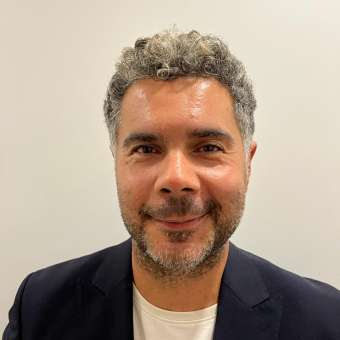
Dr. Philipp Dominik Keidl is Assistant Professor of Screen Media in Transition at the Department of Media and Culture Studies , Faculty of Humanities , Utrecht University . Holding a PhD in Film and Moving Image Studies from Concordia University and an MA in Preservation and Presentation of the Moving Image from the University of Amsterdam, his work bridges film heritage , fan studies , and digital media archiving . Ph.D., Film and Moving Image Studies, Concordia University M.A., Preservation and Presentation of the Moving Image, University of Amsterdam His research investigates how media industries , heritage institutions , and audiences negotiate ownership of film history through practices like making-of productions , fan restorations , and amateur exhibitions . Current projects include a monograph on power dynamics in media historiography and the Community Engaged Learning Stolpersteine project (2025-2027), which develops interdisciplinary educational frameworks for remembrance culture. He also leads a study on German queer film distribution via Salzgeber & Co. Medien GmbH (2025-2026). Prior editorial roles include co-editing Transformative Works and Cultures (2022) and Configurations of Film (2025). His work appears in JCMS: Journal of Cinema and Media Studies , American Behavioral Scientist , and Journal of Popular Culture , with recent focuses on forensic fandom , plastic heritage , and public media archaeology .
Julie Smith-Gagen is an Associate Professor at the University of Nevada, Reno, School of Community Health Sciences. Her research addresses cancer epidemiology, health policy, and disparities in healthcare access for underserved populations. She focuses on Cancer of Unknown Primary (CUP), nonalcoholic steatohepatitis, and women's health, particularly breastfeeding practices and laws. Education: Ph.D. in Epidemiology, University of California, Davis (2004) MPH, University of South Florida (1998) B.S. in Biology, Florida State University (1989) B.S. in Physics, Frostburg State University (1987) Her epidemiological work integrates big data and statistical methods to study cancer survivorship, diagnostic evaluation, and policy impacts on healthcare equity. Collaborations span oncology, immunology, and public health, with an emphasis on minority and rural populations. Scientific Awards: Health Care Scholars Award, UCLA Network for Multicultural Research on Health and Healthcare (2010) Rising Star, Geographic Management of Cancer Health Disparities Program at Huntsman Cancer Institute She has secured funding from the National Institutes of Health (NIH), Southern California NIOSH Education and Research Center, and Renown Health. Her leadership roles include Vice Chair for the Minority Affairs Committee in the American College of Epidemiology.
Jörg Breitung is a Professor of Econometrics and Statistics at the Institute of Econometrics and Statistics within the Faculty of Management, Economics and Social Sciences (WiSo Faculty) at the University of Cologne since 2014. He also serves as a Research Professor of the German Bundesbank in Frankfurt since 2002. Research Focus: Panel Data Analysis Time Series Analysis Forecasting Financial Econometrics Scientific Contributions: Developed advanced GMM estimators for spatial regression models Innovative approaches for assessing causality in frequency domains Created robust tests for slope homogeneity in panel data Pioneered methods for serial correlation testing in fixed effects models Contributed to nonlinear panel data modeling and bootstrap techniques Honors and Editorial Roles: Associate Editor of International Journal of Forecasting (2019-) Associate Editor of Journal of Business and Economic Statistics (2017-) Associate Editor of Econometric Reviews (2014-) Contributed to leading journals like Econometrica and Journal of Econometrics
Volkan Yeniaras is an Associate Professor of Marketing at Ozyegin University, with a Doctorate from Swansea University (2013) and a Bachelor's from Koç University. He has previously served as Assistant Professor at the American University of Sharjah (2013-2017) and Associate Professor at the University of Sussex (2017-2020). Education: Bachelor's in Marketing, Koç University (Istanbul) Master's in Marketing, University of Wales, Swansea Doctorate in Marketing, Swansea University (UK, 2013) Research Interests focus on the interplay of marketing strategy, organizational behavior, and consumer psychology, particularly examining: Emotional exhaustion in sales and service roles Impact of strategic business ties on performance Relational governance mechanisms Religiosity's influence on consumer behavior Techno-insecurity in modern work environments Innovation dynamics in emerging economies Recent Publications analyze: Technology-induced workload transmission across organizational levels (2025) Product complexity's effect on customer relationships (2024) Serial acquisition strategies in industrial networks (2024) Relational ties paradox in servitization processes (2021) Teaching includes courses on Marketing Strategy, B2B Marketing, and Sales Management.
Prof. Dr. Malte Zimmermann is a Full Professor of Semantics and Theory of Grammar at the Department of Linguistics, University of Potsdam. He is also a faculty and board member of the African Linguistics School (ALS), which biannually convenes in West African countries to advance formal linguistics knowledge among African scholars. His editorial roles include Associate Editor for Natural Language and Linguistic Theory and former Associate Editor for Linguistics and Philosophy . His educational background includes: Ph.D. in General Linguistics, Universiteit van Amsterdam (2002) M.A. in German Language and Linguistics/English/Anglistic/Philosophy, Universität zu Köln (1998) Abitur, Gymnasium Athenaeum, Stade/Niedersachsen (1989) Zimmermann's research centers on the interface between linguistic form and meaning, with specialization in formal semantics and grammar theory. His work spans quantification, tense, question semantics, discourse particles, and information structure, with particular emphasis on semantically under-researched West African languages (Chadic, Kwa, Grassfield Bantu). His research combines theoretical analysis with experimental methods, notably through projects like 'ExQ' examining embedded question interpretation across European and Non-European languages. He has led field research in Ghana, Cameroon, and Nigeria, challenging assumptions about language universals through empirical investigation of linguistic diversity. His publication trajectory reveals consistent focus on cross-linguistic semantic variation, particularly in focus interpretation, quantifier scope, and information structure phenomena. Recent work demonstrates growing integration of experimental methodologies with traditional formal approaches, with frequent comparisons between German, English, and diverse African languages. His investigations into serial verb constructions have been especially influential, uncovering hidden syntactic variability beneath surface similarities across languages like Akan and Igbo. As a supervisor, Zimmermann has guided numerous doctoral students to completion, with recent graduates including Giuliano Armenante (2024), Eva Shipova (2024), and Mareike Philipp (2023). His research has been supported by substantial funding including: SFB1287 Limits of Variability in Language, 'Limits of variability in interpretation' (2017-2021) SPP 1727 XPRAG.de, 'Exhaustiveness in embedded questions across languages' (2017-2020) SPP 1727 XPRAG.de, 'Exhaustivity in it-clefts' (2014-2017) DFG-Network 'Questions in Discourse' (2012-2016) SFB632 Information Structure projects (2007-2015) He leads the Potsdam semantics group (including Peter Sutton, Giuliano Armenante, Jeanne Lecavelier, Anna Struck, and Carla Bombi) which conducts fieldwork in West Africa. Currently, he co-directs the SFB-project on the 'Limits of Variability in Interpretation,' examining scope ambiguities, reconstruction, and bare NP interpretation across German, English, Akan, Igbo, and Medumba. His collaborative work with Edgar Onea (Graz) and Tatjana Scheffler exemplifies his commitment to bridging theoretical linguistics with empirical fieldwork and experimental validation.
Professor Christian Unkelbach serves as Chair of General Psychology at the Department of Psychology, Faculty of Human Sciences, University of Cologne, a position he has held since 2011. He additionally serves as spokesperson for the DFG Research Group 2150 'The Relativity of Social Cognition: Antecedents and Consequences of Comparative Thinking' at the University of Cologne since 2016. His significant contributions to social psychology were recognized with an ISCON Best Paper Award in 2020, and he is scheduled to receive an honorary doctorate from Université Catholique de Louvain in April 2025. Professor Unkelbach's research primarily focuses on social cognition phenomena including the truth-by-repetition effect, evaluative conditioning, and halo effects. His cognitive-ecological approach examines how cognitive processes operate within real-world social contexts, investigating how people form attitudes, process information, and make judgments in social environments. His work has important implications for understanding belief formation, cognitive biases, and social judgment processes. Analysis of his recent publications reveals a consistent research trajectory examining how repetition influences truth judgments across various contexts, including cross-linguistic settings and factual information related to current events like the COVID-19 pandemic. His work also explores the cognitive mechanisms behind social phenomena such as the halo effect and evaluative conditioning, with applications to understanding social biases and decision-making processes. ISCON Best Paper Award 2020 for 'Negativity bias, positivity bias, and valence asymmetries' Honorary Doctorate from UCLouvain (scheduled for April 2025) Extensive publication record in top journals including Journal of Personality and Social Psychology, Cognition, and Trends in Cognitive Sciences Leadership of DFG Research Group 2150 since 2016 Professor Unkelbach maintains an active research program with numerous ongoing collaborations, as evidenced by his continuous publication output through 2025. His work bridges theoretical social cognition with practical implications for understanding everyday social judgment and decision-making processes. His media appearances demonstrate his commitment to translating complex psychological phenomena for public understanding, particularly regarding cognitive biases that affect daily life.
Dylan Agius is a Research Fellow at Deakin University's School of Engineering, part of the Faculty of Science Engineering and Built Environment. Based at the Melbourne Burwood Campus, his research focuses on advanced computational modeling of material behavior with particular emphasis on additive manufacturing processes and crystal plasticity. Dr. Agius's research interests span multiple areas of materials science and mechanical engineering: Additive Manufacturing (particularly electron beam powder bed fusion and selective laser melting) Crystal Plasticity Modeling and Finite Element Analysis Microstructure Evolution and Characterization Residual Stress Analysis in Welded and Additively Manufactured Components Mechanical Behavior of Titanium and Stainless Steel Alloys Creep and Fatigue Deformation Mechanisms His publication record demonstrates a strong focus on integrating experimental characterization with computational modeling to understand and predict material behavior. Recent work has particularly emphasized the relationship between microstructure and mechanical properties in additively manufactured metals, with applications to aerospace and safety-critical components. His research often combines advanced techniques like electron backscatter diffraction with sophisticated modeling approaches to capture material behavior at multiple scales. Dr. Agius has published extensively in high-impact journals such as International Journal of Plasticity, Materials Science and Engineering: A, and Additive Manufacturing. His research has been cited extensively, with several papers exceeding 50 citations. His collaborative research involves working with experts in materials characterization, mechanical testing, and computational modeling. Current projects appear to focus on optimizing additive manufacturing processes through computational prediction of microstructure and properties, as well as developing more accurate models for predicting deformation behavior in complex loading scenarios.