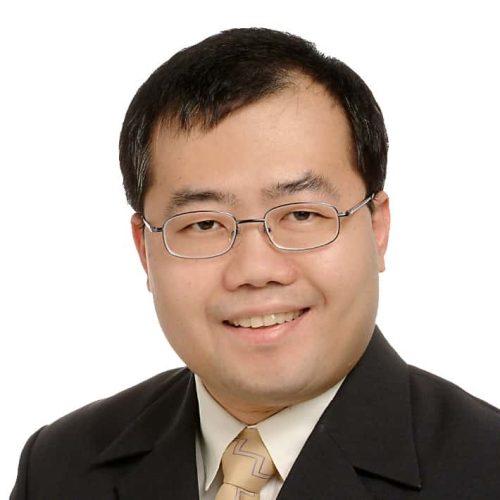
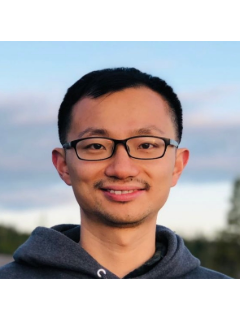
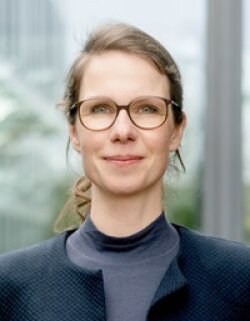
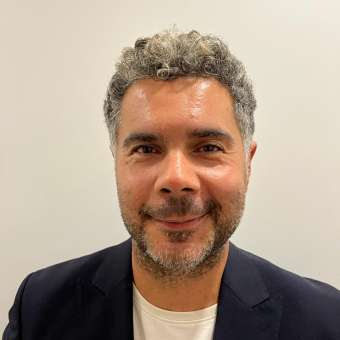
Dr. Ing. Erik van der Burg is a Research Associate at the Vrije Universiteit Amsterdam, affiliated with the Faculty of Behavioural and Movement Sciences and the APH - Mental Health department. His research focuses on how individuals with and without autism process sensory information through modalities like vision, hearing, touch, and taste, with a particular emphasis on multisensory perception and cognitive psychology. He employs methodologies such as psychophysics, functional infrared thermal imaging (fITI), EEG, eye-tracking, machine learning, and skin conductance. He collaborates with the Netherlands Autism Register (NAR), a longitudinal cohort study, to improve support systems for autistic individuals. Research interests include multisensory integration, autism spectrum disorder, sensory processing, and the application of artificial intelligence in understanding perception. His work spans cognitive flexibility in autism, visual search mechanisms, and the impact of multisensory cues on food perception. Recent studies explore attentional tunneling in pilots, audiovisual synchrony perception, and machine learning tools for camouflage assessment. Dr. van der Burg has contributed to 130+ publications and 42 activities, including lectures on visual crowding and EEG biomarkers. He has been featured in 30 media contributions discussing dating app psychology and sensory perception. His datasets, such as contributions to the Face familiarity study, are publicly available on platforms like Figshare.
Doeke Romke Hekstra is an Associate Professor at Harvard University, holding appointments in the Department of Molecular and Cellular Biology and the School of Engineering & Applied Sciences (SEAS) . His research integrates physics, chemistry, and computational methods to study biological systems. He leads the Hekstra Lab , focusing on protein dynamics, structural biology, and enzymology, with a particular emphasis on time-resolved crystallography and data analysis. Key research areas include the development of novel crystallographic software tools (e.g., MatchMaps , Laue-DIALS ), electric-field stimulated protein mechanics, and understanding enzymatic mechanisms using mix-and-inject serial crystallography. His lab has pioneered methods for analyzing structural changes in proteins under dynamic conditions. Recent work highlights include advancements in scaling and merging X-ray diffraction data using Bayesian methods, and structural studies of proteins involved in ion channels and mitochondrial function. His students and postdocs have contributed to impactful projects, such as Maggie Klureza’s thesis on VDAC gating and John Russell’s work on live-cell metabolomics. Dr. Hekstra advises multiple PhD students and mentors postdoctoral researchers, fostering interdisciplinary collaboration across Harvard’s labs and departments. His lab is located in the NW Building , and he actively engages in software development for the crystallography community through open-source projects.
Assoc. Prof. Nadia Zatsepin is an Associate Professor at Swinburne University's School of Science, Computing and Emerging Technologies. She leads research on serial crystallography using XFELs and synchrotrons to study biomolecules at atomic resolution. Her work focuses on membrane proteins, structural dynamics, and drug discovery. Zatsepin holds an ARC Future Fellowship and has pioneered techniques like viscous jet delivery and time-resolved XFEL methods. Education: PhD in X-ray physics (Monash University, 2011). Postdoctoral work at Arizona State University (2011–2015) and senior roles at La Trobe University and the ARC Centre for Advanced Molecular Imaging before joining Swinburne in 2024. Research interests include XFEL applications, microcrystallography, radiation damage mitigation, and structural analysis of medically relevant proteins. Key projects involve studying cytochrome c oxidase, chloride pumps, and GPCRs. Publications span crystallography instrumentation, protein dynamics, and structural biology. Awards include the ARC Future Fellowship. Active in supervising PhD students and leading grants like 'Developing serial crystallography for room temperature structure & dynamics.' Labs/Teams: Zatsepin Lab (https://sites.google.com/view/zatsepinlab). Collaborations include international XFEL facilities and structural biology networks.
Dr. Michael Ellington is a Senior Lecturer in Finance at the University of Liverpool Management School, specializing in Financial Econometrics, Asset Pricing, and Monetary Policy. His research focuses on topics such as network analysis, systemic risk, and Bayesian modeling. He serves as an Associate Editor for the International Journal of Finance and Economics and collaborates with institutions like the Bank of England. Affiliations: University of Liverpool Management School, Department of Finance. Key Roles: Associate Editor (International Journal of Finance and Economics), Referee for top journals, and invited speaker at the Bank of England. Dr. Ellington's research interests span Financial Markets, Forecasting, and the interplay of monetary policy with real economic variables. Notable contributions include studies on financial connectedness, real wage rigidity, and volatility risk premia. His work has been recognized by the Center for Financial Stability (CFS) and awarded the 2018 Early Career Research Award. He teaches modules such as Economics of Risk and Uncertainty and Financial Management for Business. His professional activities include examining PhD theses and contributing to policy discussions on monetary aggregates and financial stability.
Dr. Thomas Barends is an Independent Group Leader at the Max Planck Institute for Medical Research in Germany. He leads the Structural Biology of Elemental Cycles research group, focusing on the biochemical mechanisms of anammox bacteria and their role in the nitrogen cycle. Education: MSc (1998) and PhD (2004) in Chemistry, University of Groningen Career: Postdoc (2005-2010), Staff Scientist (2010-2013), and Group Leader (2014-present) at Max Planck Institute His research spans structural biology, protein crystallography, and microbial biochemistry, particularly the anammox pathway. Using X-ray free-electron lasers (XFELs), he investigates protein dynamics and mechanisms of nitrogen cycle enzymes like hydrazine synthase and hydroxylamine oxidoreductase. Key publication trends include structural studies of anammox enzymes, XFEL method development, and rare earth-dependent biochemical processes. His work has elucidated the molecular basis of hydrazine synthesis and nitric oxide generation in extremophiles. He collaborates with Prof. Mike Jetten’s microbiology group at Radboud University and co-organizes sessions at the German Crystallographic Society meetings.
Sjoerd van Bekkum is a Full Professor of Finance and Economics at the Erasmus School of Economics, Erasmus University, where he is affiliated with the Department of Finance. His research is influential in financial economics, monetary policy, and household finance, with publications in top journals and engagement with central banks such as the ECB and Federal Reserve. His research focuses on household finance , credit supply dynamics , and macroprudential policy , particularly examining how credit constraints and financial regulations affect households and markets. Recent work explores housing market interventions , collateral eligibility , and financial distress , often using administrative data to assess real-world impacts. His publications span leading journals including the Journal of Financial Economics , Review of Financial Studies , and Journal of Monetary Economics . The body of work reveals a strong emphasis on policy-relevant finance, with recurring themes in financial regulation , debt markets , and behavioral aspects of risk . Prof. van Bekkum’s work has been featured in media outlets such as The Telegraph and Het FD , particularly regarding studies on real estate investor bans and their effects on homeownership and housing affordability. His research contributes to public debate and policy design in housing and financial regulation. He has presented at major academic conferences including the American Finance Association (AFA), European Finance Association (EFA), and workshops hosted by the International Monetary Fund and the Federal Reserve Bank of New York, reflecting broad academic and policy engagement.
Siew Ann Cheong is an Associate Professor in the Division of Physics and Applied Physics at the School of Physical & Mathematical Sciences, Nanyang Technological University (NTU), Singapore. He is also an External Faculty member at the Complexity Science Hub (CSH) since 2019. Associate Professor, NTU (2016–present) Assistant Professor, NTU (2007–2016) Postdoctoral Associate, Cornell Theory Center (2006–2007) External Faculty, Complexity Science Hub (2019–present) Educational Background: B.Sc. (Hons) in Physics, National University of Singapore (1997) M.Sc., National University of Singapore (2000) M.Sc., Cornell University (2002) Ph.D. in Theoretical Condensed Matter Physics, Cornell University (2006) Siew Ann Cheong’s research centers on understanding the dynamics of complex systems with many degrees of freedom, such as financial markets, earthquakes, infectious diseases, biological sequences, and social systems. He employs both modeling and data-driven approaches to explore fundamental questions: What makes a system complex? How does complexity emerge? His goal is to develop a computational theory of complex systems by treating their dynamics as information processing. He applies methods from statistical physics, network science, time series analysis, and agent-based modeling to uncover universal principles across disciplines. His recent publications reveal a strong trend toward interdisciplinary research, particularly in econophysics, urban science, and computational history. He frequently uses topological data analysis (TDA), persistent homology, and network-based methods to study financial market crashes, urban gentrification, and knowledge evolution. His work bridges physics with social sciences, ecology, and digital humanities, demonstrating a consistent focus on identifying critical transitions and structural changes in complex systems. Scientific Awards: SPMS Excellence in Teaching Award (2008, 2010, 2011) Nanyang Award for Excellence in Teaching (2010) Science Mentorship Programme Outstanding Mentor Award (2010) Best Paper Award, International Conference on Culture and Computing (2013) Siew Ann Cheong has supervised numerous PhD, undergraduate, and high school research students, contributing significantly to academic mentoring. He has received multiple teaching awards, reflecting his commitment to education. His research is supported by interdisciplinary collaborations and grants, particularly in complex systems and data science. He has also contributed to computational history and heritage impact modeling through projects like SHIFT (Sustainable Heritage Impact Factor Theory). He leads a research group focused on complex systems, with former fellows and students now in academic and research positions worldwide. Labs and Research Groups: While no formal lab name is mentioned, his research is conducted within the Division of Physics and Applied Physics at NTU, involving a team of former and current students and fellows working on complex systems, econophysics, and network science. He collaborates with institutions such as the Complexity Science Hub, National University of Singapore, and international universities.
Mingbo Cai is an Assistant Professor in the Department of Psychology within the College of Arts and Sciences at the University of Miami. His research focuses on the intersection of human cognition and machine intelligence, leveraging computational models and experiments to study learning, decision making, and spontaneous thoughts. He develops tools like the Brain Imaging Analysis Kit (BrainIAK) to advance neuroimaging research. Key interests include reinforcement learning, Bayesian inference, and computational psychiatry. His lab explores how the brain constructs cognitive maps and processes spatial navigation through fMRI studies, emphasizing the role of predictive learning principles. Recent work includes studies on 3D object perception, unsupervised learning inspired by infant cognition, and decoding spontaneous thoughts via neuroimaging. Cai has published extensively on neural representation analysis, fMRI simulation, and transfer learning, with contributions to both theoretical neuroscience and practical machine learning applications. Current opportunities include PhD admissions (fall 2025) and a postdoc position focusing on fMRI studies of spontaneous thoughts. Collaborations leverage interdisciplinary approaches to bridge cognitive models with AI advancements, aiming to understand how neural systems achieve adaptive behavior through structured computations.
Matthew Shum is the William D. Hacker Professor of Economics in the Division of Humanities and Social Sciences at the California Institute of Technology (Caltech). He holds a B.A. from Columbia University (1992) and a Ph.D. from Stanford University (1998). His academic appointments at Caltech include Professor (2008-2016), Johnson Professor (2016-2022), Hacker Professor (2023-2024), and currently Visiting Associate (2024-2027). His research focuses on econometrics, industrial organization, and empirical microeconomics, with specific interests in discrete choice modeling, dynamic decision processes, market design, and behavioral economics. He teaches courses on Industrial Organization, Econometrics, and Empirical Methods. Shum's extensive publication record demonstrates a consistent focus on developing and applying innovative econometric methods to real-world market behaviors. His recent work explores dynamic discrete choice models, rational inattention, empirical industrial organization, and behavioral phenomena in markets ranging from pharmaceuticals to online gaming. While no specific awards are mentioned in the provided materials, Shum maintains an active research program with ongoing work on bounded rationality, two-sided platforms, and empirical auction theory. He leads econometrics courses and supervises graduate research at Caltech.
Prof. Dr. Helen Blank is a Professor of Predictive Cognition at Ruhr University Bochum, affiliated with the Faculty of Psychology and the Research Department of Neuroscience. She leads the Prediction in Communication Lab within the Research Center One Health Ruhr of the University Alliance Ruhr. Her research focuses on understanding how the brain integrates sensory signals with prior expectations, particularly in speech and face perception under uncertainty. Her research interests center on predictive processing in human cognition, exploring how expectations shape perception through mechanisms like predictive coding. She investigates how humans adapt to changing contexts, learn from experiences, and generalize prior knowledge to new sensory inputs. Her work spans multiple domains including speech perception, face recognition, and the neural mechanisms underlying these processes. Prof. Blank's recent publications demonstrate a strong focus on prediction error processing, serial effects in perception, and how expectations guide information sampling. Her work combines computational modeling with advanced neuroimaging techniques, revealing how prior expectations influence sensory processing across different modalities. She is actively mentoring students and postdocs, as evidenced by numerous recent publications with junior researchers. Her lab has access to significant infrastructure including a 3T human MRI, High-Performance-Computing Cluster, and multiple laboratories for electrophysiological and behavioral studies.
Julie Smith-Gagen is an Associate Professor at the University of Nevada, Reno, School of Community Health Sciences. Her research addresses cancer epidemiology, health policy, and disparities in healthcare access for underserved populations. She focuses on Cancer of Unknown Primary (CUP), nonalcoholic steatohepatitis, and women's health, particularly breastfeeding practices and laws. Education: Ph.D. in Epidemiology, University of California, Davis (2004) MPH, University of South Florida (1998) B.S. in Biology, Florida State University (1989) B.S. in Physics, Frostburg State University (1987) Her epidemiological work integrates big data and statistical methods to study cancer survivorship, diagnostic evaluation, and policy impacts on healthcare equity. Collaborations span oncology, immunology, and public health, with an emphasis on minority and rural populations. Scientific Awards: Health Care Scholars Award, UCLA Network for Multicultural Research on Health and Healthcare (2010) Rising Star, Geographic Management of Cancer Health Disparities Program at Huntsman Cancer Institute She has secured funding from the National Institutes of Health (NIH), Southern California NIOSH Education and Research Center, and Renown Health. Her leadership roles include Vice Chair for the Minority Affairs Committee in the American College of Epidemiology.
Jörg Breitung is a Professor of Econometrics and Statistics at the Institute of Econometrics and Statistics within the Faculty of Management, Economics and Social Sciences (WiSo Faculty) at the University of Cologne since 2014. He also serves as a Research Professor of the German Bundesbank in Frankfurt since 2002. Research Focus: Panel Data Analysis Time Series Analysis Forecasting Financial Econometrics Scientific Contributions: Developed advanced GMM estimators for spatial regression models Innovative approaches for assessing causality in frequency domains Created robust tests for slope homogeneity in panel data Pioneered methods for serial correlation testing in fixed effects models Contributed to nonlinear panel data modeling and bootstrap techniques Honors and Editorial Roles: Associate Editor of International Journal of Forecasting (2019-) Associate Editor of Journal of Business and Economic Statistics (2017-) Associate Editor of Econometric Reviews (2014-) Contributed to leading journals like Econometrica and Journal of Econometrics
Volkan Yeniaras is an Associate Professor of Marketing at Ozyegin University, with a Doctorate from Swansea University (2013) and a Bachelor's from Koç University. He has previously served as Assistant Professor at the American University of Sharjah (2013-2017) and Associate Professor at the University of Sussex (2017-2020). Education: Bachelor's in Marketing, Koç University (Istanbul) Master's in Marketing, University of Wales, Swansea Doctorate in Marketing, Swansea University (UK, 2013) Research Interests focus on the interplay of marketing strategy, organizational behavior, and consumer psychology, particularly examining: Emotional exhaustion in sales and service roles Impact of strategic business ties on performance Relational governance mechanisms Religiosity's influence on consumer behavior Techno-insecurity in modern work environments Innovation dynamics in emerging economies Recent Publications analyze: Technology-induced workload transmission across organizational levels (2025) Product complexity's effect on customer relationships (2024) Serial acquisition strategies in industrial networks (2024) Relational ties paradox in servitization processes (2021) Teaching includes courses on Marketing Strategy, B2B Marketing, and Sales Management.
Professor Christian Unkelbach serves as Chair of General Psychology at the Department of Psychology, Faculty of Human Sciences, University of Cologne, a position he has held since 2011. He additionally serves as spokesperson for the DFG Research Group 2150 'The Relativity of Social Cognition: Antecedents and Consequences of Comparative Thinking' at the University of Cologne since 2016. His significant contributions to social psychology were recognized with an ISCON Best Paper Award in 2020, and he is scheduled to receive an honorary doctorate from Université Catholique de Louvain in April 2025. Professor Unkelbach's research primarily focuses on social cognition phenomena including the truth-by-repetition effect, evaluative conditioning, and halo effects. His cognitive-ecological approach examines how cognitive processes operate within real-world social contexts, investigating how people form attitudes, process information, and make judgments in social environments. His work has important implications for understanding belief formation, cognitive biases, and social judgment processes. Analysis of his recent publications reveals a consistent research trajectory examining how repetition influences truth judgments across various contexts, including cross-linguistic settings and factual information related to current events like the COVID-19 pandemic. His work also explores the cognitive mechanisms behind social phenomena such as the halo effect and evaluative conditioning, with applications to understanding social biases and decision-making processes. ISCON Best Paper Award 2020 for 'Negativity bias, positivity bias, and valence asymmetries' Honorary Doctorate from UCLouvain (scheduled for April 2025) Extensive publication record in top journals including Journal of Personality and Social Psychology, Cognition, and Trends in Cognitive Sciences Leadership of DFG Research Group 2150 since 2016 Professor Unkelbach maintains an active research program with numerous ongoing collaborations, as evidenced by his continuous publication output through 2025. His work bridges theoretical social cognition with practical implications for understanding everyday social judgment and decision-making processes. His media appearances demonstrate his commitment to translating complex psychological phenomena for public understanding, particularly regarding cognitive biases that affect daily life.
Dylan Agius is a Research Fellow at Deakin University's School of Engineering, part of the Faculty of Science Engineering and Built Environment. Based at the Melbourne Burwood Campus, his research focuses on advanced computational modeling of material behavior with particular emphasis on additive manufacturing processes and crystal plasticity. Dr. Agius's research interests span multiple areas of materials science and mechanical engineering: Additive Manufacturing (particularly electron beam powder bed fusion and selective laser melting) Crystal Plasticity Modeling and Finite Element Analysis Microstructure Evolution and Characterization Residual Stress Analysis in Welded and Additively Manufactured Components Mechanical Behavior of Titanium and Stainless Steel Alloys Creep and Fatigue Deformation Mechanisms His publication record demonstrates a strong focus on integrating experimental characterization with computational modeling to understand and predict material behavior. Recent work has particularly emphasized the relationship between microstructure and mechanical properties in additively manufactured metals, with applications to aerospace and safety-critical components. His research often combines advanced techniques like electron backscatter diffraction with sophisticated modeling approaches to capture material behavior at multiple scales. Dr. Agius has published extensively in high-impact journals such as International Journal of Plasticity, Materials Science and Engineering: A, and Additive Manufacturing. His research has been cited extensively, with several papers exceeding 50 citations. His collaborative research involves working with experts in materials characterization, mechanical testing, and computational modeling. Current projects appear to focus on optimizing additive manufacturing processes through computational prediction of microstructure and properties, as well as developing more accurate models for predicting deformation behavior in complex loading scenarios.