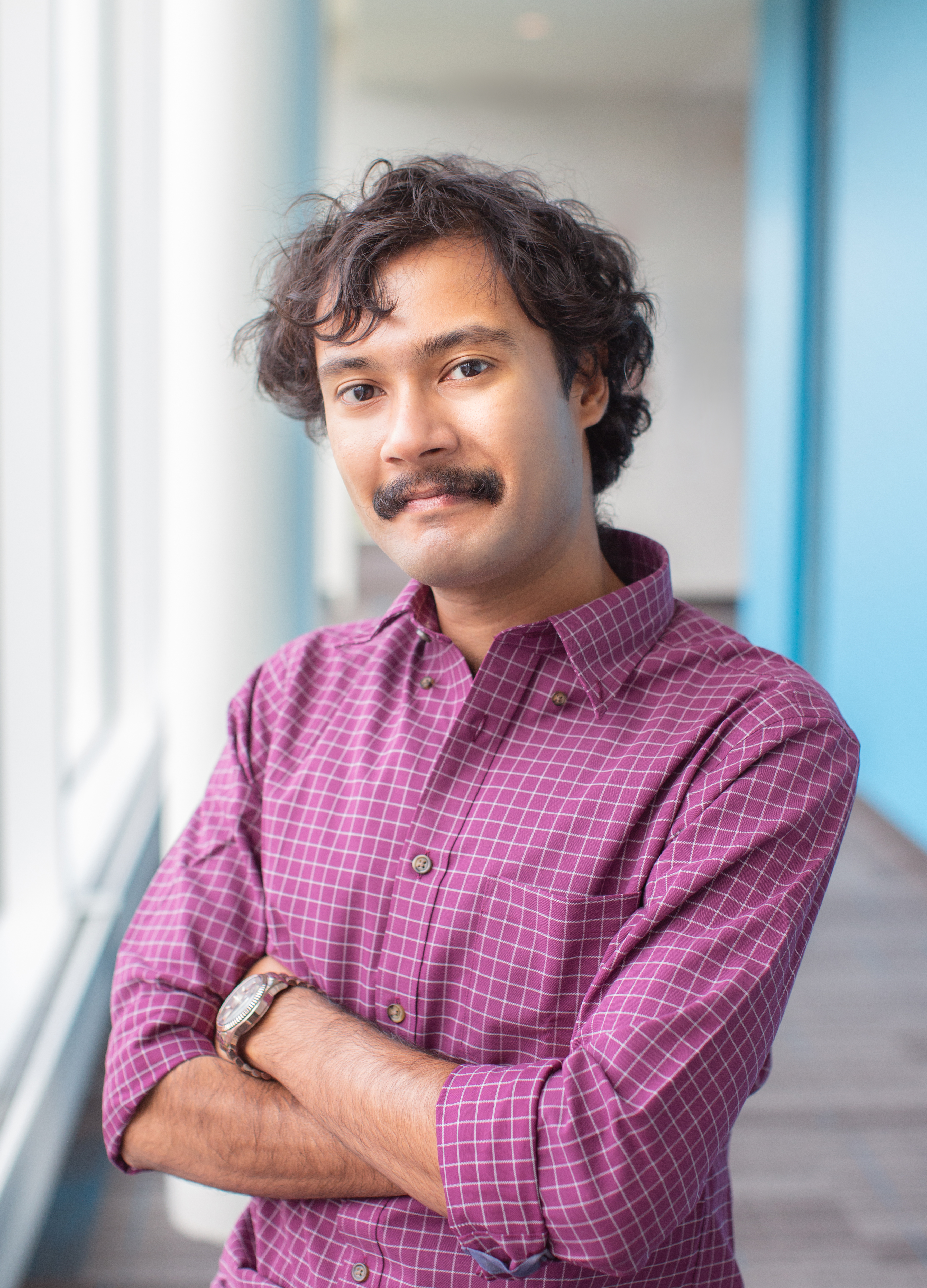
Dr. Moinak Bhaduri is an Assistant Professor in Mathematical Sciences at Bentley University. His research applies stochastic modeling to change-point detection, spatio-temporal processes, and repairable systems. He holds a Ph.D. from the University of Nevada, Las Vegas. His interdisciplinary work spans finance (market spillovers), environmental science (hurricane interactions), legal analytics (defamation trials), and social dynamics (immigration networks). Publications leverage methods like hidden Markov chains and recurrence rate ratios. No awards or student mentorship details are provided.
Persi Diaconis is the Mary V. Sunseri Professor of Statistics and Professor of Mathematics at Stanford University, with a joint appointment in the Symbolic Systems Program. He has held these positions since 1998 and previously served as a professor at Harvard University and Cornell University. His work bridges mathematics and statistics with applications across scientific computing and data analysis. Diaconis is renowned for his research in probability theory, combinatorics, and group theory, with a specialty in rates of convergence of Markov chains . His current research focuses on adapting mathematical developments to practical applications in large real-world simulations. He has opened up new areas in Markov chain theory including rates of convergence to quasi-stationarity and the study of "features" in chains. His work extends to statistical analysis of graph and network data, generalizations of de Finetti's notion of exchangeability, and connections between statistics and graph limit theory. An analysis of his recent publications reveals a strong focus on Markov chain theory, combinatorial probability, and statistical applications. His work demonstrates interdisciplinary connections between pure mathematics, theoretical statistics, and practical computing problems. Diaconis frequently collaborates with researchers like Sourav Chatterjee, Susan Holmes, and Jason Fulman on problems ranging from card shuffling to network analysis. Honorary doctorate from University of St Andrews Mary V. Sunseri Professorship at Stanford University Fellow of the Center for Advanced Study in the Behavioral Sciences (1999-2000) Diaconis has advised numerous doctoral students including Michael Howes, Zhiqi Li, Andrew Lin, and Nathan Tung. His research has been supported by various grants that enable his work on Markov chains, combinatorial probability, and statistical theory. He has developed important connections between theoretical mathematics and practical statistical applications, influencing both academic research and real-world problem solving. While not explicitly mentioned as leading a specific lab, Diaconis collaborates extensively with researchers across Stanford and globally. His work with the Symbolic Systems Program connects mathematics with cognitive science and computer science. His research group focuses on probabilistic and combinatorial problems with applications to data science and scientific computing.
Lihua Lei is an Assistant Professor of Economics at the Stanford Graduate School of Business (GSB) with a courtesy appointment as Assistant Professor of Statistics. They are also a Faculty Fellow at the Institute for Economic Policy Research (SIEPR). Dr. Lei completed their Ph.D. in Statistics at UC Berkeley under the supervision of Professors Peter Bickel and Michael Jordan, followed by postdoctoral research in the Statistics Department at Stanford University with Professor Emmanuel Candès. Dr. Lei's research focuses on the intersection of statistics and economics, with particular expertise in: Econometrics Causal Inference Conformal Inference Multiple Hypothesis Testing Network Analysis High Dimensional Statistical Inference Optimization Their publication record shows a strong trajectory in developing statistically rigorous methods with practical applications. Recent work demonstrates increasing focus on conformal inference techniques, causal effect estimation, and high-dimensional statistical problems. Dr. Lei's research bridges theoretical statistics with real-world economic applications, particularly in developing methods with formal statistical guarantees for policy evaluation and decision making. Dr. Lei has received the 2015-2016 Outstanding Graduate Student Instructor Award and has taught theoretical statistics courses at UC Berkeley, including STAT 210A and STAT 210B with Professors Michael Jordan and Martin Wainwright. As an active methodological researcher, Dr. Lei has developed several widely used R packages including adaptMT, cfcausal, dbh, and transferUQ, which implement their methodological contributions for broader application by the research community. Their ongoing work continues to influence both statistical theory and economic applications through innovative methodological developments.
Prashant Nalini Vasudevan serves as an Assistant Professor and NUS Presidential Young Professor in the Department of Computer Science at the National University of Singapore's Faculty of Computing. His research focuses on the theoretical foundations of cryptography and complexity theory, with particular emphasis on identifying computational hardness assumptions that can support cryptographic constructions. Dr. Vasudevan's research interests span Cryptography , Complexity Theory , and Theoretical Computer Science , with specific focus on statistical zero-knowledge proofs, fine-grained cryptographic primitives, and the intersection of cryptography with data privacy regulations. His work explores how computational hardness can be leveraged to build secure systems while addressing modern privacy concerns such as the right to be forgotten. Analysis of his recent publications reveals a strong trend toward statistical zero-knowledge systems, batch verification techniques, and formal approaches to data deletion. His research bridges theoretical computer science with practical privacy concerns, particularly in the context of machine learning systems and regulatory compliance. The work demonstrates increasing sophistication in cryptographic protocols while maintaining rigorous security proofs. NUS Presidential Young Professorship (2021-2026): Computational Hardness Assumptions and the Foundations of Cryptography NRF Fellowship (2022-2027): Fine-Grained Cryptography Dr. Vasudevan actively mentors multiple PhD students including Haoxing Lin, Yunqi Li, and Kel Zin Tan, along with postdoctoral researcher Rohit Chatterjee. His research group focuses on theoretical cryptography with applications to privacy-preserving systems. Current projects include developing new cryptographic primitives based on fine-grained hardness assumptions and exploring the theoretical foundations of data deletion in machine learning contexts.
Dr. Nick Harvey is a Full Professor in the Department of Computer Science at the University of British Columbia (UBC), with an affiliation to the Department of Mathematics. He leads the Mathematics of Information, Learning and Data (MILD) research cluster. His research focuses on randomized algorithms, machine learning theory, and convex optimization, with notable contributions to algorithm design and analysis. Harvey has taught courses such as Randomized Algorithms (CPSC 436R/536N), Theory of Computing (CPSC 421), and Advanced Algorithms (CPSC 420). He has received prestigious awards including the NeurIPS 2018 Best Paper Award and the CS-Can/Info-Can Outstanding Young Research Prize (2014). His work emphasizes probabilistic techniques in algorithms, including applications in graph theory, streaming algorithms, and privacy-preserving methods. Harvey supervises graduate and undergraduate students, contributing to their academic and professional development. His research group explores cutting-edge topics in algorithmic theory and machine learning, with ongoing projects in algorithmic fairness, optimization, and data science. Key achievements include advancing the Lovász Local Lemma, developing efficient graph sparsification techniques, and pioneering work on the complexity of matrix completion. Harvey's teaching philosophy prioritizes clarity and rigor, reflected in his award-winning pedagogy. He actively engages in academic service, including curriculum development and conference organization.
Dana Yang is an Assistant Professor in the Department of Statistics and Data Science at Cornell University. She joined Cornell in Spring 2022 after completing a Simons-Berkeley fellowship focusing on computational complexity of statistical inference at UC Berkeley. Previously, she was a postdoctoral associate at Duke University’s Fuqua School of Business. Her education includes a B.S. in Mathematics from Tsinghua University and M.A./Ph.D. in Statistics from Yale University. Yang’s research interests span statistical inference, machine learning, and computational complexity. She focuses on problems involving planted structures (e.g., matching recovery), privacy-preserving algorithms, high-dimensional statistics, and graph theory. Her work bridges theoretical foundations with practical applications in data science. Her recent articles explore phase transitions in statistical recovery, private convex optimization, and algorithmic fairness. Notable contributions include studies on planted matching problems, community detection efficiency, and secure sequential learning protocols. No scientific awards were explicitly mentioned in the provided materials. Her advising history and grant involvement remain unspecified in the current data. Dana Yang is affiliated with Cornell’s Comstock Hall facility, though specific lab or team affiliations were not detailed.
Peter Frazier is the Eleanor and Howard Morgan Professor of Engineering at Cornell University, holding a joint appointment in the School of Operations Research and Information Engineering (ORIE) and serving as a Senior Staff Applied Scientist at Uber. He specializes in sequential decision-making under uncertainty, optimal learning, and Bayesian optimization, with applications in healthcare, e-commerce, and transportation. Frazier earned his B.S. from Caltech (2000) and his M.A. and Ph.D. from Princeton University (2007–2009). His research bridges academia and industry, addressing challenges like Uber’s pricing systems and pandemic response strategies at Cornell. He has received prestigious awards, including the NSF CAREER Award and AFOSR Young Investigator Award, and teaches courses in simulation, optimization, and data science. Education: B.S. in Physics/Engineering (Caltech, 2000); M.A./Ph.D. in Operations Research and Financial Engineering (Princeton, 2007–2009). Research Focus: Optimal learning methods, Bayesian optimization, sequential decision-making, and their applications in simulation, healthcare, and e-commerce. Awards: NSF CAREER Award (2012), AFOSR Young Investigator Award (2010), Best Paper Award at ACM EC (2014). Industry Roles: Senior Staff Applied Scientist at Uber (2022–present), leading pricing and data science teams; previously involved in Uber’s surge pricing and Kinetics projects. His work emphasizes real-world impact, such as designing Cornell’s pandemic response strategy using surveillance testing and contributing to Uber’s pricing algorithms. Frazier’s research also explores applications in materials science, drug discovery, and climate modeling, leveraging Bayesian methods and machine learning.
Dr. Nan Ye is a Senior Lecturer in Statistics and Data Science at the University of Queensland's School of Mathematics and Physics. His research focuses on machine learning, statistics, and optimization, with contributions to sequential decision making, weakly supervised learning, and probabilistic graphical models. He holds a PhD in Computer Science from the National University of Singapore (NUS) and double first-class honors in Computer Science and Applied Mathematics from NUS. Previously, he held postdoctoral positions at QUT, UC Berkeley, and NUS. Dr. Ye teaches advanced courses such as STAT3007/7007 Deep Learning, covering topics from foundational machine learning to state-of-the-art deep learning architectures and applications. His work has been published in top venues like NeurIPS, ICML, and UAI, earning awards including the IJCAI-JAIR Best Paper Prize (2022) and UAI Best Student Paper Award (2014). His research interests span theoretical and applied machine learning, including reinforcement learning, optimization algorithms, and their applications in fields like healthcare and environmental science. He actively supervises students in these areas and collaborates on interdisciplinary projects. Dr. Ye's academic profile includes extensive contributions to open-source tools and educational materials, reflecting his commitment to advancing both research and pedagogy in data science.
Professor Hongzhi Yin is a leading academic at The University of Queensland, Australia, serving as a Professor and director of the Responsible Big Data Intelligence Lab (RBDI). His research focuses on predictive analytics, recommendation systems, graph learning, and decentralized intelligence. He holds an ARC Future Fellowship and has received numerous awards, including the 2023 Young Tall Poppy Science Award and multiple best paper awards. His work spans machine learning, data mining, and social media analysis, with over 350 publications and an H-index of 83. He advises PhD students and leads collaborative projects in trustworthy AI, federated learning, and privacy-preserving systems. Education: Completed his PhD at Peking University, receiving recognition for his thesis. Research contributions include foundational work on graph condensation, federated recommendation systems, and generative AI trustworthiness. He serves as an editor for top journals like IEEE Transactions on Knowledge and Data Engineering and ACM Transactions on Information Systems . Awards and Honors: ARC Future Fellowship, Young Tall Poppy Science Award (2023), AI 2000 Most Influential Scholar Honorable Mention (2022-2024), and eight international best paper awards. He is also a recognized leader in data mining and computer science, ranked #52 in Australia's Best Scientists 2025. Research Interests: Trustworthy recommendation systems, graph neural networks, federated learning, and privacy-preserving AI. His lab develops methods for robust graph condensation, secure decentralized systems, and ethical AI applications. Recent work includes surveys on point-of-interest recommendation and graph condensation techniques. Labs/Teams: Leads the Responsible Big Data Intelligence Lab (RBDI), fostering innovation in data science and AI ethics. Collaborates globally with institutions like MIT, Stanford, and Carnegie Mellon on foundational AI research.
Dr Masha Kyuseva is a Research Fellow at the University of Surrey within the Surrey Morphology Group , working on the Leverhulme Trust-funded project Declining Case: Inflectional Loss in Progress (2021-2024). Her research bridges spoken and sign languages, with a focus on typological analysis. Education PhD in Linguistics (2020) - University of Melbourne & University of Birmingham MA in Computational Linguistics (2014) - Higher School of Economics, Moscow BA in Linguistics (2012) - Moscow State University Research Interests center on: Morphological typology (case systems, classifiers, locative affixes) Lexical typology across physical qualities, body parts, and motion events Sign language structure (russian sign language morphology, size/shape specifiers) Computational applications in distributional semantics and corpus studies Linguistic fieldwork on circassian languages Publication Trends span multiple modalities: 2025 work on slavic case loss, 2022 studies of rsl physical qualities, 2020 morphological analysis of sign language classifiers, and earlier computational linguistics contributions.
Da Chen is a Lecturer in the Department of Computer Science at the University of Bath, affiliated with the Bath Institute for the Augmented Human and the Centre for Sustainable Energy Systems. He focuses on advanced computer vision and machine learning techniques, particularly in few-shot learning, incremental learning, video understanding, and their applications to urban planning and sustainability. His work bridges AI with real-world challenges like solar energy prediction, urban mobility optimization, and environmental monitoring. Education: He holds a PhD titled 'The Visual Analysis of Complex Natural Phenomena' (2017), supervised by Prof. P. Hall and Prof. M. Brown. Research Interests: Chen’s research spans generative AI, video object detection, solar radiation modeling, and urban scene analysis. He explores how machine learning can address sustainability goals, such as optimizing bike-sharing systems and predicting energy demands through satellite imagery. His methods often involve GANs, convolutional neural networks, and hybrid sequence encoders. Grants & Collaborations: He co-leads a Royal Society-funded project (2024–2026) on improving transient heat transfer experiments using Bayesian statistics and neural networks. His collaborations span institutions globally, focusing on urban-scale AI applications and environmental science. Labs/Teams: Active in the Bath Institute for the Augmented Human, advancing human-centric AI, and the Centre for Sustainable Energy Systems, integrating computational methods for energy efficiency.
Professor Bo Chen is a leading academic in Operational Research and Management Science at the University of Warwick's Warwick Business School (WBS). He holds a Higher Doctorate (lifetime achievement award) and is a Fellow of the Academy of Social Sciences. His research bridges ORMS, economics, and computer science, focusing on combinatorial optimization, scheduling, game theory, and AI foundations. PhD in Operations Research and Econometrics from Erasmus University Rotterdam Former Senior ESRC Management Research Fellow Visiting Professor at Stanford University Chair Professor at Tsinghua University Research interests include scheduling algorithms, mechanism design, and fairness in resource allocation. Key contributions include randomized strategyproof mechanisms and interdisciplinary auction theory integration. Teaching modules include Mathematical Programming and Statistics for BSc Accounting and Finance students. His 150+ publications span operational research methods, algorithmic game theory, and logistics optimization. Awards include the FAcSS fellowship and Warwick's Higher Doctorate.
Beibo Zhao is an Assistant Professor in the Department of Biostatistics at the University of North Carolina at Chapel Hill (UNC), affiliated with the Gillings School of Global Public Health. He holds a PhD in Biostatistics from UNC (2024) and has served at the Collaborative Studies Coordinating Center (CSCC) since 2015. His research focuses on improving subgroup analysis methodologies in clinical trials and observational studies, particularly in identifying optimal subgroups with differential treatment effects across multiple outcomes. Education: PhD in Biostatistics, UNC Chapel Hill, 2024 MS in Biostatistics, UNC Chapel Hill, 2017 BS in Biomedical Engineering, University of Southern California, 2015 Research Interests: Beibo Zhao specializes in subgroup analysis, survey sampling, and statistical methods for clinical trial design. His work emphasizes translating statistical solutions into actionable research strategies for investigators. Current projects include co-investigator roles in the Hispanic Community Health Study/Study of Latinos (HCHS/SOL), CAMEO (pediatric Crohn’s disease), and BACPAC (back pain consortium). Awards: He has received accolades including the Brenda K. Edwards Fellowship (2022) and MAL-ED Travel Award (2016). His teaching includes BIOS 670: Demographic Techniques I. Collaborations: As part of CSCC, Zhao collaborates on large-scale public health studies, focusing on statistical rigor and methodology innovation. His recent publications address subgroup treatment effects, pediatric urology interventions, and sedentary behavior patterns in Hispanic/Latino populations.
Dr. Zhang Wei is a Grant-Funded Researcher (C) at the University of Adelaide's School of Economics and Public Policy, affiliated with the Future of Employment and Skills Research Centre. He holds a PhD in economics and has held roles including Associate Lecturer at the University of Adelaide and Senior Research Fellow at Flinders University's National Institute of Labour Studies. His research focuses on labour economics, health economics, education economics, international trade, and applied game theory. Current projects include evaluations of the National Disability Insurance Scheme, impacts of ageing populations on productivity, job mismatches, and education's role in labour markets. Education: PhD in economics (thesis on multilateral vs. bilateral trade liberalisation) Research interests span policy-relevant areas such as workforce dynamics, healthcare economics, and trade agreements. He has contributed to projects funded by ARC/NHMRC, NCVER, and government departments, addressing topics like retirement policy, VET completers' job mobility, and economic security. Supervision eligibility includes co-supervision for Masters/PhD candidates.
Thijs van Ommen is an Assistant Professor in the Department of Information and Computing Sciences at Utrecht University. His research centers on causal inference, machine learning, and statistical methodologies for data science applications. He teaches courses in Advanced Machine Learning and core Machine Learning principles, emphasizing algorithmic foundations and real-world implementations. Research explores causal entropy, graphical models, and robust decision-making under uncertainty. Recent publications address causal bandits, information bottlenecks, and efficient algorithms for structural equation models. Van Ommen actively presents at conferences like SIAM Applied Algebraic Geometry and co-chairs sessions at INFORMS. His work bridges theoretical machine learning with practical challenges in causal discovery and adaptive systems.