Prof. Elisabeth Ullmann is an Associate Professor for Scientific Computing and Uncertainty Quantification at the Technical University of Munich (TUM), affiliated with the TUM School of Computation, Information, and Technology and the Department of Mathematics. She holds a PhD from TU Bergakademie Freiberg (2008) and has held academic roles including postdoctoral positions at the University of Bath, University of Hamburg, and University of Maryland. Her research focuses on developing efficient algorithms for uncertainty quantification in partial differential equations with random coefficients, Bayesian inverse problems, and rare event simulation. She is an Associate Editor for the SIAM Journal on Scientific Computing and SIAM/ASA Journal on Uncertainty Quantification , and teaches courses on numerical methods for uncertainty quantification and partial differential equations. Her work emphasizes multilevel Monte Carlo methods, stochastic Galerkin discretizations, and probabilistic numerical methods. Notable contributions include error analysis for rare event probabilities and multilevel estimators for high-dimensional problems. She collaborates internationally and maintains an active research group in Scientific Computing & Uncertainty Quantification at TUM.
Maria Carmen Armero Cervera is a Full Professor in the Department of Statistics and Operations Research at the Faculty of Mathematics, University of Valencia. She is a leading researcher in the Valencia Bayesian Research Group (VABAR), with a sustained record of contributions to Bayesian statistics, queueing theory, and stochastic modeling. Her research interests lie at the intersection of Bayesian inference and applied probability, focusing on Bayesian modeling of queueing systems , hierarchical models , survival analysis , and industrial and medical applications . She has developed methodologies for bulk service queues, patient-ventilator asynchronies, and prostate cancer risk modeling, demonstrating the versatility of Bayesian approaches. Her recent work emphasizes flexible Cox models, joint modeling, and computational methods such as Sequential Monte Carlo. The trends in her publications show a consistent focus on Bayesian methodology applied to real-world stochastic systems , evolving from theoretical queueing models to complex biomedical and industrial applications. Her work frequently appears in top-tier journals like Journal of Statistical Planning and Inference , Queueing Systems , and SORT . She has not been explicitly mentioned as receiving scientific awards in the provided texts. Maria Carmen Armero has advised or collaborated with numerous researchers, including Danilo Alvares, Anabel Forte, and David Conesa. While specific student names are not listed, her editorial contribution and extensive co-authorship indicate a strong role in mentoring and collaborative research. There is no mention of specific grants, but her sustained output suggests external funding support. She is a core member of the Valencia Bayesian Research Group (VABAR), which focuses on advancing Bayesian theory and applications in operations research, medicine, and industry.
Lesly Maria Acosta Argueta is a Lecturer in the Department of Statistics and Operations Research at the Escola Tècnica Superior d'Enginyeria Industrial de Barcelona (ETSEIB), Universitat Politècnica de Catalunya (UPC). She is a member of the UPC ADBD research group, focusing on complex data analysis for business and public health decisions. Her academic background includes a PhD in Technical and Computer Applications of Statistics, Operations Research and Optimization, and a Master of Science in Statistics. PhD: Technical and Computer Applications of Statistics, Operations Research and Optimization Program Master of Science: Statistics Undergraduate: Statistics Her primary research interests include Regression Modelling, Sequential Monte Carlo Methods, and Time Series Analysis, with practical applications in epidemiology and public health. She has made significant contributions to studies on vaccine effectiveness, particularly for pertussis and influenza, using advanced statistical methods such as Bayesian inference and multi-state models. Her work often involves collaboration with public health agencies and spans multiple European countries. The recent publications (2021–2024) show a strong trend toward applied biostatistics in infectious disease epidemiology, with a focus on vaccine effectiveness, disease progression in hospitalized patients, and diagnostic validation. These works are published in high-impact journals such as Vaccine , Scientific Reports , and Journal of Clinical Microbiology , reflecting her expertise in both methodological and applied statistics. She has been involved in several competitive and non-competitive R&D projects, including the PERTINENT sentinel surveillance system for pertussis in EU/EEA countries. These projects highlight her role in designing and analyzing public health surveillance systems and evaluating vaccination programs. Project: Estadística avanzada y Ciencia de Datos 2: Nuevos datos, nuevos modelos, nuevos retos (Competitive R&D) Project: Analysis of complex data for business decisions (Competitive R&D) Project: Suport estadístic de la fase final del Project Epiconcept (PERTINENT) (Non-competitive R&D) Lesly Acosta collaborates extensively with researchers from various institutions, particularly in epidemiology and public health, including Mireia Jané, Carmen Muñoz, and Marta Valenciano. Her work is supported by national research programs and contributes to policy-relevant evidence in vaccination strategies.
Mijke Rhemtulla is an Associate Professor in the Department of Psychology at the University of California, Davis, where she directs the Psychological Models and Measurement Lab. She serves as Associate Editor of Advances in Methods and Practices in Psychological Science , Guest Editor for a Psychometrika Special Issue on Network Psychometrics, Consulting Editor for Psychological Methods , and Statistical Advisor for Psychological Science . She is an active member of the Society for Multivariate Behavioral Methods (SMEP) and Society for the Improvement of Psychological Science (SIPS). Education: Ph.D. in Developmental Psychology, University of British Columbia, 2010 M.A. in Developmental Psychology, University of British Columbia, 2005 B.A. in Psychology, University of Alberta, 2002 Research Focus: Dr. Rhemtulla specializes in structural equation modeling (SEM) , developing methodologies for ordinal and incomplete data analysis , planned missing data designs , and item parceling to minimize bias. Her theoretical work critically examines latent variable interpretation and the implications of network models for psychological constructs, bridging methodological rigor with substantive theory testing. Publication Trends: Her research (2012-2025) demonstrates sustained innovation in psychometric methodology, with recurring themes in missing data solutions, network modeling, and genomic applications of SEM. Recent work emphasizes statistical power, research transparency, and efficiency—particularly in infant studies and complex trait genetics—showcasing interdisciplinary impact across developmental psychology, genomics, and educational research. Scientific Awards: European Research Council Fellowship SSHRC Fellowship (Social Sciences and Humanities Research Council of Canada) NSERC Fellowship (Natural Sciences and Engineering Research Council of Canada) Advising and Grants: Supported by major international and national grants (ERC, SSHRC, NSERC), Dr. Rhemtulla mentors graduate students through advanced coursework in SEM and measurement theory. Her grant portfolio enables methodological development while promoting open science practices through editorial leadership and society involvement. Labs and Teams: She leads the Psychological Models and Measurement Lab at UC Davis, which develops SEM-based tools for psychological research. The lab fosters cross-disciplinary collaboration with geneticists, developmental researchers, and educational psychologists while advocating for transparent, reproducible methods.
Marc Lelarge is a Researcher at INRIA and a part-time Professor in the Department of Computer Science at École Normale Supérieure. He received his PhD in Applied Mathematics from École Polytechnique in 2005, following engineering qualifications from École Nationale Supérieure des Télécommunications and undergraduate studies at École Polytechnique. His research focuses on generative AI for coding and interactive theorem proving, deep learning for graphs and structured data, machine learning, and programming languages. Recent publications emphasize graph neural networks, theorem proving, optimization algorithms, and statistical learning theory. He has received multiple awards including the NetGCoop Best Paper Award (2011), SIGMETRICS Rising Star Award (2012), and Best Publication in Applied Probability Award (2015). He developed the 'Deep Learning: Do It Yourself' course and maintains active educational resources on GitHub. Current affiliations include collaborations with NVIDIA (hardware donations) and Google (cloud computing grants). He advises PhD students including E. Coupechoux and maintains research teams focused on deep learning implementations.
Jeremy HENG is an Associate Professor at ESSEC Business School , specializing in Information Systems, Data Analytics and Operations . He is affiliated with both the France and Singapore campuses, with his current position at ESSEC France since 2024 and prior experience at Harvard University as a Postdoctoral Fellow (2017–2019). His research focuses on Bayesian computation , sequential Monte Carlo methods , diffusion processes , and Monte Carlo variance reduction techniques , particularly for high-dimensional and discretized models. PhD in Statistics (University of Oxford, United Kingdom, 2017) BSc in Statistics (University College London, United Kingdom, 2012) The majority of his publications address Bayesian inference , Monte Carlo methods , and stochastic differential equations , with applications in financial econometrics , generative modeling , and optimal control . He has received the 2022 Blackwell-Rosenbluth Award for his contributions to Bayesian analysis and has served as Co-Editor-in-Chief of Statistics and Computing (2022–2023).
Martin J. Wainwright is the Cecil H. Green Professor at the Massachusetts Institute of Technology (MIT) , affiliated with the Department of Electrical Engineering and Computer Science (EECS) and the Department of Mathematics . He is also associated with the Statistics and Data Science Center , the Laboratory for Information and Decision Systems , and the Institute for Data, Systems and Society . His research bridges machine learning , high-dimensional statistics , and information theory , with a focus on theoretical guarantees for algorithms in reinforcement learning, optimization, and graphical models. Books : High-Dimensional Statistics: A Non-Asymptotic Viewpoint (2019, Cambridge University Press), Statistical Learning with Sparsity: The Lasso and Generalizations (2015, CRC Press). Research Themes : Statistical and computational trade-offs, robustness in adaptive learning, posterior contraction rates, and decentralized estimation. His recent work explores non-asymptotic analysis , stochastic approximation , and instance-dependent guarantees in reinforcement learning and optimization. Key contributions include minimax optimality in value estimation, variance-reduced Q-learning , and adaptive inference under elliptical constraints. Awards : IMS Medallion Lecturer , COPSS Presidents' Award , Loève Prize in Probability , Fellow of the Institute of Mathematical Statistics , NIPS Outstanding Paper Award .
Dr. Lukas Pflug is a researcher at the Department of Mathematics, School of Engineering, Friedrich-Alexander University Erlangen-Nürnberg (FAU). His work spans applied mathematics, chemical engineering, and materials science with a focus on nonlocal conservation laws, topology optimization, and nanoparticle synthesis. Primary affiliation: FAU Erlangen-Nürnberg Research themes: Nonlocal PDEs, Robust Optimization, Plasmonics Key contributions include: Developing mathematical frameworks for nonlocal conservation laws and their singular limit problems Advancing topology optimization techniques for photonic crystals and composite materials Pioneering simulation-driven approaches in nanoparticle synthesis and characterization His methodology integrates theoretical analysis with computational implementation, producing 15+ peer-reviewed publications in high-impact journals like Advanced Optical Materials and SIAM Journal on Applied Mathematics between 2023-2025.
Paul Fearnhead is Professor of Statistics at Lancaster University since 2001, where he started as a lecturer. His academic journey includes a DPhil with Peter Clifford and a post-doctoral position with Peter Donnelly at the University of Oxford. He has been Editor of Biometrika since January 2018. Education : DPhil in Statistics (Oxford), Post-doctoral research (Oxford) Research Interests : Computational statistics with focus on sequential Monte Carlo methods, forward-backward filters, and changepoint detection algorithms; population genetics including bacterial inference for Campylobacter jejuni; Bayesian inference for diffusions and continuous-time stochastic processes. Research Funding : Lead investigator for EPSRC grants on Statistical Scalability (2016-2022), Health Sciences Bayesian Data Science (2018-2023), and CoSInES program (2018-2023) involving multiple UK institutions. Scientific Awards : 2006 Adam's Prize 2007 Royal Statistical Society Guy Medal in Bronze His collaborative work includes teaching the 2012 Modern Computational Statistics course through the Graduate Training Programme and interdisciplinary research on US college basketball ranking systems.
Víctor Elvira is a Senior Lecturer at the University of Edinburgh, specializing in Bayesian inference, sequential Monte Carlo methods, and computational statistics. He serves as an Associate Editor for IEEE Transactions on Signal Processing and organizes major academic events like the Sequential Monte Carlo Workshop (SMC 2024) and Summer School in Bayesian Filtering (SSBF 2024) . Key research areas: Bayesian filtering, importance sampling, state-space modeling, and machine learning applications Recent work focuses on sparse graphical models, differentiable particle filters, and Monte Carlo optimization Scientific Awards : 2025 EURASIP Early Career Award 2024 ELLIS Fellow 2023 Leverhulme Research Fellow 2021 Alan Turing Fellow 2018 Fulbright & Marie Curie Fellow 2018 IEEE Senior Member He has delivered PhD courses on Monte Carlo methods and Bayesian filtering in Madrid (2025) and Barcelona (2025), and maintains open-access software implementations for publications like Sparse Graphical Linear Dynamical Systems and Graphical Inference in Linear-Gaussian State-Space Models .
David Ginsbourger is a Professor and Head of Research Group at the Institute of Mathematical Statistics and Actuarial Science (IMSV) within the University of Bern, Switzerland. He maintains dual affiliations through his role at IMSV and as a member of the Multidisciplinary Center for Infectious Diseases (MCID), reflecting interdisciplinary engagement across statistical methodology and applied domains. His research program centers on advanced statistical methodologies with emphases on Gaussian process modeling, uncertainty quantification, and experimental design for computer experiments. Key contributions include novel kernel constructions for equivariant systems, sequential design strategies for excursion set estimation, and efficient computational frameworks for spatial distributional modeling. His work bridges theoretical statistics with practical applications in agriculture, chemoinformatics, environmental science, and risk assessment, demonstrating consistent innovation in handling complex prediction problems under uncertainty. Analysis of his 15 most recent publications (2024-2025) reveals persistent methodological development in Gaussian process theory alongside expanding application domains. Recurring themes include integration-free kernel design for structured data, rare event probability estimation, and multivariate forecast calibration. His research exhibits strong continuity in addressing computational challenges for large-scale inverse problems while increasingly incorporating domain-specific constraints from fields like molecular chemistry and agricultural science. Ginsbourger leads a dedicated research group at IMSV focused on advancing statistical frameworks for computer experiments and uncertainty quantification. The group maintains active collaborations across disciplines, particularly evident in recent work connecting statistical methodology to infectious disease modeling through MCID affiliations and agricultural optimization projects.
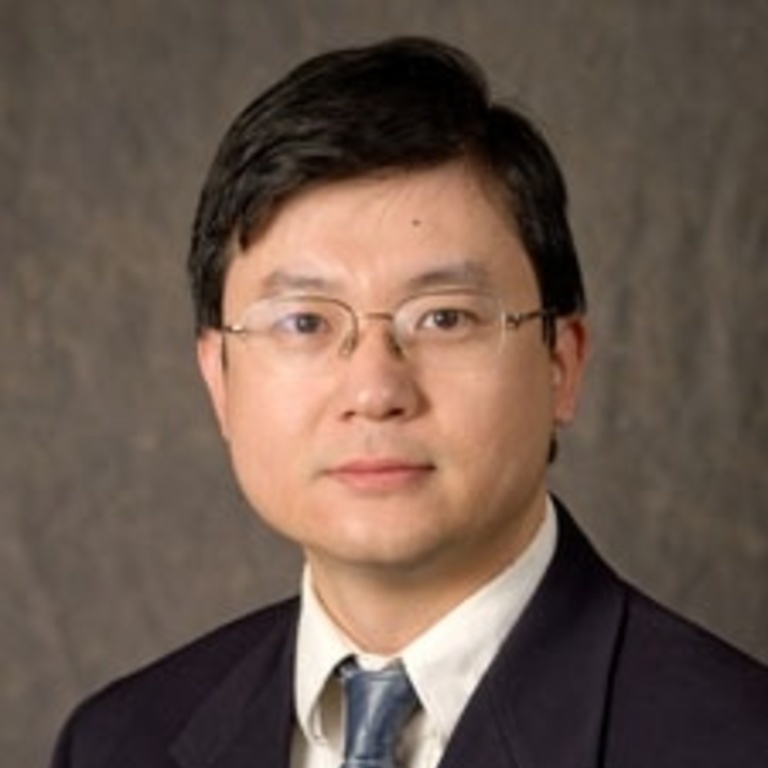
Yong Chen serves as a Professor in the Department of Industrial and Systems Engineering within the College of Engineering at the University of Iowa. His academic appointment centers on advancing methodologies in industrial engineering with emphasis on system reliability and optimization across diverse applications. Chen's research spans Industrial Engineering, Reliability Engineering, and Maintenance Optimization, with significant contributions to Statistical Process Control, Bayesian Statistics, and Machine Learning applications. His work develops novel frameworks for condition-based maintenance, multi-component system optimization, and IoT-enabled industrial analytics, addressing critical challenges in manufacturing quality control and system reliability. The integration of stochastic modeling and data-driven approaches characterizes his methodological innovations. Analysis of his 15 most recent publications (2016-2025) reveals a dominant research trajectory in Markov decision processes for maintenance optimization (35% of publications), Bayesian modeling for process monitoring (27%), and IoT/data analytics applications (13%). His work demonstrates increasing interdisciplinary expansion from traditional manufacturing systems into healthcare (dementia care analysis) and renewable energy sectors, while maintaining core focus on reliability engineering fundamentals. Scientific awards: No scientific awards were mentioned in the provided text. Advising and grants: The available documentation contains no information regarding doctoral students, postdoctoral researchers, or research funding sources. His academic profile focuses exclusively on research outputs and methodological contributions without reference to mentoring activities or sponsored projects.
Matthijs Spaan is a Professor of Reliable AI Algorithms at Delft University of Technology , where he co-directs the Sequential Decision Making group in the Department of Intelligent Systems (EEMCS faculty). Previously, he served as an Associate Professor in the Algorithmics group at TU Delft and as a Senior Research Scientist at the Institute for Systems and Robotics, Instituto Superior Técnico (Lisbon). He holds a PhD in Computer Science (2006) and an MSc in Artificial Intelligence (2002) from the University of Amsterdam. His research focuses on safe and robust reinforcement learning , planning under uncertainty using POMDPs/Dec-POMDPs, and sequential decision-making algorithms . He has contributed to embedding epistemic uncertainty in deep reinforcement learning, safe policy improvement, and constrained decision-making frameworks for smart energy systems, robotics, and traffic optimization. His work includes 15+ key publications in top venues like AAAI, IJCAI, ICAPS, and AAMAS, spanning 2024 to 2011. He has advised four PhD students to completion and co-organized major workshops such as the Lorentz workshop on Rigorous Automated Planning (2022) and AAAI 2022 program. His professional service includes editorial roles at AI Magazine and Journal of Artificial Intelligence Research , area chair positions, and leadership in IJCAI, ICAPS, and IFAAMAS.
Pan Xu is a tenure-track Assistant Professor at Duke University with joint appointments in the Department of Biostatistics & Bioinformatics , Department of Computer Science , and Department of Electrical & Computer Engineering . He earned his Ph.D. in Computer Science from the University of California, Los Angeles (2021) and completed postdoctoral training at the California Institute of Technology (2021-2022) . Research Focus: Machine Learning, Reinforcement Learning, Optimization, and High-Dimensional Statistics with applications in Bioinformatics and Healthcare. Key Contributions: Developing algorithms for robust sequential decision-making under uncertainty, improving Thompson Sampling efficiency, and advancing multi-agent reinforcement learning. Scientific Recognition: NSF award for exploration in decision-making (2023) Whitehead Scholar award (2023) PIMCO Postdoctoral Fellowship (2022) Best Paper Award at ACM FAccT (2023) Teaching: Offers graduate courses in machine learning and decision-making frameworks. Service: Serves as Area Chair for ICML, NeurIPS, and AAAI; Action Editor for TMLR.
Aleksandar Karač is a Professor at the Faculty of Mechanical Engineering, Traffic Engineering and Aeronautics of the University of Zenica. His research focuses on computational mechanics of materials, finite volume method development for multiphysics problems, and Monte Carlo simulations of percolation, adsorption, and diffusion processes. Triangular lattice modeling for percolation and jamming dynamics Fluid-structure interaction using OpenFOAM solvers Bitumen rejuvenation through conductive capsule technology He has published extensively on percolation properties in random sequential adsorption systems, particle diffusion dynamics, and numerical methods in engineering. His work bridges fundamental statistical physics with applied engineering challenges. He teaches courses in mechanics of materials, numerical methods, and engineering simulations, contributing to both undergraduate and graduate programs. His research integrates computational modeling with practical applications in civil, mechanical, and bioengineering domains.