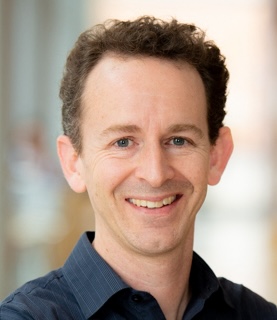
Anne H Han is Clinical Instructor of Psychiatry and Behavioral Sciences at University of Southern California, serving as Assistant Director of Academic Embedded Counseling for USC Student Health. Her work focuses on clinical education and mental health service delivery. Research interests include optimization under uncertainty, risk-adaptive decision making, and computational methods for nonconvex/nonsmooth problems. Her extensive publications demonstrate consistent focus on developing robust mathematical frameworks for complex systems.
Linjie Xu is a Visiting Professor at Queen Mary University of London's School of Electronic Engineering and Computer Science. His research focuses on artificial intelligence, particularly in reinforcement learning, machine learning, and game-playing algorithms. Key interests include state abstraction techniques, multi-agent systems, Monte Carlo tree search, and adversarial defense mechanisms for large language models. His academic work spans strategy game AI, optimization algorithms, and computational game theory. Xu has contributed to advancing sample-efficient methods in multi-agent reinforcement learning and developing elastic Monte Carlo tree search frameworks. His recent publications emphasize practical applications of state abstraction and cross-domain decision transformers. No scientific awards or grants are explicitly mentioned in the provided materials. He currently holds no listed advisees or doctoral students. Contact him at linjie.xu@qmul.ac.uk for collaboration opportunities.
Adam Johansen is a Professor of Statistics at the University of Warwick, specializing in computational statistics, sequential Monte Carlo algorithms, Bayesian methodology, and gradient flows. His research spans theoretical advancements and practical applications in simulation-based inference. Current projects: OCEAN (ERC Synergy Grant for next-gen ML algorithms), CoSinES, and APTS (co-director until 2023) Research interests focus on Monte Carlo methodology , Bayesian statistics , and sequential inference . Recent work explores scalability in decentralized systems, gradient flows for sampling, and robust algorithmic frameworks. His 15 most recent publications emphasize particle methods, convergence analysis, and mathematical statistics. He supervises a research group with PhD students including Rocco Caprio, Shu Huang, and Usman Ladan, while contributing to editorial roles at the Journal of the Royal Statistical Society: Series B and London Mathematical Society Newsletter . He developed the SMCTC and RcppSMC libraries for sequential Monte Carlo applications.
Dr. Jem Corcoran is an Associate Professor in the Department of Applied Mathematics at the University of Colorado Boulder. His research focuses on applied probability and computational statistics, with an emphasis on developing advanced Monte Carlo methods and Bayesian techniques. He specializes in MCMC (Markov Chain Monte Carlo) algorithms, perfect sampling, and stochastic simulation across disciplines such as image processing, chemical reaction networks, and econometric modeling. His work integrates theoretical rigor with practical applications, addressing challenges in rare event simulation, Bayesian network inference, and high-dimensional data analysis. Notably, he has contributed to advancements in Gibbs sampling, particle filtering, and the application of coupler methods for continuous distributions. His research also explores computational efficiency in stochastic processes and algorithmic design for complex systems. Dr. Corcoran’s scholarly contributions span over two decades, with publications on topics ranging from perfect sampling in Kac equations to Bayesian fusion of particle estimates. His methodologies have been applied in fields such as systems biology, quantum mechanics, and financial time series analysis. Despite his extensive publication record, no academic awards or grants are explicitly mentioned in the provided text.
Csaba Szepesvári is a Professor in the Department of Computing Science at the University of Alberta and a Senior Staff Research Scientist at DeepMind, leading the Foundations team. He holds the Canada CIFAR AI Chair and is a Fellow at Amii. His research focuses on reinforcement learning (RL), online learning, and theoretical foundations of sequential decision-making. Key areas include exploration-exploitation strategies, Markov Decision Processes, and stochastic control. He has co-authored over 225 publications, including seminal works like Bandit Algorithms (2020) and Algorithms for Reinforcement Learning (2010). His academic affiliations include the Reinforcement Learning & Artificial Intelligence Lab (RLAI) at the University of Alberta and editorial roles at journals like Mathematics of Operations Research and the Journal of Machine Learning Research. Awards include the ECML/PKDD Test of Time Award (2016) and recognition for contributions to ICML, UAI, and other conferences. His work bridges theoretical insights with practical applications in AI, robotics, and automated decision systems. Research interests span efficient RL algorithms, statistical guarantees for offline learning, and the intersection of optimization and uncertainty quantification. Collaborations with institutions like DeepMind emphasize foundational advances in AI, while his teaching spans graduate and undergraduate courses in machine learning and algorithms. Key achievements include pioneering contributions to exploration strategies in bandits and RL, developing PAC-Bayes bounds for neural networks, and advancing understanding of double descent phenomena in overparameterized models. His lab (RLAI) is a hub for cutting-edge research in RL theory and applications.
Julien Bect is an Associate Professor at CentraleSupélec, affiliated with the Laboratoire des Signaux et Systèmes (L2S). His primary research focuses on Bayesian optimization, Gaussian processes, uncertainty quantification, and sequential design of experiments. He has collaborated extensively with researchers such as Emmanuel Vazquez and Paul Feliot, contributing to advancements in statistical modeling and computational methods for engineering and scientific applications. His work emphasizes the development of efficient algorithms for estimating probabilities of failure, excursion sets, and quantile-based inversion in complex systems. Notable contributions include methodologies for multi-fidelity computer experiments, Bayesian subset simulation, and adaptive experimental design. His research bridges theoretical foundations in statistics with practical applications in fields like reliability engineering, food safety, and electrical systems. Bect has published numerous articles in prestigious journals such as Technometrics , SIAM/ASA Journal on Uncertainty Quantification , and Bernoulli , showcasing his expertise in statistical inference and optimization. His recent work explores novel approaches in quantile set inversion and complex-valued frequency response modeling, reflecting his commitment to advancing methodologies for real-world stochastic systems.
Martin J. Wainwright is the Cecil H. Green Professor at the Massachusetts Institute of Technology (MIT) , affiliated with the Department of Electrical Engineering and Computer Science (EECS) and the Department of Mathematics . He is also associated with the Statistics and Data Science Center , the Laboratory for Information and Decision Systems , and the Institute for Data, Systems and Society . His research bridges machine learning , high-dimensional statistics , and information theory , with a focus on theoretical guarantees for algorithms in reinforcement learning, optimization, and graphical models. Books : High-Dimensional Statistics: A Non-Asymptotic Viewpoint (2019, Cambridge University Press), Statistical Learning with Sparsity: The Lasso and Generalizations (2015, CRC Press). Research Themes : Statistical and computational trade-offs, robustness in adaptive learning, posterior contraction rates, and decentralized estimation. His recent work explores non-asymptotic analysis , stochastic approximation , and instance-dependent guarantees in reinforcement learning and optimization. Key contributions include minimax optimality in value estimation, variance-reduced Q-learning , and adaptive inference under elliptical constraints. Awards : IMS Medallion Lecturer , COPSS Presidents' Award , Loève Prize in Probability , Fellow of the Institute of Mathematical Statistics , NIPS Outstanding Paper Award .
Filippo Ascolani is an Assistant Professor of Statistical Science at Duke University. His research focuses on Bayesian statistics, particularly nonparametric methods and computational techniques for complex data structures. He develops Monte Carlo methods like Sequential Monte Carlo samplers for high-dimensional Bayesian inference. His work addresses scalability challenges in tree-based machine learning models and explores Bayesian approaches for interpretable decision-making in healthcare applications. Recent publications examine dimension-free mixing times for Gibbs samplers and novel MCMC methodologies.
Li Ma is Professor of Statistical Science and Biostatistics at Duke University. She develops Bayesian methods for high-dimensional data, with applications in image compression, cytometry, and microbiome research. Her recent work includes probabilistic image representation techniques, hidden Markov Pólya trees for distribution modeling, and graphical models for microbiome data. She has contributed to pain research through genetic association studies and phenotypic clustering. Ma leads NIH- and NSF-funded projects on statistical modeling of microbiome data and scalable inference. She is an ISBA and ASA Fellow and holds a CAREER award.
John Cameron Zito is an Assistant Research Professor in the Department of Statistical Science at Duke University. His research specializes in Bayesian inference methodologies, with particular expertise in sequential Monte Carlo algorithms for complex time series models involving stochastic volatility. Education: Ph.D., Rice University (2024) B.A., Kenyon College (2016) Research Interests: Bayesian inference for vector autoregressions Stochastic volatility modeling Sequential Monte Carlo techniques Time series analysis frameworks His publications focus on developing computationally efficient Bayesian methods for high-dimensional time series problems, particularly in econometric applications.
Paige Brooks is an Associate Professor at the University College London AI Centre and a Turing Fellow at the Alan Turing Institute. She specializes in interpretable machine learning, probabilistic programming, and generative models with applications in environmental science and chemistry. Her work includes seasonal Arctic sea ice forecasting and molecular synthesis pathway modeling. Brooks holds a DPhil from the University of Oxford and has contributed to foundational research in Bayesian inference and sequential Monte Carlo methods. Research highlights include collaborations on Arctic ice prediction with the British Antarctic Survey and development of the Molecule Chef framework for generating novel chemical compounds. She is also a statistical ambassador for the Royal Statistical Society, emphasizing ethical and transparent AI practices. Education: DPhil in Machine Learning at University of Oxford (under Frank Wood) Key Contributions: Probabilistic programming frameworks, interpretable ML, environmental AI Affiliations: Alan Turing Institute (Turing Fellow), Royal Statistical Society Her research spans theoretical advances in generative models and practical applications in domains like climate science and drug discovery. Recent work emphasizes model reliability and generalization in dynamic environments. Scientific Awards: Turing Fellowship, Royal Statistical Society Statistical Ambassador Labs/Teams: UCL AI Centre, Turing Institute's Environmental AI group
Radu Herbei is a Professor of Statistics at The Ohio State University, affiliated with the Department of Statistics. He joined the faculty in 2006 and has been funded by NSF and ONR. His research focuses on statistical inference for stochastic processes, including stochastic differential equations and stochastic partial differential equations, with an emphasis on 'exact' inference methods that avoid user-selected grids or approximations. He develops exact Markov chain Monte Carlo (MCMC) techniques using approximations of intractable probability density functions and explores high-performance GPU computing to address computational challenges. His education includes a PhD in Statistics from Florida State University (2006). Research areas include Bayesian statistics, Monte Carlo methods, inverse problems, and uncertainty quantification. Notable contributions include work on the Bernoulli factory algorithm for exact Bernoulli random variates and applications in phylogenetics and environmental modeling. Collaborations span computational biology, oceanography, and ecological systems. Key publications include developments in taxicab MCMC samplers for discrete spaces, Bayesian function registration, and statistical inference for stochastic differential equations. His work bridges theoretical advancements with computational tools, addressing complex modeling challenges in diverse scientific domains.
Professor Sumeetpal Singh holds the Tibra Foundation Chair in Mathematical Sciences at the University of Wollongong's Faculty of Engineering and Information Sciences, School of Mathematics and Applied Statistics (since 2023). Previously, he served as Professor of Engineering Statistics at the University of Cambridge (2007–2023) and as a Fellow and Director of Studies at Churchill College, Cambridge. His research focuses on Bayesian Statistics, Computational Statistics, Probabilistic Machine Learning, and Time-series analysis, with notable contributions to particle filtering, Monte Carlo methods, and statistical inference. He has supervised research on topics like 'American options and their application in political science'. His work has been recognized with awards such as the M. Barry Carlton award (2014). Singh is actively involved in editorial roles, including serving as Associate Editor for the Annals of Applied Probability and Senior Associate Editor for ACM Transactions on Probabilistic Machine Learning . Current research includes grants like the Air Force Office of Scientific Research-funded project on Bayesian Spatio-Temporal Analysis (2023–2025). Teaching includes modules like Statistical Modelling and Analysis of Time-series Data and Statistical Inference and Introduction to Model Building . His publications span computational statistics, signal processing, and machine learning, emphasizing methodological innovation and theoretical rigor.
Hyebin Song is an Assistant Professor of Statistics at the Pennsylvania State University since 2020. She holds a PhD in Statistics from the University of Wisconsin-Madison (2020) and a BA in Applied Statistics from Yonsei University (2012). Previously, she worked as a Statistician at the Bank of Korea. Her research focuses on developing statistical methodologies for high-dimensional and complex datasets, with applications in neuroscience, systems biology, and computational protein modeling. Key areas include semi-parametric inference, statistical learning, and computational biology. She has developed influential software tools like PUlasso for high-dimensional variable selection and contributed to advancements in Markov chain autocovariance estimation. Her work has been recognized with the ASA SLDS Student Paper Competition Award (2018). Education: PhD in Statistics (UW-Madison, 2020), BA in Applied Statistics (Yonsei University, 2012). Current affiliations include the Department of Statistics at Penn State and collaborations with computational biology labs. She actively advises PhD students in statistical methodology and applications. Research interests span high-dimensional statistics, shape-constrained inference, and statistical computing, with applications to protein structure analysis and functional genomics. Notable software includes the 'momentLS' package for Markov chain estimation and 'pudms' for deep mutational scanning analysis.
Matthew T Harrison is an Associate Professor in the Division of Applied Mathematics at Brown University. He is affiliated with the Carney Institute for Brain Sciences, Data Science Institute, Center for Computational Brain Science, and Center for Statistical Sciences. Education : PhD (2005) and ScM (2000) from Brown University, BA (1998) from University of Virginia. Research interests : His work spans Statistics (conditional inference, multiple hypothesis testing), Neuroscience (multi-neuronal spiking data, exploratory analysis), Information theory (rate distortion theory, model selection), and Computer vision (structured models, perceptual organization). Collaborations extend to brain-computer interfaces and ecological modeling. Publication trends : Recent articles focus on Bayesian filtering, statistical neuroscience methods, mixture models, and computational approaches to neural data. Themes include handling high-dimensional data, robust inference, and applications to biological and machine intelligence. Scientific awards : Phi Beta Kappa (1997) Jefferson Scholarship (1994-1998) Howard Hughes Medical Institute Predoctoral Fellowship (1998) National Defense Science and Engineering Graduate Fellowship (1998-2001) IBM Watson Research Award (2014) Philip J. Bray Teaching Award (2014) Advising : Mentors current PhD student Sicheng Liu and has advised former students including Jeffrey Miller (Harvard), Dahlia Nadkarni (Akamai), and Mona Khoshnevis. Collaborates with institutions like Carney Institute and Data Science Institute.