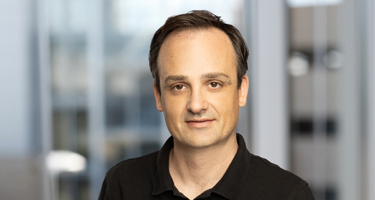
Andrew Wait is an Associate Professor at the School of Economics , University of Sydney , with a PhD from Australian National University and a Bachelor of Economics (Honours) from University of Adelaide. His research spans organizational economics, industrial organization, and game theory. Key areas: industrial organization, organizational economics, game theory, contract theory, innovation, and corporate governance. His publications focus on strategic decision-making in firms, market entry dynamics, sequential investment, and delegation models. Recent work explores diversity dynamics, deep learning applications in energy markets, and power structures in teams. Scientific contributions include co-founding the Annual Organizational Economics Workshop and collaborating with Vladimir Smirnov and Kieron Meagher on organizational structures and trust dynamics.
Ashutosh Trivedi is an Associate Professor of Computer Science at the University of Colorado Boulder, currently on leave from his position as Assistant Professor in the Department of Computer Science and Engineering at the Indian Institute of Technology Bombay. He is affiliated with multiple research initiatives including the Centre for Formal Design and Verification of Software (CFDVS) at IIT Bombay, Free and Open Source Software for Education (FOSSEE), and the Indo-French project on Algorithmic Verification of Real-Time Systems (AVeRTS). At CU Boulder, he leads the Programming Languages and Verification (CUPLV) research group focusing on trustworthy AI systems. Trivedi's research centers on bridging formal methods with artificial intelligence to create more trustworthy systems. His work spans formal verification of cyber-physical systems, reinforcement learning with formal guarantees, and developing techniques for ensuring software fairness and accountability. He specializes in using formal languages, automata, and logic to transform vague natural-language instructions into precise specifications for AI systems. His recent projects include developing reinforcement learning algorithms for cardiac pacemaker design based on formal safety requirements, using SAT solvers to ground large language model outputs in logical reasoning, and encoding state representations in reinforcement learning using formal languages. His publication trends reveal a strong focus on neurosymbolic approaches that combine neural networks with symbolic reasoning, particularly for safety-critical applications. Recent work demonstrates increasing integration of formal methods with reinforcement learning, with applications spanning medical devices, tax preparation software, and puzzle-solving AI. His research shows a clear trajectory toward making AI systems more explainable, accountable, and verifiable through principled mathematical frameworks. Distinguished Paper Award at CAV for Regular Reinforcement Learning (2024) NeuS 2025 Disruptive Idea Award for Stochastic Neural Simulation Relations for Transferring Control under Uncertainty ACM Senior Member recognition (2024) Royal Society Wolfson Visiting Fellowship (2024) Trivedi has successfully advised multiple PhD students to completion, including Shadi Tasdighi Kalat (2025), Mateo Perez (2025), John Komp (2024), Vishnu Murali (2024), and Taylor Dohmen (2024). His teaching portfolio includes foundational courses in automata theory, digital logic design, and cyber-physical systems at both IIT Bombay and CU Boulder. He has served on program committees for major conferences including FSTTCS, HSCC, and FORMATS, and organized workshops such as ICLA 2015 and ALC 2015. As leader of the CUPLV research group, Trivedi directs projects focused on formal verification of AI systems, reinforcement learning with safety guarantees, and software fairness. His group collaborates with medical researchers on cardiac device verification and with legal scholars on tax software accountability, reflecting his commitment to applying formal methods to real-world problems with significant societal impact.
Lakhdar Sais is a Professor of Computer Science at the Centre de Recherche en Informatique de Lens (CRIL), CNRS UMR 8188, at Université d'Artois, Faculty of Jean Perrin Sciences in Lens, France. His research focuses on search and representation problems in Artificial Intelligence, including propositional satisfiability, quantified boolean formulas, constraint programming, knowledge representation and reasoning, data mining, and AI applications in Social and Human Sciences. He has supervised numerous PhD students throughout his career, with recent students including David ING (2021-present) working on migration data knowledge extraction, and previously Ikram NEKKACHE (2021), Sofiane TOUATI (2021), and Kahina BOUCHAMA (2020). His research has been recognized with multiple awards including best paper awards at SAT'11 and ICTAI'2009, and first place in the International SAT 2009 competition. His current research projects include the ANR project HYCI (2023-2026) on Hyper-places, Crises, Migrations and Inequalities, Project ERA (2022-2025) on producing new knowledge in juvenile justice and mental health, and ANR project POSTCRYPTUM (2021-2023) on algebraic cryptanalysis for post-quantum cryptography. He has also edited the Handbook of Parallel Constraint Reasoning (Springer, 2018). Scientific Awards: Best paper award at SAT'11 for 'On freezing and reactivating learnt clauses' Best paper award at ICTAI'2009 for 'Learning for Subsumption' ManySAT - First rank at International SAT 2009 competition (Parallel Track) LySAT - Two bronze medals at International SAT 2009 competition (Sequential Track) ManySAT - First rank at SAT Race 2008 competition Professor Sais has taught numerous courses including Artificial Intelligence, Constraint Programming, Knowledge Representation and Reasoning, Expert Systems, Complexity Theory, Advanced Data Structures, Algorithmics, and Functional Programming. He has served as leader of the inference and decision process research group at CRIL (2002-2013) and as Delegate Director of the CRIL laboratory (2013-2018).
Assoc. Prof. Dr. Algirdas Lančinskas is a Senior Researcher and Associate Professor at Vilnius University's Faculty of Mathematics and Informatics, working within the Global Optimization Group at the Institute of Mathematics and Informatics. His academic career spans over a decade at Vilnius University, where he has progressed from Junior Researcher to his current position as Associate Professor and Chief Researcher on multiple projects. He maintains an active international research profile with collaborations across Europe. Doctor of Physical Sciences (Informatics, 09P), Vilnius University Institute of Mathematics and Informatics, 2013 Dissertation: Parallelization of random search global optimization algorithms Dissertation supervisor: Prof. Dr. (HP) Julius Žilinskas Dr. Lančinskas specializes in global optimization, particularly competitive facility location problems, discrete optimization, and parallel computing. His research bridges theoretical optimization methods with practical applications in business, spatial economics, and public health. He has made significant contributions to nature-inspired optimization heuristics, developing novel algorithms for solving complex location problems with applications ranging from business expansion strategies to pandemic testing protocols. His work often involves multi-objective optimization approaches and the development of efficient parallel algorithms to handle computationally intensive problems. Analysis of his recent publications reveals a strong focus on competitive facility location modeling, with particular expertise in discrete optimization problems where multiple competitors vie for market share. His research increasingly incorporates robustness considerations under uncertainty in customer behavior, reflecting the growing complexity of real-world location decisions. The integration of ranking-based approaches with traditional optimization techniques represents a distinctive methodological contribution across his work. Dr. Lančinskas actively supervises doctoral students and has served on multiple dissertation defense councils. His research is supported by significant funding from the Research Council of Lithuania and international collaborations through COST actions. He has led multiple research projects focused on optimization algorithm development and their applications. As a member of the Global Optimization Group, he contributes to Vilnius University's strong tradition in optimization research, collaborating closely with Prof. Julius Žilinskas and international partners across Spain, the UK, and other European institutions. His work exemplifies the institute's commitment to both theoretical advances and practical applications of optimization methods.
Eric V. Slud is a Professor in the Statistics Program within the Department of Mathematics at the University of Maryland, College Park. He has taught numerous graduate-level statistics courses including Mathematical Statistics, Categorical Data Analysis, and High-Dimensional Statistics since at least 2017. Dr. Slud's research spans several key areas of mathematical statistics and probability. His work focuses on: Census statistics, particularly demographic modeling of nonresponse to national surveys Small Area Estimation (SAE) with applications to the SAIPE program Survival data analysis including semiparametric inference and clinical trial design Meta-analysis in biostatistics Pharmaceutical statistical methods Large-scale data problems with emphasis on cross-classified data His publications demonstrate continued contributions across these domains, with particular emphasis on small area estimation methodologies, survival analysis techniques, and applications in survey statistics. Dr. Slud has developed innovative approaches to weighting adjustment, nonresponse correction, and estimation with complex survey data. Dr. Slud has advised several PhD students including Yang Cheng (2004), Sophie Tsou (2005), and others working on topics ranging from Factor Analysis to Survival Data. He has collaborated extensively with researchers at the Census Bureau and FDA. Dr. Slud maintains active research programs through multiple Research Interaction Teams (RITs) at the University of Maryland, focusing on advanced statistical methodologies and their applications to real-world problems in census methodology, healthcare, and other domains requiring sophisticated statistical analysis.
Dr. Nikolas Kantas is a Reader in Statistics at Imperial College London's Department of Mathematics. He completed his undergraduate studies and PhD at the University of Cambridge's Signal Processing Group. His research focuses on developing numerical methods for complex problems in inference, optimisation, filtering, and control. Research Interests: Kantas specializes in computational statistics and stochastic processes, with expertise in particle filtering, Sequential Monte Carlo, and Markov Chain Monte Carlo methods. His work bridges theoretical foundations with applications in data assimilation, optimization under uncertainty, and high-dimensional statistical modeling. Publication Trends: Recent work (2022-2025) demonstrates strong focus on optimization algorithms, stochastic differential equations, and Monte Carlo methods. Key themes include multi-objective optimization, privacy-preserving algorithms, Langevin dynamics, and distributed computing. Methodological innovations frequently address high-dimensional and real-time computational challenges. Student Advising & Grants: Currently supervises 4 PhD students and has graduated 9 doctoral candidates. Research funding includes JP Morgan AI Faculty Research Awards and support from the National Physical Laboratory (NPL). Academic Leadership: Co-organizes the annual Greek Stochastics workshop on Statistics and Applied Probability. Coordinates PhD programs through the Mathematics Research program, MFC CDT, and Statistics and Machine Learning CDT.
Romeil Singh Sandhu serves as Assistant Professor in Biomedical Informatics at Stony Brook University with adjunct appointments in Computer Science and Applied Mathematics & Statistics, directing the Laboratory for Imaging, Networks, and Control (LINC) from the Health Sciences Center. His academic credentials include: B.S. from Georgia Institute of Technology (2006) M.S. from Georgia Institute of Technology (2009) Ph.D. from Georgia Institute of Technology (2010) Dr. Sandhu's research integrates geometry, statistics, and control theory to advance computer vision (3D reconstruction, satellite pose estimation), network science (hypergraph dynamics, Ricci curvature), and systems biology (protein interaction networks, cellular robustness). His methodological innovations span level-set methods, variational techniques, and curvature-based network analysis with applications in medical imaging and aerospace systems. Analysis of his 2019-2023 publications reveals three dominant trajectories: (1) geometric network analysis using Ricci curvature to quantify biological network fragility; (2) distributed reinforcement learning with communication-efficient multi-agent actor-critic frameworks; and (3) medical/satellite image reconstruction via radar-based variational methods and active surfaces. These threads consistently leverage differential geometry to solve inverse problems in complex systems. The Laboratory for Imaging, Networks, and Control (LINC) develops computational frameworks bridging theoretical mathematics with healthcare and aerospace applications, particularly focusing on shape analysis, network dynamics, and control systems for medical diagnostics and satellite imaging.
Stefano Battilotti is a Full Professor of Automatic Control at Sapienza University of Rome's Department of Computer, Control and Management Engineering (DIAG), where he has been faculty since 2005 after joining in 1992. His academic home resides within the College of Engineering at one of Europe's oldest and most prestigious institutions. Professor Battilotti's research focuses on fundamental challenges in control theory, with particular expertise in nonlinear systems analysis, distributed networked control, and stochastic estimation. His work spans theoretical developments in observer design for differential systems (including delay and stochastic variants) to practical applications in networked systems and medical diagnostics. Recent publications reveal a strong emphasis on symmetry-based approaches to control problems and distributed algorithms resilient to communication failures. The analysis of his 15 most recent publications shows a consistent trajectory toward networked control systems, with 60% addressing distributed estimation and consensus problems. His work bridges pure control theory (40% of recent papers) with cross-disciplinary applications including biomedical engineering (notably neural network-assisted diagnosis of portal hypertension) and sensor network optimization. Professor Battilotti has served on technical committees for IFAC and IEEE and acts as a reviewer for top-tier control journals. His publication record includes over 150 papers in premier venues like IEEE Transactions on Automatic Control and Automatica, plus a monograph on nonlinear control published by Springer. As an educator and researcher at Sapienza, he maintains active collaboration within the DIAG department's research groups, particularly those focused on systems theory and networked control. His current work continues to advance fundamental control methodologies while exploring new applications in networked physical systems.
Yunzong Xu is an Assistant Professor in the Department of Industrial and Enterprise Systems Engineering (ISE) and Coordinated Science Laboratory (CSL) at the University of Illinois at Urbana-Champaign, with affiliations in the Departments of Computer Science (CS) and Electrical and Computer Engineering (ECE). He holds a Ph.D. in Data, Systems, and Society from MIT (2023) and dual B.S. degrees from Tsinghua University in Economics and Mathematical Sciences (2018). His research focuses on machine learning theory , foundations of AI , operations research , and management science , with specific interests in online learning , deep learning , sequential decision making , and mathematical problems related to markets , incentives , and social good . His work bridges theoretical analysis with applications in dynamic pricing, reinforcement learning, and network revenue management. Recent publications highlight algorithmic complexity in contextual bandits, offline reinforcement learning , and phase transitions in constrained bandit problems. His research has been recognized by awards from INFORMS, Applied Probability Society, and IBM Service Science. Honorable Mention, INFORMS George Nicholson Student Paper Competition (2020) Winner, INFORMS Data Mining Best Theoretical Paper Award (2020) Finalist, Applied Probability Society Best Student Paper Award (2019) Finalist, INFORMS Undergraduate Operations Research Prize (2018) Finalist, IBM Service Science Best Student Paper Award (2021) He teaches graduate courses on Foundations of Modern Machine Learning (IE598) and undergraduate courses in optimization models (IE310). For more information, visit his personal homepage .
Nicolas Perrin-Gilbert is a CNRS Research Fellow at the Institute of Intelligent Systems and Robotics (ISIR), which is part of Sorbonne University in Paris, France. He has been working at ISIR since 2013 as part of the MLIA (Machine Learning and Artificial Intelligence) team, where he conducts research at the intersection of robotics and machine learning. His office is located at ISIR, Campus Pierre et Marie Curie, 4 place Jussieu, BC173, 75005 Paris. Dr. Perrin-Gilbert's research focuses on developing advanced algorithms for robot locomotion, control, and learning. His work bridges theoretical machine learning with practical robotics applications, particularly in reinforcement learning, motion planning, and humanoid robotics. He has made significant contributions to quality-diversity algorithms, state representation learning, and controller synthesis for dynamic multi-agent systems. His approach often combines insights from control theory with modern machine learning techniques to solve complex robotics challenges. His publication record shows consistent research output since 2010, with a notable acceleration in recent years. His work spans both theoretical contributions (such as unifying frameworks for motion planning and diversity search) and practical implementations (including humanoid robot control systems). A key trend in his research is the integration of motion planning techniques with reinforcement learning, creating more efficient and robust learning systems for robotics applications. Dr. Perrin-Gilbert is the primary maintainer of xpag , a modular reinforcement learning library with JAX agents that supports standard reinforcement learning and goal-conditioned reinforcement learning. This open-source project demonstrates his commitment to developing practical tools for the research community. The library has gained significant traction with 27 GitHub stars and 6 forks, and is used by other researchers in the field. His collaborations span multiple institutions and research groups, with frequent co-authorship with researchers from ISIR including Olivier Sigaud, Alexandre Chenu, and Stéphane Doncieux. He has also collaborated with researchers from other institutions on projects involving humanoid robots like COMAN and Cassie, demonstrating the applied nature of his work.
Fabian Akkerman is a researcher at the Digital Society Institute within the Industrial Engineering & Business Information Systems department at the University of Twente . His work bridges theoretical advancements in machine learning with practical applications in logistics, energy sustainability, and transportation systems. Primary Affiliation : University of Twente, Industrial Engineering & Business Information Systems Research Focus : Artificial Intelligence, Reinforcement Learning, Autonomous Systems, and Sustainable Logistics Fabian's research specializes in sequential decision-making problems, particularly in dynamic and stochastic environments. A key area of his contributions lies in applying reinforcement learning and optimization techniques to address challenges in: Vehicle routing with uncertain demand Inventory management and warehouse operations Time slot pricing for delivery services Smart transportation and freight logistics Stochastic modeling for supply chain resilience Industry 4.0 adoption in production systems His work demonstrates a strong emphasis on developing algorithmic frameworks (e.g., DynaPlex) that combine statistical modeling with real-world implementation. Recent publications highlight applications in autonomous vehicles, intelligent transport systems, and circular economy strategies. Scientific Awards : 2024 Transportation Science Meritorious Service Award 2025 2nd Place in ISIR Research Challenge for Production-Inventory Planning at ASML
Renato Zanetti is an Associate Professor in the Department of Aerospace Engineering & Engineering Mechanics at the University of Texas at Austin, where he has served as core faculty since January 2017. His affiliations include: Core Faculty, Center for Autonomy Affiliate, Jah Decision Intelligence Group His research develops cutting-edge statistical methods for aerospace applications, focusing on three interconnected domains: Autonomy systems : Specializing in GPS-denied navigation and spacecraft rendezvous Inverse problems : Creating hybrid physics-machine learning approaches Scientific machine learning : Advancing Sequential Monte Carlo and Gaussian Mixture Models Before academia, he accumulated significant industry experience: Designed Orion spacecraft navigation systems at NASA Johnson Space Center Led the Vehicles Dynamics group at Draper Laboratory Developed navigation for Cygnus ISS resupply missions
Dr. Maryam Eghbalizarch serves as Assistant Professor in the Department of Industrial and Systems Engineering at Kennesaw State University's Southern Polytechnic College of Engineering and Engineering Technology. Her institutional affiliations include: Current: Assistant Professor, Kennesaw State University Previous: Data Scientist, The University of Texas MD Anderson Cancer Center Previous: Postdoctoral Fellow, Wayne State University (2022-2024) Previous: Assistant Professor, Alzahra University (2021-2022) Visiting Researcher, University of Pittsburgh (2016-2017) Member, Cancer Intervention and Surveillance Modeling Network (CISNET) Member, Society for Medical Decision Making (SMDM) Member, INFORMS and IISE Her educational background features a Ph.D. in Industrial Engineering from the University of Tehran (2018), with M.Sc. and B.Sc. degrees from K.N. Toosi University of Technology. As director of the Health Systems Optimization Lab, she leads research at the intersection of advanced modeling techniques and healthcare applications. Dr. Eghbalizarch's work integrates Markov decision processes , multi-objective optimization , and machine learning to solve critical problems in cancer care (ovarian/lung cancer modeling) and diabetes management . Her methodology-driven approach focuses on sequential decision-making under uncertainty to improve healthcare delivery and patient outcomes through cost-effective interventions. Her recent publications (2024-2025) demonstrate strong momentum in oncology modeling and healthcare optimization, with multiple papers in high-impact journals including American Journal of Obstetrics and Gynecology and Lung Cancer. These works reveal consistent themes in histology-specific cancer modeling, natural history validation, and diabetes treatment optimization using advanced analytics. Key recognitions include: Institute for Data Science in Oncology Fellowship at MDACC Consecutive Postdoctoral Trainee Research Awards (Wayne State, 2023-2024) National Elites Foundation Award (Iran) International Affairs Department Research Grant Dr. Eghbalizarch maintains active grant funding through CISNET and currently recruits fully funded graduate students for Fall 2026. Her mentorship approach emphasizes hands-on research experience in healthcare analytics, with students contributing to high-impact projects in cancer screening optimization and diabetes management systems. The HSOpt Lab provides a collaborative environment focused on translating engineering methodologies into practical healthcare solutions, with strong connections to cancer research networks and clinical partners. Current projects emphasize data-driven decision support systems for medical practitioners and health policy makers.
Sarah Auster serves as an Associate Professor at the University of Bonn and holds a Research Fellow position at the Centre for Economic Policy Research (CEPR), focusing on theoretical economics within organizational and decision-making frameworks. Her research specializes in decision theory under uncertainty, examining how agents process limited information in ambiguous environments. Key interests include model uncertainty in timing decisions, persuasion mechanisms with constrained data, and optimal delegation structures under bounded awareness. Her work bridges microeconomic theory with organizational behavior through rigorous mathematical modeling of information transmission and sequential decision processes. Auster's recent publications reveal a cohesive trajectory in information economics, particularly analyzing how ambiguity distorts learning and stopping behaviors. Her studies on the Wald problem demonstrate prolonged learning patterns under uncertainty, while her case-based persuasion model addresses real-world data limitations. The research consistently explores strategic information design in delegation contexts and market mechanisms affected by adverse selection, emphasizing theoretical contributions to economic theory without empirical extensions.
Toufik SAADI is a Senior Lecturer in Computer Science at the University of Picardie Jules Verne, Faculty of Sciences. He has been a member of the EPROAD EA 4669 research unit since January 2012 and leads the ROD research team, which focuses on Operational Research, Parallel computing, Decision support theory, Polynomial approximation and complexity, and Quantum computing. His research centers on: Sequential and parallel optimization of combinatorial problems High-performance computing tools development Collaborative solutions for information flow optimization in complex systems Mobile context applications Dr. SAADI's methodological framework involves comprehensive problem modeling from industrial contexts, precision analysis, implementation of sequential or parallel optimization approaches, technical environment evaluation, and performance analysis of optimization methods. His theoretical work utilizes mathematical models including graph theory, probability, logic, and data analysis, combined with both exact and approximate resolution methods such as heuristics and meta-heuristics. He remains actively engaged in the academic community, recently presenting a seminar on 'Parallel Computing' in December 2023, demonstrating his continued contribution to advancing computational optimization techniques.