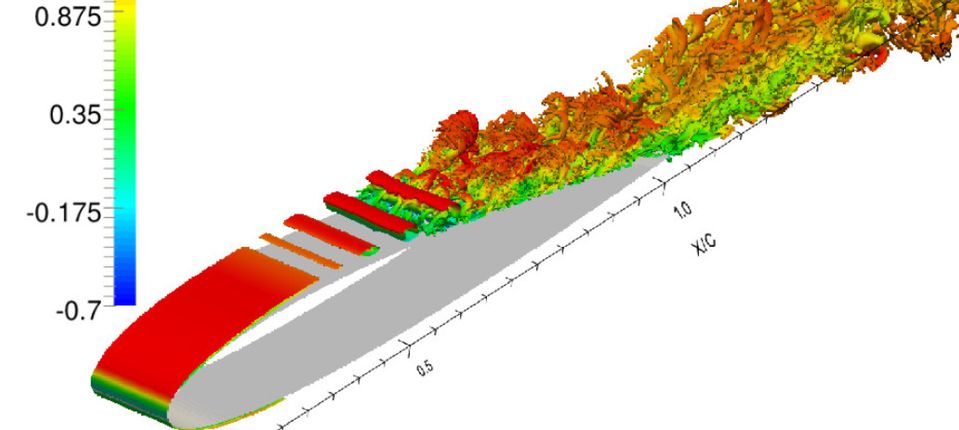
Dr. Junlin Yuan is an Associate Professor in the Department of Mechanical Engineering at Michigan State University, within the College of Engineering. Her research focuses on large-scale numerical simulations of complex turbulent shear flows, particularly addressing non-equilibrium turbulence, wall roughness, and fluid-structure interaction. Applications span engineering, environmental, and bio-locomotive systems. She has secured funding from NSF, ONR, and industry partners. Education: Ph.D. Mechanical Engineering, Queen's University, Canada (2015) M.S. Mechanical Engineering, Queen's University, Canada (2011) B.Eng. Aerospace Engineering, Northwestern Polytechnical University, China (2009) Research Interests: Dr. Yuan's work emphasizes understanding turbulence in complex geometries through direct numerical simulations (DNS) and developing physics-based models. Key areas include roughness sublayer dynamics, adverse pressure gradient effects, hyporheic exchange modeling, and turbulence-induced noise prediction. Her lab, the Turbulence Simulation & Modeling (TSM) Lab, bridges fundamental turbulence physics with practical engineering challenges. Grants & Advising: She secured a $400k NSF grant (CC* Compute) for high-memory computing infrastructure and a $490k NSF award on biomimetic fluid-structure interaction. Advised PhD students include Guangchen Shen, Saurabh Pargal, and Sai Mangavelli. Students have received fellowships such as the Richard H. Brown Endowed Fellowship and CFD Society of Canada scholarships. Labs & Teams: Directs the TSM Lab, which employs DNS and CFD tools to explore turbulence in environmental and engineered systems. Collaborates on projects involving sediment-water interface dynamics and rough wall aerodynamics.
Anne-Virginie SALSAC is a leading researcher in bioengineering and biomechanics at the University of Technology of Compiègne (UTC), France. She heads the Biomechanics and Bioengineering Laboratory (BMBI, UMR CNRS 7338) and has held an ERC Consolidator Grant (2017) from the European Research Council for her work on multiphysics modeling of microcapsules. Her research focuses on numerical simulation, microfluidics, and bioartificial capsule design for biomedical applications, including hemodynamics in vascular systems and minimally invasive therapies. She has pioneered techniques for microcapsule characterization and sorting, with applications in drug delivery and tissue engineering. SALSAC has collaborated internationally with institutions like Sorbonne Université, University College London, and Queen Mary University of London. Education: Advanced training in bioengineering, with postdoctoral experience in fluid mechanics and biomedical systems. Teaching: Leads graduate courses in mechanical properties of biological materials, microfluidics, and vascular flow modeling at UTC. Previously taught at UC San Diego and University College London. Awards: ERC Consolidator Grant (2017), European scholarship for excellence (2018). Her research integrates experimental and computational methods, emphasizing real-time prediction of capsule deformation and fluid-structure interactions. Key projects include the ERC-funded MultiphysMicroCaps initiative, which explores multiscale modeling of microcapsules under physiological flows. She has developed novel microfluidic tools for capsule sorting and mechanical property analysis, published in top journals like Physical Review E and Journal of Fluids and Structures . SALSAC advocates for scientific mediation, organizing international symposia such as the DynaCaps conference, and has engaged in public outreach via television and media features. Her work bridges fundamental research and clinical applications, with patents on microcapsule fabrication and embolization techniques.
Ngoc T. Bui is an Assistant Professor in the Department of Sustainable Chemical, Biological and Materials Engineering at the University of Oklahoma. He holds a Ph.D. in Chemical Engineering from the University of Connecticut (2014), an M.S. in Textile Engineering from Chonnam National University (2007), and a B.S. in Chemical Engineering with a minor in Organic Chemistry from HoChiMinh City University of Technology (Vietnam). His research focuses on the water-energy-environment nexus, developing advanced functional materials and membranes for sustainable separations, environmental remediation, and renewable energy applications. Dr. Bui's work integrates physics, chemistry, and engineering to study nanomaterials' physicochemical properties and their transport behaviors. His lab designs membranes and adsorbents from nanoscale building blocks, focusing on energy-efficient wastewater treatment from oil and gas industries and converting pollutants into valuable commodities. Key projects include bioinspired supramolecular complexes for heavy metal removal, carbon nanotube-based breathable protective fabrics, and adsorptive membranes for precision ion separation. His research outputs span over 30 peer-reviewed articles, patents on nanoporous membranes and adsorptive technologies, and contributions to textbooks like Desalination: Water from Water and Desalination 2nd Edition . Collaborations with Lawrence Berkeley and Livermore National Laboratories highlight his expertise in applied nanotechnology and sustainable engineering. Dr. Bui's lab emphasizes translational research through systems-level assessments, aiming to transform water, energy, and environmental landscapes. Current efforts include granulation technologies for nutrient recovery and fluidized-bed systems for industrial wastewater treatment.
Konrad Kowalczyk is an Associate Professor at AGH University of Science and Technology in Krakow, Poland, where he heads the Signal Processing Group within the Faculty of Computer Science, Electronics and Telecommunications. With extensive international experience from institutions including Queen's University Belfast, Stanford University, and Fraunhofer Institute, he has established himself as a leading researcher in audio and speech signal processing. His academic journey includes B.Eng. and M.Sc. degrees from AGH University (2005), a Ph.D. from Queen's University Belfast (2009), and a Habilitation in ICT from AGH University (2020). B.Eng. and M.Sc. in Electronics and Telecommunications, AGH University of Krakow (2005) Ph.D. in Electronics, Queen's University Belfast, UK (2009) Habilitation (D.Sc.) in Information and Communication Technology, AGH University of Krakow (2020) Kowalczyk's research spans multiple cutting-edge areas in audio processing, with particular focus on speech and audio signal processing enhanced by machine learning techniques. His work integrates deep neural networks with traditional signal processing methods to address challenges in array signal processing , speech enhancement , and speaker recognition . The research group he leads explores innovative applications in distributed signal processing for IoT , acoustic event detection , and spatial audio rendering , bridging theoretical advances with practical implementations. His recent publications demonstrate a clear trend toward integrating deep learning with traditional signal processing techniques, particularly in speaker diarization, source separation, and robust speech recognition. The research increasingly focuses on real-world applications requiring reverberation-robust processing , distributed microphone array systems , and end-to-end neural architectures that can operate in challenging acoustic environments. There's a noticeable shift toward more complex, integrated systems that combine multiple signal processing tasks. Stanislaw Staszic Medal for best graduate of AGH (2005) IEEE Best Student Paper Contest finalist (2007) AES Student Technical Paper Award winner (2008) Best Student Paper Award at IWAENC conference (2014) Best Paper Awards at IEEE SPA conferences (2016, 2019) Polish Ministry of Science Scholarship for Distinguished Young Scientists (2016-2019) Prime Minister Award for outstanding scientific achievements (2020) As Principal Investigator, Kowalczyk leads multiple significant research projects including "Acoustic Intelligence" (2024-2028) funded by National Science Center, and "Deep extraction for robust speech recognition" (2023-2028). He has successfully secured funding from prestigious programs including First TEAM from the Foundation for Polish Science, and EU FP7 projects. His research group actively supervises Ph.D., M.Sc., and B.Eng. students, with strong connections to international institutions including Aalto University and IEEE Signal Processing Society. The research output includes numerous journal publications, conference papers, patents, and software implementations that have advanced the field of audio signal processing. Kowalczyk leads the Signal Processing Group at AGH University, which focuses on developing innovative solutions for speech and audio processing challenges. The group maintains strong collaborations with international institutions including Aalto University (Finland), and participates in European research initiatives. Their work spans theoretical development through practical implementation, with applications ranging from medical voice assistants to distributed acoustic sensor networks.
Mark Plumbley is a Professor of Signal Processing at the Centre for Vision, Speech and Signal Processing (CVSSP) within the School of Computer Science and Electronic Engineering at the University of Surrey. He holds an EPSRC Fellowship in 'AI for Sound' and has led major research initiatives, including the DCASE challenges. His work focuses on AI-driven analysis of acoustic scenes and events, with contributions to machine learning, audio source separation, and sparse representations. Previously, he was Director of the Centre for Digital Music at Queen Mary University of London and Head of the School of Computer Science at Surrey. Education: PhD in Neural Networks (1991). Academic roles include Professorships at King’s College London (1991–2002) and Queen Mary University of London (2002–2014). Research spans audio event detection, sound scene classification, and generative AI for audio synthesis. He leads projects like the EPSRC-funded 'Making Sense of Sounds' and 'Musical Audio Repurposing using Source Separation', and co-edited the Springer book on Computational Analysis of Sound Scenes and Events. Research Interests: AI for Sound: Machine learning applied to real-world audio analysis. Acoustic Scene and Event Recognition: Developing models for sound classification and localization. Generative Audio Models: Text-to-audio systems and diffusion models for sound synthesis. Healthcare Applications: Audio-based diagnostics and bioacoustic signal processing. Grants and Awards: EPSRC Fellowships, EU-funded networks (SpaRTaN, MacSeNet), and Fellowships from IET and IEEE. Notable awards include the IEEE Young Author Best Paper Award (co-authored with students) and leadership in the DCASE community. Labs and Collaborations: CVSSP at Surrey, collaborations with BBC R&D, and interdisciplinary projects on urban soundscapes and noise pollution (UK Acoustics Network Plus).
Tej Chajed is an Assistant Professor in the Department of Computer Sciences at the University of Wisconsin-Madison, focusing on formal verification of systems software. His research bridges theoretical foundations and practical implementations to ensure software correctness in concurrent and crash-safe systems. Research interests include formal verification, concurrency, crash safety, and programming languages, particularly using Coq, Perennial, and Goose frameworks. He has contributed to systems like DaisyNFS, a verified file system with sequential reasoning, and Verus, a foundation for systems verification. His work appears in top venues like SOSP, OSDI, and PLDI. 2025: Dafny PC Member 2024: PLDI Committee Member, CoqPL Co-chair 2023: CoqPL Co-chair, POPL Program Committee He actively mentors students and develops tools for systems verification education, including extensive Coq-based course materials.
Professor Anthony J. Ryan, OBE, is the Professor of Physical Chemistry at the University of Sheffield and Founding Director of the Grantham Centre for Sustainable Futures. His research focuses on sustainable polymers, renewable energy, and the food-water-energy nexus. He leads sustainability initiatives integrating science, engineering, and social sciences. Ryan has held roles including Pro Vice Chancellor of the Faculty of Science (2008–2016) and Head of Chemistry. Educated at the University of Manchester (BSc, PhD) and UMIST (DSc), he has over 300 publications and co-authored influential books like The Solar Revolution . Education: BSc from University of Manchester PhD from University of Manchester DSc from UMIST Research Interests: Sustainable synthesis of polymers, flow-induced crystallization, organic photovoltaics, urban agriculture, and translational science communication. His work bridges fundamental research and real-world applications, emphasizing environmental and societal impact. Articles: Recent publications span polymer science, sustainable materials, and interdisciplinary sustainability challenges. Key themes include renewable materials, nanocomposites, and energy-efficient systems. Awards: OBE for Services to Science (2006) Beilby Medal & Prize (1999) Gold Medal, Society of Dyers and Colourists (2008) Advising & Grants: Leads major sustainability programs and collaborates with international bodies like the UNFCCC. His work includes public engagement via media and institutions like Chatham House. Labs/Teams: Directs the Grantham Centre, fostering cross-disciplinary sustainability research. Active in initiatives like Project Sunshine and urban horticulture projects.
Prof. Helmut Grabner is a Professor at the Zurich University of Applied Sciences (ZHAW), leading the Visual Intelligence and Applications Group and the Entrepreneurship initiatives within the School of Engineering. His work bridges computer science, medical technology, and visual communication, with a focus on Extended Reality (XR), surgical training simulations, and AI-driven decision making. Education: PhD in Computer Science (Graz University of Technology, 2008), Master's in Computer Science (2008), and a Certificate of Advanced Studies in Higher Education (ZHAW, 2021). Prior to academia, he held roles including CTO at Logitech and co-founder of upicto, applying computer vision in industry and startups. Research spans augmented reality medical training tools, NMR spectrum analysis via deep learning, and understanding visual engagement in advertising. Awards include the prestigious Koenderink Prize (2018) for contributions to computer vision. Projects include Immersive Education frameworks, bias-mitigation in venture capital algorithms, and surgical proficiency measurement systems. Teaching includes courses on Visual Computing, Machine Learning, and Deep Learning. His work integrates academic research with practical applications in healthcare, education, and entrepreneurship.
Maciej Thomas is an Assistant Professor at the Department of Environmental Technologies, Faculty of Environmental Engineering and Energy, Cracow University of Technology. He holds a PhD in environmental engineering and has been actively researching since 2016. His work focuses on wastewater treatment technologies, heavy metal remediation, and environmental sustainability. Key areas include advanced oxidation processes (e.g., Fenton reagent), adsorption using metal-organic frameworks, and resource recovery from industrial byproducts. Dr. Thomas has published 74 articles, achieving a Scopus h-index of 15 and a WoS h-index of 13. His research also addresses challenges in groundwater quality assessment, particulate matter prediction via machine learning, and environmental risk management. Education: PhD in Environmental Engineering (2016). His research integrates chemical engineering principles with ecological sustainability, emphasizing practical solutions for industrial wastewater and soil contamination. He has contributed to projects involving cerium-based oxidation, poultry manure utilization in soil reclamation, and PFAS contamination in marine ecosystems. His recent work highlights optimization studies for hybrid treatment processes (e.g., ferrate/trithiocarbonate systems) and recovery of rare earth elements from mine waters. Collaborations span environmental chemistry, toxicology, and geosciences. Notably, he explores the intersection of machine learning with environmental monitoring, enhancing predictive capabilities for air and water quality. Dr. Thomas leads interdisciplinary projects addressing both technical and societal dimensions of environmental challenges, with a focus on industrial waste valorization and sustainable resource management.
Professor George Papadakis is a Professor of Aerodynamics at the Department of Aeronautics, Faculty of Engineering at Imperial College London. His research focuses on fundamental analysis and manipulation of transitional or turbulent flows, with applications in aerodynamics, flow control, and mixing enhancement. He leads the Papadakis Lab, which develops computational methods and optimization algorithms for fluid dynamics problems. Education: PhD in Mechanical Engineering (National Technical University of Athens, 1996), BEng in Mechanical Engineering (National Technical University of Athens, 1990). Professional history includes roles as Lecturer at King's College London (1999–2011) and Reader at Imperial College (2011–present). Research interests include turbulence enhancement/suppression, sensitivity analysis of chaotic systems, and DNS/LES simulations. His group is funded by EPSRC, European Union, Leverhulme Trust, and the President's Scholarship Fund. Key affiliations include the Energy Futures Lab and Flow Control networks. Advising and grants: Supervised numerous PhD students (e.g., Dandan Xiao, Felipe Alves Portela) and secured funding from multiple agencies. Current students include Hanxun Yao, Karim Shawki, and others. Research outputs span flow control, vortex dynamics, and industrial mixing applications. Labs/teams: Papadakis Lab focuses on aerodynamics, turbulence, and computational methods. Collaborations include Temasek Labs (Singapore) and Prof. J.C. Vassilicos (Imperial College).
Matthew Bidwell is a Research Fellow at Imperial College London's Department of Chemistry within the Faculty of Natural Sciences. His research focuses on sustainable energy materials, including photocatalytic hydrogen generation and electrocatalytic biomass oxidation using organic semiconductors. He holds a PhD from Imperial College (2016-2021) and was awarded the prestigious EPSRC Doctoral Prize Fellowship (2021), which he undertakes in collaboration with Professors Martin Heeney and Magda Titirici. Matthew's work bridges fundamental materials science with real-world applications in energy and environmental sustainability. He has held residential roles including Assistant Warden of Woodward Buildings (2021-2023), overseeing pastoral care for 700 students, and Subwarden positions in Pembridge Hall and Woodward Buildings. Matthew is an active member of the Royal Society of Chemistry and UKRI Early Career Researcher Forum. His research interests span organic photovoltaics, nanoparticle engineering, and biomass conversion. Notable achievements include co-inventing nanoparticles for photocatalytic hydrogen evolution (US Application No. 17/639,966) and being shortlisted for Forbes 30 Under 30 in Science & Healthcare. He has secured beamtime at ISIS Neutron and Muon Source for nanoparticle morphology studies and received multiple grants for research stays at Kyoto University and conference participation. Matthew’s publications emphasize practical applications of materials science, with recent work addressing organic solar cell stability and photocatalytic systems for sustainable chemical production. His innovative approaches to waste biomass utilization and hydrogen generation align with global sustainability goals.
Slim Essid is a Full Professor at Télécom Paris, leading the Audio Data Analysis and Signal Processing (ADASP) group. He holds a Doctorat (Ph.D.) and Habilitation from Université Pierre et Marie Curie (UPMC). With 15+ years of research experience, he has advised 15 PhD graduates and currently co-advises 10 others. His work focuses on machine learning, signal processing, and multimodal systems, publishing over 150 peer-reviewed papers. He serves as a reviewer for top journals/conferences (e.g., IEEE Transactions) and research funding agencies. Education: State Engineering Degree, École Nationale d’Ingénieurs de Tunis (2001) M.Sc. (D.E.A.) in Digital Communication Systems, École Nationale Supérieure des Télécommunications, Paris (2002) Ph.D., Université Pierre et Marie Curie (2005) Habilitation (HDR), UPMC (2015) Research Interests: Multimodal learning, self-supervised representations, audio-visual segmentation, music structure analysis, domain generalization, and speech enhancement. Recent publications highlight innovations like TACO (training-free sound-prompted segmentation) and CLOUDS (domain-generalized semantic segmentation framework using foundation models). His work bridges audio processing with vision and language models, emphasizing unsupervised/zero-shot approaches. Key achievements include state-of-the-art methods in sound event detection, speaker diarization, and music segmentation. He collaborates with 14 post-docs and leads projects funded by French/EU agencies.
Dr. David Boocock is a Senior Research Fellow and Group Leader of the Biological Mass Spectrometry and Clinical Proteomics group at the John van Geest Cancer Research Centre, Nottingham Trent University. He joined NTU in 2007 as a Research Fellow and became Senior Research Fellow in 2009, establishing the quantitative LC-MS facility for biological research. His work spans biomarker discovery, cancer research (prostate, breast, melanoma, ovarian, and LAM), Alzheimer's disease, diabetes, and COPD, utilizing advanced proteomics and metabolomics techniques. Senior Research Fellow, Biological Mass Spectrometry and Clinical Proteomics Group John van Geest Cancer Research Centre, Nottingham Trent University Established quantitative mass spectrometry facility in 2013/14 His research focuses on proteomics and biomarker discovery across multiple disease contexts, with particular emphasis on cancer progression and therapeutic response. He employs SWATH Acquisition, LC-MS/MS, and multiomics approaches to analyze protein expression patterns. Collaborations include SCIEX, Ludwig-Maximilians-Universität München, and University of Debrecen. Recent publications highlight his work on chronic kidney disease biomarkers (2025), prostate cancer metastasis mechanisms (2024), and transglutaminase biology in neurodegenerative and metabolic diseases. He supervises PhD students and contributes to undergraduate teaching in cancer and proteomics topics.
Ali Haider is a Doctoral Researcher in the Department of Energy and Mechanical Engineering at the School of Engineering. His work focuses on sustainable combustion processes and energy conversion systems. Institution: School of Engineering Department: Department of Energy and Mechanical Engineering Research Interests: Ali actively investigates advanced combustion technologies, including methane utilization in industrial gas turbines, turbulent combustion modeling, and emission reduction strategies. His work spans thermocatalytic decomposition, computational fluid dynamics (CFD), and energy efficiency optimization. Publication Trends: His recent publications highlight applications of CFD in combustion stability, LES modeling for turbulent flows, and innovations in solar energy systems. Key areas include gas turbine injectors, nanocatalysts for methane decomposition, and PVT systems enhanced with nanofluids. Collaborations: Ali collaborates on interdisciplinary projects involving energy systems, aerospace combustion, and thermal comfort analysis, with a focus on sustainable and efficient engineering solutions.
David Aitken is a Professor of Organic Chemistry at the Institute of Molecular Chemistry and Materials of Orsay (ICMMO - UMR 8182) , University of Paris-Saclay. His research focuses on synthetic methodology , photochemistry , and the preparation of bioactive molecular scaffolds . He studied Chemistry at the University of Strathclyde (BSc 1983, PhD 1986), followed by a CNRS Researcher position at the University of Paris 5 before becoming a Professor at the University of Clermont-Ferrand 2 in 1998. Since 2006, he has led his research group at Orsay and currently serves as Director of ICMMO . Education : BSc and PhD in Chemistry (University of Strathclyde, Scotland) Research Interests : Synthetic methodology, photochemical transformations, hydrogen bonding in peptides, conformational control, and biologically relevant molecules Methodologies : Photochemistry, organocatalysis, tandem reactions, stereoselective synthesis, and computational modeling Structural Analysis : Hydrogen bonding, helical folding, and non-covalent interactions using spectroscopy and molecular modeling Current Role : Director of ICMMO research institute His recent publications highlight innovations in peptide helical folding , cyclobutane and cyclopropane synthesis , and enantioselective catalytic reactions . His work bridges organic synthesis with biological applications, particularly in protein interaction inhibitors and insulin-sensitizing molecules .