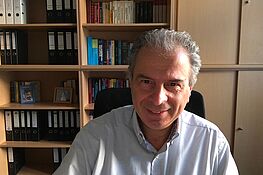
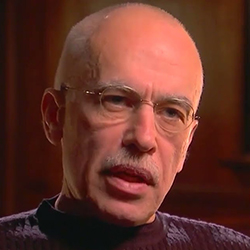
Univ.-Prof. Christos N. Likos is a world-leading researcher at the University of Vienna , holding the chair in Multiscale Computational Physics since 2010. Affiliated with the Faculty of Physics and directing the Computational and Soft Matter Physics group, he bridges scales from microscopic to macroscopic in soft matter systems. Education: Dipl.-Ing. in Electrical Engineering (NTUA Athens), M.Sc. & Ph.D. in Physics (Cornell University) Honors: Fellow of the Royal Society of Chemistry (2013), University of Vienna Teaching Award (2025), Outstanding Referee Award (2009) His research in Soft Condensed Matter focuses on polymers, colloids, and biomolecular systems through coarse-graining , density functional theory , and Monte Carlo simulations . Key collaborations include institutions in Rome, Heraklion, San Sebastian, and Princeton. His work reveals principles of self-organization, non-equilibrium phenomena, and responsive material design with applications in cosmetics, nanotechnology, and biophysics. Recent publications highlight active matter , topological polymers , and electric field-responsive microgels . The group trains 18 current students (Ph.D., M.Sc., B.Sc.) and maintains partnerships with experimental teams across Europe. As Associate Editor of Soft Matter and member of Journal of Colloid and Interface Science Open editorial board, he shapes scientific discourse in his field. Teaching excellence is a hallmark, with courses on Advanced Statistical Physics and Soft Matter Principles . His group website details ongoing projects, while lab facilities in Vienna's Kolingasse campus enable interdisciplinary research.
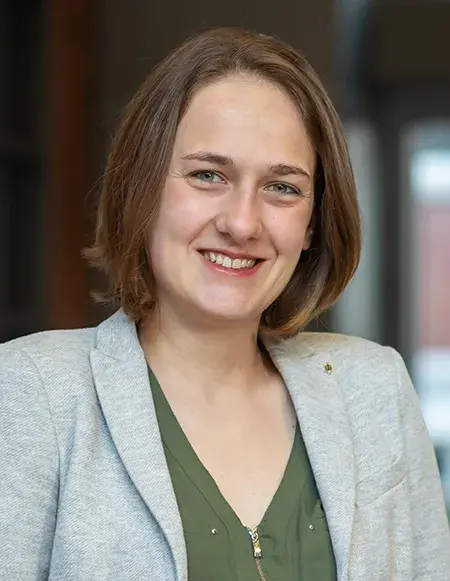
Malgorzata (Gosia) Chwatko is an Assistant Professor in the Department of Chemical and Materials Engineering at the University of Kentucky, affiliated with the Stanley and Karen Pigman College of Engineering. Her research focuses on sustainable separation processes, including membrane-enhanced peptide synthesis, green polymer development, and environmentally friendly particle synthesis. Education: Postdoctoral Fellow in Biomedical Engineering (2019-2020), Ph.D. (2019), M.S. (2019) in Chemical Engineering from the University of Texas at Austin, and B.S. in Chemical Engineering from the University of Connecticut (2015). The Chwatko research group investigates technologies to reduce solvent waste and improve sustainability in chemical processes. Key projects include membrane-enhanced liquid phase peptide synthesis , thermodynamic analysis of green solvent-polymer systems , and sustainable polymer synthesis with recyclability in mind . Recent publications highlight her work on PEG-based hydrogels for wound dressings , bioactive hydrogel coatings , and epoxide copolymerization mechanisms . Her team has produced award-winning researchers, including students honored at the 2024 REU and Super Collider events.
Professor Meng Tao is a full Professor in the School of Electrical, Computer and Energy Engineering at Arizona State University (ASU), Tempe campus. He also holds the concurrent appointment of Senior Global Futures Scientist within ASU’s Global Futures Scientists and Scholars initiative. Since joining ASU in 2011, he has led the Laboratory for Terawatt Photovoltaics and played a pivotal role in founding the U.S. Photovoltaic Manufacturing Consortium under SEMATECH. Education: Ph.D. Materials Science and Engineering, University of Illinois at Urbana-Champaign, 1998 M.S. Semiconductor Materials, Zhejiang University, China, 1986 B.S. Ferrous Metallurgy, Jiangxi Institute of Metallurgy, China, 1982 Research Focus: Professor Tao’s research is broadly centered on the science and engineering challenges of scaling photovoltaics to the terawatt level while ensuring sustainability and cost-effectiveness. His group investigates earth-abundant chalcogenide semiconductors and transparent conducting oxides for thin-film devices, substitutes silver with low-cost aluminum in Si solar cell metallization, develops energy-efficient electro-refining routes to upgrade metallurgical-grade silicon to solar-grade purity, pioneers value-added recycling technologies for end-of-life Si modules, and explores solar-powered electrolysis using metal/metal-oxide loops for long-term electricity storage. Grant Portfolio & Trends: Recent funding from NSF and DOE has supported projects on high-efficiency Schottky-barrier silicon cells, theoretical/experimental studies of iron oxysulfide absorbers, doping of cuprous oxide in electrolytes, and CVD-based valence-mending passivation for crystalline silicon. These grants underscore a consistent emphasis on materials innovation, process intensification, and circular-economy solutions for PV. Teaching & Mentoring: Professor Tao teaches and mentors across the EEE, MSE and CHE programs, offering courses ranging from introductory circuits to advanced photovoltaic energy conversion and doctoral dissertation supervision. While specific advisee names are not disclosed, the extensive thesis and research course listings indicate a large, active graduate group. Laboratory & Collaborative Networks: The Laboratory for Terawatt Photovoltaics under his direction serves as the central hub for experimental work on solar cell fabrication, electroplating, electrochemical recycling, and materials characterization. The lab collaborates closely with national consortia such as SEMATECH and leverages ASU’s advanced clean-room and analytical facilities.
Benjamin Lucien Kaminski is a Professor at Saarland University and a Lecturer at University College London . He specializes in quantitative aspects of formal program verification , with a focus on probabilistic and quantum programs , incorrectness logic , and non-classical computation models . His research includes semantics , probabilistic program verification , expected runtimes , and explainable verification . He leads the Examination Board for B.Sc. Computer Science (English) and actively mentors PhD, Master’s, and Bachelor’s students in logic and verification. 2025 : A Taxonomy of Hoare-Like Logics (POPL), Partial Incorrectness Logic (TPSA) 2024 : Quantitative Weakest Hyper Pre (OOPSLA), Caesar: A Verifier for Probabilistic Programs (Dafny), Hoare-Like Triples (Incorrectness-track) 2023 : A Deductive Verification Infrastructure (OOPSLA), Lower Bounds (OOPSLA), A Calculus for Amortized Expected Runtimes (POPL) He has received notable awards including the Ackermann Award (2020), Best Paper at LOPSTR 2020 , and EATCS Best Paper Award at ETAPS 2016 . He has also served on program committees for leading conferences like CAV , POPL , and LICS , and reviewed for prestigious journals such as Journal of the ACM and TOCL .
Dario De Marinis is an Assistant Professor at the Department of Mechanics, Mathematics & Management, Politecnico di Bari, Italy. His research focuses on fluid dynamics with applications in biomedical engineering, aerospace, and computational physics. Research Interests Fluid-structure interaction modeling Microfluidics and particle transport Biomedical applications (blood flow, valve mechanics) Aerospace engineering (hypersonic flows, turbulence) Numerical methods (Lattice Boltzmann, immersed boundary) Publications Trend Dario's recent work (2015–2025) spans computational fluid dynamics, with emphasis on multiphase flows, viscoelastic material behavior, and biomedical microfluidic devices. He has contributed to aerospace applications and turbulent thermal flows.
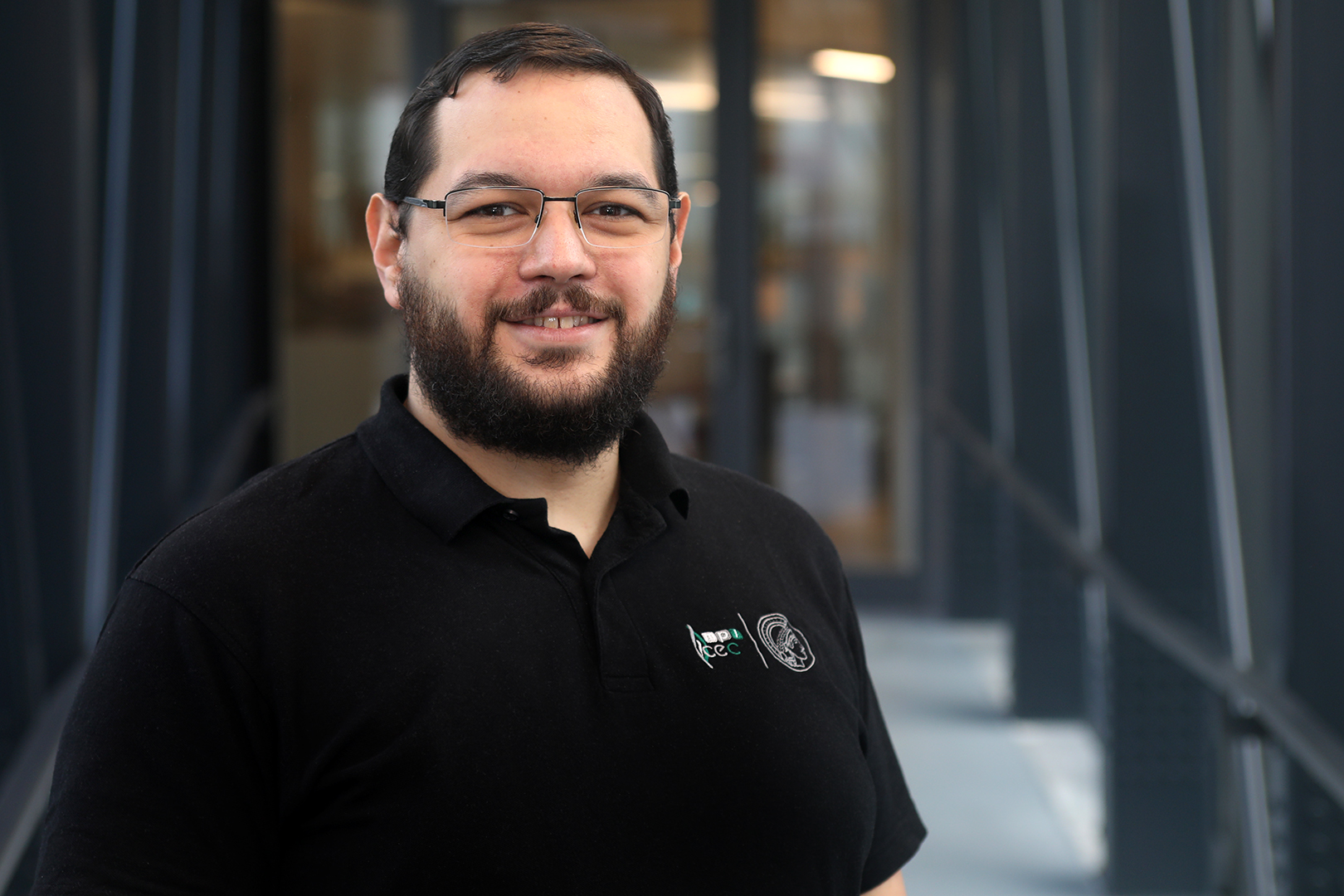
Dr. Walid Hetaba is a Group Leader in the Scientific Infrastructure department at the Max Planck Institute for Chemical Energy Conversion (MPI CEC), specializing in Electron Microscopy and X-ray Photoelectron Spectroscopy (XPS). He leads a research group focused on advanced materials characterization, particularly for catalytic systems. His academic background includes a Diplom in Technical Physics (Dipl.-Ing.) and a Dr.techn. from TU Wien (2011–2015). Prior to his current role, he held postdoctoral positions at TU Wien, Universität Bielefeld, and the Fritz Haber Institute of the Max Planck Society (2016–2020). Dr. Hetaba's research emphasizes the structural and electronic characterization of materials at micro- and nanoscales, linking material properties to catalytic function. His group develops methodologies for TEM/XPS analysis, including ChemiTEM—a TEM optimized for chemistry and materials science. Key research areas include catalyst design, nanomaterial synthesis, and surface science, with applications in energy storage and conversion. His group operates state-of-the-art equipment such as the Thermo Scientific Talos F200X TEM, Phenom Pharos SEM, and NAP-XPS systems. They collaborate extensively with other research groups to advance catalysis and materials science. Current projects include the UniSysCat cluster on bimetallic nanocatalysts and FAIRmat data standardization initiatives. Dr. Hetaba has published extensively in journals like Advanced Energy Materials , ACS Catalysis , and Chemistry-Methods , focusing on topics such as magnetic catalysts, nanomaterial functionalization, and surface reactivity. His work bridges fundamental material science with applied catalysis, driving innovations in energy technologies.
Leonard Wesley is an Associate Professor in the Department of Computer Science at the College Of Science, San Jose State University. His research spans interdisciplinary domains at the intersection of Bioinformatics , Computational Biology , and Machine Learning , with specific applications in Pharmaceutical Drug Discovery , Genomic Data Analysis , and Autonomous Robotics . Education: Ph.D. in Computer Science, University of Massachusetts M.S. in Computer Science, University of Massachusetts B.A. in Physics and Math, Northeastern University Research Interests include Approximate Reasoning (probabilistic, evidential, and fuzzy logic), Agent-Oriented Systems , and Sensor Fusion . His work applies these methodologies to Drug Portfolio Management , Protein Structure Scoring , and Medical Diagnostics . Publication Trends show a consistent focus on Computational Biology , Robotics , and Uncertainty Quantification over four decades. Early work in Computer Vision evolved into modern applications in Pharmaceutical Analytics and AI in Aerospace . Key Projects include SVM-based drug affinity prediction, evidence-driven decision support systems for biopharma, and real-time agent development frameworks like ROADS. He has contributed to CFD code control and Mobile Network Congestion solutions. Collaborations with institutions like NASA, Los Alamos National Laboratory, and international conferences (WMSCI, ICINCO, AIAA) highlight his cross-disciplinary impact. His teaching includes Artificial Intelligence and Bioinformatics courses.
Professor Ronny Pini is a Professor of Multiphase Systems at Imperial College London's Department of Chemical Engineering within the Faculty of Engineering. His research focuses on sustainable industrial processes, particularly carbon capture and storage (CCS), porous media dynamics, and imaging-based process design. He holds a PhD in Mechanical and Process Engineering from ETH Zurich and has held academic positions including Senior Lecturer and Reader at Imperial College since 2015. His educational background includes a Postdoctoral fellowship at Stanford University (2010-2013) and prior roles at the Colorado School of Mines. Research interests span multiphase flow mechanics, adsorption science, and environmental engineering applications. Key projects include the InFUSE Prosperity Partnership and Digital Rocks Lab, leveraging X-ray tomography, positron emission tomography, and computational models to study subsurface CO2 storage and sustainable materials. Professor Pini's work integrates chemical engineering with material science and earth sciences, addressing global challenges like industrial decarbonisation. He collaborates on developing advanced imaging techniques to characterise porous media behavior and optimise processes for energy transition. Current focus areas include direct air capture technologies and enhancing oil recovery via CO2 utilisation. His research outputs include over 150 peer-reviewed articles, with recent emphasis on adsorption-based CO2 capture systems, pore-scale transport phenomena, and sustainable process design frameworks. He is actively involved in training early-career researchers through Imperial College's Chemical Engineering programs and international collaborations.
Dr. Gerald Wang is an Assistant Professor in Civil and Environmental Engineering at Carnegie Mellon University with courtesy appointments in Chemical Engineering and Mechanical Engineering. He leads the M5 Lab (Mechanics of Materials via Molecular and Multiscale Methods), focusing on nanoscale mechanics using computational approaches to solve civil engineering challenges related to water-energy systems, material resilience, and sustainable polymers. Education: Ph.D. in Mechanical Engineering and Computation, MIT (2019) S.M. in Mechanical Engineering, MIT (2015) B.S. in Mechanical Engineering, Mathematics & Physics, Yale University (2013) His research integrates statistical physics, fluid mechanics, and high-performance computing to investigate nanoscale structural and transport phenomena. Key areas include climate-resilient infrastructure, energy-water nexus solutions, and nanoscale thermal transport in materials. Recent work explores molecular-scale separation processes and recyclable polymer design using advanced simulation techniques. Publication trends demonstrate consistent focus on nanoscale transport mechanisms, computational method development, and interdisciplinary applications from materials science to urban systems. Articles frequently bridge molecular dynamics with macro-scale engineering problems. Awards: Scott Institute Seed Grant for clean energy research CMU Celebration of Education Award for teaching excellence Current projects include NSF-funded work on nanoscale slip phenomena and polymer upcycling collaborations. The M5 Lab develops open-source simulation tools and maintains active industry partnerships in advanced materials.
Prof. Feridun Boylu is a Professor in the Department of Mineral Processing Engineering at Istanbul Technical University (ITU), affiliated with the Faculty of Mines. His research focuses on mineral processing techniques, coal technology, and industrial raw materials. He holds a PhD in Ore Coal Preparation and Evaluation from ITU and has extensive experience in academic leadership roles, including Head of Department and Advisor to the Rector at ITU. His work spans over 30 years, with contributions to coal flotation, dense medium cyclones, and bentonite characterization. Prof. Boylu has supervised numerous theses and leads projects funded by national and international grants, including EU initiatives like FineFuture. His research emphasizes sustainable mining practices and advanced separation technologies. Education: PhD (Ore Coal Preparation and Evaluation, ITU, 2004), MSc (Ore Coal Preparation, ITU, 1998), BSc (Mining Engineering, ITU, 1993) Key Roles: Professor at ITU, Former Head of Department (2021–2021), Erasmus Coordinator (2020–present), and International Student Coordinator (2021–present) Research Interests: Chemical-biological recovery techniques, coal water slurries, flotation optimization, and mineral beneficiation. His work addresses challenges in fine particle flotation, coal preparation, and sustainable utilization of industrial raw materials. Recent Projects: Includes the EU-funded FineFuture project (2019–2023) and studies on three-product dense medium cyclones and machine learning for mill liner wear prediction. His research bridges theoretical modeling and industrial applications in mineral processing.
James Durrant serves as Professor of Photochemistry at Imperial College London since 2005 and holds a part-time Sêr Cymru Solar Professorship at Swansea University since 2013. His research focuses on photochemical processes in solar energy conversion devices, utilizing transient spectroscopy to analyze electron transfer dynamics in next-generation photovoltaic and photocatalytic systems. His academic foundation includes a B.A. in Natural Sciences (Physics) from the University of Cambridge (1984-1987) and a PhD in Biochemistry from Imperial College London (1987-1991) under Lord Porter and James Barber. Prior appointments include BBSRC Advanced Research Fellow (1994-1999) and progressive academic roles in Imperial's Chemistry Department (1999-2005). Durrant's research centers on solar energy conversion mechanisms, with current emphasis on polymer/fullerene and perovskite solar cells alongside water-splitting photocatalysts. His experimental approach combines transient laser spectroscopies with device engineering to establish design principles for efficient solar materials. Key focus areas include charge carrier dynamics, interface engineering, and stability optimization for practical solar technologies. Recent publications reveal consistent advancement in understanding charge transfer processes across diverse materials systems, with growing emphasis on stability challenges and interfacial phenomena in both photovoltaic and solar fuel generation applications. The work bridges fundamental photochemistry with device-level performance optimization. His distinguished recognition includes: Meldola Medal of the RSC (1995) Imperial College Research Excellence Award (2006) Environment Prize of the RSC (2009) ERC Advanced Grant (2012-2017) Tilden Prize of the RSC (2012) Elected Fellow of the Royal Society (2017) Hughes Medal of the Royal Society (2018) Durrant directs a substantial research enterprise comprising 6 postdoctoral researchers, 8 PhD students, and 2 technicians at Imperial College, supported by EPSRC, ERC, CEC, and Solvay SA grants. He concurrently leads the Centre for Plastic Electronics (since 2015) and the Welsh government-funded Sêr Solar programme at Swansea's SPECIFIC IKC, accelerating printed photovoltaic technology demonstration through industry-academic collaboration.
Prof. Kwang W. Oh is a Professor and Director of Graduate Studies in the Department of Electrical Engineering at the University at Buffalo (SUNY), with an adjunct appointment in the Department of Biomedical Engineering. He directs the Sensors and MicroActuators Learning Lab (SMALL), focusing on biomedical microfluidic devices, sensors, and actuators for applications in medical diagnostics and biological research. His educational background includes: PhD in Electrical and Computer Engineering from the University of Cincinnati (2001) MS in Electrical and Computer Engineering from the University of Cincinnati (1997) BS in Physics with summa cum laude from Chonbuk National University, Korea (1994) Prof. Oh's research centers on microfluidics and BioMEMS (Bio Micro Electro Mechanical Systems), with specializations in LOC (lab-on-a-chip), MicroTAS (Micro Total Analysis Systems), and SANS (Sample-to-Answer Nano/microfluidic Systems). His work develops practical microfluidic devices for medical diagnostics, including point-of-care blood testing, single cell manipulation, and nanobiosensors. His lab has pioneered innovative approaches like the "pysanky" wax-based technique for rapid prototyping of microfluidic devices and vacuum-driven micropumps for plasma separation from finger-prick blood samples. His recent publications reveal a strong trend toward practical medical applications of microfluidics, particularly in photoacoustic imaging test phantoms, point-of-care diagnostics, and nanoparticle synthesis for viral treatment. His research bridges engineering with clinical needs, focusing on making laboratory functions portable and accessible through microfluidic integration. Among his notable awards: The SUNY Chancellor's Award for Excellence in Teaching (2020) President Emeritus and Mrs. Meyerson Award for Distinguished Undergraduate Teaching and Mentoring (2019) Qualcomm Faculty Award (2019) Senior Teacher of the Year Award, SEAS, UB (2017) Emerging Investigators 2012, Lab Chip, Royal Society of Chemistry (2013) Honor of CEO, Samsung Electronics for development of a micro PCR system (2003) Prof. Oh has advised numerous graduate students including Dr. Anyang Wang, Dr. Nikhila Nyayapathi, and Dr. Domin Koh, who have gone on to successful careers in academia and industry. His research has been supported by significant grants, including a Qualcomm Faculty Award in 2019, which recognizes research that "inspires students and sparks new approaches in key technology areas." He actively participates in professional service as an editorial board member for several journals including Sensors and Micromachines. He directs the Sensors and MicroActuators Learning Lab (SMALL), which houses state-of-the-art facilities for microfluidic device fabrication and testing. The lab focuses on developing practical microfluidic solutions for medical diagnostics, with recent projects including test phantoms for photoacoustic imaging, vacuum-driven micropumps for point-of-care blood separation, and microfluidic devices for nanoparticle synthesis targeting viral treatments. The lab fosters interdisciplinary collaboration between engineering, medicine, and life sciences to translate microfluidic innovations into real-world medical applications.
Mads Røge Eldrup is an Assistant Professor at the Department of the Built Environment, Aalborg University, within the Faculty of Engineering and Science. His research focuses on coastal engineering, wave dynamics, and structural resilience of marine infrastructure. He leads the Ocean and Coastal Engineering Research Group and contributes to the BLUE – Marine & Maritime Research initiative. Research interests include breakwater stability, nonlinear wave modeling, physical model testing, and numerical simulation techniques. Key projects involve the RESCUER initiative (2024-2028) addressing resilient coastal solutions. He has authored/co-authored 46 publications since 2014, with recent work on NL-SORS wave decomposition, submerged bar dynamics, and rock armour stability. He actively participates in international conferences and workshops, including sessions on Smoothed Particle Hydrodynamics and nonlinear wavemaker theory. Collaborations span institutions globally, focusing on coastal resilience and hydraulic engineering challenges.
Dr. Gregory Ryskin is an Associate Professor in the Department of Chemical and Biological Engineering at Northwestern University. His research spans cosmology, geophysics, fluid dynamics, and theoretical physics, with a recent focus on cosmological models addressing dark energy and vacuum energy. He holds dual PhDs in Chemical Engineering (Caltech) and Theoretical Physics (St. Petersburg Polytechnic Institute). Research interests include cosmic expansion mechanisms, Earth's magnetic field generation, catastrophic geological events, and fundamental physics problems like Hawking radiation. His interdisciplinary work connects astrophysics with geophysical phenomena through fluid dynamical principles. Publications include theoretical studies of vanishing vacuum energy (2020), cosmic repulsion (2015), and Hawking radiation (2014), alongside earlier contributions to fluid dynamics of polymers and liquid crystals. His 2010 paper on abrupt Earth events received recognition from paleontologist David Raup. Dr. Ryskin's current work develops physics-based explanations for cosmological observations, providing alternatives to standard dark energy models through modified gravitational theories.
Prof. Naresh R. Shanbhag holds the Jack S. Kilby Professorship in Electrical and Computer Engineering at the University of Illinois Urbana-Champaign. He is affiliated with the Coordinated Science Lab and the Information Trust Institute, both part of the College of Engineering. His research focuses on energy-efficient computing architectures, in-memory computing, nanoelectronics, and secure machine learning systems. Prof. Shanbhag has pioneered work on statistical error compensation techniques and resistive crossbar-based architectures, addressing critical challenges in low-power, high-performance computing. Education and career details are not explicitly provided in the text, but his extensive publications (313+) and honors indicate deep academic involvement. His research interests emphasize the intersection of hardware architecture and machine learning, with a focus on emerging technologies like MRAM and SRAM-based in-memory computing. Key awards include the IEEE Fellow designation (2006) and the prestigious Semiconductor Industry Association (SIA) University Research Award (2018). His recent work explores security vulnerabilities in in-memory architectures, energy-accuracy trade-offs in resistive systems, and adversarial robustness of neural networks. Prof. Shanbhag’s contributions span over 20 years, bridging theoretical computer science with practical hardware implementations. His lab (Coordinated Science Lab) and collaborations drive innovations in nanoscale information processing and trustworthy computing systems.