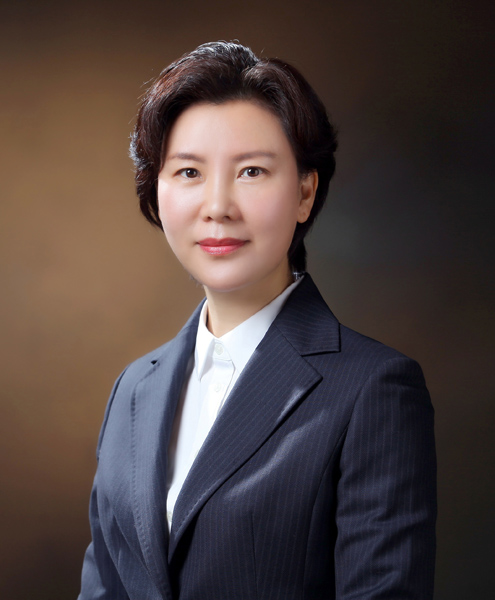
Prof. Yu Jihong is a full Professor at the Department of Chemistry, Jilin University, and serves as Director of the International Center of Future Science and Vice President of the Chinese Chemical Society. She leads the State Key Laboratory of Inorganic Synthesis and Preparative Chemistry. Her research focuses on designing nanoporous materials for energy and environmental applications, with over 320 publications in top journals like Science and Nature Communications. Education: BS (1989), MS (1992), PhD (1995) from Jilin University Postdoctoral: Hong Kong University of Science and Technology (1996–1997), Tohoku University (1997–1998) Research interests include inorganic synthesis, porous materials, catalytic materials, and environmental applications. Her work bridges computational methods with experimental synthesis, yielding innovations in zeolite structures and catalytic systems. Awards: IUPAC Distinguished Women in Chemistry Award (2017), TWAS Fellow (2016), Chinese Academy of Sciences Academician (2015), and multiple national science prizes. She is an Associate Editor of Chemical Science and leads editorial boards for Materials Horizons and others. Her articles emphasize novel synthetic methods, catalytic systems, and sustainable materials. Key themes include accelerating zeolite crystallization, designing nanocatalysts, and developing porous membranes for environmental applications.
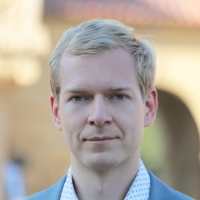
Vladimir Kazeev is an Assistant Professor at the Faculty of Mathematics, University of Vienna , where he has held a faculty position since 2019. He also held previous academic appointments as a Szegő Assistant Professor at Stanford University (2017–2019), a postdoctoral researcher at the University of Geneva (2015–2017), and research positions at ETH Zurich (2011–2015), Russian Academy of Sciences (2008–2011), and Moscow Institute of Physics and Technology (2009). His research focuses on adaptive, data-driven numerical methods for differential equations, nonlinear low-parametric approximation, and numerical linear algebra. His work intersects computational mathematics, tensor methods, and high-dimensional problem-solving, particularly in the context of partial differential equations (PDEs) and stochastic modeling. The 15 most recent publications reveal a strong emphasis on quantized tensor-structured methods for PDEs, low-rank approximations, and high-dimensional numerical analysis. His research spans theoretical advancements in tensor decomposition, practical applications in chemical reaction networks, and novel discretization techniques for multiscale and degenerate diffusion problems. Scientific awards include the prestigious ETH Medal for outstanding doctoral theses (2016) Russian Academy of Sciences Medal for outstanding student works in mathematics (2011) Advising and teaching activities include supervising Jason Zhu (Stanford, 2019) and Simon Etter (ETH Zurich, 2014), as well as teaching advanced courses in tensor methods, numerical analysis, and PDEs at the University of Vienna, Stanford University, and the University of Geneva. His service to the community includes peer review for 15+ journals and co-organizing minisymposia at SIAM meetings.
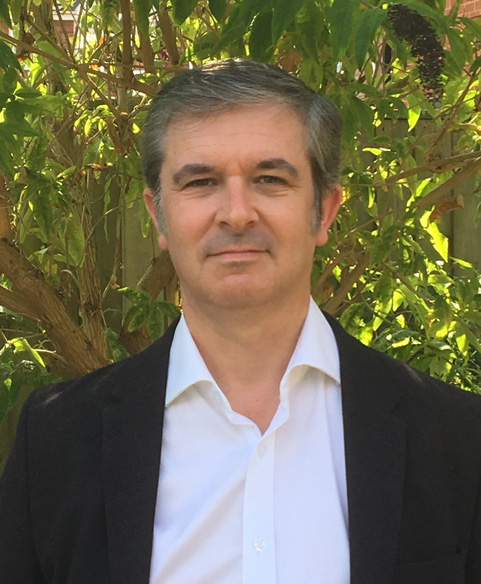
Neil Champness is the Norman Haworth Professor of Chemistry at the University of Birmingham. He holds a prestigious academic position following roles at the University of Nottingham, including Professor of Chemical Nanoscience (2004-2020). His research focuses on supramolecular chemistry, crystal engineering, and metal-organic frameworks (MOFs). Champness leads a group pioneering studies on molecular self-assembly, surface chemistry, and functional materials. Education & Career - Began academic career with Teaching Fellowships at the University of Nottingham (1995) and Southampton (1994). - Became Lecturer in Inorganic Chemistry at Nottingham (1998), progressing to Reader (2003) and full Professor (2004). - Currently heads the Champness Group at Birmingham, established in 2021. Research Interests Champness’s work spans: - Design of porous materials (MOFs, HOFs) for gas storage and catalysis. - Surface self-assembly of 2D supramolecular frameworks. - Photoresponsive materials and molecular rotaxanes. - Chemical synthesis under constrained conditions. His group emphasizes interdisciplinary approaches, linking chemistry with materials science and nanotechnology. Awards & Recognition 2019: Elected Fellow of the European Academy of Sciences 2020: EPSRC Established Career Fellowship 2016: Royal Society of Chemistry Surfaces & Interfaces Award 2011: Thomson Reuters Highly Cited Researcher 2006: Corday-Morgan Medal (Royal Society of Chemistry) Advisory Roles & Grants - Editorial roles include Chem, Crystals, and CrystEngComm. - Served on Royal Society panels, Irish Research Council, and IUPAC. - Secured major grants from EPSRC and Royal Society. Labs & Collaborations His Birmingham group collaborates globally, with visiting professorships in Japan, Australia, and Brazil. Research is supported by advanced facilities in crystallography and surface chemistry.
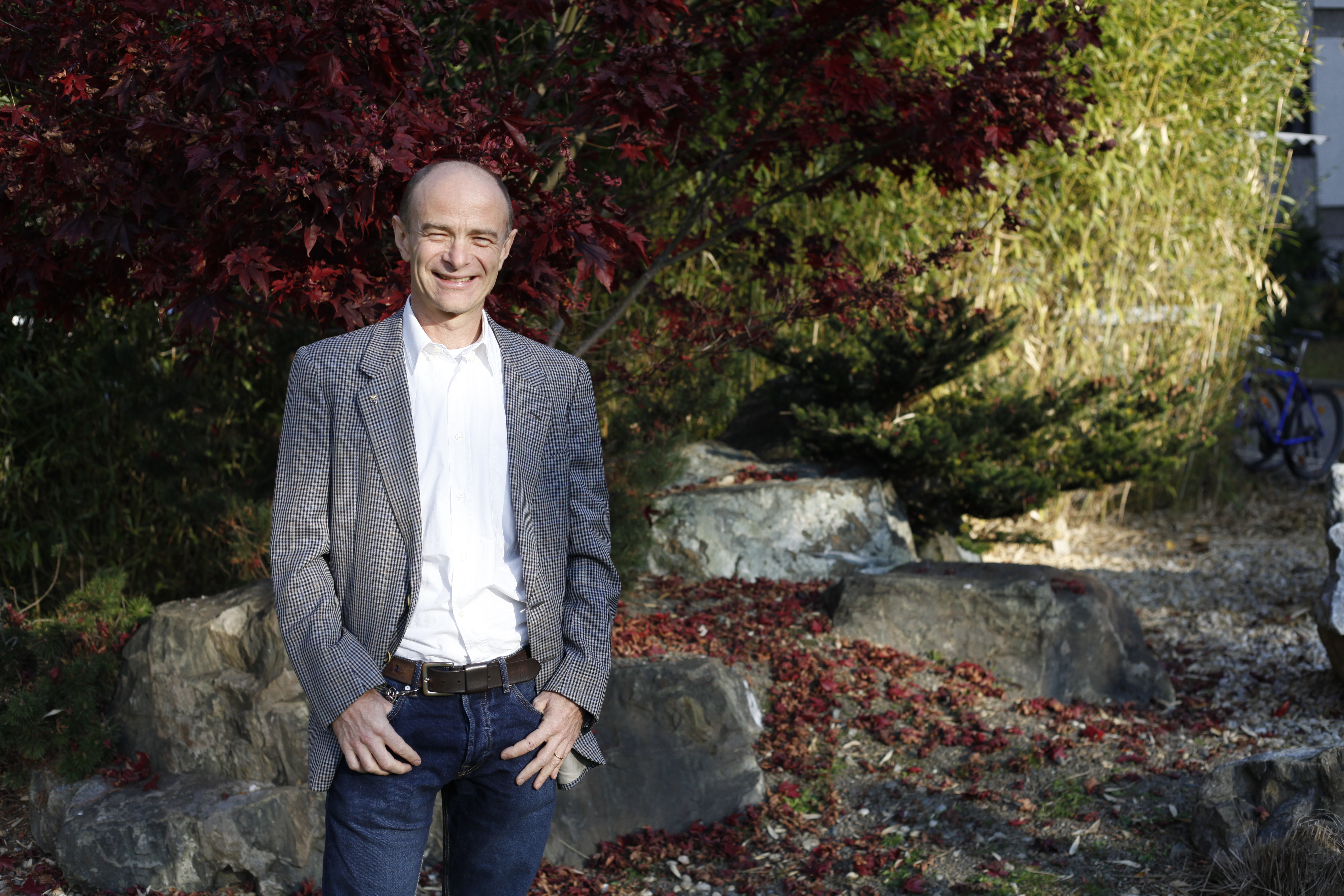
Enrico Arrigoni is a Professor at the Institute of Theoretical Physics - Computational Physics at Graz University of Technology (TU Graz). His research focuses on correlated quantum systems, many-body physics, and nonequilibrium dynamics, with applications to Mott insulators, quantum transport, and photovoltaic systems. He teaches courses such as 'Green's functions in Many-Particle Physics' and 'Atom Physics - Quantum Mechanics'. Recent work explores phonon effects in Mott systems, neural network approaches to quantum states, and impact ionization processes in photodriven materials. His methods include auxiliary master equation techniques and variational cluster approaches. Publications span topics like nonequilibrium steady states, quantum impurity models, and disordered systems. While no specific awards are listed, his contributions to theoretical physics and computational methods are evident through his prolific research output. Advising and grants details are not explicitly mentioned, though his involvement in graduate theses and research projects is implied via available master's and bachelor's thesis topics.
Alois Jungbauer is a full Professor and Head of the Institute of Biochemical Engineering at the University of Natural Resources and Life Sciences Vienna (BOKU), within the Department für Biotechnologie und Lebensmittelwissenschaften. He is a leading expert in bioprocess engineering, with a focus on downstream processing, continuous manufacturing, and sustainable biopharmaceutical production. Doctorate, University of Natural Resources and Life Sciences Vienna Habilitation, 1991 His research interests center on advanced purification technologies for biologics, including monoclonal antibodies, viral vectors, virus-like particles (VLPs), and gene therapy products. He is a pioneer in continuous integrated biomanufacturing, real-time process monitoring, and the development of platform processes for non-mAb proteins. His work integrates computational modeling, digital twins, and process intensification to improve efficiency and reduce environmental impact. He has made significant contributions to affinity chromatography, membrane adsorbers, and non-chromatographic separation methods. Recent publications highlight trends in continuous downstream processing, water conservation, in-situ buffer preparation, and the purification of complex biomolecules like secretory IgA and VLPs. His work spans both fundamental biophysical studies and industrial applications, reflecting a strong industry-academia interface. His scientific awards include: ISMR Thermo Fischer Award for Affinity Technologies (2011) Bia Separations Award (2000) Fulbright Award, Austrian-American Fulbright Commission (1996) Award of Japanese Society for Promotion of Science (1994) Golden Award 93 Professor Jungbauer actively supervises university theses and leads a dynamic research group. He has delivered numerous lectures and keynotes worldwide, indicating active engagement in knowledge transfer. His research is supported by ongoing projects and collaborations, with a strong emphasis on environmental and economic modeling of bioprocesses. He is affiliated with the Institute of Biochemical Engineering at BOKU, a hub for innovation in bioprocessing and industrial biotechnology.
Professor Matthew Jonathan Rosseinsky holds the Chair of Inorganic Chemistry at the University of Liverpool, a position he has occupied since October 1999. His career includes significant appointments at the University of Oxford (1992-1999) and Bell Laboratories in New Jersey (1990-1992), following his DPhil at Merton College, Oxford. As a Fellow of the Royal Society and recipient of numerous prestigious awards, Professor Rosseinsky maintains an active research program and leadership roles in the international chemistry community. Professor Rosseinsky's educational background includes a First Class Honours degree in Chemistry with Quantum Chemistry from the University of Oxford (1987) and a DPhil in "Physical Properties of Superconducting Oxides and Radical Cation Salts" completed in 1990 under Professor P. Day FRS. His research focuses on the synthesis of new materials with applications in energy storage and generation, communications, separation, and catalysis. The Rosseinsky Group employs a broad range of synthesis and characterization techniques, including neutron and synchrotron X-ray diffraction, combined with computational methods in collaboration with Dr. George Darling. Current research areas include Dynapore, CO2 fuels, SOLBAT, and CATMAT projects that target specific material challenges. Professor Rosseinsky's publication record is exceptional, with 304 papers including 11 in Nature, 6 in Science, and 3 in Nature Materials, accumulating over 15,000 citations and an h-index of 56 as of 2012. His work demonstrates consistent excellence across materials chemistry, with particular emphasis on porous frameworks, electronic materials, and solid-state chemistry. Among his numerous accolades are the Harrison Memorial Prize (1991), Corday-Morgan Medal (2000), Royal Society Wolfson Research Merit Award (2002), De Gennes Prize (2009), and the prestigious Hughes Medal from the Royal Society (2011). He also holds an ERC Advanced Investigator Grant and has delivered distinguished lectures worldwide. Professor Rosseinsky has served in numerous editorial and advisory capacities, including as Associate Editor for Chemical Sciences, membership on the Royal Society Conference and Travel Grant Committee since 2007, and as a member of the International Advisory Board for the Max Planck Institut for Solid State Research since 2011. His professional activities extend to international review committees for research institutions in France, South Korea, and Saudi Arabia. The Rosseinsky Group operates within the Department of Chemistry at the University of Liverpool, collaborating extensively with researchers including Dr. John Claridge, Professor Andrew Cooper, and Professor Paul Chalker. The group maintains strong international partnerships and utilizes advanced facilities for materials synthesis and characterization to drive innovation in functional materials development.
Martin Holler is a Professor at the Institute of Mathematics and Scientific Computing at the University of Graz, Austria, where he leads the research group Applied Mathematics and Machine Learning . His work bridges theoretical mathematics with practical applications in imaging and machine learning. Research Focus: His primary research areas include the mathematics of data science, variational methods in imaging, dynamic and multi-modality inverse problems, and biomedical imaging. He has made significant contributions to model-based regularization techniques, particularly with Total Generalized Variation (TGV) approaches for image and video reconstruction. Publication Trends: Over the past decade, Holler's research has evolved from traditional variational methods for image reconstruction toward increasingly sophisticated machine learning approaches. His recent work (2021-2023) focuses on integrating deep learning with variational methods, particularly for motion separation in medical imaging and learning-informed parameter identification in partial differential equations. His publications demonstrate a consistent thread of applying rigorous mathematical frameworks to solve practical problems in medical imaging and computer vision. Mathematics of data science and machine learning Generative models in machine learning Variational methods in imaging Dynamic and multi-modality inverse problems Model-based regularization Biomedical imaging Image and video decompression Technical Leadership: Holler has developed several open-source software packages implementing advanced reconstruction algorithms, particularly for multi-modal imaging problems. His GitHub repositories show active maintenance and development of these tools, which have been cited in the medical imaging community.
Prof. Trajce Stafilov is a Full Professor at the Faculty of Natural Sciences and Mathematics , Ss. Cyril and Methodius University, Skopje, North Macedonia. With a career spanning over three decades at the university, he has held positions from Teaching Assistant (1974-1978) to Laboratory Manager in industry (1978-1985), Scientific Researcher (1985-1988), and Full Professor since 1997. Education: BSc, Institute of Chemistry, Faculty of Natural Sciences and Mathematics, Ss. Cyril and Methodius University, Skopje MSc (1977), same institution PhD (1985), same institution Prof. Stafilov's research focuses on analytical chemistry , environmental chemistry , and geochemistry . He specializes in trace element analysis using atomic spectroscopy, heavy metal contamination mapping, and chemometric modeling of environmental data. His work includes major projects on pollution monitoring around industrial sites and national geochemical atlas creation. His recent publications emphasize environmental contamination (soil, honey, moss), chemometric methods , and geochemical mapping in Macedonia and Europe. Awards include two Goce Delčev state awards for monographs, a Gold Medal at the World Exhibition of Innovation, and recognition for research excellence at Ss. Cyril and Methodius University. Scientific Awards Lifelong Achievement Award (2018), Balkan Environmental Association Goce Delčev Award (2017, 2009), Republic of Macedonia Gold Medal (2003), World Exhibition of Innovation, Brussels PhD Supervision: 21 students MSc Supervision: 48 students International Editorial Board Member: 10 journals Prof. Stafilov has coordinated EU PHARE, UNDP, and NATO projects to strengthen environmental monitoring capacities, with 439 scientific papers, 24 books, and 7 patents to his name. His work remains central to heavy metal analysis and environmental risk assessment in the Balkans.
Assoc. Prof. Dietmar Pum is a leading researcher at the Institute of Biophysics, University of Natural Resources and Life Sciences, Vienna (BOKU). With a career spanning over three decades, he has pioneered work on S-layer proteins as nanobiotechnological tools and biomimetic surface functionalization. His research bridges microbiology, biophysics, and nanomaterials science. Education & Career Doctorate (1984) and Habilitation (1992) at Vienna University of Technology Awarded FEBS (1987) and EMBO (1982) fellowships Assoc. Univ. Prof. since 1997, Deputy Head of Biophysics Institute since 2014 Research Focus Dr. Pum's work centers on leveraging S-layer proteins for nanoscale fluid mechanics , molecular imprinting , and biohybrid materials . His projects explore: Self-assembly of 2D protein crystals Functionalization of carbon nanotubes Biomimetic sensor development Applications in diagnostics and environmental technology Publication Trends His recent publications (2025-2019) highlight interdisciplinary advancements in: Nanoscale biofluid dynamics Gold nanoparticle synthesis via microbial enzymes Archaeal S-layer characterization Protein-directed nanomaterials Biosensor platforms Lipid quantification via machine learning Scientific Recognition Philip Morris Research Prize (1998) Cardinal Innitzer Prize (1992) ÖAGM Prize (1986) Peer reviewer for Nature Materials , Advanced Materials , and Biophysical Journal Advising & Collaborations Dr. Pum has supervised over 15 theses, mentoring students in topics ranging from Caenorhabditis elegans imaging to nanomembrane fabrication. He leads international collaborations under EU Horizon and FWF grants, including the Stimuli Responsive Materials project (2020-2025). Labs & Networks As a core member of BOKU's Center for NanoBiotechnology and the Ludwig Boltzmann Institute for Molecular Nanotechnology , he develops bioinspired nanomaterials and contributes to global programs in molecular self-assembly.
Inci Dirim is a Professor at the Department of German Studies within the Faculty of Philology and Cultural Studies at the University of Vienna . Her work focuses on German as a Second Language (DaZ) , multilingualism, migration pedagogy, and educational equity. She has developed diagnostic tools for language assessment, contributed to curriculum design, and critically analyzed discrimination mechanisms in language education. Education : Magistra Artium (MA) in Linguistics and German Studies from the University of Bremen (1991); PhD in Educational Science from the University of Hamburg (1997) Her research emphasizes language diagnostics , cultural identity , and reflexive pedagogy , particularly in contexts of linguistic and social heterogeneity. She has led projects like TESSLA (language support for multilingual children) and Unterrichtsbegleitende Sprachstandsbeobachtung DaZ (classroom language assessment). Recent publications explore inter- and transdisciplinary approaches to DaZ, normative foundations in language teaching, and separation practices in language promotion. She serves as a key figure in the Austrian Association for German as a Foreign/Second Language (ÖDaF) and the German Society for Educational Science (DGfE) , advocating for critical perspectives on language, migration, and education. Her teaching includes courses on Basics of German as a Foreign and Second Language , Modern German Literature , and Language Diagnostics .
Nico Sommerdijk is a Professor of Bone Biochemistry at the Radboud Institute for Molecular Life Sciences, Radboud University Medical Center Nijmegen. Previously, he held positions at Eindhoven University of Technology, including Full Professor (2014–2019) and Head of the Laboratory of Materials and Interface Chemistry. His research focuses on biomineralization, biomimetic materials, and advanced electron microscopy techniques, particularly cryo-EM and liquid-phase EM. He earned his PhD (cum laude) from Radboud University Nijmegen in 1995 and completed postdoctoral research at the University of Kent (UK), Radboud University, and Eindhoven University of Technology. He pioneered the use of cryo-EM to study organic-inorganic interactions and founded the Radboud Electron Microscopy Center. His work has been supported by prestigious grants, including an ERC Advanced Grant (2018), NWO VICI (2010), and TOP-PUNT (2016). Notable awards include the Royal Society of Chemistry Soft Matter Award (2015) and the NWO VIDI Award (2006). Key research areas include collagen mineralization mechanisms, crystal nucleation, and biomaterial design. His interdisciplinary approach bridges chemistry, materials science, and biophysics, with applications in biomedical materials and geology.
Andreas Radbruch is a leading immunologist and Professor for Experimental Rheumatology at Charité – Universitätsmedizin Berlin. He serves as Scientific Director of the Leibniz Institute Deutsches Rheuma-Forschungszentrum Berlin (DRFZ). With a PhD in Genetics and Immunology from Cologne University, his career spans key roles including Associate Professor at the University of Cologne and Visiting Scientist at the University of Alabama, Birmingham. Professor for Experimental Rheumatology, Charité – Universitätsmedizin Berlin (1998–present) Scientific Director, DRFZ Berlin (1996–present) Associate Professor for Genetics and Immunology, University of Cologne (1990–1998) His research focuses on immunological memory and chronic inflammatory autoimmune diseases, with groundbreaking work on memory plasma cells and their survival niches. He has pioneered technologies like MACS, cytokine cytometry, and magnetofluorescent liposomes for lymphocyte analysis. Notable awards include the ERC Advanced Grant (2011), Avery Landsteiner Award (2014), and Blondel Medal (2017). He is a member of EMBO, the Berlin-Brandenburg Academy, and the German Academy of Sciences (Leopoldina). His recent publications highlight SARS-CoV-2 immune dynamics, T-cell regulation in autoimmune arthritis, and molecular mechanisms of memory cell survival. These studies bridge fundamental immunology and clinical applications in rheumatology.
Xinliang Feng is a W3 Chair Professor at Dresden University of Technology, where he heads the Chair of Molecular Functional Materials. He also holds an Adjunct Chair Professorship at Shanghai Jiao Tong University, China. Previously, he served as a Distinguished Group Leader at the Max Planck Institute for Polymer Research in Mainz, Germany (2012-2014), and as a Group Leader at the same institute (2007-2012). His educational background includes a Bachelor's degree in Analytic Chemistry (2001), a Master's degree in Organic Chemistry (2004), and a PhD from the Max Planck Institute for Polymer Research (2008). Feng's research focuses on the frontier areas of nanomaterials science, particularly on 2D nanomaterials and low-dimensional nanostructures for energy applications. His work spans from fundamental organic synthesis to applied energy technologies. Key research areas include: Bottom-up synthesis of carbon nanostructures and graphene nanoribbons 2D polymers and supramolecular polymers with tailored properties Mesoporous covalent-bonding organic frameworks for energy storage Organic synthetic methodology in aromatic coupling reactions 2D carbon-rich conjugated polymers for electronic and optoelectronic applications His extensive publication record includes over 436 journal papers with significant impact, featuring publications in top-tier journals including Nature (3 papers), Science (1 paper), Nature Materials (2 papers), and numerous papers in Advanced Materials, Angewandte Chemie, and Journal of the American Chemical Society. His work has garnered over 34,797 citations in Web of Science (H-index ≥88) and over 44,959 citations in Google Scholar (H-index ≥101). Feng has received numerous prestigious awards recognizing his contributions to materials science and chemistry: Member of the German National Academy of Sciences (Leopoldina, 2024) Member of the Academia Europaea (2019) Fellow of the European Academy of Sciences (2019) EU-40 Materials Prize (2018) ERC Consolidator Grant Award (2018) Multiple years as a Highly Cited Researcher (2014-2018) ERC Starting Grant Award (2012) IUPAC Prize for Young Chemists (2009) He serves on the international/editorial advisory boards of 12 international journals and has organized or co-organized 30 symposia, workshops, and conferences. As the Head of the ESF Young Research Group "Graphene Center Dresden" and Working Package Leader for the EU GRAPHENE FLAGSHIP project, he plays a significant role in European materials research initiatives.
Karol Życzkowski is a Professor of Physics at the Smoluchowski Institute of Physics, Jagiellonian University, Cracow, Poland, and also holds a position at the Center for Theoretical Physics, Polish Academy of Sciences, Warsaw. He has held visiting positions at the Perimeter Institute for Theoretical Physics (2004/05) and previously served as Director of the Quantum Information Center in Gdańsk (2019-2023). Since January 2023, he has been President of the Cracow Branch of the Polish Academy of Sciences. Education Ph.D. in Theoretical Physics (1987, Jagiellonian University) Habilitation in Physical Sciences (1994, Jagiellonian University) Życzkowski’s research spans Quantum Information Theory , with a focus on quantum entanglement, geometry of quantum states, random matrices, and operator theory. His work bridges theoretical physics, mathematics, and interdisciplinary applications, including voting systems (e.g., Jagiellonian Compromise) and scientometrics. He has authored or co-authored over 150 papers and the influential monograph Geometry of Quantum States (Cambridge University Press, 2006, second edition 2017). His recent publications emphasize quantum thermodynamics (e.g., Jarzynski equality for stochastic maps), entanglement detection via uncertainty relations, and mathematical structures in quantum theory. Collaborations span 134 scientists from 19 countries, and his work has been cited over 6500 times (Google Scholar) with an H-index of 40. Scientific Awards Award of Rector of Jagiellonian University (2013) for work on quantum information foundations Award of Rector of Jagiellonian University (2007) for the monograph Geometry of Quantum States Prime Minister Award (1995) for habilitation thesis Humboldt Fellowship (1989), Fulbright Fellowship (1997/98) Życzkowski has supervised 5 Ph.D. and 16 Master’s theses, with 3 Ph.D. students currently in progress. He coordinated 9 research grants, participated in 10 others, and led the Polish node of a German SFB-Transregio project. He serves on editorial boards for journals including Open Systems & Information Dynamics and Journal of Physics A . He co-organized workshops (including Oberwolfach and Marseille) and founded research networks like the European Research Network Krzyżowa Initiative for Quantum Information. His Jagiellonian Quantum Information Team (JQIT) and involvement in the Mark Kac Complex Systems Research Centre highlight his collaborative leadership.
Univ.-Prof. Christos N. Likos is a world-leading researcher at the University of Vienna , holding the chair in Multiscale Computational Physics since 2010. Affiliated with the Faculty of Physics and directing the Computational and Soft Matter Physics group, he bridges scales from microscopic to macroscopic in soft matter systems. Education: Dipl.-Ing. in Electrical Engineering (NTUA Athens), M.Sc. & Ph.D. in Physics (Cornell University) Honors: Fellow of the Royal Society of Chemistry (2013), University of Vienna Teaching Award (2025), Outstanding Referee Award (2009) His research in Soft Condensed Matter focuses on polymers, colloids, and biomolecular systems through coarse-graining , density functional theory , and Monte Carlo simulations . Key collaborations include institutions in Rome, Heraklion, San Sebastian, and Princeton. His work reveals principles of self-organization, non-equilibrium phenomena, and responsive material design with applications in cosmetics, nanotechnology, and biophysics. Recent publications highlight active matter , topological polymers , and electric field-responsive microgels . The group trains 18 current students (Ph.D., M.Sc., B.Sc.) and maintains partnerships with experimental teams across Europe. As Associate Editor of Soft Matter and member of Journal of Colloid and Interface Science Open editorial board, he shapes scientific discourse in his field. Teaching excellence is a hallmark, with courses on Advanced Statistical Physics and Soft Matter Principles . His group website details ongoing projects, while lab facilities in Vienna's Kolingasse campus enable interdisciplinary research.