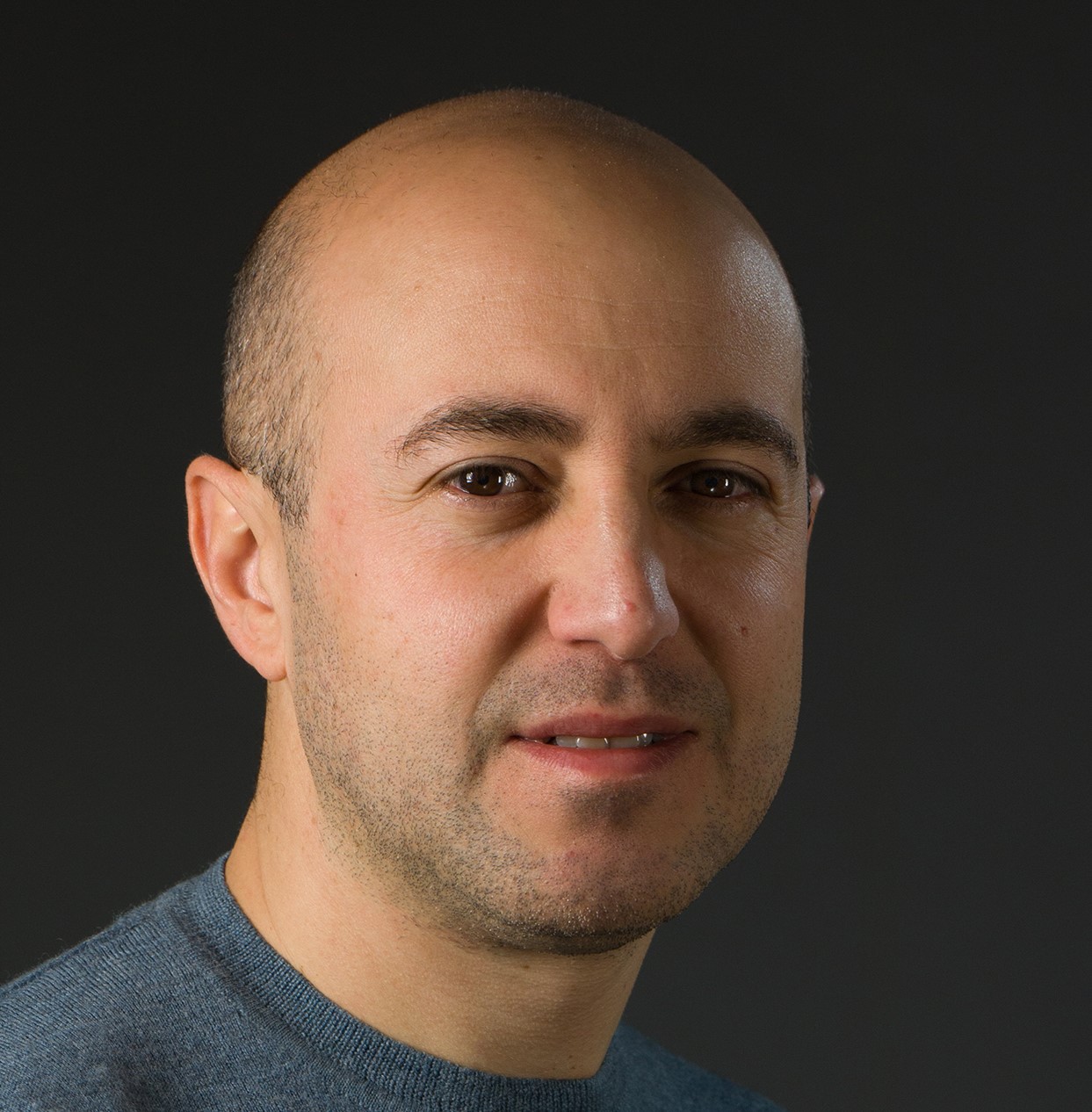
Archontis Politis is an Assistant Professor in the Department of Computing Sciences at Tampere University's Faculty of Information Technology and Communication Sciences. His research focuses on signal processing, machine learning, and their applications in audio engineering, particularly in spatial audio, sound source separation, and parametric audio coding. He explores topics such as Ambisonics, reverberation control, and neural network-based approaches for audio processing. His work emphasizes spatial audio reproduction, including six degrees of freedom (6DOF) rendering, microphone array processing, and efficient compression techniques for higher-order Ambisonics. He also investigates sound event localization and detection, leveraging machine learning for real-world acoustic scenarios. His contributions span theoretical advancements in spherical harmonics and practical implementations of spatial audio systems. Recent research highlights include developing datasets for music source separation, improving synthetic-to-real generalization in classical music, and creating neural encoding models for irregular microphone arrays. His methodologies often integrate deep learning with traditional signal processing to address challenges in multi-speaker environments and dynamic acoustic scenes.
Luca Barra is Full Professor of Television and Digital Media at the Department of Arts, University of Bologna. His research focuses on media studies, particularly television history and contemporary evolution, transnational circulation of content, serialization, and comic/humorous genres. He has coordinated the Master's Degree in Information, Cultures and Media Organization since 2021 and serves as editor-in-chief of VIEW. Journal of European TV History and Culture. University of Bologna, Department of Arts Research areas: Television History, Transnational Media, Digital Transformation, Italian TV Production Barra's work examines the international mediation of ready-made TV formats, Italian streaming partnerships, and the cultural implications of digital television. His recent articles analyze dystopian narratives, sitcom reception in Italy, and the redefinition of celebrity during the pandemic. He contributes to academic discourse through editorial roles in journals like SERIES and Comunicazioni Sociali. His publications include monographs on Italian television programming, sitcoms, and co-edited volumes exploring European premium TV fiction and digital media frameworks. Barra has led research projects such as ATLas and F-ACTOR, and collaborates with international institutions including Brown University and NECS.
Michael J. Larson is a Professor of Psychology in the College of Family, Home, and Social Sciences at Brigham Young University (BYU), where he directs the Clinical Cognitive Neuroscience and Neuropsychology (CCNN) Lab. His research integrates neuropsychology and cognitive neuroscience methodologies to investigate cognitive control mechanisms in healthy individuals and cognitive dysfunction following traumatic brain injury (TBI). He employs advanced techniques including event-related potentials (ERPs) and functional magnetic resonance imaging (fMRI) to examine neural correlates of cognitive processes. Dr. Larson's research program has four primary aims: (1) Investigating behavioral and neural reflections of cognitive control using ERP/fMRI; (2) Understanding lifespan developmental trajectories of cognitive control in neurologic insult or psychopathology (TBI, autism, depression); (3) Examining cognitive control's role in exercise and food-related behaviors including obesity; (4) Determining psychometric properties of biological measures for clinical application. His work spans traumatic brain injury recovery, exercise cognition, food inhibitory control, and psychopathology-neurocognition interactions. His publication trends reveal strong focus on methodological rigor in psychophysiology, with recent articles emphasizing ERP reliability across paradigms, preregistration practices, and multiverse analysis approaches. Key research domains include TBI rehabilitation (particularly via photobiomodulation and HRV biofeedback), sex differences in concussion mechanisms through the LIMBIC MATARS Consortium, and neural markers of food-related inhibitory control. Editor-in-Chief, International Journal of Psychophysiology (2016-Present) Top-Cited Scholar for Scientific Field (2019) Martin B. Hickman Innovation in Teaching Award (2018) University Young Scholar Award (2015) College Outstanding Young Alumnus, University of Florida (2014) Dr. Larson mentors students through the BYU Chapter of the Association of Neuropsychology Students and Trainees (ANST) and collaborates extensively with Dr. Tricia Merkely, Dr. Derin Cobia, and Dr. Shawn Gale on clinical neuropsychology training. His lab emphasizes rigorous methodology and psychometric validation, contributing significantly to standards in electrophysiological research through editorial leadership and methodological publications.
Daniel Lee Peters is a Limited Term Assistant Professor in the Department of Geography at the University of Victoria, holding additional roles as Associate Fellow at the Canadian Rivers Institute (University of New Brunswick) and Sessional Lecturer at UVic. His research focuses on watershed hydrology, climate impacts, and flow regulation effects, with specialties in northern deltas and instream flow needs. Peters holds a BSc (Environmental Geography, Concordia University), MSc and PhD (Watershed Ecosystems, Trent University). Key research areas include: Hydrological impacts of climate variability/change Flow regulation effects on river systems Runoff processes in northern deltas Instream flow standards for agricultural watersheds Hydrological modeling using isotopic/geochemical tracers His publications (2000-2008) emphasize northern hydrology, with notable contributions to understanding Peace-Athabasca Delta dynamics and Mackenzie Basin hydroclimatology. Awards include the D.M. Gray Award and recognition for student research excellence. Professional roles include editorial board membership for the Canadian Water Resources Journal and active participation in national hydrology organizations (CGU, CWRA, IAHS). Technical reports address water resource management challenges in agricultural and northern environments. Current projects involve climate impact assessments on Okanagan streams and Sooke Lake Reservoir hydrology.
Professor Guy Brown is Chair of Computer Science at the University of Sheffield's School of Computer Science. He holds a BSc in Applied Science (1984), PhD in Computer Science (1992), and MEd in Teaching and Learning (1997). His research focuses on Computational Auditory Scene Analysis (CASA), noise-robust speech recognition, auditory modeling, and binaural processing. Research interests include: Machine hearing systems for sound source separation Reverberation-robust speech processing Auditory scene analysis models for normal/impaired hearing Applications in robotics and healthcare technologies Publication trends show recent focus on deep learning approaches for biomedical applications including sleep apnea detection, respiratory sound analysis, and multimodal health monitoring systems using neural networks. Honors include: University Senate Award for Excellence in Teaching (2014) Microsoft Software Engineering Innovation Award (2013) He leads doctoral supervision for 15+ students and has secured research funding from EPSRC, Innovate UK, EU FP7, and AHRC. Manages the Speech and Hearing research group and has held visiting positions at international institutions including LIMSI-CNRS and ATR Japan.
Xavier Alameda-Pineda is a Research Director at Inria Grenoble Rhône-Alpes, where he leads the RobotLearn Team. He is affiliated with Université Grenoble Alpes and has been a key member of the Perception team. His work integrates machine learning, computer vision, and audio processing for scene understanding and human-robot interaction. Research Interests: His research lies at the intersection of multimodal machine learning and social behavior analysis. He focuses on developing algorithms for understanding human behavior in natural settings using audio-visual signals, with applications in robotics and AI companions. His work emphasizes real-world challenges such as noisy data, missing modalities, and dynamic environments. Publication Trends: His recent publications reflect a consistent focus on multimodal fusion, particularly combining vision and audio for social scene analysis. Themes include group behavior recognition, sound source separation, and cross-modal learning, often applied in robotics contexts. Scientific Awards: SIGMM Rising Star Award 2018 IEEE TMM Outstanding Associate Editor Award 2022 ACM TOMM Best Paper Award 2020 Best Paper Award, ACM MM 2015 Best Scientific Paper Award, ICPR 2016 Best Student Paper Award, IEEE WASPAA 2015 Outstanding Paper Award, ICMI 2011 Novel Technology Paper Award Finalist, IROS 2017 Advising and Grants: Xavier has mentored students and early-career researchers, evidenced by co-authored student papers. He coordinated the H2020 SPRING project on socially pertinent robots in gerontological healthcare and co-leads an AI chair on audio-visual perception for companion robots, indicating leadership in funded research initiatives. Labs and Teams: He is the leader of the RobotLearn Team at Inria and was previously part of the Perception team. He has also collaborated with the Multimodal and Human Understanding Group at the University of Trento.
John Mackay is an Associate Professor (Reader) in the School of Mathematics at the University of Bristol. His research focuses on geometric analysis, particularly analysis on metric spaces, geometric group theory, hyperbolic groups, and conformal dimension. He is a member of both the Probability, Analysis and Dynamics and Pure Mathematics institutes at Bristol, where he maintains an active research program and teaches undergraduate mathematics courses. His educational background includes undergraduate studies at the University of Edinburgh, PhD work at the University of Michigan under Bruce Kleiner (2003-2008), followed by a J.L. Doob research assistant professorship at the University of Illinois (2008-2010) and a postdoc at the University of Oxford (2011-2013) working with Cornelia Drutu before joining Bristol. Mackay's research explores the intersection of geometry, analysis, and group theory, with particular emphasis on conformal dimension, quasiconformal geometry, and the structure of hyperbolic and relatively hyperbolic groups. His work often involves studying metric spaces through their geometric and analytic properties, with connections to harmonic analysis and topology. His publication record shows consistent output since 2008, with recent work focusing on Poincaré profiles, asymptotic dimension, and the conformal dimension of hyperbolic groups. His most recent publications extend to 2025, indicating active ongoing research. The publications demonstrate a progression from foundational work in conformal dimension toward more complex applications involving random groups, Lie groups, and relatively hyperbolic structures. Among his significant contributions is the co-authored book "Conformal Dimension: theory and application" published by the AMS in 2010. Mackay actively contributes to the mathematical community through conference organization, including the "Interactions between Geometry, Dynamics and Group Theory" workshop at Bristol in January 2020, and upcoming events including the "Actions on graphs and metric spaces (OGG Workshop)" at the Isaac Newton Institute for September 2025 and the "Probability, Analysis and Dynamics conference" at Bristol for April 2025.
Paul Rosen is an Associate Professor at the University of Utah, affiliated with the Scientific Computing and Imaging Institute and the Kahlert School of Computing. He holds a Ph.D. in Computer Science from Purdue University (2010). Prior to his current role, he was an Assistant/Associate Professor at the University of South Florida (2015–2022) and a Research Assistant Professor at the University of Utah's SCI Institute (2010–2015). Research Focus: Rosen specializes in topology-based visualization techniques, with emphasis on network visualization, uncertainty quantification, and perceptual studies. His work bridges computational methods with human perception, aiming to enhance data understanding through effective visual design. Awards & Recognition: National Science Foundation CAREER Award (2019) Best Paper Awards at PacificVis 2016, IVAPP 2016, and multiple other conferences Honorable Mentions for IEEE VIS and VAST Challenge submissions Leadership: As General Chair of IEEE VIS 2024, Rosen led the planning for this flagship visualization conference, emphasizing community-driven design and in-person collaboration. Education Contributions: His research includes pedagogical innovations, such as predictive modeling for student feedback and peer review analysis in visual literacy courses.
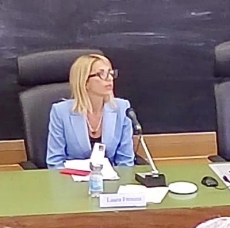
Laura Frosina is an Associate Professor of Comparative Public Law (IUS/21) at the Department of Political Science, Sapienza University of Rome. She teaches courses such as States, Autonomies and Separatisms in the Master's program in International Relations and Comparative Public Law in the undergraduate program in International Cooperation and Development. She is a member of the Doctoral Faculty in Public, Comparative, and International Law and actively participates in national and international research projects. PhD in Theory of the State and Comparative Political Institutions, Sapienza University of Rome (2005) Laurea in Political Science (with honors), Sapienza University of Rome (2000) Postgraduate Course in Assembly Consultants, Sapienza University of Rome (2001) Her research centers on comparative constitutional law, with a strong focus on Spain, Italy, and Latin America. Key themes include multilevel governance, European Union institutions, separatism, autonomy, federalism, parliamentary systems, and constitutional reforms. She analyzes political-constitutional crises, emergency powers, and the evolution of democratic institutions in pluralistic societies. Her work frequently examines the interplay between law, politics, and institutions in contexts of territorial tension. The most recent articles highlight a sustained scholarly engagement with Spanish constitutional dynamics, particularly around the Catalan independence movement, coalition governments under Sánchez, judicial-political conflicts, and broader EU institutional challenges. Trends include the analysis of secession referendums, emergency governance during the pandemic, urban constitutionalism, and the transformation of party systems. Her publications appear in specialized journals such as Nomos , Federalismi.it , and Revista de Derecho Constitucional Europeo , as well as in edited volumes from major academic publishers. Member, Editorial Board of Nomos (since 2001) Responsible, Critical Reviews Section, Nomos (since 2014) Member, Editorial Board, Federalismi.it (2006–2010) Member, Editorial Board, Focus America Latina , Federalismi.it (since 2009) Member, Editorial Board, Quaderni di Nomos (since 2012) Member, Editorial Board, Rivista di Diritto pubblico comparato ed europeo (since 2022) Principal Investigator, Cities and Models of Governance in the 21st Century (Sapienza SEED PNR Project, 2022–2025) Member, Large Ateneo Research Project Following Constitutional Law No. 1/2020, which Parliament? (Sapienza, 2022) Laura Frosina has been involved in numerous research projects funded by the Italian Ministry of Education, Universities and Research (MIUR), CNR, Sapienza University, and the European Committee of the Regions. She has served as a research fellow and principal investigator on topics including intergovernmental cooperation, EU multilevel governance, democratization in South Asia, and urban governance. She has collaborated with the Center of Excellence Integración Europea y Globalización at the University of Granada and participated in international training programs for parliaments in the Balkans. Her academic work bridges doctrinal legal analysis with political science perspectives, contributing to both theoretical and policy-oriented debates. She is affiliated with the Association of Comparative and European Public Law and has coordinated academic events and seminars, including tributes to her mentor Fulco Lanchester. Her institutional page lists regular office hours and remote availability via Google Meet, indicating active engagement with students and the academic community.
Jayanth Krishnan serves as the Milt and Judi Stewart Professor of Law at the Indiana University Maurer School of Law and directs the Milt and Judi Stewart Center on the Global Legal Profession. Previously, he was a Professor of Law at William Mitchell College of Law (2006-2009), Associate Professor (2004-2006), and Assistant Professor (2001-2004), where he received the Teacher of the Year award for the 2003-2004 academic year. He has also held visiting positions at the University of Iowa's College of Law, the University of Edinburgh's Centre for South Asian Studies, and the Australian National University's College of Law. His research interests span the legal profession, immigration law, law and globalization, access to justice, and legal education, with particular focus on the United States, India, Nigeria, Brazil, and other regions across Asia, Africa, and the Middle East. His socio-legal research examines how these areas intersect across different national contexts. Professor Krishnan's recent scholarly output demonstrates a strong emphasis on immigration law and the global legal profession, with numerous publications exploring the challenges faced by immigrants in the U.S. legal system, the role of lawyers in immigration proceedings, and the functioning of legal institutions across different national contexts. His work combines empirical analysis with theoretical frameworks to address practical challenges in legal systems worldwide. Elected to the American Law Institute (December 2019) Leon Wallace Teaching Award (2025, 2015) Indiana University Trustees' Teaching Award (2023, 2012) IU Black Law Students Association's Most Outstanding Interactive Professor Award (2023) Teacher of the Year for the 2003-2004 Academic Year at William Mitchell College of Law As director of the Milt and Judi Stewart Center on the Global Legal Profession since 2014, Krishnan has led numerous research initiatives and public events examining legal professions worldwide. Previously, he co-directed the Center for Law, Society & Culture from 2011-2014 and served as Project Director for a Ford Foundation-funded study examining lower courts in India (2010-2014). His leadership has established the Center as a significant hub for comparative legal research with a particular focus on India, Nigeria, and other developing legal systems.
Malgorzata (Gosia) Chwatko is an Assistant Professor in the Department of Chemical and Materials Engineering at the University of Kentucky, affiliated with the Stanley and Karen Pigman College of Engineering. Her research focuses on sustainable separation processes, including membrane-enhanced peptide synthesis, green polymer development, and environmentally friendly particle synthesis. Education: Postdoctoral Fellow in Biomedical Engineering (2019-2020), Ph.D. (2019), M.S. (2019) in Chemical Engineering from the University of Texas at Austin, and B.S. in Chemical Engineering from the University of Connecticut (2015). The Chwatko research group investigates technologies to reduce solvent waste and improve sustainability in chemical processes. Key projects include membrane-enhanced liquid phase peptide synthesis , thermodynamic analysis of green solvent-polymer systems , and sustainable polymer synthesis with recyclability in mind . Recent publications highlight her work on PEG-based hydrogels for wound dressings , bioactive hydrogel coatings , and epoxide copolymerization mechanisms . Her team has produced award-winning researchers, including students honored at the 2024 REU and Super Collider events.
Dr. Gregory Ryskin is an Associate Professor in the Department of Chemical and Biological Engineering at Northwestern University. His research spans cosmology, geophysics, fluid dynamics, and theoretical physics, with a recent focus on cosmological models addressing dark energy and vacuum energy. He holds dual PhDs in Chemical Engineering (Caltech) and Theoretical Physics (St. Petersburg Polytechnic Institute). Research interests include cosmic expansion mechanisms, Earth's magnetic field generation, catastrophic geological events, and fundamental physics problems like Hawking radiation. His interdisciplinary work connects astrophysics with geophysical phenomena through fluid dynamical principles. Publications include theoretical studies of vanishing vacuum energy (2020), cosmic repulsion (2015), and Hawking radiation (2014), alongside earlier contributions to fluid dynamics of polymers and liquid crystals. His 2010 paper on abrupt Earth events received recognition from paleontologist David Raup. Dr. Ryskin's current work develops physics-based explanations for cosmological observations, providing alternatives to standard dark energy models through modified gravitational theories.
Konrad Kowalczyk is an Associate Professor at AGH University of Science and Technology in Krakow, Poland, where he heads the Signal Processing Group within the Faculty of Computer Science, Electronics and Telecommunications. With extensive international experience from institutions including Queen's University Belfast, Stanford University, and Fraunhofer Institute, he has established himself as a leading researcher in audio and speech signal processing. His academic journey includes B.Eng. and M.Sc. degrees from AGH University (2005), a Ph.D. from Queen's University Belfast (2009), and a Habilitation in ICT from AGH University (2020). B.Eng. and M.Sc. in Electronics and Telecommunications, AGH University of Krakow (2005) Ph.D. in Electronics, Queen's University Belfast, UK (2009) Habilitation (D.Sc.) in Information and Communication Technology, AGH University of Krakow (2020) Kowalczyk's research spans multiple cutting-edge areas in audio processing, with particular focus on speech and audio signal processing enhanced by machine learning techniques. His work integrates deep neural networks with traditional signal processing methods to address challenges in array signal processing , speech enhancement , and speaker recognition . The research group he leads explores innovative applications in distributed signal processing for IoT , acoustic event detection , and spatial audio rendering , bridging theoretical advances with practical implementations. His recent publications demonstrate a clear trend toward integrating deep learning with traditional signal processing techniques, particularly in speaker diarization, source separation, and robust speech recognition. The research increasingly focuses on real-world applications requiring reverberation-robust processing , distributed microphone array systems , and end-to-end neural architectures that can operate in challenging acoustic environments. There's a noticeable shift toward more complex, integrated systems that combine multiple signal processing tasks. Stanislaw Staszic Medal for best graduate of AGH (2005) IEEE Best Student Paper Contest finalist (2007) AES Student Technical Paper Award winner (2008) Best Student Paper Award at IWAENC conference (2014) Best Paper Awards at IEEE SPA conferences (2016, 2019) Polish Ministry of Science Scholarship for Distinguished Young Scientists (2016-2019) Prime Minister Award for outstanding scientific achievements (2020) As Principal Investigator, Kowalczyk leads multiple significant research projects including "Acoustic Intelligence" (2024-2028) funded by National Science Center, and "Deep extraction for robust speech recognition" (2023-2028). He has successfully secured funding from prestigious programs including First TEAM from the Foundation for Polish Science, and EU FP7 projects. His research group actively supervises Ph.D., M.Sc., and B.Eng. students, with strong connections to international institutions including Aalto University and IEEE Signal Processing Society. The research output includes numerous journal publications, conference papers, patents, and software implementations that have advanced the field of audio signal processing. Kowalczyk leads the Signal Processing Group at AGH University, which focuses on developing innovative solutions for speech and audio processing challenges. The group maintains strong collaborations with international institutions including Aalto University (Finland), and participates in European research initiatives. Their work spans theoretical development through practical implementation, with applications ranging from medical voice assistants to distributed acoustic sensor networks.
Mark Plumbley is a Professor of Signal Processing at the Centre for Vision, Speech and Signal Processing (CVSSP) within the School of Computer Science and Electronic Engineering at the University of Surrey. He holds an EPSRC Fellowship in 'AI for Sound' and has led major research initiatives, including the DCASE challenges. His work focuses on AI-driven analysis of acoustic scenes and events, with contributions to machine learning, audio source separation, and sparse representations. Previously, he was Director of the Centre for Digital Music at Queen Mary University of London and Head of the School of Computer Science at Surrey. Education: PhD in Neural Networks (1991). Academic roles include Professorships at King’s College London (1991–2002) and Queen Mary University of London (2002–2014). Research spans audio event detection, sound scene classification, and generative AI for audio synthesis. He leads projects like the EPSRC-funded 'Making Sense of Sounds' and 'Musical Audio Repurposing using Source Separation', and co-edited the Springer book on Computational Analysis of Sound Scenes and Events. Research Interests: AI for Sound: Machine learning applied to real-world audio analysis. Acoustic Scene and Event Recognition: Developing models for sound classification and localization. Generative Audio Models: Text-to-audio systems and diffusion models for sound synthesis. Healthcare Applications: Audio-based diagnostics and bioacoustic signal processing. Grants and Awards: EPSRC Fellowships, EU-funded networks (SpaRTaN, MacSeNet), and Fellowships from IET and IEEE. Notable awards include the IEEE Young Author Best Paper Award (co-authored with students) and leadership in the DCASE community. Labs and Collaborations: CVSSP at Surrey, collaborations with BBC R&D, and interdisciplinary projects on urban soundscapes and noise pollution (UK Acoustics Network Plus).
Slim Essid is a Full Professor at Télécom Paris, leading the Audio Data Analysis and Signal Processing (ADASP) group. He holds a Doctorat (Ph.D.) and Habilitation from Université Pierre et Marie Curie (UPMC). With 15+ years of research experience, he has advised 15 PhD graduates and currently co-advises 10 others. His work focuses on machine learning, signal processing, and multimodal systems, publishing over 150 peer-reviewed papers. He serves as a reviewer for top journals/conferences (e.g., IEEE Transactions) and research funding agencies. Education: State Engineering Degree, École Nationale d’Ingénieurs de Tunis (2001) M.Sc. (D.E.A.) in Digital Communication Systems, École Nationale Supérieure des Télécommunications, Paris (2002) Ph.D., Université Pierre et Marie Curie (2005) Habilitation (HDR), UPMC (2015) Research Interests: Multimodal learning, self-supervised representations, audio-visual segmentation, music structure analysis, domain generalization, and speech enhancement. Recent publications highlight innovations like TACO (training-free sound-prompted segmentation) and CLOUDS (domain-generalized semantic segmentation framework using foundation models). His work bridges audio processing with vision and language models, emphasizing unsupervised/zero-shot approaches. Key achievements include state-of-the-art methods in sound event detection, speaker diarization, and music segmentation. He collaborates with 14 post-docs and leads projects funded by French/EU agencies.