Prof Anindita Ghosh is a Professor of Modern Indian History at the University of Manchester's Department of History. She holds a doctoral degree from the University of Cambridge and has been affiliated with Manchester since 1999, serving as a Simon Fellow and lecturer before her current role. Her research focuses on power dynamics, culture, and resistance in colonial South Asia, particularly Bengal. She has authored influential monographs such as Power in Print (2006) and Claiming the City (2016), exploring print culture, urban history, and gender studies. Ghosh has supervised nine PhD students and secured major grants, including a British Academy award. She chairs the British Association for South Asian Studies (BASAS) and contributes to public discourse through media appearances and academic events. Educated in India and Cambridge, her work bridges colonial and postcolonial studies, examining topics like women’s resistance, Calcutta’s material cultures, and revolutionary movements. She actively engages with interdisciplinary projects, such as the Global Urban History Project, and organizes public lectures on Bengali cultural heritage. Her research outputs span monographs, edited volumes, and peer-reviewed articles on colonial urbanism, print culture, and gender. While her articles encompass diverse themes—from bioremediation to nuclear chemistry—they reflect her broader engagement with interdisciplinary methodologies. Ghosh’s academic leadership includes mentoring early-career scholars and fostering collaborations across disciplines. Her advocacy for marginalized urban communities and historical preservation underscores her commitment to bridging academic research with public impact.
Dr Graeme Bragg is a Senior Teaching Fellow at the University of Southampton within the Department of Electronics and Computer Science . His work spans teaching, research, and technical development with a focus on event-driven computing, bioinformatics, and computational modeling. He actively supervises PhD students and collaborates on interdisciplinary projects. Research Interests: Parallel computing, event-driven systems, genotype imputation, Petri net simulations, subglacial hydrology modeling Teaching: Specializes in hardware description languages and computational methods for engineering students Technical Expertise: RISC-V architecture, FPGA acceleration, bespoke compute fabric development His recent publications demonstrate expertise in applying event-driven computing to diverse problems including: 2025: Automated marking systems for SystemVerilog labs 2025: Seasonal dynamics in subglacial hydrology 2023: Genotype imputation using custom hardware 2022: Optimization algorithms and graph analysis Current research explores: Custom RISC-V FPGA clusters for bioinformatics Event-triggered systems for scientific simulations Parallel computing solutions for molecular modeling Contact: gmb@ecs.soton.ac.uk | +44 23 8059 2784
Mikael Johansson is a Professor in the Department of Psychology at Lund University, where he leads research on the cognitive and neural bases of memory and cognitive control. His academic appointments include membership in eSSENCE: The e-Science Collaboration, LAMiNATE (Language Acquisition, Multilingualism, and Teaching), LU Profile Area: Proactive Ageing, and LU Profile Area: Natural and Artificial Cognition. With 159 research outputs and leadership in 18 projects (8 active), he maintains a prominent position in cognitive neuroscience research. His research focuses on the neural mechanisms of memory using behavioral, electrophysiological (EEG/ERP), and functional magnetic resonance imaging (fMRI) methods. Key interests include interactions between memory systems, formation and retrieval of episodic memories, emotion regulation and emotional memory, mechanisms underlying incidental and intentional forgetting, and the relationship between eye-movements, mental imagery and memory. His work has significant implications for understanding memory functions in psychiatric conditions such as depression and post-traumatic stress disorder. Analyzing his extensive publication record spanning from 2012-2025 reveals a consistent focus on memory mechanisms with increasing integration of eye-tracking methodologies and clinical applications. His research demonstrates an evolving trajectory from basic memory processes toward understanding memory in real-world contexts and clinical populations, with recent work emphasizing the role of eye movements in memory construction and the neural dynamics of memory integration. Mikael Johansson serves as a member of The Swedish National Committee for Psychological Sciences at the Royal Swedish Academy of Sciences since 2011 and has received significant research funding including from The Bank of Sweden Tercentenary Foundation, Swedish Research Council, and Stiftelsen Marcus och Amalia Wallenbergs Minnesfond. His current major projects include TEAM: Transdisciplinary Approaches to Learning, Acquisition, Multilingualism (2024-2029), Tracking cognitive change as a function of normal ageing and different types of degenerative disease, and How the brain constructs the present and reconstructs the past via sequences of eye movements. He leads the Lund Memory Lab where his team investigates how the brain constructs and maintains coherent episodic memories through eye movements. His research group actively collaborates with international partners across multiple disciplines, bridging cognitive psychology, neuroscience, and clinical applications. The lab's work has gained significant attention, with several publications being highlighted in news outlets and academic discussions.
Robert J. Brunner is a Professor at the University of Illinois with primary appointments in the Gies College of Business (Department of Accountancy) and the School of Information Sciences. He holds affiliate roles across multiple departments including Astronomy, Computer Science, and Statistics, as well as research centers like the Beckman Institute and NCSA. His research focuses on applying statistical/machine learning to solve complex problems in astronomy, finance, and large-scale data science. Education: Ph.D. in Astrophysics from Johns Hopkins University (advisor: Alex Szalay). Postdoctoral work at Caltech on the Digital Sky project. Research Interests: Machine learning applications, computational techniques, data management/visualization, and observational cosmology. His work bridges astrophysical data analysis with modern data science methodologies. Recent work includes developing spatio-temporal neural networks for forecasting, evaluating AI-driven financial analysis tools, and planning for the Vera C. Rubin Observatory. He collaborates internationally on large-scale surveys like the Dark Energy Survey and SDSS. Labs/Teams: Leads data science initiatives at the University of Illinois Research Park. Active in interdisciplinary teams at NCSA and Beckman Institute focusing on algorithm optimization and data-intensive research.
Deg-Hyo Bae is a Professor in the Department of Civil and Environmental Engineering at Sejong University, serving since 2001, and concurrently holds the position of University President since 2018. His academic career spans leadership roles including Assistant/Associate Professor at Changwon National University (1996-2001), Senior Researcher at Yonsei University (1994-1996), and Researcher at the US Department of Agriculture-ARS (1992-1994). His research focuses on critical water security challenges through advanced hydrological modeling and climate impact assessment. His academic credentials include a Ph.D. (1992) and M.S. (1989) from the University of Iowa, and a B.S. from Yonsei University (1983). These qualifications form the foundation for his interdisciplinary expertise bridging civil engineering, atmospheric science, and environmental informatics. Professor Bae's research program centers on atmosphere-surface interactions, climate-driven hydrological extremes, and real-time prediction systems. His work integrates radar meteorology, GIS analytics, and climate modeling to develop operational tools for flood forecasting, drought monitoring, and transboundary water management. Major achievements include the Global Water Bank system and coupled atmosphere-urban flood models, directly supporting UN Sustainable Development Goals for clean water and climate action. Recent publications (2024-2025) reveal a strategic shift toward AI-enhanced hydrology, combining Bayesian uncertainty quantification with deep learning for streamflow prediction. His work increasingly addresses climate change impacts on extreme events in vulnerable regions like Burundi while exploring teleconnection mechanisms such as ENSO-ozone interactions through CMIP6 frameworks. Professional activities include media coverage of Sejong University's research impact (2021-2022) and international collaborations with Slovak presidential advisors. While specific grant details and student advising records aren't documented in the source material, his 111 publications and h-index of 25 demonstrate significant scholarly influence in water resources engineering.
Zhe Hou is a Senior Lecturer at the School of Information and Communication Technology , Griffith University, Australia. His academic journey includes a PhD in automated reasoning for separation logic from the Australian National University (2015) and prior research roles at Nanyang Technological University, Singapore (2015-2017). He joined Griffith University in 2017 and became permanent faculty in late 2019. Research Interests : Formal methods for software verification Automated reasoning with logical frameworks Blockchain technology and security Quantum computing verification Integration of LLMs with rigorous reasoning Sports analytics via model checking Recent Publications demonstrate expertise in neural-symbolic reasoning, blockchain security, quantum SAT solvers, and runtime verification frameworks. His work combines formal logic with machine learning for applications in cybersecurity and AI trustworthiness. Scientific Awards : ACM SIGSOFT Distinguished Paper Award (2025) Supervision Roles : Principal/Associate Supervisor for 6+ doctoral projects in blockchain security, AI verification, and network security. Professional Activities : Editor for Springer-Nature and Formal Aspects of Computing special issues, conference chair for ICFEM, ICECCS, and ISACE symposia.
Rowan C Martindale is an Associate Professor at the University of Texas at Austin's Department of Earth and Planetary Sciences within the Jackson School of Geosciences. His research focuses on marine paleoecology, mass extinctions, and carbon cycle perturbations in deep time, particularly the Triassic-Jurassic and Toarcian Ocean Anoxic Event. He leads the Martindale Lab, which investigates Jurassic reef crises, Lagerstätten preservation, and modern reef decline. His work integrates field studies, geochemical analyses, and educational tools like board games to enhance STEM engagement. Affiliations: UT Austin Non-vertebrate Paleontology Lab GSA Geobiology & Geomicrobiology Division (Executive Committee) Education: Doctoral research centered on Triassic/Jurassic boundary reef collapse linked to ocean acidification. Postdoctoral opportunities at Scripps and Humboldt Foundation were declined. Research Interests: Reconstruction of ancient reef ecosystems, exceptional fossil preservation mechanisms, and applying paleontological insights to modern conservation. Key projects include the Pliensbachian/Toarcian reef crisis and Jamaican coral reef monitoring. Publications: Over 50 peer-reviewed articles since 2015, emphasizing Jurassic paleoecology, fossil preservation, and education innovation. Top-tier journals include Paleontology , Geology , and Papers in Palaeontology . Awards: NSF CAREER Award (2019) UT Austin Teaching Excellence Award (2017) Advising & Grants: Supervised 15+ graduate students and postdocs. Secured NSF grants for reef research and educational initiatives like the GeoPATHS program in Jamaica. Labs/Teams: Collaborates with global institutions on field projects in Morocco, Jamaica, and the Caribbean. Lab focuses on combining fieldwork, microscopy, and geochemical analyses.
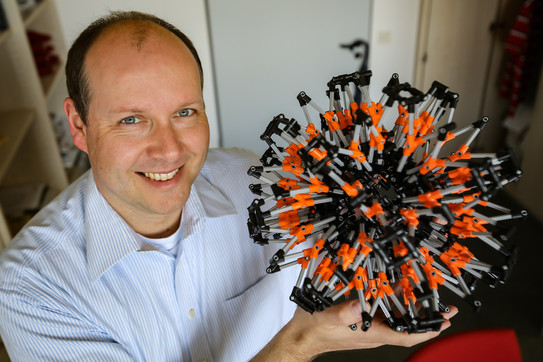
Guido Clever is a Professor (W3) for Bioinorganic Chemistry at the Technical University Dortmund, Faculty of Chemistry and Chemical Biology, Department of Inorganic Chemistry. His office is located at Otto-Hahn-Str. 6, Room C1-05-734 in Dortmund, Germany. Prof. Clever's research focuses on supramolecular chemistry, particularly the design and construction of artificial nanoscale devices and complex systems inspired by nature's biochemical machinery. His work spans chemistry inside molecular cages, DNA nano-architecture, and molecular machines. The Clever Lab creates functional molecules and supramolecular assemblies for applications as diagnostic tools, selective reagents, and stimuli-responsive materials. His research group has access to state-of-the-art equipment including a 500 MHz NMR spectrometer, high-resolution Ion Mobility-ESI mass spectrometer, single crystal X-ray diffractometer, and various spectroscopy and chromatography systems that enable sophisticated analysis of supramolecular structures. Prof. Clever has received numerous awards including an ERC Consolidator Grant in 2016 and several young investigator awards from the German Chemical Society and Fonds der Chemischen Industrie. ERC Consolidator Grant 2016 Otto Hofmann Foundation prize for pre-diploma Dr. Sophie Bernthsen Fonds prize for diploma Dr. Klaus Römer Foundation prize for PhD thesis ADUC Prize 2012 (Young Investigator Award) FCI Dozentenpreis 2014 (Young Investigator Award) Prof. Clever has successfully supervised PhD students including Laura Neukirch, who recently defended her thesis on photoinduced charge separation in coordination cages. His academic career includes previous positions as Professor (W2) at Georg-August-University Göttingen (2013-2015), Junior Professor at the same institution (2010-2013), and postdoctoral work at Tokyo University. The Clever Lab maintains active international collaborations, including serving as International Advisor of the Japanese 'Asymmetallic' Collaborative Research Consortium, and has participated in various symposia including Alexander von Humboldt Foundation events in China and Germany.
Professor Tim Rogers is affiliated with the University of Bath as a faculty member in the Department of Mathematical Sciences . He is actively involved in research spanning complex systems, network theory, and stochastic processes. PhD in Random Matrix Theory from King's College London (2010) His research focuses on emergent behavior in random systems , including: Collective Behavior : Crowd dynamics, lane formation, and noise-enhanced synchronization Epidemics & Networks : Spread prediction, node risk assessment, and misinformation impacts Ecology & Evolution : Trait emergence, species boundaries, and demographic noise effects Random Matrix Theory : Spectral analysis and applications to complex systems Publication trends reflect interdisciplinary work bridging Physics, Biology, and Mathematics , with a focus on network structures , stochastic modeling , and emergence phenomena . Scientific awards include: 2015 : Editor's Choice for Europhys. Lett. 109, 28005 2016 : Highlight of Journal of Physics A 2017 : Editor's Suggestion for Phys. Rev. E 92, 032708 He has supervised numerous PhD students and postdocs on projects related to stochastic dynamics , network modeling , and mathematical biology , with ongoing grants from agencies like EPSRC and The Leverhulme Trust .
Dr. Armin Mustafa is an Associate Professor in Computer Vision and AI at the University of Surrey, where he holds a prestigious Royal Academy of Engineering Research Fellow position. He is affiliated with the Centre for Vision, Speech and Signal Processing (CVSSP), the School of Computer Science and Electronic Engineering, and the Surrey Institute for People-Centred Artificial Intelligence (PAI). His research focuses on developing AI systems for visual understanding of complex dynamic scenes, with applications in entertainment, autonomous systems, and augmented/virtual reality. Dr. Mustafa completed his PhD in general dynamic scene reconstruction from multi-view videos in 2016 from the University of Surrey under the supervision of Prof. Adrian Hilton. Prior to his doctoral studies, he worked for three years (2010-2013) at Samsung Research Institute in Bangalore, India, in the field of Computer Vision. His research expertise spans Computer Vision, Scene Understanding, 3D/4D Vision, Virtual Reality, Light Fields, Machine Learning, Video Captioning, Augmented Reality, Artificial Intelligence, and Audio-visual Video Understanding. Dr. Mustafa has pioneered advances in 4D vision, NLP, and Scene Understanding over the past decade, with a particular focus on enabling machines to model and interpret real-world environments for socially beneficial applications. His work bridges theoretical advances in computer vision with practical applications in media production, virtual reality, and autonomous systems. Analysis of Dr. Mustafa's recent publications reveals a strong focus on multimodal learning, particularly the integration of audio and visual information for scene understanding. His work spans diverse areas including shadow detection and removal, audio event classification, video captioning, person image generation, and dynamic scene reconstruction. A notable trend is his exploration of transformer architectures for both vision and audio tasks, as well as the application of self-supervised learning techniques to reduce dependency on labeled data. Dr. Mustafa has received numerous prestigious awards: 2018 - Research Fellowship, The Royal Academy of Engineering, UK 2017 - Young Researcher award, CVPR 2016 - Doctoral Consortium grant, CVPR 2015 - BMVA travel grant for ICCV 2014 - Set-Squared Research to Innovator grant 2013 - Overseas Research Scholarship, FEPS, The University of Surrey 2010 - Cadence Silver Medal, Indian Institute of Technology, Kanpur As a dedicated mentor, Dr. Mustafa supervises several PhD students working on cutting-edge topics including multi-person reconstruction, audio-visual scene understanding, and automatic storyboard generation. His research is supported by significant grants including a £15 million UKRI Prosperity Partnership with the BBC (AI4ME), a 5-year Royal Academy of Engineering fellowship (4D Vision for Perceptive Machines), and multiple projects with industry partners such as Figment Productions and Foundry. Dr. Mustafa is an active member of the Centre for Vision, Speech and Signal Processing (CVSSP), one of the world's leading research centers in vision, speech, and signal processing. He also contributes to the Surrey Institute for People-Centred Artificial Intelligence (PAI), where he serves as a Surrey AI Fellow. His work often involves collaboration with industry partners and other academic institutions across Europe.
Lucie Tvrznikova is a Postdoctoral Researcher at Lawrence Livermore National Laboratory, specializing in experimental particle physics and detector engineering. Her work focuses on direct dark matter detection, nuclear physics, and cyclotron radiation emission spectroscopy (CRES). She holds a Ph.D. from Yale University (2019), where her dissertation explored sub-GeV dark matter searches and electric field modeling in the LUX and LZ experiments. Her research has advanced understanding of low-mass dark matter particles, detector calibration techniques, and high-voltage behavior in liquid noble gases through projects like XeBrA and the Project 8 collaboration. Key contributions include developing methods to extend LUX's sensitivity using Bremsstrahlung and Migdal effects, creating 3D electric field models for xenon detectors, and advancing CRES technology for neutrino mass measurements. She collaborates on major experiments like LZ and the LUX-ZEPLIN initiative, addressing challenges in next-generation noble liquid detectors. Current work focuses on dielectric breakdown studies in liquid xenon, machine learning applications for data analysis, and neutrino mass measurements using Project 8's Kr and tritium systems.
Dr. Ivett Orsolya Bacskay is an Assistant Professor at the Department of Analytical and Environmental Chemistry, Institute of Chemistry, Faculty of Science, University of Szeged. Her research focuses on fundamental and applied aspects of separation science, particularly in liquid chromatography, with expertise in retention mechanisms, mass transfer, and stationary phase characterization. Research Interests: Her work spans several key areas in analytical chemistry, including hydrophilic interaction liquid chromatography (HILIC), size-exclusion chromatography, chiral separations, pore size distribution analysis, and molecular imprinting for artificial antibody development. She investigates both theoretical models and practical applications in chromatographic systems. An analysis of her recent publications (2010–2025) reveals a strong emphasis on improving chromatographic efficiency and understanding molecular interactions in separation processes. Her studies frequently address challenges in hold-up volume determination, overloading effects, and mass transfer in various stationary phases, contributing significantly to the advancement of HPLC and LC-MS methodologies. Scientific Awards: No awards mentioned in the provided text. Advising and Grants: While specific details about students or funded projects are not listed, her active research output and faculty position suggest involvement in mentoring graduate students and securing research support. She has contributed to interdisciplinary studies involving neuropharmacology and plant biochemistry, indicating collaborative research efforts. Labs and Teams: Dr. Bacskay is part of the Institute of Chemistry at the University of Szeged, where she conducts research within the Department of Analytical and Environmental Chemistry. Her work likely involves collaboration with analytical chemistry research groups focusing on method development, column technology, and environmental or pharmaceutical analysis.
Richard Kempter is a Full Professor at the Humboldt-Universität zu Berlin, where he leads the Theoretical Neuroscience research group within the Institute for Theoretical Biology, Department of Biology. His research focuses on the neural basis of learning and memory through computational and mathematical modeling of synapses, neurons, and neural networks. He is affiliated with several major research centers including the Bernstein Center for Computational Neuroscience, the Einstein Center for Neurosciences Berlin, and the CRC 1315 Memory Consolidation. Professor Kempter's research interests span theoretical and computational neuroscience with a particular focus on the neural mechanisms underlying learning and memory. His work employs biophysical modeling and mathematical analysis to study synaptic short- and long-term plasticity, the dynamics of single neurons, and the interaction of neurons in recurrently coupled networks. A key aspect of his research investigates how neural systems maintain a balance between learning susceptibility and stability against pathological activity patterns, with model systems including the hippocampus and early auditory system. His research group has made significant contributions to understanding hippocampal sharp wave-ripple events, phase precession in spatial navigation, auditory processing in barn owls, and memory consolidation mechanisms. The group's work combines theoretical approaches with computer simulations to unravel the computational principles of neural circuits, showing particular interest in how neural tissue remains susceptible to learning while maintaining robust stability against pathological activity patterns. Scholarship of the State of Bavaria (03/1994-12/1995) Emmy Noether Fellowship Part I (09/1999-08/2001), funded by the Deutsche Forschungsgemeinschaft Emmy Noether Fellowship Part II (01/2003-09/2008) Guest Professor , HU Berlin, Department of Biology (10/2008-03/2010) Professor Kempter has advised numerous PhD and Master's students throughout his career, with many continuing in neuroscience research. His group maintains strong connections with experimental laboratories to bridge computational models with empirical findings, particularly in hippocampal function and auditory processing. The Theoretical Neuroscience Lab participates in collaborative projects investigating memory consolidation and neural coding principles, contributing significantly to our understanding of how neural circuits implement computational principles underlying learning and memory.
Jonathan Regehr is Professor and Associate Head (Undergraduate) in Civil Engineering at University of Manitoba's Price Faculty of Engineering. He holds BSc and PhD degrees in Civil Engineering from University of Manitoba. His research examines transportation information systems, freight logistics, railway operations, and road safety. As Co-Director of Urban Mobility and Transportation Informatics Group, he collaborates with government and industry partners to develop data-driven solutions for transportation policy challenges. Recent publications focus on freight system resilience, rail corrugation management, and traffic monitoring innovations. His work frequently addresses cold-region transportation challenges and has been recognized with nominations for Transportation Research Board awards. Professor Regehr serves as Vice-President of Heavy Vehicle Transport and Technology Forum and actively contributes to transportation policy development through committee leadership.
Archontis Politis is an Assistant Professor in the Department of Computing Sciences at Tampere University's Faculty of Information Technology and Communication Sciences. His research focuses on signal processing, machine learning, and their applications in audio engineering, particularly in spatial audio, sound source separation, and parametric audio coding. He explores topics such as Ambisonics, reverberation control, and neural network-based approaches for audio processing. His work emphasizes spatial audio reproduction, including six degrees of freedom (6DOF) rendering, microphone array processing, and efficient compression techniques for higher-order Ambisonics. He also investigates sound event localization and detection, leveraging machine learning for real-world acoustic scenarios. His contributions span theoretical advancements in spherical harmonics and practical implementations of spatial audio systems. Recent research highlights include developing datasets for music source separation, improving synthetic-to-real generalization in classical music, and creating neural encoding models for irregular microphone arrays. His methodologies often integrate deep learning with traditional signal processing to address challenges in multi-speaker environments and dynamic acoustic scenes.