Susan Fino is a Professor at the College of Liberal Arts and Sciences, Wayne State University. Her research focuses on public law, American constitutional law, administrative law, and the role of state supreme courts. She holds a B.A. from Johns Hopkins University, an M.A. and Ph.D. from Rutgers University. She has received the President's Award for Excellence in Teaching. Her courses include American Government (PS1010) and Constitutional Law (PS5110/PS5120), taught across multiple terms from 2023 to 2025. Dr. Fino's research explores judicial federalism, state constitutional frameworks, and legal interpretations of rights. Her work analyzes topics like church-state relations, taxation provisions in state constitutions, and assisted suicide debates. She has written extensively on state supreme court dynamics, including landmark cases and institutional performance metrics. Her scholarship bridges legal theory with practical governance challenges at both state and federal levels. Her publications span over three decades, addressing evolving legal landscapes such as the Rehnquist Court’s federalism approach and technological impacts on criminal sentencing. She consistently engages with issues at the intersection of law, politics, and societal values.
Kevin D. Ashley is a Professor of Law at the University of Pittsburgh School of Law. He is also a senior scientist at the Learning Research and Development Center and an adjunct professor of computer science at the University of Pittsburgh. His interdisciplinary work bridges artificial intelligence, legal analytics, and ethical reasoning. JD, Harvard Law School M.A. and PhD, University of Massachusetts BA, Princeton University His research focuses on computational modeling of legal reasoning , AI and ethics , legal text analytics , and case-based reasoning . He has pioneered AI applications for legal decision support, automated argumentation, and bias detection in legal corpora. Recent publications include studies on large language models in legal annotation, argument mining, and empirical legal analysis. His work has been supported by multiple National Science Foundation grants, emphasizing fairness in AI and access to justice. 2022 Codex Prize for Computational Law 2015 University of Massachusetts Outstanding Achievement Award 2002 AAAI Fellow for AI in Law contributions 2000 Chancellor’s Distinguished Research Award A former President of the International Association for Artificial Intelligence and Law, Ashley has held visiting roles at the University of Bologna, Stanford CodeX, and IBM Watson Research Center. He co-edits the journal Artificial Intelligence and Law and teaches courses on applied legal analytics.
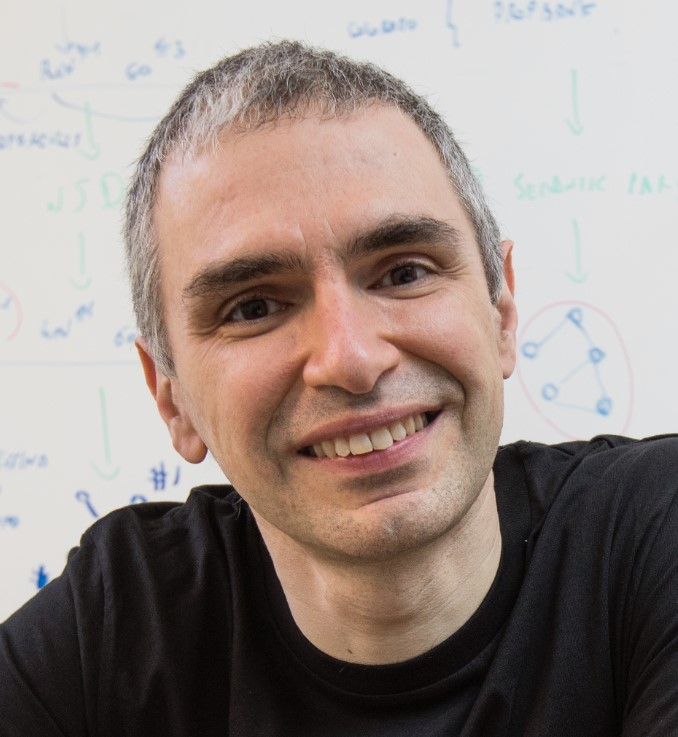
Roberto Navigli is a Full Professor in the Department of Computer, Control and Management Engineering at Sapienza University of Rome, where he leads the Sapienza NLP Group. He has held academic positions at Sapienza since 2007, progressing from Researcher to Associate Professor, and now Full Professor. Navigli is internationally recognized for his groundbreaking work in multilingual natural language processing and computational semantics. His research spans multiple areas within Natural Language Processing, with a particular focus on multilinguality , lexical semantics (Word Sense Disambiguation and induction), sentence-level semantics (Semantic Role Labeling and Semantic Parsing), and Large Language Models . As the leader of the Minerva LLM project, he pioneered the development of the first pretrained LLM in Italian. His creation of BabelNet, the largest multilingual encyclopedic computational dictionary covering 271 languages and about 14 million concepts, represents a landmark achievement in computational linguistics. Professor Navigli's recent publications demonstrate a strong focus on advancing multilingual capabilities of language models, addressing challenges in semantic understanding across languages, and developing robust evaluation frameworks. His work on Italian LLM optimization, lexical ambiguity in machine translation, and cross-lingual safety gaps reflects his commitment to building more accurate and reliable language technologies that work effectively across diverse linguistic contexts. AAAI Fellow (2025) EurAI Fellow (2024) ELLIS Fellow (2024) ACL Fellow (2023) Outstanding Paper Awards at ACL 2024, ACL 2023, and NAACL 2021 Best Resource Paper Award at ACL 2022 Prominent Paper Awards from the Artificial Intelligence Journal (2023, 2017) META Prize 2015 for BabelNet Professor Navigli has successfully secured substantial research funding, including two prestigious ERC Grants (MultiJEDI ERC Starting Grant 2010-2016 and MOUSSE ERC Consolidator Grant 2017-2023, totaling around 3 million euros), PI of PRIN 2017 and PRIN 2020 projects (overall 1.4 million euros), and a Google Focused Research Award (around 300k$). He has mentored over 30 PhD students, many of whom have gone on to successful careers in academia and industry. His leadership extends to major international conferences, serving as General Chair of ACL 2025 and Program Co-Chair of ACL-IJCNLP 2021. As the director of the Sapienza NLP Group and co-leader of the Transversal Project on Large Language/Multimodal Models in the FAIR (Future Artificial Intelligence Research) project, Professor Navigli oversees a vibrant research ecosystem focused on advancing the state-of-the-art in natural language understanding across languages. His spinoff company, Babelscape, translates academic research into practical applications for industry.
Sara Stymne is a Senior Lecturer in Computational Linguistics at the Department of Linguistics and Philology, Uppsala University, where she has been working since 2012. She initially joined as a post-doc (2012-2015), then worked as a researcher (2015-2017), and served as an assistant professor (2017-2023) before her current position as Senior Lecturer. Prior to Uppsala, she was a researcher at Linköping University's Department of Computer and Information Science. Dr. Stymne earned her PhD in Computational Linguistics from Linköping University in 2012 with the thesis 'Text Harmonization Strategies for Phrase-Based Statistical Machine Translation,' following a Licentiate degree in Computational Linguistics (2009) and a Master's degree in Cognitive Science (2006), both also from Linköping University. During her doctoral studies, she spent the autumn of 2010 and spring of 2009 at Xerox Research Centre Europe in Grenoble, France. Her primary research interests focus on cross-lingual natural language processing and digital humanities, with particular emphasis on multilingual dependency parsing. Dr. Stymne is passionate about applying computational linguistics to solve research questions in other fields, including language history, literary analysis, and political science. Her earlier work concentrated on machine translation, with specific interests in discourse-aware translation, compound processing, and error analysis. She has made significant contributions to the development of language technology tools for analyzing dialogue, narrative, and stylistic features in literature. Analysis of Dr. Stymne's recent publications reveals a strong focus on cross-lingual and cross-domain natural language processing. Her work spans multiple subfields including dependency parsing across genres and topics, discourse relation analysis in low-resource languages like Egyptian Arabic, direct speech identification in Swedish literature, and causality detection in governmental documents. A notable trend is her application of NLP techniques to digital humanities problems, particularly in analyzing literary texts and historical language change. Her research often involves creating and utilizing specialized datasets for specific linguistic phenomena across multiple languages. Dr. Stymne actively supervises graduate students, having guided numerous master's and bachelor's theses on topics ranging from speech recognition to multilingual parsing and causality detection. She leads or participates in several research projects including 'Fictional prose and language change' (funded by VR, 2021-2023) and 'Enabling climate-resilient development' (funded by Marianne and Marcus Wallenberg Foundation, 2023-2027), demonstrating her commitment to interdisciplinary research with practical applications. Her work has resulted in several notable software resources including uuPronPred for cross-lingual pronoun prediction, uuparser for dependency parsing, and Docent for document-level machine translation. Within the Computational Linguistics and Language Technology group at Uppsala University, Dr. Stymne contributes to multiple research initiatives focused on developing language technology tools for digital humanities applications. Her team works closely with literary scholars and historians to create computational methods for analyzing large corpora of literary texts, particularly focusing on Swedish literature across different historical periods. Her research bridges the gap between theoretical computational linguistics and practical applications in the humanities, creating new methodologies for quantitative analysis of literary and historical texts.
Sakari Melander is a Professor at the Faculty of Law , University of Helsinki, specializing in Criminal Law , with a focus on constitutionalization, Europeanization, and sentencing policies. His work bridges theoretical criminal law with practical legislative and policy challenges. Key research areas include EU criminal law, constitutional constraints on criminal legislation, and general doctrines of criminal law. He has extensive experience in parliamentary legal consultation, providing expert opinions to Finland’s Legislative Committees (e.g., on immigration control, anti-corruption directives, and digital evidence handling). Recent publications address topics like EU corporate sanction policies, constitutionalization of criminal law, and reforms in Finnish sentencing systems. His 2025 article in the New Journal of European Criminal Law explores balancing administrative and criminal sanctions in the EU. Scientific awards include: Hilkka ja Otto Brusiin Foundation Thesis Prize (2001) Magister Bonus – Good Teacher Award (2014) Primustohtori Award (2010) Year’s Teacher (2010) Year’s Opponent (2008) He leads research projects such as Criminal Law Under Pressure: Differentiation and Harmonization (2012-2015) and Assessment of Human Trafficking Sanction Practices (2021-2022), and supervises doctoral theses on criminal law topics.
Professor Brian Dillon is the Professor of Creative Writing and Director of Creative Writing at Queen Mary University of London's School of English and Drama. Previously, he served as Head of the Writing Programme at the Royal College of Art. He holds a PhD from the University of Kent (1999) and has authored numerous books blending creative nonfiction, literary criticism, and art analysis. His research focuses on the essay form, autobiography, literature-visual arts intersections, and writing about illness. Key publications include *Suppose a Sentence* (2020), an experimental essay collection analyzing literary sentences, and *Affinities* (2023), exploring photographic imagery. Current projects include a study of Kate Bush's *Hounds of Love* and an essay on education. Dillon frequently contributes to *The Guardian*, *London Review of Books*, and *Artforum*, and has curated exhibitions for Tate and Hayward Galleries. His awards and fellowships are not explicitly listed here, but his work has been widely exhibited and published internationally. He supervises doctoral students in creative writing and related fields, emphasizing interdisciplinary approaches to literature and art. Public engagement includes talks at institutions like the British Museum and Pompidou Centre, and appearances on BBC Radio 3 and RTE Radio. His work bridges academic critique with accessible creative writing, making complex themes engaging for broader audiences.
Freda Shi is an Assistant Professor at the David R. Cheriton School of Computer Science at the University of Waterloo and a Faculty Member at the Vector Institute, where she holds a Canada CIFAR AI Chair. She joined the University of Waterloo in July 2024 after completing her Ph.D. at the Toyota Technological Institute at Chicago. Educational Background: Ph.D. in Computer Science, Toyota Technological Institute at Chicago (2024), advised by Professors Karen Livescu and Kevin Gimpel Bachelor's degree in Intelligence Science and Technology (Computer Science Track) with a minor in Sociology, Peking University (2018) Dr. Shi's research focuses on computational linguistics and natural language processing, particularly on deeper understandings of natural language and the human language processing mechanism. She is especially interested in learning language through grounding, computational multilingualism, and related machine learning aspects. Her work aims to inform the design of more efficient, effective, safe, and trustworthy NLP systems. She leads the CompLING Lab at the University of Waterloo, which investigates how language models process spatial relationships and acquire linguistic structures through grounded experiences. Her publication record shows a consistent trajectory of high-impact research, with recent work focusing on spatial reasoning in vision-language models, multilingual chain-of-thought capabilities, and grounded language acquisition. She has published in top-tier conferences including ACL, EMNLP, ICLR, and NAACL, with several papers receiving notable recognition including Best Paper Nominee status at multiple venues. Her research bridges theoretical linguistics with practical NLP applications, demonstrating how linguistic insights can improve AI systems. Scientific Recognition: Canada CIFAR AI Chair (2024) Google Ph.D. Fellowship Thesis of Distinction for her doctoral work Multiple Best Paper Nominee awards at major NLP conferences Dr. Shi teaches CS 784: Computational Linguistics and CS 486/686: Introduction to Artificial Intelligence at the University of Waterloo. She actively contributes to the NLP research community through conference participation, program committee service, and collaborative projects. Her research has significant implications for creating more robust, human-like language understanding systems and advancing the field of grounded language learning in artificial intelligence.
Stephen Billings is an Associate Professor of Finance at the Leeds School of Business, University of Colorado Boulder, where he holds the Global Real Estate Capital Markets Chair position. He serves as the faculty director of the MS in Real Estate program and research director for the CU Real Estate Center. His work spans multiple research centers including the Center for Research on Consumer Financial Decision Making and the Michael A. Klump Center for Real Estate. Billings received his PhD in Economics from the University of Colorado, a MS in urban planning from the University of North Carolina, and a BS in economics from Georgetown University. Prior to joining CU Boulder in 2016, he was faculty at the University of North Carolina Charlotte with appointments in both economics and public policy, where he also served as faculty director for the real estate center. His research focuses on the intersection of housing, schools, neighborhoods and crime, addressing critical policy issues including the impact of public investment in light-rail transit on neighborhoods, school segregation's influence on academic achievement and crime, neighborhood gentrification causes, lead-based paint in low-income housing, and the effects of sea level rise and natural disasters on neighborhood sorting and household finances. Billings employs sophisticated analysis of large micro-datasets with studies based on data and policies in Charlotte, NC and Denver, CO. His work connects urban economics with public policy, demonstrating how neighborhood environments shape individual outcomes across multiple dimensions. Billings' recent publication record demonstrates a consistent focus on neighborhood effects, school choice impacts, crime economics, and housing market dynamics. His work frequently examines the intersection of race, housing, and economic outcomes, with particular attention to policy implications. He has developed innovative methodological approaches to studying residential amenities and neighborhood spillovers, with increasing attention to climate change impacts on housing markets. His research appears in top journals including The Quarterly Journal of Economics, American Economic Review: Insights, and Journal of Urban Economics. As an educator, Billings teaches undergraduate and masters classes in real estate finance and economics, as well as doctoral and masters level courses on cost-benefit analysis and statistical methods. He has extensive consulting experience conducting economic impact studies, including assessments of North Carolina's public higher education system, affordable housing needs in Colorado communities, and the economic effects of marijuana legalization on property markets. His practical policy work complements his academic research, creating a bridge between theoretical insights and real-world applications. Billings leads significant research initiatives through the CU Real Estate Center, where he directs studies examining the impact of business improvement districts and other urban development policies. His work bridges academic research with practical policy applications, making substantial contributions to our understanding of how housing, education, and neighborhood environments shape individual outcomes and community development. His December 2023 memo on the HUD Officer Next Door Program exemplifies his engagement with current housing policy issues.
Patrick Metze is Professor of Law at Texas Tech University School of Law, where he has served since 2008. He initially joined as an adjunct professor teaching the criminal defense clinic in 2007 and became a full-time Associate Professor of Law and Director of the Criminal Defense Clinics in May 2008. He was promoted to Professor of Law with tenure in September 2012. Professor Metze has established several groundbreaking clinical programs including the Capital Punishment Clinic (2010), the Caprock Regional Public Defender Office and Clinic (2010) - the first full-time public defender office operated from within a law school, and the Texas Tech School of Law Innocence Clinic (2016). Professor Metze earned his B.A. from Texas Tech University in 1970 and his J.D. from the University of Houston in 1973. Before joining academia, he maintained a private law practice in Levelland and Lubbock, Texas for over 30 years, initially handling general practice including banking, collections, corporate law, and oil and gas matters, but shifting focus to criminal and family law following the 1986 oil industry collapse in West Texas. He was one of only 14 attorneys qualified for appointment as first chair in Capital Murder cases in the 9th Administrative Judicial Region. Professor Metze's research focuses on criminal law and procedure, with particular emphasis on capital punishment, innocence projects, and the school-to-prison pipeline. His publications reveal a consistent concern with constitutional protections, ethical obligations of courts and practitioners, and systemic reforms in criminal justice. His work spans both theoretical analysis of legal principles and practical guidance for criminal defense attorneys. Among his professional recognitions, Professor Metze is a Life Fellow of The Texas Bar Foundation and maintains membership in The Pro Bono College of the State of Texas. His presentations at numerous professional seminars demonstrate his active engagement with the criminal defense bar and commitment to advancing legal practice. Professor Metze has served on various committees including the Criminal Justice Council of the State Bar of Texas, the Advisory Committee to the Lubbock Special Needs Defenders Office, and as a former board member of the Lubbock Criminal Defense Lawyers Association (where he served as President) and the Texas Criminal Defense Lawyers Association.
Andrew Ollett is an Associate Professor and Director of Graduate Studies in the Department of South Asian Languages and Civilizations at the University of Chicago , where he has taught since 2019. His research focuses on the literary and intellectual traditions of South and Southeast Asia, particularly through works in Sanskrit, Prakrit, Apabhramsha, and Kannada from the first millennium CE. Co-founder and editor of NESAR (New Explorations in South Asia Research) Director of NEH-funded edition/translation of the Kavirājamārga (earliest Kannada literary manual) Expert in Prakrit and Kannada literary traditions His work explores the 'question of language'—examining how language choice shaped cultural production and change in premodern India. Current projects include a monograph on context-sensitivity in Indian language theories and a study of manuscript technology's impact on early South Asian knowledge communities. He has authored The Mirror of Ornaments (Naples: Unior Press, 2025) and Language of the Snakes (UC Press, 2017), and co-authored Lilavai (Harvard, 2021). Recent publications include interdisciplinary studies on: Sanskrit-Prakrit campū genre reevaluation Pragmatics in Mīmāṁsā interpretive concepts Manuscript literacy's influence on literary forms Historical linguistics of Middle Indic syllable reduction Philosophy of language in Śālikanātha and Kumārila Bhaṭṭa Awarded the NEH 'Scholarly Editions and Translations' grant , he teaches classical South Asian literature courses covering Sanskrit, Prakrit, and Tamil traditions. He maintains digital resources including a Prakrit Digital Texts Project and Mīmāṁsādigdarśinī digital text repository, and actively contributes to open-access scholarship.
Maria Fitzpatrick is Professor in Cornell University's Department of Policy Analysis and Management and Director of the Cornell Institute for Public Affairs. A Research Associate at the National Bureau of Economic Research, she holds a Ph.D. from the University of Virginia (2008) and specializes in child/family policy and education economics. Research examines early childhood education impacts, teacher compensation and retirement systems, child maltreatment reporting, and incarceration effects on families. Notable studies analyze universal pre-kindergarten programs, teacher pension reforms, and maternal incarceration's impact on birth outcomes. Current projects investigate child welfare decision-making algorithms and prison visitation policies. Fellowships include the Henry Luce Foundation/ACLS Early Career Fellowship and postdoctoral positions at Stanford's Institute for Economic Policy Research. She has advised government agencies including the Australian Prudential Regulation Authority and Queensland Rail.
Julian Jara-Ettinger is an Associate Professor of Psychology and Computer Science at Yale University. He holds a Ph.D. from MIT (2016). His research focuses on understanding the cognitive and computational mechanisms underlying human social behavior, including fairness, linguistic communication, gesture, moral reasoning, and pedagogy. He employs interdisciplinary methods such as computational modeling, eye-tracking, cross-cultural studies, and developmental research to bridge psychology and artificial intelligence. Key research areas include the development of social cognition in children, the integration of theory of mind with communication, and the application of cognitive science principles to build socially intelligent machines. His work emphasizes how humans infer others' knowledge, intentions, and desires, with implications for AI safety and ethical systems design. Publications span topics like epistemic inference, moral judgments, and the computational foundations of social interaction. His lab's research often intersects with evolutionary simulations, neural modeling, and cultural psychology. No scientific awards are explicitly mentioned in the provided text. Collaborations involve cross-disciplinary teams addressing challenges in developmental science, AI ethics, and cognitive robotics. His work has practical applications in educational strategies, social policy, and human-AI collaboration frameworks.
Dr. Steven Kemp is a Senior Lecturer in the Department of Public Law at the University of Girona, Spain. His research focuses on the intersection of criminal law, cybercrime, and criminological analysis, with affiliations to institutions like UNICRI, Open University of Catalonia, and the Institute of Public Security of Catalonia. His work spans digital security, fraud victimization, and sentencing disparities. Current roles: Serra Hunter Fellow, University of Girona (2023–present); Collaborating Teacher, UNICRI (2024–present) Previous roles: Associate Professor, University of Girona (2015–2021); Postdoctoral Researcher, Pompeu Fabra University (2021–2023) and University of Manchester (2021) His research interests include: Cybercrime dynamics during global crises (e.g., pandemic-related fraud trends) Victimization patterns in digital societies, particularly among older adults Legal implications of smart technologies and cybersecurity frameworks Comparative criminal justice systems, especially plea bargaining and sentencing disparities Key trends in his recent publications (2025–2019) highlight: Rising cyberfraud incidents and their societal impacts Interdisciplinary approaches to digital security and legal systems Statistical modeling of crime trends post-COVID-19 Behavioral responses to cybercrime risks Scientific recognition includes: Serra Hunter Fellow He actively collaborates with research groups like the Research Group in the Seminar of Criminal and Criminological Sciences and contributes to public policy initiatives in cybersecurity and fraud prevention.
Matthew Santa serves as Professor of Music Theory and Chair of the Music Theory and Composition Area at Texas Tech University School of Music, with prior teaching appointments at Queens College and Hunter College. His leadership shapes curriculum development and academic initiatives within the department. Academic credentials include advanced degrees from Louisiana State University and The City University of New York, establishing foundational expertise in theoretical frameworks and analytical methodologies. Research focuses on post-tonal analysis , diatonic set theory , and parsimonious voice leading , bridging complex theoretical concepts with practical pedagogy. His work integrates popular music analysis and metrical studies, emphasizing accessibility for diverse learners through innovative teaching resources. Publications demonstrate evolving scholarly trends from late-20th century set theory toward contemporary applications in musical form and rhythm. Recent textbooks synthesize Rothstein, Krebs, and Mirka's theories into unified analytical approaches for undergraduate and graduate education. Scientific recognition includes: MTSNYS Young Scholar Award (1998) Mentorship encompasses graduate and undergraduate students across composition and theory disciplines, though specific advisees aren't documented in source materials. No grant funding details appear in available records. Collaborative projects include the Flute/Theory Workout series with Lisa Garner Santa and Thomas Hughes, blending performance technique with theoretical concepts through MIDI accompaniment systems.
Professor David Nelken is a distinguished academic in the field of law and legal studies, currently serving as Professor of Comparative and Transnational Law at the Dickson Poon School of Law, King's College London. He previously held positions at prestigious institutions including the University of Cambridge, University College London, and the University of Macerata (Italy) as a Distinguished Professor. His academic career includes roles as Distinguished Research Professor at Cardiff University (1995–2013) and Visiting Professor of Criminology at the University of Oxford (2010–2014). Professor Nelken's research focuses on comparative sociology of law, criminology, and legal/social theory. He has made significant contributions to understanding global social indicators, juvenile justice, white-collar crime, and international criminal justice. His work emphasizes interdisciplinary approaches, combining theoretical inquiry with empirical research. His notable awards include the American Sociological Association Distinguished Scholar Award (1985), Sellin-Glueck International Award (2009), and Fellowships from the British Academy (2023) and the Academy of Social Sciences (2009). He has served on editorial boards of leading journals and contributed to global legal governance initiatives, including the SCOPUS Database evaluation committee. Professor Nelken has advised on criminal justice systems globally, including roles in Scotland’s Children’s Hearings and Italian Regional Crime Committees. He is actively involved in PhD supervision, having been awarded supervisory excellence in multiple years. His teaching spans Jurisprudence, Law & Social Theory, and Sociology of Law at both undergraduate and postgraduate levels.