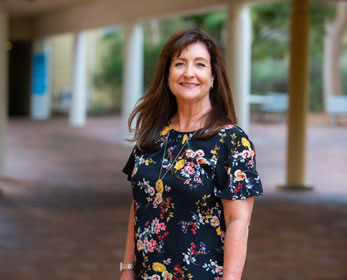
Professor Mila Dimitrova Vulchanova is affiliated with NTNU's Department of Language and Literature within the Faculty of Humanities. Her research focuses on language acquisition, language processing, and neurodevelopmental disorders, particularly autism spectrum disorders (ASD). She leads major international projects like SCALA (HorizonEurope-UKRI), MultiplEYE (COST Action), and e-LADDA (MSCA ITN). Her work bridges linguistic theory, cognitive science, and clinical applications, emphasizing multilingualism and intervention strategies for developmental language deficits. Recent research explores figurative language processing in ASD, spatial communication universals, and the interplay between statistical learning and language development. She co-directs the Language Acquisition and Language Processing Lab and has coordinated several EU-funded initiatives addressing multilingualism and STEM education. Her publications span journals like Nature Human Behaviour , Autism Research , and Journal of Neurolinguistics , reflecting her interdisciplinary approach to language and cognition. Key grants include the NFR FRIHUM project on situated reference in language acquisition and the EDULANG grant focusing on multilingual education. She actively engages in outreach, including public lectures on language development and digital media's role in education.
Kaja Borthen is a Professor at the Department of Language and Literature at NTNU. Her research focuses on the intersection of pragmatics and semantics, particularly non-truth-conditional aspects of linguistic meaning. She investigates how pragmatic principles interact with encoded meaning to shape utterance interpretation in context, with specializations in referring expressions, implicatures, and pragmatic particles. Research Projects: NOT Project (2014-2017): Analyzed Norwegian pragmatic tags Cross-linguistic Nominal Forms Study (2007-2009) BREDT Project (2003-2006): Focused on anaphor resolution PhD Work (1999-2003): Examined Norwegian bare singulars Her recent work explores phenomena like pronominal right-dislocation in Norwegian and regional variation in pragmatic particles. She has contributed to foundational discussions on referential semantics and discourse coherence, integrating insights from relevance theory and cognitive linguistics. Teaching responsibilities include advanced courses in linguistic theory and research methodologies. Publications span journals like Glossa , Nordic Journal of Linguistics , and Journal of Pragmatics , reflecting her commitment to bridging theoretical linguistics with empirical discourse analysis.
Dr Jan Rouke Kuipers is a Lecturer in Psychology at the University of Stirling. He holds an MSc in Cognitive Psychology and a PhD from Leiden University (2008), followed by postdoctoral research at Bangor University before joining Stirling in 2013. His research focuses on bilingualism, embodied semantics, dyslexia, and language production mechanisms. Key methods include ERP, eye-tracking, pupillometry, and TMS. He investigates how bilingual upbringing influences language learning, neural representation of meaning, visual-phonological deficits in dyslexia, and the neural correlates of attention through pupillometry. His recent work explores mobile cognition and cross-modal semantics. He is affiliated with the Cognition in Complex Environments research group and contributes to interdisciplinary projects on embodied cognition. Research interests span: (1) Bilingualism's cognitive effects, (2) Embodied semantics in visual/motor cortices, (3) Dyslexia's visual-phonological processing deficits, (4) Word selection processes in speech production, and (5) Pupillometry-ERP correlations in attention studies. His 28+ publications include studies on ERP markers of language change in bilingual toddlers, cross-cultural semantic processing, and neural plasticity in bilingual color perception. Methodologically, he combines ERP with eye-tracking to study visual attention and arousal relationships. Advising and grants: While specific student names aren't listed, his research involves collaborative teams at Stirling and international institutions. Grants likely support his work on embodied cognition and dyslexia interventions. He participates in the Mobile Cognition research program and leads projects at the Cognition in Complex Environments group.
Julie Van Dyke is an Assistant Clinical Professor at the Child Study Center, Yale University. Her research focuses on reading comprehension mechanisms, linguistics, and educational interventions, employing eye-tracking technology and computational methods. She explores how text formatting, acoustic features, and linguistic structures influence comprehension across populations including ELL students and adolescents. Notable contributions include databases like DerLex and CompLex, analyzing word reading behavior through eye-movement studies. Her work bridges cognitive science with practical educational applications, addressing both theoretical and applied challenges in literacy development. Her academic contributions extend to special issue curation and peer-reviewed publication processes, reflecting her role in advancing scholarly discourse in reading research. While no explicit awards or student advisement are noted in the text, her prolific output since 2019 demonstrates sustained engagement with language processing, phonological awareness, and syntactic-semantic interactions in comprehension.
Rosalind Thornton is a Professor in the Department of Linguistics at Macquarie University, affiliated with the Centre for Language Sciences (CLaS). Her research focuses on children's acquisition of syntax, semantics, and morphology within the framework of Universal Grammar, particularly in relation to language delay (specific language impairment). She has contributed significantly to understanding innate linguistic knowledge versus environmental learning through experimental studies with young children. Her research interests include the syntax-semantics interface, cross-linguistic studies (e.g., Mandarin, Turkish), and the implications of child language data for theoretical syntax. Notably, she has explored how children with language impairments process negation, disjunction, and syntactic structures. Rosie has led several funded projects, including 'Unexpected Wide Scope Phenomena in Child Language' (2020–2022) and 'CLaS - MQRC' (2019–2021). Her publications span experimental methods, parameter setting in Universal Grammar, and language disorders. Despite no longer supervising students, her work has shaped understanding of linguistic deficits in children with SLI. Collaborations include studies on MEG systems for child language research and audio-visual tools for clinical applications. She is a key figure in the intersection of formal linguistics and developmental psycholinguistics.
Beth Jefferies is a Professor in the Department of Psychology at the University of York. Her research focuses on the neural basis of memory, language, and cognitive control, with a particular emphasis on semantic cognition and its breakdown in disorders such as stroke aphasia and semantic dementia. She employs advanced neuroimaging techniques (fMRI, MEG) and transcranial magnetic stimulation (TMS) to explore how the brain dynamically organizes large-scale networks to support flexible thought. Dr. Jefferies holds a MA in Experimental Psychology from the University of Oxford and a PhD in Neuropsychology from the University of Bristol. Before joining York in 2007, she was an RCUK Research Fellow at the University of Manchester. Her work has been supported by prestigious grants, including an ERC Consolidator Grant (FLEXSEM) and multiple Wellcome Trust and Stroke Association awards. Research Interests : Neural substrates of semantic control and memory-guided cognition Default mode network and its role in semantic processing Functional connectivity in stroke and neurodegenerative diseases Phonological-semantic interactions in language Grants & Collaborations : ERC Consolidator Grant (FLEXSEM, EUR 2M, 2018–2024) Collaborations with institutions worldwide, including CNRS (Paris), the Montreal Neurological Institute, and the Chinese Academy of Sciences Awards : Mid-Career Prize (British Association of Cognitive Neuroscience, 2022) Cortex Prize (2010), Elizabeth Warrington Prize (2008) Teaching : Undergraduate courses on brain-behavior relationships and neuropsychology, including a focus on dementia and memory systems.
Helen Gibbon is an Associate Professor at the University of New South Wales (UNSW), affiliated with the School of Law, Society & Criminology within the Law & Justice department. She holds additional roles as a Fellow of the Scientia Education Academy and a 2024 Nexus Fellow. Her research focuses on legal education, homicide law, plea negotiations, and drug law reform, with contributions to initiatives like the Australian Drug Law Reform Initiative (ADLaRI) at UNSW Law & Justice. Her teaching responsibilities include courses such as Crime & the Criminal Process, Criminal Laws, Drug Law and Policy, and the Police Powers Clinic. She has secured grants, including a 2018 UNSW Law Learning & Teaching Grant for research on criminal law education and a 2016 grant for interactive Moodle content development. Helen’s research spans drug policy analysis, policing practices, and legal pedagogy. Her recent work explores NSW’s coercive control legislation, Sydney policing strategies, and transnational drug policy shifts. Earlier studies addressed human rights issues among trans-Tasman migrants and alternative approaches to drug criminalization. Honors include the 2021 Australian Law Awards Academic of the Year finalist, the 2017 VCATE Teaching Excellence Award, and the 2014 UNSW Law School Teaching Award. She actively contributes to policy discussions through submissions on bail compliance, coercive control laws, and sexual assault consent frameworks.
Antonio Cassatella is an Associate Professor of Administrative Law at the University of Trento’s Faculty of Law. He holds a PhD in Fundamental Freedoms in Constitutional, Administrative, European, and Comparative Law. His career includes roles as a researcher and professor in multiple Italian universities, including Padua, Trieste, and Bolzano. He has extensive teaching experience across disciplines like urban law, administrative process, and public policy, spanning over 20 years. Education: Graduated with honors in Law from the University of Trento (2001). PhD in Fundamental Freedoms (2006). Abilitazione scientifica nazionale for first-class professor in administrative law (2020). Research focuses on general administrative law, EU administrative law, urban planning law, and administrative procedure. He explores historical origins of administrative law and their impact on legal methodology. Key interests include administrative transparency, public-private law interactions, and intellectual property governance. Publications and Conferences: Over 30 articles and presentations on topics like judicial remedies, administrative discretion, urban governance, and ADR mechanisms. Active in international forums, including Valencia and Florence conferences, discussing EU law and urban policy. Professional Engagements: Member of editorial boards for Diritto Processuale Amministrativo and Diritto & Formazione . Served on public hiring committees for Trentino Province. Evaluated legal scholarship for ANVUR and peer-reviewed journals. Labs/Teams: Involved in interdisciplinary projects like the University of Trento’s Living Integration Law initiative, addressing migration governance and administrative justice.
Ariel Mira is a Full Professor in the Linguistics Department at Tel Aviv University, holding this position since 2006. Previously, they served as Associate Professor (1998-2006), Senior Lecturer (1992-1998), and Lecturer (1988-1992). They have held administrative roles including Chair of the Linguistics Department three times (1997-1999, 2003-2008, 2015-2018) and Chair of the Women’s Forum at Tel Aviv University (1997-1999). Education includes a Ph.D. in Linguistics from Tel Aviv University (1986), advised by Tanya Reinhart and Ellen Prince, an M.A. from the University of Pennsylvania (1978), and undergraduate studies at Tel Aviv University (1974-1976). Postdoctoral research was conducted at the University of London (1986-1987). Research focuses on pragmatics, semantics-pragmatics interface, accessibility theory, and grammaticalization. Key areas include scalar implicatures, reference linguistics, and relevance theory. Recent work explores pragmatic interpretations of linguistic constructs like 'or' and 'most', and semantic changes in verbs like 'bring' → 'give'. 2017–2020 Leadership roles in Societas Linguistica Europaea (President-elect, President, Vice-President) Notable publications include monographs on pragmatics (2010, 2008) and a highly cited book on noun-phrase accessibility (1990/2014) Administrative service includes roles in the School of Cultural Studies’ PhD Committee (2003–2007) and Budget Committee (1993–1997). Research has been published in top journals like Language , Journal of Linguistics , and Studies in Language .
Dr. Denise Paquette Boots serves as the Senior Associate Dean of Undergraduate Education in the School of Economic, Political & Policy Sciences at the University of Texas at Dallas, where she is also a Professor of Public Policy and Political Economy. She has been at UT Dallas for over 18 years and holds additional appointments as a Senior Research Fellow at the Institute for Urban Policy Research and as affiliated faculty with the Center for Children and Families in the School of Behavioral and Brain Sciences. Dr. Boots earned her Ph.D. in Criminology from the University of South Florida in 2006, following an M.A. (2001) and B.A. (1995) in the same field from the same institution. Prior to her academic career, she was a U.S. Border Patrol Agent trainee and a Level 4 juvenile counselor for adjudicated youth. Ph.D. in Criminology - University of South Florida (2006) M.A. in Criminology - University of South Florida (2001) B.A. in Criminology - University of South Florida (1995) Dr. Boots' research focuses on interpersonal violence, with particular emphasis on domestic violence, child abuse and neglect, campus sexual assault, mental health issues in criminal justice contexts, capital punishment, human trafficking, gender pathways to crime and victimization, parricide, and evaluations of courts and criminal justice programs. Her work bridges criminology, public policy, and political economy, examining how social and institutional structures influence violence and victimization patterns. Analysis of Dr. Boots' recent publications reveals a strong focus on practical applications of criminological research to inform policy and practice. Her work spans domestic violence prevention, criminal justice education, campus safety initiatives, and the intersection of mental health and violence. She frequently collaborates with colleagues across disciplines, demonstrating the interdisciplinary nature of contemporary criminological research. Scientific Awards and Recognition Minnie Stevens Piper Professor of Texas (2020) University of Texas Regents' Outstanding Teaching Award President's Teaching Excellence Award for Tenured Faculty (2016) Love of Learning Award from Phi Kappa Phi Honor Society (2023, 2020, 2017) Evelyn Gilbert Unsung Hero Award (2016) Comet Teaching Awards (2016, 2015, 2013) Immediate Past President, Academy of Criminal Justice Sciences (2023) President, Academy of Criminal Justice Sciences (2022) Dr. Boots has secured over $1.8 million in research funding from private and public sources to support her work on violence prevention and criminal justice evaluation. She has served as a court-certified expert and consultant to numerous non-profit, government, and community organizations on issues related to family violence, human trafficking, sexual assault, mental health, and child abuse. Her leadership extends to mentoring students and junior faculty, with over 100 media interviews demonstrating her commitment to translating research for public understanding. As an active member of the academic community, Dr. Boots has held significant leadership roles including Program Head of Criminology (2016-2018) and Associate Dean of Undergraduate Education (2019-2024) before her current position as Senior Associate Dean. She continues to contribute to the field through her role as a Senior Research Fellow at the Institute for Urban Policy Research, where she examines the intersection of urban environments and criminal justice policy.
Dalė Roikienė is a Lecturer at the Šiauliai Academy. Her research focuses on Semantic Syntax and Space Relations , with a specialization in linguistics, particularly in English and Lithuanian language structures. She holds a PhD and has over 39 years of academic experience. Roikienė has contributed to numerous publications exploring topics such as ICT in language teaching, cross-linguistic comparisons of syntax and semantics, and translation methodologies. Her educational background includes studies at Vilnius University, and she has authored/co-authored books on pedagogical strategies, including English for Gifted Pupils and guidelines for competence development in English philology. Her work frequently intersects with language acquisition, translation challenges between English and Lithuanian, and the application of technology in educational settings. Research interests also encompass deadjectival verbs , spatial metaphors , and sentence structure analysis . She has presented at international conferences such as the Worldview in Language and Text: Linguistics and Poetics series, contributing to both theoretical and applied linguistics discourse.
Dr. Natalie Gately is an Associate Professor and Academic Lead for Criminology at Edith Cowan University's School of Arts and Humanities. She holds roles as Lecturer, Principal Researcher, and Higher Degrees Supervisor. Her research focuses on youth justice, drug-crime nexus, family impact of incarceration, and public perceptions of crime. She collaborates with agencies like WA Police and Department of Justice. Education: Bachelor of Arts (ECU), PhD (Deakin University, 2012). Research Interests: Criminology (youth offenders, arson, drug-related crime), psychology of families in criminal contexts, and criminal justice processes. She emphasizes community engagement through industry partnerships. Recent Articles: Explore procedural barriers for detainees, juvenile offending patterns, and therapeutic court programs. Highlights include evaluations of the Justice Facility Dog Program and reforms to parole laws for life-sentenced prisoners. Awards: 2022 Honour Award for Media Contributions 2021 Vice-Chancellor's Teaching Award 2020 School Research Award Grants & Supervision: $524k DUMA WA grant (2022-2026) Supervised over 10 PhD/Master's theses on topics like coercive control and Indigenous offender treatment Collaborations: Works with Children’s Court, Mental Health Commission, and Constable Care Foundation on projects addressing family violence, drug courts, and prisoner reintegration.
Gavin Dingwall serves as Professor at Northumbria University's Law School since 2024, following academic appointments at De Montfort University and Aberystwyth University, and policy leadership at the Sentencing Academy as Head of Policy and Communications. His international scholarly engagement includes visiting positions at King's College London, University of Birmingham, University of Modena and Reggio Emilia, and Flinders University of South Australia. Professor Dingwall's research critically examines criminal justice systems through multiple lenses including ethnic minority experiences during pandemic lockdowns, truth-seeking imperatives in legal processes, and psychological dynamics of blame allocation. His scholarship bridges theoretical criminology and practical policy concerns, with particular focus on alcohol-related offending, rural crime patterns, and diversionary mechanisms within criminal procedures. This interdisciplinary approach consistently connects academic rigor with real-world justice system applications. His publication trajectory reveals evolving priorities from foundational work on rural crime and alcohol-crime relationships (1990s-2000s) toward contemporary crises including pandemic impacts on incarcerated populations and truth verification challenges in modern legal practice. The consistent thread across three decades remains systemic analysis of justice processes through empirical and theoretical frameworks. At De Montfort University, Professor Dingwall demonstrated academic leadership as Faculty Head of Research Students, Chair of the Faculty Professoriate, and Chair of the Research Ethics Committee. His policy impact is evidenced by 2023 oral testimony to the House of Lords' Justice and Home Affairs Select Committee regarding non-custodial sentencing, alongside regular media analysis for BBC, ITV, and LBC. Recognition includes university-level teaching awards for research-enabled pedagogy featured by the British Society of Criminology.
Dr. Olivia Afonso is a Senior Lecturer in Psychology at the School of Psychology, Social Work and Public Health at Oxford Brookes University. She holds a BSc in Psychology and a PhD in Cognitive Neuroscience and Education. As Year 1 Lead for the BSc Psychology program, she teaches modules including 'Introduction to Psychological Research' and 'Topics in Developmental Psychology,' while supervising MSc and PhD students. Her research focuses on written language production, particularly spelling processes and handwriting cognition in both typical and atypical populations, including dyslexia, aging, and bilingualism. She leads the Writing Lab and collaborates with the SRUK/CERU research network. Her research investigates cognitive processes underlying spelling and handwriting, comparing handwriting vs. typewriting, and analyzing online measures like pen pressure and writing duration. Notable projects include evaluating AI reading assistants in Northern Ireland (funded by the Department of Education) and studying handwriting development in children with dyslexia. She has published extensively in journals like Brain and Cognition , Journal of Learning Disabilities , and Cognitive Science . Professional Memberships: Fellow of HEA, European Literacy Network, EARLI Writing SIG, National Handwriting Association Executive Committee, BPS Cognitive Section Executive Keynote Talks: 'Influences of spelling on handwriting speed' (National Handwriting Association, 2021), 'How we learn to write' (Royal Society of Medicine, 2021) Dr. Afonso's work bridges cognitive science and education, addressing practical applications for literacy support and neurorehabilitation. Her studies often employ cognitive-kinematic analysis to link high-level language processing with motor execution during writing.
Professor Vincent Connelly is a Professor of Psychology and Programme Lead for Psychology at Oxford Brookes University’s School of Psychology, Social Work and Public Health. He oversees strategic development of psychology programmes for 400+ students, integrating academic, technical, and administrative teams. Externally, he represents the university in the Association for Heads of Psychology Departments and serves as the British Psychological Society’s Director of Teaching and Learning. Research Interests : Armed Forces Organizational Psychology : Focuses on Reservists, Veterans, and 'Whole Force' integration. Key projects include family welfare support, military-civilian life balance, and veteran societal perceptions. Writing & Reading Development : Investigates writing difficulties in children with dyslexia and developmental language disorders. Includes interventions like sentence-combining and spellcheck usage. Grants & Collaborations : Lead/co-investigator on ESRC-funded studies on NHS teams, military reservists, and veteran integration. Collaborations with King’s Centre for Military Health Research and international institutions on defense and education topics. Professional Contributions : Member of Expert Advisory Group for UK Veterans Family Study and Academic Advisory Board for Forces in Mind Trust. Edited volumes on reading/spelling (e.g., Contemporary Perspectives on Reading and Spelling ) and military reservist dynamics. Teaching & Mentorship : Supervised doctoral students on topics ranging from veteran public perception to dyslexic writing strategies. Active in curriculum development and educational policy advocacy.