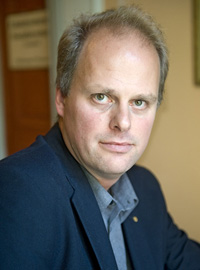
Jennifer M. Groh is a Professor at Duke University with appointments in Psychology and Neuroscience, Neurobiology, Biomedical Engineering, and Computer Science . She is a Faculty Network Member of the Duke Institute for Brain Sciences and a Center for Cognitive Neuroscience member. Ph.D. in Neuroscience, University of Pennsylvania (1993) M.S. in Psychology, University of Michigan, Ann Arbor (1989) Her research explores sensorimotor integration , particularly how vision and hearing interact to create embodied cognition . Key findings include demonstrating that eye position alters auditory pathway responses , challenging traditional views of sensory processing. Recent publications focus on eardrum oscillations , neural multiplexing , and cross-modal signal interactions . Awards include the Guggenheim Fellowship and Sloan Research Fellowship . Current grants investigate neural coding mechanisms and multisensory processes in hearing . Her lab examines auditory cortex dynamics , inferior colliculus function , and visual-auditory signal coordination through experimental and computational approaches.
Professor Anthony Lambert is a distinguished Professor of Psychology at the University of Auckland's Faculty of Science, where he has maintained an academic position since 1988 with his current appointment extending until December 31, 2029. His research program focuses on visual attention and perception, particularly examining the functional distinctions between dorsal and ventral visual streams. Lambert has made seminal contributions to cognitive neuroscience through his development of the unified model of vision and attention, which explains how spatial landmark cues recruit dorsal stream processing while identity cues rely on ventral stream processing. His work bridges theoretical cognitive psychology with practical applications in areas ranging from accident prevention to stress recovery mechanisms. PhD, University of Leicester, United Kingdom (1977-1981) Professor Lambert's primary research interests center on visual attention mechanisms and sensory imagery processing. He has pioneered research on the relationship between aphantasia (lack of visual imagery) and anauralia (lack of auditory imagery), coining the latter term to describe this previously unnamed phenomenon. His work on the unified model of vision and attention has been particularly influential, demonstrating how different visual processing pathways contribute to attentional orienting. Additional research areas include the cognitive mechanisms of thought suppression, the role of eye tracking in educational contexts, and the psychological and physiological effects of nature exposure on stress recovery. His multidisciplinary approach integrates methods from behavioral psychology, cognitive neuroscience, and educational technology. Professor Lambert's publication record reveals a consistent trajectory of theoretical development and empirical validation in visual attention research. His most impactful work has centered on developing and testing the unified model of vision and attention through both behavioral paradigms and neurophysiological measurements (EEG). Over time, his research has expanded from fundamental attentional mechanisms to applied domains including accident prevention, sensory imagery disorders, and stress recovery. A notable recent contribution is the conceptualization of "anauralia" to describe the absence of auditory imagery, complementing existing research on aphantasia. His work increasingly demonstrates cross-disciplinary reach, with collaborations spanning psychology, art, education, and environmental science. Professor Lambert serves as an accredited PhD supervisor at the University of Auckland, mentoring graduate students in cognitive psychology and neuroscience. While specific grant details aren't provided in the available records, his extensive publication record spanning three decades suggests successful acquisition of research funding to support his laboratory work. His research program appears to involve substantial collaborative efforts, as evidenced by his numerous co-authored publications across multiple disciplines. Professor Lambert has been actively involved in interdisciplinary collaborations, particularly evident in the "Eyetrackers" exhibitions that bridge art and neuroscience. His research program utilizes both behavioral testing facilities and neurophysiological equipment (EEG) at the University of Auckland. His work with eye tracking technology has fostered collaborations across traditional academic boundaries, connecting cognitive psychology with art education and environmental psychology.
Nathalie Giroud is an SNF Assistant Professor at the University of Zurich, leading the Neuroscience of Speech & Hearing research group. Her work explores neural and cognitive mechanisms in speech, language, and communication across the lifespan, integrating developmental and clinical perspectives. Academic Affiliation: University of Zurich Leadership Roles: Head of the Competence Center Language & Medicine , Group Leader at the Healthy Longevity Center Editorial Role: Member of the Editorial Board for Aging Brain Research Networks: Faculty at the Max Planck Research School and Neuroscience Center Zurich (ZNZ) Her research focuses on: Neural speech tracking and auditory processing Interactions between hearing loss and cognitive decline Immersive auditory-cognitive training interventions Speech-in-noise comprehension in aging populations Neuroanatomical correlates of language and sensory processing Recent studies highlight her work on multisensory integration , neural plasticity , and gamified training protocols to address age-related communication challenges. Trends in her publications emphasize technology-driven clinical applications and cross-disciplinary approaches linking neuroscience with audiology and gerontology. Scientific recognition includes: Vontobel Award for Research on Age(ing) (2017) SNF PRIMA-grant (2020) Global Future Council Fellowship, World Economic Forum (2021) She collaborates across institutions, including the Canadian Consortium on Neurodegeneration in Aging and Concordia University, while maintaining active contributions to journals and innovative research platforms like the trackyourhearing mHealth crowdsensing tool.
Anne-Kristin Solbakk is a Professor at the University of Oslo 's Department of Psychology and holds a 20% part-time position at the Neurosurgery Department of Oslo University Hospital-Rikshospitalet (OUS-RH) since 2016. She co-leads a research group focused on the neurophysiological basis of cognitive control functions, including prediction, expectation violation, attention, and working memory, using methods like fMRI , EEG , and intracranial ECoG in both healthy adults and patients with CNS injuries. Education: Dr. Psychol. (2001), University of Oslo Cand. Psychol. (1993), University of Bergen Specialist in Clinical Psychology (2005) Her research explores how frontal subregions interact with other brain areas, particularly in ADHD , Klinefelter syndrome , and epilepsy . Key projects include Sound prediction in the human brain and studies on functional connectivity . She collaborates internationally with institutions like UC Berkeley , Stanford , and University of Glasgow . Recent publications (2025-2023) address topics such as beta oscillations , theta dynamics , rhythmic cognition , and neural compensation mechanisms , using advanced techniques like information-theoretical measures and anatomical electrode registration . Her work bridges clinical populations (e.g., brain injury, ADHD) with theoretical neuroscience . She is actively involved in the UiO:Life Sciences cross-faculty initiative and contributes to cognitive rehabilitation projects like Goal-Management Training for executive dysfunction.
Dr. Christoph Strauch is an Assistant Professor in the Department of Experimental Psychology within the Faculty of Social and Behavioural Sciences at Utrecht University. His research focuses on using psychophysiological methods to investigate cognition and perception, with special emphasis on visual and spatial attention mechanisms. His primary research expertise spans pupillometry, psychophysiology, eye tracking, applied data science, and human-centered artificial intelligence. Strauch investigates fundamental questions about attention deployment, eye movement patterns, and the underlying neural mechanisms. He proposes that pupil size indexes all fundamental aspects of attention (orienting, alerting, and executive functioning) and samples specific underlying circuits at the brainstem level. His work bridges fundamental cognitive science with practical applications in human factors research, human-computer interaction, neuropsychology, and ophthalmological diagnosis. Strauch's recent publication portfolio demonstrates a strong methodological focus on pupillometry as a tool for understanding attentional processes. His work spans from fundamental research on attentional networks to applied research in multiple domains. A notable trend is his development of open-source tools like Open-DPSM for modeling pupil size changes, and large-scale data collection efforts including a dataset of 4243 participants examining attention biases across age groups. His research shows increasing integration of computational approaches with traditional psychophysiological methods. Dr. Strauch actively collaborates with researchers including S. Van der Stigchel, M. Naber, A.J. Hoogerbrugge, and D. Koevoet. His laboratory work focuses on psychophysiological methods, particularly using changes in pupil size and eye movements to investigate cognitive processes. He maintains a creative exploration project that seeks innovative applications of these methods to uncover new cognitive and perceptual phenomena, which he describes as 'open ended, fun and curiosity driven.'
Florence Bara is an Associate Professor at Université Toulouse Jean Jaurès , affiliated with the Cognition, Langues, Langage, Ergonomie (CLLE) laboratory. Her research focuses on learning psychology , developmental psychology , and multisensory educational tools , particularly for children aged 4-10 with and without disabilities. She leads the TACTILIVR project (supported by FIRAH) to develop tactile books for early intervention and inclusive education, and participates in initiatives like NUMEC (ANR-FQRSC) for digital writing tools. Her work combines quantitative statistical analyses and qualitative methods (interviews, video analysis) to improve teaching strategies. Key research areas: Educational Psychology, Multisensory Learning, Special Education Recent projects: TACTILIVR (tactile books), NUMEC (digital writing), handwriting studies Collaborations: CLLE, Université Toulouse Jean Jaurès, international partners in Quebec and Rwanda Her publications from 2025-2014 include studies on: Haptic perception in developmental disorders Tactile pictogram design for blind children Motor-cognitive integration in early writing Participatory research for inclusive education Comparative studies across France, Quebec, and Rwanda Handwriting training interventions
Dr. Gabriella Musacchia is an Associate Professor and Department Chair of the Department of Audiology at the University of the Pacific since 2015. She enhances learning through augmented reality and patient simulation while researching auditory processing and neuroplasticity. Education: PhD, Communication Sciences and Disorders, Northwestern University (2008) BA, Psychobiology, UC Santa Cruz (2000) AS, Biology, City College of San Francisco (1996) Her research centers on auditory processing, neuroplasticity, pediatric audiology, and music . Using EEG, ABR, and FFR methodologies, she investigates speech-music interactions and infant language development. As co-director of the Auditory Electrophysiology Lab, she collaborates with Stanford University on bilirubin neurotoxicity in newborns. Recent publications emphasize technology-enhanced audiology education (augmented reality, virtual simulation) and neural mechanisms of auditory processing across musicians, infants, and clinical populations. Key themes include infant language acquisition, music training effects, and auditory assessment innovations. Dr. Musacchia mentors students through diverse teaching modalities including traditional lectures, hands-on demonstrations, and self-paced assignments. The text does not specify research grants or formal student advising relationships. She co-directs the Auditory Electrophysiology Lab with Dr. Jiong "Joe" Hu and maintains active collaborations with Stanford University on newborn auditory research.
Henrik Isak Immanuel Gustafsson serves as Professor of Film, Media and Visual Culture in the Department of Language and Culture at UiT The Arctic University of Norway. His academic profile bridges film studies, media theory, and visual culture with particular expertise in postwar cinema, ethics of images, and border studies. With five authored or edited books including the monograph Crime Scenery in Postwar Film and Photography (Palgrave Macmillan 2019), Gustafsson has established himself as a significant voice in contemporary media scholarship. His research spans multiple interconnected domains: Film and media theory, with special focus on montage, cinematic gesture, and visual representation Ethics of images, trauma representation, and the politics of memory Border studies, digital media, and contemporary conflicts Postwar cinema, crime films, and photographic documentation Surveillance studies and the politics of visibility Gustafsson's publication trajectory reveals a movement from historical analyses of postwar cinema toward contemporary examinations of digital media, cognitive capitalism, and settler colonialism. His 2023-2024 works demonstrate deep engagement with philosophical frameworks (Foucault, Warburg) to interrogate contemporary visual culture while maintaining his longstanding interest in the ethical dimensions of imagery. Notably, his interdisciplinary reach extends into sports science through collaborative publications on athlete development and performance psychology. He actively contributes to multiple research communities as a member of: Border Poetics / Border Culture Engaging Conflicts in a Digital Era (ENCODE) Pax Slavica in Flux: European Contexts (PSIF)
Prof. Armin Bahl is a Professor and Emmy Noether Group Leader at the University of Konstanz's Department of Collective Behavior, where he directs the Bahl Lab. His research investigates neural circuit mechanisms underlying sensory integration, decision-making, and collective behavior using larval zebrafish models combined with two-photon imaging, behavioral analysis, and computational modeling. Research focuses on: Behavioral algorithms of sensory-motor transformations Neural basis of evidence accumulation during decision-making Emergent properties in collective behavior Development of advanced microscopy tools for brain imaging Computational modeling of neural circuit dynamics His recent publications (2019-2025) demonstrate expertise in behavioral neuroscience, neural circuit mapping, and interdisciplinary approaches bridging biology with computational techniques. Research consistently features zebrafish models, sensory processing mechanisms, and decision-making paradigms. Awards: Emmy Noether Fellowship He leads an active research group including 8+ PhD students, 4+ postdocs, and multiple undergraduate researchers. The lab collaborates internationally through exchange programs focusing on advanced imaging techniques and computational neuroscience.
Peter Janssen is a Full Professor at KU Leuven's Faculty of Medicine, affiliated with the Department of Neuroscience. He leads the Neurophysiology Research Group at the Laboratory for Neuro- and Psychophysiology and holds memberships in interdisciplinary institutes including the KU Leuven Brain Institute (LBI), Institute for Artificial Intelligence (Leuven.AI), and Institute for Integration of Micro- and Nano-scale Technologies (LIMNI). His administrative roles include membership in the Faculty Council of Medicine and Departmental Council of Neurosciences. His research focuses on: Neural mechanisms of visual perception and action processing Intracortical brain-machine interfaces for visual prosthetics Neurophysiology of primate frontal and parietal cortices High-resolution neural implants and stimulation techniques Epileptic network dynamics using multimodal intracranial recordings Current projects include developing flexible retinal implants for vision restoration (2025-2028), decoding neural activity for navigation (2022-2026), and studying mirror neuron connectivity in primates (2023-2027). He teaches advanced courses including Neurophysiology (E0E76A), Consciousness and Sleep (E0N60A/U00L9A), Neuroscience (E05Y5A), and Nervous System Morphology/Pathophysiology (E0I69A). As primary supervisor, he mentors PhD candidates in neuroprosthetics, brain-machine interfaces, and neural coding research. Recent student projects involve intracortical visual prostheses, action observation in motor cortex, and human intracranial decoding. His laboratory utilizes cutting-edge techniques including intracortical recordings in primates, human electrocorticography, high-density electrode arrays, and AI-driven neural modeling.
Larry Hoffman serves as an Adjunct Professor in the Department of Surgery at the University of California, Los Angeles (UCLA), where he leads the Vestibular Neuroscience Laboratory. He holds affiliated memberships with UCLA's Head and Neck Surgery division, Brain Research Institute, and Neuroengineering Training Program. His research is supported by the National Institute on Deafness and Other Communication Disorders (NIDCD) through the National Multipurpose Research and Training Center for vestibular neuroscience. Dr. Hoffman's research program investigates vestibular neuroscience with three primary focuses: (1) Neurophysiologic and neuroanatomic organization of vestibular primary afferent neurons bridging peripheral receptors and the CNS; (2) Pathophysiology in contexts of nerve regeneration, ototoxicity, and sensory epithelium regeneration; and (3) Anatomy and cell biology of efferent vestibular neurons. His work employs diverse methodologies including neurophysiological recordings, genetic models, drug delivery systems, and computational approaches. Analysis of his 15 most recent publications (2017-2024) reveals consistent themes across vestibular neuroscience: computational modeling of neural encoding, therapeutic interventions for ototoxicity (especially N-acetylcysteine delivery), vestibular adaptations to extreme environments (spaceflight), genetic contributions to hearing disorders, and detailed characterization of vestibular cellular mechanisms. These studies frequently utilize rodent models, in vitro systems, and interdisciplinary collaborations. Dr. Hoffman maintains an active training role, supervising research projects for undergraduate, graduate, medical, postdoctoral, and resident students. He coordinates the Division’s Basic Science curriculum and co-administers the NIDCD institutional training grant. His Vestibular Neuroscience Laboratory continues to investigate fundamental questions about vestibular signal processing and therapeutic strategies for vestibular disorders.
Aparna Suvrathan is an Assistant Professor at the Department of Neurology and Neurosurgery within the Faculty of Medicine and Health Sciences at McGill University . She holds a secondary appointment as a Scientist at the Research Institute of the McGill University Health Centre (RI-MUHC) , specifically at the Montreal General Hospital site. Her research program is integrated into the broader Brain Repair and Integrative Neuroscience Program at the Center for Translational Biology. Her research focuses on synaptic plasticity mechanisms in the cerebellum, particularly how neural circuits encode learning through Electrophysiological recordings Mouse genetic models Behavioral analysis Microscopic imaging Her work bridges motor learning research with neurodevelopmental disorder studies, especially autism spectrum disorders . Recent publications highlight her contributions to understanding Cerebellar synaptic timing heterogeneity Experience-dependent plasticity rules Amygdala microstructural changes Translational regulation in neural learning Her laboratory investigates both healthy brain function and disease states , with particular emphasis on Fragile X syndrome models Stress-induced neural modifications Cerebellar circuit mechanisms Synaptic receptor trafficking at the Research Institute of the McGill University Health Centre in Montreal, Canada. Current work continues to explore the relationship between synaptic plasticity rules and behavioral outcomes through advanced mouse genetic approaches.
Dr. Shigeo Sakuragi is an Assistant Professor at Waseda University's School of Advanced Science and Engineering, Department of Biophysics, where he has served since April 2022. Previously, he held research positions at Waseda University's Research Institute for Science and Engineering (2020-2022), Yamagata University's Faculty of Medicine (2018-2020), Tohoku University's Graduate School of Life Sciences (2016-2018), and Nagoya University as a Postdoctoral Fellow (2014-2016). His educational background includes a Ph.D. from Osaka University's Graduate School of Frontier Biosciences (2010-2014) and a Bachelor's degree from Osaka University's Faculty of Science (2006-2010). Dr. Sakuragi's research focuses on the intersection of neuroscience, biophysics, and pharmacology, with particular emphasis on Neuropharmacology of anesthetics Synaptic plasticity mechanisms Neurodegenerative disease processes Calcium signaling in astrocytes Optogenetic approaches to studying neural function His work combines advanced imaging techniques like quantum dot-single particle tracking with molecular and cellular neuroscience approaches. His publication record shows a clear progression from fundamental studies of synaptic plasticity and BDNF signaling (2010-2015) toward more applied research on anesthesia mechanisms and neurodegenerative processes (2016-present). Recent work prominently features optogenetic tools for controlling tau aggregation and studying anesthetic effects on neuronal receptors. Dr. Sakuragi has received notable scientific recognition including: 2025 Biophysics and Physicobiology Editors' Choice Award Waseda University Teaching Award (2022) 2018 Biophysics and Physicobiology Editors' Choice Award He serves on Waseda University's Collaboration Council as a Working Member of the Joint Research Group (2023-present) and maintains active professional memberships in major neuroscience and biophysics societies in Japan. His current research is supported by competitive grants from the Japan Society for the Promotion of Science focusing on volatile anesthetics' mechanisms and tau aggregation in postoperative cognitive dysfunction. At Waseda University, Dr. Sakuragi leads the Banna Lab (https://sites.google.com/view/wasedabannailab/english), which specializes in applying advanced biophysical techniques to neuropharmacological questions, with particular expertise in single-molecule tracking and optogenetic approaches to study anesthesia mechanisms and neurodegenerative processes.
Nicolas Brunel is an Adjunct Professor of Neurobiology at Duke University , where he contributes to the Duke Institute for Brain Sciences (DIBS) and the Center for Cognitive Neuroscience. His research focuses on theoretical models of brain systems, particularly mechanisms of learning and memory at both synaptic and network levels. Education: Pierre and Marie Curie University (France) - Ph.D. in 1993 His work spans neuroscience and computational biology , examining synaptic plasticity, cortical circuits, dendritic nonlinearities, and inhibition stabilization. Using methods from statistical physics, he has shown how network connectivity can reproduce experimentally observed features. Recent publications demonstrate expertise in diverse neuroscience domains, including cortical and cerebellar circuits, memory mechanisms, and neural network modeling. His research has received significant recognition, including the Prime d'excellence scientifique from the National CNRS in 2011. Grants: NIH - Cortical circuit dynamics (2019-2024) NIH - Striatal microcircuits in habit formation (2018-2023) University of Chicago - Multiscale cortical dynamics (2017-2023)
Lars Nyberg is a Professor of Neuroscience at Umeå University, holding positions in Radiation Sciences and the Department of Integrative Medical Biology. He serves as the Director of the Umeå Center for Functional Brain Imaging (UFBI), a leading facility for neuroimaging research in Sweden. Professor Nyberg's research focuses on using brain-imaging techniques to examine memory functions in both healthy individuals and those with neurological conditions. His work spans cognitive neuroscience, neuropsychology, and aging research, with particular emphasis on understanding how memory functions change throughout adult life. One of his major research initiatives is the Betula study, a longitudinal project aimed at identifying risk factors for dementia and early signs of cognitive decline. This comprehensive study has revealed strong genetic contributions to individual differences in memory function and their relationship to structural and functional brain changes. Professor Nyberg's scientific contributions have been recognized with numerous prestigious awards: Member of The Royal Swedish Academy of Sciences (2008) KA Wallenberg Scholar (2009) Mångbergs Prize in Neural Sciences, Umeå University, Sweden (2008) Gustafsson Prize in medicine from The Royal Swedish Academy of Sciences (2007) Brain Research Interactive Young Investigator Award (2002) Award from the Royal Skytteanska Society to 'eminent young researchers' (1994) As Director of the Umeå Center for Functional Brain Imaging, Nyberg oversees a state-of-the-art facility supporting numerous research projects examining brain structure and function. His laboratory employs various neuroimaging techniques including fMRI, PET, and DTI to investigate the neural correlates of memory and cognitive processes. The Betula study, which he leads, represents one of the most comprehensive longitudinal investigations of cognitive aging and dementia risk factors in the world.