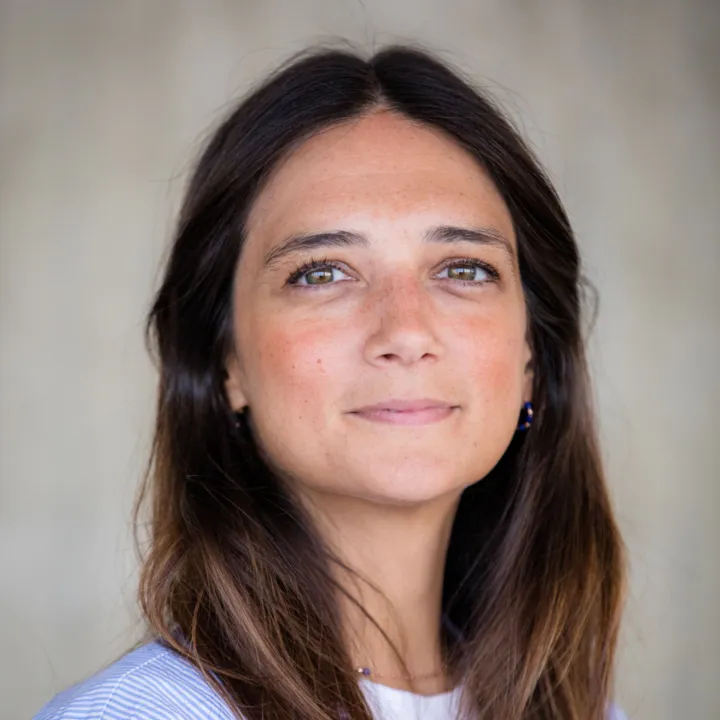
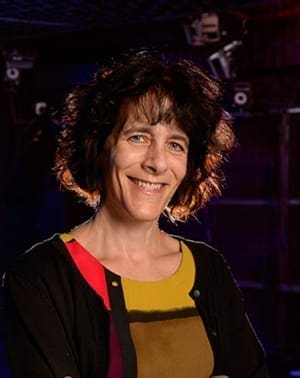
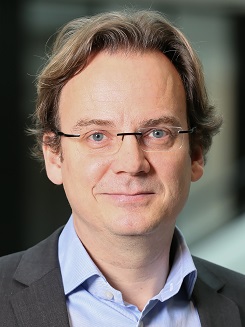
Karim Oweiss is a Pre-eminent Professor at the University of Florida, with joint appointments in the Department of Biomedical Engineering (Herbert Wertheim College of Engineering), Electrical and Computer Engineering, and Neuroscience (McKnight Brain Institute). He holds a Ph.D. in Electrical Engineering and Computer Science from the University of Michigan (2002). His research focuses on neural mechanisms of sensorimotor integration and the development of clinically viable brain-machine interfaces (BMIs) to restore damaged neurological function. His work spans computational neuroscience, neural decoding, optogenetics, and advanced neurotechnology, with a strong emphasis on closed-loop systems and neural plasticity. 2025 : Chemogenetic stimulation of phrenic motor output and diaphragm activity 2024 : Chemogenetic phrenic motoneuron activation enables increased tidal volume 2023 : Compressive sensing of functional connectivity maps from patterned optogenetic stimulation Oweiss has received the NSF Excellence in Neural Engineering Award (2001) and is a Senior Member of the IEEE. He has published extensively on topics including neural decoding, compressive sensing, and multiscale neural interfacing. As editor of Statistical Signal Processing for Neuroscience and Neurotechnology (2010), he has contributed significantly to the field's methodological foundations. His lab develops tools like NeuroQuest for large-scale neural data analysis and implantable neuroprocessors for wireless BMI applications.
Surjo R. Soekadar is the Einstein Professor of Clinical Neurotechnology at Charité – University Medicine Berlin. He leads the Clinical Neurotechnology Laboratory , which focuses on developing noninvasive neurotechnologies for treating neurological and psychiatric disorders through closed-loop brain stimulation and advanced brain-machine interfaces (BCI/BMI). His work integrates real-time EEG/MEG monitoring with electromagnetic stimulation to modulate pathological brain oscillations and enhance neuroplasticity in conditions like stroke, spinal cord injury, and psychiatric disorders. Education : Studied medicine in Mainz, Heidelberg, and Baltimore Clinical Training : Residency in Psychiatry and Psychotherapy at University of Tübingen Academic Journey : 2008-2011 Research Fellow at NINDS (USA); 2017 Venia Legendi at University of Tübingen; 2018 First Professor of Clinical Neurotechnology in Germany His research interests span: • Closed-loop neurostimulation combining real-time brain state monitoring with targeted intervention • Next-generation BCI using optically pumped magnetometers (OPM) for mobile MEG recordings • Neurorehabilitation through exoskeleton control and sensory feedback • Neurophysiological modeling of entropy measures and phase flows Recent publications highlight: • Adaptive deep brain stimulation protocols • Real-time phase-sensitive tACS applications • OPM-based BCI innovations • Stroke recovery mechanisms through corticospinal tract analysis Scientific recognition includes: International BCI Research Award BIOMAG Award NARSAD Young Investigator Award Funded by the European Research Council (ERC) , his lab trains doctoral students like David Haslacher (EEG/MEG integration), Khaled Nasr (multicoil TMS optimization), and Annalisa Colucci (entropy-driven BCI development). The team also explores quantum AI applications in clinical decision-making and bidirectional BCI systems using OPM and tES.
Fausto Caruana is Senior Researcher at the Italian National Research Council's Institute of Neuroscience and Adjunct Professor at the University of Parma's Department of Medical and Surgical Sciences (DIMEC). His career bridges neurophysiology , cognitive neuroscience , and neurophilosophy , focusing on mirror neuron systems , emotional contagion , and embodied cognition . Research Pillars : System neuroscience, laughter studies, social cognition, and 4E cognitive science Methodological Expertise : Intracranial EEG, brain stimulation, tractography, and cross-species comparisons His publications (over 100) demonstrate temporal progression from primate electrophysiology to human clinical neuroscience. Key themes include: Laughter's neurochemical and network basis Insula-cingulate pathways in emotional processing Sensorimotor abductive mechanisms in social cognition Pragmatist approaches to emotion theories Scientific recognition includes the prestigious Sante de Sanctis Prize for his volume "Come Funzionano Le Emozioni". He serves editorial boards for Frontiers in Theoretical Psychology and Mind & Society , while organizing international conferences like the 2024 Erice workshop on Emotional Expressions.
Enzo Mastinu is an electronic engineer specialized in embedded systems for biomedical applications, holding an Associate Professor qualification in Bioengineering. He earned his bachelor's and master's degrees in electronic engineering from the University of Cagliari and a PhD in biomedical signals and systems from Chalmers University of Technology, Sweden. His research focuses on advanced prosthetics and neuroprostheses for upper limb amputations, incorporating embedded systems design, control algorithms, sensory feedback, signal processing, AI, and osseointegration. Key projects include the HAND and HAND2 initiatives, funded by the EU and the Italian Ministry of Research, aiming to develop semi-autonomous prosthetic hands. He has published 25 journal articles (75% in Q1) and 21 conference papers, contributing to a PCT patent. Mastinu is a Senior Member of IEEE EMBS and RAS, reviews for ~90 journals/conferences, and edits Transactions on Medical Robotics and Bionics (IEEE) and Scientific Data (Nature). He has supervised ~40 students across PhD, master's, internships, and postdocs, and teaches courses in biomedical engineering and STEM education. His scientific awards include the Marie Skłodowska-Curie Fellowship (2021), National Qualification as Associate Professor (2024), and a Young Researcher Grant (2025). Research emphasizes clinical implementation of prosthetics with neural feedback and intuitive control, as highlighted in high-impact journals like the New England Journal of Medicine.
Claudius Gros is a Professor of Theoretical Physics at Goethe University Frankfurt. He holds a PhD from ETH Zurich and has held academic positions at Indiana University, University of Dortmund, and Saarland University. His research focuses on complex systems theory, physics of AI, self-organized robotics, and the Genesis Project, an interstellar mission concept for establishing life on exoplanets. His work bridges theoretical physics with interdisciplinary applications, including epidemiology modeling and societal dynamics analysis. Key contributions include the textbook Complex and Adaptive Dynamical Systems (Springer) and foundational studies on attention mechanisms in AI architectures. Education: Bachelor/Master: ETH Zurich, Theoretical Condensed Matter Physics PhD: ETH Zurich, 1985 (Advisor: T. Maurice Rice) Postdoc: Indiana University, 1988–1990 (With Steve Girvin and Allan MacDonald) Research Interests: Physics of AI : Analysis of transformer models, attention mechanisms, and neural scaling laws. Complex Systems : Epidemic models, dormancy dynamics in cellular automata (Spore Life), and self-organized robotics. Genesis Project : Feasibility of interstellar probes to seed life on exoplanets, magnetic sail deceleration. Societal Dynamics : Strategy condensation, envy-driven class stratification, and pandemic policy modeling. Articles Overview: Recent work spans AI physics (attention mechanisms, neural scaling), complex systems (epidemic oscillations, dormancy models), and robotics (self-organization principles). Themes include theoretical frameworks for embodied systems, computational models of societal behavior, and interdisciplinary applications of dynamical systems theory. Advising & Grants: Claudius Gros has advised multiple researchers, with co-authored papers featuring collaborators like O. Neumann, D.H. Nevermann, and B. Sandor. His grants include funding for Genesis Project studies and robotics research. Labs & Teams: His research group focuses on Physics of AI and Self-Organized Robotics , with active projects on embodied robots, neural network dynamics, and interstellar mission feasibility.
Jonathan Tsay is an Assistant Professor in the Department of Psychology at Carnegie Mellon University, affiliated with the Dietrich College of Humanities and Social Sciences. His research focuses on understanding human motor learning through computational modeling, neuropsychology, and psychophysics, with applications to clinical rehabilitation and brain-computer interfaces. Education: B.A. in Mathematics from Northwestern University; D.P.T. from Northwestern University's Feinberg School of Medicine; Ph.D. in Psychology from UC Berkeley. Research Interests: Investigating how humans master complex movements through cognitive and neural mechanisms. Key areas include sensorimotor adaptation, implicit learning processes, and the interplay between perception and action. His work integrates experimental methods with computational models to explore motor control in health and disease. Labs/Teams: Leads the Physical Intelligence Lab (Pi-Lab), studying movement diversity and optimization through interdisciplinary approaches. The lab emphasizes translational research to improve clinical interventions and human performance technologies.
Stephen H. Lane is a Teaching Professor at the University of Pennsylvania's School of Engineering and Applied Science, Department of Computer and Information Science. He serves as Director of the Computer Graphics and Game Technology (CGGT) Master's Program and teaches courses such as Computer Animation (CIS462/562), Advanced Topics in Computer Graphics and Animation (CIS660), and Game Design and Development (CIS564). He also supervises the Game Design Practicum (CIS568) capstone course. Education: B.S. in Mechanical and Aerospace Engineering from Cornell University (1980) M.S. in Systems Engineering from UCLA (1982) Ph.D. in Mechanical and Aerospace Engineering from Princeton University (1988) Dr. Lane's research focuses on the intersection of robotics, physically-based character animation, embodied intelligent agents, and virtual reality user interfaces. His work integrates control theory, artificial intelligence, and computer animation techniques to develop advanced simulation and training systems. His publications since 1987 cover topics such as inverse kinematics, neural networks for motion control, B-spline receptive fields, robotic skill acquisition, and gesture recognition systems. His recent work (2010-2011) emphasizes sensor fusion for gesture recognition and immersive training interfaces. Scientific Awards: Co-inventor of four US patents related to robotic animation and motion control systems Contributions to hybrid controller hierarchies and neural network training methods As founder of soVoz, Inc., Dr. Lane commercializes behavioral animation technology for virtual environments. His academic-industry collaboration includes contracts with Microsoft, Disney, and the US Army. He has developed tools like ProScena™ to integrate interactive 3D simulation capabilities into gaming and training applications.
Karl R. Gegenfurtner is a Professor of General Psychology at the Department of Psychology, Justus Liebig University Giessen. His research focuses on information processing in the visual system, particularly the interplay between low-level sensory processes, high-level visual cognition, and sensorimotor integration. He investigates how complex scenes are perceived, represented in the brain, and used to drive motor systems, with a specialization in color perception, material property recognition, and eye movement dynamics. Ph.D. in Experimental Psychology, New York University (1990) Diploma in Psychology, University of Regensburg (1986) Habilitation in Medical Psychology and Behavioral Neurobiology, University of Tübingen (1998) His work bridges visual neuroscience with computational modeling, examining color categorization in neural networks, cortical mechanisms of color vision, and dynamic recalibration of visual perception during eye movements. Recent projects include Color 3.0: An object-oriented approach to color (ERC Advanced Grant) and Dynamics in Vision and Touch (Marie Curie Actions). Publications highlight advancements in understanding saccadic suppression, predictive eye movements, and chromatic adaptation timelines. Scientific awards include the Wilhelm Wundt Medal (2016), Rank Prize Funds Lecture (2014), and ERC Advanced Grant (2020–2025). He has served on editorial boards of Journal of Vision , Vision Research , and Perception , and led initiatives like the Neuroscientific Workflow Assistance (NOWA) project. Collaborations span institutions in Germany, the U.S., Australia, and the U.K., with a focus on perception-action loops and neural mechanisms underlying visual stability.
Claudia Cea is an Assistant Professor in the Department of Electrical & Computer Engineering at Yale University's School of Engineering and Applied Science. Her research focuses on developing soft, multifunctional bioelectronic devices designed to interface with the nervous system for long-term neural interrogation and modulation. She leads The Cea Group, which integrates principles from bioelectronics, materials science, and neuroscience to engineer conformable, high-resolution neural interfaces. Ph.D., Columbia University M.Sc., San Diego State University B.Sc., University of Pisa Her research interests lie at the intersection of bioelectronics , neural engineering , and soft materials design , with a focus on creating minimally invasive tools for understanding brain–body communication. By combining electrical, optical, and chemical modalities, her lab develops technologies capable of both recording and modulating neural activity in central and peripheral circuits. These innovations aim to uncover fundamental neural mechanisms and translate them into therapies for neurological, psychiatric, and systemic disorders. The recent publications demonstrate a strong trajectory in implantable bioelectronics , particularly in organic electrochemical transistors , ionic communication systems , and multimodal neural interfaces . Her work consistently appears in top-tier journals such as Nature Materials , Science Advances , and PNAS , reflecting significant impact in neuroengineering and bioelectronic medicine. The research emphasizes device autonomy, biocompatibility, and real-time neural signal processing. Her scientific achievements have been recognized with prestigious honors: MIT Technology Review 35 Innovators under 35 SEAS Ph.D. Research Symposium Winner, Columbia University CSNE Hackathon Winner, University of Washington Shiley Scholarship in Bioengineering Claudia Cea has secured competitive funding and recognition that support her lab’s innovative work. While specific grant details are not listed, awards such as the Shiley Scholarship and hackathon wins indicate strong support from institutions like the Center for Sensorimotor Neural Engineering (CSNE). Her role as principal investigator of The Cea Group suggests active mentorship of graduate students and postdoctoral researchers in interdisciplinary research. The lab fosters collaboration across engineering, neuroscience, and clinical domains to accelerate translation. The Cea Group is dedicated to advancing soft, multifunctional electronics for biomedical applications. The team focuses on designing conformable, implantable devices that seamlessly integrate with biological tissues. Their work spans materials synthesis, device fabrication, in vivo testing, and clinical translation, aiming to bridge gaps between engineering innovation and medical need. The lab environment promotes creativity, rigor, and translational thinking in next-generation neural technologies.
Ben Ward-Cherrier is a Senior Lecturer in Robotics at the University of Bristol's School of Engineering Mathematics and Technology. His research focuses on biomimetic tactile sensing, neuromorphic systems for robotics, and haptic interfaces. He develops artificial tactile systems inspired by biological sensory mechanisms for applications in prosthetics, robotic manipulation, and human-robot interaction. Key research areas include neuromorphic tactile sensors that mimic biological afferents, real-time texture and edge classification algorithms, incipient slip detection for stable grasping, and vibrotactile feedback systems. Recent work integrates spiking neural networks with tactile hardware for efficient sensory processing. Publications demonstrate advancement in tactile sensing capabilities, including braille recognition in noisy environments, psychophysics-inspired benchmarking, multi-modal texture/velocity classification, and industrial applications like composite defect detection. Research bridges computational neuroscience with practical robotic systems.
Professor Ian Loram is a leading academic in neuromuscular control and human movement science at Manchester Metropolitan University's Institute for Biomedical Research into Human Movement and Health (IRM). He holds roles as Academic Director of IRM and Academic Lead of the Biomechanics and Motor Control Research Group. His research focuses on sensorimotor control, postural stability, and applications of deep learning in medical imaging. Key contributions include studies on neuromuscular disorders, balance control mechanisms, and automated analysis of muscle function using ultrasound and neural networks. Education: PhD from University of Birmingham (2003) Awards: Leverhulme Early Career Fellowship (2004-2005) Grants: EPSRC Grants EP/F068514/1, EP/F069022/1, and EP/F06974X/1 ("Intermittent Control of Man and Machine") His research interests span neuromuscular control, biomechanics, postural dynamics, and clinical applications of imaging technologies . Recent work emphasizes automated analysis of muscle structure via ultrasound and deep learning, with clinical relevance to conditions like spinal muscular atrophy and cervical dystonia. Publications highlight interdisciplinary approaches, integrating control theory, neurophysiology, and computational methods to understand human movement. His lab develops tools for objective assessment of trunk control in children with cerebral palsy and explores the role of intermittent control in motor learning and balance. Labs/Teams: Biomechanics and Motor Control Research Group Healthcare Science Research Institute
Cynthia F. Moss is a Professor in the Department of Psychological and Brain Sciences at Johns Hopkins University (JHU), with joint appointments in Neuroscience and Mechanical Engineering. She directs the Comparative Neural Systems and Behavior Laboratory (Bat Lab), investigating neural mechanisms of sensory perception and spatial navigation in echolocating bats. Her work combines neurophysiology, behavioral ecology, and engineering to study how bats process auditory information for navigation, communication, and obstacle avoidance. Dr. Moss earned a B.S. (summa cum laude) from the University of Massachusetts, Amherst, and a Ph.D. from Brown University. She held prior faculty positions at Harvard University and the University of Maryland, where she directed the Neuroscience and Cognitive Science graduate program. Her research has received prestigious awards including the Hartmann Award (2017), James McKeen Cattell Award (2018), and Alexander von Humboldt Research Prize (2019). Her research focuses on sensory coding of natural stimuli, spatial perception, attention, and adaptive motor control. Key findings include discoveries about 3D auditory space representation in the midbrain, age-resistant hearing in bats, and the role of wing hairs in flight control. Her lab employs innovative techniques like wireless neural recording, two-photon imaging, and DREADDs-mediated inactivation to study neural circuits. Dr. Moss collaborates across disciplines, bridging neurobiology, robotics, and sensory systems engineering. Her work informs biomimetic technologies for sonar navigation and adaptive control systems. She actively mentors students and postdocs in the Krieger School of Arts and Sciences, Whiting School of Engineering, and School of Medicine at JHU.
Auke Jan Ijspeert is a full professor at the École Polytechnique Fédérale de Lausanne (EPFL), where he serves as head of the Biorobotics Laboratory (BioRob). He holds a primary affiliation with the Institute of Bioengineering and a secondary affiliation with the Institute of Mechanical Engineering. His academic leadership and research excellence have established him as a leading figure in bio-inspired robotics and computational neuroscience. B.Sc./M.Sc. in Physics, École Polytechnique Fédérale de Lausanne (EPFL), 1995 Ph.D. in Artificial Intelligence, University of Edinburgh, 1999 Postdoctoral research at IDSIA/EPFL and University of Southern California (USC) SNF Assistant Professor at EPFL, 2002 Promoted to Associate Professor, October 2009 Promoted to Full Professor, April 2016 His research lies at the intersection of robotics, computational neuroscience, nonlinear dynamical systems, and applied machine learning. He investigates animal locomotion and movement control using numerical simulations and robotic platforms, aiming to understand biological principles and apply them to novel robot designs and controllers. His work has led to groundbreaking robots like the salamander-inspired Pleurobot and amphibious robotic systems. He also explores applications in assistive technologies such as exoskeletons and smart furniture for people with limited mobility. The recent publications reflect a strong trend in bio-inspired robotics, neuromechanical modeling, and the use of robots to understand biological locomotion. Key themes include spinal cord modeling for gait control, amphibious and aquatic locomotion, central pattern generators, and the evolutionary transition from swimming to walking. His work integrates neuroscience, biomechanics, and robotics to create physical models that serve both engineering and scientific discovery purposes. Scientific Awards and Honors: IEEE Fellow (2020) Best Paper Prize, CLAWAR 2019 Best Conference Paper Award, SAB 2018 Best Paper Award, IEEE RO-MAN 2014 Best Paper Award, IEEE Humanoids 2007 Overall Best Paper Award, IEEE ICRA 2002 Young Professorship Award, Swiss National Science Foundation Marie Curie Scholarship, European Commission Auke Ijspeert has been actively involved in academic service, serving as an associate editor for IEEE Transactions on Robotics (2009–2013) and Soft Robotics (2018–2021), and as an associate editor for IEEE Transactions on Medical Robotics and Bionics and the International Journal of Humanoid Robotics. He has secured major funding from the Swiss National Science Foundation, Human Frontier Science Program, European Commission (FP7, H2020), Human Brain Project, and other international agencies. He has organized seven major international conferences and served on over 50 program committees. His laboratory, BioRob, is a hub for interdisciplinary research, training students and researchers in biorobotics, and fostering collaboration across neuroscience, robotics, and biomechanics.
J.J. Buchanan is a Professor at the Department of Health and Kinesiology, Texas A&M University, and Program Chair of Kinesiology and Sport Management. He is also affiliated with the Faculty of Neuroscience at Texas A&M. His research focuses on motor neuroscience, bimanual coordination, observational learning, and neurorehabilitation. Ph.D. in Complex Systems from Florida Atlantic University (1996) M.A. in Experimental Psychology from Florida Atlantic University (1992) B.A. in Psychology from University of Texas at San Antonio (1985) His research explores the dynamics of motor skill acquisition, the role of perceptual feedback in motor performance, and the application of augmented reality in rehabilitation. Google Scholar articles highlight advancements in transcranial stimulation, coordination stability, and memory consolidation during wakefulness. Buchanan has secured numerous grants from federal and private institutions, including the National Science Foundation, Morton Cure Paralysis Fund, and Qatar National Fund, for projects involving stroke rehabilitation, robotic limb creation, and motor learning enhancement. He has mentored multiple doctoral students and contributed to over 15 book chapters. His work bridges neuroscience, kinesiology, and robotics to improve human motor function and understanding of perceptual-motor integration.
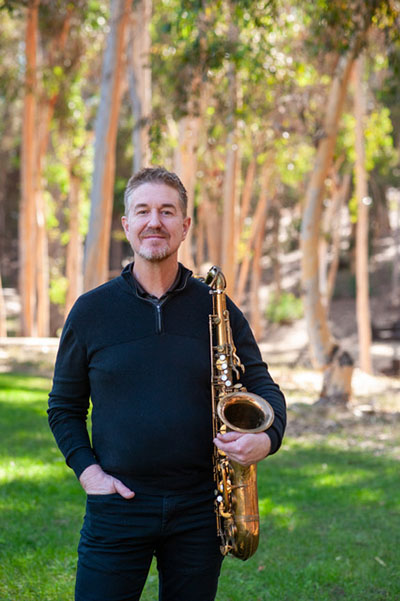
David Borgo is a Professor in the Department of Music at the University of California, San Diego (UCSD), where he has been a faculty member since 2002. He is affiliated with the Integrative Studies and Jazz and Music of the African Diaspora programs, and holds joint affiliations in Ethnic Studies and Cognitive Science. His interdisciplinary scholarship bridges music, cognitive science, and cultural theory. B.M. in Jazz Studies, Indiana University M.A. and Ph.D. in Ethnomusicology, UCLA David Borgo’s research focuses on musical improvisation through the lenses of complexity theory, cybernetics, embodied cognition, and distributed agency. His acclaimed book Sync or Swarm: Improvising Music in a Complex Age won the 2006 Alan P. Merriam Prize and was reissued in 2022. His scholarly work appears in leading journals such as Jazz Perspectives , Journal of Consciousness Studies , and Parallax , and in major handbooks including The Oxford Handbook of Critical Improvisation Studies . His work consistently explores the intersections of cognition, technology, and collective creativity in musical practice. His recent publications reveal a deep engagement with themes such as embodied musicianship, ecological approaches to music education, distributed agency in performance, and the philosophical implications of improvisation. Articles like 'Embodied, Situated and Distributed Musicianship' and 'Openness From Closure' illustrate his theoretical sophistication and interdisciplinary reach. His research often employs frameworks from second-order cybernetics, systems theory, and enactive cognition to analyze improvisational dynamics. Alan P. Merriam Prize (2006) 2020 Diversity, Equity and Inclusion Teaching Award (UCSD) 2013 Distinguished Teaching Award International John Coltrane Competition Winner As an educator and administrator, Borgo served as Department Chair from 2017 to 2020 and has been recognized for innovative teaching, particularly in jazz and improvisation. His artistic practice is equally robust: he is an active saxophonist and composer, performing in the electro-acoustic duo KaiBorg and the polyrhythmic ensemble Kronomorfic. He has released over 17 albums and toured internationally. While no specific students are listed, his role as professor and mentor implies significant advising responsibilities in graduate and undergraduate programs. David Borgo leads a vibrant research and artistic practice centered on the complex dynamics of improvisation, integrating performance, theory, and technology in a uniquely interdisciplinary manner.