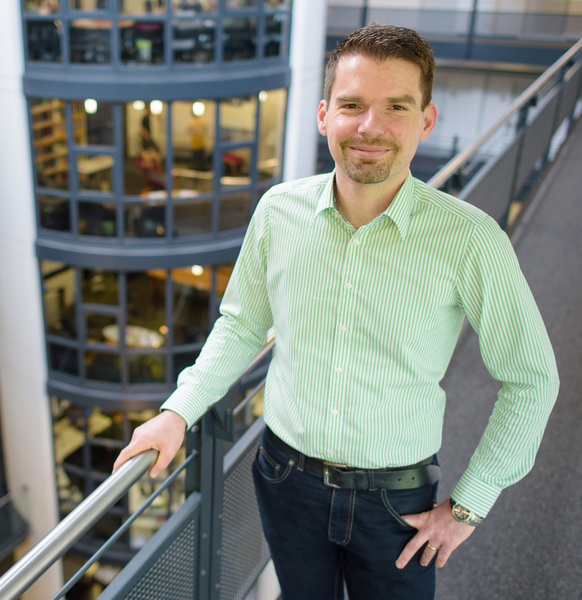
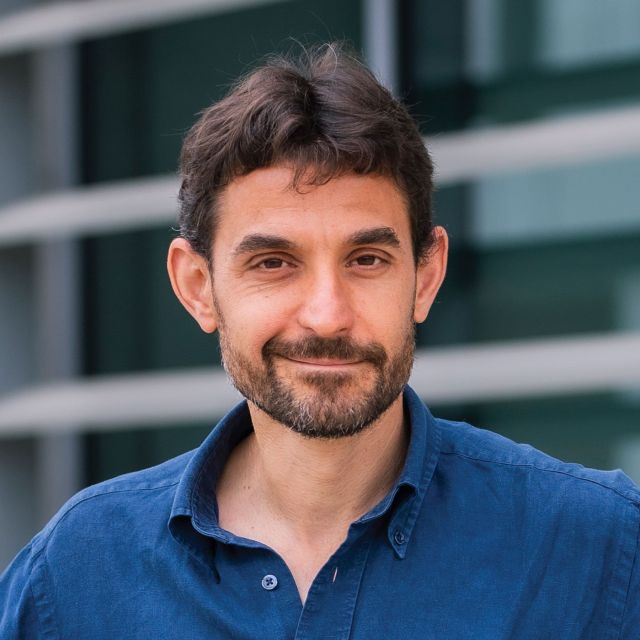
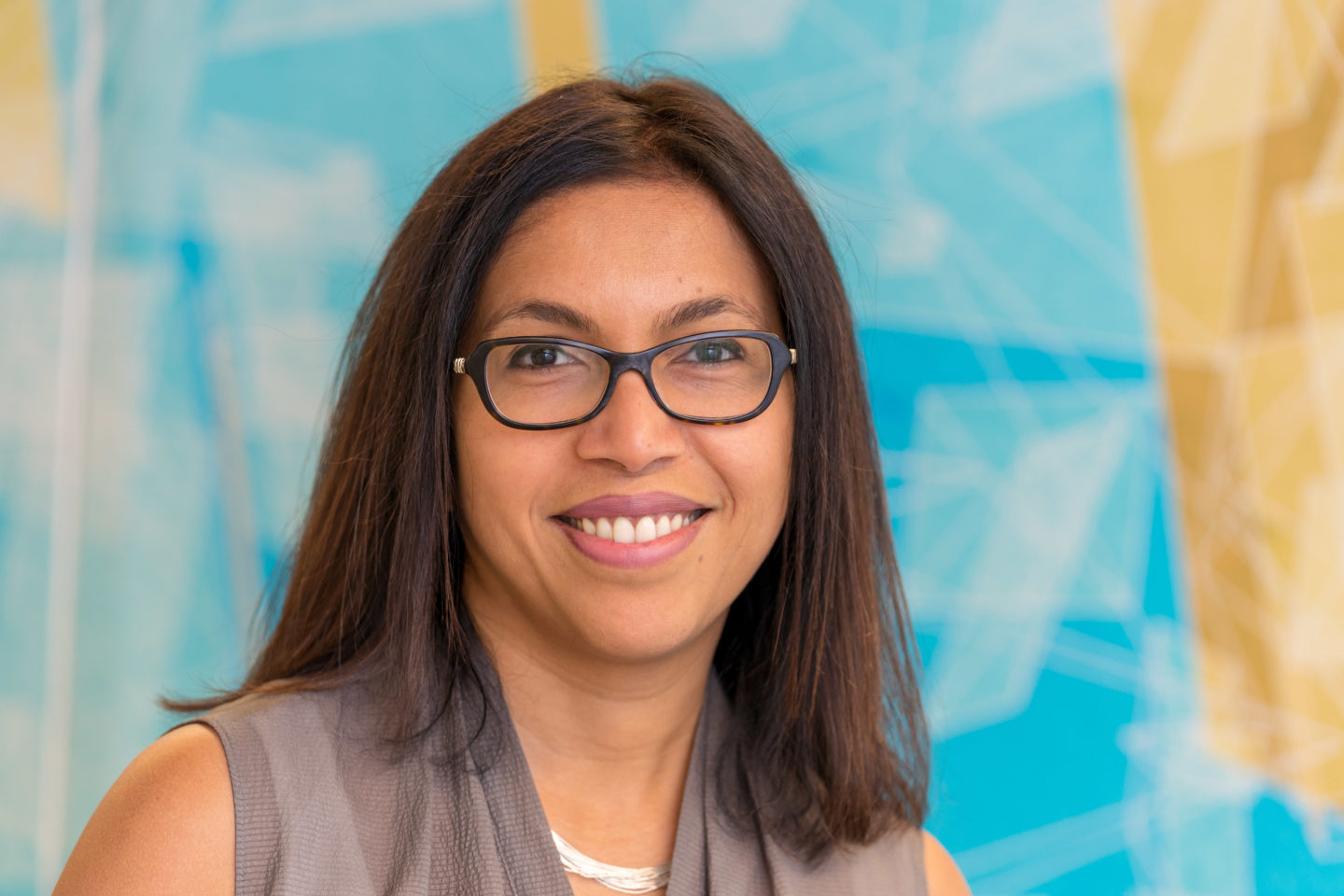
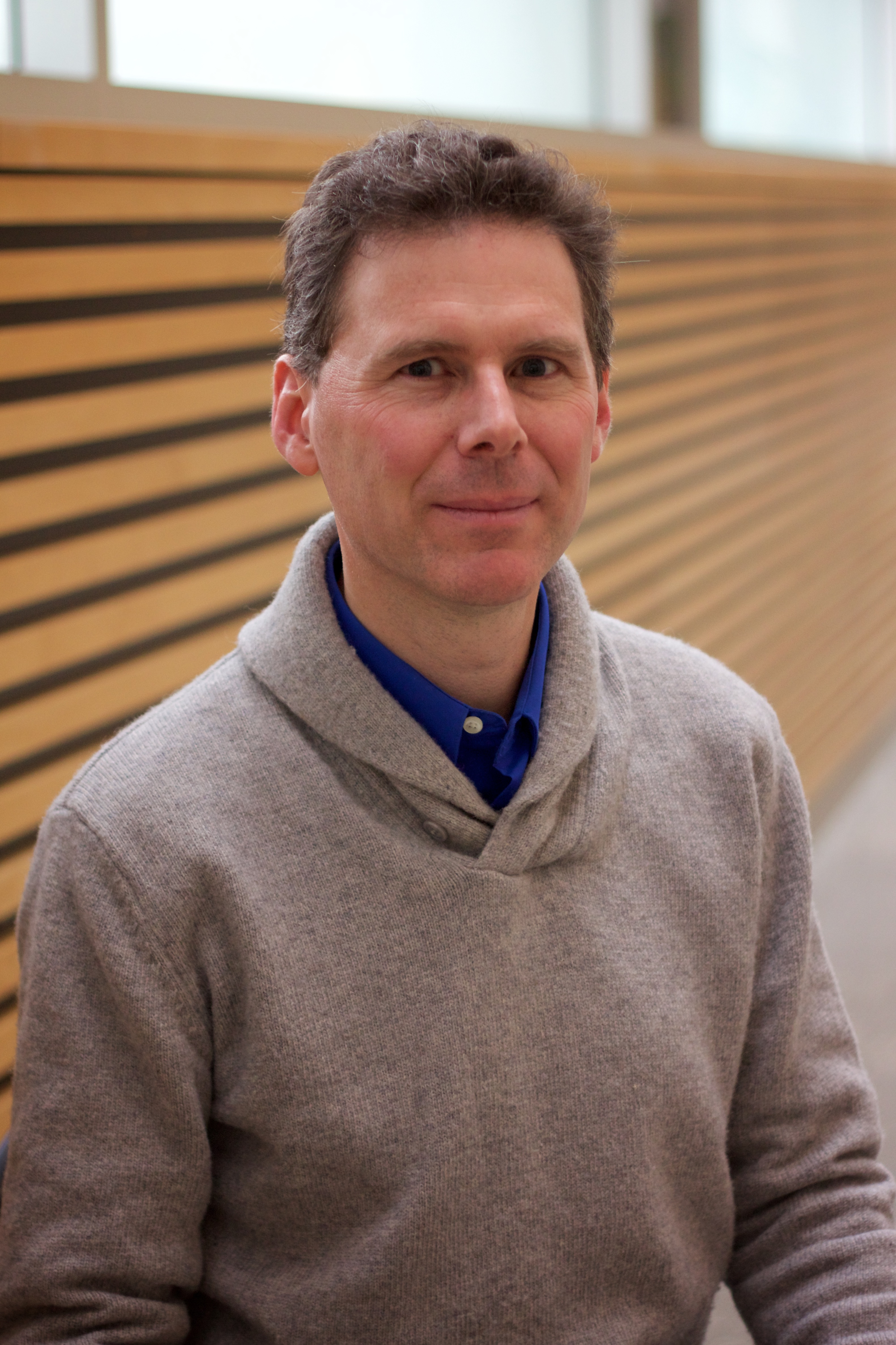
Matthew Louis Mauriello is an Assistant Professor in the Department of Computer and Information Sciences at the University of Delaware , where he directs the Sensify Lab . He holds a PhD in Computer Science from the University of Maryland (2018) and completed postdoctoral work at Stanford University (School of Medicine, 2020; School of Public Policy & Environmental Engineering Department, 2019). Research interests span Human-Computer Interaction (HCI), Ubiquitous Computing, and User-Centered Design with applications in: Sustainability Human-Building Interaction Wearable Technology Personal Informatics Educational Game Design Mental Health Interventions Recent publications highlight trends in stress monitoring (skin-like biosensors, workplace wellbeing), energy auditing (thermography systems), and educational technology (block-based programming tools for teachers). His work appears in ACM CHI, ACM Human-Computer Interaction, and Building and Environment. Scientific awards include: Best Paper Honorable Mention, CHI 2016 Best Paper Honorable Mention, CHI 2015 Best of WebSci'18 Teaching at University of Delaware encompasses courses like Educational Game Design Operating Systems Advanced Web Technologies Computing for Social Good with a focus on project-based learning and systems thinking.
Gierad Laput is a Senior Engineering Manager at Apple, leading the Perception and Interaction Engineering organization under Machine Intelligence Neural Design (MIND) at Apple AI/ML (AIML). He is also an Adjunct Professor at Carnegie Mellon University's School of Computer Science and Human-Computer Interaction Institute. His research sits at the intersection of sensing systems, interactive technologies, and machine learning, with applications in ambient intelligence, wearables, and AI-driven interactive experiences. Ph.D. in Computer Science from Carnegie Mellon University Founding member of CMU's Future Interfaces Group Former Google Ph.D. Fellow, Disney Imagineer, and recipient of 10 Best Paper Awards/Nominations His research agenda at Apple leverages cutting-edge hardware to develop multimodal ML systems for vision, audio, and motion sensors, enabling features like head gesture detection for AirPods, Apple Intelligence integrations, and health monitoring tools. Recent collaborative projects include Vision Pro hand interaction systems and WatchOS updates for cycling/fall detection. Key research areas include human-computer interaction , machine learning for sensor fusion , and smart environment sensing . Over 35 publications cover transformative technologies like ViBand (bio-acoustic sensing), EM-Sense (touch recognition), SkinTrack (arm as touchpad), and ElectroDermis (stretchable electronics). Scientific honors include: Fast Company Innovation by Design Award (2017) Google PhD Fellowship (2018) Swartz Entrepreneurial Fellowship (2018) Best Paper Awards at ACM UIST (2016) and ACM CHI (2015) As an educator, he has taught courses at CMU and the University of Michigan on on-device machine learning , signal processing , and human-centered design . His lab has mentored numerous researchers now pursuing PhDs at MIT, UW, CMU, and Northwestern.
Prof. Ingmar Posner is a leading figure in applied artificial intelligence at the University of Oxford, where he serves as Principal Investigator for the Applied Artificial Intelligence Lab (A2I) and founding Director of the Oxford Robotics Institute. His work focuses on enabling robots to operate effectively in complex real-world environments through experience-driven learning. Key research areas: robot learning, scene interpretation, data-efficient learning, and transfer learning Applications in manipulation, autonomous driving, logistics, and space exploration His team has produced groundbreaking work in world models, sim-to-real transfer, and constraint-based manipulation systems (e.g., COMBO-Grasp). Notable contributions include the TWIST distillation framework and foundational research in tactile data generation (TactGen). He has received multiple best paper awards at top robotics venues. Publications reveal evolving research themes: 2025 work emphasizes language-conditioned learning (Lumos) and multi-agent decision-making, while 2024 focused on diffusion models for locomotion and differentiable simulators. Earlier work spans from urban scene analysis to physically plausible scene synthesis (RELATE).
Christian Theobalt is a Professor of Computer Science at Saarland University and Scientific Director of the Visual Computing and Artificial Intelligence Department at the Max Planck Institute for Informatics . He leads the Saarbruecken Center for Visual Computing as a strategic partnership between Google and MPI. PhD in Computer Science (2005) from MPI-INF/Saarland University Postdoctoral Researcher at MPI (2005-2007) Visiting Assistant Professor at Stanford (2007-2009) His research focuses on the intersection of Computer Graphics, Computer Vision, and Artificial Intelligence , with specializations in: 3D/4D Human Reconstruction Neural Rendering Performance Capture Geometric Deep Learning Volumetric Video Quantum Visual Computing Recent article trends show emphasis on: Quantum computing applications in visual reconstruction Neural rendering with radiance fields Human motion capture from egocentric views Gesture-language interaction modeling Multi-modal scene understanding Real-time free-viewpoint rendering Scientific Awards : Fellow of EUROGRAPHICS (2022) CVPR Best Student Paper Honorable Mention (2020) ERC Consolidator Grant (2017) Karl Heinz Beckurts Award (2017) Busy Beaver Teaching Award (2016) ERC Starting Grant (2013) Advising over 50 students and researchers including: Current researchers: Viktor Rudnev, Linjie Lyu, Mohit Mendiratta Postdocs: Kwang In Kim, Kiran Varanasi Alumni: Franziska Mueller (Google), Dushyant Mehta (Qualcomm), Ayush Tewari (MIT) Grants include ERC grants, Google Glass Research Award, and multiple industry partnerships. His lab maintains cutting-edge facilities with: Multi-camera capture systems Quantum annealing infrastructure HDR radiance field technology GPU clusters for AI research Time-of-flight imaging systems Event camera arrays
Prof. Christian Holz is an Associate Professor at the Department of Computer Science and Deputy Head of the Institute of Intelligent Interactive Systems at ETH Zürich. His work focuses on advancing human-computer interaction through innovations in wearable technologies, mixed reality systems, and sensor-driven applications. Key research areas include motion capture, physiological signal processing, and adaptive user interfaces. Holz leads the SIPLab (siplab.ethz.ch), producing influential work at the intersection of computer science and biomedical engineering. His research explores cutting-edge topics such as egocentric vision systems, wearable health monitoring devices, and VR/AR applications. Recent studies investigate cybersickness detection via EEG, heart rate estimation from eye-tracking cameras, and scalable motion capture using inertial/UWB sensors. Holz's work emphasizes practical applications in healthcare, education, and human-centered computing. Publications reflect a strong focus on interdisciplinary solutions, combining machine learning with sensor data analysis. Notable contributions include the EgoSim multi-view simulator, WildPPG biomedical dataset, and MiBOT cardiovascular modulation device. His research bridges theoretical advancements with real-world usability in domains like emergency response training, chronic disease monitoring, and immersive education.
Luca Carlone is the Boeing Career Development Associate Professor in the Department of Aeronautics and Astronautics at MIT and a Principal Investigator at the Laboratory for Information & Decision Systems (LIDS) . He leads the SPARK Lab , focusing on developing certifiable perception algorithms for autonomous systems. PhD in Mechatronics (Polytechnic University of Turin, 2012) Research spans robotics, computer vision, and optimization Research Interests : Certifiable Perception algorithms for high-integrity systems High-level Perception (geometric, semantic, physical understanding) Efficient Perception methods for resource-constrained robots Scientific Contributions include: 2024 Outstanding Systems Paper Award (RSS) 2023 IEEE Transactions on Robotics King-Sun Fu Award 2021 NSF CAREER Award 2020 AIAA Advising Award 2019 Amazon Research Award Advising : Teaches graduate courses like Visual Navigation for Autonomous Vehicles and Robotics: Science and Systems . Collaborates with institutions including JPL, Caltech, and KAIST through the DARPA SubT Challenge.
Adrian Weller is a prominent researcher and academic at the University of Cambridge, serving as a Director of Research in Machine Learning within the Department of Engineering. He holds multiple significant leadership roles including Programme Director for Trust and Society at the Leverhulme Centre for the Future of Intelligence (CFI), and previously served as Programme Director for AI at The Alan Turing Institute, the UK national institute for data science and AI. His work bridges theoretical machine learning research with practical applications and societal implications of artificial intelligence. Weller's research interests span a broad spectrum of AI and machine learning topics with a particular focus on ensuring beneficial societal outcomes. His work encompasses explainability, fairness, robustness, scalability, privacy, safety, and ethics in AI systems. He has made significant contributions to trustworthy machine learning, including developing frameworks for AI governance, certification, and human-AI collaboration. His research group actively investigates neuro-symbolic approaches, privacy-preserving techniques, and methods for improving the reliability and interpretability of AI systems. His recent publications demonstrate a strong trend toward addressing the practical challenges of deploying AI systems in real-world contexts, particularly focusing on certification frameworks, governance mechanisms, and human-centered approaches. His work spans theoretical advances in machine learning architectures while maintaining a strong connection to societal impact, with publications appearing in top venues across AI, machine learning, and interdisciplinary applications. Scientific Awards: MBE for services to digital innovation (2022 Queen's Birthday Honours) Turing AI Fellowship for Trustworthy Machine Learning Weller actively supervises a large group of PhD students and postdocs, with current students including Juyeon Heo, Yanzhi Chen, Katie Collins, Isaac Reid, Yichao Liang, Herbie Bradley, and Shoaib Siddiqui. His former students have gone on to positions at leading institutions including Google DeepMind, ETH Zurich, NYU, and MPI-IS Tübingen. He has served on numerous advisory boards including the Centre for Data Ethics and Innovation, UNESCO's expert group on AI ethics, and the World Economic Forum's Global Future Council on AI. His research has been supported through his Turing AI Fellowship and various collaborative projects focused on safe and ethical AI development. Weller leads a vibrant research group focused on trustworthy machine learning, which actively organizes workshops and conferences including ICML 2024 (where he served as Program Chair), multiple workshops on responsible AI, and events through the ELLIS network. His group collaborates extensively across disciplines, working with researchers in computer science, social sciences, law, and policy to address the multifaceted challenges of developing beneficial AI systems.
Professor Omar A. Saleh is a distinguished physicist and materials scientist at the University of California, Santa Barbara, holding appointments in both the Materials and Physics Departments. Since summer 2023, he has served as Chair of the Materials Department and maintains a minority appointment in the Biomolecular Science and Engineering (BMSE) Program, where he previously served as Director from 2013-2017. His educational background includes a B.S. in Physics from MIT (1997) and a Ph.D. in Physics from Princeton (2003), supported by a Hertz Fellowship. Following postdoctoral work at École Normale Supérieure in Paris developing single-molecule techniques for motor protein/DNA studies, he joined UCSB in 2005. Saleh's research centers on fundamental principles of biomolecular behavior through experimental investigation of biopolymer elasticity and biomimetic organelles. His lab pioneers precision single-molecule stretching experiments to study entropic/energetic contributions in soft systems and creates life-like behaviors using reconstituted nucleic acid/protein assemblies. Key focus areas include DNA nanostar phase separation, liquid-liquid phase behavior, intrinsically disordered proteins, and non-equilibrium biomolecular systems. His publication trends reveal a strong emphasis on biomolecular condensates (2023-2025), with recurring themes in DNA nanotechnology, polyelectrolyte physics, and single-molecule mechanics. Recent work explores tension-mediated control of phase separation, transcriptional regulation of biomolecular liquids, and active matter principles in DNA systems. NSF CAREER Award (2008) Bessel Research Award from Alexander von Humboldt Society (2017) Fellow of the American Physical Society (2019) Saleh actively mentors graduate students and postdocs including Sam Wilken, Gabrielle Abraham, Anna Nguyen, and Aria Chaderjian, whose research spans DNA nanostar liquids, active droplets, and complex coacervation. His lab develops innovative instrumentation including high-speed magnetic tweezers and GPU-based tracking systems, supported by grants such as NSF/MCB-BSF: Direct force measurements of intrinsically disordered proteins. The Saleh Group operates at BioE 3006, focusing on creating quantitative models of biological function through physical reconstitution.
Lerrel Pinto is an Assistant Professor of Computer Science at the Courant Institute of Mathematical Sciences at New York University (NYU), where he leads the General-purpose Robotics and AI Lab (GRAIL) as part of the CILVR research group. His work bridges the gap between theoretical machine learning and practical robotics applications, with a focus on enabling robots to generalize and adapt in real-world environments. Dr. Pinto received his undergraduate degree from IIT Guwahati, followed by a PhD from the Robotics Institute at Carnegie Mellon University (CMU). He then completed a postdoctoral fellowship at the University of California, Berkeley before joining NYU as faculty. His research program centers on robot learning and decision making, with several key thrusts that demonstrate his innovative approach to robotics. Pinto's work emphasizes large-scale learning techniques that leverage both extensive data and sophisticated model architectures. A significant portion of his research focuses on representation learning for sensory data, particularly developing methods that enable robots to make sense of visual, tactile, and auditory inputs. His lab has made notable contributions to reinforcement learning algorithms that allow robots to adapt to new scenarios with minimal retraining. Pinto also champions open-source robotics , developing affordable robot platforms that democratize access to robotics research. Analysis of Pinto's recent publications reveals a strong trend toward multimodal perception in robotics, integrating visual, tactile, and auditory information to create more robust robot systems. His work increasingly focuses on zero-shot and few-shot learning capabilities, enabling robots to handle novel situations without extensive retraining. There's also a clear progression toward general-purpose robotics , moving away from task-specific solutions toward more flexible systems that can handle diverse real-world challenges. Dr. Pinto's scientific contributions have been recognized with several prestigious awards: Sloan Research Fellowship (2025) NSF CAREER Award (2024) RAL Early Career Award (2024) Best Student Paper Award at ICRA (2016) Outstanding Paper Award at MFM-EAI workshop at ICML (2024) Best Paper Award at NGSM workshop at ICML (2024) Best Student Paper Award at RSS (2023) As an advisor, Pinto has mentored numerous students who have gone on to impactful careers in both academia and industry. His former PhD student Denis Yarats co-founded Perplexity.AI, while Mahi Shafiullah became a postdoc at UC Berkeley and Meta AI. Many of his Masters students have pursued PhDs at top institutions like CMU, MIT, and Stanford, or joined leading robotics companies including 1X, Fauna Robotics, and NVIDIA. Pinto's lab has secured significant research funding, including the NSF CAREER award and likely other grants supporting his robotics research program. The General-purpose Robotics and AI Lab (GRAIL) that Pinto leads brings together a diverse team of researchers working on cutting-edge robotics challenges. The lab maintains strong collaborations with industry partners and other academic institutions, facilitating technology transfer and real-world impact. GRAIL's research spans multiple robotics platforms and focuses on developing algorithms that enable robots to learn from diverse experiences and generalize across environments.
Sanjiv Singh is a Research Professor at the Robotics Institute within Carnegie Mellon University's School of Computer Science. His academic journey at CMU spans from Systems Scientist (1995-2001), to Senior Research Scientist (2001-2003), Associate Research Professor (2003-2007), and finally Research Professor since 2007. He also holds an adjunct faculty position in Mechanical Engineering since 2009. Singh serves as Editor-in-Chief of the Journal of Field Robotics, demonstrating his leadership in the robotics community. His educational background includes a Ph.D. and M.S. in Robotics from Carnegie Mellon University (1995, 1992), an M.S. in Electrical Engineering from Lehigh University (1985), and a B.S. in Computer Science from the University of Denver (1983). Dr. Singh's research focuses on three primary themes: Autonomous Navigation (developing motion planning and control for ground and air vehicles with applications in agriculture, exploration, and low-flying aircraft), Coordinated Multi-Robots (examining team-based tasks like structure assembly and search/rescue operations), and Forceful Interaction with the world (using physical models to enable robots to handle complex, high-force interactions). His work spans aerial robotics, agricultural and forestry robotics, mining robotics, 3D vision, sensing and perception, visual servoing, motion planning, and field service robotics. Analysis of his recent publications (2016-2020) reveals a strong focus on collision avoidance algorithms, sensor fusion techniques, and real-time navigation systems. His research demonstrates consistent advancement in SLAM (Simultaneous Localization and Mapping) technologies, particularly in GPS-denied environments, with increasing sophistication in handling complex aerial maneuvers and multi-robot coordination. Editor-in-Chief of Journal of Field Robotics Dr. Singh has advised numerous graduate students throughout his career, with current advisees including Matt Aasted (Ph.D), Andrew Chambers (M.S), Hugh Cover (M.S), Michael Dille (Ph.D), and Justin Haines (M.S). His past students include prominent researchers like Sebastian Scherer, Joe Djugash, Fred Heger, Geoff Hollinger, and Ji Zhang who have gone on to make significant contributions in robotics. His research has been supported through various projects including CASC (agricultural applications), Riverine, Transformer, Trestle, and Ember. His laboratory work focuses on developing practical robotic systems capable of operating in challenging real-world environments, with particular emphasis on agricultural applications, search and rescue operations, and coordinated multi-robot teams that can work effectively alongside humans.
Tanzeem Choudhury is a Professor at the Jacobs Technion-Cornell Institute at Cornell Tech, specializing in Information Sciences. She co-founded HealthRhythms Inc. and directs the People-Aware Computing lab, focusing on machine learning for human activity and social network analysis. Her work pioneered the 'Reality Mining' field, leveraging mobile sensors to model social interactions. Choudhury holds a Ph.D. from MIT's Media Lab and B.S. in Electrical Engineering from the University of Rochester. Her research spans wearable tech, mental health interventions, and ubiquitous computing. Notable projects include affective touch wearables for anxiety reduction, stress detection systems (e.g., StressSense), and the BeWell app for well-being monitoring. Choudhury has been recognized as an ACM Fellow and SIGCHI Academy member, with impactful contributions to healthcare technology and sensor-based behavioral analysis. Current lab initiatives include developing closed-loop interventions for mental health, equity-driven sensing systems, and exploring AI integration in psychotherapy. She advises PhD students on topics like digital biomarkers, burnout detection in healthcare workers, and smartphone-based mental health assessment. Education: Ph.D. in Media Arts & Sciences (MIT), M.S. (MIT Media Lab), B.S. in Electrical Engineering (University of Rochester) Lab Team: Includes PhD candidates (Dan Adler, Yiran Zhao) and researchers focusing on health AI, wearable devices, and clinical applications. Major Awards: ACM Fellowship (2020), SIGCHI Academy (2018), Best Paper Awards at Ubicomp and MobileHCI conferences. Key Projects: OptoBeat (skin-tone calibrated blood oxygen sensor), EmotionCheck (anxiety intervention), and Affective Touch devices.
Nima Fazeli is an Assistant Professor of Robotics at the University of Michigan (2020–Present), holding courtesy appointments in Computer Science & Engineering (CSE) and Mechanical Engineering. He directs the Manipulation and Machine Intelligence (MMint) Lab, focusing on enabling dexterous robotic manipulation through multimodal representation learning, tactile sensing, and model-based reasoning. His work integrates mechanics, perception, controls, and planning to achieve autonomous interaction with uncertain environments. Education: PhD, MIT (2019); MSc, University of Maryland (2014); BSc, Amirkabir University of Technology (2011) Research interests emphasize embodied intelligence , including visuo-tactile fusion, contact dynamics modeling, and cross-modal learning. Recent work explores tactile shadows, deformable object manipulation, and language-guided robot control. His research is supported by the NSF CAREER grant and National Robotics Initiative, with applications in manufacturing, assistive robotics, and space systems. Publications span topics like tactile sensing hardware (e.g., GelSlim 4.0), visuo-tactile implicit representations (ViTaSCOPE), and failure recovery policies (Racer). His team’s work has been featured in outlets like The New York Times and BBC. Key Awards: NSF CAREER Grant (2024) Teaching includes Introduction to Robotic Manipulation . Collaborations involve cross-disciplinary projects with mechanical, electrical, and biomedical engineering groups.
Robert Rohling is a Professor at the University of British Columbia's Faculty of Applied Science, affiliated with the Department of Mechanical Engineering and holding a joint appointment with the Department of Electrical and Computer Engineering. As Director of the Institute of Computing, Information and Cognitive Systems (ICICS), his research focuses on biomedical engineering, medical imaging, robotics, and computational methods. B.A.Sc. (UBC) M.Eng. (McGill) Ph.D. (Cambridge) Rohling's work spans three primary research areas: medical imaging (3D ultrasound, spatial compounding, elasticity reconstruction), medical information systems (radiologist navigation tools for large image datasets), and robotic calibration for surgical applications. His multidisciplinary approach integrates mechanical and electrical engineering principles with clinical needs. Rohling's publications (2020-2022) reveal trends in advanced ultrasound techniques (e.g., shear wave vibro-elastography), AI-driven image processing (cycleGAN translation), and computational optimization for diagnostic accuracy. Keywords across his work include Medical Imaging, Biomedical Engineering, Robotics, and Computational Modeling. As director of the Robotics and Control Laboratory , Rohling leads interdisciplinary collaborations with industry and clinical partners to address practical challenges in medical diagnostics and surgical robotics. His research emphasizes translating engineering innovations into clinical practice.
Dr. Kaya de Barbaro is an Associate Professor in the Department of Psychology at the University of Texas at Austin (College of Liberal Arts). She holds a Ph.D. from the University of California San Diego. Her research focuses on bridging computer science and developmental/clinical psychology, particularly maternal mental health and infant social-emotional development. She directs the Daily Activity Lab, which uses mobile/wearable sensors and machine learning to analyze real-world interactions, aiming to develop just-in-time interventions for new mothers. Key research areas include maternal-infant dynamics, physiological synchronization, and the impact of environmental chaos on development. She has pioneered methods for analyzing high-density data, such as Granger causality and machine learning algorithms to detect behaviors like crying and holding. Recent work emphasizes leveraging ecological momentary assessment surveys and 24-hour LENA audio recordings to understand proximal mechanisms of development. Dr. de Barbaro teaches Psychology 333D (Introduction to Developmental Psychology) and has developed curricula for both in-person and online formats. She is actively involved in training students through the Eureka program at UT Austin. Her lab collaborates on tools like chatbots for postpartum mental health and has published extensively on sensor-based methodologies in developmental science.
Olga Sorkine-Hornung is a Professor of Computer Science at ETH Zurich and head of the Institute of Visual Computing. She leads the Interactive Geometry Lab, focusing on theoretical and practical advancements in digital content creation, geometry processing, and shape modeling. Current position: ETH Zurich, Department of Computer Science Previous roles: Courant Institute (NYU), Technical University of Berlin Education: BSc and PhD from Tel Aviv University, postdoc at TU Berlin Her research spans shape representation, digital fabrication, computer animation, and fundamental geometry processing. Key contributions include Laplacian surface editing, as-rigid-as-possible deformation, and generalized winding numbers. She works on applications in VR, AR, and autonomous systems. Awards include Test of Time Awards (2024), ACM Fellow (2020), ERC Consolidator Grant (2020), and EUROGRAPHICS Young Researcher Award (2008). She has supervised numerous students and co-developed software libraries like libigl and Instant Meshes . Co-chair roles for SIGGRAPH, Eurographics, and Pacific Graphics Editorial board member for ACM Transactions on Graphics and other journals Keynote speaker at VMV, CVPR, and SIAM conferences Her work bridges mathematical rigor with practical implementation, advancing computer graphics and geometry processing through intuitive algorithms that maintain surface detail while enabling efficient computation.