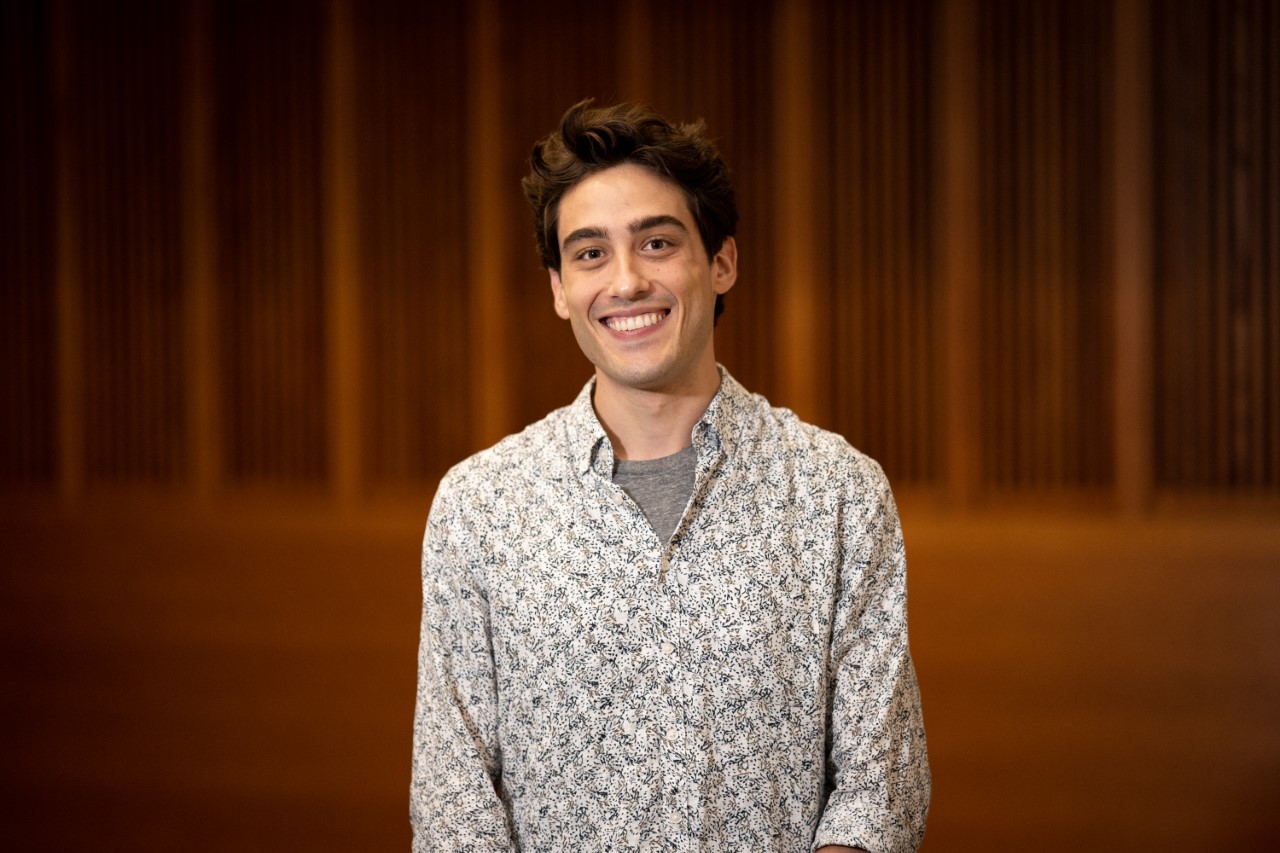
Rasmus Bjørk is a Professor at the Technical University of Denmark (DTU) in the Department of Energy Conversion and Storage. His research focuses on advanced materials for energy systems, particularly in magnetocaloric and elastocaloric cooling, magnetic materials, and additive manufacturing for functional devices. His work contributes to the UN Sustainable Development Goals, especially in affordable and clean energy. PhD Supervision: Active projects include energy storage using topological spin textures, magnetothermal waste heat harvesting, and bio-magnetometers. Key Research Areas: Magnetic refrigeration, energy harvesting, and freeze-casting of functional materials. Recent advancements include 3D-printed elastocaloric coolers and studies on magnetoresistive devices. His team develops novel techniques for optimizing magnetic systems and energy conversion processes. He has published over 160 articles and led projects on regenerator design, magnetic bearings, and sensor technologies. Collaborations span multiple countries and disciplines. Notable contributions include pioneering work on freeze-casting for biomaterials and the MagTense micromagnetic framework. His research bridges theoretical modeling and practical applications in sustainable energy solutions.
Roberto Rojas-Cessa is a Professor in the Department of Electrical and Computer Engineering at New Jersey Institute of Technology (NJIT), affiliated with the School of Applied Engineering and Technology. His research focuses on networking, blockchain applications in smart cities, energy systems, wireless communications, and high-performance switching. He has led multiple National Science Foundation (NSF)-funded projects, including initiatives on controlled delivery power grids and next-generation network quality of service. Notably, his work explores blockchain for energy metering, sustainable environmental measures, and smart grid optimization. He is also a Senior Member of the National Academy of Inventors (2024). His research interests span network protocols, distributed systems, and IoT applications. Recent projects include AMI-Chain (a blockchain-based power metering system) and studies on indirect free-space optical communications for vehicular networks. He has contributed to advancements in medium access control for crowded networks and energy packet switches for digital microgrids. Rojas-Cessa’s work integrates machine learning for network management and flood impact analysis. He has developed tools for time-lapse analysis of urban data and agent-based models to evaluate electric vehicle adoption. His publications emphasize scalability, security, and efficiency in both traditional and emerging technologies. Grants: Collaborative Research on Power Grids (NSF, 2016–2018), NeTS-NR: Quality of Service Networks (NSF, 2004–2008) Awards: Senior Member of the National Academy of Inventors (2024) His lab activities include experimental evaluations of digital microgrids and blockchain implementations for carbon footprint tracking. He actively collaborates on projects addressing emergency communications and resilient energy distribution systems.
Igor Wojnicki is a Professor at AGH University of Science and Technology's Faculty of Electrical Engineering, Automatics, Computer Science and Biomedical Engineering, where he serves as Vice-Dean of the Faculty of Cooperation and Education. His primary affiliation is with the Department of Applied Informatics, where he maintains an active research laboratory focused on knowledge engineering and smart systems. His research spans multiple domains with evolving focus: Early career: Deductive databases and rule-based inference engines (PhD thesis on "A Rule-based Inference Engine Extending Knowledge Processing Capabilities of Relational Database Management Systems") Mid-career: Graph-based knowledge representation and Tabular Trees (XTT predecessor) Current focus: Smart city applications, particularly energy-efficient lighting control systems and graph-based urban data integration His recent publications demonstrate a clear trajectory toward applied urban computing, with over 15 significant papers in the last five years addressing smart city infrastructure optimization. Key themes include dynamic street lighting control, graph-based computational methods for urban environments, and energy conservation in public infrastructure. Wojnicki actively contributes to academic-practical collaboration through initiatives like the Green AGH Campus Project and IBM academic partnerships. His technical leadership includes development of the ReDaReS system for relational database knowledge processing and the Jelly View technology for advanced database queries. His laboratory maintains strong industry connections, particularly with IBM through student internship programs and technology transfer initiatives. The team produces both theoretical frameworks and practical implementations, with notable outputs including the Osiris GUI system and Magellan GPS software for Poland.
Bhushan Gopaluni is a Professor in the Department of Chemical and Biological Engineering at the University of British Columbia, where he also serves as Associate Dean for Education and Professional Development in the Faculty of Applied Science. He holds associate faculty positions in multiple interdisciplinary institutes including the Institute of Applied Mathematics, Institute for Computing, Information and Cognitive Systems, Pulp and Paper Center, and Clean Energy Research Center. He previously held the Elizabeth and Leslie Gould Teaching Professorship from 2014 to 2017. Education: Ph.D. in Chemical Engineering, University of Alberta (2003) Bachelor of Technology in Chemical Engineering, Indian Institute of Technology, Madras (1997) Research Interests: Professor Gopaluni's research spans several critical areas at the intersection of chemical engineering, machine learning, and process control. His primary focus includes the development of advanced process control strategies using reinforcement learning and machine learning techniques. He has made significant contributions to battery technology research, particularly in capacity estimation and remaining useful life prediction for lithium-ion batteries. His work also encompasses sustainable energy systems, industrial process monitoring, fault diagnosis, and the application of digital twin technology in chemical processes. His research methodology emphasizes the integration of data-driven approaches with fundamental process understanding, leading to practical solutions for complex industrial challenges. This includes the development of interpretable machine learning models for industrial applications, real-time optimization strategies, and advanced monitoring systems for process industries. Publications and Research Impact: Professor Gopaluni's recent publications demonstrate a strong focus on cutting-edge applications of machine learning in chemical engineering. His work prominently features battery technology and energy systems, with multiple papers addressing lithium-ion battery capacity estimation and management. He has also contributed significantly to process control applications, including drilling process monitoring, greenhouse gas reduction in marine transport, and renewable carbon tracking in biofuel processing. His research extends to advanced computational methods including deep learning, reinforcement learning, and causal discovery in industrial processes. Awards and Recognition: Killam Teaching Prize (University of British Columbia) Dean's Service Medal (University of British Columbia) D.G. Fisher Award in Process Control (Canadian Society for Chemical Engineers) Elizabeth and Leslie Gould Teaching Professor (2014-2017) Professional Service and Editorial Roles: Professor Gopaluni currently serves as Associate Editor for three prestigious journals: Journal of Process Control, The Journal of Franklin Institute, and Results in Control and Optimization. His service to the academic community extends through his role as Associate Dean for Education and Professional Development, where he oversees educational initiatives across the Faculty of Applied Science. Industry Experience: From 2003 to 2005, Professor Gopaluni worked as an engineering consultant at Matrikon Inc. (now Honeywell Process Solutions), where he designed and commissioned multivariable controllers for British Columbia's pulp and paper industry and implemented controller performance monitoring projects across oil & gas and chemical industries.
Bernardo Tellini is a Full Professor of Electrical and Electronic Measurements at the Department of Energy, Systems, Land, and Construction Engineering (DESTEC) at the University of Pisa, where he also serves as Vice-Rector for Doctoral Research. He has held this institutional role since 2020, overseeing doctoral program planning, accreditation, and admission procedures. Previously, he chaired the doctoral program in Energy, Electrical, and Thermal Engineering from 2012 to 2016 and served on the Leonardo da Vinci Doctoral School in Engineering from 2008 to 2016. Education: PhD in Electrical Engineering, University of Pisa (1999) Degree in Electrical Engineering, University of Pisa (1993) Postdoctoral research at Karlsruhe Research Center for Technology and Environment Industry experience at ABB Tellini's research focuses on electrical and magnetic measurement methodologies for high-power pulsed applications, characterization of electrical and magnetic properties of materials, aging processes in battery cells, and electromagnetic emissions from power circuits. His work spans from fundamental measurement theory to practical industrial applications, particularly in railway technologies where he represents the University on the Steering Committee of the District for Railway Technologies, High-Speed, and Network Safety in Tuscany. He has served as president of the European Pulsed Power Laboratories agreement and chaired major IEEE conferences including I2MTC 2015 and MELECON 2020. His recent publications reveal a strong emphasis on RFID-based localization systems , nanoparticle-enhanced optical sensors , and advanced battery characterization techniques . The research trajectory shows increasing integration of measurement science with emerging technologies like plasmonic sensing, microwire-based transducers, and smart systems for industrial monitoring. His team has developed innovative approaches for battery health monitoring under vibration stress, temperature sensing using magnetic materials, and precise localization methods using phase-based RFID systems. Professional Service: President of Italian Section of IEEE (2019-2021) Scientific director of Pisa research unit in Association of Electrical and Electronic Measurements (GMEE) Member of Certification Committee of Italcertifer SpA (since 2019) Representative on District for Railway Technologies Steering Committee (since 2013) Tellini has authored approximately 200 publications in international journals and conference proceedings. His leadership extends to academic governance through roles on the DESTEC Department Human Resources Committee and various university committees overseeing scientific qualifications and doctoral programs. His research bridges theoretical measurement principles with practical engineering solutions for energy systems, transportation infrastructure, and industrial monitoring applications.
Nick Cheney is an Associate Professor in the Department of Computer Science at the University of Vermont, leading the UVM Neurobotics Lab. He also serves as Graduate Program Director and is affiliated with the Vermont Complex Systems Center, an interdisciplinary hub for data-rich complex systems research. PhD in Computational Biology and Biological Statistics from Cornell University Advised by Hod Lipson and Steve Strogatz His research focuses on bio-inspired machine learning algorithms, particularly in evolutionary computation, deep learning, and reinforcement learning. Key applications span robotics, healthcare diagnostics, and environmental science. The lab's interdisciplinary work has been recognized with prestigious awards including the NSF CAREER Award and SIGEVO Impact Award . Recent publications highlight advancements in morphological computation, continual learning, and cross-domain applications of machine learning. His team develops algorithms for soft robots, medical diagnostics using wearable sensors, and sustainable agriculture systems, often publishing in venues like the Nature Scientific Reports , GECCO , and Soft Robotics . Scientific Awards : NSF CAREER Award SIGEVO Impact Award The lab actively mentors graduate students in Complex Systems and Data Science, with alumni securing positions at institutions like Harvard, UC Berkeley, and Medidata. Collaborative grants with biomedical and environmental researchers demonstrate the lab's commitment to societal impact through machine learning applications.
Ming Li is a Professor of Electrical and Computer Engineering at Duke Kunshan University's Division of Natural and Applied Science, and a Principal Research Scientist at the Digital Innovation Research Center. He holds an adjunct position as a Professor at Wuhan University's School of Computer Science. His research focuses on audio/speech processing, multimodal behavior signal analysis, and applications in autism spectrum disorder diagnosis. Li has over 200 publications and serves on editorial boards of journals like IEEE Transactions on Audio, Speech and Language Processing. Education: Ph.D. in Electrical Engineering from the University of Southern California (2013). Awards include the IBM Faculty Award (2016), ISCA 5-Year Best Paper Award (2018), and Youth Achievement Award (2020). He leads initiatives in anti-spoofing countermeasures, voice conversion, and speech synthesis. Recent Courses: Random Signals and Noise Speech Recognition Data Science Key Research Contributions: Development of datasets like KunquDB, TMCSpeech, and systems for speaker verification, deepfake detection, and autism diagnosis tools. His work bridges signal processing with clinical applications, leveraging AI for social interaction improvement in neurodiverse populations.
Kshirasagar Naik is a Professor in the Department of Electrical and Computer Engineering at the University of Waterloo, Ontario. He is actively involved in graduate research supervision and has been a member of IEEE since 1994. His academic career spans decades, with a focus on wireless communication, energy efficiency, and cybersecurity. 1992, Doctorate in Computer Engineering from Concordia University, Ontario 1988, Master of Mathematics in Computer Science from University of Waterloo, Ontario 1983, MTech in Computer Engineering from Indian Institute of Technology, Kharagpur, India 1981, BScEng in Electronics and Telecommunication from Sambalpur University, India His research interests include Mobile and Ad Hoc Networks , Cybersecurity , Internet of Things (IoT) , and Intelligent Transportation Systems . He has published extensively on energy optimization in wireless devices, delay-tolerant networks, and security protocols for vehicular systems. Recent publications highlight the integration of Machine Learning and IoT in environmental monitoring, particularly forest fire detection and prediction. Other works focus on cybersecurity , vehicular networks , and energy optimization in data centers and handheld devices. Professor Naik is currently accepting graduate students for research in mobile systems, network protocols, and green computing at the University of Waterloo.
Dr. Alan Jamison is an Assistant Professor at the University of Waterloo's Institute for Quantum Computing (IQC), located in the Quantum-Nano Centre. His research focuses on ultracold atoms and molecules to study quantum many-body physics and quantum chemistry, enabling precise control of quantum states for applications in quantum computing, sensors, and simulation. He teaches courses such as PHYS 359 (Statistical Mechanics) and PHYS 363 (Intermediate Classical Mechanics), having taught them since 2021. Jamison holds a PhD and MSc from the University of Washington (2014, 2008), and a BS in Mathematics from the University of Central Florida (2007). His accolades include the Henderson Thesis Prize (2015) and the Hans G. Dehmelt Prize (2013). He leads the Jamison Lab, a multidisciplinary team exploring quantum systems' fundamental properties and applications, with current and former students contributing to cutting-edge projects. The lab collaborates across disciplines, including economics, to apply quantum mechanics to diverse fields. Education: PhD Physics, University of Washington, 2014 MSc Physics, University of Washington, 2008 BS Mathematics, University of Central Florida, 2007 Research Interests: Jamison's work spans ultracold chemistry, quantum simulation, and quantum computing. His group uses lasers to cool atoms to near-absolute zero, creating systems to study quantum phenomena like supersolid phases and quantum interference-driven reactions. Recent projects include collisional cooling of molecules and probing spin-orbit coupling in Bose-Einstein condensates. Awards: Henderson Thesis Prize, University of Washington (2015) Hans G. Dehmelt Prize, University of Washington (2013) Mellam Teaching Fellowship, University of Washington (2008) Lab & Team: The Jamison Lab at IQC fosters collaboration across physics, mathematics, and economics. Current graduate students include Omar Hussein and Megan Byres, with undergraduates like Nabeel Rasheed. Former members have pursued roles at institutions like Harvard University and Pratt & Whitney. Labs/Teams: Jamison Lab is part of IQC, a hub for quantum research with faculty from diverse departments. Projects include exploring economic systems through quantum many-body techniques and advancing precision interferometry for quantum sensors.
Monika Kuffer is a Full Professor at the University of Twente's Faculty of Geo-Information Science and Earth Observation (ITC), holding additional roles as Associate Professor in the Department of Urban and Regional Planning and Geo-Information Management. She leads research in urban remote sensing, deprived area monitoring, and sustainable urban development. Her work integrates spatial statistics, machine learning, and citizen science to inform inclusive city planning. Education: PhD in Human Geography & GIS from the University of Twente MSc in Human Geography (TU Munich) MSc in Geographic Information Science (University of London) Research Interests: Urban Remote Sensing Slum and Deprivation Mapping Climate Adaptation Strategies Citizen Science for Urban Inequalities Earth Observation Policy Support Articles Trends: Recent work emphasizes multi-city climate adaptation analyses, thermal inequality assessments in African slums, and scalable deprivation modelling frameworks like IDEAMAPS. Projects like ONEKANA and NightWatch highlight fusion of EO data with community-driven methods. Awards: 2022 EO4all Prize for innovative Earth Observation applications Advising & Grants: Supervised 3 PhD/MSc projects. Active in global initiatives like the EU's Knowledge Centre on EO and the UN's SDG frameworks. Leads datasets on deprivation (e.g., IDeAMapSudan). Labs/Teams: Core member of ITC's Urban Remote Sensing and GeoAI teams. Collaborates with the Digital Society Institute for interdisciplinary urban research.
Jonas Stålhand is a Professor at Linköping University, affiliated with the Department of Management and Engineering (IEI) and the Division of Solid Mechanics (SOLMEK). His research focuses on biomechanics, smart textiles, haptic technologies, and cardiovascular mechanics. He leads interdisciplinary projects such as a study on pain relief using smart textile garments, combining neuroscience, materials science, and biomechanics. His work spans arterial wall mechanics, wearable haptic systems, and biomaterial characterization. Recent projects include parameter identification in arteries and the development of electroactive yarn actuators for wearable applications. Collaborations involve multidisciplinary teams across engineering, medicine, and textile science. Research interests emphasize translating biomechanical insights into clinical and industrial applications. Notable contributions include studies on aortic stress analysis, acetabular cup stability, and electroactive polymer-based actuators. His publications address both fundamental and applied aspects of soft tissue mechanics and medical engineering. No scientific awards are explicitly listed, but his work has been highlighted in university news for its innovative potential in healthcare and technology.
Melvin Rafi is an Assistant Teaching Professor in the Department of Aerospace Engineering Sciences at the University of Colorado Boulder, part of the College of Engineering and Applied Science. His research focuses on aircraft flight dynamics, control systems, and aviation safety, particularly in loss-of-control mitigation and augmented-reality displays. He holds a PhD, MS, and BS in Aerospace Engineering from Wichita State University. Education: PhD, Aerospace Engineering, Wichita State University, 2020 MS, Aerospace Engineering, Wichita State University, 2013 BS, Aerospace Engineering, Wichita State University, 2007 His work emphasizes real-time adaptive control systems, resilient aircraft control architectures, and safety-enhancing technologies like augmented-reality pilot advisory displays. Recent publications explore predictive loss-of-control avoidance, Kalman-filter-based adaptive control, and flight dynamics in flexible aircraft. Rafi has conducted extensive pilot-in-the-loop simulations and flight tests to validate these systems. His research trends highlight integration of artificial intelligence, neural networks, and human factors into aviation safety frameworks. Notable projects include real-time control margin prediction and failure recovery mechanisms for general aviation and transport aircraft. Rafi’s professional experience includes postdoctoral research at Wichita State University’s General Aviation Flight Lab before joining CU Boulder. He collaborates on projects involving 3D design visualization, flight simulation systems, and sensor technologies for real-time aircraft diagnostics.
Professor Matt Garratt is a faculty member at the University of New South Wales (UNSW Canberra), School of Engineering and IT, serving as AI theme lead for the Defence Trailblazer Universities initiative with over $200 million in funding. His primary research focuses on sensing, guidance, and control for autonomous systems within robotics and unmanned aerial vehicles. Garratt's research spans robotics, swarm intelligence, and autonomous systems with emphasis on bio-inspired navigation techniques and adaptive flight control. His work addresses critical challenges including terrain following using vision systems, landing UAVs on moving platforms, and developing self-organizing swarms. He integrates artificial intelligence, computer vision, and machine learning to advance unmanned systems capabilities in complex environments. Analysis of his recent publications reveals strong trends in bio-inspired UAV navigation (particularly honeybee behavior modeling) and swarm robotics applications. His work increasingly incorporates deep learning for perception tasks while addressing real-world challenges like gas plume detection and adversarial robustness in 3D vision systems. The research demonstrates consistent progression toward practical implementation of autonomous systems in dynamic environments. Professor Garratt has secured over $7.7 million in external research funding as Chief Investigator on 33 grants. He actively mentors graduate students with scholarships available for Masters and PhD research in robotics and AI, focusing on: UAV path planning and adaptive control systems Swarm robotics collective motion optimization Bio-inspired autonomous navigation techniques Computer vision for robotic perception He co-founded the UNSW Canberra AIR (AI and Robotics) Group (AIR Lab), which drives research in trusted autonomy, swarm intelligence, and AI integration for defense applications. The lab develops practical solutions for autonomous systems operating in complex, real-world environments while maintaining ethical AI frameworks.
Roger Michaelides is an Assistant Professor of Earth, Environmental, and Planetary Sciences and Environmental Studies at Washington University in St. Louis. He leads the Radar Interferometry and Geospatial Science Laboratory (Radar Lab), focusing on radar remote sensing, geospatial techniques, and Arctic permafrost dynamics. His work integrates InSAR, radar altimetry, and multi-sensor fusion to study environmental processes like wildfire-permafrost interactions, coastal erosion, and climate change impacts. Michaelides earned a PhD in Geophysics from Stanford University (2020) and held postdoctoral positions at the Colorado School of Mines (2020–2022). He joined Washington University in 2022. His research emphasizes developing novel remote sensing methods for cryospheric and terrestrial systems, including NASA-funded studies tracking permafrost thaw and wildfire effects in the Arctic. Recent awards include a NASA Early Career Investigator Program Fellowship (ECIP-ES), supporting his $300,000 project on Arctic permafrost monitoring. He actively mentors graduate and undergraduate students, offering funded PhD opportunities in InSAR applications and climate science. His lab collaborates with agencies like NASA and the Indian Space Research Organization, leveraging satellite data from missions like NISAR. Key interests include radar signal processing, environmental modeling, and interdisciplinary approaches to Earth observation. Michaelides’ work bridges geophysics, ecology, and climate science, with applications to global environmental challenges such as permafrost degradation and wildfire prediction.
Prof. Dieter H.H. Hoffmann is a distinguished academic in the Department of Physics , specializing in high-energy physics, dark matter detection, and plasma-based fusion research. His work focuses on particle astrophysics, including axion searches via helioscopes like CAST, nuclear fusion mechanisms (particularly proton-boron reactions), and plasma dynamics in extreme conditions. He collaborates on major projects such as the Cherenkov Telescope Array (CTA) for gamma-ray astronomy and heavy-ion beam experiments at facilities like FAIR. Research interests include: Dark matter axion detection and theoretical modeling Proton-boron fusion as an alternative energy pathway Plasma interactions in high-intensity laser and beam experiments Stopping power and beam transport in dense matter High-energy-density physics for inertial confinement fusion Recent work highlights advancements in: CAST experiment sensitivity improvements for solar axions Experimental validation of proton-boron fusion yields in dense plasmas Development of NectarCAM cameras for CTA's gamma-ray detection Simulation of proton beam dynamics in solid-state materials His contributions bridge fundamental physics with applied research in energy and detector technology, with active involvement in international collaborations like CTA and FAIR experiments.