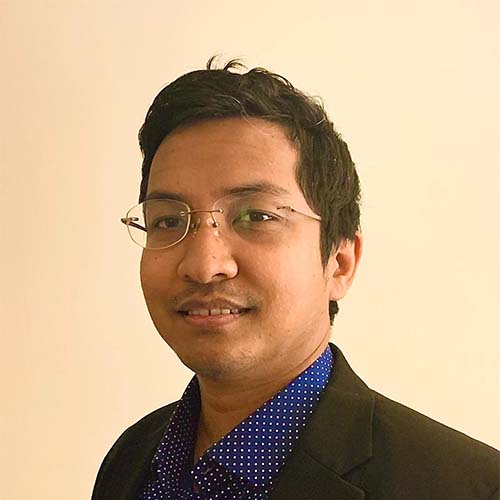
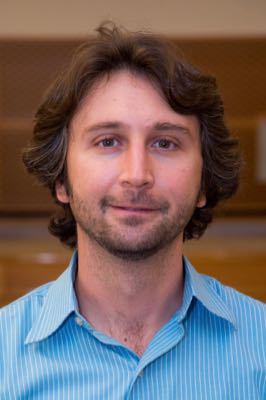
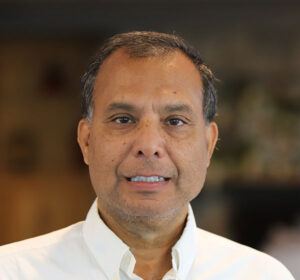
Anomadarshi Barua is an Assistant Professor in the Department of Cyber Security Engineering at George Mason University, leading the System Design and Security research group. His work spans hardware-software co-design for securing cyber-physical systems (CPS), robotics, and sensors. Prior Affiliation: PhD from University of California, Irvine (2023) Industry Experience: Intel Corporation, Solidigm, Nordic Semiconductor, IDEAS Research Themes: Focuses on multimodal system security (audio, visual, electromagnetic data), analog-digital signal integrity, and quantum-inspired defenses in CPS. Key applications include healthcare systems, smart grids, and industrial control systems (ICS). Recent ACSAC 2024 paper acceptance Best Paper Award at ACSAC 2022 NSF panel reviewer (2024) Labs & Collaborations: Collaborates with University of Louisville on robotics and works on Commonwealth-funded UG research (2024). Publications in ACM CCS, USENIX, CHES, and IEEE Transactions (TDSC, TIFS).
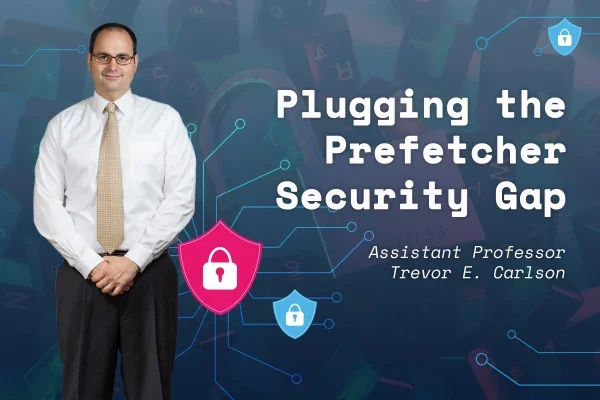
Trevor E. Carlson is an Assistant Professor at the School of Computing, National University of Singapore (NUS), focusing on high-efficiency microarchitectures, hardware/software co-design, and secure chip design for IoT and server applications. He earned his Ph.D. in Computer Science from Ghent University (2014) and B.Sc./M.Sc. in Electrical & Computer Engineering from Carnegie Mellon University (2002/2003). Research Interests include energy-efficient processors, secure computing platforms, neuromorphic accelerators, and fast simulation methodologies. He co-developed the Sniper Multi-Core Simulator used globally for performance/power evaluation. Scientific Awards : Best Paper Award, International Conference on Embedded Computer Systems (2016) Best Paper Award, International Symposium on Performance Analysis of Systems and Software (2013) Heidelberg Laureate Forum participation (2015) HiPEAC Technology Transfer Award for Sniper Simulator (2013) Current Research involves secure Systems-on-Chip (SOCure project), hardware security for IoT, and simulation methodologies. He leads a lab with researchers working on topics like Capstone for trustless secure memory access and LABS for laser fault injection benchmarks.
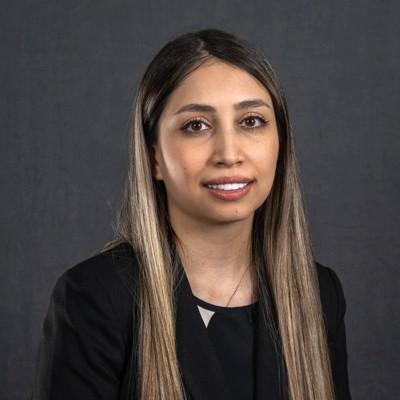
Kimia Zamiri Azar serves as an Assistant Professor in the Department of Electrical and Computer Engineering at the University of Central Florida, focusing on hardware security and verification methodologies. Her research bridges theoretical formal methods with practical security implementations in semiconductor design and testing. Her educational background includes: Ph.D. in Electrical and Computer Engineering, George Mason University (2021) Postdoctoral Research, University of Florida Dr. Azar's research spans hardware security with emphasis on system-level verification, VLSI design-for-trust, and advanced IC testing. She pioneers techniques in logic locking, secure heterogeneous integration, and IC supply chain security, developing frameworks for authenticated encryption in Systems-in-Package and runtime security monitoring. Her work integrates formal verification with innovative testing methodologies to address hardware trust challenges across the semiconductor lifecycle. Analysis of her recent publications reveals two dominant trends: (1) Application of large language models (LLMs) to hardware design tasks including high-level synthesis code generation and RTL optimization, and (2) Advancement of secure heterogeneous integration techniques for System-in-Package architectures with focus on counterfeit prevention and split-test security protocols. These directions address critical gaps in hardware trustworthiness amid increasingly complex semiconductor supply chains. Her scientific contributions have earned significant recognition: Best Paper Award at ICCAD 2019 Best Paper Award at ISVLSI 2020 Best Paper Award at ICCAD 2020 Best Paper Award at IEEE DCAS 2020 Best Paper Award at HOST 2022 Best Paper Award at DATE 2023 Dr. Azar secures substantial research funding from premier agencies including NSF, SRC, DARPA, AFRL, DoD (NG), and Microsemi. Her grants support projects spanning hardware security validation frameworks, secure heterogeneous integration, and AI-augmented verification methodologies. She actively mentors students in her research group, guiding publications in top venues like IEEE D&T, IEEE TC, and DAC while fostering industry-academic collaborations. Her work directly impacts semiconductor security standards through patented innovations and open-source verification tools. As an active IEEE and ACM member, she contributes to community advancement through conference organization (HOST, DATE), journal editorial roles, and workshop leadership on hardware security standards. Her research group collaborates with semiconductor industry leaders to translate theoretical security frameworks into practical design-for-trust methodologies for next-generation integrated circuits.
Dr. Brett J. Borghetti is a Professor of Computer Science in the Department of Electrical and Computer Engineering at the Air Force Institute of Technology (AFIT), Graduate School of Engineering and Management, Wright-Patterson AFB, OH. He was promoted to Professor in July 2022, following prior appointments as Associate Professor (2017) and Assistant Professor (2008/2013). His expertise lies in artificial intelligence, machine learning, deep learning, cybersecurity, and human-machine teaming. Education: Ph.D. in Computer Science, University of Minnesota, Twin Cities (2008) M.S. in Computer Systems, Air Force Institute of Technology (1996) B.S. in Electrical Engineering, Worcester Polytechnic Institute (1992) Dr. Borghetti's research focuses on applying machine learning to physical science sensors (hyperspectral, seismic, RF), cybersecurity, and enhancing human-machine team performance. He teaches graduate courses in machine learning, AI, data security, and algorithm design, and advises numerous MS and PhD students in areas such as sensor exploitation, cognitive workload, and cyber situational awareness. His recent publications demonstrate strong trends in deep learning for multimodal sensor fusion, nuclear security, and neuroergonomics. Scientific Awards: AETC Educator of the Year (2021, Civilian) AFIT Ezra Kotcher Teaching Award (2021) AFIT Teaching Excellence Award (2019) AF STEM Outstanding Science and Educator Award (2015) Multiple Eta Kappa Nu Outstanding Instructor Awards Air Force Meritorious Service Medal and other military honors Dr. Borghetti has advised numerous graduate students and led research projects with significant funding and applications in defense and national security. He has directed research in AI-driven sensor analysis, cyber defense systems, and adaptive automation. His work often involves collaboration with national labs and DoD agencies. He has contributed to major research initiatives in human factors, cyber intruder detection, and machine learning for operational environments. Labs and Research Teams: His work is associated with AFIT's research in cyber security, sensor exploitation, and human-machine systems. He collaborates with teams working on the Cyber Intruder Alert Testbed (CIAT), neuroergonomic modeling, and machine learning for defense applications.
Andrew Kwong is an Assistant Professor at the University of North Carolina at Chapel Hill in the Department of Computer Science. His research focuses on computer security and applied cryptography, particularly side-channel attacks and defenses, including Rowhammer, Spectre, and cache timing vulnerabilities. He teaches courses such as Hardware Security and Side-Channels and Research Topics in Computer Security , covering topics like transient execution attacks, speculative probing, and cryptographic implementation flaws. Department of Computer Science, UNC Chapel Hill Assistant Professor Teaching COMP 790-184 (Hardware Security) and COMP 790-185 (Computer Security Research) His research involves cutting-edge work on hardware vulnerabilities, including Rowhammer-based key recovery in post-quantum cryptography, cache eviction side-channels, and speculative execution attacks. His publications appear at top venues like IEEE S&P, CCS, and USENIX Security. He received a Best Paper Award Honorable Mention at CCS 2022 for his work on FrodoKEM exploitation. Key trends in his publications include leveraging hardware flaws for data leakage, cryptographic protocol breakdowns, and combining transient execution with memory corruption attacks. His work has implications for hardware design security and cryptographic implementation practices. Best Paper Award Honorable Mention, CCS 2022 Contact: andrew@cs.unc.edu
Tobias Oechtering is a Professor at the Division of Information Science and Engineering within the School of Electrical Engineering and Computer Science at KTH Royal Institute of Technology. His research focuses on information theory, privacy-preserving technologies, statistical signal processing, machine learning, and smart grid systems. He has held academic positions at KTH since 2008, advancing from Post-Doctoral Researcher to Assistant Professor (2010–2013), Associate Professor (2013–2018), and Professor (2018-present). He has supervised over 20 PhD students and contributed to numerous postdoctoral programs. Research Interests: - Network information theory and physical-layer security - Privacy mechanisms with provable guarantees - Distributed statistical inference and sensor calibration - Reinforcement learning and privacy-aware machine learning - Smart grid privacy and energy management - Wireless communication algorithms and signal processing - Networked control systems and stability analysis He currently supervises 7 PhD students and hosts 3 postdocs. His work has led to over 150 peer-reviewed publications, with recent contributions in privacy-preserving smart grid strategies, adversarial inference control, and information-theoretic security. He has served as editor for IEEE Transactions on Information Forensics and Security and held leadership roles in KTH's Digitalisation Research Platform.
Assoc. Prof. Nhien An Le Khac is an Associate Professor at the School of Computer Science, University College Dublin. He serves as Programme Director for the MSc in Forensic Computing & Cybercrime Investigation, which has trained over 1,500 law enforcement officers globally. His research focuses on cybersecurity, digital forensics, AI security, and secure healthcare IT systems. He holds a PhD from Institut National Polytechnique de Grenoble (France) and has supervised 9 PhD students. His work includes pioneering contributions to electromagnetic side-channel analysis (EM-SCA) for IoT forensics, blockchain forensics, and AI-based fraud detection. Education: BSc/MSc: Vietnam National University, Ho Chi Minh City PhD: Institut National Polytechnique de Grenoble, France Professional Certificate in University Teaching & Learning: UCD Research Interests: Cybersecurity, Digital Forensics, AI Security, Machine Learning, Cloud Computing, Big Data Analytics, Healthcare IT Security. Recent Article Trends: Focus on EM-SCA for IoT device forensics, illicit Bitcoin transaction tracking, and cross-device ML portability. His work bridges theoretical AI advancements with practical forensic applications, emphasizing privacy preservation and explainable AI. Awards & Recognition: World’s Top 2% Scientists (2024) UCD Teaching Excellence Awards (2022, 2018) Best Paper Awards at Elsevier, AI-2022, and DFRWS conferences Grants & Advising: Principal Investigator on grants like Cloud Atlas, CERBERUS, and Urban ARK. Advised 9 PhD students who now work in academia/research globally. Active in funding initiatives like ML-Labs (SFI-funded). Labs & Teams: Leads ASEADOS Lab and maintains datasets like EM-SCA and InSDN. Collaborates globally on forensic frameworks and cybersecurity tools.
Reza Curtmola is a Professor in the Department of Computer Science at NJIT. His research focuses on cybersecurity, distributed systems, and network security with an emphasis on secure routing, cloud computing, and privacy-preserving technologies. He holds a Ph.D. in Computer Science from Johns Hopkins University (2007), an M.S. from the same institution (2003), and a B.S. from the Politehnica University of Bucharest (2001). Dr. Curtmola’s work addresses challenges in wireless mesh networks, vehicular communication systems, and mobile-cloud integration. His contributions include innovative solutions for secure network coding, distributed resource management (e.g., parking assignment systems), and auditable data storage mechanisms. He has developed middleware frameworks like Moitree for mobile-cloud applications and has explored defenses against side-channel attacks, cache leaks, and entropy-based network vulnerabilities. His research also extends to privacy in vehicular DSRC protocols, dynamic traffic optimization, and verifiable code review systems. He has published extensively on topics ranging from cryptographic defenses in distributed systems to practical implementations of remote data checking in untrusted clouds. Current research activities include advancing secure cloud infrastructure, improving mobile crowdsensing reliability, and mitigating threats in IoT-enabled urban environments. His work often bridges theoretical foundations with practical system implementations, emphasizing real-world applicability in smart cities and critical infrastructure systems.
Prof. Ilia Polian serves as Head of the Institute of Computer Engineering and Chair of the Hardware-Oriented Computer Science (HOCOS) department at the University of Stuttgart. His leadership spans research, teaching, and institutional coordination across multiple high-impact projects. Prof. Polian's research focuses on developing circuit and system architectures based on both traditional and novel principles, including neuromorphic, stochastic, and approximate architectures. His second major research focus is systematic design methodology and design automation, with particular emphasis on safety and reliability properties of developed systems. Current research directions include quantum computing engineering, secure mixed-signal neural networks, and resource-efficient stochastic circuits for near-sensor computing applications. His recent publications demonstrate strong trends in quantum computing (particularly circuit partitioning and compilation for multi-QPU architectures), hardware security (including memristive cryptographic implementations), and AI-driven approaches to hardware testing and reliability. These works bridge fundamental computer architecture research with practical industrial applications. University of Stuttgart's Publication Prize for Paper on Partitioning of Quantum Circuits Prof. Polian actively supervises doctoral students including Devanshi Upadhyaya, and leads significant research grants such as the DFG Priority Program Nano Security which he coordinates. His department offers numerous thesis and research opportunities for students interested in cutting-edge hardware research. The Hardware-Oriented Computer Science department maintains strong collaborations with industry partners including IBM, Infineon Technologies, and Advantest, as well as academic institutions through the IQST Graduate School and QuantumBW initiatives.
Yang Liu is an incoming Assistant Professor at Florida State University (Fall 2025) and currently a Senior Research Associate and Affiliated Lecturer in the Department of Computer Science and Technology at the University of Cambridge. She holds a B.E. in Software Engineering from Xi’an Jiaotong University (2016) and a Ph.D. in Computer Science from City University of Hong Kong (2020), advised by Prof. Zhenjiang Li. Her research focuses on intelligent mobile/wearable sensing technologies, combining AI and signal processing to advance applications in human-computer interaction (HCI), smart health, and IoT. She has received notable awards such as the 2024 N2Women Rising Star Award and the 2021 ACM SIGBED Doctoral Thesis Award. Research interests span mobile systems, AI-driven wearable sensing, privacy in human interactions, and healthcare monitoring. Key projects include RespEar (earable-based respiratory monitoring), SmarTeeth (toothbrushing tracking), and WearIoT (privacy-aware wearable systems). She mentors students in areas like biomedical signal processing and secure wearable systems. Teaching includes Mobile/Wearable Systems courses at Cambridge and previously at City University of Hong Kong. Education: B.E. Software Engineering, Xi’an Jiaotong University (2016) Ph.D. Computer Science, City University of Hong Kong (2020) Grants & Services: Organizing roles in ACM SIGCOMM, IEEE ICPADS, and multiple conference TPCs. Invited talks at Columbia University, Purdue University, and others. Her work bridges mobile computing with health applications, addressing both technological innovation and societal impacts through over 30 peer-reviewed publications and industry collaborations.
Joshua Garcia is an Assistant Professor in the Informatics Department at the University of California, Irvine (UCI), within the Donald Bren School of Information and Computer Sciences. His research focuses on software architecture, automated testing, and cybersecurity, particularly in autonomous systems and mobile applications. He leads projects like DeltaDroid, Doppelgänger Test Generation, and Darcy, which address software vulnerability management, architectural consistency, and safety-critical systems. Key achievements include an NSF CAREER Award (2025), an NSF CRI Grant (2018), and a DARPA competition win (2024). His work is adopted by organizations like Boeing, Google, and NASA. Garcia collaborates internationally, involving institutions in Padova and researchers like Luca, Jessy Ayala, and Philipp. Research Interests: Software architecture evolution, automated exploit generation, autonomous vehicle testing, and accessibility in software development Grants: NSF CAREER ($500K+), NSF CRI ($1M+) Labs/Teams: HexHive Group, Autonomous Systems Testing Lab
Shimeng Yu is a full professor at the Georgia Institute of Technology's School of Electrical and Computer Engineering, holding the Dean’s Professorship. He earned his B.S. from Peking University (2009) and M.S./Ph.D. from Stanford University (2011/2013). His research focuses on semiconductor devices, non-volatile memories, 3D integration, and AI hardware accelerators. Yu leads SRC/DARPA JUMP 2.0 centers on memory/storage and 3D integration, with over 400 publications and 30,000+ citations (H-index 82). He serves on flagship conference committees (e.g., IEDM, VLSI) and editorial boards (IEEE EDL, JETCAS). Education: B.S., Microelectronics, Peking University (2009) M.S./Ph.D., Electrical Engineering, Stanford University (2011/2013) Research Themes: Emerging non-volatile memories for AI Monolithic 3D integration Energy-efficient computing systems His work spans device fabrication, circuit design, and system-level co-optimization. Recent projects are funded by NSF, DARPA, DOE, and industry partners (TSMC, Intel, Samsung), totaling >$17M. His lab, located at the Pettit Microelectronics Research Center, develops prototypes with cleanroom access. Awards: IEEE Fellow (2024) ACM/IEEE DAC Under-40 Innovators Award (2020) NSF CAREER Award (2016) Multiple editorship roles and distinguished lecturer appointments (IEEE EDS/CASS) Grants & Funding: Lead of two SRC/DARPA JUMP 2.0 centers Total research funding exceeds $17M
Emre Salman is a Professor in the Department of Electrical and Computer Engineering at Stony Brook University (SUNY), where he directs the Nanoscale Circuits and Systems (NanoCAS) Lab. His research focuses on nanoscale IC design, energy-efficient computing, and biomedical electronics, with notable contributions to 3D integrated circuits and wireless energy harvesting for IoT and healthcare applications. Education : PhD in Electrical Engineering, University of Rochester (2009) MSc in Electrical and Computer Engineering, University of Rochester (2006) BSc in Microelectronics Engineering, Sabanci University, Turkey (2004) Research Interests : Salman’s work spans energy-efficient integrated circuits, secure IoT systems, and implantable medical devices. He pioneers techniques like charge-recycling logic and thermal-aware design for post-Moore computing. His group develops monolithic 3D ICs to address power/thermal challenges in AI accelerators and biomedical implants. Articles Trends : Recent publications highlight advancements in triboelectric energy harvesters for knee implants, thermal covert channel mitigation in 3D processors, and energy-efficient DNN accelerators. He emphasizes sustainability and security in emerging technologies like ReRAM-based computing and AC circuits for wireless IoT. Awards : 2023-2024 IEEE Distinguished Lecturer 2018 IEEE Region 1 Technological Innovation Award 2013 NSF CAREER Award Advising & Grants : Salman has directed multiple NSF, NIH, and industry-funded projects. He advises students on topics like hardware security and biomedical electronics, with a focus on translating research into commercializable technologies. Labs & Teams : The NanoCAS Lab collaborates with Brookhaven National Lab and industry partners (e.g., AMD, Samsung) to bridge academic research with real-world applications in energy-efficient computing and secure 3D ICs.
Vir V. Phoha is a distinguished Professor in the Department of Electrical Engineering and Computer Science at Syracuse University's College of Engineering and Computer Science. He holds multiple prestigious fellowships including AAAS, AAIA, IEEE, NAI, and SDPS, and was named an ACM Distinguished Scientist in 2008. Dr. Phoha's research spans across cybersecurity, machine learning, and biometrics. His work focuses on cutting across conventional disciplines to unify basic and common concepts, particularly in security (malignant systems, active authentication), machine learning (decision trees, statistical, and evolutionary methods), and computer networks (anomalies, optimization). He develops field-realizable defensive and offensive cyber-based systems using these methodologies. His recent publications reveal a strong focus on continuous authentication, biometric security, fake news detection, and adversarial challenges in cybersecurity. The research shows an evolution from traditional network security to more specialized areas like wearable device security, keystroke dynamics, and gait authentication. Scientific Awards: Fellow of AAAS, AAIA, IEEE, NAI, SDPS ACM Distinguished Scientist (2008) IEEE Computer Society Distinguished Visitor (2024-2026) ACM Distinguished Speaker (2012-2015) IEEE Region 1 Technological Innovation Award (2017) "Highest Impact Award" IEEE CVPR 2018 Workshop on Biometrics Dr. Phoha serves as an associate editor for the ACM journal, ACM Digital Threats: Research and Practice (DTRAP) , and as an associate editor of IEEE Transactions on Computational Social Systems (TCSS) . He has advised numerous students who have gone on to publish significant research in cybersecurity and biometrics. His work has been supported by grants from DARPA and NSF, including the development of the BB-MAS dataset which became one of IEEE DataPort's most popular datasets.
Prof. Dr. Willi Meier serves as a Lecturer for mathematics and cryptology at the Institute for Sensors and Electronics within the School of Engineering and Environment at FHNW (University of Applied Sciences and Arts Northwestern Switzerland) in Windisch, Switzerland. With an extensive publication record spanning over three decades (1988-2025), he maintains an active research profile in cryptographic analysis. Dr. Meier's research primarily focuses on cryptanalysis of symmetric cryptographic primitives, with particular expertise in stream ciphers, block ciphers, and hash functions. His work frequently employs algebraic techniques, differential cryptanalysis, and mathematical modeling approaches to analyze cryptographic security. Recent research has centered on analyzing modern ciphers like Grain, Keccak, RIPEMD-160, and various lightweight cryptographic designs, often developing novel attack methodologies such as coefficient grouping and algebraic meet-in-the-middle approaches. His publication trends over the last five years show consistent high productivity in top-tier venues including CRYPTO, EUROCRYPT, ASIACRYPT, and IACR Transactions on Symmetric Cryptology. The research spans both theoretical advancements in cryptanalytic techniques and practical applications to real-world cryptographic standards. A significant portion of his recent work involves collaborations with international researchers, particularly Fukang Liu, Takanori Isobe, and Santanu Sarkar, reflecting his integration within the global cryptographic research community. Dr. Meier's work has practical implications for cryptographic standardization and implementation security, with analyses of protocols used in telecommunications (TETRA), lightweight IoT applications, and post-quantum cryptographic candidates. His research continues to contribute to the fundamental understanding of symmetric cryptographic primitives and their security margins.