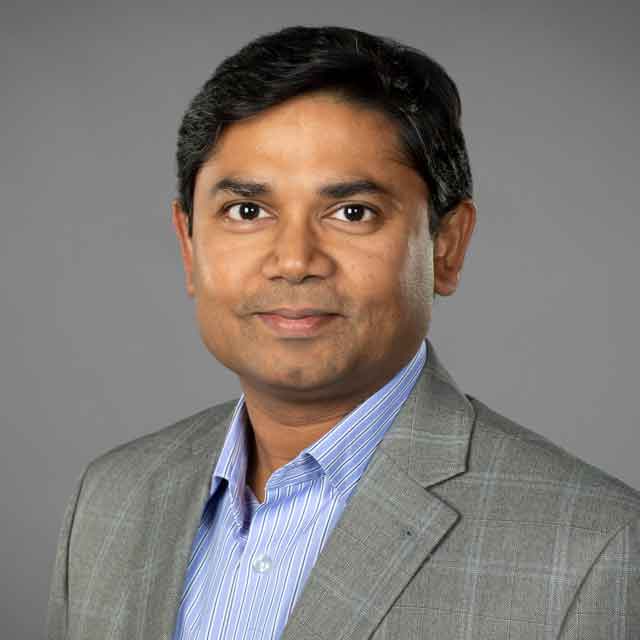
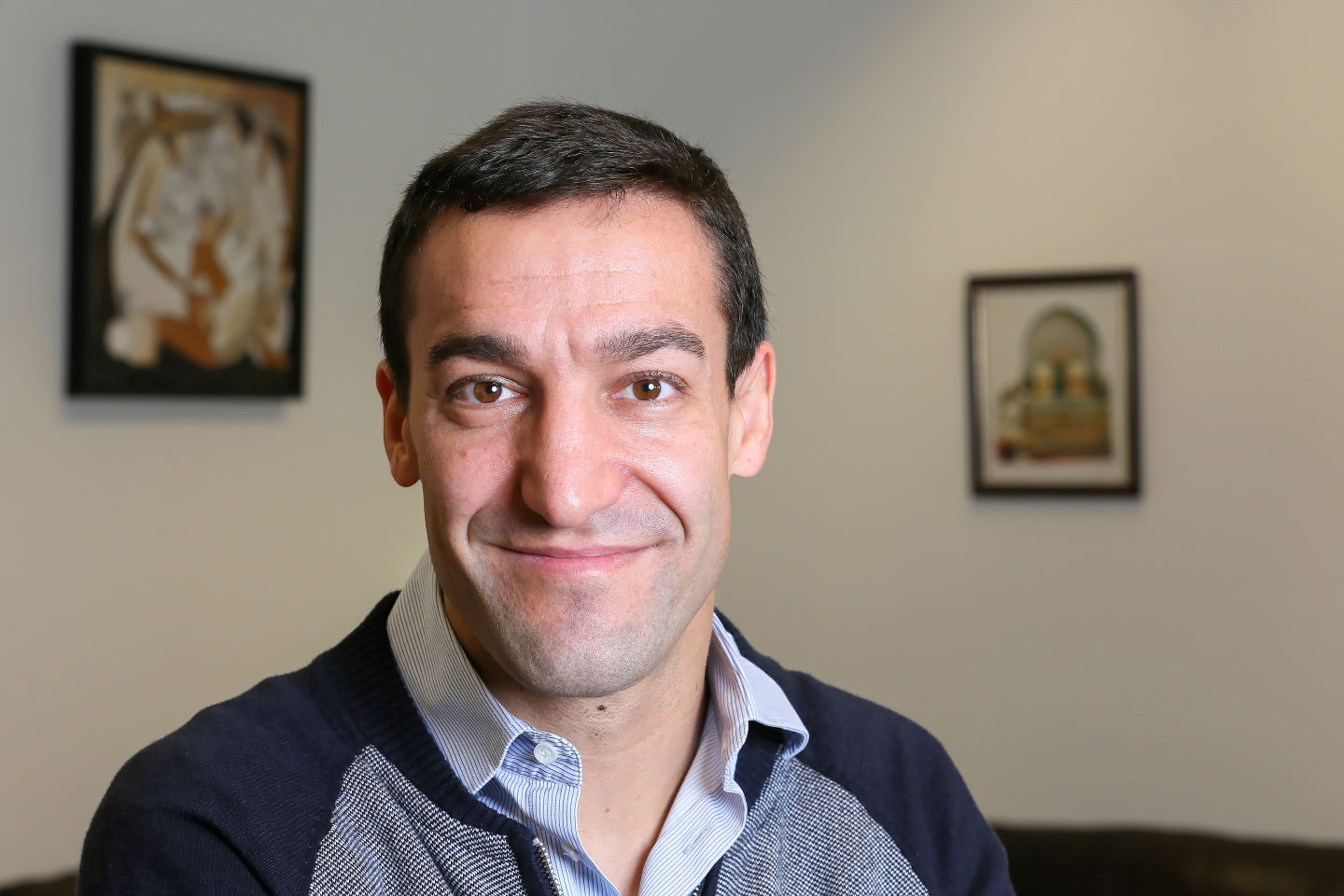
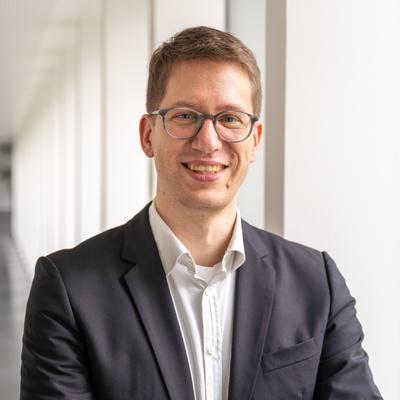
Professor Roger Woods is a prominent academic and researcher affiliated with Queen's University Belfast's School of Electronics, Electrical Engineering and Computer Science, part of the Faculty of Engineering and Physical Sciences. He holds the rank of Professor and is actively involved in advancing research and innovation in embedded systems, FPGA technologies, and AI-driven solutions for industry challenges. His work emphasizes practical applications through close collaboration with industry partners. His research interests span novel computing architectures (e.g., multi-precision and edge computing), FPGA-based systems for data analytics, and secure IoT communication protocols. Notably, he co-founded and serves as Chief Scientist of Analytics Engines Ltd, a data analytics company. He has led significant initiatives like the Kelvin-2 Tier-4 High Performance Computing centre and contributed to semiconductor reviews through EFutures. Professor Woods has been recognized with prestigious awards, including the IET Northern Ireland Engineering Excellence Award and IEEE Fellowship. He has supervised numerous PhD students focusing on topics like FPGA-based image processing, secure wireless communications, and embedded AI platforms. His publications reflect interdisciplinary strengths in hardware acceleration, physical layer security, and structural health monitoring. Key Collaborations : Projects with industry and institutions on semiconductor design, bridge monitoring, and AI hardware. Grants : Principal Investigator for multiple research grants, including Core Equipment Awards for advanced instrumentation. Labs/Teams : Active in Queen's Advanced MicroEngineering Centre and the EFutures network.
Dr. Tim Lynar serves as a Senior Lecturer at the University of New South Wales Canberra within the School of Systems & Computing. With a strong background in both academic research and industry practice, he has established himself as a leading figure in cyber security and computer science. His work bridges theoretical research with practical applications, focusing on innovative solutions for complex computing challenges across multiple domains including IoT security, machine learning applications in cyber defense, and high-performance distributed systems. Dr. Lynar's research interests span a wide spectrum of cyber security applications, with particular emphasis on the application of machine learning techniques to security challenges and the innovative use of epidemiological approaches to understand and combat cyber threats. His work in modeling & simulation, statistical & data analysis, network & systems administration, and high-performance distributed computing demonstrates his commitment to developing comprehensive security frameworks that address evolving threats in digital environments. The interdisciplinary nature of his research connects computer science with biological modeling approaches, creating novel methodologies for understanding security vulnerabilities. Analysis of Dr. Lynar's recent publications reveals a strong trend toward applying advanced machine learning techniques to cyber security challenges, particularly in IoT environments. His work increasingly integrates epidemiological models with security frameworks, creating a unique approach to threat detection and mitigation. The research spans practical applications in network security, drone systems, and AI security, demonstrating both theoretical depth and real-world applicability. A notable pattern is the consistent application of cutting-edge deep learning architectures like Vision Transformers and Variational Autoencoders to solve specific security problems across diverse domains. IBM Master Inventor (2016) Multiple IBM Innovation Awards (2011-2018) Client Value Outstanding Technical Achievement Awards (2015-2016) High Value Patent Awards (2014-2016) Best Article Award – International Journal of Information Systems & Social Change (2010) Multiple research scholarships from 2007-2010 Dr. Lynar's extensive patent portfolio demonstrates significant industry impact, with numerous issued US patents spanning diverse applications from energy efficient supercomputing to vehicle collision avoidance and drone-based microbial analysis. His research has attracted substantial industry collaboration, particularly with IBM, where he received multiple prestigious awards including the IBM Master Inventor designation. The practical applications of his work are evident in the wide range of patented technologies addressing real-world security and optimization challenges across multiple industries. Dr. Lynar's work spans multiple research domains simultaneously, with active projects in cyber security, drone systems, AI safety, and maritime traffic analysis. His research methodology consistently combines theoretical modeling with practical implementation, often leveraging simulation environments to test and validate approaches before real-world deployment. The interdisciplinary nature of his work creates connections between traditionally separate fields, enabling innovative solutions to complex problems.
Fraser King is an incoming Assistant Professor in the Department of Atmospheric and Oceanic Sciences (AOS) at the University of Wisconsin–Madison, starting in Winter 2026. He holds a PhD in Machine Learning and Remote Sensing of Precipitation from the University of Waterloo (2022) and is currently a postdoctoral research associate at NASA Goddard Space Flight Center. His research integrates machine learning with atmospheric physics to advance precipitation and snowfall retrieval, cloud microphysics, and climate modeling. He has held research positions at the University of Michigan and NASA Jet Propulsion Laboratory. His research interests include: Climate and Climate Change Radiation and Remote Sensing Synoptic Meteorology Atmospheric and Cloud Physics Large Scale Dynamics Machine Learning and Model Interpretability Arctic Snowfall Prediction His recent publications reflect a strong trend in applying deep learning (e.g., U-Net, CNNs) and unsupervised methods (PCA, t-SNE, UMAP) to radar and satellite data for precipitation and snow microphysics. Key themes include radar gap inpainting, melting layer detection, and dimensionality reduction for physical interpretation. His work bridges geoscience and AI, aiming for interpretable models that enhance physical understanding. Scientific awards and professional service include: Finalist for the 2023 Governor General's Gold Medal, University of Waterloo Associate Editor, Journal of Atmospheric and Oceanic Technology (AMS) Member, AMS Committee on Artificial Intelligence Applications to Environmental Science Executive Council Member, AGU Precipitation Technical Committee Executive Member, Eastern Snow Conference Research Board Fraser King has mentored students through research projects and led educational initiatives such as a 12-week course on machine learning for land cover classification. He has secured research experience through internships at Aquanty Inc. and multiple NASA-affiliated institutions. He founded MapsByFraser, a company combining cartography and satellite data, and has collaborated with Google's Quantum AI team. His technical skills span Python, deep learning frameworks, and high-performance computing platforms. He leads several major research projects: Towards Interpretable Physical Models : Using sparse autoencoders and nonlinear dimensionality reduction to interpret geoscience models. Microphysical Dimensionality Reduction : Applying PCA, t-SNE, and UMAP to identify physical modes in precipitation data. BlindPaint : A U-Net for radar gap inpainting in spaceborne systems. DeepPrecip : A deep learning model for surface precipitation retrieval. iPhone LiDAR : Using consumer smartphones for snow depth measurement via drones. NRCan Machine Learning Land Cover Classifier : Training ML models on Sentinel-2 data. Climate Model Calibration : Using ML to correct biases in snow-related climate variables. CloudSat Snowfall Validation : Validating high-latitude snowfall estimates. Snow Modelling : A Rust-based physical/temperature-index snow model.
Aamir Anwar is a researcher affiliated with the University of West London , focusing on interdisciplinary applications of artificial intelligence, machine learning, and human-computer interaction. His work bridges technology with education, healthcare, and cybersecurity, as evidenced by his publications on topics like emotion-aware online learning , malware detection in IoT devices , and smart systems for people with disabilities . Research Interests : Machine Learning, Sentiment Analysis, Online Learning, EEG Signal Processing, Smart Systems, Healthcare Informatics. Key Collaborations : Co-authored studies with researchers in cybersecurity, nursing education, and neuromarketing. Publication Trends : Recent articles span 2021–2024, emphasizing AI in education (emotion detection), deep learning for cybersecurity , and health-focused technologies (frailty assessment, seizure prediction).
Shamik Sengupta is the Ralph E. and Rose A. Hoeper Professor at the University of Nevada, Reno (UNR) , where he serves as Professor in the Department of Computer Science & Engineering and Executive Director of the Cybersecurity Center . He holds a PhD in Computer Science from the University of Central Florida (2007) and a BE in Computer Science from Jadavpur University (2002). IEEE Senior Member Director, UNR Cybersecurity Center NSF CAREER Award Recipient
Zinat Behdad is a Researcher at the Division of Communication Systems within the School of Electrical Engineering and Computer Science (EECS) at KTH Royal Institute of Technology , Stockholm, Sweden. Her work bridges wireless communications and sensing technologies. Education: Master of Science in Electronics and Communications Engineering, Isfahan University of Technology, Iran (2017) Research Interests: Wireless Communications Integrated Sensing and Communication (ISAC) Cell-Free Massive MIMO URLLC (Ultra-Reliable Low-Latency Communication) Energy Efficiency RF Energy Harvesting Article Trends: Her publications emphasize Cell-Free Massive MIMO systems, with a focus on integrated sensing and communication (ISAC) , mmWave technology , and energy efficiency . Key areas include target detection , power allocation , and URLLC optimization , reflecting her work on balancing sensing accuracy and communication reliability. The 2018 paper explores RF energy harvesting in IoT networks through cooperative strategies. Affiliation and Lab: She is based at the Division of Communication Systems , KTH EECS, working on advanced wireless technologies with applications in security, energy sustainability, and 5G/6G networks.
David Atienza is a Professor in the Department of Electrical Engineering at the School of Engineering, Swiss Federal Institute of Technology in Lausanne (EPFL), renowned for pioneering embedded systems education and research in ultra-low power computing. His innovative teaching methods, including using Nintendo DS consoles and smartphones to teach embedded systems, earned him the 2015 EPFL Teaching Award in Electrical Engineering. His research focuses on Embedded Systems , Edge AI , and Wearable Healthcare , with breakthroughs in energy-efficient hardware-software co-design for biomedical applications. Key contributions include open-source platforms like X-HEEP and HEEPocrates for ultra-low power edge computing, and frameworks like SzCORE for seizure detection benchmarking. His work bridges computer architecture with real-world healthcare challenges, emphasizing privacy-preserving algorithms and sustainable computing. Recent publications (2023-2025) reveal a dominant trend toward biomedical edge AI and sustainable computing , with 70% of articles targeting healthcare wearables (seizure detection, cough monitoring) and 30% addressing energy efficiency in data centers and edge devices. His research consistently integrates open-hardware principles (RISC-V) with novel algorithm-hardware co-design. Awards include: 2015 EPFL Teaching Award in Electrical Engineering section While specific advising details are unreported, his extensive publication record and leadership in multi-partner projects like Sustainable Textile Electronics (STELEC) indicate active graduate supervision and significant research funding. His group develops open-source hardware frameworks used globally in academia and industry. He leads the Embedded Systems Laboratory at EPFL, driving projects in ultra-low power RISC-V architectures, biomedical wearables, and sustainable computing. Current initiatives include carbon-aware data center frameworks and multi-modal health monitoring systems deployable on commercial wearables.
Samsung Lim serves as an Associate Professor of geographic information systems (GIS) in the School of Civil and Environmental Engineering at the University of New South Wales (UNSW) Sydney. With expertise spanning data science, artificial intelligence, and machine learning, Lim applies geospatial technologies to critical real-world challenges in natural disaster management and public health research. Lim's interdisciplinary work bridges engineering, computer science, and public health domains to develop practical decision-making tools for emergency response and disease surveillance. Ph.D. in Aerospace Engineering and Engineering Mechanics, University of Texas, Austin, TX, USA M.A. in Mathematics, Seoul National University, Seoul, South Korea B.A. in Mathematics, Seoul National University, Seoul, South Korea Lim's research focuses on applying GIS to natural disaster management and public health challenges. Key areas include machine learning methods for bushfire susceptibility mapping, spatial clustering for landslide susceptibility analysis, city-scale evacuation management in flood scenarios, and social media-based natural disaster assessment. In public health, Lim investigates geo-correlations between environmental factors and asthma occurrence, computational approaches to avian influenza outbreaks, emerging hot spot analysis of COVID-19, and early detection systems for emerging infectious diseases. This work combines advanced spatial analytics with machine learning to address complex environmental and health challenges. The recent publication record demonstrates a clear interdisciplinary trajectory where geospatial science intersects with public health emergency response and natural hazard management. Lim's work consistently applies machine learning techniques to geospatial data, with particular emphasis on disaster susceptibility mapping, disease outbreak detection, and infrastructure monitoring. The research spans multiple continents and addresses both immediate emergency response needs and long-term environmental health challenges, reflecting a commitment to practical applications of geospatial science. Associate Editor of Geospatial Information Science National Delegate of Commission 3 of International Federation of Surveyors (FIG) National Representative of the International Cartographic Association (ICA) Commission on Sensor-driven Mapping Senior Member of Institute of Electrical and Electronics Engineers (IEEE) Lim actively contributes to the development of early warning systems for emerging infectious diseases through collaborations with public health researchers. The work on EPIWATCH demonstrates how AI can enhance surveillance capabilities for outbreak detection. Lim's research on cruise ship transmission of diseases and the spread of avian influenza through bird migration patterns and poultry trade networks shows strong engagement with real-world public health challenges. These projects often involve multidisciplinary teams spanning engineering, computer science, epidemiology, and veterinary medicine. Lim's work integrates multiple geospatial data sources and analytical techniques to address complex environmental and public health challenges. This includes developing frameworks for performance analysis of OpenStreetMap data, creating specialized road datasets for pedestrian navigation, and applying Persistent Scatterer Interferometry for land motion monitoring. The research combines traditional geospatial methods with cutting-edge machine learning approaches to extract meaningful insights from complex spatial datasets.
Joseph Talghader is the Cymer Professor in the Department of Electrical and Computer Engineering at the University of Minnesota, where he has been a faculty member since 1997, progressing from Assistant to Full Professor. He leads the Optical Micro+Nanosystems Group and holds appointments in the College of Engineering. Dr. Talghader's educational background includes a B.S. in Electrical Engineering from Rice University, followed by an M.S. (1993) and Ph.D. (1995) from UC Berkeley, where he was awarded an NSF Graduate Fellowship. Prior to joining academia, he worked at Texas Instruments and Waferscale Integration in process development and memory design. His research spans optics and micro/nano-mechanical systems with particular focus on infrared detectors, optical coatings, heat transfer mechanisms, and microsensors. His group has developed groundbreaking technologies including the highest sensitivity uncooled thermal detectors and the first tunable multispectral thermal detectors. Recent work has expanded into applications for glacial ice analysis and high-power laser systems. His research integrates theoretical modeling with advanced fabrication techniques, particularly atomic layer deposition. Analysis of his 15 most recent publications reveals a consistent focus on infrared technologies, optical coatings, and thermal phenomena. His work demonstrates strong interdisciplinary connections between electrical engineering, materials science, and optical physics, with increasing emphasis on practical applications in environmental sensing and high-power laser systems. Among his notable recognitions are three 3M Faculty Awards and being a Finalist for the Minnesota Cup for entrepreneurs. He has served on various program committees including the Army Research Office Electronics Division strategic planning panel and has chaired multiple IEEE conferences. Dr. Talghader actively mentors students and postdocs, with numerous publications listing junior researchers as lead authors. His group has secured significant research funding, though specific grant details aren't provided in the source material. He currently serves as an Editor for the NPG journal Light: Science and Applications, demonstrating his standing in the optics research community. The Optical Micro+Nanosystems Group maintains strong industry and interdisciplinary collaborations, with research spanning from fundamental materials properties to practical device implementation. Current projects focus on improving infrared detection technologies, developing advanced optical coatings for high-power applications, and exploring novel sensing mechanisms for extreme environments.
Dr. Stephen Warren-Smith is a Senior Research Fellow at the Future Industries Institute, University of South Australia (UniSA), where he conducts cutting-edge research in optical fiber technology and photonics. He is affiliated with the Laser Physics and Photonic Devices Laboratories within UniSA STEM (Science, Technology, Engineering and Mathematics), and serves as a Research Degree Supervisor for graduate students. Dr. Warren-Smith's primary research interests span optical fiber technology, photonics, and biosensors, with a particular focus on developing novel fiber optic sensing platforms for biomedical and environmental applications. His work encompasses microstructured optical fibers, fluorescence sensing, and the integration of machine learning techniques for enhanced sensor performance. He has made significant contributions to the fields of harmonic generation in optical fibers, NV center-based quantum sensing, and multimode fiber applications. Analysis of Dr. Warren-Smith's recent publications reveals a strong trend toward developing sophisticated fiber optic sensing platforms with diverse applications. His work demonstrates increasing integration of advanced materials (like diamond with NV centers) and computational methods (particularly deep learning) to overcome traditional limitations in optical sensing. The research spans fundamental physics of light-matter interactions in fibers to practical applications in medical diagnostics, environmental monitoring, and industrial process control. A notable pattern is the development of multi-parameter sensing capabilities within single fiber platforms, enabling simultaneous measurement of various physical and chemical properties. Dr. Warren-Smith has secured significant research funding including ARC Future Fellowships (FT200100154), ARC Discovery Projects (DP190102896), and support from the Australian National Fabrication Facility (Optofab Node) utilizing Commonwealth and South Australian State Government resources. His research has received substantial citation counts, with several papers cited multiple times in Web of Science and Scopus. Dr. Warren-Smith leads research activities within the Laser Physics and Photonic Devices Laboratories at UniSA STEM. His team specializes in the design, fabrication, and characterization of advanced optical fiber devices, with particular expertise in microstructured optical fibers, suspended core fibers, and integrated photonic sensing platforms. The laboratory maintains strong connections with the Australian National Fabrication Facility (Optofab Node) for advanced device fabrication capabilities and collaborates extensively with institutions including RMIT University, University of Melbourne, University of Adelaide, and international partners in China.
Dr. Sönke Knoch is a researcher affiliated with the Ubiquitous Media Technology Lab (UMTL) at the Saarland Informatics Campus and the German Research Center for Artificial Intelligence (DFKI) GmbH . His work focuses on Human-Computer Interaction , Activity Recognition , Process Mining , and Industry 4.0 technologies. Current Affiliation: DFKI GmbH (Saarland Informatics Campus) Academic Role: Researcher Research Interests span digital twins, augmented reality in manufacturing, and safety-critical systems. He leads projects like RZzKI (AI and Digital Transformation) and BaSySafe (risk assessment via management shells). His work addresses zero-defect manufacturing and cognitive support for impaired workers . Recent Publications focus on digital twins for industrial safety, AR-based task adaptation , and AI quality management in smart factories. Key themes include human-centric AI , real-time process conformance , and context-aware systems . Leadership includes contributing to the WALL-ET project for autonomous logistics and co-developing the PARTAS system for cognitively impaired workers.
Philip Brunner is a Professor of Hydrogeology at the University of Neuchâtel's Faculty of Science since 2012. He is based at the Center for Hydrogeology and Geothermics (CHYN), leading the Laboratory of Hydrogeological Processes. His work centers on sustainable water resource management through quantitative tools. He earned his PhD from ETH Zurich, focusing on sustainable salt and water management in Western China's agricultural basins. Post-PhD, he conducted three years of postdoctoral research in Australia, developing new approaches for simulating river-aquifer interactions. Brunner's research spans surface water-groundwater interactions, numerical modeling, and remote sensing. He integrates methods from numerical modeling, remote sensing, scientific computing, and isotopic chemistry. His interdisciplinary collaborations with mathematicians, biologists, and physicists address challenges in agriculture, ecohydrology, engineering, and sustainable resource management. Recent publications highlight innovative tracer techniques (noble gases, microbes), low-cost monitoring systems, and advanced numerical models. His work tackles climate change impacts on ecosystems, groundwater in conflict zones, and sustainable practices in diverse environments including mountains and agricultural regions. He teaches courses such as Introduction to Hydrological Processes (Master), Numerical Modeling (Master), Remote Sensing (Master), and Introduction to Soil Physics (Bachelor, in French). His laboratory serves as a center for experimental and computational hydrogeological research.
Annick Hubin is a Professor in the Department of Sustainable Materials Engineering at the Faculty of Engineering, Vrije Universiteit Brussel. She serves in additional leadership roles including R&D Central management and as Head of a Research Group. Her work focuses on electrochemical processes with applications in materials engineering, corrosion science, and sustainable technologies. Her research interests span electrochemical kinetics, thermodynamics of aqueous solutions, electrode processes, electroreduction of metals and alloys (plating, extraction, refining, recycling), and environmental electrochemistry. She specializes in investigating basic electrochemical reactions using techniques such as potentiometric titrations, voltammetry, chronoamperometry, chronopotentiometry, and impedance measurements. Her work also examines mass transport in electrochemical processes and the action of organic inhibitors for metal deposition or dissolution reactions. Her recent publications reveal a strong focus on corrosion science, battery technologies, and electrochemical materials. There is a clear trend toward applying advanced characterization techniques and machine learning to solve complex problems in electrochemistry and materials science. Her research increasingly addresses sustainability challenges, particularly in battery technology and low-carbon solutions. Professor Hubin actively supervises doctoral students and participates in numerous research projects, demonstrating her commitment to mentoring the next generation of scientists and engineers. She has secured substantial research funding for projects spanning fundamental and applied research in materials engineering. She leads or participates in several significant research initiatives including DESTINY (Low-carbon solutions network), fundamental research on sulfide-based all-solid-state batteries, and projects focused on atmospheric corrosion prediction using machine learning. Her laboratory appears to specialize in electrochemical characterization and materials development for energy applications.
Prof. Dr. Willi Meier serves as a Lecturer for mathematics and cryptology at the Institute for Sensors and Electronics within the School of Engineering and Environment at FHNW (University of Applied Sciences and Arts Northwestern Switzerland) in Windisch, Switzerland. With an extensive publication record spanning over three decades (1988-2025), he maintains an active research profile in cryptographic analysis. Dr. Meier's research primarily focuses on cryptanalysis of symmetric cryptographic primitives, with particular expertise in stream ciphers, block ciphers, and hash functions. His work frequently employs algebraic techniques, differential cryptanalysis, and mathematical modeling approaches to analyze cryptographic security. Recent research has centered on analyzing modern ciphers like Grain, Keccak, RIPEMD-160, and various lightweight cryptographic designs, often developing novel attack methodologies such as coefficient grouping and algebraic meet-in-the-middle approaches. His publication trends over the last five years show consistent high productivity in top-tier venues including CRYPTO, EUROCRYPT, ASIACRYPT, and IACR Transactions on Symmetric Cryptology. The research spans both theoretical advancements in cryptanalytic techniques and practical applications to real-world cryptographic standards. A significant portion of his recent work involves collaborations with international researchers, particularly Fukang Liu, Takanori Isobe, and Santanu Sarkar, reflecting his integration within the global cryptographic research community. Dr. Meier's work has practical implications for cryptographic standardization and implementation security, with analyses of protocols used in telecommunications (TETRA), lightweight IoT applications, and post-quantum cryptographic candidates. His research continues to contribute to the fundamental understanding of symmetric cryptographic primitives and their security margins.
Per Frankelius is an Associate Professor and Senior Lecturer in Business Administration at Linköping University's Department of Economic and Industrial Development (IEI). His work centers on understanding and stimulating innovative processes, primarily in agriculture, with marketing as a key component. He serves as process manager for Agtech Sweden (formerly Agtech 2030), a major innovation initiative funded by Vinnova with a budget of nearly 200 million SEK. Frankelius's research focuses on the intersection of innovation, marketing, and business analysis. He defines innovation as 'original concepts that gain acceptance in society,' arguing that marketing and external factors are natural parts of the innovation process. His current work emphasizes agricultural innovations, climate calculations, and the role of agriculture in addressing global challenges like food security and climate change. He has developed visual models of company development over time and studies 'X-factors'—external elements not central to mainstream economic models. His publications reveal a strong trend toward practical applications of innovation theory in agriculture and sustainability. The research spans climate policy, technological standardization, resource integration in green services, and international agricultural technology transfer. Frankelius frequently connects innovation to broader societal challenges, particularly food security and the role of agriculture in peace and stability. His work bridges theoretical business administration with practical agricultural applications, often challenging conventional paradigms like the IPCC's climate calculations for agriculture. Silver Medal, Agritechnica Innovation Award (as part of Agtech 2030 team) Frankelius actively participates in societal debates, writing for publications like The Lancet and Aftonbladet. He advocates for investment in agricultural innovation to prevent food shortages that could lead to conflict. His work with Agtech Sweden involves collaboration with numerous industry partners, government agencies, and international organizations. The initiative has secured significant funding from Vinnova and has established a national knowledge hub for agricultural digitalization with a 20 million SEK budget. As co-leader of the innovation environment Agtech Sweden, Frankelius works with partners to establish an innovation ecosystem focused on sensors, digital technology, AI, and the Internet of Things for tomorrow's agriculture. The initiative includes projects like solar co-farming, precision agriculture, and international delegation trips to share knowledge and develop new technologies.