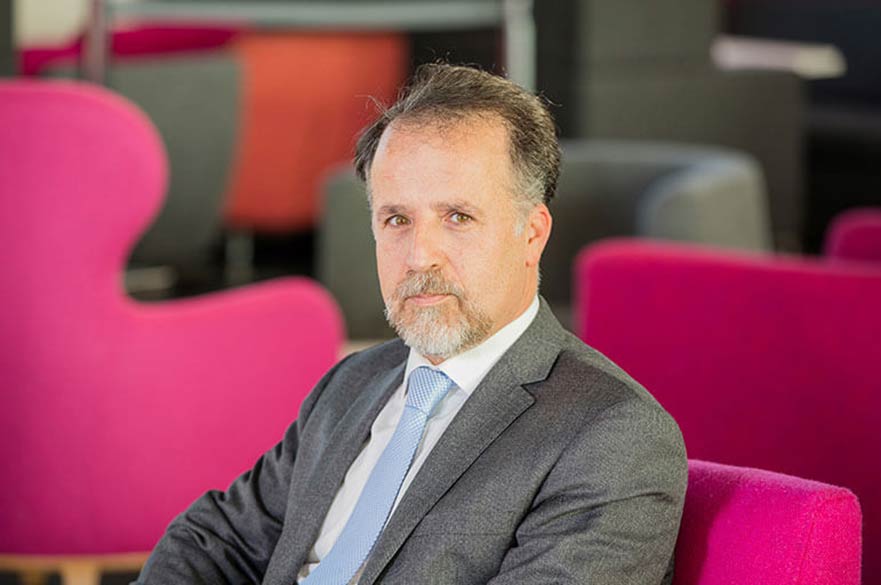
Dr. Volkan Dedeoglu is an active researcher at Queensland University of Technology (QUT), specializing in blockchain technology and IoT systems within the School of Computer Science. His work focuses on developing privacy-preserving frameworks and trust architectures for distributed systems. Research Focus: Blockchain applications in IoT and cyber-physical systems Privacy-preserving data sharing and threat intelligence Decentralized trust and reputation management Secure data aggregation and marketplace frameworks His recent work explores cutting-edge applications like CypherChain for privacy-preserving data aggregation in blockchain-based demand response programs and Priv-Share for differential privacy in cyber threat intelligence sharing. These publications demonstrate a consistent focus on bridging theoretical blockchain innovations with practical cybersecurity challenges in IoT ecosystems. Collaborative Research: Dr. Dedeoglu frequently collaborates with QUT colleagues including Raja Jurdak, Salil Kanhere, and Sidra Malik, indicating active participation in QUT's distributed systems and cybersecurity research groups.
Bo Chen is a Professor in the Department of Mechanical Engineering – Engineering Mechanics and the Department of Electrical & Computer Engineering at Michigan Technological University. She directs the Intelligent Mechatronics and Embedded Systems (IMES) Laboratory, focusing on advanced controls, optimization, and artificial intelligence for connected and autonomous vehicles, electric vehicle–smart grid integration, and smart mobility. PhD in Mechanical and Aeronautical Engineering from the University of California, Davis (2005) Visiting Professor at Argonne National Laboratory (2014–2015, 2016) Sabbatical at Oak Ridge National Laboratory (2022–2023) Dr. Chen's research spans Mechatronics , Embedded Systems , Hybrid Electric Vehicles , and Cyber-Physical Systems . Her work includes vehicle-to-grid integration , battery control systems , and cybersecurity for automotive systems . Recent publications highlight advancements in predictive control algorithms for hybrid vehicles, consensus-based frequency regulation , and plausibly deniable encryption systems for mobile devices. Funded by the National Science Foundation, Department of Energy, and industry partners, her research has secured over $10 million in grants. ASME Fellow Best Paper Award (2008 IEEE/ASME MESA Conference) Top Cited Article Award (Journal of Computers & Graphics) Best Survey Paper Award (IEEE Transactions on ITS) Co-recipient of four Best Student Paper Awards Dr. Chen has held leadership roles as Chair of the Technical Committee on Mechatronics and Embedded Systems (IEEE ITS Society), Chair of the ASME Design Engineering Division's Technical Committee, and Associate Editor for IEEE Transactions on Intelligent Transportation Systems (2012–2019). She organized multiple international conferences and co-edited special issues on intelligent transportation systems.
Sandeep Gupta is a Professor and Director of the School of Computing and Augmented Intelligence at Arizona State University's Ira A. Fulton Schools of Engineering. He also serves as a Senior Global Futures Scientist. His work bridges computer science, engineering, and healthcare applications with a focus on creating reliable cyber-physical systems that interact safely with humans. Education: Ph.D. from The Ohio State University (1995) Research Interests: Professor Gupta's research spans cyber-physical systems, green and sustainable computing, mobile and pervasive computing, and parallel and distributed computing. His work increasingly focuses on human-in-the-loop systems where AI and humans collaborate safely, particularly in healthcare contexts. Recent research integrates large language models with cyber-physical systems to enhance safety and operational effectiveness in critical applications like medical monitoring and industrial automation. Research Trends: Analysis of Professor Gupta's recent publications reveals a strong focus on operational safety in human-AI collaborative systems, particularly in healthcare applications. His work combines physics-guided models with machine learning to detect "unknown-unknowns" in safety-critical systems, develops LLM-based approaches for medical image classification, and creates frameworks for ethical human-AI collaboration. The research increasingly addresses real-world challenges in diabetes management, epilepsy diagnosis, and industrial automation. Professional Service: IEEE Communication Letters Editorial Board, Area Editor (2008-Present) IEEE Journal on Special Areas in Communications - Issue on Body Area Network, Co-editor (2006-Present) Elsevier COMNET - Computer Network Journal, Reviewer (2008-Present) Technical Advisory Committee Chair for Networks (2005-Present) Advising and Grants: Professor Gupta has secured numerous research grants from NSF, NIH, Intel, Raytheon, and other organizations, totaling millions of dollars. His research portfolio includes projects on smart stadiums, mobile ECG sensing, power-aware scheduling, medical device verification, and sustainable data center management. He actively advises PhD and Master's students through thesis courses and research supervision, focusing on cyber-physical systems and healthcare applications. Labs and Research Groups: Professor Gupta leads research in cyber-physical systems with applications in healthcare, sustainable computing, and mobile networks. His work involves interdisciplinary collaboration across engineering, computer science, and medical domains, particularly through ASU's Global Futures initiatives.
Raghavendra Ramachandra is a Professor at the Department of Information Security and Communication Technology (IIK) , within the Faculty of Information Technology and Electrical Engineering at the Norwegian University of Science and Technology (NTNU) in Gjøvik. His research focuses on biometric systems, particularly in face, fingerprint, and finger vein recognition, with emphasis on presentation attack detection, morphing attack detection, and deep learning applications. Current research projects include: SALT (2022-2026) : Developing privacy-preserving facial biometric authentication systems. OffPAD (2022-2025) : Creating cryptographic tools and presentation attack detection for fingerprint biometrics. SWAN (2015-2020) : Developing biometric countermeasures against presentation attacks. His recent publications demonstrate technical expertise in: Face morphing attack detection using vision transformers and point cloud networks Image fusion techniques for multispectral biometrics GAN-based synthetic data generation for security evaluation Explainable AI approaches for biometric verification Professor Ramachandra also supervises PhD and Master’s students, and has extensive experience in leading national and EU research initiatives.
Tanvir Arafin serves as an Assistant Professor in the Department of Cyber Security Engineering at George Mason University, where his research focuses on hardware security and trust mechanisms for emerging computing platforms. With publications in premier venues including IEEE Transactions on Very Large Scale Integration Systems, IEEE Transactions on Computers, and ACM International Conference on Computer-Aided Design, he addresses critical security challenges in next-generation systems through rigorous hardware-software co-design approaches. His research portfolio spans Hardware Security, Trusted Computing, and IoT Security, with specialized expertise in Side-Channel Attacks and Secure Hardware Design. Dr. Arafin investigates electromagnetic side-channel vulnerabilities in O-RAN networks, develops countermeasures for autonomous vehicle cybersecurity, and pioneers RRAM-based security solutions for memory-constrained devices. His work bridges theoretical security models with practical implementations, emphasizing real-world applicability in edge computing environments and autonomous navigation systems. Current projects explore machine learning integration for anomaly detection in connected vehicles and secure acceleration of cryptographic operations. Analysis of Dr. Arafin's 2022-2025 publications reveals strategic focus areas: electromagnetic fingerprinting for radio units in O-RAN (2025), spatial acceleration of Kolmogorov-Arnold Networks (2025), and NTT-based cryptography accelerators (2024). His research demonstrates consistent innovation in securing autonomous navigation systems and edge devices, with emerging work on in-memory computing architectures using resistive memory technologies. Key trends include hardware-centric defense against model inversion attacks, voltage overscaling for lightweight authentication, and robust multi-robot coordination in dynamic environments. Scientific Awards: No scientific awards, fellowships, or medals were documented in the source materials. Dr. Arafin leads significant collaborative research, including the NSF CISE-MSI grant (DP: CNS) for edge-based robust multi-robot systems. His educational initiatives feature Capture-the-Flag competitions targeting underrepresented students in cybersecurity. Current grant activities emphasize practical security solutions for autonomous navigation, multi-robot coordination, and IoT edge devices, with demonstrated focus on translating research into deployable countermeasures for real-world threats in dynamic operational environments.
Professor David Xu is a distinguished faculty member in the Department of Information Systems at City University of Hong Kong, where he has served as Professor since 2023 after progressing from Associate Professor (2017-2023). Prior to joining CityU, he held academic positions at Wichita State University from 2011-2017, culminating in the Bomhoff Endowed Professor of Business title in 2017. His educational background includes a PhD in Management Information Systems from the University of British Columbia (2011), an MPhil in Information Systems from City University of Hong Kong, and a First-class honors BBA in Business Administration from Lingnan University. As Programme Leader for both BBA Information Management and Bachelor's Degree in Information Systems programs since 2018, he plays a significant administrative role in curriculum development. Professor Xu's research spans human-computer interaction, artificial intelligence applications, and technology adoption across diverse domains. With over 90 publications including 40+ journal papers in top-tier venues like MIS Quarterly and Information Systems Research, his work demonstrates exceptional scholarly impact. His Google Scholar metrics (3,300+ citations, h-index of 22) reflect substantial influence in the field. His recent publications reveal a strategic focus on AI ethics, information cocoon mitigation in social media, healthcare applications of AI, and digital transformation effects on business. The work spans theoretical contributions and practical implementations, with increasing emphasis on societal impacts of technology. AIS Early Career Award (2018) AIS Distinguished Member – Cum Laude (2020) Multiple teaching excellence awards (2021, 2024, 2025) ICIS and ISR Best Associate Editor Awards (2020-2021) Numerous paper award nominations across major conferences Professor Xu has secured significant research funding including NSFC, RGC GRF, and CityU Strategic Research Grants totaling millions in funding. His current projects address critical issues like AI beauty filters, depression treatment systems, and information cocoon mitigation. As Senior Editor for Information Systems Journal and Associate Editor for Information Systems Research, he shapes the field's scholarly discourse while supervising DBA and PhD students across multiple programs.
Hua Huang is an Assistant Professor in the Department of Computer Science and Engineering at the University of California, Merced. He holds a Ph.D. in Computer Engineering from Stony Brook University (2020), an M.S. in Computer and Information Sciences from Temple University (2014), and a B.E. in Electronic and Information Engineering from Huazhong University of Science and Technology (2012). Ph.D. in Computer Engineering, 2020 — Stony Brook University, New York M.S. in Computer and Information Sciences, 2014 — Temple University, Pennsylvania B.E. in Electronic and Information Engineering, 2012 — Huazhong University of Science and Technology, Wuhan, China Hua Huang's research focuses on sensor systems, wireless networks, ubiquitous computing, and smart healthcare. His work bridges theoretical and practical challenges in mobile computing, emphasizing real-world applications like device-free intrusion detection, driving safety monitoring, and healthcare wearables. His publications span key conferences and journals such as ACM MobiCom, IEEE ICCPS, ACM Transactions on Sensor Networks, and INFOCOM, with a notable Best Paper Runner-Up award at ACM MSWiM 2018. Themes include wireless sensor optimization, deep learning applications, and mobility-aware infrastructure design. Scientific Awards Best paper runner-up at ACM MSWiM 2018 Research Collaborations Collaborated with prominent researchers like Shan Lin, Fei Miao, and Tian He Advising Seeks self-motivated students with backgrounds in wireless systems and signal processing Labs & Teams Leads a research group at UC Merced focusing on wireless and ubiquitous systems
Claire F. Gmachl is the Eugene Higgins Professor of Electrical and Computer Engineering at Princeton University, where she also serves as Associate Chair of the Department of Electrical and Computer Engineering and Head of Whitman College. She is affiliated with the Princeton Materials Institute (PMI) and directs the education program of MIRTHE, an NSF-sponsored Engineering Research Center. Ph.D., Technical University of Vienna, Austria (1995) M.Sc., Physics, University of Innsbruck, Austria (1991) Her research focuses on quantum cascade lasers (QCLs), leveraging semiconductor heterostructures for environmental, health, and security applications. Projects include high-temperature QCLs, widely tunable systems, and collaborations with spectroscopists across academia, government, and industry. The group integrates device modeling, fabrication in PMI cleanrooms, and optical characterization. Recent publications emphasize QCLs' design flexibility through quantum wells and barriers, enabling innovations in gain bandwidth, power efficiency, and tunability. These align with applications in trace gas sensing, medical diagnostics, and security systems. Scientific Awards: MacArthur Fellow (2005) Popular Science Brilliant 10 (2004) Snell Premium award (2003) MIT Technology Review TR100 (2002) Claire has mentored numerous graduate students, including Radhika Bhuckory and Mingkun Zhao, and leads interdisciplinary collaborations through MIRTHE's network of 6 universities, 40 faculty, and 40 industry partners. Her lab utilizes advanced fabrication facilities and emphasizes a balanced work style integrating modeling, experimentation, and scientific communication.
Dr. Sönke Knoch is a researcher affiliated with the Ubiquitous Media Technology Lab (UMTL) at the Saarland Informatics Campus and the German Research Center for Artificial Intelligence (DFKI) GmbH . His work focuses on Human-Computer Interaction , Activity Recognition , Process Mining , and Industry 4.0 technologies. Current Affiliation: DFKI GmbH (Saarland Informatics Campus) Academic Role: Researcher Research Interests span digital twins, augmented reality in manufacturing, and safety-critical systems. He leads projects like RZzKI (AI and Digital Transformation) and BaSySafe (risk assessment via management shells). His work addresses zero-defect manufacturing and cognitive support for impaired workers . Recent Publications focus on digital twins for industrial safety, AR-based task adaptation , and AI quality management in smart factories. Key themes include human-centric AI , real-time process conformance , and context-aware systems . Leadership includes contributing to the WALL-ET project for autonomous logistics and co-developing the PARTAS system for cognitively impaired workers.
Ahmad Lotfi is a Professor of Computational Intelligence and Head of Department of Computer Science at Nottingham Trent University , with a Visiting Professor role at Tokyo Metropolitan University . He leads the Computational Intelligence and Applications (CIA) research group and has supervised over 30 PhD students to completion. PhD in Learning Fuzzy Systems (University of Queensland, 1995) MTech in Control Systems (Indian Institute of Technology, India) BSc in Control Systems (Isfahan University of Technology, Iran) His research spans computational intelligence , ambient intelligence , robotics , and machine learning , with applications in dementia monitoring , smart environments , and healthcare technology . Recent work focuses on using thermal sensor arrays for privacy-preserving human activity analysis. He has secured funding from Innovate UK , EPSRC , The Royal Society , and Horizon 2020 , with projects like iCarer (assistive living), SmartBerry (agricultural AI), and BigSpark (financial data augmentation). His 15 most recent articles demonstrate expertise in Wi-Fi-based activity recognition , EEG fall detection , and thermal sensor fusion . Senior Member IEEE Member of British Computer Society (MBCS) Editorial roles in Soft Computing and Journal of Ambient Intelligence and Smart Environments He has served as Program Chair for conferences like PETRA and ICCRT , and as Keynote Speaker at PETRA 2023 . His 28+ years of academic leadership include organizing UKCI and UKRAS conferences.
Mahbubur Rahman is an Assistant Professor in the Department of Computer Science at Queens College and the Graduate Center, City University of New York (CUNY). He earned his PhD in Computer Science from Wayne State University in 2020 and a BSc in Computer Science & Engineering from Bangladesh University of Engineering and Technology in 2012.
Stavros Vologiannidis serves as an Assistant Professor in the Department of Informatics, Computer and Telecommunications Engineering at the International University of Greece. His academic career spans both teaching and research in control theory, robotics, and machine learning applications. Previously, he was associated with the Mathematics Department at Aristotle University of Thessaloniki where he completed his education and conducted postdoctoral research. Education: B.Sc. in Mathematics from Aristotle University of Thessaloniki (1997) Ph.D. in Control Theory from Aristotle University of Thessaloniki (2005) with dissertation titled 'ALGEBRAIC-POLYONYMICAL COMPUTING METHODS IN CONTROL THEORY' Dr. Vologiannidis' research focuses on Classical and Intelligent Control Theory, Robotics, and Machine Learning, with particular expertise in polynomial matrices and automatic control systems. His work bridges theoretical mathematics with practical engineering applications, especially in educational robotics and industrial control systems. He has developed several educational platforms including EUROPA, a ROS-based educational robot for teaching sensor integration and data acquisition. His publication record shows a clear evolution from theoretical control systems research toward applied machine learning and educational technology. Recent work demonstrates increasing focus on practical applications of AI in education, urban feature recognition, industrial monitoring, and robotics education across multiple educational levels from middle school through university. His research combines mathematical rigor with real-world implementation. Scientific Recognition: Excellence Scholarship in the 'Excellence Scholarships 2010' program of the Research Committee Total citations exceeding 250 with Scopus H-index of 9 Dr. Vologiannidis has secured numerous research grants and led multiple projects including 'Rapid Earthquake Damage Assessment Consortium – REDACt', 'Predictive Maintenance 4.0', and 'Development of computational methods for optimization of eigenvalue assignment problems'. He has collaborated extensively with institutions across Europe including UTIA Foundation in Prague and has participated in EU-funded projects like GALENOS and GN4-1 GÉANT Research and Education Networking. His laboratory work centers around the EUROPA educational robotics platform and the StreetScouting urban feature detection system, both of which integrate hardware, software, and educational applications. These projects demonstrate his commitment to translating theoretical research into practical educational and industrial tools.
Dr. Pei Huang is a Senior Lecturer in Energy Engineering at Dalarna University, Sweden, working within the Department of Information and Technology. His academic career focuses on multidisciplinary research at the intersection of energy systems, electromobility, and sustainable urban development, with significant contributions to both teaching and research in renewable energy and energy efficiency. Dr. Huang received his Ph.D. from the City University of Hong Kong in 2017. His educational background has provided a strong foundation for his current research in energy systems and sustainable technologies, bridging engineering principles with practical applications in the energy transition. Dr. Huang's research interests span several critical areas in modern energy systems. He specializes in peer-to-peer energy sharing, urban energy systems, and electromobility, with particular focus on electric vehicles as mobile power sources. His work also encompasses positive energy districts, district heating systems, building energy efficiency, and HVAC systems. A distinctive aspect of his research involves applying machine learning to address uncertainty in energy systems, creating more resilient and adaptive solutions for the energy transition. His multidisciplinary approach connects energy engineering with computer science, urban planning, and sustainability science. Analysis of Dr. Huang's recent publications reveals a strong emphasis on integrating electric vehicles into energy systems as flexible resources. His work demonstrates how vehicle-to-grid technology can enhance grid resilience and enable community energy sharing through innovative solutions like the Electric Vehicle based virtual Electricity Network (EVEN). There's also a notable focus on applying artificial intelligence to optimize energy systems, particularly in data-scarce scenarios where he combines clustering analysis and transfer learning. His research bridges the gap between theoretical models and practical implementation, with several studies based on real-world data from Sweden, demonstrating immediate relevance to current energy challenges. Dr. Huang has been highly successful in securing research funding, with approximately SEK 10 million secured for projects at Dalarna University. His current research portfolio includes: PI for a 2023-2026 Energy Agency project on enhancing grid resilience through electric vehicle-based virtual electricity networks (SEK 2.64 million) PI for a 2023-2026 FORMAS project on photovoltaic and electric vehicle utilization (3.75 million SEK, with a competitive success rate of 13.8%) Co-PI and national coordinator for a 2023-2026 CETPartnership project on thermal energy storage in district heating (2.32 million Euro) Co-PI for a 2024-2026 Swedish Energy Agency project on electric vehicles for frequency regulation (3.25 million SEK) Dr. Huang serves on the editorial board of the journal Buildings and has published extensively, with 49 journal articles, 1 book, 5 book chapters, and 19 conference papers to his name. His research has active participation in IEA tasks, demonstrating international recognition of his expertise. In addition to his primary energy research, Dr. Huang has made significant contributions to neuroscience, particularly in Parkinson's disease diagnostics and treatment, showing the breadth of his interdisciplinary approach.
Dr. Kevin M. Crosby is a Professor of Physics, Astronomy, and Computer Science at Carthage College, where he also holds the Hedberg Distinguished Professor of Entrepreneurial Studies title. He serves as Director of the Wisconsin Space Grant Consortium and leads the Carthage Space Sciences program. Dr. Crosby has chaired both the Physics and Astronomy Department and the Computer Science Department, and previously served as Division Chair for Natural Sciences for 10 years and Dean of the Division of Natural and Social Sciences for one year. Dr. Crosby earned his position at Carthage College in 1998, coming from the University of Northern Colorado where he was a visiting assistant professor of physics. His academic journey has positioned him as a leader in space science education and research. Dr. Crosby's research focuses on space science and microgravity fluid dynamics, with particular expertise in propellant gauging technologies for spacecraft. His work bridges theoretical physics with practical space applications, emphasizing undergraduate research opportunities. He has developed innovative approaches to measuring liquid propellant in microgravity environments, which has significant implications for long-duration space missions and in-orbit refueling capabilities. His research program actively involves undergraduate students in meaningful space science projects. Analysis of Dr. Crosby's publication record reveals a strong focus on propellant management in microgravity environments, with particular emphasis on modal propellant gauging techniques. His research spans experimental work on parabolic flights, suborbital payloads, and CubeSat missions, demonstrating a commitment to hands-on space research with undergraduate students. Recent work shows increasing integration of AI and advanced sensor technologies into space applications. Hedberg Distinguished Professor of Entrepreneurial Studies Director of the NASA Wisconsin Space Grant Consortium Dr. Crosby actively mentors undergraduate students in space science research, with notable projects including suborbital payload experiments, parabolic flight experiments, and CubeSat development. His Carthage Space Sciences program has secured significant NASA funding through the Space Grant Consortium. Students like Celestine Ananda '20 have participated in high-profile research that has been featured in media outlets including Wisconsin Public Radio and the Milwaukee Independent. Dr. Crosby leads the Modal Propellant Gauging research team that collaborates with NASA Kennedy and Johnson Space Centers. His Carthage Space Sciences program functions as an active research hub where students participate in real NASA-related projects, including the Blue Origin New Shepard flights that have successfully demonstrated propellant gauging technologies in microgravity.
PD Dr. habil. Thomas Wöhling serves as a Senior Research Scientist and Team Leader for Stochastic Modelling of Hydrosystems at the Chair of Hydrology, Dresden University of Technology's Faculty of Environmental Sciences. His research spans integrated environmental systems modeling with particular expertise in surface water-groundwater interactions, braided river systems, and vadose zone processes. Previously, he held research positions at Water and Earth System Sciences Competence Cluster in Tübingen (2010-2015) and Lincoln Environmental Research in New Zealand (2006-2010). Dr. Wöhling completed his Dipl.-Hydrol. (1999) and PhD in Hydrology (2005) at Dresden University of Technology, followed by habilitation in Stochastic Hydrology (2021). His educational background includes extensive research at the Institute of Hydrology and Meteorology at TU Dresden (1999-2005) where he developed foundational expertise in hydrological modeling. Wöhling's research focuses on integrated modeling of coupled environmental systems , particularly flow and contaminant transport in surface water-groundwater systems, nutrient and energy fluxes in soil-plant-atmosphere systems, and distributed hydrological modeling. His work emphasizes stochastic modeling and uncertainty analysis , with significant contributions to inverse modeling, model calibration, multiobjective optimization, and Bayesian model averaging techniques. He has pioneered methods for evaluating monitoring network worth and data utility for environmental models. His publication record demonstrates consistent contributions to hydrological science, with recent work (2023-2025) focusing on machine learning applications in hydrology, advanced statistical inversion techniques, and complex karst system modeling. Key trends include integration of physics-based and data-driven approaches, improved uncertainty quantification methods, and applications to climate change impacts on water resources. His work bridges theoretical advances with practical applications in New Zealand's braided rivers and European hydrological systems. STAHY Best Paper Award (2018) ASCE Journal of Irrigation and Drainage Engineering Best Reviewer Awards (2008, 2010, 2011, 2015, 2018) ASCE Journal of Irrigation and Drainage Engineering Best Paper Awards (2008, 2009) Dr. Wöhling leads the Stochastic Modelling of Hydrosystems team and has secured funding for numerous projects including Klimakonform, ISOSIM, VAMOS II, and the International Research Training Group 'Integrated Hydrosystem Modelling.' His work combines novel monitoring techniques with modeling and optimal sensor placement to improve prediction reliability for river-groundwater exchange fluxes. He collaborates extensively with international partners, particularly in New Zealand through the Lincoln Agritech's Braided Rivers program. His laboratory work focuses on combining traditional hydrological measurements with advanced computational techniques, including deep learning applications for soil surface hydrology and time-windowed Bayesian analysis for predictive modeling. The team maintains strong connections with field sites in Germany's Saxon region and New Zealand's Canterbury Plains, facilitating integrated theoretical and empirical research approaches.