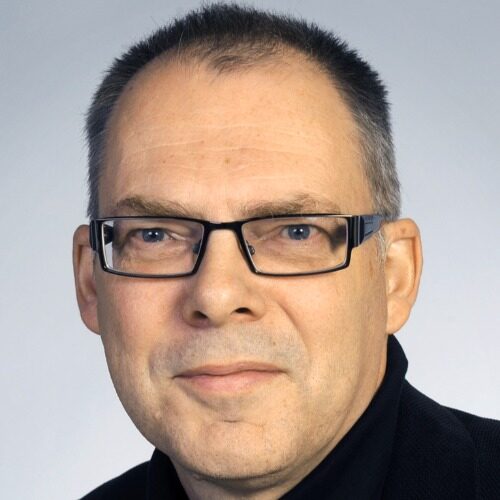
Jussi Nikander is a Senior University Lecturer at Aalto University in the Built Environment domain. His work spans geoinformatics, agricultural technology, and computational data analysis. Research Interests: He specializes in geospatial data systems, cybersecurity for agricultural networks, educational technology in GIS instruction, and optimization of forestry operations. His interdisciplinary approach bridges computer science with environmental and agricultural sciences. Recent Trends: Recent publications focus on open geospatial data security, self-assessment tools in education, and agricultural knowledge processing architectures. His work often addresses practical challenges in precision agriculture and timber logistics. Projects: Notably involved in developing the Geoportti self-assessment platform and the Cropinfra data collection system for ISO 11783-compliant farm equipment.
Sahel Iqbal is a Doctoral Researcher at the Department of Electrical Engineering and Automation , affiliated with the School of Electrical Engineering at Aalto University . His work bridges Machine Learning with Signal Processing and Partial Differential Equations , focusing on applications in froth flotation and dynamical systems . His research spans: Physics-informed machine learning for mineral processing optimization. Probabilistic modeling using particle filters in experimental design. Parallel-in-time solutions for nonlinear PDEs leveraging Gaussian processes. Publications highlight interdisciplinary trends in Machine Learning (2025), Computer Science (2024), and Mathematics (2024), with subtopics including neural networks , dynamical systems , and probabilistic modeling . He is part of the Sensor Informatics and Medical Technology group, contributing to cutting-edge methodologies in signal processing and automation.
Thomas Hellstén is a Senior Lecturer in Physiotherapy at Arcada University of Applied Sciences, affiliated with the School of Engineering, Culture and Wellbeing. He holds a Master of Physiotherapy and is a PhD student at the University of Helsinki, focusing on interdisciplinary research in technology and healthcare. His research emphasizes musculoskeletal physiotherapy, digitalization in healthcare, rehabilitation robotics, and wearable technologies. Hellstén leads the Computer Vision based Real-Time Motion Analysis in Health and Well-Being project at Arcada. His academic background includes studies in clinical physiotherapy and advanced training in interdisciplinary healthcare innovation. Key research interests include applying computer vision for motion analysis in rehabilitation, remote physiotherapy practices, and integration of humanoid robots in pediatric neurorehabilitation. Recent publications highlight advancements in markerless pose estimation for joint motion analysis, feasibility studies in robotic rehabilitation for cerebral palsy patients, and telehealth implementation in芬兰. His work bridges clinical practice with emerging technologies, emphasizing multi-professional collaboration for healthcare innovation. Professional awards and grants are not explicitly mentioned, but his active role in cross-departmental research collaborations showcases his leadership in academic innovation. Hellstén is involved in developing wearable sensor technologies and real-time monitoring systems for healthcare applications.
Hannu Nieminen is a Researcher at Tampere University's Biomedical Technology department. He holds a Doctor of Science (Technology) in Electrical Engineering from 1994. His work focuses on healthcare technology, digital health platforms, and health data governance. Nieminen has contributed to projects like DiHECO and ENVISION, exploring healthcare ecosystems and AI-driven solutions for chronic disease management. His research includes designing platform ecosystems for Parkinson's disease patients, developing user modeling frameworks for personalized health interventions, and evaluating technology-assisted stress management systems. Key areas of expertise include digital health platforms, wearable sensor technologies, healthcare data visualization, and stakeholder perceptions in data governance. He has collaborated on over 20 peer-reviewed publications, with notable work in Technovation and IEEE Access . His activities include presenting at conferences on workplace well-being and serving in a private sector advisory role (Movendos Oy, 2013–2015). Research highlights include: Developing a timeline visualization tool for clinical data analysis Designing a mobile microservices architecture for remote patient monitoring Exploring value capture mechanisms in healthcare platform ecosystems His work aligns with UN Sustainable Development Goals related to health and well-being innovation. Current research emphasizes digital health infrastructure, user-centric health technologies, and ethical data practices in secondary health data use.
Wael Mohammed is a Postdoctoral Researcher and Doctoral Researcher at Tampere University's Automation Technology and Mechanical Engineering department. His research focuses on advanced robotics, Industry 4.0, and digital twin architecture in manufacturing systems. He holds an MSc in Automation Engineering (2017) and a BSc in Mechatronics Engineering (2010) from the University of Jordan. His work emphasizes human-robot collaboration, cognitive validation of AI systems, and machine vision for food manipulation. Key contributions include methodologies for digital twin implementation in factories and ontology-driven semantic frameworks for manufacturing processes. Mohammed has contributed to projects like the FASTory digital twin initiative and REMODEL's cable manipulation research. Research interests span robotics applications in food production, energy-efficient automation, and semantic integration of industrial IoT systems. He has reviewed for IEEE Transactions on Industrial Informatics and co-created datasets on robotic grasping and assembly line optimization. Ongoing work explores large language models for HRC reliability and multimodal human-robot interfaces.
Lauri Palva is a University Lecturer at the Department of Electrical Engineering and Automation, Aalto University. He is affiliated with the Sensor Informatics and Medical Technology research groups. His work focuses on advancing medical imaging technologies, particularly mobile MRI systems and artifact reduction in biomedical signals. Palva also contributes to environmental monitoring through contributions to the SMEAR network, studying boreal forest ecosystems and climate interactions. His research spans both technical innovation and educational methodologies, including remote teaching of medical modules. Key research themes include MRI technology design, wearable health monitoring systems, and environmental sensor networks. His publications demonstrate interdisciplinary collaboration in engineering, healthcare, and environmental sciences. Palva's work bridges theoretical advancements with practical applications such as stroke rehabilitation environments and mobile medical solutions.
Milica Todorovic serves as an Associate Professor in the Department of Materials Science within the Faculty of Science and Engineering at the University of Turku (UTU). She leads the Materials Informatics Laboratory (MIL) and heads the Modern Industrial Materials MSc track. Her institutional roles include Vice-director of the Sustainable Materials and Manufacturing (SUSMAT) UTU profiling area, Vice-chair of COST Action CA22154 DAEMON, Vice-leader of the Human-Centric Artificial Intelligence for Sustainable Future (HAIF) Doctoral Training Network, and Co-lead of Finnish Centre for AI (FCAI) Highlight E. Her research integrates artificial intelligence algorithms with first-principles simulations to optimize functional materials and device performance. The MIL group develops data-driven solutions spanning aerosol research, chemical engineering of bio-based materials, and experimental-computational integration. Current projects focus on battery recycling optimization, magnetic materials design, perovskite engineering, and atmospheric aerosol analysis using Bayesian optimization and active learning techniques. Her work demonstrates significant interdisciplinary reach across computational chemistry, nanotechnology, and sustainable engineering. Scientific contributions include: Development of AI workflows for materials discovery Bayesian optimization frameworks for adsorption structure prediction Question answering systems for materials literature mining Data-efficient methods for molecular property prediction Her teaching portfolio includes advanced courses in Data Visualisation and Analysis, Simulations and New Materials, and Machine Learning for Materials Science. She actively contributes to European research networks through DAEMON and FCAI initiatives, driving collaborative efforts in data-driven materials engineering.
Muhammad Iqbal is a Research Fellow at Aalto University, affiliated with the Department of Electrical Engineering and Automation. His work focuses on resilient control systems, cybersecurity for cyber-physical systems, and advanced signal processing techniques. Research Interests: Resilient control of connected automated vehicles Robust Kalman filtering under cyber-attacks Multi-agent systems and distributed optimization Signal denoising and sparse signal processing Microgrid fault diagnostics and control Hydropower system regulation Research Groups: Sensor Informatics and Medical Technology.
Teemu Hannu Tapani Härkönen is a Postdoctoral Researcher at Aalto University's Department of Electrical Engineering and Automation. Affiliated with the Sensor Informatics and Medical Technology research group, his work focuses on advanced signal processing and statistical modeling in biomedical contexts. Position: Postdoctoral Researcher Email: teemu.h.harkonen@aalto.fi Research Interests: His expertise spans sensor informatics, medical technology, and spectral analysis, with current projects applying Gaussian processes to chemometric challenges in laboratory systems. A recent publication (2025) in Chemometrics and Intelligent Laboratory Systems demonstrates his innovative approach to signal processing. Contact: For collaboration or inquiries, reach him via his official Aalto email.
Dr. Indrė Žliobaitė is a researcher in the Department of Computer Science at Aalto University. Her work spans interdisciplinary domains, combining computational methods with ecological and biomedical applications. Adaptation Concept drift Evolving data streams Change detection Predictive analytics Discrimination aware data mining Her research includes modeling respiratory motion for medical applications, analyzing fossil records for paleoecological insights, and developing energy-efficient computing architectures. Publications highlight applications of Bayesian models, mobility trace analysis, and approximate computing techniques.
Wajiha Bano is a Research Fellow at Aalto University's Department of Electrical Engineering and Automation, affiliated with the Sensor Informatics and Medical Technology research group. Her research integrates sensor informatics and medical technology within the domains of electrical engineering and automation. Email: wajiha.bano@aalto.fi
Professor Alfred Colpaert at the University of Eastern Finland specializes in the Department of Geographical and Historical Studies within the Faculty of Social Sciences and Business Studies . His work bridges traditional geography with advanced geospatial technologies, focusing on environmental monitoring in Arctic and transboundary contexts. Affiliations: Professor, University of Eastern Finland (2005–present) Researcher, Lively Border Project (Kone Foundation, 2017–2020) International collaborator on Lake Ladoga and Zambezi Region studies His research interests span multiple disciplines: Remote sensing applications for environmental change detection Arctic ecosystem dynamics and reindeer pasture management Transboundary water resource governance Historical geography of border regions Integration of UAVs and satellite data for geospatial analysis Recent publications demonstrate expertise in: Lake eutrophication analysis using multi-sensor approaches 3D reconstruction of cultural heritage sites with low-cost technology Permafrost degradation monitoring in northern Finland Anthropogenic impacts on vegetation cover across continents Historical environmental narratives in museum contexts Project Involvement includes the Lively Border initiative (2017–2020), exploring nature tourism and memory politics along the Finnish-Russian-Norwegian border. He actively contributes to Finnish-Namibian academic collaboration through joint publications with researchers like Augustine-Moses Gbagir and Kenneth Matengu .
Janne Heiskanen is a University Researcher and holds the Title of Docent at the Department of Geosciences and Geography, University of Helsinki. He serves as a supervisor for the Doctoral Programme in Atmospheric Sciences and the Doctoral Programme in Geosciences. His research integrates geospatial technologies to address environmental challenges in African ecosystems. Heiskanen's research focuses on: Remote sensing applications in land cover and vegetation analysis Climate change impacts on tropical montane ecosystems GIS-based environmental monitoring in East Africa Development of machine learning methods for ecological studies His work spans diverse landscapes from Kenyan highlands to urban environments globally. With over 130 publications, his research demonstrates strong trends in: Satellite-based land surface phenology monitoring Hyperspectral data applications for invasive species detection Climate-smart agriculture frameworks Urbanization impacts on microclimates Recent works emphasize machine learning integration with remote sensing data. Scientific Awards: Excellence in Doctoral Supervision Award (2025) He actively advises doctoral candidates and contributes to major research initiatives: Project Manager for REACT (2022-2026): Climate-smart agricultural systems in East Africa Co-investigator in ESSA (2022-2026): Earth observation for agro-pastoral transformation Contributor to TAITASMART (2021-2024): Climate-smart landscape frameworks Participant in GACBE (2018-2022): Geo-informatics capacity building in Ethiopia Heiskanen leads field research teams in Kenya and Ethiopia, collaborating with international partners on drone-based environmental sensing and hyperspectral data analysis projects.
Si Zuo is a Postdoctoral Researcher at Aalto University's Department of Information and Communications Engineering and the Ambient Intelligence research group. His work focuses on cybersecurity, privacy-preserving technologies, and human-centered computing. He has contributed to secure communication protocols for medical devices, smart home systems, and pervasive surveillance environments. Recent research emphasizes authentication mechanisms leveraging first-person-view video and unsupervised learning techniques for activity recognition. Key research themes include balancing privacy and utility in smart devices, replicability in data-intensive design studies, and secure interaction-free device pairing using biomedical signals. His work bridges sensor networks, machine learning, and ethical computing to address challenges in wearable technology and medical informatics. Awarded an ORCID identifier (0000-0002-1418-8919), his contributions have been featured in IEEE Access, ACM IMWUT, and interdisciplinary design journals. Press coverage highlights innovations in privacy-preserving gesture systems and secure medical device communication. Current affiliations include Aalto's Department of Information and Communications Engineering and the Ambient Intelligence initiative, where he explores next-generation pervasive computing solutions.
Tony Cederberg is a researcher at Åbo Akademi University's Faculty of Natural Sciences and Engineering, specializing in Environmental and Marine Biology. His work focuses on biodiversity assessment, ecosystem-based management, and environmental monitoring in the Baltic Sea region. Institution: Åbo Akademi University School: Faculty of Natural Sciences and Engineering Department: Environmental and Marine Biology Research interests include: Marine biodiversity conservation Passive acoustic monitoring techniques Spatiotemporal ecological patterns MPA network expansion strategies Underwater vegetation mapping Coastal ecosystem management Recent publications highlight his expertise in: Long-term ecological monitoring Marine habitat assessments Biodiversity data integration Acoustic monitoring of bats Ecosystem-based policy frameworks Geospatial analysis of coastal zones Email: tony.cederberg@abo.fi