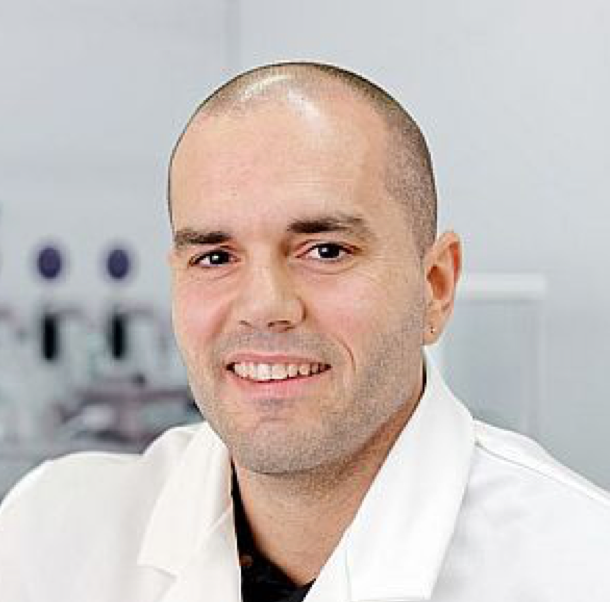
Dr. Rajesh Bera is a Research Fellow at ICFO's Functional Optoelectronic Nanomaterials group specializing in quantum-confined nanostructures. His research examines ultrafast carrier dynamics, excitonic properties, and optoelectronic applications of nanomaterials including quantum dots, nanoplatelets, and hybrid nanostructures. Current investigations focus on intraband transitions in doped nanocrystals, orientation-dependent excitonic behavior in 2D materials, and charge transfer mechanisms in heterostructure devices. Work bridges fundamental photophysics with applications in photodetection, sensing, and energy conversion. Recent publications demonstrate expertise in time-resolved spectroscopy of quantum materials, nanomaterial synthesis via colloidal chemistry, and rational design of optoelectronic devices. Continually develops novel characterization methods to probe ultrafast processes at nanoscale interfaces.
Carme Torras Genís is a Research Professor at the Spanish National Research Council (CSIC), affiliated with the Institute of Robotics and Industrial Informatics (IRI) in Barcelona and the Technical University of Catalonia (UPC). Her career spans over three decades, focusing on robotics, neurocomputing, and artificial intelligence with applications in healthcare and deformable object manipulation. M.Sc. in Mathematics (University of Barcelona, 1978) M.Sc. in Computer Science (University of Massachusetts, 11981) Ph.D. in Computer Science (UPC, 1984) Research Interests : Robotic manipulation of deformable objects (especially textiles) Neurocomputing and machine learning for robotic control Human-robot interaction and assistive robotics Computational topology for cloth state representation Ethics in social robotics and AI Medical applications of robotics for neuromuscular disease assessment Scientific Leadership : ERC Advanced Grant recipient (2016) IEEE and EurAI Fellow Coordinator of Horizon Europe project SoftEnable and former ERC project CLOTHILDE Editorial leadership in IEEE Transactions on Robotics and multiple journals Active in ethics committees and AI policy advisory boards Advisory Committee of Ethics in AI (Catalan Government) Vice-President of CSIC Ethics Committee Member of Royal Academy of Engineering (Spain)
Prof. Raimon Jané Campos is a leading figure in biomedical signal processing at the Universitat Politècnica de Catalunya (UPC) and Universitat de Barcelona (UB). As co-director of UPC's Biomedical Signal and System Group (CREB) and coordinator of the Biomedical Engineering PhD Programme, he bridges engineering and clinical applications. His work focuses on respiratory and sleep disorder diagnostics, with significant contributions to COPD and sleep apnea monitoring through wearable devices and machine learning. PhD in Biomedical Engineering (UPC, 1989) Visiting researcher at Université de Nice-Sophia Antipolis Vice-president of Spanish Society of Biomedical Engineering Research spans respiratory mechanics , sleep-disordered breathing , acoustic biomarkers , bioimpedance , and machine learning in biomedical contexts . His 2025 work on microcalorimetric pathogen classification and 2024 spiking neural networks for apnea detection demonstrate cutting-edge integration of computational methods with physiological monitoring. Articles from 2017-2024 reveal consistent focus on non-invasive diagnostics , cardiorespiratory synchronization , and smartphone-based health solutions . Awarded the Barcelona City Technology Research Award (2005) and serving on the International Advisory Board for Physiological Measurement since 2010, his career combines academic leadership with real-world clinical translation through IBEC's technology transfer initiatives.
Susana Paton Alvarez is an Associate Professor at the Department of Electronic Technology within the College of Engineering at the Universidad Carlos III de Madrid. She is affiliated with the Microelectronic Design and Applications (DMA) research group and the University Institute on Gender Studies . Her contact information includes email addresses susana.paton@uc3m.es and spaton@ing.uc3m.es , and her office is located at 1.2.C06 - Agustin De Betancourt in Leganés. Her research focuses on analog and mixed-signal circuit design , with a particular emphasis on capacitance-to-digital converters , voltage-controlled oscillators (VCO) , and biomedical sensors . Recent work includes advancements in time-encoded sensors for physiological monitoring and noise analysis in multi-bit SigmaDelta modulators. She also explores applications in flexible electronics and edge computing for biosignal acquisition. Notable publications include contributions to IEEE Sensors Letters , IEEE Transactions on Circuits and Systems II , and IEEE Sensors Journal , reflecting her expertise in microelectronic design and biomedical engineering. Her research often bridges theoretical circuit analysis with practical implementations in nanometer CMOS technologies. Dr. Paton Alvarez actively participates in collaborative projects and conferences, such as Modularos and Short Range Wireless Front-Ends initiatives. While no scientific awards are explicitly listed, her publications highlight sustained contributions to the field of analog and biomedical circuit design. Her academic roles include teaching Computer Science and Electronics subjects. She is involved in the University Institute on Gender Studies , indicating an interest in interdisciplinary research or outreach in gender-related academic issues.
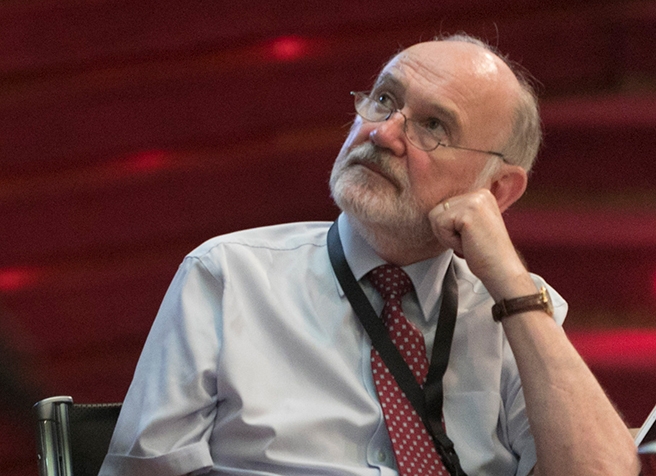
John Kilner is a Senior Research Investigator at Imperial College London, formerly holding the BCH Steele Professorship of Energy Materials and serving as Head of the Department of Materials and Dean of the Royal School of Mines. His research focuses on ionic and mixed-conducting ceramics, particularly for applications in fuel cells, oxygen separators, and sensors. He pioneered isotopic exchange SIMS techniques to study oxygen exchange and diffusion in oxide ceramics, with recent work centered on intermediate-temperature fuel cells and interfacial phenomena in solid electrolytes. Prof. Kilner's academic background includes over 30 years of research in materials science, leading to over 250 publications and multiple patents in fuel cell and gas separation technologies. He co-founded CeresPower Ltd, a successful spinout company. His work bridges fundamental materials science with applied energy technologies, emphasizing solid-state ionics and ceramic electrolyte development. Publications span advancements in garnet solid electrolytes, lithium-ion conductivity enhancement strategies, and in-operando microscopy analysis of battery materials. His contributions to the Journal of Solid State Ionics as European Editor highlight his role in shaping the field's academic discourse. Notably, Kilner advises doctoral research such as William Manalastas Wang’s thesis on ceramic lithium-ion electrolytes. His research team actively explores next-generation battery materials with a focus on improving energy density and stability through advanced ceramic engineering and surface analysis techniques.
Pere-Pau Vázquez is an Assistant Professor in AI for Visual Computing at the Computer Vision Lab, TU Wien, Austria . Previously, he held academic positions at the ViRVIG Group and Facultat d'Informàtica de Barcelona (UPC) , where he taught courses in Programming, Computer Graphics, and Visualization for over 20 years. His research focuses on Information Visualization, Scientific Visualization, Medical Data Visualization, Molecular Visualization, and AI applications to Visual Computing . Current Teaching : Data Visualization, Fast Realistic Rendering, Information Visualization, Medical Images, Scientific Visualization, Virtual Reality, and 3D Medical Visualization. Former PhD Students : Elena Molina, Alexandra Cortez, Jesús Díaz, Pedro Hermosilla, Eva Monclús. His scientific awards include the Best PhD Thesis Award (UPC, 2003), Best Student Paper Award (SPIE, 2012), and Best Paper Award (International Conference on Computer Graphics Theory and Applications, 2013). Recent publications explore AI integration in biomedical visualization, molecular data analysis, and interactive techniques for volume rendering. He serves on the EuroGraphics Executive Board as Secretary and is active in steering committees for EuroVis and Visual Computing for Biology and Medicine . His work bridges Computer Graphics, Artificial Intelligence, and Human-Computer Interaction , with applications in medical and molecular data analysis.
Andrea Ianiro is a Full Professor in the Aerospace Engineering Department at Universidad Carlos III de Madrid (UC3M), where he leads research in fluid dynamics, turbulence, and heat transfer. His work bridges experimental techniques and machine learning applications for flow analysis and control. He serves as Associate Editor of the International Journal of Heat and Mass Transfer (2025-2028) and directs the EFM Lab (Experimental Fluid Mechanics Laboratory) at UC3M. Professor Ianiro's research focuses on turbulence characterization, boundary layer flows, and the application of machine learning to fluid mechanics problems. His work spans experimental techniques including Particle Image Velocimetry (PIV), infrared thermography, and advanced data processing methods. Recent research emphasizes data-driven approaches for flow field reconstruction, turbulence control, and heat transfer optimization in wall-bounded flows. His projects often combine theoretical, experimental, and computational approaches to address complex fluid mechanics challenges. The analysis of his recent publications reveals a strong trend toward integrating machine learning with traditional fluid mechanics. His work increasingly focuses on using deep learning techniques (particularly CNNs and GANs) for flow field prediction from limited measurements, developing meshless computational methods for flow analysis, and applying optimization techniques (including genetic algorithms) to heat transfer enhancement. His research maintains a strong experimental foundation while embracing data-driven approaches to tackle turbulence modeling challenges. Associate Editor of the International Journal of Heat and Mass Transfer (2025-2028) Professor Ianiro leads multiple significant research projects including SPANDRELS (SParse AND paRsimonious Event-based fLow Sensing, 2025-2030), HumanIC (Human-Centric Indoor Climate for Healthcare Facilities, 2024-2027), and EXCALIBUR (Extraction of machine learning strategies for turbulent flow control, 2023-2026). His work has attracted funding from the European Commission, Spanish National Research Agency, and industry partners including Airbus. He has supervised numerous theses on topics including AI-based sensing of turbulent flows, convective heat transfer control, and turbulent boundary layers. At UC3M, Professor Ianiro directs the Experimental Fluid Mechanics Laboratory (EFM Lab), which focuses on advanced measurement techniques for fluid flow and heat transfer characterization. The lab specializes in PIV/PTV techniques, infrared thermography, and the development of novel experimental approaches for turbulence research. Current research directions include machine learning applications for flow field reconstruction, plasma-based flow control, and heat transfer optimization in complex flow configurations.
Prof. Josep Puigmartí-Luis is a Research Professor at the University of Barcelona (UB) since 2020, following an ERC Starting Grant in 2015 and an ICREA Research Professorship in 2019. He holds a master’s in Chemistry and Food Engineering from IQS (2003) and a PhD in Materials Science from ICMAB. His research focuses on functional materials synthesis, microfluidic technologies, and self-assembly processes, with applications in nanotechnology and biomedical engineering. Key awards include the Premi Antoni de Martí (2009), St. Jordi Award (2006), and ETH Fellowship (2008). His group, ChemInFlow, develops magnetic microrobots and piezoelectric catalytic systems for targeted therapies and environmental remediation. Educations: PhD in Materials Science, Institut de Ciència de Materials de Barcelona (ICMAB) Master in Chemistry and Food Engineering, Institut Químic de Sarrià (IQS), 2003 Research Interests: Synthesis of functional materials in solution/surfaces, microfluidic technologies, non-equilibrium assemblies, magnetic microrobotics, and piezoelectric catalysis. Articles Trends: Recent work emphasizes microfluidics-driven material synthesis, magnetic microrobot navigation, and piezoelectric catalysis for biomedical and environmental applications. Key themes include nanoreactors, targeted drug delivery, and functional MOF/COF materials. Awards: Premi Antoni de Martí i Franquès de Ciències Químiques (2009) ERC Starting Grant (2015) Rising Star Award (IEEE 3M-NANO 2023) Grants & Labs: ERC Starting Grant (2015), ICREA Professorship (2019). The ChemInFlow Group pioneers interdisciplinary approaches in materials synthesis and robotics, with collaborations spanning Europe and Asia. Labs/Teams: Leads the ChemInFlow Group at UB, focusing on microfluidic technologies and biomedical microrobotics.
Agustín Zaballos Diego is an Assistant Professor in the Department of Computer Engineering at University Ramon Llull (URL), Barcelona, Spain, since 1999. He serves as Research Coordinator in the Department of Engineering at La Salle Campus Barcelona and leads the R&D Networking and Security Area since 2002. His academic background includes a PhD in Data Networks and Internet Technologies (2012), an International MBA (2014), and an M.S. in Electronic Engineering (2000). University: University Ramon Llull (URL) Department: Department of Computer Engineering Research Group: GRITS Research Focus: Real-time QoS-aware routing protocols in Smart Grids, Ubiquitous Sensor Networks, and IoT communications. His work bridges telecommunications, computer science, and energy systems through projects like OPERA (FP6), INTEGRIS (FP7), and FINESCE (FP7). Publication Trends: Recent articles highlight advancements in HF communications for Antarctic research, hybrid genetic algorithms for traffic engineering, IPv6 testing, and Industry 4.0-related networking solutions. Keywords span Smart Grids, IoT, Sensor Networks, and QoS optimization. Collaborative Projects: Key initiatives include the Antarctica Project , ATHIKA (ICT in healthcare), ENVISERA (environmental sensor networks), HOTSUP (online teaching innovation), PLANET4 (AI/ML in industry), and XIoT (IoT scalability challenges).
Alan Briones Delgado is a researcher at the La Salle School of Engineering , Universitat Ramon Llull , with a focus on Internet of Things , Cybersecurity , and Transport Protocols . His work spans projects funded by the European Commission and national grants, including EXCEL4HOUSING4.0 , WeB-Nimbus , and NG-SOC , addressing challenges in cloud computing education, ecological monitoring, and security operations. His research integrates Artificial Intelligence and Wireless Sensor Networks for sustainable solutions. Key research areas include Quality of Service in heterogeneous networks, Environmental Conservation via IoT, and Teaching and Learning strategies for Big Data. Projects like EcoSentinel and BTL-COP highlight his commitment to Environmental Monitoring and Community Policing applications. His collaborations extend to institutions in the UK , Albania , and Western Balkans . Contact: alan.briones@salle.url.edu
Arben Merkoçi is an ICREA Research Professor and leader of the NanoBioelectronics and Biosensors Group at the Catalan Institute of Nanoscience and Nanotechnology (ICN2). He holds a PhD in ion-selective electrodes from the University of Tirana (Albania) and has held research positions at institutions including the Polytechnic University of Budapest, University of Ioannina, and New Mexico State University. His research focuses on integrating biological molecules with micro/nanostructures to design advanced biosensors, with applications in healthcare and environmental monitoring. Education: PhD in Analytical Chemistry (University of Tirana, 1992) Roles: Co-Editor-in-Chief of Biosensors and Bioelectronics , member of the Academy of Sciences of Albania Research interests include nanomaterial-based biosensors (e.g., graphene, MXenes, quantum dots), point-of-care diagnostics, and sensor fabrication technologies. He has pioneered innovations in inkjet-printed sensors, wearable devices, and CRISPR-integrated biosensing. His group collaborates globally to advance nanobiosensor applications in clinical and environmental settings. Over 350 publications (H-index 91) and 40 supervised PhD theses highlight his contributions. He co-founded GraphenicaLab (graphene patterning) and PaperDrop (clinical diagnostics). Active in grant acquisition and policy, he shaped Spain’s first nanoscience undergraduate program at the Universitat Autònoma de Barcelona.
Miguel Ángel Sotelo Vázquez is a full Professor at the University of Alcalá, leading the INVETT Research Group (Intelligent Vehicles and Traffic Technologies). He holds the Department of Automatic Control and specializes in autonomous systems, particularly in path planning, sensor fusion, and human-vehicle interaction. His research integrates machine learning, robotics, and control theory to address challenges in intelligent transportation systems. He earned his Ph.D. in 2001 with a thesis on autonomous vehicle navigation in partially known environments. His work emphasizes real-world deployment, explainable AI, and safety-critical systems. Recent projects focus on lane change prediction, pedestrian behavior modeling, and cybersecurity for autonomous systems. Key contributions include neuro-symbolic frameworks for decision-making, real-time multi-physics field reconstruction, and cross-cultural studies of pedestrian interactions. He collaborates internationally on urban mobility resilience and hydrogen refueling infrastructure. Research Highlights : Development of knowledge graph-based prediction architectures Experimental validation of human-vehicle interaction in VR environments Creation of the SCOUT trajectory prediction framework
LUIS GONZALEZ GUERRERO is an Assistant Professor at the Universidad Carlos III de Madrid, specializing in photonics and telecommunications. His research focuses on integrated photonic circuits for millimeter-wave and terahertz (THz) communication systems, with applications in satellite payloads, wireless fronthaul/backhaul, and space technology. He leads projects in hybrid integrated optical platforms (e.g., InP-Si3N4), laser stability, and high-frequency signal generation. His work bridges photonics with electrical engineering to enable next-generation wireless systems. Research Interests: Dr. Gonzalez Guerrero’s expertise spans integrated photonics, microwave photonics, THz communication links, satellite communication systems, and photonic signal generation. His innovations include low-noise radiometers, optical injection locking for stable local oscillators, and high-purity mm-wave/THz signal transmission. His contributions address challenges in frequency stability, bandwidth efficiency, and phase noise mitigation in high-frequency systems. Publications: His recent work emphasizes hybrid photonic platforms, sub-THz wireless bridges, and phase noise mitigation techniques. Articles highlight advancements in optical signal processing, laser source integration, and applications in space communication. His research trends reflect a strong focus on translating laboratory prototypes into deployable systems for satellite and terrestrial networks. Affiliations: He is affiliated with the Grupo Universitario de Tecnologías de Identificación (GUTI), a research group at UC3M. His work is supported by grants focused on photonic integrated circuits and space communication technologies. He collaborates internationally on projects involving multicore fiber systems, coherent THz transmitters, and optical frequency comb applications.
Jorge Garcia Vidal is a Professor in the Department of Computer Architecture at the School of Computer Science, Universitat Politècnica de Catalunya (UPC). He is a key member of the CNDS - Computer Networks and Distributed Systems research group, with a sustained record of research activity from the late 1980s to the present, including publications projected into 2025. His work bridges theoretical network performance analysis and applied IoT systems, particularly in environmental monitoring. His research interests center on Computer Networks , Internet of Things (IoT) , Sensor Networks , and Data Quality in IoT . He has made significant contributions to ATM network performance, medium access control, and traffic modeling. More recently, his focus has shifted to air quality monitoring using low-cost sensor networks, employing techniques in Graph Signal Processing , Machine Learning , and Anomaly Detection to improve data reliability and estimate pollutants like black carbon. The recent article trends show a strong emphasis on developing data-driven frameworks, virtual sensors, and robust models for environmental IoT platforms. His work integrates advanced signal processing and machine learning to address the challenges of heterogeneous, low-cost sensor data in urban settings. His scientific achievements have been recognized with awards including the Premio Extraordinario de Doctorado and the Premio Mejor Tesis Doctoral . He has advised several doctoral students, including Pau Ferrer-Cid, David Fusté Vilella, Steluta Iordache, and Julian David Morillo Pozo. He is actively involved in numerous competitive and non-competitive R&D projects, such as those related to digital twins, IoT platforms for smart cities, and nature-based urban solutions, often funded by state and regional programs. He collaborates extensively within UPC and with external partners. His research is conducted primarily within the CNDS research group at UPC, a collaborative environment focused on computer networks and distributed systems, with connections to broader initiatives in smart cities and environmental monitoring.
Dr. Juan Antonio Montiel-Nelson is a Full Professor at the Department of Electronic and Automatic Engineering, University of Las Palmas de Gran Canaria, Spain, and a permanent member of the Institute for Applied Microelectronics (IUMA). With over 195 publications and 691 citations (ResearchGate, April 2024), he maintains an h-index of 13 in Scopus with 544 citations across 407 documents. PhD in Electrical Engineering from University of Las Palmas de Gran Canaria (1994) Full Professor since 2003 (previously Titular Professor 1997-2003) Visiting Scientist at Edith Cowan University, Australia (1996-1997) His research spans VHSIC design across GaAs, SiGe, InP, and CMOS technologies, with current focus on MEMS sensors design and integration for health monitoring, oceanographic profiling, and aquaculture applications. His work integrates circuit design with AI-driven systems for environmental and health monitoring. Dr. Montiel-Nelson serves on the MWSCAS Steering Committee since 2009 and the IEEE Sensors council for the Spanish chapter. He has contributed to 72 IEEE publications including flagship conferences from 2006-2023 and serves as reviewer for multiple IEEE Transactions journals. Myril B. Reed Best Paper Award, 2008 IEEE MWSCAS Active reviewer for IEEE Transactions on Circuits and Systems I/II Reviewer for IEEE Transactions on Very Large Scale Integration (VLSI) He currently leads multiple major research initiatives including EU-funded projects on AI-assisted health monitoring systems and national projects on oceanographic profilers and aquaculture sensor networks, demonstrating strong leadership in interdisciplinary research bridging electronic engineering with practical environmental and healthcare applications.