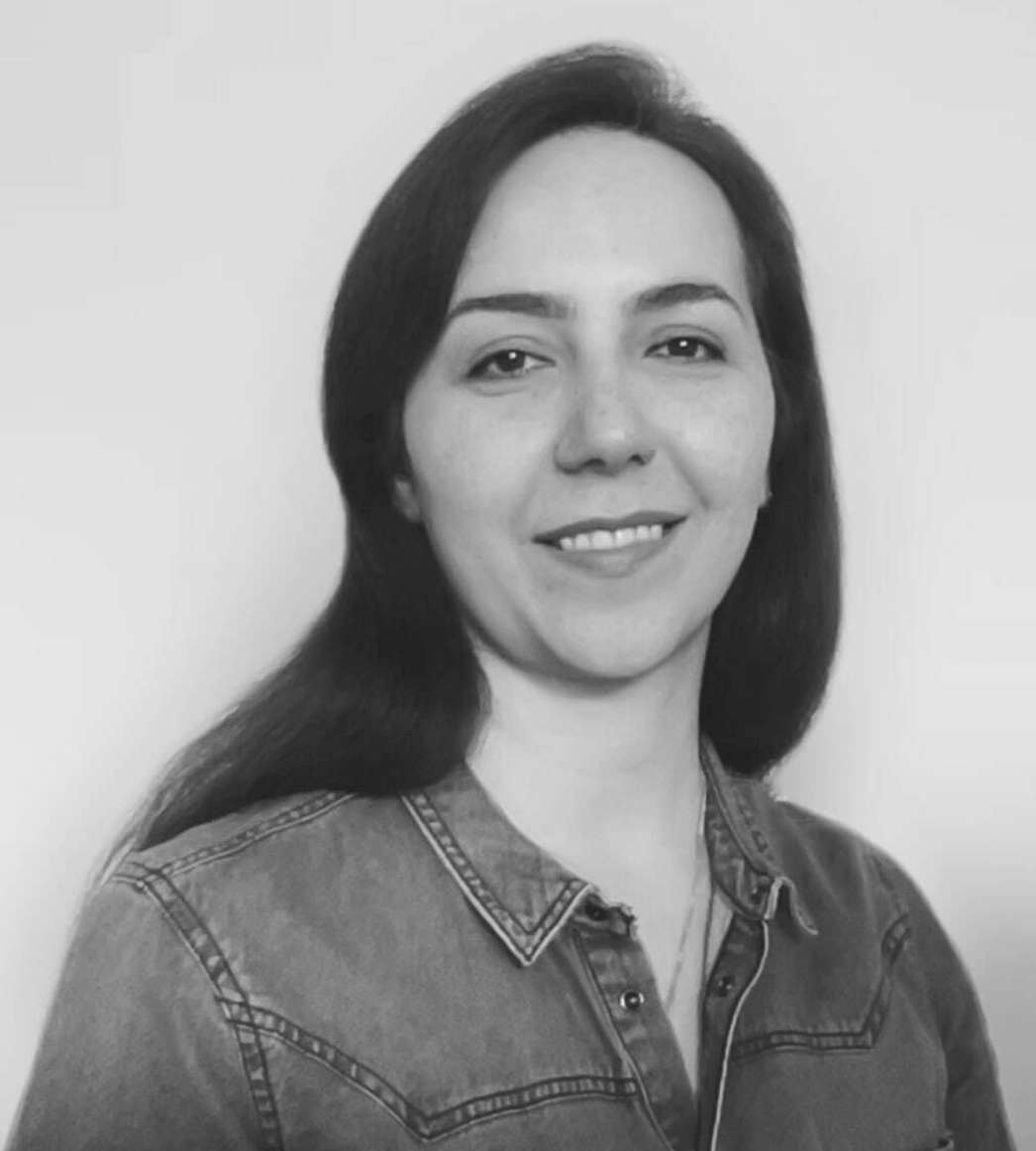
Neda Rahmani is a Postdoctoral Fellow at the Niels Bohr Institute , University of Copenhagen, affiliated with the Niels Bohr International Academy . Her research lies at the intersection of biophysics, computational materials science, and nanotechnology. Previous Position: Postdoctoral Fellow in the Computational Material Group at Southern Denmark University. Current Focus: Multiscale computer simulations to study biomaterials, particularly designing nanoscale force sensors for membrane protein interactions. Her work combines density functional theory (DFT) with multiscale modeling to explore functional materials for photovoltaics, spintronics, and biological systems. Recent publications highlight applications in neurotransmitter sensing , amyloid proteolysis , and membrane dynamics .
Jie Cai is an Assistant Professor at the Department of Technology and Innovation, University of Southern Denmark, specializing in structural engineering, maritime operations, and data science. His research bridges computational methods with marine and pipeline mechanics. Key research areas include structural stability, residual strength analysis, lateral buckling, and data-driven maritime systems Recent work focuses on medical image segmentation (2025) and burst strength prediction for corroded pipelines (2025) Active in digital twin development for vessel operations and engine monitoring He has contributed to journals like Computers and Electrical Engineering , Ocean Engineering , and Journal of Marine Science and Application , with expertise in finite element analysis and anomaly detection. Jie Cai serves as a peer reviewer for journals including the Journal of Offshore Mechanics and Arctic Engineering and Energies , and teaches courses in data science, programming, and IoT applications at the master's and bachelor's levels.
Jan-Matthias Braun is an Associate Professor at the Maersk Mc-Kinney Moller Institute, University of Southern Denmark, specializing in Applied AI and Data Science. His research bridges artificial intelligence, robotics, and medical device engineering. Current projects focus on explainable AI integration in colon capsule endoscopy Development of real-time FPGA-based systems for colorectal diagnostics Biomechanical modeling for adaptive orthotic devices His work emphasizes cross-disciplinary applications of machine learning in healthcare, particularly for gastrointestinal disease detection and assistive robotics. Publications demonstrate expertise in deep neural networks, hardware acceleration, and smart environment control systems. Teaching responsibilities include: Advanced cybersecurity courses Deep learning applications in epilepsy detection Mentorship in capsule endoscopy image analysis
Jonas Alexander Lundberg Andersen serves as an External Lecturer at the Institute of Mechanical and Electrical Engineering, University of Southern Denmark (SDU), specializing within the SDU Mechatronics (CIM) department. His research focuses on interdisciplinary mechatronics systems, integrating robotics, control theory, and embedded computing for electromechanical automation solutions. Key interests include real-time control algorithms, sensor integration in robotic platforms, and hardware-software co-design for industrial automation. Contact: jonasal@sdu.dk | +45 6550 3575
Irena Czycholl is a Professor at the Department of Veterinary and Animal Sciences, Faculty of Health and Medical Sciences, University of Copenhagen. She specializes in applied animal welfare science with a focus on developing practical assessment methodologies. Her career includes veterinary practice, postdoctoral research at Kiel University, and industry experience as a Senior Research Scientist in pig welfare. Education: Habilitation in Animal Husbandry, Kiel University (2020) Specialist in Behavioral Science (Fachtierarzt), Tierärztekammer Schleswig-Holstein (2020) PhD in Veterinary Medicine, University of Veterinary Medicine Hannover (2015) State Examination in Veterinary Medicine (2012) Her research integrates ethology, precision technology, and clinical veterinary science to address fundamental questions in animal welfare. Primary investigations include: developing reliable welfare assessment protocols; analyzing causal mechanisms of behavioral disorders in farm animals; optimizing housing systems through automated monitoring; and evaluating interspecies differences in stress responses. Current work emphasizes practical implementation of welfare innovations in livestock production systems. Publications demonstrate consistent focus on translational animal science, with recent works examining: welfare biomarker validation across species; technological solutions for farm management; comparative pathology of behavioral disorders; and policy frameworks for companion animals. Research consistently bridges theoretical ethology and agricultural applications. Awards: Boehringer Ingelheim Animal Welfare Medal for swine research (2018) University Teaching Prize for educational excellence (2019) Professional appointments include senior research roles at the Pig Improvement Company (2021-2022) and Kiel University (2015-2021), reflecting sustained industry-academic collaboration in welfare science.
Lene Juul Pedersen serves as Professor and Section Leader of the Behavior, Stress and Animal Welfare (BSW) Research Group at Aarhus University's Department of Animal Science. Her primary affiliation spans interdisciplinary collaborations with engineering experts, industry partners, and European research consortia focused on advancing animal welfare within modern livestock systems. Her research program centers on animal behavior and welfare in pig production, with growing emphasis on sustainability integration. Current work investigates trade-offs between welfare outcomes and environmental/economic dimensions through precision livestock farming technologies. Key focus areas include space allowance optimization, organic production systems, and climate-smart solutions that position animal welfare as a core sustainability metric rather than a separate concern. Analysis of recent publications reveals consistent thematic progression toward holistic sustainability frameworks. Early work established welfare impacts of space density and enrichment, while current research connects these to meat quality, greenhouse gas emissions, and economic viability. The publication trajectory shows increasing European collaboration and methodological sophistication through sensor technologies and on-farm validation studies. Professor Pedersen directs substantial research infrastructure through active grants including EUPAHW (2024-2030), SowSo (2023-2027), and SOS (2023-2026), demonstrating sustained funding for welfare-integrated production systems. Her group maintains strong industry partnerships that translate findings into practical tools like the TailBiteAdvice ICT platform and greenhouse gas reduction strategies. She leads the Behavior, Stress and Animal Welfare Research Group at Aarhus University's Tjele facilities, where experimental work bridges fundamental welfare assessment with precision farming implementation. The group's interdisciplinary approach combines behavioral science, engineering, and sustainability metrics to develop commercially viable welfare solutions for modern pig production.
Elisabeth Mathiesen serves as a Clinical Professor in the Department of Clinical Medicine at the University of Copenhagen, specializing in Endocrinology within Internal Medicine. Based at Blegdamsvej in Copenhagen, she maintains clinical and research operations through the Copenhagen University Hospital (Region Hovedstaden) with direct contact via elisabeth.reinhardt.mathiesen@regionh.dk and phone +4535458358. Her research critically examines diabetes management during pregnancy and long-term metabolic outcomes, with emphasis on gestational diabetes interventions and type 1 diabetes complications. Key investigations include glucose control during labor, cardiometabolic risk concordance in couples post-GDM pregnancy, and health literacy impacts on dietary quality. She employs nationwide cohort methodologies and randomized controlled trials to address clinical gaps in maternal-fetal medicine. Recent publication trends reveal intensive focus on Danish clinical trials (Face-It RCT, INTENSE-GDM, CopenFast) evaluating family-based health promotion, nutrition therapy efficacy, and insulin delivery systems. These works span endocrinology, obstetrics, and public health domains with consistent emphasis on real-world intervention scalability and postpartum continuity of care. No scientific awards were documented in the provided materials. Dr. Mathiesen actively collaborates through the Face-It Study Group and CopenFast trial consortium, driving multi-institutional research on gestational diabetes interventions and type 1 diabetes management during pregnancy. Her network includes Copenhagen University Hospital clinicians, University of Copenhagen researchers, and nationwide registry collaborators, though specific grant details remain undisclosed in source materials. Her laboratory operations center on clinical trial execution and registry data analysis, particularly leveraging Denmark's comprehensive health registries for matched-cohort studies on diabetic complications. Current work prioritizes translational applications of sensor-derived glycemic metrics and couple-based health behavior modification post-GDM pregnancy.
Jakob Rahr Winther serves as a Biochemistry Professor in the Department of Biology at the University of Copenhagen, specializing in Biomolecular Sciences. His research program focuses on fundamental mechanisms of protein structure, folding, and redox regulation, with particular emphasis on disulfide bond formation and enzyme function. Professor Winther's research spans several interconnected areas of protein science: Mechanisms of protein folding and stability in cellular environments Disulfide bond formation and thiol-disulfide redox regulation Protein engineering and enzyme optimization High-throughput analysis of protein variants Structural determinants of enzyme specificity and function His recent publication record demonstrates a consistent trajectory in developing innovative methodologies for measuring cellular redox conditions and understanding protein sequence-structure-function relationships. Winther frequently employs yeast-based systems combined with biochemical and computational approaches to investigate fundamental biochemical processes, with applications ranging from basic science to potential therapeutic interventions. His work on engineered disulfide bonds for redox sensing and systematic characterization of protein variants represents significant methodological advances in the field. Professor Winther maintains active scientific engagement through conference presentations including 'Kinetic and Thermodynamic Aspects of Cellular Thiol-Disulfide Redox Regulation' (2012) and 'DNA, genteknologi og proteiner – "intelligent" design' (2009), demonstrating his commitment to knowledge dissemination across both specialist and broader audiences.
Stine Grønfeldt Stenspil serves as a Guest Researcher at the Department of Chemistry within the Faculty of Science at the University of Copenhagen. Her research program focuses on the photophysical properties and applications of fluorescent nanomaterials, with particular emphasis on organic dye-based systems and molecular switching technologies. Dr. Stenspil completed her doctoral studies in 2023 with a PhD thesis titled "Bright SMILES: Development and study of fluorescent nanoparticles and chromophores" at the University of Copenhagen. Her educational background has equipped her with expertise in synthetic chemistry, photophysical characterization, and nanomaterials engineering. Her primary research interests include the design and characterization of fluorescent nanoparticles, molecular switching systems (particularly dihydroazulene-spiropyran dyads), and energy transfer mechanisms in confined molecular environments. She investigates how to control fluorescence lifetime, enhance quantum yields, and develop systems with specific photoresponsive behaviors for applications in sensing and molecular electronics. Her 2024 review article in Chemical Science addresses fundamental challenges in fluorescent nanoparticle design. Analysis of Dr. Stenspil's publication record from 2022-2025 reveals two dominant research trajectories: development of multi-state molecular switching systems and investigation of proton-coupled electron transfer processes in fluorescent probes. Her work demonstrates increasing sophistication, with 2025 publications showing refinement of the "Meta-rule" of photoactivity and novel sensing modalities. Dr. Stenspil maintains a productive research collaboration primarily with Professor B.W. Laursen at the University of Copenhagen, with whom she has co-authored multiple publications across high-impact journals. Her research has attracted attention across academic platforms including X (formerly Twitter), Bluesky, and academic reference managers like Mendeley, with several publications accumulating over 10 Mendeley readers. She actively contributes to the photochemistry and nanomaterials research community through her work at the Department of Chemistry, University of Copenhagen, where she continues to advance fundamental understanding of fluorescent systems and their practical applications.
Dr. Svenja Woudstra, PhD and Dr.med.vet., serves as an Assistant Professor in the Department of Veterinary and Animal Sciences at the Faculty of Health and Medical Sciences, University of Copenhagen. Based at Grønnegårdsvej 8 in Frederiksberg, she leads research initiatives focused on bovine health management with particular emphasis on udder health optimization and the practical implementation of precision livestock farming data to enhance animal welfare and disease control in dairy operations across Denmark and international collaborations. Her research program centers on mastitis prevention through innovative approaches including social network analysis of dairy herds, pathogen transmission dynamics, and milking system engineering. She investigates how precision farming technologies can be leveraged by veterinarians to interpret behavioral and physiological data, with significant contributions to understanding intramammary infections, Trueperella pyogenes diversity, and parity-related milking behaviors. This work bridges veterinary epidemiology, microbiology, and data science to develop actionable farm management strategies. Analysis of her 2023-2025 publications reveals a strong thematic focus on data-driven solutions for dairy health challenges, with increasing emphasis on interdisciplinary collaboration between veterinarians, farmers, and technology developers. Her work consistently addresses practical applications of research findings to improve on-farm decision-making and animal welfare outcomes. Dr. Woudstra's scientific excellence has been recognized through prestigious awards: ECBHM Resident award 2024 (awarded September 12, 2024) Wilfried Wolter Gedächtnispreis 2022 (awarded March 2022) Through her extensive collaborative network spanning multiple European institutions and dairy operations, she actively mentors emerging researchers and contributes to advancing veterinary practice standards. Her research outputs demonstrate significant engagement with both academic and industry stakeholders through conference presentations and practitioner-focused publications. As part of the Animal Welfare and Disease Control research group at the University of Copenhagen, she participates in multidisciplinary teams utilizing advanced monitoring technologies and epidemiological modeling. Her work connects laboratory-based pathogen analysis with on-farm observational studies, creating a comprehensive research ecosystem that addresses bovine health challenges from multiple angles while maintaining strong industry relevance.
Thomas Just Sørensen is a Professor in the Department of Chemistry at the University of Copenhagen's Faculty of Science. His research focuses on lanthanide-based molecular systems with applications in optical authentication and photophysics. Affiliated with the university's chemistry department since at least 2011, he maintains active research groups and industry collaborations. His primary research interests include lanthanide coordination chemistry , molecular photophysics , and optical authentication technologies . He investigates symmetry properties of lanthanide complexes, develops chloride-binding systems, and creates physical unclonable functions (PUFs) for anti-counterfeiting. His work bridges fundamental inorganic chemistry with practical security applications. His publication trends show consistent focus on lanthanide luminescence (2017-2025), with recent expansion into computational symmetry analysis (2024) and crystallization mechanisms (2025). Key journals include Journal of Physical Chemistry , Inorganic Chemistry , and Nature Reviews Chemistry . Scientific awards: The Lundbeck Foundation’s Talent Prize (2011) Sørensen actively participates in f-element chemistry conferences including ACS National Meetings and Rare Earth Research Conferences. He has founded two commercial ventures: Pufin-ID (optical authentication solutions) and KU-dyes (specialty dyes), demonstrating strong industry translation of his research. His laboratory focuses on synthesizing and characterizing lanthanide complexes for security applications, with particular emphasis on luminescence-based detection systems and molecular design for aqueous environments.