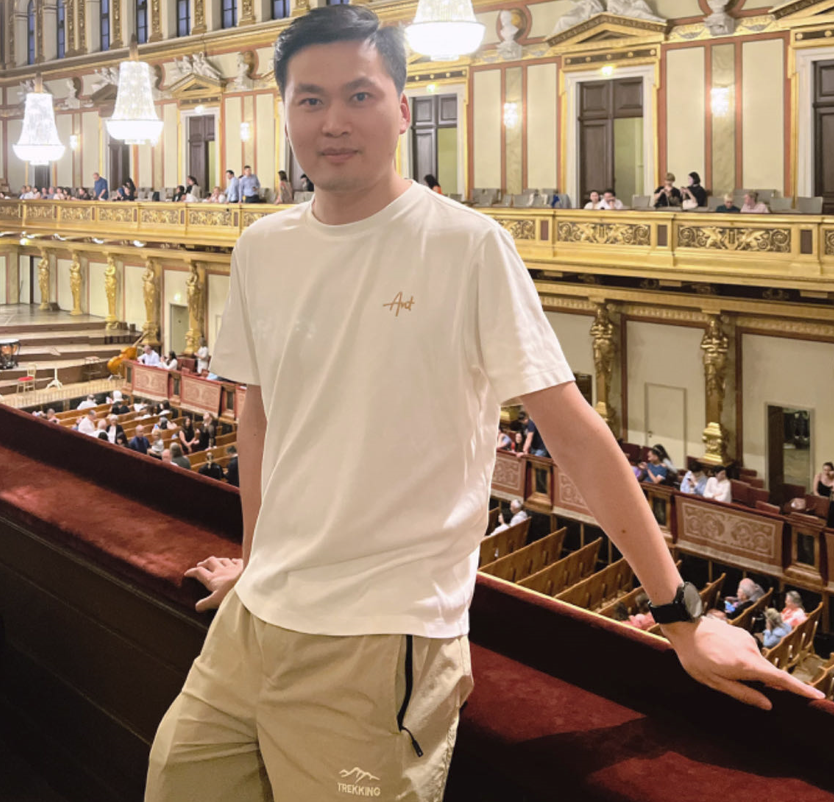
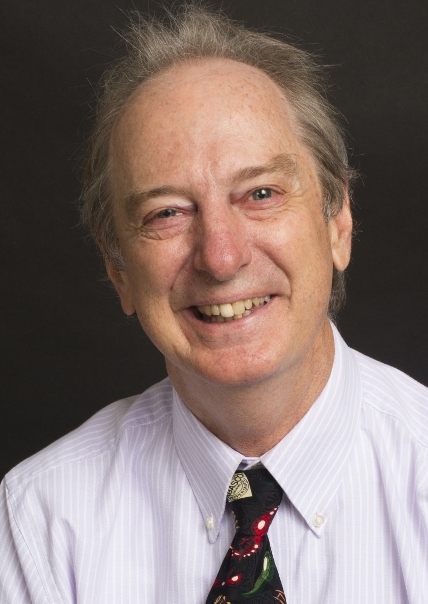
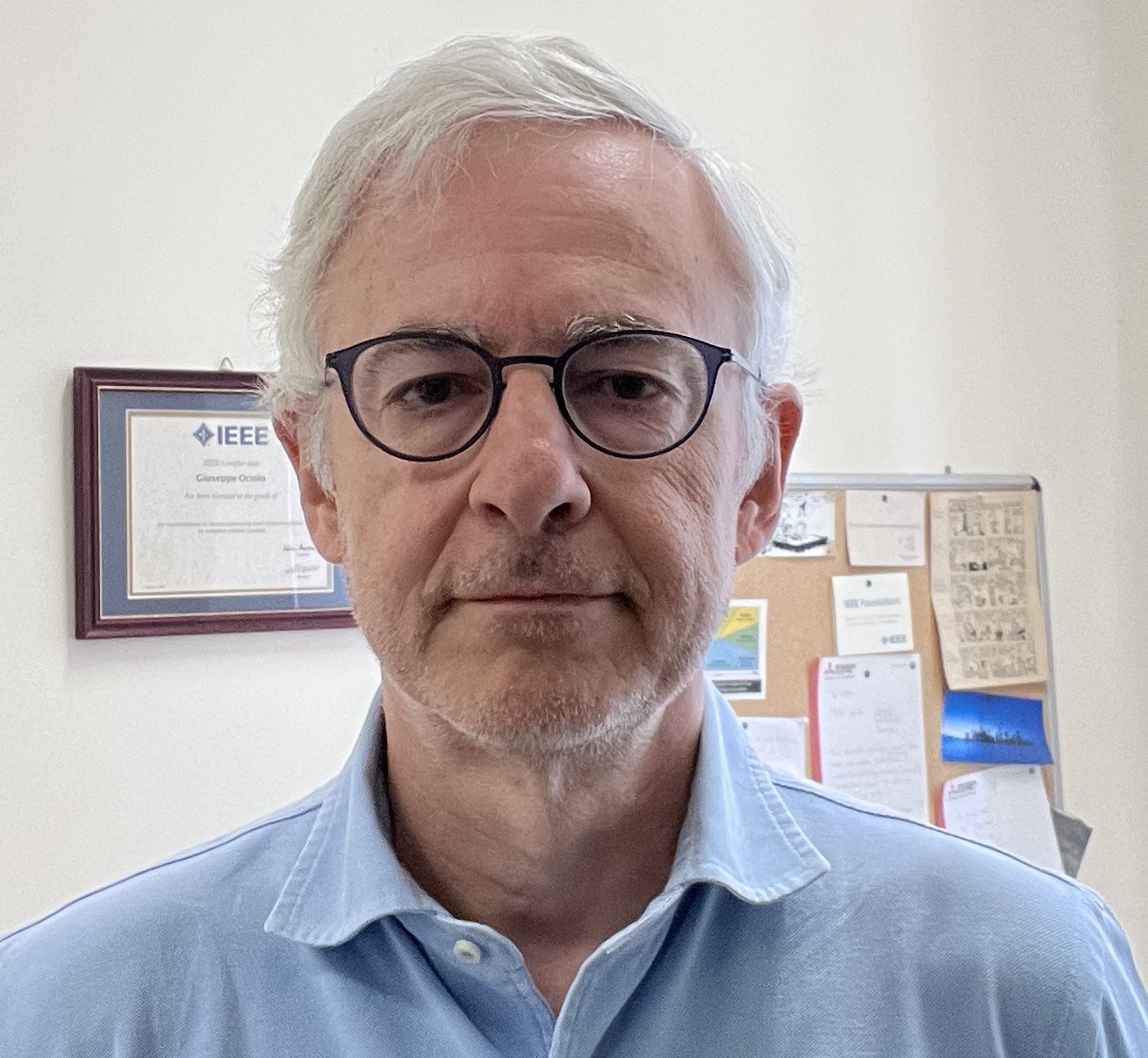
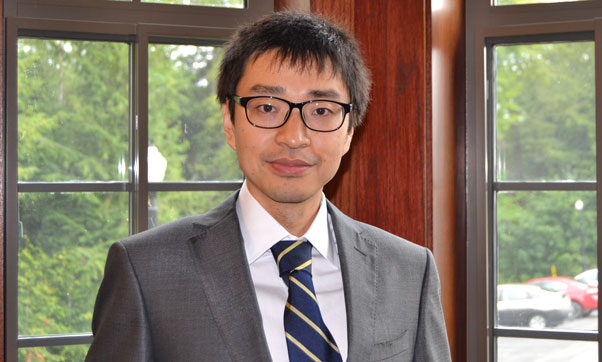
Hu Cao is a postdoctoral research associate at the Chair of Robotics, Artificial Intelligence and Real-Time Systems (Prof. Alois Knoll) at the Technical University of Munich (TUM) . Holding a Ph.D. from TUM, his research bridges autonomous driving , robotic grasping , medical image analysis , and dense prediction (classification, detection, segmentation). Education : Ph.D. from TUM Hu's work explores: Autonomous Driving : Perception under adverse conditions, multi-sensor fusion, and risk-based safety models Robotic Grasping : Vision-language integration for 6D pose estimation Medical Imaging : Transformer-based segmentation techniques (e.g., Swin-Unet) His recent publications include 15+ works at top venues like CVPR , ICCV , IEEE TPAMI , and IEEE TIV , with 6052+ Google Scholar citations . Notably, Swin-Unet ranks among the top 3 most cited ECCV papers in 5 years, and his work on event-based autonomous driving perception was featured in IEEE Xplore Innovation Spotlight . Editorial roles include: Associate Editor for Visual Intelligence and Frontiers in Neurorobotics Editorial Board member of Artificial Intelligence and Autonomous Systems (AIAS) Topic Editor for Frontiers in Robotics and AI and Frontiers in Neuroscience He has reviewed for 20+ top journals (e.g., Nature Computational Science , IEEE TRO ) and served on program committees for NeurIPS , CVPR , ICCV , and MICCAI .
Luis Sanchez Fernandez is a Full Professor at the Department of Telematics Engineering, Carlos III University of Madrid. His research focuses span Smart Cities, Semantic Web, and Distributed Systems. Contact information includes email luis.sanchez@uc3m.es and office location 4.1.F08 in Leganés. His research program integrates Blockchain Governance , Urban Mobility Analysis , and Complex Systems Modeling . Recent work examines approval-based voting mechanisms in decentralized networks and fractional transport equations for physical simulations. Publications demonstrate a strong emphasis on fair algorithm design for societal applications. Key article themes show convergence of Smart City Data Integration Multiwinner Election Algorithms Cellular Automaton Dynamics Semantic Annotation Frameworks As Deputy Director of Teaching Affairs, he leads curriculum innovation in Telematics Engineering. His educational background includes a Doctorate from Universidad de Salamanca, focusing on Wikipedia as a teaching resource in higher education.
Dr. Usman Hadi serves as an Assistant Professor in the School of Engineering within Ulster University's Faculty of Computing, Engineering and Built Environment at the Jordanstown campus. His academic trajectory includes a Ph.D. in Electronic Engineering from the University of Bologna (2020), followed by postdoctoral research at Aalborg University and industry experience as an External Research Engineer at Nokia Bell Labs in Denmark (2019-2021). His educational foundation comprises: PhD in Electronic Engineering, University of Bologna (2020) Master's in Digital Predistortion for Compensation of Nonlinearities in Radio over Fiber Links, University of Bologna Dr. Hadi's research spans cutting-edge domains in wireless communications and AI-driven networking solutions. His primary focus includes 5G/6G technologies, Time Sensitive Networks, Radio over Fiber systems, and machine learning applications in telecommunications. Recent work emphasizes AI-enhanced signal detection for MIMO systems, UAV-based communication frameworks, and IoT security architectures, with significant contributions to optical front-haul optimization and wireless sensor networks. Analysis of his publication record reveals a strategic emphasis on AI integration for next-generation wireless systems. Key trends include deep learning applications for MIMO detection in 6G networks, digital twin implementations for UAV fault detection, and secure IoT frameworks for drone communications. His work consistently bridges theoretical advancements with practical implementations in optical and wireless front-haul systems, particularly through the MADNI (Made in UU) drone platform. Notable recognitions include: Top 2% Cited Researcher designation for three consecutive years (2021-2023) Research and Impact Fund Award (2023) Dr. Hadi supervises two PhD students: Ms. Cara Rose (Department of Economy-funded, 2023-present) and Mr. M.Y. Daha (Vice Chancellor's Research Studentship, 2022-present). His active research portfolio includes drone-based climate resilience initiatives funded by the British Council (2025-2026) and IoT-driven cybersecurity frameworks supported by Innovate UK (2025), alongside participation in EPSRC-funded infrastructure projects. He leads the MADNI drone research platform, which integrates state-of-the-art 5G connectivity, object detection, and facial recognition capabilities. His laboratory maintains active collaborations with Nokia Bell Labs, University of Manchester, University of East Anglia, Manchester Metropolitan University, University of Texas, and Boise State University, focusing on next-generation communication technologies and sustainable development applications aligned with UN SDGs.
Thomas G. Thomas is an Associate Professor in the Department of Electrical and Computer Engineering at the University of South Alabama , where he contributes to both undergraduate and graduate education in electrical and computer engineering disciplines. Education: Ph.D. Electrical Engineering, University of Alabama Huntsville (1997) M.S. Electrical Engineering, University of Alabama Birmingham (1987) B.S. Electrical Engineering, University of South Alabama (1984) B.S. Chemistry, University of South Alabama (1977) Research Interests: Dr. Thomas's work spans robotics , smart grid systems , hyperspectral imaging , neural networks , and cybersecurity for industrial control systems . His research often integrates advanced machine learning techniques with practical engineering applications, particularly in autonomous systems and educational technology. Publication Trends: His recent publications (2004–2024) demonstrate a strong focus on robotics , machine learning , and engineering education . Notable contributions include autonomous navigation systems, cybersecurity in SCADA/PLC networks, and innovative educational programs to enhance student retention in engineering. Teaching: He instructs courses such as Virtual Instrumentation , Programmable Logic Controllers , and Introduction to Robotics , fostering hands-on learning in electrical and computer engineering.
Maurice Fallon is a Professor of Engineering Science at the University of Oxford and a Royal Society University Research Fellow, leading the Dynamic Robot Systems Group (Perception) at the Oxford Robotics Institute. His research focuses on robust probabilistic methods for localization and mapping in challenging environments through advanced sensor fusion. Education: Electronic Engineering, University College Dublin PhD in Acoustic Source Tracking, University of Cambridge Research Interests: Dr. Fallon specializes in probabilistic state estimation , legged robot navigation , and dynamic motion planning for autonomous systems operating in vision-denied or complex natural environments. His work emphasizes robustness through multi-sensor integration , with applications spanning disaster response, forestry, and industrial inspection. Key innovations include terrain-aware locomotion and long-term autonomy frameworks. Publication Trends: Recent work (2024-2025) demonstrates a strategic shift toward forest robotics and long-term industrial inspection , leveraging legged and aerial platforms. There is strong emphasis on vision foundation models for place recognition, scalable 3D reconstruction using neural radiance fields, and open-vocabulary scene understanding . The research consistently addresses real-world challenges like lighting variations, sensor dropout, and environmental dynamics. Scientific Awards: Royal Society University Research Fellowship 4x Best Paper Awards at ICRA Nominations at Intelligent Vehicles, AAAI, and Humanoids conferences Advising and Grants: Dr. Fallon has secured major funding as PI/Co-I for EU/UK projects including ORCA, RAIN, THING, MEMMO, and the DARPA SubT-winning CERBERUS team. Current initiatives include the Horizon Europe DigiForest project and UKAEA collaborations. He mentors PhD students and postdocs in robotics systems development, though specific advisees aren't listed in source materials. Labs and Teams: He directs the Dynamic Robot Systems Group, which achieved global recognition through DARPA Robotics Challenge participation and SubT Challenge victory. The team operates specialized facilities for legged robot testing and maintains partnerships with nuclear energy and forestry sectors for field deployment.
Saleh Hadi Mohammed is an Associate Professor at the Faculty of Computer Science , National Research University Higher School of Economics (HSE), where he has worked since 2015. With over 10 years of academic experience, his expertise spans software engineering, blockchain systems, and intelligent transport technologies. Candidate of Technical Sciences (2013) Engineer in 'Computers, Complexes, Systems and Networks' (2008) Professional training in Moodle-based distance learning Research interests include: Intelligent transport systems and location-based services Software/hardware navigation integration and blockchain applications Cloud services, mobile app development, and MLOps platforms His recent publications analyze MLOps scalability, blockchain donation tracking, and AI-driven navigation for visually impaired users. Notable collaborations involve Springer, IEEE, and CEUR Workshop Proceedings. Scientific awards : Gratitude from HSE Faculty of Computer Science (2024) As a thesis supervisor , he has guided 15+ students in projects ranging from fraud detection to mobile education apps. He also leads SmartMLOps , HSE’s AI service deployment platform (2024), and participated in the Administrative Personnel Reserve Program (2024-2025).
Giuseppe Oriolo is a Full Professor of Automatic Control and Robotics at the Department of Computer, Control and Management Engineering (DIAG) of Sapienza University of Rome, where he has been since 1994. He coordinates the DIAG Robotics Lab and has held teaching positions at the University of Siena, University of Cassino, and Roma Tre. Oriolo was a Visiting Scholar at the University of California, Santa Barbara, and serves on various editorial and program committees, including IEEE Transactions on Robotics and international conferences like ICRA and IROS. Education : Ph.D. in Systems Engineering (1992), Sapienza University of Rome His research focuses on robotics and control theory, particularly in robot control, motion planning, trajectory optimization, redundant robotic systems, control of underactuated systems, sensor-based localization, navigation for mobile robots, humanoid robots, and visual servoing. He has over 230 publications and contributes to advanced robotics frameworks. Recent publications highlight his work on Model Predictive Control (MPC) for humanoids and mobile robots, emphasizing robustness, singularity-free trajectories, and decentralized cooperation. His research addresses dynamic constraints, feasibility, and real-time adaptation in complex environments. Scientific Awards : 2017 IEEE Fellow, 2020 IEEE Robotics and Automation Magazine Best Paper Award, 2016 ANTS Best Paper Award, 2024 Human-Friendly Robotics Best Paper Award Oriolo's teaching includes Control Systems at Sapienza, with past roles in courses like Adaptive Systems, Nonholonomic Control, and Underactuated Robots. He has mentored numerous advisees through publications and lab activities. He leads the DIAG Robotics Lab, fostering innovation in humanoid robots, autonomous systems, and control theory.
Rizwan Bulbul is a researcher at the Institute of Geodesy , Graz University of Technology (TU Graz), Austria. His work bridges geodesy, geographic information systems (GIS), and computational modeling. Research Interests : Bulbul's research focuses on geospatial modeling, artificial intelligence integration, and sustainable urban development. Key areas include smart tourism simulations, energy transition policy analysis, and off-road robotic navigation using machine learning. His work also addresses forest fire prediction uncertainty, vertical photovoltaic potential, and cattle tracking in alpine environments. Publications : His research spans spatial optimization, 3D city modeling, and semantic routing. Recent projects involve leveraging AI for tourism simulations and energy policy evaluation, demonstrating interdisciplinary applications of geospatial technologies. Contact : Email: bulbul@tugraz.at Office: TU Graz, Steyrergasse 30/I, Room ST01122
He David Zhang is an Assistant Professor of Computer Science at Governors State University and a Postdoctoral Associate at Virginia Commonwealth University (VCU) Robotics Lab. His research focuses on computer vision, robotics, and assistive technologies for visually impaired individuals. Ph.D. in Electrical & Computer Engineering, University of Arkansas at Little Rock (2018) B.S. in Computer Science & Technology, Chinese University of Mining and Technology at Beijing (2009) Study Certificate in Computer Architecture, University of Chinese Academy of Sciences (2010) Dr. Zhang's research integrates vision-based algorithms with inertial sensors to create robust systems for indoor localization, 3D mapping, and human-robot interaction. Key projects include Smart Cane, CoRobotic Cane (CRC), Wearable Robotic Object Manipulation Aid (W-ROMA), and Quadrupedal Human-Assistive Robotic Platform (Q-HARP), which aim to enhance mobility for the visually impaired and elderly populations. His recent publications emphasize improving Visual-Inertial Odometry (VIO) accuracy through depth uncertainty modeling and hybrid perspective-n-point methods. He has contributed to benchmark datasets like VCU-RVI and explored SLAM applications in real-time assistive robotics. Awards include Best Conference Paper honors and competitive recognitions in IROS and 3MT competitions. Best Conference Paper Award, IEEE HSI 2019 2nd Place, IROS 2020 UZH-FPV VIO Competition System Engineering Award for Excellent Ph.D. Student, UA Little Rock (2018)
Alaa Sheta is a tenured Professor of Computer Science at Southern Connecticut State University , New Haven, CT, USA. With over 180 refereed publications, three authored books, and extensive funded research, he is a globally recognized authority in machine learning, evolutionary computation, image processing, and robotics. Education B.E. Electronics & Communication Engineering, Cairo University, 1988 M.Sc. Electronics & Communication Engineering, Cairo University, 1994 Ph.D. Computer Science, George Mason University, USA, 1997 Research Interests Prof. Sheta’s research integrates machine learning , deep learning , and evolutionary algorithms to solve complex real-world problems. Core themes include image and signal processing for medical and industrial applications, autonomous robotics for navigation and inspection, big-data analytics for environmental and financial forecasting, and software reliability modeling using computational intelligence. His work frequently leverages meta-heuristic optimization techniques such as genetic algorithms, particle swarm optimization, and hybrid neuro-fuzzy systems. Publication Trends From 2015-2021, Prof. Sheta’s publications reveal a clear pivot toward deep learning and healthcare informatics , with multiple studies on obstructive sleep-apnea diagnosis using ECG and depth-sensor data, brain-tumor detection in MR images, and mobile-health applications. Earlier work emphasizes industrial process modeling , power-system optimization , and software effort estimation , reflecting sustained contributions across both theoretical algorithmic advances and high-impact interdisciplinary applications. Scientific Awards & Honors Best Poster Award, SGAI International Conference on Artificial Intelligence, Cambridge, UK, 2011 Senior Member, IEEE Vice-President, Arab Computer Society (2011) Associate Editor, International Journal of Advanced Computer Science and Applications (IJACSA) Associate Editor, International Journal of Computational Complexity and Intelligent Algorithms (IJCCIA) Advising & Grants Prof. Sheta has successfully supervised more than 30 master’s and Ph.D. students in the United States, United Kingdom, Jordan, and Syria. His research has been funded by the U.S. National Science Foundation , as well as agencies in Egypt, Saudi Arabia, and Jordan. He has also consulted for the Egyptian Ministry of Communication & IT (2002-2004) and UNDP Smart Schools project (2003). Labs, Workshops & Leadership He is the founder and chair of the Advanced Computation for Engineering Applications (ACEA) workshop series, held five times across Egypt, Jordan, and Saudi Arabia. He served as Program Chair of the Science and Information Conference 2013 in London and has held academic leadership roles such as Associate Dean (2008-2009) and Assistant Dean for Planning & Development (2006-2008) at Al-Balqa Applied University, Jordan.
Victor Bolbot serves as a Postdoctoral Researcher in the Department of Energy and Mechanical Engineering at Aalto University, Finland, affiliated with the Marine and Arctic Technology research group. His work focuses on advancing safety, reliability, and cybersecurity frameworks for autonomous maritime systems through rigorous systems engineering approaches and data-driven methodologies. He maintains active collaborations with international researchers and institutions, evidenced by extensive co-authorship across high-impact publications. Dr. Bolbot's research centers on autonomous ships, marine systems safety, ship propulsion cybersecurity, and risk modeling. He employs systems-theoretic process analysis (STPA), Bayesian networks, and association rule mining to address critical challenges including maritime accident causation, cybersecurity vulnerabilities in dual-fuel engines, safety acceptance criteria for autonomous vessels, and socio-technical implications of maritime automation. His methodological innovations bridge theoretical safety engineering with practical applications in Arctic navigation, inland waterways, and regulatory compliance, emphasizing the integration of cyber-physical risk assessment. Analysis of his 2023-2025 publications reveals three dominant research trajectories: (1) Development of cyber-physical risk frameworks like STPA-Cyber for maritime cybersecurity; (2) Real-time Bayesian modeling for dynamic operations including remote pilotage and ice navigation; and (3) Socio-technical investigations into regulatory frameworks, educational needs, and workforce skill transformations for autonomous shipping. His work consistently addresses the interplay between technological innovation and safety assurance, with growing emphasis on cybersecurity as a critical maritime safety component. As an active member of Aalto University's Marine and Arctic Technology research group, Dr. Bolbot contributes to interdisciplinary projects tackling complex challenges in marine safety engineering, Arctic operations, and sustainable maritime technologies. The group's collaborative environment supports the development of safer, more efficient, and environmentally conscious maritime systems through experimental validation, computational modeling, and industry partnerships.
Wei-Chiu Ma is an Assistant Professor of Computer Science at Cornell University, where he leads research at the intersection of 3D/4D computer vision and robotics. His work focuses on building AI systems that can understand, reconstruct, and re-simulate our dynamic world to enable more robust autonomous systems and advance entertainment applications. Prior to joining Cornell, Dr. Ma was a Young Investigator/Postdoc at AI2 / University of Washington. He received his Ph.D. from MIT, working with Antonio Torralba and Raquel Urtasun. Before his Ph.D., he was a Senior Research Scientist at Uber ATG R&D and Waabi working on self-driving vehicles, and completed his M.S. in Robotics at Carnegie Mellon University under the advisement of Kris M. Kitani. Dr. Ma's research interests span several interconnected areas in computer vision and robotics: 3D/4D Computer Vision: Focused on scene reconstruction, modeling, and understanding from visual inputs Neural Radiance Fields (NeRF): Developing techniques for novel view synthesis and scene representation Robotics and Simulation: Creating realistic sensor simulation for autonomous systems Digital Twins: Building interactive, game-engine compatible virtual environments Self-Driving Technology: Working on scene flow estimation, sensor simulation, and vehicle localization His recent publications demonstrate a strong focus on pushing the boundaries of 3D scene understanding, with particular emphasis on extreme-view geometry, neural rendering techniques, and creating realistic simulations for autonomous systems. His work often bridges theoretical computer vision with practical applications in robotics and autonomous vehicles. Dr. Ma has received several notable recognitions including being selected as a Cyber-Physical Systems (CPS) rising star and a Siebel Scholar. He has also earned the Best Application Award for his work on TDTOS: T-Shirt Design and Try On System. As an educator and mentor, Dr. Ma is actively involved in guiding the next generation of researchers. He hosts pro bono office hours for students from underrepresented groups and is committed to fostering diversity in the field. He is currently building his research group at Cornell and plans to hire 1-2 graduate students during the 2024-25 cycle. Dr. Ma has organized several influential workshops including the "Synthetic Data for Computer Vision" workshop at CVPR 2025, the "Agent in Interaction, from Humans to Robots" workshop at CVPR 2025, and the "3D Modeling, Reconstruction, and Generation in the Wild" workshop at ECCV 2024, demonstrating his leadership in the computer vision community.
Dr. Gonca Altuger-Genc serves as Associate Professor in the Department of Mechanical Engineering Technology within Farmingdale State College's School of Engineering Technology. Holding a PhD in Mechanical Engineering from Stevens Institute of Technology, she specializes in integrating artificial intelligence and simulation technologies into engineering education curricula while maintaining active roles in program coordination and curriculum development. Education Background: B.S. in Mechanical Engineering, Eskisehir Osmangazi University (2002) M.E. in Mechanical Engineering, Stevens Institute of Technology (2005) Ph.D. in Mechanical Engineering, Stevens Institute of Technology (2012) Design and Production Management Certificate, Stevens Institute of Technology (2007) Fundamentals of Supply Chain Management Certificate, Supply Chain Online (2012) Teaching and Learning Certificate for New Faculty, SUNY Center for Professional Development (2018) Brightspace Fundamentals Training Certificate, SUNY Center for Professional Development (2022) Her research pioneers the incorporation of AI in engineering assignments, development of machine learning systems for educational platforms, and simulation-aided online teaching practices. Current work focuses on creating discrete event simulation models for manufacturing optimization and maintenance scheduling, significantly enhancing student engagement through technology-driven pedagogical innovations that bridge theoretical concepts with practical applications in engineering technology education. Publication trends reveal a strategic evolution from foundational work in simulation-based teaching (2015-2018) toward cutting-edge integration of AI tools like ChatGPT in engineering education (2023-2024). Her research consistently addresses critical gaps in engineering pedagogy through systematic literature reviews, curriculum development frameworks, and practical implementation studies presented at premier conferences including ASEE and ASME. Scientific Recognition: First In the World - Research Aligned Mentorship (RAM) Program Academic Fellowship Award (2016) Farmingdale College Foundation Award for Excellence in Teaching (2018) As former Graduate Program Coordinator for the MS Technology Management program, Dr. Altuger-Genc has shaped curriculum development and assessment frameworks while mentoring undergraduate research projects. Her RAM Fellowship supported innovative mentorship approaches, and her teaching excellence award recognizes transformative contributions to engineering education through applied learning methodologies and technology integration. She collaborates extensively with colleagues on interdisciplinary research initiatives spanning engineering education and manufacturing systems.
Daniele Leonardis serves as Associate Professor of Applied Mechanics at the Institute of Mechanical Intelligence (IIM) of the Sant'Anna School of Advanced Studies in Pisa since October 2025. His research centers on wearable haptic interfaces and hand exoskeletons for clinical neurorehabilitation, virtual reality, and teleoperation applications. His primary research domains include: Development of miniaturized actuators for high-fidelity haptic rendering in wearable devices Clinical neurorehabilitation using serious games for children with Cerebral Palsy Integration of tactile feedback in teleoperation systems for complex manipulation tasks Soft exoskeletal devices for movement assistance in spinal/neurological patients Industrial robotics for railway infrastructure inspection Leonardis leads significant research initiatives: Coordinator and scientific director of the completed TELOS project (2024) for VR-based cerebral palsy rehabilitation Scientific director for SSSA in the European SUN project on augmented reality and haptic feedback Director of the SmartNest third-party research project Collaborator in TATTO, LEARN, and AVATAR projects Supervisor for RFI's mobile railway inspection system design His recent publications (2024-2025) demonstrate concentrated advancements in teleoperation interfaces, soft exoskeleton validation, and novel actuation methods for tactile feedback, with strong clinical and industrial validation components. He actively disseminates research through editorial roles in leading robotics journals and public demonstrations at international conferences. As founding partner of Next-Generation-Robotics spin-off, Leonardis bridges academic research and commercial applications in railway inspection robotics, reflecting his commitment to translational impact.
Manuel Berger is a Lecturer at the MCI Management Center Innsbruck, specializing in Fluid Dynamics and Medical Engineering. He holds a PhD in Image Guided Diagnosis and Therapy (IGDT) from the Medical University of Innsbruck (2021) and advanced degrees in Mechatronics/Mechanical Engineering (M.Sc., 2014) and Mechatronics (B.Sc., 2011). His academic journey includes roles as a scientific staff member (2014–2024) and dissertant at MCI. He has taught courses such as Advanced Computational Modeling, Medical Image Processing, and Fluid Dynamics. His research focuses on fluid dynamics applications in medical technologies, including nasal airflow simulations, hydrocyclone optimization, and biomedical device development. He has pioneered tools like a sensorized guide wire for cardiovascular surgery and CFD-based pre-surgery planning for nasal interventions. His work also addresses environmental challenges, such as biogas production from waste and microplastic separation. Berger has received awards including the MCI Teaching Award (2024) and the Wilhelm-Auerswald-Preis (2022 finalist). He actively supervises bachelor’s and master’s theses on topics ranging from CFD applications to renewable energy systems. His research group collaborates on projects like plasma actuation studies, hydrocyclone scale-up, and AI-driven aerodynamic analysis. Additional expertise includes fluid mechanics in hydropower, laser anemometry validation, and interdisciplinary education initiatives. He is currently pursuing Chinese language training and has conducted research stays in Taiwan via an OeAD scholarship (2022).