Andrew Markham is a Professor of Computer Science at the University of Oxford , affiliated with Kellogg College . He leads a research group focusing on Cyber Physical Systems (CPS) , specializing in sensors, signal processing, and machine learning to enable machines to better perceive the physical world. His work emphasizes cross-disciplinary collaboration, notably in wildlife tracking and indoor positioning systems. He has held roles as a Postdoctoral Fellow (2008-2012), Associate Professor (2013), and Full Professor (2021). Education : PhD in Electrical Engineering (University of Cape Town, 2008), BSc (Hons) in Electrical Engineering (2004). Research Interests : Tracking and localization in GPS-denied environments (e.g., underground, indoors), magneto-inductive systems, physics-informed machine learning, and data-driven approaches for noisy sensor data. His projects include wildlife monitoring via wireless sensor networks and mmWave radar for human motion capture. Key Projects : CARACAL acoustic monitoring system, mmPoint dense human tracking, and RandLA-Net for large-scale point cloud segmentation. His work spans robotics, environmental sensing, and biomedical applications. Advising & Grants : Supervises over 30 students and collaborates with industrial partners. Research teams include Cyber Physical Systems, Autonomous Ubiquitous Sensing, and Wildlife Monitoring initiatives. Labs/Teams : Leads the CPS research group, focusing on sensor networks, inertial navigation, and multimodal fusion systems. Collaborates with zoology and earth science disciplines on applied projects.
Mark Bocko is a Distinguished Professor of Electrical and Computer Engineering at the University of Rochester, affiliated with the Hajim School of Engineering & Applied Sciences. He holds roles as Director of the Center for Emerging and Innovative Sciences (CEIS) and Director of Audio & Music Engineering. He earned his PhD in Physics from the University of Rochester in 1984, focusing on gravitational wave detectors. His research spans audio signal processing, sensors, superconductivity, and quantum computing. Notable contributions include flat-panel loudspeaker development, non-contact ECG sensors, and quantum coherence studies in Josephson junctions. Research interests include audio and acoustic signal processing, computer audition, and sensor technologies. His work integrates interdisciplinary approaches, combining electrical engineering, physics, and computer science. Awards include the 2012 Goergen Award for Teaching and Mercer Brugler Distinguished Teaching Professor (2008–2011). Recent publications address modal crossover networks for loudspeakers, vibrational touch sensing, and room impulse response modeling. He has advised PhD students on topics like spatial audio rendering and musical vibrato analysis. His labs focus on advancing audio engineering and smart sensor systems through collaborative industry partnerships.
Jesper Rindom Jensen is an Associate Professor in the Department of Electronic Systems at Aalborg University, Denmark, under the Technical Faculty of IT and Design. He is the Head of the Audio Analysis Lab, a leading research group in audio signal processing, since 2023. His work bridges theoretical signal processing and practical applications in artificial intelligence and audio systems. Full Name: Jesper Rindom Jensen Institution: Aalborg University School: The Technical Faculty of IT and Design Department: Department of Electronic Systems Research Lab: Audio Analysis Lab Email: jrj@es.aau.dk Office: Fredrik Bajers Vej 7B, B5-206, 9220 Aalborg Øst, Denmark Education: M.Sc. in Electronic Systems, Aalborg University (cum laude, 2009) Ph.D. in Signal Processing, Aalborg University (2012) Research Interests: Jesper Rindom Jensen's research centers on audio signal processing, with a strong emphasis on artificial intelligence, speech enhancement, noise reduction, beamforming, and multichannel systems. His work applies to diverse domains including robot and drone audition, spatial audio, and active noise control. He develops novel filtering techniques, including variable span linear filters and harmonic beamformers, to improve speech quality and intelligibility in noisy and reverberant environments. Publication Trends: His recent publications (2023–2025) show a strong trend toward integrating deep learning with classical signal processing, particularly in direction-of-arrival estimation, underwater acoustics, and robust multichannel systems. There is a clear focus on real-world applications, including sound zone control, active noise control, and limited-data scenarios using knowledge distillation. His work consistently emphasizes robustness, efficiency, and practical deployment. Scientific Awards and Recognition: AAU Talent for emerging research leaders Recipient of a competitive postdoc grant from the Danish Independent Research Council Advising and Grants: Jesper has supervised multiple PhD and master’s students, including Nørholm, Karimian-Azari, Zhang, and Wang. He has led significant research projects such as 'Sound Processing for Robots and Drones' (2018–2020) and participated in others related to joint audio-visual tracking and speech enhancement. His research has been supported by national funding bodies, reflecting its innovation and impact. Labs and Teams: He is a founding and core member of the Audio Analysis Lab at Aalborg University, which focuses on cutting-edge audio signal processing and AI-driven solutions. The lab fosters interdisciplinary collaboration and has produced numerous publications, datasets, and real-world applications. Jensen’s leadership since 2023 underscores his pivotal role in shaping the lab’s research direction.
Pierluigi Salvo Rossi is a Professor at the Department of Electronic Systems , Norwegian University of Science and Technology ( NTNU ), with additional roles as Deputy Head of Department (since 2021) and Deputy Manager at the Center for Green Shift in the Built Environment (since 2022). He also serves as a part-time Research Scientist at SINTEF Energy's Gas Technology department. Education: Ph.D. in Computer Engineering, University of Naples “Federico II”, Italy (2005) Dr.Eng. (cum laude) in Telecommunications Engineering, University of Naples “Federico II”, Italy (2002) Research Interests span Wireless Communications , Digital Twins , Machine Learning , and Statistical Signal Processing , focusing on applications like Industrial IoT , Fault Detection , and Energy Systems . His recent Publications highlight trends in Federated Learning , Graph Signal Processing , and Multi-Sensor Anomaly Detection across domains from Natural Gas Pipelines to Subsea Leakages . Scientific Awards include: Exemplary Senior Editor, IEEE Communications Letters (2018) Department Ambassador, NTNU (2016) IEEE Senior Member (since 2011) Professional Roles encompass editorial leadership (e.g., IEEE Sensors Journal) and conference organization (e.g., General Chair for IEEE Sensor Array and Multichannel Signal Processing Workshop, 2022). He leads major funded research projects like PREFERENCE (RCN, 2023-2027) and AUTOSHIP (RCN, 2020-2028).
Archontis Politis is an Assistant Professor in the Department of Computing Sciences at Tampere University's Faculty of Information Technology and Communication Sciences. His research focuses on signal processing, machine learning, and their applications in audio engineering, particularly in spatial audio, sound source separation, and parametric audio coding. He explores topics such as Ambisonics, reverberation control, and neural network-based approaches for audio processing. His work emphasizes spatial audio reproduction, including six degrees of freedom (6DOF) rendering, microphone array processing, and efficient compression techniques for higher-order Ambisonics. He also investigates sound event localization and detection, leveraging machine learning for real-world acoustic scenarios. His contributions span theoretical advancements in spherical harmonics and practical implementations of spatial audio systems. Recent research highlights include developing datasets for music source separation, improving synthetic-to-real generalization in classical music, and creating neural encoding models for irregular microphone arrays. His methodologies often integrate deep learning with traditional signal processing to address challenges in multi-speaker environments and dynamic acoustic scenes.
Mathias FINK is a Professor at ESPCI Paris on the Georges Charpak chair. His research focuses on fundamental wave physics in complex media with major applications in medical imaging, telecommunications, and geophysics. He pioneered time-reversal mirrors for wave focusing and co-founded 6 technology companies. Key Institutions: ESPCI Paris, Collège de France Research Themes: Wave physics, time-reversal techniques, matrix imaging, metasurface design His work spans multi-echo wave systems , ultrasonic therapeutic devices , and adaptive electromagnetic communication systems . Recent publications emphasize 3D matrix imaging in biological tissues and space-time interface dynamics . Scientific recognition includes: First academic elected at Collège de France (2008) Over 400 peer-reviewed publications 70+ patents and 6 start-ups Collaborations extend to Institut des Hautes Études Scientifiques , Langevin Institute , and Hong Kong University of Science and Technology . His team's volcanic imaging work with seismic noise has revolutionized subterranean mapping.
Konrad Kowalczyk is an Associate Professor at AGH University of Science and Technology in Krakow, Poland, where he heads the Signal Processing Group within the Faculty of Computer Science, Electronics and Telecommunications. With extensive international experience from institutions including Queen's University Belfast, Stanford University, and Fraunhofer Institute, he has established himself as a leading researcher in audio and speech signal processing. His academic journey includes B.Eng. and M.Sc. degrees from AGH University (2005), a Ph.D. from Queen's University Belfast (2009), and a Habilitation in ICT from AGH University (2020). B.Eng. and M.Sc. in Electronics and Telecommunications, AGH University of Krakow (2005) Ph.D. in Electronics, Queen's University Belfast, UK (2009) Habilitation (D.Sc.) in Information and Communication Technology, AGH University of Krakow (2020) Kowalczyk's research spans multiple cutting-edge areas in audio processing, with particular focus on speech and audio signal processing enhanced by machine learning techniques. His work integrates deep neural networks with traditional signal processing methods to address challenges in array signal processing , speech enhancement , and speaker recognition . The research group he leads explores innovative applications in distributed signal processing for IoT , acoustic event detection , and spatial audio rendering , bridging theoretical advances with practical implementations. His recent publications demonstrate a clear trend toward integrating deep learning with traditional signal processing techniques, particularly in speaker diarization, source separation, and robust speech recognition. The research increasingly focuses on real-world applications requiring reverberation-robust processing , distributed microphone array systems , and end-to-end neural architectures that can operate in challenging acoustic environments. There's a noticeable shift toward more complex, integrated systems that combine multiple signal processing tasks. Stanislaw Staszic Medal for best graduate of AGH (2005) IEEE Best Student Paper Contest finalist (2007) AES Student Technical Paper Award winner (2008) Best Student Paper Award at IWAENC conference (2014) Best Paper Awards at IEEE SPA conferences (2016, 2019) Polish Ministry of Science Scholarship for Distinguished Young Scientists (2016-2019) Prime Minister Award for outstanding scientific achievements (2020) As Principal Investigator, Kowalczyk leads multiple significant research projects including "Acoustic Intelligence" (2024-2028) funded by National Science Center, and "Deep extraction for robust speech recognition" (2023-2028). He has successfully secured funding from prestigious programs including First TEAM from the Foundation for Polish Science, and EU FP7 projects. His research group actively supervises Ph.D., M.Sc., and B.Eng. students, with strong connections to international institutions including Aalto University and IEEE Signal Processing Society. The research output includes numerous journal publications, conference papers, patents, and software implementations that have advanced the field of audio signal processing. Kowalczyk leads the Signal Processing Group at AGH University, which focuses on developing innovative solutions for speech and audio processing challenges. The group maintains strong collaborations with international institutions including Aalto University (Finland), and participates in European research initiatives. Their work spans theoretical development through practical implementation, with applications ranging from medical voice assistants to distributed acoustic sensor networks.
Shoji Makino is a Professor at Waseda University's Graduate School of Information, Production and Systems. He has held academic and research positions at institutions such as the University of Tsukuba and NTT Communication Science Laboratories. His work spans acoustic signal processing, blind source separation, and adaptive filtering. Education: Ph.D., Tohoku University (1993.03) Mechanical Engineering, Tohoku University Graduate School of Engineering (1979.04–1981.03) Engineering, Tohoku University Faculty of Engineering (1975.04–1979.03) Research Interests: His research focuses on acoustic signal processing for speech and audio, including blind source separation (BSS) , beamforming , and adaptive filtering . He pioneered methods for solving permutation alignment in frequency-domain BSS and developed geometrically constrained ICA techniques. Scientific Awards: Hoko Award (2018.10, Hattori Hokokai Foundation) Outstanding Contribution Award of the Institute of Electronics, Information, and Communication Engineers (2018.06) IEEE Signal Processing Society Best Paper Award (2014.01) IEEE Fellow (2004.01) IEICE Achievement Award (1997.05) Committee Memberships: He has served as Chair of the IEEE CAS Society's Blind Signal Processing TC, General Chair of IEEE WASPAA2007, and Associate Editor of IEEE Trans. SAP. He is actively involved in EURASIP, APSIPA, and the Acoustical Society of Japan.
Dr. Shunqiao Sun is an Assistant Professor in the Department of Electrical and Computer Engineering at The University of Alabama, College of Engineering. He joined the faculty in August 2019 as a tenure-track professor after working at Aptiv’s radar core team in Malibu, California. His research focuses on advanced signal processing, machine learning, and optimization for automotive and MIMO radar systems in autonomous vehicles. Ph.D. : Electrical and Computer Engineering, Rutgers University, 2016 M.S. : Electrical Engineering, Fudan University, 2011 B.S. : Electrical Engineering, Southern Yangtze University, 2004 Dr. Sun's research lies at the intersection of statistical and sparse signal processing , mathematical optimization , and machine learning , with applications in automotive radar , MIMO radar , and autonomous driving . His work emphasizes sparsity-oriented frameworks, AI-powered radar perception, and high-resolution 4D sensing. He leads a dynamic research group focused on next-generation radar technologies for intelligent transportation systems. His recent publications demonstrate a strong trend in deep learning for radar signal recovery , collaborative radar imaging , direction-of-arrival estimation with sparse arrays , and integrated sensing and communication . Several of his papers are among the most downloaded and cited in IEEE journals, including top articles in IEEE Signal Processing Magazine and IEEE Journal of Selected Topics in Signal Processing. Scientific Awards and Honors: NSF CAREER Award (2024) NSF CRII Award (2022) IEEE AESS Robert T. Hill Best Dissertation Award (2016) Best Student Paper Award at IEEE SAM Workshop (2020) Rutgers ECE Academic Achievement Award (2015–2016) University of Alabama Hewson Engineering Faculty Fellow (2025) Dr. Sun is actively involved in academic service and leadership. He is an Associate Editor for IEEE Signal Processing Letters and IEEE Open Journal of Signal Processing . He serves as Vice Chair of the IEEE Signal Processing Society’s Autonomous Systems Initiative and is an elected member of the IEEE Sensor Array and Multichannel (SAM) Technical Committee and the Integrated Sensing and Communication (ISAC) Technical Working Group. He has co-organized numerous workshops and special sessions at ICASSP, EUSIPCO, and IEEE Radar Conference. His lab has secured significant research funding from the National Science Foundation , NXP Semiconductors , MathWorks , and NOAA . He mentors multiple Ph.D. students, several of whom have interned at leading industry labs such as NXP and GM Cruise. He has co-organized the Workshop on Signal Processing for Autonomous Systems (SPAS) at ICASSP and EUSIPCO and delivered invited seminars at institutions including TU Delft, UC Davis, and Lehigh University.
Ralph Etienne-Cummings is the Julian S. Smith Professor of Electrical and Computer Engineering at Johns Hopkins University (JHU), where he also serves as Vice Provost for Faculty Affairs. He holds secondary appointments in Computer Science and is affiliated with JHU's Applied Physics Lab. His work spans three decades, pioneering advancements in neuromorphic engineering, neural prosthetics, and biomorphic robotics. Etienne-Cummings leads the Computational Sensory Motor Systems Laboratory and has developed systems for closed-loop neural interfaces, prosthetics, and biomedical sensors. Education: BSc in Physics (1988), Lincoln University MSEE (1990) and PhD (1994) in Electrical Engineering, University of Pennsylvania Research Interests: His work focuses on neuromorphic systems, bio-inspired algorithms, and neural prosthetics. Key areas include spinal cord stimulation for mobility restoration, wearable health monitoring, and ultrasonic imaging for infertility treatment. He has contributed to silicon Central Pattern Generators (CPGs) for bipedal robotics and developed the first large-scale neural computer using VLSI chips. His lab explores organoid intelligence and biohybrid systems, blending neuroscience with engineering. Impact & Recognition: Named Fellow of AIMBE (2021) and IEEE (2012) Recipient of JHU Discovery Awards (2018–2019) and NSF CAREER Award (1996) Developed the 'Microbead'—a 0.009mm³ wireless neural stimulator Industry & Outreach: Served as founding director of JHU's Institute of Neuromorphic Engineering and advised firms like Panasonic and Avago. Testified in federal court on intellectual property disputes. Recognized as a 'ScienceMaker' in the HistoryMakers Archive for contributions to African American STEM leadership. Labs & Collaborations: Directs the Computational Sensory Motor Systems Lab. Collaborates with DARPA on prosthetics and the NIH on bioelectronic medicine. His work bridges academia and industry, emphasizing practical applications of neural engineering.
Dr. Prasanga Samarasinghe is an Associate Professor at the Australian National University (ANU) within the College of Systems & Society. Her research focuses on spatial audio, acoustic signal processing, and drone audition. She holds a B.E. in Electrical and Electronic Engineering from the University of Peradeniya (2010) and a PhD in Signal Processing from ANU (2015). Key professional achievements include a 2022 Fulbright Fellowship at Yale University and the 2023 ARC DECRA Fellowship. She has secured significant funding through ARC Linkage, Discovery grants, and industry partnerships with Sony, Dolby, and META. Her industry experience includes roles at Dolby Laboratories and collaborations with defense-related entities like the Australian Signals Directorate. Research Groups: Joint supervisor of ANU Audio and Acoustic Signal Processing Group Professional Roles: Member of IEEE Signal Processing Society's Audio & Acoustic Signal Processing TC (2021–2023), former Chair of IEEE ACT Section's COMMS/SP Chapter (2018–2020) Her work bridges theoretical advancements in spatial audio with practical applications in noise cancellation, drone audition, and virtual acoustics. She actively supervises PhD and Honours students in these areas. Awards: Fulbright Fellowship (2022), ARC DECRA (2023) Industry Collaborations: Sony-Japan, Dolby (Sydney/USA), META (USA), Australian Defence Portfolio
Philip Jackson is a Professor in Machine Audition at the University of Surrey's Centre for Vision, Speech and Signal Processing (CVSSP) within the School of Computer Science and Electronic Engineering. His research focuses on audio-visual machine learning, spatial audio technologies, object-based media production, and responsible AI applications. He has over 200 publications and an h-index of 30, contributing to projects like Nephthys, BALTHASAR, and SAVEE. He served as an associate editor for Computer Speech and Language and reviewer for major journals like IEEE/ACM Transactions on Audio, Speech and Language Processing. Key research interests include sound localization, audio-visual tracking, reverberation modeling, and ethical implications of AI in media. His work spans datasets such as Tragic Talkers, SurrRoom, and ForecasterFlexOBM, advancing immersive audio-visual systems and personalized media experiences. Notable projects include spatial audio reproduction for VR, parametric room acoustics, and citizen council research on algorithmic transparency. He has advised over 20 PhD/Master’s students and collaborates with industry on applications like the Catalan Pavilion's Venice Biennale installation. His grants include UK postdoctoral fellowships and leadership in EU-funded initiatives like UDRC2 and QESTRAL.
Simon Laurent is a Lecturer at Le Mans University and a researcher at the Laboratory of Acoustics (LAUM) since 1994. His work bridges signal processing with acoustics and mechanical applications, focusing on innovative solutions for audio systems, biomedical diagnostics, and environmental monitoring. Research Focus: Non-linear systems (electrodynamic loudspeakers), biomedical signals (snoring), sensor arrays (fractional sphere antennae), and impact signal analysis (water droplets on complex liquids) Recent Publications highlight applications in precision livestock farming, adaptive audio systems, and acoustic diagnostics. Key trends span multichannel signal processing , bioacoustic monitoring , and non-linear acoustic modeling . Patents include improved microphone array designs for spatial sound capture. Collaborative work on droplet impact acoustics and mobile sound zones demonstrates interdisciplinary applications.
Dr. Alexander Bertrand is a Professor at the Faculty of Engineering Sciences , KU Leuven, heading the Dynamic Systems, Signal Processing and Data Analysis (STADIUS) division. He leads the Department of Electrical Engineering (ESAT) and contributes to Leuven.AI institute, with expertise spanning wireless sensor networks, brain-computer interfaces (BCI), and biomedical signal processing. Research Focus : Wireless acoustic/EEG sensor networks, distributed signal enhancement, adaptive filtering, neural decoding of auditory/visual attention, and AI-driven time series analysis. Key Projects : EEG-Linx platform for modular brain recordings (2025-2027) Calibration-free BCI systems (2025-2029) AI quality assessment for time series data (2024-2028) Wireless EEG patches for hearing technology (2024) Publications (2023-2025) demonstrate leadership in distributed signal processing , auditory attention BCI , and scalable sensor architectures , with applications in education, healthcare, and wearable tech. Teaching includes courses on digital signal processing, biomedical data analysis, and medical technology design.
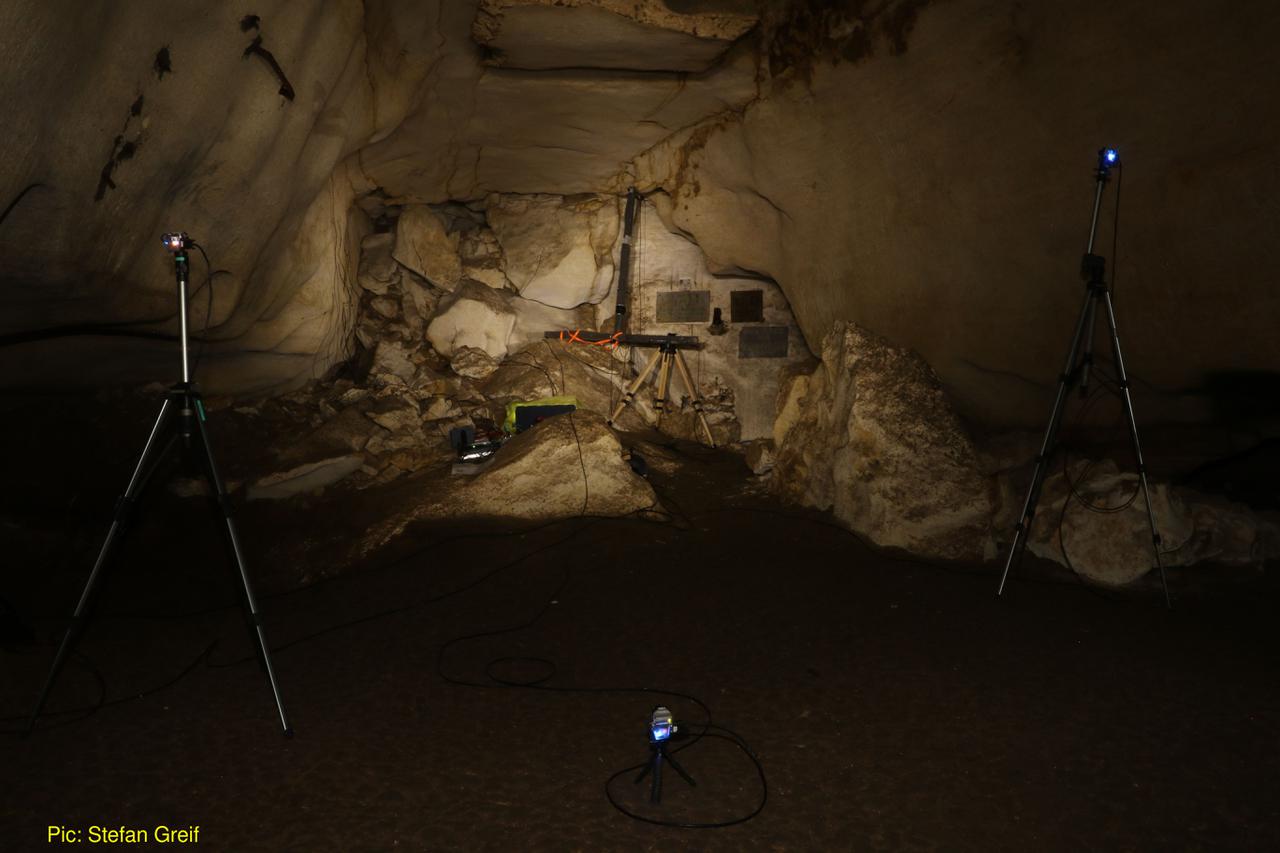
Dr. Thejasvi Beleyur is a Group Leader of the Active Sensing Collectives Lab at the Centre for the Advanced Study of Collective Behaviour, University of Konstanz, and holds an affiliated position at the Max Planck Institute of Animal Behavior. She also serves as IMPRS Faculty, contributing to interdisciplinary research at the intersection of animal behavior, sensory biology, and collective systems. Current: Group Leader, Active Sensing Collectives Lab (2025-present) Previous: Postdoc at Centre for the Advanced Study of Collective Behaviour (2021-2025) PhD: Max Planck Institute for Ornithology (2015-2021) Education: BS-MS in Biological Sciences, IISER-TVM (2008-2013) Dr. Beleyur's research program investigates how active-sensing agents like echolocating bats navigate complex sensory environments when operating in groups. Her work combines field observations, computational modeling, and swarm robotics to understand the sensorimotor strategies animals employ in information-limited settings. She has pioneered the development of the Ushichka dataset—a multichannel audio-video system for recording echolocating bats in natural habitats—which provides unprecedented insights into how bats modify flight and echolocation behaviors as group sizes change. Her publication record reveals a consistent trajectory examining sensory challenges in collective animal systems, with emphasis on echolocating bats. The research spans experimental field work, computational modeling, and methodological innovations in acoustic and video tracking. Recent work has expanded into developing computational tools like the beamshapes Python package for sound source modeling and exploring robot platforms to simulate bat collective behavior. Carl-Zeiss Nexus grant for inter-disciplinary research (2025) DFG Walter Benjamin postdoc grant (2021-2023) Early Career Researcher Award at International Bioacoustics Congress Google Cloud Platform Research Credits award ($1000) DAAD-GSSP Stipend for doctoral studies (2015-2020) Dr. Beleyur actively mentors students in her lab, currently supervising PhD student Frithjof and Master's student Aditya, following the completion of Gabriele's Master's thesis on the active-sensing Ro-BAT platform. Her research program is supported by competitive grants including the Carl-Zeiss Nexus grant and previously the DFG Walter Benjamin fellowship, which funded her work on 'The How and What of Active Sensing Collectives.' The Active Sensing Collectives Lab brings together an interdisciplinary team working at the interface of sensory biology, robotics, and collective behavior. The lab develops novel computational methods for analyzing complex datasets from multi-sensor field recordings, with emphasis on creating tools for long-term community use. Current projects include characterizing echolocating groups in the field and studying sensorimotor strategies using computational modeling.