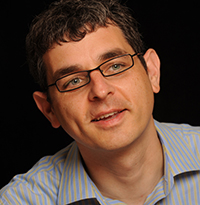
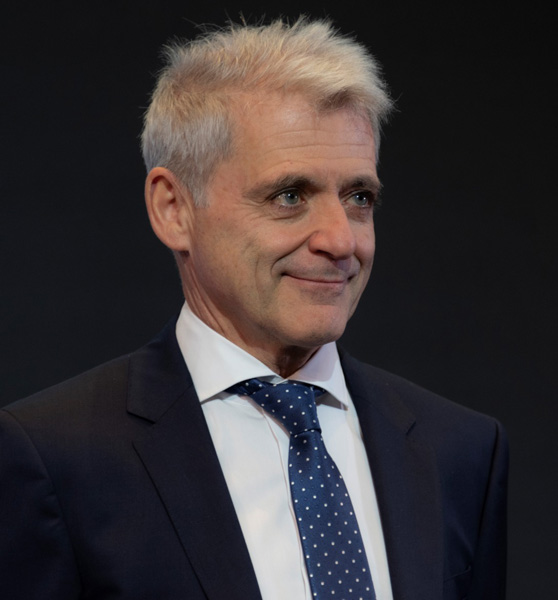
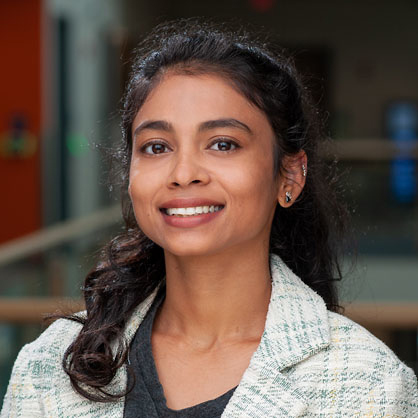
Thomas Heldt is Associate Professor of Electrical and Biomedical Engineering in the Department of Electrical Engineering and Computer Science at MIT, and a Principal Investigator at MIT's Research Laboratory of Electronics. He leads the Integrative Neuromonitoring and Critical Care Informatics Group and serves as Associate Director of the Institute for Medical Engineering and Science. Research focuses on: Noninvasive intracranial pressure monitoring Computational models of cerebrovascular dynamics Sepsis detection algorithms Wearable physiological monitoring Clinical decision support systems Recent publications (2022-2024) demonstrate advances in hemodynamic modeling, diagnostic algorithms for critical care, and AI applications for physiological monitoring. Key innovations include open cranium models for intracranial hypertension studies, deep learning frameworks for fatigue assessment, and mobile-based neurocognitive tracking. Professor Heldt collaborates with Boston Children's Hospital, Beth Israel Deaconess Medical Center, and Boston Medical Center to translate research into clinical practice. His work has been recognized through the W.M. Keck Career Development Professorship and IEEE EMBS Distinguished Lectureship.
Professor Sandra Bucci is a NIHR Research Professor and Clinical Professor of Psychology at The University of Manchester , UK. She holds a Honorary Consultant Clinical Psychologist position at the Greater Manchester Mental Health NHS Foundation Trust and co-directs the Complex Trauma and Resilience Research Unit there. She is also Editor-in-Chief of the Psychology and Psychotherapy: Theory, Research and Practice journal, published by the British Psychological Society . Doctor of Clinical Psychology, University of Newcastle, Australia (2006) Bachelor of Science (Psychology), University of Wollongong, Australia (1998) Bachelor of Science (Exercise Science), University of Wollongong, Australia (1998) Her research focuses on digital care pathways and remote monitoring technologies to enhance detection and treatment of severe mental health issues . She investigates psychological and social mechanisms in psychosis, schizophrenia, bipolar disorder, and trauma. Her work aligns with the UN Sustainable Development Goals , particularly in education and health . Recent publications highlight her expertise in digital mental health and implementation challenges across diverse populations (youth, inpatient settings, acute wards). Key subfields include digital therapeutics , user engagement , wearable sensors , and systematic reviews . Aurora Women in Leadership (2017) Social Economy Award (2016) AXA PPP Health and Tech Awards Finalist (2015) Making a Difference Award - Commendation (2017) Northern Health Science Alliance Honour’s List (2019) She supervises postgraduate research students and collaborates with NHS clinicians and international researchers . Her funded projects include NIHR Manchester Biomedical Research Centre (2022–2027) and iCHARTS (adverse event monitoring in digital platforms).
Dr. Ahmad Azab is a Lecturer at the University of Sydney’s School of Computer Science, specializing in Networking, Cybersecurity, and Machine Learning. He holds a PhD and industrial certifications including CISSP, CCSP, and CCNA. His teaching spans networking, cybersecurity, ethical hacking, and machine learning applications. Research interests focus on network traffic classification, IoT integration in cognitive radio networks, malware analysis, and cybersecurity countermeasures. His work bridges academic research with industrial applications, emphasizing practical solutions for emerging threats. Publications highlight innovations in botnet detection, malware classification, and cybersecurity frameworks. Supervision of bachelor and master’s projects underscores his commitment to mentoring future technologists. Professional affiliations include IEEE and ISC².
Shiwei Fang is an Assistant Professor in the Department of Computer & Cyber Sciences within the School of Computer and Cyber Sciences at the University of North Georgia. He holds a Ph.D. in Computer Science from the University of North Carolina (2021) and a B.E. in Computer Science from the State University of New York (2015). His research focuses on IoT systems, cybersecurity, sensor networks, and edge computing, with notable contributions to multimodal analytics, privacy visualization tools, and geospatial tracking datasets. He advises the Graduate Student Organization and serves on the SCCS Academic Web Oversight Committee. Education: Ph.D., Computer Science, University of North Carolina, 2021 B.E., Computer Science, State University of New York, 2015 Research interests include IoT security, context-aware systems, and sensor fusion. His work on IoBT-MAX and GDTM datasets highlights expertise in experimentation frameworks and geospatial tracking. Recent publications explore privacy risks in IoT, AR-based privacy visualization, and efficient inference models for edge computing. He has contributed to over 25 peer-reviewed articles since 2015, with a focus on real-world IoT applications and hardware-software co-design. Service roles include faculty advising and committee participation. He teaches courses like CSCI 3170/5170 on Computer Organization, bridging theoretical computer science with practical hardware concepts.
Edoardo Serra is an Associate Professor in the Department of Computer Science at Boise State University (BSU), a role he has held since July 2021. He previously served as an Assistant Professor at BSU from 2015 to 2021 and holds a joint appointment as a Senior Researcher at Pacific Northwest National Laboratory (PNNL) since June 2021. Since January 2023, he has co-directed the Computing Ph.D. Program at BSU and serves as General Chair of the 2024 ACM CIKM Conference. His academic journey includes a Ph.D. in Computer Science Engineering from the University of Calabria, Italy (2012), followed by postdoctoral positions at the University of Calabria and the University of Maryland. He also served as a Visiting Researcher at UCLA (2010–2011). His research focuses on AI/ML applications in cybersecurity, graph representation learning, generative AI, and robust AI systems. Notable projects include: NSF-funded cybersecurity curriculum integration Department of Defense-funded analysis of terrorist networks Idaho Department of Commerce precision agriculture initiatives Key research areas include graph neural networks, adversarial robustness, and ML-driven security solutions. His work has been recognized with awards such as Best Application Paper (2021) and Best Paper Award (2018). He actively contributes to professional service roles, including program chairs and editorial boards. Current projects emphasize AI ethics, generative models, and scalable graph algorithms. He advises on applied AI consulting for industry and government, focusing on model interpretability and cybersecurity implications.
Satish Nagarajaiah is a tenured Professor at Rice University with joint appointments in the Civil & Environmental Engineering Department , Mechanical Engineering Department , and affiliation with Materials Science and Nano-Engineering . His research spans structural dynamics , earthquake engineering , seismic isolation , and adaptive stiffness systems , with significant contributions to negative stiffness , smart tuned mass dampers , and strain sensing using nanomaterials . Joint appointments across Civil, Mechanical, and Materials Science departments Developed 3D-BASIS software for nonlinear dynamic analysis of base-isolated structures Recipient of NSF CAREER Award , ASCE Moissieff Award , and multiple ASCE medals Research Interests include: Nonlinear dynamic analysis of seismic systems Adaptive passive stiffness and control mechanisms Machine learning and computer vision for sparse structural identification Nanocomposite-based strain sensing (contact/noncontact) Development of smart skins and optical sensors for structural health monitoring Scientific Awards include: NSF CAREER Award (1998-1999) ASCE Moissieff Award (2015) Raymond C. Reese Research Prize (2017) Nathan M. Newmark Medal (2020) George W. Housner Medal (2025) Fellow, U.S. National Academy of Inventors (2019) Distinguished Member, ASCE (2021) Editorial Leadership includes Senior Editor of Mechanical Systems and Signal Processing (Elsevier, 2017-2019, 2024-present), Editor of Structural Control and Health Monitoring (Wiley, 2008-2022, 2024-present), and Editor-in-Chief of Structural Monitoring and Maintenance (Techno-Press, 2014-2024).
Dr Zhiyuan (Thomas) Tan is an Associate Professor at Edinburgh Napier University’s School of Computing, Engineering and the Built Environment . He is internationally recognised for his cybersecurity research and has been listed among Stanford University’s Top 2% Scientists for 2021–2023. Education BEng (2005) with high distinction – North-eastern University, China MEng (2008) – Beijing University of Technology, China PhD in Computer Systems (2014) – University of Technology Sydney, Australia Research Interests Dr Tan’s research integrates cybersecurity with machine learning and data analytics. His core areas include: Intrusion detection and defence of critical service systems Adversarial machine learning for malware and anomaly detection Virtualisation security through non-parametric behaviour modelling IoT and vehicular network security—cloud/edge/cloudlet frameworks Privacy-preserving AI and federated machine unlearning Smart-city digital forensics and cyber-physical system resilience Research Output Trends His recent articles (2020–2025) reveal a strong focus on federated learning, edge & mobile computing, UAV coordination, and AI-driven security. Topics span advanced steganography, metamorphic malware, graph injection attacks, and trustworthiness in vehicular platoons, all anchored in real-world IoT and transportation applications. Awards & Distinctions Stanford University Top 2% Scientists List (2021, 2022, 2023) National Research Award 2017 – Research Council of the Sultanate of Oman Best Paper Awards (three instances) Kaspersky Lab Student Cyber Security Conference – Finalist Award SICSA Supervisor of the Year 2019 – Honourable Mention Grants & Leadership Dr Tan has attracted over £200k in external funding including: Carnegie Trust (£73,564) – Federated Machine Unlearning ENU Development Trust (£29,998) – Machine Unlearning Royal Society (£12,000) – VANET Security & Privacy SICSA & other awards for MemoryCrypt, AI Secrets, behaviour biometrics, and visiting-fellow schemes. Supervision & Mentoring Since 2013 he has supervised or co-supervised 16 doctoral candidates and several master’s students; six PhDs have successfully graduated. Roles range from Director of Studies to additional supervisor across diverse topics from malware evolution to VR olfactory interfaces. Research Groups & Collaboration He is affiliated with the Centre for Artificial Intelligence and Robotics , the Centre for Distributed Computing, Networking and Security , and the Centre for Cybersecurity, IoT and Cyber-physical Systems at ENU, fostering interdisciplinary collaboration with national and international partners.
Ioannis Stamos is a Professor of Computer Science at Hunter College, City University of New York (CUNY), within the School of Arts and Sciences. His research focuses on Computer Vision, Robotics, Computer Graphics, and 3D Visualization, with emphasis on 3D modeling using range and image data. He earned his Ph.D. in Computer Science from Columbia University (2001), followed by an M.S. and M.Phil. from Columbia's Computer Science Department, and a Diploma of Engineering from the University of Patras, Greece. Dr. Stamos has received prestigious awards including the NSF CAREER Award (2003) and Google Research Awards (2014, 2017). His work integrates 2D images and 3D range data for urban scene modeling, sensor fusion, and real-time object detection. Notable contributions include advancements in 6DoF pose estimation, LiDAR-based curb detection, and Kronecker product models for repeated patterns in urban imagery. He leads the Computer Vision & Robotics Lab and teaches graduate courses in 3D Computer Vision and Photorealistic Modeling. His research is supported by NSF grants, including MRI awards for mobile robotics and large-scale 3D modeling. He serves as Area Editor for the Journal of Computer Vision and Image Understanding and has co-chaired conferences like 3DV 2013. His lab collaborates on projects involving procedural modeling of urban environments and online classification of 3D point clouds.
Jean Ponce is a Professor of Computer Science at Ecole Normale Superieure (ENS) in Paris and a Part-Time Global Distinguished Professor at New York University's Courant Institute of Mathematical Sciences and Center for Data Science (CDS). He previously served as Director of the ENS Computer Science Department (2011-2017) and held positions at Inria (2017-2022), University of Illinois at Urbana-Champaign (1998-2006), MIT, Stanford, and Inria (1982-1985). Academic Leadership: Scientific Director of PRAIRIE Interdisciplinary AI Research Institute in Paris Startup Involvement: Co-founder and CEO of Enhance Lab (2022) Editorial Roles: Senior Editor-in-Chief of International Journal of Computer Vision (2019-2022) Conference Leadership: Chair of IEEE CVPR (1997,2000), ECCV (2008), and upcoming ICCV (2023) Research Focus: Computer vision, machine learning, robotics, and AI with applications in exoplanet imaging, 3D reconstruction, and image quality assessment. His work bridges statistical learning and deep learning approaches. Awards: IEEE Fellow (2003) ELLIS Fellow (2019) ERC Advanced Grant (2011) IEEE CVPR Longuet-Higgins Prizes (2016,2020) ICML Test-of-Time Award (2019) Patents & Publications: Co-author of influential textbook Computer Vision: A Modern Approach (translated into Chinese, Japanese, Russian). Holds two US patents and one pending French patent. Google Scholar h-index of 78 with over 55,000 citations.
Tamara Sumner is a Professor at the Institute of Cognitive Science , University of Colorado. Her research focuses on leveraging AI and educational technology to improve teaching practices, particularly in STEM education, and fostering equitable learning opportunities. She co-leads the Institute for Student-AI Teaming (iSAT), reimagining AI's role in education. Her work emphasizes classroom discourse analysis, teacher professional development, and rural STEM pathways. Key research areas include: AI tools for automating feedback on teacher-student interactions Equity-focused learning analytics and visualizations Rural youth engagement in STEM through community partnerships Integration of computational thinking and sensor technologies in K-12 curricula Her recent articles highlight advancements in automated discourse analysis, equity-driven tools like the SEET system, and AI-augmented tutoring models. She has contributed to grants such as the BIGDATA: IA initiative (2018) and co-designed programs like DaSH Home for remote learning. Her work bridges research and practice, involving educators and communities in co-design processes. Current initiatives aim to address systemic inequities through technology, such as visual learning analytics for classroom reflection and STEM career pathways for underserved rural populations.
Dr. Shivanjali Khare is an Assistant Professor in the Computer Science department at the University of New Haven, affiliated with the Tagliatela College of Engineering. She leads the SARI (Security and ARtificial Intelligence) Research Lab and teaches courses in Artificial Intelligence and Data Mining. Her research focuses on enhancing cybersecurity through hybrid cryptography, IoT data security, machine learning, and wireless sensor technologies to empower user protection in the digital age. Education: Ph.D. and M.S. in Computer Science from the University of Louisiana at Lafayette (2021 and 2016, respectively). Research Interests: IoT Data Security Hybrid Cryptography Systems Wireless Sensor Networks Big Data Sharing Mechanisms AI-Driven Cybersecurity Solutions Publications highlight contributions in IoT security protocols, cryptographic algorithm optimization, and machine learning applications. Notable work includes energy-efficient secure IoT drone systems (ESIoD) and ensemble learning for anomaly detection in smart homes. Recent outreach includes conducting cybersecurity seminars for senior citizens through the New Haven Free Public Library, demonstrating her commitment to societal impact and public education.
Li Wei is a distinguished academic affiliated with Tsinghua University, with a focus on interdisciplinary research spanning artificial intelligence, machine learning, and computer vision. His work often intersects with medical informatics, remote sensing, and signal processing, demonstrating a commitment to advancing technological solutions in healthcare, environmental monitoring, and engineering systems. Research interests include deep learning applications in clinical diagnostics, satellite data analysis for climate modeling, and optimization of energy storage systems. He has contributed to innovative solutions in areas such as UAV-enabled edge computing, privacy-preserving blockchain protocols, and thermal-based surveillance systems. His collaborative projects often involve multidisciplinary teams across institutions. Publications reflect a strong emphasis on practical applications, such as mobile health tools for tumor recognition, transformer-based super-resolution techniques for oceanography, and AI-driven risk classification models for respiratory diseases. While no specific awards or grants are listed, his prolific output across top-tier journals indicates sustained research impact. Professional activities include contributions to conferences like RecSys, MICCAI, and AAAI, and editorial roles are implied through his extensive publication record. Collaborations with industry partners (e.g., in energy systems and medical imaging) suggest engagement with real-world problem-solving.
Christian A. Nijhuis is a Full Professor at the University of Twente's MESA+ Institute for Nanotechnology, within the Faculty of Science and Technology. His research focuses on hybrid materials for opto-electronics, molecular electronics, and nanotechnology, with emphasis on self-assembled monolayers, molecular tunnel junctions, and plasmonic devices. He leads the Hybrid Materials for Opto-Electronics group, driving innovations in molecular-scale devices and electronic hardware. His work integrates chemistry, physics, and engineering to develop advanced materials and nanoscale systems. Notable contributions include molecular-scale reconfigurable electronics, plasmonic energy harvesting, and biomimetic sensors. Recent projects explore proton-coupled electron transport, self-assembled monolayer stability, and plasmonic waveguide engineering. Research trends in his publications highlight molecular-level control over charge transport, plasmonic phenomena, and integration of organic-inorganic systems. He actively collaborates internationally, advancing optoelectronic devices and sensor technologies. His group's work addresses challenges in energy-efficient computing and sustainable materials. He has delivered invited talks on 'Intelligent molecular materials' and 'Biomolecular interactions', showcasing interdisciplinary research impact. His lab develops cutting-edge tools for in-operando characterization of molecular junctions and nanoscale systems.
Marko Tanasković is a researcher at Singidunum University's Faculty of Informatics and Computing, specializing in control systems, robotics, and electrical engineering. He holds a PhD from ETH Zurich (2015) in Information Technology and Electrical Engineering, following degrees from University of Belgrade (BEng, 2009) and ETH Zurich (MEng, 2011). His research focuses on adaptive control systems, machine learning applications in engineering, and sensorless motor control. Key contributions include: Development of predictive algorithms for traffic systems and industrial automation Innovations in rotor orientation determination for PMSM motors Integration of AI in fraud detection and building climate control Recent work includes a 2024 study on wearable health monitoring devices and a 2022 paper on drone forensics. He has authored/co-authored over 15 peer-reviewed articles and holds patents in motor control technologies. Current affiliations include Singidunum University's Department of Electrical Engineering and Collaboration with ETH Zurich alumni networks. Active in international conferences such as Sinteza and IEEE events.
Chi-Chun Lee (Jeremy) is a Professor and Associate Chair in the Department of Electrical Engineering at National Tsing Hua University (NTHU), Taiwan. He also serves as Director of the NVIDIA-NTHU Joint Innovation Center and leads the Behavioral Informatics & Interaction Computation (BIIC) Lab. His academic journey includes a B.S. (magna cum laude) and Ph.D. in Electrical Engineering from the University of Southern California (USC), USA (2007 and 2012), followed by roles as a data scientist at id:a lab and technical consultant for companies like E.Sun Bank and Allianz Taiwan. Research focuses on speech processing, affective computing, health analytics, and behavior signal processing. He is an IEEE Senior Member and holds editorial roles in top journals such as IEEE Transactions on Affective Computing and Multimedia. Key contributions include leading teams to international competitions (e.g., 1st place in INTERSPEECH 2009 Emotion Challenge) and developing AI frameworks for clinical applications like respiratory sound classification and tumor image synthesis. Recipient of prestigious awards including the NTHU-Novatek Distinguished Talent Chair (2024), National Science and Technology Council Outstanding Research Award (2023), and multiple best paper awards. His work bridges academia and industry, with collaborations extending to NVIDIA and startups like AHEAD Medicine. Research has been featured in major media outlets including Scientific American and Discovery.