
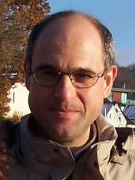
Alessandro Bausi is a Full Professor of Ethiopian Studies at Sapienza University of Rome since November 2023, where he focuses on Ethiopic language, literature, and manuscript cultures. Prior to this, he served as a Professor for Ethiopian Studies at the University of Hamburg (2009–2023) and held academic roles at the University of Naples 'L’Orientale' and Addis Ababa University. MA (1988, University of Florence) PhD (1992, Naples Oriental Institute) His research spans Ethiopian textual and manuscript cultures, Aksumite history, textual criticism, hagiography, and Semitic studies. He has led major projects like TraCES and Beta maṣāḥǝft , emphasizing linguistic evolution and manuscript digitization. He is a member of prestigious academies including the Accademia Nazionale dei Lincei (foreign member since 2023), Academia Europaea, and the Ethiopian Academy of Sciences. His editorial roles include editing Aethiopica and the Encyclopaedia Aethiopica .
جستجوی استاد راهنمای دانشگاهی
برای مسیر پژوهشیتان، استاد راهنما، استاد دانشگاه و پژوهشگر مناسب را پیدا کنید و با آنها ارتباط بگیرید.
نمایش ۱-۱۵ از ۸۹۰ استاد راهنما
اطلاعات پروفایلها از صفحات عمومی دانشگاهها گرفته شده و ممکن است بهروز نباشد.
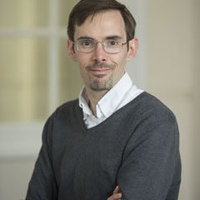
Francois Soyerمشاهده پروفایل
دانشیار
Dr. François Soyer is an Associate Professor at the University of New England's School of Humanities, Arts, and Social Sciences, specializing in Early Modern History. He holds a PhD from the University of Cambridge (2007) and has held academic positions at the University of Southampton and the University of Adelaide. His research focuses on anti-Semitism, the Spanish and Portuguese Inquisitions, gender/sexuality history, and colonial empires. He has authored multiple books and articles, including Popularizing anti-Semitism in early modern Spain and its empire (2014) and Antisemitic conspiracy theories in the early modern Iberian world (2019). His work often examines how religious persecution intersected with medical, artistic, and legal practices. Education: PhD in History, University of Cambridge (2007) MPhil in History, University of Cambridge (2003) MA Honours, University of St. Andrews (2002) Postgraduate Certificate in Academic Practice, University of Southampton (2011) Research Interests: Anti-Semitic propaganda and conspiracy theories Inquisitorial archives and legal practices Gender transgression and queer histories Censorship of art and religious imagery His recent publications explore the Blood Libel legend, the trial of Catalan cross-dresser Maria Duran, and the emotional dimensions of religious conversion. He has been awarded fellowships from the Royal Historical Society and the Parkes Institute. His current projects include tracing the origins of anti-Jewish iconography in colonial Peru and analyzing the role of emotion in early modern religious trials.
- Ancient History
- Epigraphy
- Classical Studies
- +۳ مورد دیگر
Piotr Głogowski is a researcher at the Institute of History, University of Wrocław, specializing in ancient epigraphy and Near Eastern studies. His work bridges the Hellenistic, Roman, and Persian periods, with a focus on the Levant and Phoenicia. Education: BA & MA in History and Classical Philology (University of Wrocław, 2012-2015); Erasmus exchanges at Bilkent University (2013/2014, 2016/2017); PhD in History (University of Wrocław, 2021). Research areas include ancient epigraphic cultures, Phoenician identity, Achaemenid Persia, and Greco-Persian military dynamics. His publications analyze inscriptions as cultural markers and explore historical narratives in Diodorus. Notable grants: Principal investigator for the National Science Center's Preludium project (2021-2024) on Near Eastern epigraphic culture, and internal grants for studies on Phoenician regional identity and Cappadocian politics. Scientific Awards: Gerda Henkel Foundation Scholarship (2020)
Aaron Hornkohlمشاهده پروفایل
دانشیار
Dr Aaron D. Hornkohl is an Associate Professor in Hebrew and Bye-Fellow at Girton College, University of Cambridge. He serves as Director of Studies in Asian and Middle Eastern Studies at Girton and Homerton Colleges. His academic background includes a BA from Biola University, MA from The Hebrew University of Jerusalem, and PhD (2012) on the linguistic analysis of the Book of Jeremiah. His research focuses on ancient Hebrew philology, linguistic periodization, and exegesis, with a particular interest in the diachronic development of Hebrew and textual criticism of biblical manuscripts. Teaching responsibilities include courses on ancient and modern Hebrew literature, language history, and Middle Eastern culture. He co-organizes initiatives like the Sutton Trust Summer School and leads AHRC-funded research on critical editions of Hebrew texts, including the Kaufmann MS of the Mishna. Recent publications explore Tiberian reading traditions, Masoretic vocalization, and linguistic features in Qumran manuscripts. Research projects include Grammar of Biblical Hebrew Books (2024) and Studies in the Masoretic Tradition (2022). His work bridges linguistic analysis with historical context, addressing questions of language evolution and textual authenticity in Hebrew biblical and rabbinic corpora.

Dr. Wolfgang Wieshaider serves as Associate Professor and Deputy Head of the Institute for Legal Philosophy at the University of Vienna's Faculty of Law. He is also the Academic Director of the LL.M. program in Religious Law and holds a position as permanent visiting professor at Charles University in Prague. His scholarly work bridges legal theory with practical applications in religious freedom, cultural heritage, and minority rights. Professor Wieshaider's research spans multiple intersecting domains with particular emphasis on religious law in Central and Eastern Europe, monument protection law, and the legal status of religious minorities. His scholarly output demonstrates deep engagement with the tension between religious practices and state regulation, especially regarding ritual slaughter, religious architecture, and religious minorities' rights. A significant portion of his work focuses on Jewish and Muslim communities in Austria and Central Europe, examining their legal status, rights, and challenges within national and European frameworks. Analysis of his recent publications reveals a consistent focus on the intersection of religious practice and state law, with growing attention to contemporary challenges like religious freedom during the pandemic, Islamic law in European contexts, and the legal recognition of philosophical organizations. His work demonstrates methodological diversity, combining doctrinal legal analysis with comparative approaches and historical perspectives. Professor Wieshaider has made substantial contributions through editorial work, serving as co-editor of the book series Law and Religion in Central and Eastern Europe and Intarsia · Interpretations of Culture and Law , as well as co-editing the Austrian Archives for Law & Religion . His academic leadership extends to directing the LL.M. program in Religious Law, which appears to be a significant educational initiative at the University of Vienna. His scholarly activities include advising graduate students, though specific names are not mentioned in the available materials. Professor Wieshaider maintains active international collaborations, particularly with scholars in Central and Eastern Europe, as evidenced by his numerous co-edited volumes and multilingual publications. The Institute for Legal Philosophy, where Professor Wieshaider works, appears to maintain a strong focus on religious law and cultural heritage, with several team members sharing similar research interests. His office is located in Room 4OG039 at Schenkenstraße 8-10 in Vienna, and he holds consultation hours on Thursdays from 2:30-3:30 pm during academic terms.
Bart Wallet is Professor of Jewish Studies specializing in Early Modern and Modern Jewish History at the University of Amsterdam's Faculty of Humanities, where he is affiliated with the Department of Semitic Languages and Cultures. His academic work focuses on the intricate relationship between Jewish communities and Dutch society throughout history, with particular emphasis on the connections between the Dutch Royal House and Jewish communities. Wallet's research interests span Dutch Jewish history from the early modern period to the contemporary era, with special attention to Yiddish studies, religious history, cultural integration, and the development of Jewish identity in the Netherlands. His scholarly output reveals a consistent focus on how Jewish communities navigated their position as a religious minority within Dutch society, particularly examining the complex dynamics between Jewish citizens and the Dutch state and monarchy. His work often explores the tension between religious tradition and modernization, and how Jewish communities maintained their identity while integrating into broader Dutch society. Analysis of his recent publications shows a strong thematic concentration on Orange-Jewish relations throughout Dutch history, Jewish military service, religious education, and the material culture of Jewish communities. His scholarship demonstrates a methodological approach that combines cultural history with religious studies, often revealing how seemingly mundane aspects of daily life reflect broader societal patterns of integration and identity formation. The geographic focus remains predominantly on the Netherlands, though with comparative perspectives on Jewish communities in other European contexts. Professor Wallet has been active in public scholarship through media appearances, radio programs, and contributions to encyclopedias. His work has appeared in both academic journals and public-facing media outlets, demonstrating his commitment to making Jewish history accessible to broader audiences. He has contributed to numerous radio programs on Jewish history for Dutch Jewish radio stations and has written for newspapers including the Reformatorisch Dagblad. His academic contributions include extensive work on Dutch-Jewish relations, particularly focusing on the relationship between Jewish communities and the Dutch Royal House throughout history. He has also produced significant scholarship on Jewish integration in Dutch society, religious education, and the development of Jewish identity in the Netherlands from the early modern period to the present day. His work often examines how Jewish communities maintained religious traditions while adapting to changing social and political contexts.
Jacqueline Vayntrub is an Associate Professor of Hebrew Bible at Yale University's Yale Divinity School (YDS). Her expertise spans the Hebrew Bible, wisdom literature, biblical poetry, philology, and the reception history of biblical scholarship. She holds a PhD in Near Eastern Languages and Civilizations from the University of Chicago (2015), along with earlier degrees from UCLA and Hebrew University. Dr. Vayntrub’s research examines biblical genres within ancient Near Eastern literary contexts, focusing on how textual values evolve through transmission and reception. Her first monograph, Beyond Orality: Biblical Poetry on its Own Terms (Routledge, 2019), critiques scholarly assumptions about biblical poetry’s oral origins. Her current projects include Reframing Biblical Poetry (Yale U.P.) and Seeking Eternity , exploring transmission and mortality in biblical texts. She directs the international Renewed Philology working group and chairs SBL units in Hebrew Bible and philology. Vayntrub has published widely in journals like Harvard Theological Review and Catholic Bible Quarterly , and her work has been reviewed at prestigious institutions including Yale and NYU. She received a 2019-20 Katz Center fellowship for her Seeking Eternity project. Her academic service includes organizing conferences at Yale, Harvard, and Princeton, and editorial roles for Studies in Cultural Contexts of the Bible . Her teaching and scholarship emphasize critical engagement with ancient texts and their enduring cultural impact.

Stephen Spector is a Professor of English at Stony Brook University since 1972, with a PhD from Yale University (1973). His work bridges medieval literature, religious studies, and language history. He has held visiting positions at the Hebrew University (Jerusalem, 1996–97) and fellowships at the National Humanities Center and Wesleyan University. His research focuses on medieval English literature, particularly mystery plays and biblical texts, alongside modern topics like Christian Zionism and the Ethiopian Jewish rescue operation (Operation Solomon). He has authored influential books such as Evangelicals and Israel (2009), which won the London Book Festival Prize, and Operation Solomon (2005), honored with the JDC-Herbert Katzki Award. Education: B.A. in English and Psychology from Penn State University (1968), M.Phil. and Ph.D. from Yale University (1973). He has taught courses ranging from the history of the English language to medieval literature and the Bible as literature. Research highlights include pioneering studies on anti-Semitism in medieval mystery plays, textual editing of the N-Town Play, and modern analyses of religious-political intersections. His recent work explores biblical prophecy’s influence on US foreign policy and contemporary grammar usage guides. Awards include the Van Courtlandt Elliott Prize (1980) for medieval scholarship, National Endowment for the Humanities grants, and SUNY Research Foundation fellowships. He has also contributed op-eds on topics like Sarah Palin’s religious influences and Israel-Evangelical relations. Grants and fellowships span decades, including directing NEH summer seminars on Jewish presence in early English literature (1993, 1996). His work often integrates historical methodologies with contemporary cultural analysis. Labs/Teams: Not explicitly listed, but his research collaborations are evident in co-edited volumes like The Olde Daunce (1991) and contributions to interdisciplinary projects like the Early English Text Society.

Prof William Tooman is the Head of the School of Divinity and Principal of St Mary's College at the University of St Andrews. He holds the rank of Professor of Hebrew Bible and Ancient Judaism. His research focuses on the literary conventions and hermeneutics of ancient Jewish writers, particularly examining how poetics and textual evolution influenced interpretation. A co-PI of the Texture project, he explores historical poetics of ancient Jewish literature with Prof Andrew Teeter. Tooman earned his PhD in Hebrew and Semitic Studies from the University of Wisconsin-Madison (2006) and has held roles including Lecturer at St Andrews (2009) and co-director of the Institute of Bible, Theology, and Hermeneutics (2018). Teaching spans undergraduate modules like DI1003 Old Testament 1 and postgraduate courses such as Textual Criticism. His research areas include textual criticism, inner-biblical interpretation, and scribal practices, with notable publications on Ezekiel, Targum Jonathan, and Qumran texts. Awards include an Honorary Research Fellowship at Manchester and grants from Harvard and Swiss-European programs. His advising includes five PhD students focusing on ancient Jewish literature. Key grants include the Texture project (2022–2027), exploring how ancient Jewish writers used literary techniques to transmit and reinterpret scripture. Labs/teams include the Institute of Bible, Theology, and Hermeneutics, emphasizing interdisciplinary biblical studies.

- Sociology
- Urban Studies
- Racialization
- +۵ مورد دیگر
Dr Ben Gidley is a Professor of Sociology and Psychosocial Studies at Birkbeck, University of London, within the School of Social Sciences. He holds a PhD in Sociology from the University of London and has conducted interdisciplinary research on migration, urban sociology, and racialization. His work focuses on contemporary forms of racialization, intercultural encounters in urban contexts, and the sociology of British Jewry. Education: BA Anthropology, MA Urban Studies, PhD Sociology (University of London). Research Interests: Urban diversity, antisemitism and Islamophobia, diasporic belonging, Jewish-Muslim encounters, fascism studies, and East/Southeast London ethnography. His recent projects include comparative studies on Muslim-Jewish relations in Europe (ENCOUNTERS) and a study of liminal waterway countercultures (LIMINALWATER). Publications include books such as Turbulent Times (2010) and journal articles exploring urban multiculturalism, antisemitism, and diaspora spaces. He supervises doctoral students on topics like Italian migrant whiteness, Kurdish diaspora, and carceral geographies. Teaching: Modules on racism, antisemitism, and urban studies. He is Director of Research and Sociology REF lead at Birkbeck.

- German Literature
- Holocaust Studies
- Queer Studies
- +۷ مورد دیگر
Professor Helen Finch (University of Leeds) is a leading scholar in German Literature , with a focus on Holocaust Studies , Queer Memory , and German-Jewish Cultural Production . Affiliated with the School of Languages, Cultures and Societies and the Centre for Jewish Studies , she co-leads the LCS Queer Area Studies Network and contributes to equality initiatives through the LGBT+ staff network . Research: Holocaust representation in German works, queer identity in postwar literature, transnational memory studies, curriculum design in German studies Awards: Fellow of the Higher Education Academy (2014) Academic Output : Her 15 most recent publications span Holocaust poetics , queer life writing , translation ethics , and Sebaldian intertextuality , with a particular focus on intersections between trauma , identity , and intergenerational testimony . Supervision : Currently guides PhD research on topics including transnational transphobia , queer art practices , and LGBTQ+ cross-cultural representation . Her students explore areas from German exile photography to postcolonial queer narratives .

Prof. Dr. Elisa Marie Hoven is a professor at the Faculty of Law, University of Leipzig, specializing in German and foreign criminal law, criminal procedural law, and commercial/media criminal law. She works at Burgstraße 21, Room 1.10, Leipzig. Education: Law at Free University Berlin, Radboud University Nijmegen, and University of Cambridge Professional Background: Legal clerkship in Berlin and at the International Criminal Court; visiting roles at Berkeley, Harvard, Sydney, and others Her research focuses on: Corporate criminal law (particularly corporate sanctions) Media criminal law and digitalization (hate speech) Sentencing law reform Anti-doping legislation Animal welfare criminal law Current third-party funded projects: "Gerechte Strafzumessung" (DFG-funded, analyzing sentencing practices and proposing reforms) "Hate Speech im Internet" (funded by German Federal Ministry of Justice, interdisciplinary collaboration with media studies and sociology) Scientific awards: Habilitation award from the University of Erlangen-Nuremberg Dissertation prize from the Free University of Berlin She leads the "Legal Lab Hate Speech" and founded the national Moot Court Strafrecht. Her work spans legal education, empirical research, and public science communication.
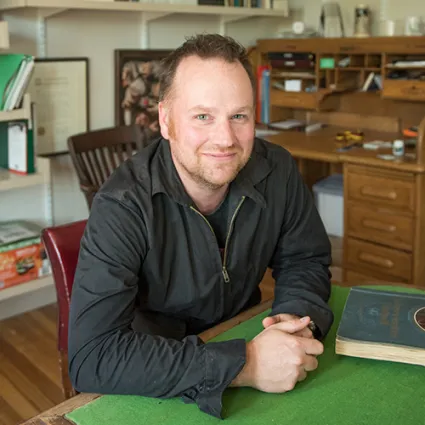
Joel Westerdale is an Associate Professor of German Studies at Smith College, where he also serves as Chair of German and Italian. He is affiliated with the Film and Media Studies and Comparative Literature programs, with courses cross-listed in Jewish Studies and the History of Science. Ph.D. and A.M. from Harvard University B.A. from University of Michigan His research focuses on 19th-21st century German literature, intellectual history, and early cinema. He examines intersections between language, technology, and cultural expression, particularly in works like Nietzsche’s Human, All Too Human and early German films such as The Cabinet of Dr. Caligari . Recent scholarly contributions include analyses of Nazi-era film historiography and Nietzschean philosophical themes in literature. He has conducted extensive research at institutions in Germany, including University of Freiburg and Center for Literary and Cultural Research (ZfL) in Berlin. Grants from the Alexander von Humboldt Foundation, U.S. Fulbright Commission, and Whiting Foundation have supported his work. He co-directed Smith’s Kahn Liberal Arts Institute Evil project (2011–12) and led the study abroad program at University of Hamburg (2015–16).
- Criminology
- Hate Crime
- Violence
- +۵ مورد دیگر
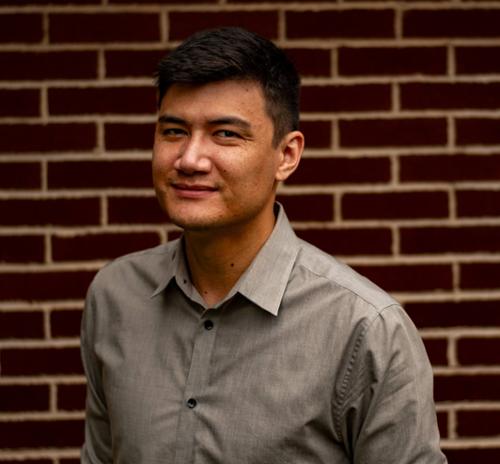
Christopher Han-Fai Seto is an Assistant Professor of Sociology at Purdue University, having joined the Department of Sociology in 2023. His research sits at the intersection of criminology, public health, and the sociology of religion, with a strong computational and spatial-methods orientation. Education: Ph.D. in Criminology, Pennsylvania State University Research Interests: Dr. Seto’s substantive work revolves around hate crime, violence, health, and religion/morality , approached through ecological lenses. He leverages spatial data , large-scale network analysis , and big social & digital data to understand how community contexts shape deviance and well-being. Publication Profile: Between 2020 and 2025 he has published extensively in leading journals—including Justice Quarterly , Health & Place , Social Science & Medicine , British Journal of Criminology , Sociology of Religion , and Journal of Adolescent Health . The body of work reveals a consistent focus on anti-Asian hate incidents , Christian nationalism and gun policy , religious ecology of crime , and COVID-19 spillover effects . Contact & Web Presence: Office: BRNG 1156, Purdue University Email: setoc@purdue.edu Personal website: chseto.com
- Syntax
- Semantics
- Linguistic Diversity
- +۶ مورد دیگر
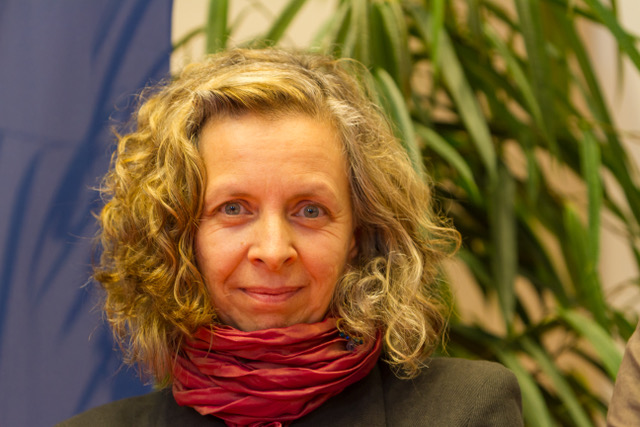
Demirdache Hamida is a Full Professor of Linguistics at Nantes University and Director of the Nantes Linguistics Lab (LLING UMR 6310, CNRS). She holds a PhD from MIT (1991) and Habilitation à diriger des recherches from Nantes University (2003). Her research focuses on syntax-semantics interfaces, linguistic diversity, and formal syntactic theory with emphasis on Semitic languages and under-represented languages like Salish. She has pioneered experimental methodologies to probe logical form syntax, particularly in studies of temporal anaphora, distributivity, and quantification. Leadership roles: Founded LLING lab in 2004, elevated to CNRS status in 2016 Research grants: Coordinator of ANR-DFG projects (2022-2025), CHILL serious game initiative (2018-2021) Awards: Palmes académiques (2011), Descartes-Huygens Prize (2003), multiple PEDR/PES excellence awards Her experimental work bridges theoretical syntax and empirical child language studies, with recent focus on cross-linguistic variation in telicity and scalar implicatures. Supervised 15 PhD theses (including 3 double-doctorates) and 54 master’s theses. Active in international research networks including the Van Riemsdijk Foundation and Carnot Cognition Institute. LLING lab specializes in formal linguistics with particular expertise in: syntax-semantics interfaces, multilingualism, and experimental methods. Current projects investigate Boolean connectives (FRAL project), heritage language maintenance (AThEME EU project), and logical language acquisition through game-based learning (Cool Boole School).
نمایش نتایج تا ۷۵۰ مورد اول. برای یافتن نتایج دقیقتر، جستجوی خود را با فیلترها محدود کنید.