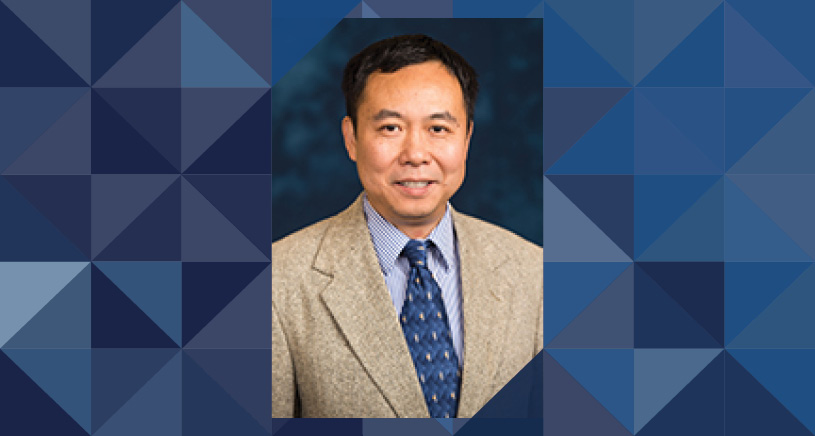
Refik Soyer is a Professor of Statistics at The George Washington University. His research focuses on Bayesian statistics, reliability modeling, decision analysis, and time series analysis. He has made significant contributions to the application of Bayesian methods in reliability engineering, queueing systems, and adversarial risk analysis. Education: D. Sc. in Statistics (1985), George Washington University His recent publications highlight advancements in Bayesian reliability analysis, adversarial decision frameworks, and computational methods for time series and queueing systems. Areas of emphasis include dynamic INAR processes, accelerated life testing, and software failure modeling. Soyer's work bridges theoretical statistics with practical applications in call centers, healthcare fraud detection, and risk management.
Syed Ejaz Ahmed is a distinguished Professor of Mathematics and Statistics at Brock University , with a career spanning multiple institutions including the University of Windsor, University of Regina, and University of Western Ontario. He serves as a Review Editor for Technometrics and holds editorial roles for several journals. PhD, Carleton University MSc, University of Guelph MSc in Statistics, University of Karachi BSc (Honors), University of Karachi His research focuses on big data analytics , statistical machine learning , and shrinkage estimation , with applications in healthcare, economics, and environmental science. He has organized international workshops on high-dimensional data analysis since 2011. Recent scientific contributions highlight advanced methods for high-dimensional regression, censored data analysis, and predictive modeling. His work has received international recognition through awards and fellowships. Fellow, American Statistical Association Fellow, Royal Statistical Society Elected Member, International Statistical Institute NSERC Discovery Grant (2017-2022) ISOSS Gold Medal A dedicated educator, he has supervised numerous PhD/MSc students and postdoctoral fellows. Currently, he leads the Centre for Business Analytics at Brock and collaborates with institutions worldwide through honorary professorships and visiting roles.
David Rossell is an Associate Professor at the Department of Economics, Universitat Pompeu Fabra (UPF) in Barcelona, Spain. He is affiliated with the Statistics@UPF research group and directs the Master in Data Science at the Barcelona School of Economics (BSE). Previously, he held positions at IRB Barcelona as head of the Biostatistics Unit and at the University of Warwick's Statistics Department. He obtained his PhD in Statistics from Rice University, Houston (USA), and conducted postdoctoral research at M.D. Anderson Cancer Center under Professors Valen Johnson and Veera Baladandayuthapani. Research Interests: Rossell specializes in high-dimensional statistical inference, Bayesian methods, computational statistics, and applications in biomedicine and social sciences. His work emphasizes methodology for complex data integration, variable selection, graphical models, and experimental design. Key areas include non-local priors, scalable Bayesian computation, and the development of R packages for statistical analysis (e.g., casper , chroGPS , gaga ). Publications: His recent work focuses on advancing Bayesian variable selection, graphical models with external data, and causal inference. Themes include leveraging external datasets for improved model accuracy, robustness to model misspecification, and applications in healthcare and complex mixture analysis. His contributions span methodological innovation and computational tools for high-dimensional problems. Funding & Grants: Rossell has secured funding through Spanish and European grants, including Juan de la Cierva Fellowships, AGAUR fellowships, and Marie Slodowska-Curie Actions. He supports PhD and postdoctoral researchers through programs like La Caixa InPhD and Beca Beautriu de Pinós. Labs & Teams: He leads the BSE Data Science Center and contributes to interdisciplinary collaborations at UPF and IRB Barcelona, bridging statistical theory and practical applications in genomics, epigenomics, and health data analysis.
Dr. Fan Xia is an Assistant Professor in the Department of Epidemiology and Biostatistics at the University of California, San Francisco (UCSF) School of Medicine. She earned her PhD in Biostatistics from the University of Washington, Seattle in June 2020. Dr. Xia's research focuses on methodological developments in causal inference, particularly causal mediation analysis, and she has made significant contributions to the field with numerous publications in high-impact statistical and medical journals. PhD in Biostatistics, University of Washington, Seattle (June 2020) Dr. Xia's research is primarily oriented around causal mediation analysis. Her work provides comprehensive guidance for applied statisticians and epidemiologists navigating the philosophical subtleties and abundant methodology in causal inference. She develops methodologies for complex causal mediation structures, including mediation analysis with treatment-induced confounding, mediation analysis with multiple mediation pathways, and mediation analysis for longitudinal data, using rigorous statistical theories for semiparametric inference. Additionally, her research involves causal discovery and cluster randomized trials with stepped wedge designs, which are related to model-based causal inference with longitudinal data. Dr. Xia has demonstrated a steady publication record with increasing productivity since completing her PhD. Her publications span from 2017 to 2025, with a notable increase in output from 2021 onward. Her work appears in top statistical journals like Biometrika, Journal of the American Statistical Association, and Biometrics, as well as medical journals including JAMA Network Open and Clinical Infectious Diseases. The publications reflect her dual focus on methodological advancements in statistics and applications to important health issues, particularly in HIV research, clinical trials methodology, and chronic disease epidemiology. No specific awards mentioned in the provided information Dr. Xia appears to be actively involved in collaborative research across multiple domains. Her publications indicate collaborations with researchers in epidemiology, medicine, and public health. While specific grant information is not provided, her research on stepped wedge cluster randomized trials suggests involvement in methodological grant-funded research. She has served as a co-investigator on studies related to HIV, hypertension, tobacco use, and chronic kidney disease, demonstrating the breadth of her research impact. Dr. Xia appears to be part of the broader biostatistics and epidemiology research community at UCSF. Her publications indicate collaborations with researchers across different departments and institutions. While specific lab information is not provided, her work on stepped wedge designs suggests she may be part of or collaborate with teams focused on clinical trial methodology. Her research on HIV and women's health also suggests connections with relevant research groups at UCSF, contributing to the university's mission of advancing health worldwide.
Professor Spiridon Ivanov Penev is a leading academic in the School of Mathematics and Statistics at the University of New South Wales. He holds a PhD in Mathematical Statistics from Humboldt University (Berlin, Germany) and has been affiliated with UNSW since 1992, progressing from Lecturer to Professor in 2019. His research spans wavelet methods, saddlepoint approximations, structural equation models, and stochastic risk analysis. Education: PhD in Mathematical Statistics, Humboldt University Current Affiliation: Department of Statistics, School of Mathematics and Statistics, UNSW His work focuses on advanced nonparametric techniques, including wavelet-based signal recovery with adaptive sampling rates, and robust inference in structural equation models. He has developed bias-corrected reliability measures for psychometric applications and contributed to stochastic optimization problems in finance and engineering. Recent publications highlight his expertise in semiparametric regression, robust portfolio optimization, and marine engineering applications using machine learning. Key trends include the use of Bregman divergence for shape-preserving estimation and Markov chain methods for climate model weighting. Scientific Awards: DAAD award Elected member of the International Statistical Institute (ISI) He has supervised numerous grants as Chief Investigator, including Australian Research Council projects and industry collaborations. Administrative roles include membership in the School of Mathematics and Statistics Executive Committee. Teaching duties span advanced statistical inference, multivariate analysis, and data science applications.
Andreas Groll is a Professor at the Technical University of Dortmund, affiliated with the Department of Statistical Methods for Big Data under the Faculty of Statistics. His research focuses on variable selection, regularization techniques in generalized linear models, categorical data analysis, and sports statistics, particularly predicting international soccer and tennis tournaments. He leads a working group including researchers like Dr. Daniel Horn and Dr. Rouven Michels. Key research areas include semiparametric regression and event data analysis. Recent work explores machine learning applications in sports analytics and healthcare, such as predicting hospital readmissions and modeling environmental data. Groll has published extensively in journals like Journal of Quantitative Analysis in Sports and Statistical Modelling .
Yi Li is the M. Anthony Schork Collegiate Professor of Biostatistics at the University of Michigan School of Public Health. With a PhD in Biostatistics from the University of Michigan (1999) and postdoctoral training at Harvard (1999-2000), Dr. Li has established himself as a leading researcher in statistical methodology with applications across multiple biomedical domains. Dr. Li's research spans survival analysis, data science, high-dimensional inference, machine learning, deep learning, spatial data analysis, random-effects models, clinical trial design, and infectious disease modeling. His methodological work finds application in cancer genetics/genomics, radiomics, racial disparity analysis, chronic disease research, and opioid overuse studies. With over 230 publications in major statistical journals including JASA, Biometrika, JRSSB, and Biometrics, as well as premier subject matter journals like PNAS, JAMA, and JCO, Dr. Li's work has significantly impacted both statistical theory and biomedical applications. His research portfolio demonstrates consistent evolution from foundational methodological work in survival analysis and spatial statistics to cutting-edge applications in high-dimensional data, machine learning, and deep learning approaches for complex biomedical problems. The recent publications reveal increasing focus on integrating multiple data sources, causal inference in observational studies, and developing interpretable machine learning models for clinical applications. Dr. Li's work has been continuously supported by NIH funding since 2003, including multiple National Cancer Institute grants (R01 CA95747, 1P01CA134294-010002, R21CA157219, R01CA249096, R01CA269398) and a National Institute on Aging grant (R21AG058198). He actively collaborates with researchers from the University of Michigan and Harvard University on clinical and observational studies. As an educator, Dr. Li has taught advanced courses in survival analysis and statistical methods, mentoring the next generation of biostatisticians. His methodological contributions have been widely recognized through invitations to serve on NIH study sections (BMRD 2008-2012, EPIC 2015-2019) and as Associate Editor for leading statistical journals including Journal of the American Statistical Association, Biometrics, and Scandinavian Journal of Statistics.
Dr. Liyang Sun is a Lecturer in Economics and Deputy Graduate Tutor at the University of College London's Department of Economics, and an Untenured Associate Professor (on leave) at CEMFI in Madrid. She holds a PhD in Economics and Statistics from MIT (2021) and a BA in Economics and Mathematics from Wellesley College (2014). Her research focuses on causal inference methodologies under treatment effect heterogeneity and weak identification with many instruments. Prior to her current roles, she was a Postdoctoral Research Fellow at UC Berkeley. Her academic positions include: Lecturer in Economics, University College London (current) Untenured Associate Professor, CEMFI, Madrid (on leave) Postdoctoral Research Fellow, UC Berkeley (previous) Research interests span econometric method development, applied economics, and policy analysis. Her work emphasizes improving causal inference techniques in realistic economic settings. Recent publications explore synthetic control methods, instrumental variables with many weak instruments, and machine learning applications in structural reforms analysis. Her scholarly contributions address core econometric challenges such as: Policy learning and confidence estimation Temporal aggregation in synthetic control frameworks Adaptive methods for model misspecification No specific grants or advising activities are documented here. She contributes to the department's teaching and graduate training programs as Deputy Graduate Tutor.
Sally Paganin is an Assistant Professor of Statistics at The Ohio State University, affiliated with the Department of Statistics within the College of Arts and Sciences. She joined the faculty in 2023 and holds a PhD from the University of Padova (2019). Her research focuses on Bayesian statistics, computational methods, and latent variable modeling, with recent emphasis on genomic data analysis for cancer detection and software development for hierarchical models. Her expertise spans Bayesian nonparametrics, statistical computing, and domain knowledge integration in modeling frameworks. She actively contributes to the NIMBLE project, an R-based platform for hierarchical modeling, and has developed open-source tools like the compareMCMCs package for MCMC efficiency analysis. Dr. Paganin serves as an Associate Editor for the software section of The New England Journal of Statistics in Data Science and previously served as Treasurer of j-ISBA (2021–2022). Her work bridges theoretical advancements with practical applications in healthcare and computational statistics. Key research themes include Bayesian model assessment, latent variable models, and statistical methods for complex data structures. Her publications reflect contributions to MCMC algorithms, semiparametric IRT models, and prior-driven clustering techniques.
Stefan Hoderlein is a Professor in the Department of Economics at Emory University. His expertise lies in econometrics, with a focus on nonparametric methods, panel data analysis, and structural models. He holds a PhD from Bonn University and the London School of Economics (2002), and a Diplom Volkswirt from Bonn University (1997). His research interests include advanced econometric techniques such as instrumental variable estimation, demand analysis, and random coefficient models. He has contributed to methodologies addressing unobserved heterogeneity, endogeneity, and identification challenges in economic data. His work often explores applications in consumer behavior, market structure, and policy evaluation. Recent research trends in his publications emphasize nonparametric identification strategies, panel data methodologies, and the integration of big data into econometric frameworks. His technical contributions include Stata modules for statistical testing and frameworks for analyzing aggregate demand and welfare effects. While no specific awards are listed, his extensive publication record reflects sustained scholarly impact in econometric theory and applied economics. Advising details and grant information are not explicitly provided in the sources, though his work often involves collaborative research teams. His office is located in the R. Rollins Building (R428), and he maintains an active academic website.
J. Isaac Miller is a Professor and Department Chair in the Department of Economics at the University of Missouri. His research focuses on econometrics, time series analysis, energy economics, and climate change impact assessment. He has developed structural econometric models for climate and energy demand, with applications to policy evaluation and forecasting. Key research areas: Climate econometrics, mixed-frequency time series, energy demand modeling, and economic impacts of climate change. Recent publications highlight statistical frameworks for climate sensitivity analysis, energy consumption forecasting, and mitigation strategy optimization. Teaching includes graduate courses in econometric theory and advanced time series methods.
Professor Rajen Shah is a faculty member in the Statistical Laboratory at the University of Cambridge, part of the Department of Pure Mathematics and Mathematical Statistics (DPMMS) within the Faculty of Mathematics. His research focuses on statistical methodology, particularly in high-dimensional data analysis, machine learning, and robust statistical inference. He is known for contributions to areas such as change-point regression, inverse propensity score weighting, and efficient estimation techniques in complex models. Key research interests include developing novel methods for variable selection, robust hypothesis testing, and scalable algorithms for large-scale data. He has collaborated on interdisciplinary projects, such as functional genomics studies (e.g., screening conserved genes of unknown function). His work often emphasizes theoretical rigor alongside practical applications in fields like causal inference and computational statistics. Prof. Shah has published extensively in top-tier journals like The Annals of Statistics , Bernoulli , and Journal of the Royal Statistical Society Series B . His recent articles address challenges in cross-validation for change-point detection, rank-transformed subsampling, and sandwich boosting methods. He is actively involved in the academic community, contributing to the Cambridge Statistics Clinic and supervising research in statistical methodology. His research group is affiliated with the Statistical Laboratory at the Centre for Mathematical Sciences, Cambridge. The lab focuses on advancing statistical theory and applications, with a strong emphasis on high-dimensional and assumption-lean methods.
Kenichi Shimizu is an Assistant Professor in Econometrics (tenure-track) at the Department of Economics, University of Alberta. He holds a PhD in Economics from Brown University (2021) and previously worked at the Adam Smith Business School, University of Glasgow. His research focuses on Bayesian econometrics, quantitative marketing, industrial organization, and time-series analysis. He teaches courses such as Introductory Econometrics (ECON 399) and Applied Econometrics (ECON 599). Education: PhD in Economics from Brown University (2021). Professional affiliations include roles at the University of Alberta and University of Glasgow. His work emphasizes methodological advancements in econometrics with applications to marketing and industrial organization. Research trends in his publications highlight Bayesian methodologies for dynamic modeling, structural breaks, and high-dimensional data. Key topics include semiparametric estimation, sparse models, and policy evaluation frameworks. Grants: Recipient of SSHRC Insight Development Grant (2024-2026) for research on Bayesian econometric methods in industrial organization and marketing. Active presenter at major conferences including the NBER-NSF Seminar, Canadian Economic Association meetings, and the World Congress of the Econometric Society. Teaching responsibilities include undergraduate and graduate econometrics courses with emphasis on applied regression methods and model specification.
Professor Javier Hidalgo is a Professor of Econometrics at the Department of Economics, London School of Economics and Political Science (LSE). He holds roles as Co-Director of the STICERD Econometrics Programme and has extensive editorial experience with journals such as Journal of Econometrics and Econometric Theory . His expertise spans econometric theory, with a focus on semiparametric estimation, long-memory processes, and structural change models. Education: PhD in Economics from LSE (1990), M.Sc. in Econometrics and Mathematical Economics (1985), and a Licenciatura in Mathematics from Universidad Complutense de Madrid (1982). Research Interests: Includes semiparametric estimation, dependence in economic analysis, diagnostic testing, and long-memory processes. His work emphasizes methodological advancements in econometric analysis of nonstationary and dependent data. Grants & Awards: Secured ESRC grants totaling over £400k for research on nonstationary economic data and long-memory processes. His 2015 article received the prestigious Tjalling C. Koopmans Econometric Theory Prize. Teaching & Supervision: Teaches advanced econometric courses including EC309 and EC518. Supervised 3 PhD students and served as Program Director for the M.Sc. in Econometrics and Mathematical Economics (2004–2019). Labs/Teams: Active in STICERD’s Econometrics Programme, fostering collaborative research in time series and econometric theory.
Jeroen Dalderop is an Assistant Professor of Economics at the University of Notre Dame. His research focuses on advanced econometric methods for financial time series analysis and asset pricing. Ph.D., University of Cambridge (2018) M.Phil., University of Cambridge (2013) M.Sc. & B.Sc., Tilburg University (2012) His work develops nonparametric and semiparametric techniques to model financial asset price dynamics and their connections to macroeconomic factors. Recent publications examine: Risk modeling through density ratio frameworks Market-implied pricing kernels Latent variable structures in asset pricing Current research includes projects on central clearing mechanisms in OTC derivative markets. Jeroen maintains active collaborations with financial econometrics scholars and contributes to methodological advancements in derivative pricing and risk assessment.