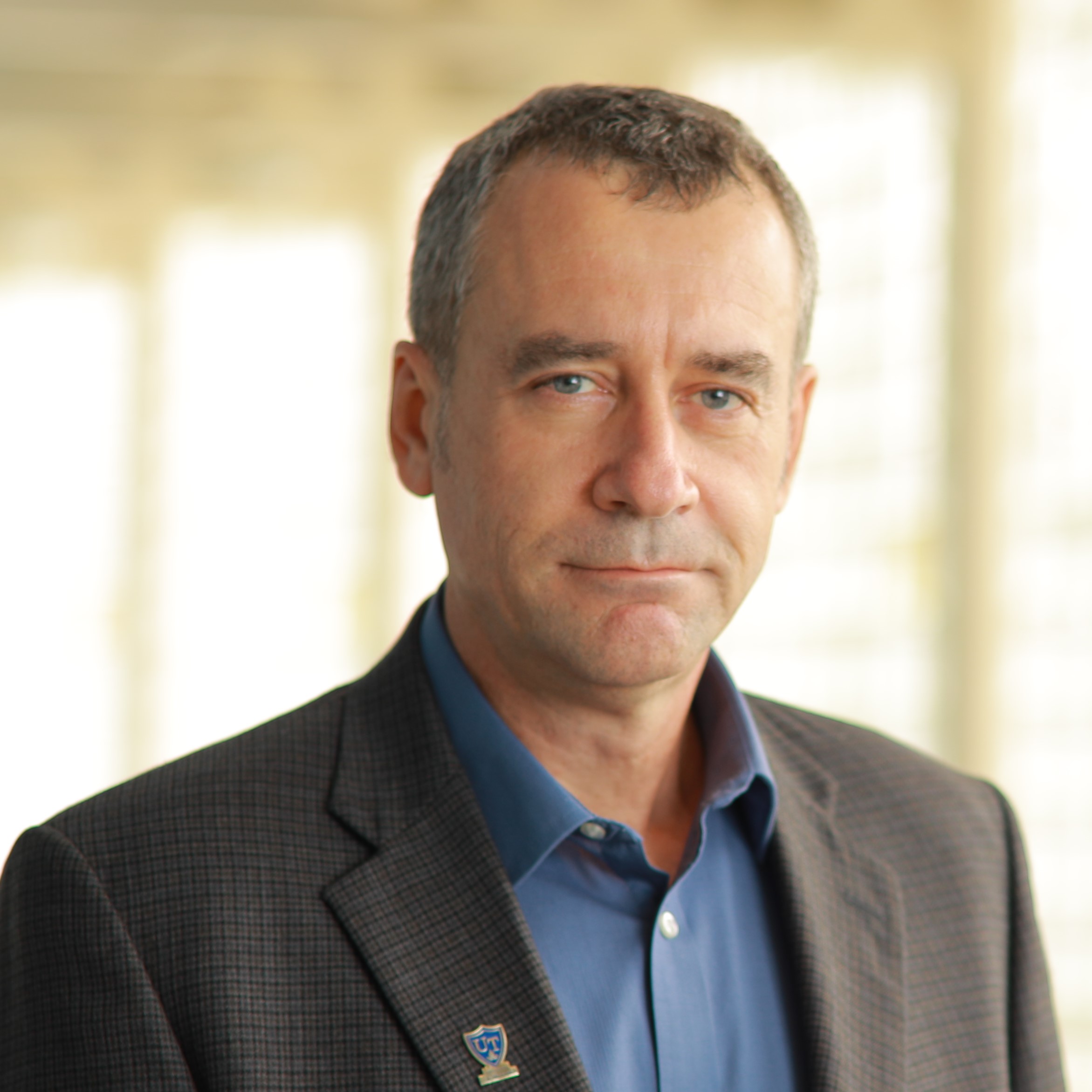
Joshua Farrell serves as the Thomas E. D'Ambra Professor of Chemistry within the Department of Chemistry at the College of the Holy Cross, where he maintains active faculty status. His academic credentials include: Ph.D. from Northwestern University Professor Farrell specializes in Inorganic Nanotechnology, a research domain at the intersection of chemistry and materials science focused on synthesizing and characterizing inorganic structures at the nanoscale. This work drives innovation in catalytic systems, energy storage materials, and quantum dot applications through precise atomic-level manipulation of metal and semiconductor compounds.
Chiheb Ben Mahmoud is a Junior Research Fellow and Swiss National Science Foundation Postdoctoral Fellow in the Department of Chemistry at the University of Oxford, working under Prof. Volker Deringer. He holds a PhD in Materials Science and Engineering from the Swiss Federal Institute of Technology (EPFL) and Master’s degrees from Ecole CentraleSupélec (France) and the University of Paris-Saclay (France). His research focuses on applying machine learning to model macroscopic properties of materials, with a particular emphasis on atomistic simulations and computational materials science. Key research interests include graph neural networks for interatomic potentials, solid-state NMR predictions, and addressing data challenges in atomistic machine learning. His work bridges machine learning methodologies with fundamental materials science problems, such as charge density wave modulation and hot-electron dynamics. He collaborates with experts like Dr. Andy Anker and Dr. Dmytro, advancing interdisciplinary approaches to materials modeling. No scientific awards are explicitly mentioned in the provided text. His advisory and grant activities are not detailed here, though his postdoctoral position suggests affiliation with the Swiss National Science Foundation. He contributes to Prof. Deringer’s research group, focusing on cutting-edge computational techniques for materials discovery and analysis.
Prof. Dr. Manfred Helm is the Director of the Institute of Ion Beam Physics and Materials Research at the Helmholtz-Zentrum Dresden-Rossendorf (HZDR). His research focuses on materials science, nanotechnology, and semiconductor physics, leveraging advanced facilities like the Ion Beam Center (IBC) and the ELBE Center for High-Power Radiation Sources. He leads interdisciplinary projects, including the EU-funded ReMade@ARI initiative, and coordinates technology transfer through innovations like FlexiSens and Blitzlab. Helm's work emphasizes functional materials development, ion beam synthesis, and optoelectronic applications, with contributions to superconductivity, quantum defect engineering, and high-pressure material studies. Research highlights include investigations into GeSn alloys, CrSBr magnetic systems, and terahertz photonics. His institute promotes young scientists through programs like the DRESDEN-concept Research Group and the HZDR High Potential Program. Helm oversees collaborations in networks such as LEAPS and FELs of Europe, advancing applications in energy, information technology, and sustainable materials.
Dr. Mahdi Ghorbani-Asl is a Senior Researcher at the Institute of Ion Beam Physics and Materials Research at the Helmholtz Center Dresden-Rossendorf (HZDR), Germany. His research focuses on 2D materials, particularly their application in energy-efficient nanoelectronics, catalysis, and energy storage systems. He leads the COM2DMATER Group , which explores substituting silicon with novel 2D materials to address stability challenges in thin-film systems. Key research interests include Atomistic simulations of irradiation-induced phenomena Defect engineering in 2D materials Electronic and structural properties under ion/electron irradiation Material synthesis and characterization for quantum and energy devices Publications emphasize structural transformations, defect dynamics, and electronic property modulation in materials like MoS₂, MoTe₂, and CrSBr. His work bridges computational modeling (e.g., DFT) with experimental insights from TEM and in situ analysis. Awards: None mentioned explicitly in the provided texts. Grants/Advising: Actively recruiting PhD students via email for projects in 2D materials; no specific grants listed. Labs/Teams: Leads the COM2DMATER Group, collaborating with global institutions on materials discovery and device applications.
Elaine Kirkpatrick is an Associate Professor of Physics and Optical Engineering at Rose-Hulman Institute of Technology. Her research focuses on nanomagnetic materials, nanostructured thin films, and magnetic nanoparticles. She has pioneered collaborative undergraduate research projects in planetary science, establishing advanced laboratory facilities for student experimentation. Education: PhD in Applied Physics, Carnegie Mellon University (1997) MS in Physics, Carnegie Mellon University (1994) BS in Physics, University of Dayton (1992) Her work bridges nanotechnology and astrophysics, with recent emphasis on asteroid lightcurve analysis and photomagnetic effects in cobalt ferrite systems. Notable contributions include seminal studies on magnetic nanoparticle behavior and asteroid rotational dynamics. Awards: NASA/American Society of Engineering Education’s Summer Faculty Fellow (2002) Best Poster Award at Nano ’98 Conference (1998) National Science Foundation Travel Grant (1996) Teaching emphasizes foundational physics concepts with hands-on labs in X-ray diffraction and semiconductor physics. She mentors students through Rose-Hulman's Oakley Observatory and advanced materials labs, integrating research into undergraduate education.
Kenneth Goodson is the Vice Provost for Graduate Education and Postdoctoral Affairs at Stanford University, holding the title of Davies Family Provostial Professor and courtesy Professor in Materials Science and Engineering. He previously served as Chair and Vice Chair of the Mechanical Engineering Department (2008-2019) and Senior Associate Dean for Research & Faculty Affairs in the School of Engineering. His research focuses on heat transfer and energy conversion, with applications in electric vehicles, data centers, and electronics cooling. Dr. Goodson has mentored over 55 Stanford graduate students, many of whom now hold academic positions at top institutions like MIT and Princeton. His DARPA-funded ICECool Programs developed world-record heat sinks for power conversion. He leads the Stanford VPGE Research Lab and holds 35 patents, co-founding Cooligy (acquired by Emerson). He is a member of the National Academy of Engineering and a Fellow of multiple societies including AAAS, ASME, IEEE, and APS. His awards include the ASME Kraus Medal, IEEE Richard Chu Award, and Sudler Prize for Arts Achievement. Beyond academia, he is a baritone soloist with voice fellowships at Tanglewood Music Festival and married to concert pianist Laura Dahl of Stanford's music faculty. Education: PhD (1993), MS (1991), and BS in Mechanical Engineering (1989) from MIT, with a concurrent BS in Humanities (Phi Beta Kappa). His work spans thermal systems design, nanomaterials, and phase-change technologies, addressing extreme heat flux challenges in electronics and energy systems.
Titel Jurca is an Associate Professor in the Department of Chemistry at the University of Central Florida, College of Sciences. His research focuses on synthetic inorganic chemistry for catalytic organic transformations and thin film materials chemistry, with emphasis on developing novel main-group metal catalysts and chemical precursors for atomic layer deposition (ALD). Research areas include: Design of inorganic precursors for ALD growth of metal oxides and transition metal dichalcogenides Development of sustainable nanocatalysts for fine chemical transformations Convergence of molecular synthesis, thin film deposition, and heterogeneous catalysis Application of green chemistry principles in materials synthesis His recent publications demonstrate strong focus on vapor deposition techniques (ALD, CVD), catalytic nanomaterials, surface analysis, and structure-property relationships in inorganic systems. Research frequently employs spectroscopic characterization, computational modeling, and nanofabrication approaches. Dr. Jurca currently advises graduate students in inorganic synthesis and materials characterization techniques, while maintaining active collaborations in energy and nanotechnology research.
Tom Veeken is a Researcher at AMOLF, the Netherlands Institute for Nanotechnology, specializing in photonic control over light absorption and emission in photovoltaic systems. He holds a PhD from the University of Amsterdam (UvA), awarded in 2022, where his thesis focused on optimizing light-matter interactions in solar cells. His work spans advancements in perovskite materials, radiative cooling techniques for solar modules, and quantum dot integration for enhanced energy conversion efficiency. Veeken’s research interests include nanophotonics, solar energy materials, and optical engineering, with a focus on improving solar cell performance through novel material designs and light management strategies. He collaborates with interdisciplinary teams to address challenges in energy harvesting, such as reducing reabsorption losses in textured silicon and enhancing luminescent solar concentrator efficiency. His publications highlight contributions to perovskite-based solar cells, radiative cooling via photonic silica microcylinders, and quantum dot emission control. Veeken’s work aligns with AMOLF’s LMPV (Light and Matter for Photonics and Energy) group, advancing sustainable energy materials and photonic technologies. No scientific awards or student advisement records are explicitly listed in the provided texts. His role as a Program Officer at AMOLF suggests involvement in project coordination and technical leadership within the institute’s research infrastructure.
Prof. Dr. Stephanie Reich is a Professor of Experimental Solid-State Physics at the Freie Universität Berlin, leading the AG Reich research group within the Department of Physics. Her research focuses on nanoscale materials and their light-matter interactions, particularly in plasmonic systems, carbon nanotubes (CNTs), graphene, and transition metal dichalcogenides (TMDs). She explores phenomena such as ultrafast relaxation dynamics, excitonic states, and nanoscale optoelectronic properties. Key areas include plasmon-enhanced spectroscopy, functionalization of nanomaterials, and applications in nanophotonics. Prof. Reich's work bridges fundamental physics with practical applications, utilizing advanced techniques like Raman spectroscopy and near-field microscopy. Affiliations: Freie Universität Berlin, Institute of Physics, AG Reich Lab Equipment: Tunable Raman spectroscopy, fluorescence spectrometers, near-field microscopy (s-SNOM), AFM systems Research Interests: Prof. Reich investigates optical properties of low-dimensional materials, plasmonic nanostructures, and functionalized nanotubes. Her studies address topics such as exciton-photon coupling in 2D materials, energy transfer mechanisms in hybrid systems, and the design of nanoscale optical devices. Recent work emphasizes applications in energy conversion, sensing, and super-resolution microscopy. Recent Trends in Publications: Her research highlights advancements in plasmonic supercrystals, THz-driven phonon dynamics in hybrid perovskites, and collective electronic states in nanotube systems. These studies underscore the interplay between material structure and optoelectronic behavior, with implications for next-generation photonic technologies.
Prof. Fabio Piccinelli is an Associate Professor in the Department of Biotechnology at the University of Verona, specializing in Inorganic Chemistry with a focus on luminescent materials. He leads the research group 'Chimica Inorganica e dello Stato Solido' and is involved in projects like 'Eco-Friendly Hydrometallurgy for Rare Earths Recycling' and 'TheCURA' (theranostic agents). His research involves the synthesis and characterization of coordination compounds of lanthanide ions for optical sensing and gallium-based materials for nuclear imaging. He teaches courses such as 'General and Inorganic Chemistry' across multiple programs, including Biotechnology and Medical Engineering. His work spans 49 teaching modules since 2008, emphasizing inorganic chemistry fundamentals and advanced topics like bioinorganic chemistry and green chemistry applications. Research highlights include studies on energy transfer mechanisms in lanthanide-doped materials, chiral luminescent probes, and nanocrystals for biomedical imaging. He collaborates with industry spin-offs like Microbion S.r.l. and EDIVITE S.r.l., focusing on material innovation.
Dr. Daniel Georgiev is a Professor in the Department of Electrical Engineering and Computer Science at the University of Toledo's College of Engineering since 2006. He holds a M.S. in Engineering Physics (Quantum Electronics and Laser Equipment) from Sofia University and a Ph.D. in Electrical Engineering (Electronic Materials and Devices) from the University of Cincinnati. Prior to his current role, he worked at Wayne State University's Center for Smart Sensors and Integrated Microsystems. His research focuses on laser processing of materials, thin films, photovoltaics, sensors, chalcogenide glasses, oxide/nitride materials, and nanofabrication. Key areas include laser microstructuring, metal whisker growth mechanisms, and thin film characterization for biomedical and electronic applications. Publications highlight advancements in GaN diodes, tin whisker suppression, and nickel oxide thin films. His work spans journals like IEEE Transactions, Scripta Materialia, and Physical Review Letters. He has contributed to patents and holds a strong record in materials science and engineering. Notable collaborations involve biomedical implant materials and semiconductor device fabrication. His research bridges fundamental material science with applied technologies, addressing challenges in energy, electronics, and medical devices.
Dr. Daria Smirnova is a Professor at the Department of Fundamental & Theoretical Physics, Australian National University (ANU). Her research focuses on topological photonics, nonlinear optics, and dielectric metasurfaces. She leads projects such as 'Topological wave manipulation in hybrid integrated platforms' and 'Ultrafast Infrared Spectroscopy Facility', demonstrating expertise in advanced photonic systems and quantum technologies. Her key research interests include: Designing topological photonic structures for robust light control Nonlinear optical phenomena in metasurfaces and nanophotonic systems Multipolar light-matter interactions in dielectric nanostructures Machine learning applications for optimizing photonic systems Recent work highlights include broadband infrared imaging with silicon metasurfaces, identification of topological lattice properties via machine learning, and exploration of Floquet-engineered materials. Her publications reflect interdisciplinary collaborations in nanophotonics, quantum optics, and applied physics. Dr. Smirnova has secured significant funding through ANU initiatives and leads a research group advancing photonic technologies. Her work integrates theoretical modeling with experimental validation, producing impactful contributions to optical engineering and materials science.
Daniel Nagy is an Assistant Professor at the Department of Electronics and Computing within the Higher Polytechnic School of Engineering at the University of Seville. His research focuses on nanoelectronics, semiconductor device simulation, and TCAD technologies. He leads the ARQCOMP research group, specializing in computer architecture and novel transistor design. Education details are not explicitly provided in the texts, but his academic focus suggests advanced training in electronics engineering or related fields. His research interests include quantum transport phenomena, nanoscale device variability analysis, and computational modeling of FinFETs, nanowire FETs, and nanosheet transistors. He has extensively contributed to TCAD simulation frameworks such as NESS (Nano-Electronic Simulation Software), emphasizing open-source tools. Research Trends: His work emphasizes transistor scaling challenges for sub-2nm nodes, device variability mitigation, and the development of modular simulation tools. Key topics include nanosheet FET optimization, POM-based molecular memory systems, and benchmarking of emerging transistor architectures. His studies often bridge quantum mechanics (via Schrödinger equation modeling) with classical transport phenomena. No scientific awards are mentioned in the provided texts. He has advised no publicly listed PhD/Master’s students. His ARQCOMP group collaborates on next-generation electronic device architectures and simulation methodologies. Labs/Teams: The ARQCOMP group focuses on advancing computer architecture and nanoelectronic device simulation through interdisciplinary approaches, integrating computational physics, materials science, and electrical engineering.
Paulette Clancy is the Edward J. Schaefer Professor in Engineering at the Whiting School of Engineering, Johns Hopkins University, where she leads a prominent research group in computational materials science. She is the director of research for the JHU Data Science and AI Initiative and associate director of the Johns Hopkins Center for Integrated Structure-Mechanical Modeling and Simulation (CISMMS), and a fellow of the Hopkins Extreme Materials Institute (HEMI). Education: Bachelor’s in Chemistry, Queen Elizabeth College, University of London (1974) DPhil in Physical Chemistry, Oxford University (1977) Postdoctoral research at Cornell University and London University Her research focuses on the atomic- and molecular-scale modeling of semiconductor materials, particularly organic and hybrid systems. Key areas include advanced organic materials (covalent organic frameworks, organic electronics), algorithm development (machine learning, Bayesian optimization, force fields), electronic materials (III-V semiconductors), and nucleation and crystal growth (perovskites, quantum dots). She develops physics-informed machine learning frameworks like PAL 2.0 to accelerate materials discovery. The recent publications highlight a strong trend in integrating machine learning (especially Bayesian optimization) with computational chemistry to model and predict material behavior during processing. Topics span perovskite crystallization, gallium nitride growth, polymer thermoelectrics, and quantum dot self-assembly, reflecting a broad impact in semiconductors , renewable energy materials , and nanomaterials . Scientific Awards and Honors: Fellow, Royal Society of Chemistry Fellow, American Institute of Chemical Engineers (AIChE) AIChE National Women’s Initiatives Mentoring Award Alice Cook Award (Cornell) Zellman Warhaft Award (Cornell) Clancy is a dedicated mentor, having advised numerous PhD and master’s students who have gone on to careers in academia and industry. Her group has received funding for AI-driven microelectronics training through a $2.7M NSF award. She is also a founding chair of Women in Science and Engineering at Cornell and a strong advocate for diversity in STEM. Labs and Teams: Clancy Research Group, JHU – focused on computational materials discovery Collaborator with Mitra Taheri’s group on real-time materials monitoring Director of Research, JHU Data Science and AI Initiative Associate Director, CISMMS Fellow, HEMI
Mustafa Alevli is a faculty member at Marmara University specializing in materials science and semiconductor research. His primary focus is on atomic layer deposition of nitride semiconductors and their applications in optoelectronics and energy conversion. Professor Alevli's research interests include: Atomic layer deposition of nitride semiconductors (GaN, InN, AlN) Thin film growth mechanisms and characterization Optical and structural properties of semiconductor materials Solar cell enhancement using nanoparticle technology Photodetector development based on nitride materials His recent publications (2023-2025) show a continued focus on thin film deposition techniques while expanding into electrochromic materials and perovskite solar cells. The research demonstrates strong technical expertise in plasma-assisted deposition methods and comprehensive materials characterization. Professor Alevli has supervised 3 theses according to the metrics provided and maintains active collaborations with researchers both within Turkey and internationally.