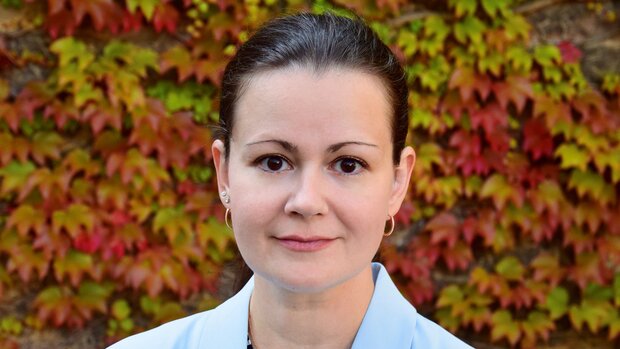
Dr. Hannah Smith is an Independent Researcher at the Department of Materials Science and Engineering, Friedrich-Alexander-Universität Erlangen-Nürnberg (FAU), specializing in organic semiconductors and solar energy technologies. She joined FAU in October 2022, bringing expertise in molecular doping and charge transport from her PhD at Princeton University under Prof. Antoine Kahn. Education: PhD in Materials Science, Princeton University Prior research experience at Wake Forest University with Dr. Oana Jurchescu Research Focus: Electrical doping of organic semiconductors using molecular dopants Enhancing charge transport properties in wide bandgap materials Applications in solar cells, LEDs, and photovoltaic devices Expertise in photoelectron spectroscopy (UPS/IPES) for band structure analysis Publication Trends: Hannah's work spans organic electronics, renewable energy, and materials engineering, with a focus on molecular design, doping mechanisms, and interface optimization for solar cell and LED applications. Scientific Awards: National Science Foundation Graduate Research Fellowship Francis Robbins Upton Fellowship in Engineering Dean’s Grant from Princeton University
Jesse Davis is a Professor at the Department of Computer Science , KU Leuven , actively contributing to the Machine Learning group and the Sports Analytics Lab . He is part of the Faculty of Engineering Science and the Leuven.AI Institute . Ph.D. in Computer Sciences from University of Wisconsin-Madison (2007) M.S. in Computer Sciences from University of Wisconsin-Madison (2005) B.A. in Computer Science from Williams College (2002) His research focuses on machine learning, data mining, big data analytics, and sports analytics, with significant work in: Transfer learning and Markov logic networks Anomaly detection and semi-supervised learning Medical NLP and biomechanical data analysis Soccer performance metrics and tactical analysis His recent work explores spatio-temporal data analysis in sports and explainable AI for medical applications, with collaborations spanning finance, healthcare, and semiconductor manufacturing. Notable scientific awards include: Best Paper Award (Applied Data Science Track) at KDD 2019 Best Technical Paper Award at Intelligence Analysis Workshop He advises numerous PhD and Master's students in areas like: Football analytics Tree ensemble compression Medical question-answering systems Biomechanical load prediction His lab develops tools such as: GSSL for Markov network structure learning TODTLER for transfer learning Alchemy system for Markov logic networks
Mohammed Ismail is a Professor and Chair of the Electrical and Computer Engineering Department at Wayne State University, where he also serves as Founding Director of the WINCAS Center of Excellence. He has held academic positions at institutions including Ohio State University, KTH (Sweden), Aalto University (Finland), and Tokyo Institute of Technology (Japan). A pioneer in CMOS design, his research spans analog/mixed-signal/RF ICs, 5G/6G wireless chipsets, IoTs, and machine learning for wearable medical devices. Education : Ph.D. in Electrical Engineering from University of Manitoba, M.S. and B.S. from Cairo University Leadership : Founder of Springer Journal of Analog Integrated Circuits and Signal Processing; Founder of IEEE ICECS and ISQED conferences His research focuses on CMOS analog/RF/mm-wave ICs , IoT systems , automotive electronics , and RF energy harvesting . He has developed groundbreaking technologies including the first CMOS Wi-Fi Radio chip and a self-powered wearable heart attack prediction device. Scientific Awards : US Presidential Young Investigator Award Ohio State Lumley Research Award (x4) SRC Inventor Recognition Award (x2) 2018 UNESCO Medal SRC Board Special Recognition IEEE Fellow Mohammed Ismail has founded multiple startups including Spirea AB, Firstpass Technologies, and ANACAD (acquired by Siemens). He has authored 23 books, over 200 journal papers, and holds 17 US patents. At Wayne State, he teaches advanced courses like ECE7566 (Advanced Mixed Signal Integrated Circuits) and ECE9997 (Doctoral Seminar).
Iacopo Mochi is a Group Leader for Advanced Lithography and Metrology and beamline scientist at the Paul Scherrer Institute (PSI), specifically working at the Laboratory for X-ray Nanoscience and Technologies within the PSI Center for Photon Science. He has extensive experience in EUV lithography, X-ray optics, and semiconductor metrology, with a career spanning multiple prestigious research institutions including Lawrence Berkeley National Laboratory and imec. Dr. Mochi received his physics degree from the University of Florence and earned a PhD in Methods and Technologies for Environmental Monitoring. His career path has included significant contributions to LIDAR systems, astrophysical instrumentation, and ultimately EUV technologies for semiconductor manufacturing. At PSI since 2016, he has established himself as a leading researcher in advanced lithography techniques. His primary research focuses on the development of EUV instrumentation for semiconductor metrology, particularly the XIL-II metrology end station - a lensless microscope dedicated to EUV photomask inspection. His work spans nano-imaging, interferometry techniques in the X-Ray spectrum, and the characterization of advanced materials for semiconductor manufacturing. Dr. Mochi has made significant contributions to the field through the development of RESCAN, an actinic pattern inspection platform based on coherent diffraction imaging. Analysis of his publication record reveals a strong trajectory of innovation in EUV lithography, with recent work pushing resolution limits to 5 nm, developing novel metrology techniques, and applying machine learning approaches to improve image reconstruction and defect detection. His research directly addresses critical challenges in semiconductor manufacturing as the industry moves toward smaller technology nodes. Dr. Mochi's scientific contributions include groundbreaking work on EUV pellicles for mask protection, characterization of absorber and phase defects on EUV reticles, and advancements in interference lithography techniques. His collaborative research demonstrates strong partnerships with industry and academic institutions worldwide. As the beamline scientist for the XIL-II beamline, Dr. Mochi coordinates and supervises experiments that support cutting-edge research in semiconductor manufacturing and nanotechnology. His leadership extends to mentoring junior researchers and contributing to the development of next-generation scientists in the field of advanced lithography.
Prasad Enjeti is a Professor and Texas Instruments Jack Kilby Chair in Electrical & Computer Engineering at Texas A&M University, College of Engineering. With expertise in power electronics and renewable energy systems, he has significantly advanced grid-connected technologies, energy storage, and power quality solutions. Ph.D., Electrical Engineering, Concordia University (1988) M.S., Electrical Engineering, I.I.T. Kanpur (1982) B.S., Electrical Engineering, Osmania University (1980) His research focuses on power electronic converters for renewable energy integration, solid-state transformers, high-temperature power systems, grid-edge intelligence, and cybersecurity in distributed energy systems. He has pioneered innovations in AC/DC microgrids, droop control, and advanced filtering technologies. Recent publications emphasize cybersecurity for renewable systems, wide-bandgap semiconductor applications, and AI-driven power electronics optimization. He holds 20+ patents and has supervised 29 Ph.D. and over 50 Master's students, many now in leading academic and industrial positions. IEEE Fellow (2000) R. David Middlebrook Technical Achievement Award (2012) Best Paper Awards at PCIM (2014), IEEE IAS IPCC (2003, 2002, 1998, 1996) NSF Research Initiation Award (1990) Texas A&M Faculty Fellow (1996-97, 2001) He leads the Power Electronics Intelligence at the Network Edge (PINE) research group, with significant contributions to eVTOL energy systems, cryptocurrency mining load analysis, and secure peer-to-peer energy transactions.
Haitham Kanakri is a Lecturer in the Department of Electrical and Computer Engineering at Purdue University's Indianapolis campus. His research focuses on power electronics, biomedical engineering, and electromagnetic systems with applications in medical devices, renewable energy systems, and semiconductor technologies. He is affiliated with Purdue Engineering and contributes to interdisciplinary projects spanning nanoengineering, sustainable housing design, and neurostimulation therapies for Alzheimer’s disease. Key research interests include capacitorless power converter designs, planar electromagnetic components, and neuroengineering innovations. His work integrates nanotechnology fabrication processes with traditional electrical systems to achieve compact, high-performance solutions. Recent projects explore electromagnetic field therapy for neurological disorders and high-efficiency DC-AC conversion systems for electric vehicles. Notable contributions include developing portable neurostimulation devices using meander line antennas and advancing resonant converter technologies for renewable energy applications. His work bridges theoretical electromagnetic models with practical engineering solutions, particularly in transformer design and semiconductor cooling systems. While no specific awards are listed, his publications indicate sustained innovation in power electronics and biomedical engineering. Academic advising and grant activities are not detailed in available records. Collaborations likely involve multidisciplinary teams given the breadth of his research portfolio.
Hyunseok Kim is an Assistant Professor in the Department of Electrical and Computer Engineering at the University of Illinois at Urbana-Champaign. He leads the Hyunseok Kim Research Group, focusing on heterogeneous integration technologies for future electronics. Prior to this role, he served as a Postdoctoral Associate and Research Scientist at MIT (2019-2023). His research emphasizes low-dimensional materials, 3D integration, and semiconductor devices for microelectronics and photonics. Education: Ph.D., Electrical and Computer Engineering, UCLA (2018) B.S., Electrical Engineering and Computer Science, Seoul National University (2011) Research Interests: 2D materials-based layer transfer processes Epitaxial membrane manufacturing Vertical micro-LEDs and optoelectronics Wafer-scale semiconductor integration His work bridges advanced materials science with scalable manufacturing, targeting next-generation electronics and photonics. Grants: Secured a Samsung grant to advance semiconductor integration research. Labs/Teams: Directs the Hyunseok Kim Research Group, collaborating with industry partners to develop practical applications of novel materials and integration techniques.
Boubacar Kanté is the inaugural Chenming Hu Endowed Chaired Professor at the University of California, Berkeley , affiliated with the College of Engineering and Department of Electrical Engineering and Computer Sciences . He leads research at the intersection of Nanophotonics , Plasmonics , Metamaterials , and Quantum Optics , with a focus on wave-matter interaction across microwave to optical frequencies. Education: Ph.D. in Engineering/Physics (Universite Paris Saclay, 2010), M.Eng. in Electrical Engineering and Computer Sciences (Ecole Polytechnique Universitaire de Lille, 2006), M.S. in Electrical Engineering/Telecommunications (Universite de Lille 1, 2006) His research explores topological photonics and bound state in continuum (BIC) lasers , addressing challenges in energy, defense, and health through novel optical devices. Notable inventions include the BerkSEL (Berkeley Surface Emitting Laser) and the first non-magnetic metamaterial invisibility cloak . Recent work focuses on quantum emitter synthesis in silicon , exceptional point-based sensors , and topological lasers . His publications span Nature , Science Advances , and Physical Review journals, emphasizing scalable quantum technologies and nonperiodic photonic systems. Scientific Awards: 2024 Bakar Prize 2021 Bakar Fellows Spark Award 2020 Moore Inventor Fellow 2017 ONR Young Investigator Award 2016 NSF Career Award 2010 Richelieu Prize 2007 URSI Young Scientist Award Kanté has advised Ph.D. students including Yertay Zhiyenbayev , Zhetao Jia , and Rushin Contractor . His group holds world records in plasmonic nanosensing and achromatic metalens bandwidth/efficiency . Current projects involve quantum internet technologies and silicon-based quantum light sources .
Associate Professor Jarryd Pla is an experimental physicist and electrical engineer at the University of New South Wales, specializing in quantum information processing and quantum technologies. He holds a PhD in Electrical Engineering from UNSW (2013) and a first-class honors BEng in Photonic Engineering (2009). Current ARC Future Fellow Former Bragg Gold Medal recipient His research focuses on: Spin-based quantum computation in silicon Superconducting quantum circuits Quantum-noise-limited microwave amplifiers Hybrid quantum systems for quantum memory Quantum sensing and spectroscopy Recent publications highlight: Room-temperature maser amplifiers Kinetic inductance parametric amplifiers Coherent control of donor spins Quantum-limited electron spin resonance Scientific Awards: ARC Future Fellowship (2024-2028) Bragg Gold Medal His grants include: ARC DECRA (2019-2022): Superconducting hybrid quantum technologies ARC Discovery Project (2021-2024): Quantum sensing with semiconductor devices ARC Future Fellowship (2024-2028): Room-temperature diamond-based microwave detection
Dana Weinstein is a Professor in the Department of Electrical and Computer Engineering at Purdue University, West Lafayette campus. Her research focuses on cutting-edge MEMS resonators, RF device integration, and acoustoelectronic systems. Academic Rank: Professor Department: Electrical and Computer Engineering University: Purdue University Email: danaw@purdue.edu Research Interests: Microelectronics and MEMS Resonators Radio Frequency (RF) Devices and 2D Materials Silicon Photonics and Ferroelectric Transducers Acoustoelectronics and GaN/SiC Heterostructures Integrated Nonreciprocal RF MEMS Devices Scientific Awards: NSF CAREER Award (2017) NSF CAREER Award (2012) Editorial Leadership in IEEE Nanotechnology Express (2015) Key Article Trends: Her recent publications explore advanced MEMS resonators, high-frequency RF devices, acoustoelectric interactions, and integration of 2D materials into CMOS-compatible platforms. Topics include Sezawa wave SAW devices, GaN/SiC heterostructures, BEOL-compatible transistors, and ferroelectric-based transducers.
Professor David John Richardson FRS, FREng is Deputy Director of the Optoelectronics Research Centre/Zepler Institute at the University of Southampton and Head of the ORC Fibre and Laser Group. With over 30 years of experience at the ORC, he is globally recognized as a leading authority in optical fibre technology and its applications, spanning telecommunications, high-power laser systems, and biomedical applications. His educational background includes: B.Sc. in Fundamental Physics from Sussex University (1985) PhD in Fundamental Physics from Sussex University (1989) Richardson's research focuses on hollow core optical fibres for telecommunications, lasers and sensing; high power fibre lasers for industrial materials processing; optical communications including high performance optical amplifiers; and ultrafast lasers for biomedical imaging. His work bridges fundamental physics with practical engineering solutions, creating technologies with significant academic and industrial impact. The interdisciplinary nature of his research connects materials science, photonics, telecommunications, and biomedical engineering, resulting in practical applications across multiple sectors. His recent publications demonstrate a strong emphasis on hollow core fiber technology, with numerous papers exploring novel designs, manufacturing techniques, and applications across telecommunications, sensing, and medical fields. Key trends include the development of ultra-stable fibers using specialized materials, high-energy laser systems based on hollow core architectures, and biomedical applications leveraging the unique properties of advanced optical fibers for precision medical procedures. Professor Richardson's scientific achievements have been recognized with numerous prestigious awards: Fellow of the Royal Society (2018) Fellow of the Royal Academy of Engineering (2009) IET Team Innovation Award (2010) Royal Society Wolfson Research Merit Award (2013) EU Horizon 2020 Prize "Breaking the Optical Transmission Barriers" (2016) Sir Harold Hartley Medal (2022) Fellow of IEEE, OSA, and IET Throughout his career, Professor Richardson has supervised over 70 PhD students to completion and mentored more than 100 postdoctoral research fellows, many of whom have established successful careers in academia and industry. His research has been supported by substantial grants from EPSRC, European Union programs, and industry partners, including major projects like the EPSRC Hyperhighway and Airguide Photonics Programmes and EU PHASORS, MODEGAP and SAFARI projects. His work has resulted in more than 1,500 research papers and over 30 patents. Professor Richardson leads the ORC Fibre and Laser Group, a world-renowned research team that has pioneered numerous advances in optical fiber technology. The group maintains strong collaborations with industry partners and has co-founded two successful spin-out companies: SPI Lasers Ltd (2000) for industrial fibre lasers and Lumenisity Ltd (2017) for telecommunications cables, demonstrating his ability to translate fundamental research into commercially viable products with global impact.
Timothy H. Gfroerer is a Professor of Physics at Davidson College , where he has been since 1999. His research focuses on semiconductor spectroscopy and defect analysis in optoelectronic devices for solar energy and LED applications. He has mentored over 25 undergraduate researchers who co-authored publications with him. Ph.D. in Physics from Dartmouth College (1996) M.S. in Electrical Engineering from Georgia Institute of Technology (1991) B.S. in Physics from University of the South (1989) His research interests include defect state characterization in semiconductors, carrier diffusion dynamics, and sustainable energy technology . He employs techniques like photoluminescence imaging, thermal diffusivity analysis, and transient capacitance spectroscopy. His work has been funded by the American Chemical Society – Petroleum Research Fund and Research Corporation . The scientific awards he has received include the Duke Energy Distinguished Visiting Faculty Award (2011-2012). His publications demonstrate expertise in defect-related recombination , quantum dot relaxation , and device efficiency optimization . He has also contributed significantly to physics pedagogy through lab development and student-centered teaching methods.
Mool C. Gupta is the Langley Distinguished Professor and Founding Director of the NSF Industry/University Cooperative Research Center for Lasers and Plasmas at the University of Virginia. He holds affiliations with the Department of Electrical and Computer Engineering within the School of Engineering and Applied Science. Previously, he served as Director of the Applied Research Center at Old Dominion University and worked at Eastman Kodak Company and NASA's Jet Propulsion Laboratory. His academic roles include Adjunct Professor at Cornell University and Editor-in-Chief of the Handbook of Photonics . Education: Senior Research Fellow, California Institute of Technology (1978–1979) Postdoctoral Fellow, Cornell University (1976–1978) Ph.D. in Physics, Washington State University (1973) Research Interests: His work focuses on photon processing of materials, photovoltaics, nanomaterials, and optoelectronic devices. Key areas include laser processing for solar cell optimization, anti-icing surface technologies, and advanced materials characterization. His research bridges fundamental materials science with practical applications in energy and aerospace. Publications & Trends: Gupta's recent work emphasizes laser-based manufacturing, thermoelectric materials, and photovoltaic innovations. His 2023 study on silicon solar cell passivation and 2020 research on anti-icing surfaces highlight his dual focus on energy and materials engineering. He frequently publishes in journals like Applied Physics , Journal of Alloys and Compounds , and IEEE Transactions . Awards: Member of Kodak's Inventors' Gallery Fellow of the National Academy of Inventors Grants & Advising: Past PI for NSF, DARPA, AFOSR, and NASA projects. Courses taught include Photovoltaics and Electrical Engineering Projects . His lab collaborates on solar-land coexistence solutions and advanced materials for energy systems. Labs & Teams: Directs the NSF Center for Lasers and Plasmas, leveraging interdisciplinary teams for laser-materials innovation. His lab focuses on photonics, nanotechnology, and sustainable energy solutions.
Dr. Harm Van Zalinge is a Lecturer specializing in Electronics and Electrical Engineering. He teaches and coordinates modules such as Amplifier Circuits, CMOS Integrated Circuits, and Electronic Circuits and Systems. His research focuses on semiconductor devices, nanomaterials, and electronics engineering with applications in HEMT technology, electromagnetic absorption materials, and circuit design. He has secured research funding including the Value in People Award 2005 from the WELLCOME TRUST (UK) (2005–2009). His professional activities include invited presentations and conference participation. Key research outcomes include advancements in GaN-based transistor technologies, SiC@Ni composites for electromagnetic absorption, and voltage reference generator design. His work bridges material science with electronic applications, emphasizing practical solutions for high-temperature and high-performance systems.
Yana Vaynzof is an Israeli physicist and electrical engineer who serves as Director of the Institute for Emerging Electronic Technologies (IET) at the Leibniz Institute for Solid State and Materials Research (IFW) in Dresden and holds the Chair for Emerging Electronic Technologies at Technical University Dresden since January 2023. Previously, she was Chair for Emerging Electronic Technologies at cfaed and IAPP at TU Dresden starting in October 2019, and before that held professorships at the University of Heidelberg. Her research focuses on perovskite solar cells, organic electronics, and emerging electronic technologies, with particular emphasis on understanding and optimizing optoelectronic device performance through materials engineering and interface modification. Her work bridges fundamental physics with practical applications in renewable energy technologies. Professor Vaynzof's publication record reveals a strong focus on perovskite photovoltaics, with significant contributions to understanding material properties, device architecture, and stability issues. Her research spans from fundamental charge transport mechanisms to practical device optimization, demonstrating both theoretical depth and experimental expertise. Scientific Awards: ERC Consolidator Grant (2022) Fellow of the Royal Society of Chemistry (2021) Energy & Environmental Science Lectureship (2020) Walter Kalkhof-Rose Memorial Award (2018) ERC Starting Grant (2017) Professor Vaynzof serves as Associate Editor for the Journal of Materials Chemistry C and Materials Advances (Royal Society of Chemistry) and has organized numerous significant conferences and symposia in her field. She leads research activities at the intersection of materials science, physics, and electrical engineering, with a strong emphasis on next-generation photovoltaic technologies.