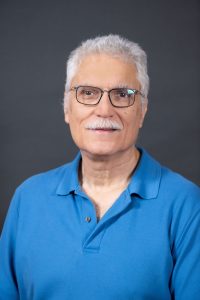
William Eisenstadt is a Professor in the Department of Electrical and Computer Engineering at the University of Florida. His research encompasses electronics, IoT applications for agriculture and public health, RF/microwave circuit design, and semiconductor testing. He holds a Ph.D., M.S., and B.S. in Electrical Engineering from Stanford University. Dr. Eisenstadt's research focuses on integrating IoT technologies with agricultural pest control, developing advanced testing methodologies for semiconductor devices, and designing RF/microwave systems. His work bridges hardware innovation with real-world applications in health, safety, and environmental monitoring. Recent publications demonstrate strong emphasis on semiconductor testing (BGA sockets, LDO regulators), 3D IC signal integrity, smart IoT devices for mosquito control, and biomedical ICs for drug delivery. Trends indicate cross-disciplinary convergence of microelectronics with biomedical and agricultural applications.
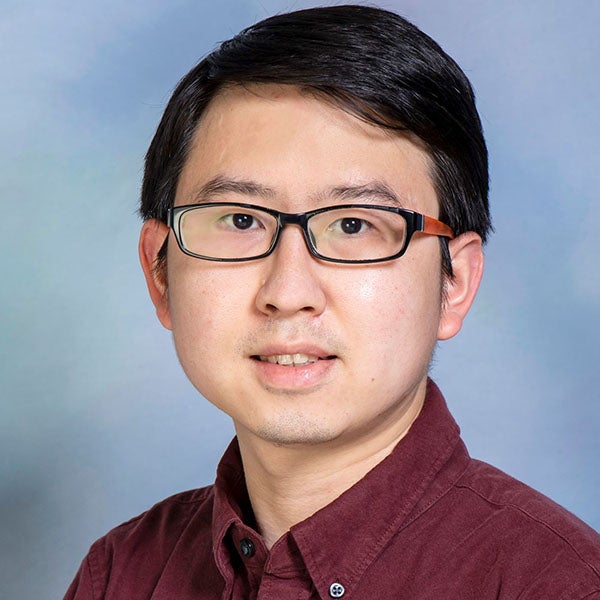
Robert Fox is an Associate Professor and ECE Associate Chair at the University of Florida's Department of Electrical & Computer Engineering. He holds a Ph.D. in Electrical Engineering from Auburn University (1986), an M.S. in Electrical Engineering from Auburn University (1981), and a B.S. in Physics from the University of Notre Dame (1972). His research focuses on analog integrated circuit design, with contributions to photonics, semiconductor technology, and high-density components. Notable awards include the UF EDGE Outstanding Faculty Award (2005) and the SRC Inventor Recognition Award (2005). His work spans cutting-edge areas like monolithic silicon photonics and 3D integrated laser technologies. While no advising or grant details are explicitly listed, his publications reflect a strong emphasis on innovation in electronics and biomedical applications.
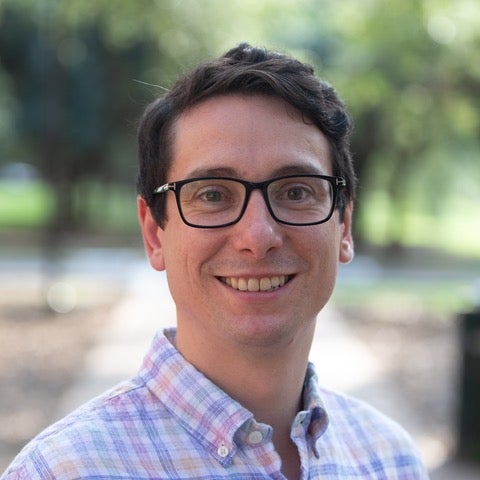
Dr. Guido Mueller is Professor of Physics at the University of Florida, affiliated with the Institute for High Energy Physics and holding a PhD from Universität Hannover. His research focuses on gravitational wave detection (LIGO/LISA) and particle physics (ALPS collaboration), with major contributions to Advanced LIGO's input optics subsystem enabling the first gravitational wave detection. Professor Mueller serves as Co-Spokesperson for the ALPS collaboration and holds leadership positions in the LISA Consortium. Research spans terrestrial/space gravitational wave observatories and detectors for axions/axion-like particles. Current projects investigate charge management systems for space inertial sensors, dimensional stability testing for space telescopes, and heterodyne detection techniques for ultra-weak electromagnetic fields. Publications demonstrate pioneering work in precision interferometry, quantum noise reduction, and space instrumentation. Recent articles focus on LISA pathfinder technology validation, UV-LED charge management systems, and axion detection methodologies using optical resonators. Scientific Awards: Gruber Cosmology Prize (2016) Breakthrough Prize in Fundamental Physics (2016) APS Fellow (2014) International Educator of the Year (2006) Secured over $20M in research funding from NSF, NASA, and private foundations. Supervised 16 PhD students and 11 postdoctoral scholars. Organized NSF-funded international research experience for undergraduate students in gravitational physics. Directs the Fields-CQAM Laboratory for Inference & Prediction, developing instrumentation for gravitational wave observatories and dark matter searches through collaborations with international partners.
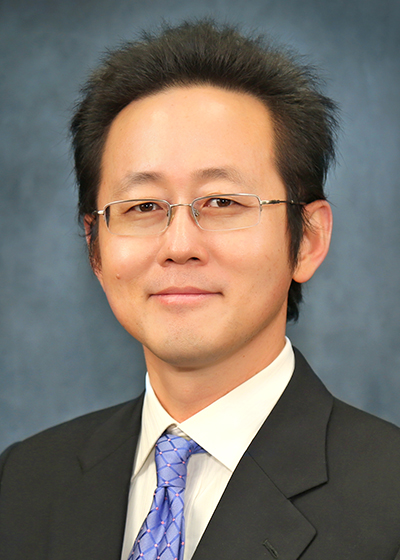
Dr. Songtao Chen is an Assistant Professor in the Department of Electrical and Computer Engineering at Rice University, where he is also part of the Rice University Quantum Initiative. He holds a B.S. in Optical Science and Engineering from Zhejiang University (2013) and a Ph.D. in Electrical and Computer Engineering from Brown University (2018). Prior to joining Rice, he was a postdoctoral research associate at Princeton University (2018-2021), focusing on quantum network nodes using single erbium ions. Dr. Chen's education includes: B.S. in Optical Science and Engineering, Zhejiang University, 2013 M.S. in Electrical and Computer Engineering, Brown University, 2016 Ph.D. in Electrical and Computer Engineering, Brown University, 2018 His research focuses on quantum information processing using solid-state spins, particularly leveraging silicon photonics to develop scalable quantum networks. Key areas include optically interfaced solid-state spins, quantum optics, and the integration of spin-based quantum registers with photonic circuits. His group aims to create hybrid silicon quantum chips that combine spin-based qubits with silicon photonic components for on-chip quantum processing. Dr. Chen has received notable awards, including the 2023 National Science Foundation (NSF) CAREER Award and the 2018 Outstanding Thesis Award from Brown University. National Science Foundation (NSF) CAREER Award (2023) Outstanding Thesis Award, Brown University (2018) William Prager Fellow, Brown University (2014) He advises students such as Adam and Ulises, who have contributed to significant milestones like the first group paper. His NSF CAREER Award supports research on controlling single T-center qubits. The group also engages interns and new lab members like Xiang Chen and Shengbin Yan, advancing projects in silicon quantum chips and spin-based systems. Dr. Chen leads the Quantum Defects and Photonics (QDP) Lab at Rice University, focusing on defect-based spin systems in silicon. The lab collaborates with funding agencies and institutions to develop hybrid quantum photonic chips and holds workshops to advance quantum defects research.
Scott Keene is an Assistant Professor in the Department of Materials Science and NanoEngineering at Rice University. He holds a B.S. from the University of Washington (2015) and a Ph.D. from Stanford University (2020), followed by a Marie Curie postdoctoral fellowship at the University of Cambridge. His research focuses on developing conducting polymer-based devices for neuroengineering applications, including bioelectronics, organic electronics, and neural interfaces. His lab designs materials with tailored properties for biosensors and neuroelectronic interfaces. Education: Ph.D. in Materials Science and Engineering, Stanford University, 2020 M.S. in Materials Science and Engineering, Stanford University, 2018 B.S. in Materials Science and Engineering, University of Washington, 2015 Research Interests: Development of conducting polymer devices for biomedical applications Mixed ionic-electronic transport phenomena Biosensor fabrication and optimization Neural interface design for neurotechnology His work bridges materials science, bioelectronics, and neuroengineering, with a focus on creating sustainable and biocompatible solutions. Awards: Marie Skłodowska-Curie Fellowship (2021) Materials Research Society Graduate Student Award (2020) JSPS Postdoctoral Fellowship (2019) Stanford Graduate Research Fellowship (2015) Lab and Collaborations: The Keene Lab at Rice University collaborates with interdisciplinary teams to advance bioelectronic tools for neuroscience. Research areas include materials design, biosensor characterization, and neuroelectronic interfaces.
Seungdeog Choi is a Professor in Electrical and Computer Engineering at Mississippi State University's Bagley College of Engineering, directing the Power Electronics and Energy System Lab (PEESL). Research focuses on: High-reliability power electronics design Wide-bandgap semiconductor applications Electric drive systems for traction and antennas Real-time condition monitoring Recent publications emphasize electromagnetic interference mitigation, arc fault detection, and lifetime prediction of power modules. Emerging interests include cyber-physical security of electric drives and ultra-high-speed motors for portable antenna systems.
Chun-Hung Liu is an Associate Professor in the Department of Electrical and Computer Engineering at Mississippi State University (MSU). He previously held positions at the University of Michigan, National Chiao Tung University, and Qualcomm Inc. His research focuses on machine learning theory, stochastic control, data science, wireless communication, and cyber-physical systems security. Prof. Liu has received prestigious awards including the Air Force Research Lab Faculty Fellowship (2023), Taiwan’s Young Scholar Award (2015), and an IEEE Globecom Best Paper Award (2014). Education: Ph.D., Electrical and Computer Engineering, University of Texas at Austin M.S., Mechanical Engineering, MIT M.S., Electrical Engineering, National Taiwan University B.S., Mechanical Engineering, National Taiwan University Research Interests: Dr. Liu’s work spans theoretical and applied domains, including deep learning topology analysis, edge computing optimization, federated learning architectures, and underwater acoustic communication systems. He explores practical solutions for energy-efficient computing, cyber-physical system security, and next-generation wireless networks (e.g., 5G/6G, RIS-enabled systems). Publications: His recent work emphasizes interdisciplinary approaches, with articles addressing topics like RIS-assisted MIMO systems, federated learning over UAV networks, and solar-powered edge computing. These studies highlight innovations in both algorithm design and system-level performance evaluation. Awards: Air Force Research Lab Faculty Fellowship (2023) Taiwan’s Young Scholar Award (2015) IEEE Globecom Best Paper Award (2014) Advising & Grants: While specific grant details are not provided, his publications indicate sustained research activity supported by military and academic collaborations. His lab focuses on experimental platforms for federated learning and wireless mesh networks, as evidenced by a mini-PC-based testbed described in 2022 work. Labs/Teams: Leads a research group at MSU investigating edge computing, federated learning, and reconfigurable intelligent surface technologies. Collaborates with industry partners (e.g., Qualcomm) and international institutions on communication systems and AI integration.
Behnaz Papari is an Assistant Professor at Clemson University with appointments in Automotive Engineering and Electrical and Computer Engineering. She directs the Secure Energy and Automation Laboratory (SEAL), focusing on secure controls for cyber-physical energy systems. Her research explores power systems control, cyber-physical security, electric vehicle technologies, hardware-in-the-loop methodologies, renewable energy integration, and stochastic optimization. She specializes in resilient infrastructure for transportation and energy networks. Recent publications (2024-2025) address co-simulation techniques, electric ship power systems, cyberattack detection in hybrid vehicles, battery degradation modeling, and microgrid optimization. Key innovations include adaptive delay compensation, neural network-based threat detection, and evolutionary optimization for renewable systems. She collaborates with industry partners including Hyundai, Kia Motors, and naval engineering consortia to validate research in real-world applications.
Dr. Andrew O'Hara is an Assistant Professor of Physics specializing in computational materials physics at Western Michigan University. He holds a Ph.D. from the University of Texas at Austin and a B.S. from Haverford College. Research utilizes density functional theory to model materials properties including defects, interfaces, ferroelectrics, and 2D materials. Current projects investigate magnetoelectric coupling in 2D systems, van-der-Waals-layered ferro-ionic conductors, and radiation effects on materials. He has published over 40 papers across condensed matter physics and materials science.
Dr. Dimitris Ioannou is a Professor in the Department of Electrical and Computer Engineering at George Mason University's Volgenau School of Information Technology and Engineering. He specializes in semiconductor device physics, nanoelectronics, and reliability engineering. His work includes pioneering contributions to SOI device reliability, nanowire-based memory, and quantum coupling in 2D materials. Education: PhD in Solid-State Electronics, Manchester University (1978) MS in Solid-State Electronics, Manchester University (1975) BS in Physics, Thessaloniki University (1974) Research Interests: Nanoelectronics, SOI technology, and CMOS reliability Nanowire-based non-volatile memory Quantum coupling in 2D materials Gas sensors using nanowire and graphene systems Grants & Awards: 2008 Outstanding Research Faculty Award (George Mason University) IEEE Fellow (2008) Two-time recipient of IBM Faculty Award Principal Investigator for NIST-funded projects on GeRAM and CMOS reliability Advising & Contributions: Advised over 30 research students. Authored/co-authored 250+ publications and conference presentations. Leadership roles at IEEE International SOI Conferences (2001–2002). Labs & Collaborations: Volgenau School of Engineering labs focusing on nanoelectronics and semiconductor reliability. International collaborations include Grenoble Polytechnic (France) and institutions in Greece.
Dr. Ye Cao is an Associate Professor in the Department of Materials Science and Engineering at The University of Texas at Arlington (UTA). He holds a B.S. and M.S. from Shanghai Jiao Tong University and a Ph.D. from Pennsylvania State University. Before joining UTA, he was a Postdoctoral Researcher at Oak Ridge National Laboratory. University: The University of Texas at Arlington Department: Materials Science and Engineering Academic Rank: Associate Professor (since 2024) His research focuses on phase-field simulations, multi-scale modeling of energy storage materials, resistive switching in memristors, and ferroelectric domain dynamics. Key projects include modeling lithium metal battery dendrite inhibition, solid-state electrolytes, and ferroelectric oxide properties. Dr. Cao has secured grants from the National Science Foundation (NSF) and American Chemical Society (ACS), totaling over $8 million. He has authored/co-authored over 60 peer-reviewed articles in journals like Nature Materials , Nature Communications , and Advanced Materials . Key Awards: STARs Award, UT System (2017) Silver Medal in Phase-field Symposium (2014) Robert E. Newnham Award (2013) He advises graduate students and postdocs in topics ranging from battery materials to computational modeling. Teaching includes courses like Computational Materials Science and Phase Transformations . Dr. Cao collaborates on interdisciplinary projects, including the UTA/NU Partnership for Functional Materials. His lab focuses on translating computational insights into practical energy storage and electronic devices.
Zoran Prijic is a Full Professor at the Faculty of Electronic Engineering, University of Nis, Serbia, specializing in Microelectronics since 2004. His academic career spans over three decades at the same institution, covering semiconductor research, energy harvesting systems, and device reliability. Education: PhD in Microelectronics, Faculty of Electronic Engineering, University of Nis, 1993 Master's degree in Microelectronics, Faculty of Electronic Engineering, University of Nis, 1990 Bachelor's degree in Electronic Components, Faculty of Electronic Engineering, University of Nis, 1987 His research centers on Microelectronics with emphasis on energy harvesting for wireless sensor networks using thermoelectric and photovoltaic technologies, semiconductor device reliability under radiation and bias stress, and PCB-based sensor design. Key contributions include NBTI analysis in power MOSFETs, thermal energy harvesting systems, and radiation-hardened devices. Publication trends show consistent focus on applied microelectronics: recent works (2012-2017) target energy harvesting and device reliability, while earlier research (1996-2008) covers semiconductor characterization, CMOS photodiodes, and PCB technology. The corpus demonstrates strong industry relevance in sustainable energy and industrial sensing applications. Scientific awards: No awards mentioned in source material. He currently leads one national research project. As a senior professor, he mentors graduate students in microelectronics despite no specific advisees being listed. His work bridges academic research and industrial applications through PCB technology innovations. Professor Prijic operates within the Department of Microelectronics research group at the Faculty of Electronic Engineering, collaborating across power engineering and computer science departments on energy harvesting systems and semiconductor reliability projects.
Ljubomir M. Vracar is an Assistant Professor at the Faculty of Electronic Engineering, University of Niš, specializing in Microelectronics and Microsystems. He received his PhD (2014), MSc (2009), and BSc (1999) in Microelectronics from the same institution. His research focuses on sensor technology, energy harvesting, and advanced electronic systems. Education: PhD in Microelectronics, Faculty of Electronic Engineering, University of Niš (2014) MSc in Microelectronics, Faculty of Electronic Engineering, University of Niš (2009) BSc in Electronic Components, Faculty of Electronic Engineering, University of Niš (1999) Research interests include developing capacitive sensors, thermoelectric energy systems, and photovoltaic solutions. He holds four patents, including innovations in pressure sensing keyboards and thermoelectric self-powered devices. His publications span topics like vibration analysis in industrial equipment and NBTI measurement techniques for power transistors. Current projects: Engaged in 1 national research project. Active in the Microelectronics research group at the Faculty. Contact: ljubomir.vracar@elfak.ni.ac.rs | Faculty Profile
Prof. Dr. Barış Bayram is a faculty member at Middle East Technical University (College of Engineering, Department of Electrical and Electronics Engineering). His research focuses on microelectromechanical systems (MEMS), diamond-based ultrasonic transducers, and medical imaging technology. He supervises the ULTRAMEMS research laboratory, which has secured multiple patents and produced numerous high-achieving students pursuing advanced degrees at institutions like Stanford, ETH Zurich, and Georgia Tech. Key research areas: MEMS, CMUT arrays, diamond electronics, acoustic crosstalk reduction Notable projects: ULTRALIGHT business idea, fiber optic MEMS microphone Major achievements: TÜBA GEBIP Award (2011), 4 US/EU/TR patents issued
Thomas Van de Velde is a Part-Time Lecturer at the Gordon Institute, Tufts University School of Engineering. His research focuses on advanced materials for energy harvesting, semiconductor technologies, and optoelectronic systems. He has contributed to innovations in thermophotovoltaics (TPV), metamaterials for infrared applications, and quantum dot-based photodetectors. His work emphasizes high-temperature materials like iridium-based metamaterials and GaSb/GaAs heterostructures. Key areas include optimizing semiconductor films (GeSn, GaAsBi), developing selective emitters for TPV systems, and enhancing photodetection via nanoantenna integration. His research bridges material science, photonics, and device engineering for applications in renewable energy and aerospace. Van de Velde has collaborated on grants including the NSF CAREER Award for metamaterial-enhanced thermal energy harvesters. His publications span over 15 years, with recent work advancing infrared photodetectors, plasmonic structures, and high-efficiency energy conversion systems. He advises on cutting-edge fabrication techniques and optical characterization methods.