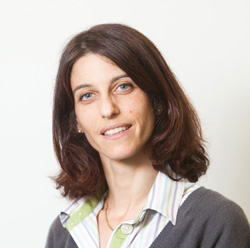
Xi Ling is an Associate Professor in the Department of Chemistry and Materials Science & Engineering at Boston University. They lead the Ling Group, which focuses on the fundamental science and applications of nanomaterials, particularly 2D van der Waals materials. Their research integrates synthesis, characterization via advanced spectroscopy, and device development for energy conversion and chemical sensing. The group utilizes facilities at the Photonics Center for cutting-edge materials analysis. Education: B.A. in Chemistry (Lanzhou University, 2007); Ph.D. in Physical Chemistry (Peking University, 2012). Research emphasizes interdisciplinary approaches to synthesize novel 2D crystals, investigate their physical properties through Raman and photoluminescence spectroscopy, and engineer flexible, transparent devices. Recent publications highlight innovations in strain engineering, ferroelectricity modulation, and exciton dynamics in materials like NiPS3 and GaSe. Students gain expertise applicable to academia and industry roles in semiconductor manufacturing, materials engineering, and instrumentation. The group’s work bridges foundational science and practical applications, addressing challenges in nanoelectronics and sustainable energy technologies.
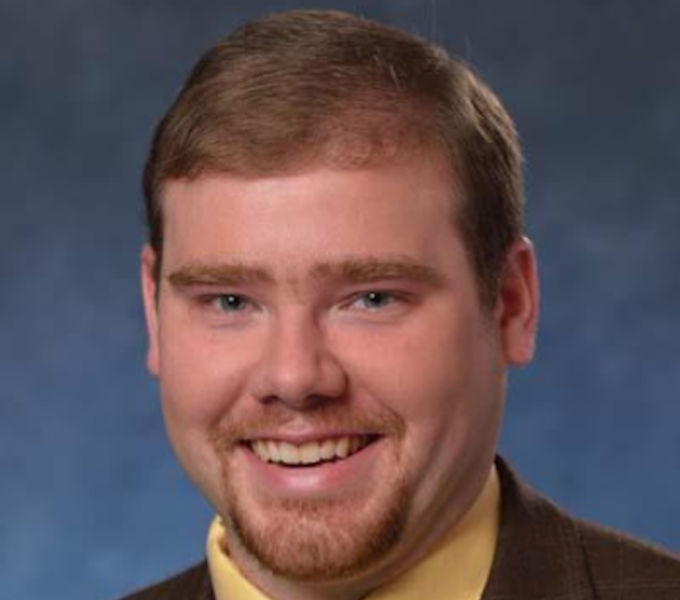
Kyle McCall is an Assistant Professor in the Department of Materials Science and Engineering at the University of Texas at Dallas, within the Erik Jonsson School of Engineering and Computer Science. He holds a PhD in Applied Physics from Northwestern University (2019) and a B.S. in Physics and Mathematics from the University of Notre Dame (2014). He served as a Postdoctoral Research Fellow at ETH Zurich, Switzerland, from 2019 to 2021. Research Interests: Dr. McCall's research lies at the intersection of materials science, chemistry, and physics, focusing on the synthesis and characterization of complex semiconductors for energy and radiation detection applications. His group employs a materials-by-design approach to develop novel functional optoelectronic materials, particularly halide perovskites and related compounds. Key areas include crystal growth (via Bridgman method), X-ray crystallography, and the development of materials for solar cells, light-emitting devices, X-ray photodetectors, and neutron/gamma-ray scintillators. Publication Trends: His recent publications (all from 2021) highlight a strong focus on halide perovskite materials for radiation detection and optoelectronics. Themes include room-temperature gamma-ray detection, neutron imaging using luminescent materials, structural instabilities in perovskites, and optical behavior tuning via cation engineering. The work combines fundamental structure-property studies with device-relevant performance metrics. Scientific Awards and Memberships: Member, American Chemical Society (ACS) Member, Materials Research Society (MRS) Advising and Grants: As a tenure-track faculty member, Dr. McCall leads the McCall Research Group at UT Dallas, mentoring students in interdisciplinary materials research. He was part of the 2021 cohort of new tenured/tenure-track faculty at UT Dallas. While specific grants are not listed, his research program is clearly supported by institutional funding and infrastructure, including crystal growth and characterization facilities. Laboratories and Teams: He founded the crystal growth component of the ETH+ SynMatLab facility during his postdoc at ETH Zurich. At UT Dallas, he leads his own research group focused on materials chemistry and functional device integration, continuing his work on single crystal growth and optoelectronic characterization.
Georg Fantner is an Associate Professor at the Swiss Federal Institute of Technology Lausanne (EPFL) with dual appointments in the School of Engineering (STI) within the Institute of Bioengineering and the School of Life Sciences (SV) for teaching. He directs the Laboratory for Bio- and Nano-Instrumentation (LBNI) and holds leadership roles including President of the Open Science Strategic Committee and the Association des Professeurs de l'EPFL. Research Focus: Bioinstrumentation, Nanotechnology, Scanning Probe Microscopy, and Metrology Teaching: Structural Mechanics for Life Sciences, Metrology, and Metrology Practicals His research pioneers advanced instrumentation for nanoscale characterization, emphasizing data-driven approaches to enhance microscopy techniques. Recent work integrates deep learning with scanning probe microscopy for real-time biological imaging and develops novel MEMS devices for fluid-compatible nanoscale manipulation. Key innovations include hermetically sealed sample chambers for pathogen studies and deterministic nanotopography engineering. Professor Fantner actively mentors 7 current PhD students and has supervised 14 graduates. His laboratory fosters interdisciplinary collaboration across engineering, physics, and life sciences to advance nanoscale measurement technologies and instrumentation development.
Michal Lipson serves as the Eugene Higgins Professor of Electrical Engineering and Professor of Applied Physics at Columbia University's Fu Foundation School of Engineering and Applied Science. Elected to both the National Academy of Engineering and National Academy of Sciences, she pioneered critical building blocks in silicon photonics that have transformed the field, with over 50,000 related publications annually. Her research has generated more than 250 scientific publications and 45 issued patents. Lipson's research focuses on nanophotonics and silicon photonics, where she demonstrated the ability to tailor electro-optic properties of silicon in landmark 2004 and 2005 Nature papers. Her work has enabled the development of photonic devices and circuits that now form the foundation of over 1,000 papers published yearly. She investigates novel optical phenomena while developing practical applications that address major bottlenecks in microelectronics. Her research spans fundamental physics to practical device implementation, with particular emphasis on integrated photonic systems. Analysis of her recent publications reveals a strategic expansion from foundational silicon photonics into emerging applications including quantum information processing, machine learning acceleration, biomedical sensing, and topological photonics. While maintaining core expertise in silicon-based devices, her work increasingly incorporates 2D materials, heterogeneous integration, and novel optical phenomena to push performance boundaries. The research demonstrates consistent progression from fundamental device physics to system-level implementations with practical applications. National Academy of Engineering (2025) National Academy of Sciences MacArthur Fellowship Blavatnik Award Optica's R.W. Wood Prize IEEE Photonics Award John Tyndall Award NAS Comstock Prize in Physics Thomson Reuters Top 1% Highly Cited Researcher (annually since 2014) Professor Lipson has mentored an exceptional research group, graduating 40 PhD students and 2 MS students, with numerous postdocs and visiting researchers. Her alumni occupy prominent positions including professorships at major universities (Rochester, Ottawa, UNICAMP, Johns Hopkins), leadership roles at Intel, Bell Labs, and startups she co-founded (HyperLight, Voyant Photonics). Her laboratory has received substantial research funding supporting cutting-edge work in nanofabrication, optical characterization, and device development. Current research directions include quantum photonics, AI-accelerated optical systems, and novel materials integration. The Lipson Research Group operates state-of-the-art facilities for nanophotonic device design, fabrication, and characterization. The team comprises principal investigators, postdoctoral researchers, PhD students, and administrative staff working collaboratively across disciplines including electrical engineering, materials science, physics, and applied physics. The group maintains strong industry partnerships while pursuing fundamental scientific advances in light-matter interactions at the nanoscale.
Jon Schuller is a Professor in the Department of Electrical and Computer Engineering at the University of California, Santa Barbara (UCSB), within the College of Engineering. His research focuses on nanophotonics, metamaterials, plasmonics, and their applications in energy-efficient technologies such as photovoltaics, thermal management systems, and advanced optical devices. He leads the Schuller Lab, which explores engineered metasurfaces and naturally occurring materials to control light-matter interactions at subwavelength scales. His work bridges fundamental science (e.g., quantum phenomena in hybrid perovskites) and engineering (e.g., reconfigurable semiconductor meta-optics). He is affiliated with the California NanoSystems Institute (CNSI) and actively contributes to interdisciplinary research initiatives. Contact: jonschuller@ece.ucsb.edu, Office 3221C Engineering Science Building. Research interests include directional light emission control via metasurfaces, thermal radiation tuning using phase-change materials, and the development of high-efficiency photonic devices. His lab emphasizes fabrication and characterization of nanophotonic structures, with applications ranging from space technology to exoplanet imaging systems. Recent efforts focus on electrically tunable metasurfaces and multipolar optical phenomena in layered materials. Key technical contributions involve designing reconfigurable optical antennas, optimizing metasurface-based LEDs, and exploring magnetic dipole emission in 2D perovskites. His team collaborates across disciplines to address challenges in energy, aerospace, and quantum technologies. Current opportunities include postdoctoral positions in nonlinear optics and photonics.
Mark G. Kuzyk is the Regents Professor of Physics at the Department of Physics and Astronomy , Washington State University (WSU), within the College of Arts and Sciences . His research focuses on Nonlinear Optics , Photomechanical Materials , and Polymer Fibers , with contributions to the theoretical and experimental understanding of quantum limits in optical responses. He pioneered work on polymer fiber optics and developed novel photomechanical actuator technologies. His lab specializes in creating single-mode polymer optical fibers and has advanced research on self-healing photodegradation in dye-doped polymers. Key achievements include his seminal 2000 paper on Physical Limits on Electronic Nonlinear Molecular Susceptibilities , featured in Physical Review Letters , and a book on Polymer Fiber Optics . His work on sum rules for quantum limits has been highlighted in Circuits & Devices Magazine and media outlets like National Geographic and Wired News . Research Interests span: Nonlinear Optics and Quantum Optics Photomechanical and Photothermal Effects Photonic Crystals and Polymer Waveguides Self-healing materials and device applications Lab Facilities include specialized equipment for fabricating and testing polymer optical fibers, with notable studies on disperse red 1 azobenzene dye-doped PMMA fibers . His group investigates both fundamental physics and applied technologies, such as all-optical computing components and energy-efficient photonic devices.
Dr. Xiaofeng Qian is an Associate Professor in the Department of Materials Science & Engineering at Texas A&M University, with joint appointments in Physics and Astronomy, and Electrical & Computer Engineering. His research focuses on materials theory , quantum materials design , and high-throughput computational discovery , particularly for 2D materials and energy applications . Educational Background: Ph.D., Nuclear Science and Engineering, Massachusetts Institute of Technology (2008) B.S., Engineering Physics, Tsinghua University (2001) Research spans first-principles electronic structure methods , nonlinear optical responses , and multiscale modeling of electronic, thermal, and ionic transport. Key areas include quantum spin Hall effect , ferroelectric switching , and machine learning for materials prediction . Notable Awards: Dean of Engineering Excellence Award (2024) Engineering Genesis Multidisciplinary Award (2024) AZZ Faculty Fellow (2021) NSF CAREER Award (2018) Manson Benedict Fellowship (2006) Actively recruiting PhD, MS, and UG researchers with backgrounds in physics, materials science, or computational methods. Collaborates extensively on hybrid AI-materials projects and topological device concepts .
Hai-Feng (Frank) Ji is Professor of Chemistry and affiliated faculty in Materials Science at Drexel University. He earned his PhD from Chinese Academy of Sciences and has published over 215 papers spanning nanomaterials, sensors, and drug design. His research develops phosphorus-based 1D/2D nanomaterials for energy applications, microcantilever biosensors for medical diagnostics, plasma-treated polymers for biomedical use, and structure-based cancer therapeutics. Recent breakthroughs include high-mobility amorphous red phosphorus films and ultra-long crystalline phosphorus nanowires. He authored the ACS book 'Fundamentals and Applications of Phosphorous Nanomaterials' and holds patents in sensor design and nanomaterial synthesis.
Caterina Ducati is a Professor of Nanomaterials at the Department of Materials Science & Metallurgy, University of Cambridge. Her research focuses on nanomaterials, their structure-property relationships, and applications in energy technologies, particularly photovoltaics, photocatalysis, and optoelectronics. Research Interests: In situ electron microscopy of nanomaterials under external stimuli (electrical, thermal, photonic), growth mechanisms of nanostructures (carbon nanotubes, semiconductor nanowires), and degradation processes in energy devices. Methodologies: Advanced characterization via HAADF STEM, TEM, and development of tools for real-time nanoscale observation. Recent publications highlight her work on perovskite solar cells, battery materials (Li, Zn, Na-ion), and ferroelectric thin films. She actively investigates degradation mechanisms in energy devices and develops novel fabrication techniques for nanocomposites. Scientific Recognition: A&B Post-doctoral Fellowship winners (institutional award) She supervises research groups utilizing the Wolfson Electron Microscopy Suite and contributes to interdisciplinary collaborations in materials for sustainability and healthcare applications.
Dr Brandon M Grainger is an Eaton Faculty Fellow and Associate Professor of Electrical and Computer Engineering at the University of Pittsburgh’s Swanson School of Engineering, where he also directs the Electric Power Technologies Laboratory, serves as Associate Director of the Energy GRID Institute, and co-directs Pitt AMPED. A key architect of Pitt’s electric power program since 2008, he focuses on advanced power conversion, high-voltage electronics, wide-band-gap semiconductors, and aerospace power systems. Education PhD, Electrical Engineering (Power Conversion), University of Pittsburgh, 2014 MS, Electrical Engineering, University of Pittsburgh, 2011 BS, Mechanical Engineering & Minor in Electrical Engineering, University of Pittsburgh, 2007 Executive Education Certificate, Tepper School of Business, Carnegie Mellon University, 2019 Research Focus Dr Grainger’s work lies at the intersection of power electronics, high-voltage engineering, and sustainable energy systems. He specializes in medium- and high-voltage power electronics (HVDC, STATCOM), resonant converters, and ultra-high-power-density designs leveraging SiC and GaN semiconductors. His investigations extend to electric-vehicle traction drives, solid-state transformers, optimized magnetics for aerospace applications, and resilient microgrids. He and his students routinely collaborate with NASA JPL, Johns Hopkins APL, Honeywell Aerospace, and the Naval Research Laboratory, leveraging Pitt’s NSF SHREC center to push the boundaries of power conversion in space and defense systems. Selected Research Themes High-frequency, high-density DC/DC converters for satellite power systems Radiation-tolerant GaN converters and point-of-load power stages Medium-voltage testbed development (13.8 kV, 5 MVA) Rare-earth-free permanent-magnet machine topologies Model-predictive control of multi-phase drives and microgrids Honors & Awards 2024 IEEE Region 2 Outstanding Educator Award 2024 Pitt STRIVE Outstanding DEI Service Award 2019 ESWP Engineer of the Year 2019 ASEE 2nd Place Best Paper Award 2019 SRI Undergraduate Best Mentor Award Richard K. Mellon Endowed Graduate Fellowship National Academies of Science & Engineering Ambassador Senior Member, IEEE Grants & Industry Partnerships Dr Grainger’s research has been continuously funded by federal agencies and industry partners including NASA JPL, Johns Hopkins APL, Honeywell Aerospace, the Naval Research Laboratory, Eaton, and the National Science Foundation through the SHREC Center. These awards support graduate students and post-docs working on next-generation power systems for aerospace, naval, and terrestrial applications. Laboratories & Teams Director, Electric Power Technologies Laboratory (EPTL) Associate Director, Energy GRID Institute Co-Director, Pitt AMPED (Advanced Multimodal Power and Energy Development) Faculty Affiliate, NSF SHREC Center
Christian Enz is a Full Professor at École Polytechnique Fédérale de Lausanne (EPFL), where he serves as Director of the Institute of Microengineering and Head of the Integrated Circuits Laboratory. With M.S. and Ph.D. degrees in electrical engineering from EPFL (1984 and 1989), he has established himself as a leading researcher in low-power analog circuit design and semiconductor device modeling. His research interests focus on very low-power analog and RF IC design , semiconductor device modeling , and increasingly on cryogenic electronics for quantum computing applications . Professor Enz is particularly known for his work on FDSOI MOSFET behavior at cryogenic temperatures, developing comprehensive models that address challenges in subthreshold swing saturation, threshold voltage shifts, and self-heating effects. As a Life Fellow of IEEE with 282 publications and over 7,400 citations, Professor Enz has made significant contributions to the field. His recent work demonstrates how the $G_{m}/I_{D}$ design methodology remains effective in advanced technology nodes and can be extended to cryogenic temperature operation. His research bridges fundamental semiconductor physics with practical circuit design considerations for quantum computing interfaces. Life Fellow, IEEE Director of the Institute of Microengineering, EPFL Head of the Integrated Circuits Laboratory 282 publications with 7,400+ citations Specialist in cryogenic CMOS for quantum computing Professor Enz's work on cryogenic electronics addresses critical challenges for quantum computing scalability. By developing accurate models for transistor behavior at temperatures as low as 3.3K, his research enables the design of specialized control electronics that can operate inside dilution refrigerators, potentially solving major wiring constraints that currently limit quantum computer scaling. His laboratory continues to advance the understanding of semiconductor device physics at cryogenic temperatures while developing practical circuit design methodologies for this emerging application domain.
Boris Murmann is Professor at Stanford University, specializing in integrated circuit design, mixed-signal computing, and energy-efficient AI hardware. His research advances neural interface technologies, analog design automation, and tinyML systems. Recent work develops ultra-low-power neural recording ICs for brain-computer interfaces, RRAM-based memory systems, and open-source semiconductor design frameworks. Publications demonstrate innovations in compressive sensing for neural data, hardware-algorithm co-design, and reinforcement learning for analog circuit synthesis. Significant contributions include Medusa (TinyML processor), EMBER (RRAM macro), and methodologies for coarsely-quantized computer vision and analog design automation.
David A. Muller serves as the Samuel B. Eckert Professor of Engineering in the School of Applied and Engineering Physics at Cornell University and co-directs the Kavli Institute at Cornell for Nanoscale Science. His research group focuses on developing quantitative electron microscopy methods to understand materials properties at the atomic scale, with particular emphasis on sustainable energy applications and quantum materials. Muller's laboratory utilizes some of the world's highest resolution electron microscopes housed in specially designed, environmentally isolated rooms. Muller received his undergraduate education at the University of Sydney and earned his Ph.D. in Physics from Cornell University in 1996. Between 1997 and 2003, he was a member of the technical staff at Bell Laboratories, where he applied his expertise in imaging single atoms and atomic-scale spectroscopy to determine the physical limits of transistor miniaturization. In 2003, he returned to Cornell as a faculty member, where he has since established himself as a leader in advanced electron microscopy techniques. Muller's research spans multiple frontiers in materials science, with particular focus on understanding how electronic-structure changes at the atomic scale control macroscopic behavior in diverse systems like turbine blades, fuel cells, and transistors. His current work emphasizes the physics of renewable energy materials, atomic-scale control of materials to create electronic phases that cannot exist in bulk, and developing hardware and algorithms for 'big data' acquisition from high-bandwidth pixelated electron microscope detectors. His group's work bridges theoretical physics and experimental techniques, requiring researchers who can think in both real and reciprocal space while considering both fundamental principles and practical applications. Analysis of Muller's recent publications reveals a strong trend toward advancing electron ptychography and 4D-STEM techniques for atomic-scale imaging. His group has pioneered methods for 3D atomic-scale metrology, strain mapping, and imaging of radiation-sensitive materials. The research spans applications from semiconductor technology to quantum materials and energy storage systems, demonstrating the versatility of his microscopy approaches across multiple scientific domains. Top 100 Young Innovator by Tech Review Magazine (2003) Burton Medal from Microscopy Society of America (2006) Ernst Ruska Prize of German Society for Electron Microscopy (2021) John Cowley Medal from International Federation of Societies for Microscopy (2023) Fellow of American Physical Society Fellow of American Association for the Advancement of Science Fellow of Microscopy Society of America Muller has mentored an extensive group of students and postdocs who have gone on to successful careers in academia and industry. His former students hold faculty positions at institutions including Rice University, University of Southern California, Seoul National University, Colorado School of Mines, and the University of Michigan, among others. His research has been supported by substantial grants, including a $22.5M NSF grant that accelerates materials discovery. The Muller lab maintains close collaborations with the Kavli Institute at Cornell and PARADIM (Platform for the Accelerated Realization, Analysis, and Discovery of Interface Materials). The Muller lab operates at the forefront of electron microscopy, housing specialized instrumentation including high-resolution transmission electron microscopes in environmentally isolated rooms. The group collaborates extensively with other research teams at Cornell and worldwide, focusing on understanding materials atom by atom. Current research directions include applying machine learning to electron microscopy data analysis, developing cryogenic techniques for studying low-melting-point materials, and exploring quantum phenomena in engineered materials systems.
Raisul Islam is an Assistant Professor of Materials Engineering at Purdue University, with a courtesy appointment in Electrical and Computer Engineering. His research focuses on advanced materials for energy technologies, semiconductor devices, and nanoscale memory systems. He holds affiliations with the College of Engineering and is actively involved in interdisciplinary collaborations. His work emphasizes the development of novel materials and device architectures for applications in solar energy, resistive memory, and neuromorphic computing. Key areas include photovoltaic cell optimization, phase-change memory innovation, and the integration of nanotechnology with electronics. Notable research trends from his publications (2020–2023) highlight advancements in tandem solar cell efficiency, thermal management in resistive memory, and multilevel switching mechanisms in ferroelectric tunnel junctions. His work bridges fundamental materials science with practical device engineering, addressing both performance and scalability challenges. Dr. Islam’s lab focuses on experimental and computational materials characterization, with a focus on thin films, nanoscale interfaces, and energy-efficient electronics. His contributions span academic journals and industry collaborations, targeting next-generation energy and computing technologies.
Abhijit Sarkar is a Professor in the Department of Civil and Environmental Engineering at Carleton University, Ottawa. His work centers on computational dynamics and probabilistic modeling, with office MC 3076 in the Minto Centre for Advanced Studies in Engineering and contact details including phone (613) 520-2600 x6320 and email abhijit_sarkar@carleton.ca . Education: D.Phil. from University of Oxford M.Sc. from Indian Institute of Science (IISc) B.E. from Calcutta University Professional Engineer (P.Eng.) designation His research drives innovation in uncertainty quantification for complex engineering systems. Core interests include dynamics of nonlinear structures, probabilistic mechanics for stochastic finite element methods, and Bayesian inference frameworks for parameter estimation. He pioneers scalable high-performance computing solvers for large-scale systems and sparse learning algorithms to address overfitting in statistical modeling. Recent publications (2022-2024) reveal three dominant trends: (1) Bayesian model calibration for stochastic compartmental systems applied to epidemiology and aerospace, (2) domain decomposition techniques for scalable uncertainty quantification in stochastic PDEs, and (3) sparse learning methods for nonlinear aerodynamic encoding. Key applications span wind turbine vibration analysis, flutter margin prediction, MEMS resonator optimization, and geospatial pandemic modeling. Scientific awards: No awards, fellowships, or medals listed in the source material Graduate supervision includes 6 current students (Ajay Kumar, John Clarabut, Nastaran Dabiran, Sakhi Mittal, Michael Pantano, Brandon Robinson) and 18 graduated students across 17 years (2006-2023). His research leverages high-performance computing for projects in structural dynamics, aeroelasticity, and computational epidemiology, frequently co-supervised with Dominique Poirel and Chris Pettit. Notable grants focus on wind tunnel validation for nonlinear systems and pandemic spread modeling. Based in the Minto Centre for Advanced Studies in Engineering, his computational mechanics group develops algorithms for stochastic dynamics using Carleton University's high-performance computing infrastructure. Collaborations span aerospace engineering (flutter analysis), civil infrastructure (seismic wave propagation), and public health (Covid-19 modeling).