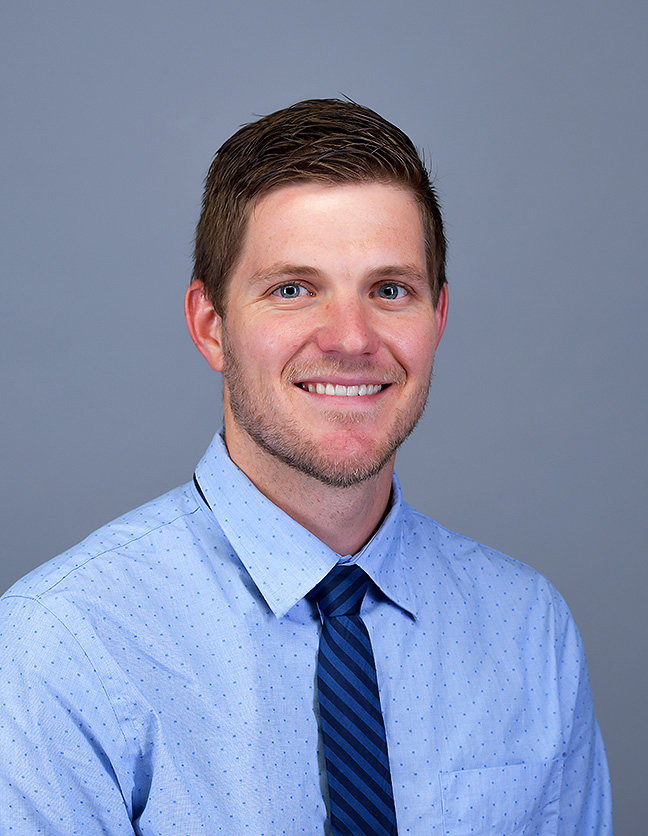
Miika Mattinen is a Researcher in the Department of Chemistry at the University of Helsinki. His research focuses on atomic layer deposition (ALD) processes for synthesizing advanced materials, particularly thin films with applications in catalysis, energy storage, and optoelectronics. He specializes in developing novel ALD precursors and processes for 2D materials like MoS₂ and transition metal dichalcogenides, as well as functional oxides and sulfides for electrochemical reactions. His work addresses challenges in low-temperature synthesis, thin film nucleation, and material stability, with applications in batteries, solar cells, and electrocatalysis. Key projects include investigations into ALD-based catalysts for the oxygen evolution reaction (OER), enhanced separators for Li-S batteries, and hybrid photoresists for extreme ultraviolet lithography. He has contributed to over 46 peer-reviewed publications and holds three notable awards, including the Young Investigator Award at ALD 2024. His research integrates materials chemistry, surface science, and nanotechnology to advance sustainable energy solutions and next-generation materials systems. Education: Doctoral Thesis in Chemistry (2015), University of Helsinki Grants: Research Council of Finland Postdoctoral Researcher Project (2022–2025) Labs/Teams: Collaborates with groups focused on ALD innovation, catalysis, and energy materials at the University of Helsinki and international institutions.
Gang Fan is an Assistant Professor in the Department of Chemical Engineering at the University of Rochester's Hajim School of Engineering and Applied Sciences. His research bridges microbial engineering and chemical engineering to develop sustainable polymer solutions, focusing on bio-inspired approaches to create environmentally friendly plastics and improve polymer industry sustainability through microbial systems. Research interests center on developing biohybrid systems for sustainable materials synthesis and environmental applications. Key areas include catalytic bio-nano interfaces for CO2 conversion, microbial synthesis of functional polymers, tunable nanocoatings for biological protection, and electrode design for electrochemical biosensing. The work combines synthetic biology with materials chemistry to create innovative solutions for plastic upcycling and environmental remediation. Publications demonstrate consistent focus on bio-electrochemical systems and functional nanomaterials, with recent advances in DNA-directed catalysis, microbial protection technologies, and sustainable polymer synthesis. The research trajectory shows increasing integration of biological systems with engineered materials for environmental applications. Awards and Honors: ACS PMSE Future Faculty Scholar (2022) Chemical Engineering Research Grant, MIT (2021-2022) Procter & Gamble Poster Competition Award: First Place, UT Austin (2019) Finalist for Excellence in Graduate Polymer Research, AIChE (2018) Paper of the Year Award, UT Austin (2018)
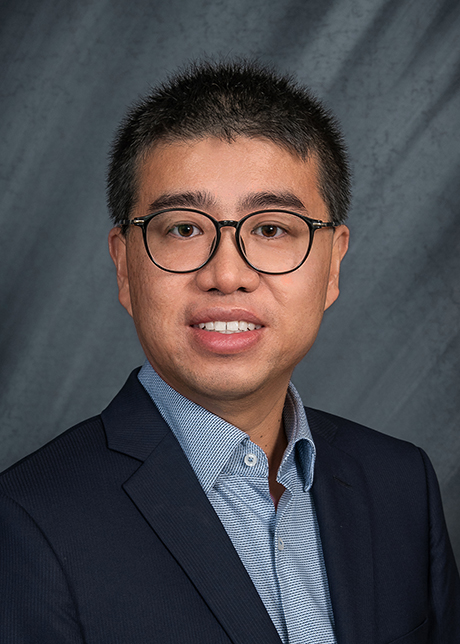
Salah Bedair is a Distinguished Professor in the Department of Electrical and Computer Engineering at North Carolina State University. His research focuses on semiconductor materials and devices, including atomic layer epitaxy, laser-assisted deposition, and chemical vapor deposition. He leads investigations into optical and microwave devices such as detectors, solar cells, and light-emitting diodes (LEDs). Bedair holds a Ph.D. in Engineering Science from the University of California, Berkeley, and has authored over 200 publications. His work emphasizes optimizing InGaN templates to overcome challenges in LED efficiency and spectral range extension. Bedair’s awards include the Alexander Quarles Holladay Medal for Excellence (2015), NC State Alumni Distinguished Graduate Professorship (1998), and IEEE Fellow (1992). His research has been highlighted in media for innovations in high-efficiency solar cells and LED technologies. Recent projects involve developing tunnel junctions with negative differential resistance and improving quantum well structures for broader applications in optoelectronics.
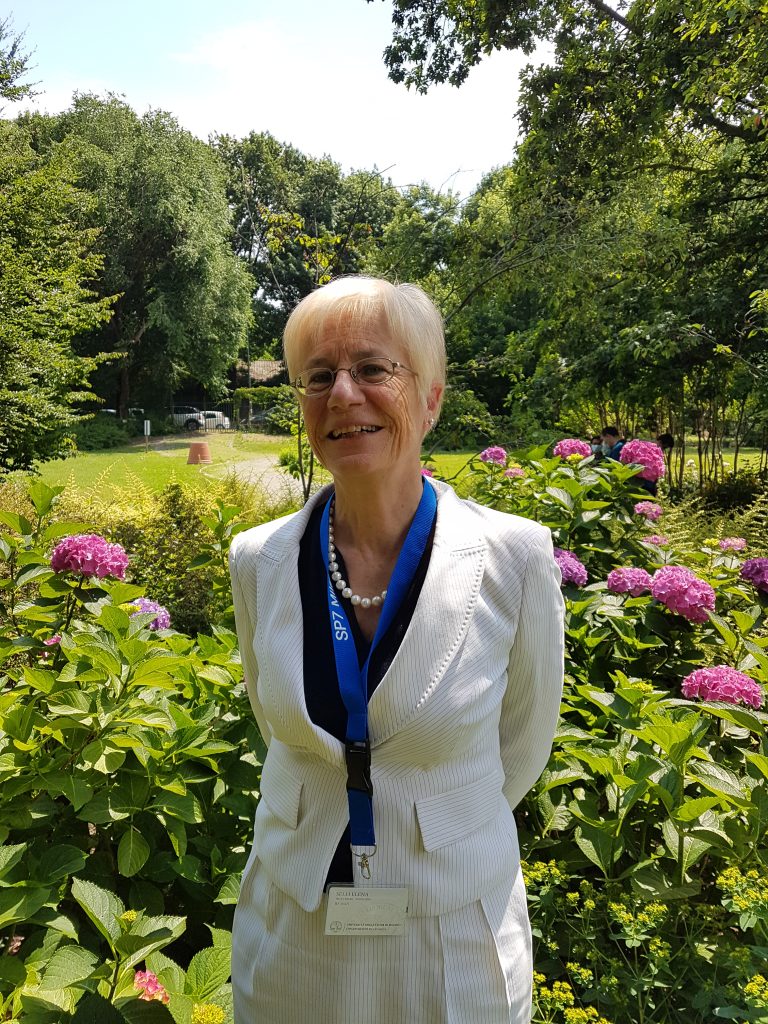
Prof. Elena Selli is a Full Professor of Physical Chemistry at the University of Milan's Chemistry Department. She holds a cum laude degree from the University of Pisa and Scuola Normale Superiore (1977), followed by a PhD at Scuola Normale Superiore (1978-1981). Her career includes roles as a research assistant at Scuola Normale Superiore and University of Milan, and later as an associate professor (1998-2010). She specializes in photocatalysis, semiconductor photochemistry, and solar energy conversion. Her research focuses on optimizing photocatalytic materials for environmental applications (e.g., water remediation) and energy systems (e.g., hydrogen production). She has authored over 200 papers, achieving an h-index of 52 (Scopus). Key roles include: President of the Physical Chemistry Division of the Italian Chemical Society (2016-2018), President of the Italian Photochemistry Group (2012-2014), and Board member of the International Conference on Photochemical Conversion and Storage of Solar Energy (2008-2014 and 2016-2022). She was awarded the 2024 Bonino Medal for her contributions to physical chemistry. Her research interests span Mechanistic aspects of photocatalysis on semiconductors Surface modification effects on photocatalytic pathways Development of efficient photocatalysts for solar energy applications Her work includes innovations in photoelectrochemical systems, such as ammonia abatement and solar water splitting. She leads the UNIMI Photocatalysis Group and collaborates with the Interdisciplinary Centre for Nanostructured Materials and Interfaces.
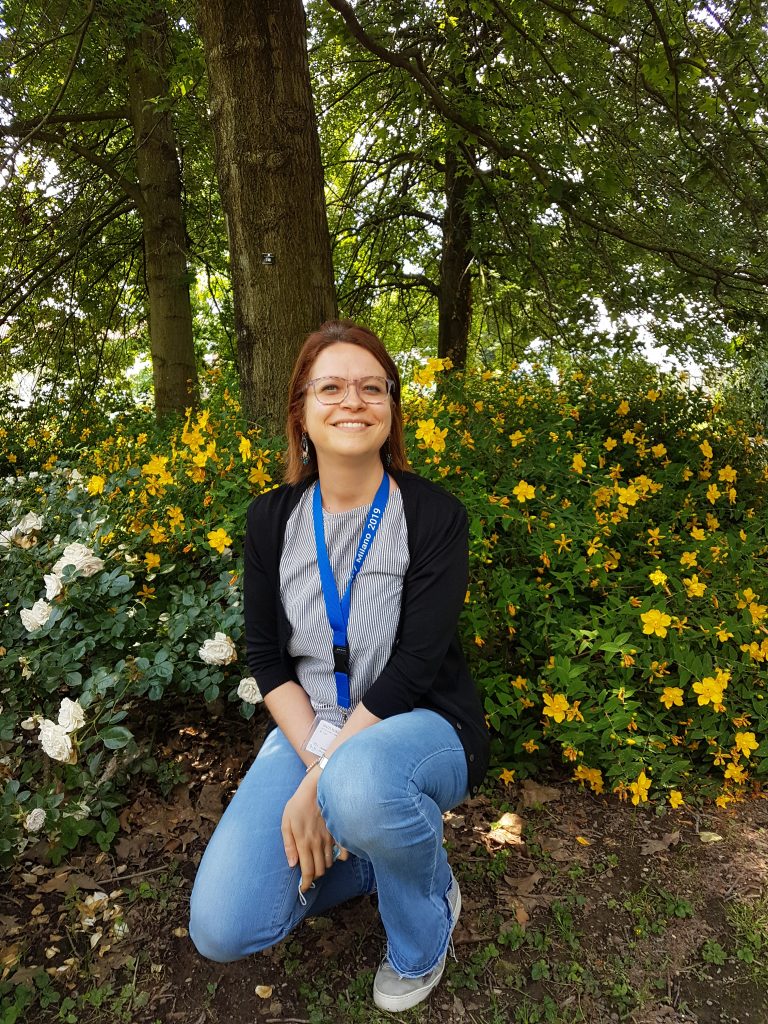
Prof. Maria Vittoria Dozzi is a tenure-track Associate Professor at the Department of Chemistry, University of Milan. Her research focuses on developing efficient photo(electro)catalysts for solar energy conversion and environmental applications, emphasizing materials like TiO2, BiVO4, and CuWO4. She holds a PhD in Chemical Sciences (2012) from the University of Milan and conducted postdoctoral research at Hokkaido University (Japan). Her work spans photocatalytic hydrogen production, CO₂ reduction, and photodynamic therapy. She has authored 53 papers (18 as first author), with 1,742 citations and an h-index of 25 (Scopus). Education: BSc (2008): Chemical Sciences, University of Milan (thesis: TiO₂ photocatalysis) PhD (2012): Chemical Sciences, University of Milan (thesis: TiO₂ doping/surface modification) Research Interests: Photocatalysis, photoelectrocatalysis, semiconductor materials, environmental remediation, and photodynamic therapy. Her studies address charge carrier dynamics, heterojunction optimization, and material design for energy and biomedical applications. Awards: Giovanni Semerano Award (2013), Lindau Nobel Laureate Meeting Grant (2013), and Finalist for the Primo Levi Prize (2018). She co-chaired the 7th International Conference on Semiconductor Photochemistry (2019) and guest-edited a Special Issue on surface aspects of semiconductor photochemistry (Surfaces journal). Labs/Teams: UNIMI Photocatalysis Group and collaborations with the SmartMatLab Centre. Her work integrates experimental and theoretical approaches to advance catalyst design and applications in renewable energy and healthcare.
Prof. Dr. Daniel Loss is a Full Professor of Theoretical Physics at the University of Basel, affiliated with the Philosophisch-Naturwissenschaftliche Fakultät and the Department of Physics. He leads the FG Loss research group, focusing on quantum computing, spintronics, and topological quantum matter. His work bridges theory and experiment, with notable contributions to spin qubits and quantum coherence in semiconductor nanostructures. Loss holds leadership roles as Director of the Basel QC2 Center and Co-Director of the Swiss Nanoscience Institute (SNI). He earned his Diploma and PhD from the University of Zürich (1983, 1985), followed by postdoctoral positions at IBM Research and Simon Fraser University. Since 1996, he has been at the University of Basel. His research interests include quantum dots, spin dynamics, topological insulators, and Majorana fermions. He has pioneered theories for quantum computing with spin qubits, influencing global experimental programs. Loss has received prestigious awards, including the Marcel Benoist Prize (Switzerland's top science honor), the King Faisal Prize, and fellowships from the American Physical Society. His work spans theoretical advancements in superconductivity, magnons, and cavity-coupled systems. Key grants include leadership in the NCCR SPIN initiative and collaborations on quantum materials. His lab explores hybrid superconducting-semiconducting systems and domain-wall qubits. Recent projects address noise mitigation in spin qubits and topological magnonic devices.
Professor Chong Meng Nan is a leading academic at Monash University Malaysia, serving as Director of the Centre for Net-Zero Technology. With over 18 years of experience in academia and research, he holds a Ph.D. from the University of Adelaide and has held roles at CSIRO. His research focuses on renewable energy, particularly solar fuels and photoelectrochemical systems, addressing technical challenges like low conversion efficiency and electrode stability. Chong has secured over RM 20 million in research funding and is recognized internationally, including the Royal Society Newton Fellowship and inclusion in Stanford's Top 2% Scientists list. He teaches courses in chemical engineering, including material balances, thermodynamics, and sustainable development. His work contributes to UN SDGs targeting clean energy and climate action. Key projects include green hydrogen production via photoelectrochemical water splitting and AI-driven microalgae CO2 fixation. Collaborations span Malaysia, Australia, and global institutions. Awards include the Green Talents Award and Top Research Scientist Malaysia. Chong actively advises on grants and mentors researchers, with a focus on advancing sustainable technologies. His lab explores nanostructured materials and advanced characterization using synchrotron facilities. Education: Ph.D. in Chemical Engineering (University of Adelaide), B.Eng. in Chemical Engineering Grants: Over RM 20M secured as PI/CI for projects on solar fuels, CO2 reduction, and urban water systems Labs/Teams: Leads the Centre for Net-Zero Technology and collaborates with industry partners like Microsoft
Masaki Takahashi is a postdoctoral researcher at AAU Energy, Aalborg University, Denmark, within the Faculty of Engineering and Science and the Department of Power Electronics System Integration and Materials. His work focuses on wide-bandgap power devices, power electronics packaging, and reliability engineering, particularly in thermo-mechanical simulations and failure analysis of power modules. Education: B.Sc. (2014) and M.Sc. (2016) from Kwansei Gakuin University, Japan; Ph.D. (2024) in Energy Technology from Aalborg University. Research Interests: Thermal stress analysis of SiC and GaN devices Thermo-mechanical reliability of power modules Failure mechanism prediction 3D simulation techniques for reliability design Key Projects: CoDE Center of Digitalized Electronics (2021–2026) PhD Project: Reliability Design of 10kV SiC MOSFET Modules (2021–2024) Awards: Recipient of the APEC 2023 Outstanding Poster Award for work on thermal stress analysis. Collaborations: Active in international projects, with visiting research at Kyushu Institute of Technology (Oct-Dec 2023).
M. Yasin Akhtar Raja is a Professor of Physics and Optical Science at the University of North Carolina at Charlotte (UNC Charlotte), where he has served since 2004. He also holds an adjunct professorship in Electrical and Computer Engineering since 2011. As an undergraduate advisor, he plays a key role in student mentorship. Ph.D. in Optical Physics from the University of New Mexico (1988) M. Phil in Laser Physics from Quaid-i-Azam University (Pakistan) B.Sc. in Physics and Math from Punjab University (Lahore, Pakistan) His research focuses on optoelectronics, photonics, and optical communication networks, with expertise in VCSELs, optical amplifiers, and solar energy harvesting. He has authored over 170 publications and secured multiple patents, including foundational work on surface-emitting lasers (VCSELs). Raja has supervised 42 graduate students and chairs the undergraduate committee in his department. He co-founded the HONET-ICT international conference series and advises research initiatives in Pakistan. Notable achievements include his invention of the surface-emitting RPG laser (VCSEL), a Merit Scholarship from Pakistan, and contributions to fiber optic networks and smart grid technologies. His work spans theoretical and applied research, with applications in telecommunications, energy, and materials science.
Olcay Bay is a Researcher affiliated with the Faculty of Engineering at Vrije Universiteit Brussel (VUB), specializing in the Electrical Engineering and Power Electronics department. He is part of the MOBI - Electromobility Research Centre and holds a doctoral scholarship. His work focuses on advanced power electronics systems, particularly leveraging Gallium Nitride (GaN) technologies for electric vehicle applications. Key areas include high-performance power modules, thermal management of semiconductor devices, and traction inverter design. Research Interests: Evaluation of GaN-based power electronics for electric vehicles Thermal optimization of power transistors and inverters Development of low-voltage/high-current power systems Bi-directional on-board charger topologies Collaborations: Active involvement in interdisciplinary projects with industry partners, including roles in the HiEFFICIENT consortium. Recent contributions include presentations at the 2024 IEEE Vehicle Power and Propulsion Conference and the 2023 European Conference on Power Electronics. Advising & Supervision: Co-supervised Master's thesis titled "Modeling and Implementation of DC Microgrid for Lighting Application" (2023). Labs/Teams: Core member of VUB's Electromobility Research Group, contributing to the MOBI centre's mission on sustainable transportation technologies.
Dr. Vasanthan Devaraj is a PostDoc Group Leader at the Institute for Photonic Quantum Systems (PhoQS) in the University of Paderborn , leading the Ultrafast Nanophotonics group. His research focuses on plasmonics, 3D printing of nanostructured materials, biosensor development, and quantum emitter engineering. He specializes in self-assembly techniques, metallic nanostructure fabrication, and biohybrid systems. Research Interests : Plasmonic nanostructures and their optical properties 3D printing of metallic and biomaterial nanoarchitectures Smart biosensors for healthcare, environment, and agriculture Quantum dots and photonic devices Bio-inspired self-assembly using M13 bacteriophage Energy-efficient nanomaterials for solar cells Notable Contributions : Pioneered 3D printing of multi-material plasmonic nanostructures with sub-100 nm resolution. Developed biosensors for lung cancer detection, environmental pollutants, and fruit freshness analysis. Optimized plasmonic nanocavities with sub-5 nm gaps for enhanced light-matter interactions. Recent Work Trends : His articles emphasize plasmonic dimer assembly , 3D-printed metallic nanostructures , and biohybrid systems . Key themes include self-assembly optimization, plasmonic field enhancement, and biomaterial integration for diverse applications. Labs & Teams : Leads the Ultrafast Nanophotonics Group , collaborating on projects involving photonics, quantum materials, and bio-inspired engineering.
Dr. Arnau Call Quintana is a Ramón y Cajal Researcher in the Department of Chemistry at the University of Girona (UdG), Faculty of Sciences. He is affiliated with the Grup de Recerca en Química Bioinspirada, Supramolecular i Catàlisi (QBIS-CAT), where he leads independent research in catalysis and sustainable chemistry. He holds a Ramón y Cajal contract, a prestigious Spanish fellowship for early-career researchers, and serves as a principal investigator in projects funded by the Spanish Ministry of Science and Innovation. His educational background includes: B.Sc. in Chemistry, University of Girona (2011), awarded Extraordinary Degree Award M.Sc. in Chemistry, University of Girona (2012) Ph.D. in Chemistry, University of Girona (2016), supported by FPU grant Postdoctoral training at WPI-I2CNER (Japan) and University of Girona (Juan de la Cierva contract) Additional research stay at University of Utah (USA) in multiparametric linear modeling His research focuses on the development of catalytic systems for asymmetric C–H oxidation , CO 2 reduction , hydrogen production , and light-driven stereoselective transformations . He combines experimental work with DFT calculations and multivariable regression models to optimize enantioselective reactions. His work bridges synthetic organic chemistry, inorganic catalysis, and sustainable materials, with strong industrial collaboration, particularly in pharmaceutical applications and recyclable polymer design. The 15 most recent publications reflect a consistent focus on catalysis, green chemistry, and energy-related transformations. Key themes include enantioselective oxidation, photocatalytic hydrogen evolution, CO 2 utilization, and the development of bioinspired and hybrid catalytic systems. His work frequently appears in high-impact journals such as JACS , ACS Catalysis , and Chemical Science , with several publications highlighted on journal covers or as important contributions. His scientific recognitions include: Extraordinary Degree Award (UdG, 2011) FPU and Juan de la Cierva fellowships Ramón y Cajal Program appointment Three journal cover features Four papers recognized as important contributions Editorial highlight in Chem. Sci. (2018) Feature in Org. Chem. Highlights (JACS 2022) He is actively involved in advising and research leadership, currently co-directing three doctoral theses and one master's thesis. He has secured competitive national grants, including 'Proyectos de generación de conocimiento' and 'Proyectos de Transición Ecológica y Transición Digital 2021'. He also serves as a peer reviewer for scientific journals and participates in evaluation committees. His research group collaborates with pharmaceutical companies and focuses on translating fundamental discoveries into industrial applications. He is a key member of the QBIS-CAT research group, which specializes in bioinspired and supramolecular catalysis. His lab integrates synthetic chemistry, mechanistic studies, and computational modeling to develop next-generation catalytic systems for sustainable chemical transformations.
Anna Fontcuberta i Morral is a Full Professor at the Institute of Materials (IMX) within the School of Engineering (STI) at École polytechnique fédérale de Lausanne (EPFL) . She serves as President of EPFL since 2021, with a dual role in academic leadership and research. Her research focuses on: Semiconductor nanostructures (particularly GaAs and InP nanowires) Quantum photonics and optoelectronics Photovoltaic device engineering Thin film synthesis techniques (MBE, sputtering) Spintronic materials (chiral magnets like CoZnMn and FeGe) Strain-free vdW growth on graphene Recent work spans solar cells exceeding Shockley–Queisser limits, quantum dot integration, and skyrmion-hosting thin films. She has supervised over 30 PhD students and received a Marie Curie Excellence Grant (2005–2010). Key grants & roles: Research counselor, Swiss National Science Foundation (2016–) Founder, Section Editor of EPFL Publications (2016–) Lead on H2020 and FNS-funded projects
Dr. Jeffrey Christians serves as an Associate Professor of Engineering at Hope College, specializing in chemical engineering with a focus on photovoltaic materials and solar cell technology. He joined the Hope College faculty in 2018 after completing his postdoctoral research at the National Renewable Energy Laboratory. His educational background includes: Postdoctoral researcher, National Renewable Energy Laboratory, 2015–2018 Ph.D., chemical and biomolecular engineering, University of Notre Dame, 2015 B.S., engineering with chemical emphasis, chemistry, Calvin College, 2010 Christians' research primarily focuses on developing semiconductor materials for solar cells through simple printing and coating methods, similar to those used in photographic film production, which could dramatically reduce manufacturing costs. His work extends to non-traditional applications of solar cells, particularly color-switching solar cells designed for integration into building facades. His research lab at Hope College actively engages undergraduate students in engineering, chemistry, and physics in sustainable energy materials research. His publication record demonstrates a consistent focus on perovskite solar cell technology, with particular emphasis on material stability, structural tunability, and performance optimization. His work spans fundamental materials science to practical applications, with several publications appearing in high-impact journals including Nature Energy, ACS Energy Letters, and Energy and Environmental Science. Among his notable recognitions: Towsley Research Scholar, Hope College (2021–25) NREL Highest Impact Publication Award (2019) EERE Postdoctoral Research Award from the Department of Energy (2016) Research Seed Grant from the Michigan Space Grant Consortium (2020) Christians maintains an active research program through the Christians Research Lab, which focuses on designing and improving materials for sustainable energy applications, particularly as photovoltaic absorbers. His work connects to broader energy challenges identified by Nobel Laureate Richard Smalley as humanity's biggest challenge over the next 50 years. The lab actively recruits Hope College students from engineering, chemistry, and physics backgrounds for research opportunities. His research lab operates from the A. Paul Schaap Science Center at Hope College, with strong connections to the National Renewable Energy Laboratory where he completed his postdoctoral training.
Ole Blaurock is a Professor of Computer Science at the University of Applied Sciences Lübeck, where he is affiliated with the Department of Electrical Engineering and Computer Science. His expertise lies in embedded systems, computer architectures, operating systems, and systems programming. Research Interests: His research focuses on embedded systems design, particularly in the areas of hardware/software codesign, SystemC-based modeling, platform-based SoC development, and reuse of C-models. He has contributed significantly to methodologies promoting legacy model reuse and modular design frameworks. His work bridges theoretical design approaches with industrial applications in semiconductor systems. Recent Publications Trends: His recent publications, spanning from 2001 to 2011, show a consistent focus on SystemC-based design flows, TLM simulation, and modular verification frameworks. A notable contribution includes editing proceedings on robotic sailing, indicating interdisciplinary interests in autonomous marine systems. Scientific Awards: No awards mentioned in the provided text. Advising and Grants: Information about students, advising, or grants is not available in the provided text. Labs and Teams: Ole Blaurock is associated with the Competence Center CoSA (Cooperative Systems and Automation) at the University of Applied Sciences Lübeck, indicating active engagement in applied research and technology transfer in embedded and cooperative systems.