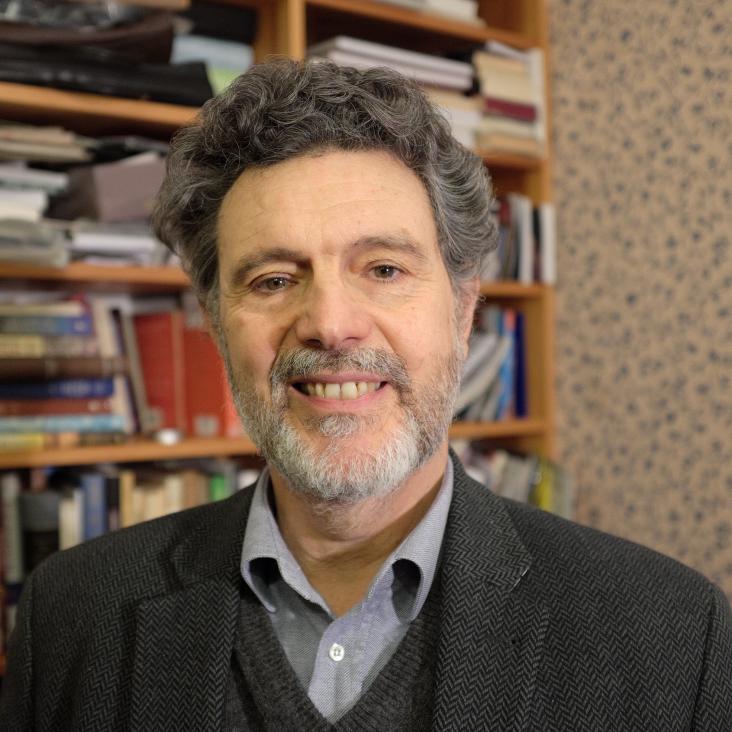
Professor Paolo G. Radaelli is the Dr Lee's Professor of Experimental Philosophy at the Clarendon Laboratory, University of Oxford, and a Professorial Fellow at Wadham College. He holds key roles in quantum materials research within the Condensed Matter Physics sub-department, specializing in oxide electronics. Education : Laurea from Università degli Studi di Milano, PhD from Illinois Institute of Technology. Research Experience : Postdoctoral roles at Argonne National Laboratory, CNRS, Institute Laue–Langevin, and ISIS Facility. His research focuses on quantum materials , particularly antiferromagnetic spin textures , topological defects , and spintronic applications . Recent work explores crystal field engineering, twisted bilayer materials, and magneto-orbital coupling. His 15 most recent publications (2023–2017) span topics like antiferromagnetic skyrmions, photoluminescence in perovskites, and Brexit's impact on academia. Articles highlight interdisciplinary trends in condensed matter physics , magnetism , and quantum technologies . Scientific Awards MPLS Excellent Supervisor Award (2020) Prof Radaelli's work bridges theoretical and experimental physics, with collaborations across international institutions and contributions to neutron diffraction, density functional theory, and spintronic device design.
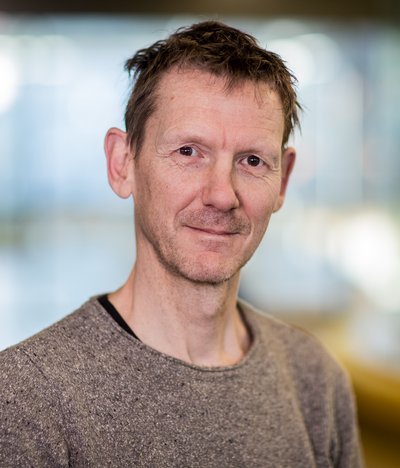
Daniele Pontiroli is an Associate Professor at the Department of Mathematical, Physical, and Computer Sciences of the University of Parma. With a career spanning over two decades, he transitioned from a PhD in Condensed Matter Physics (2006) through postdoctoral research (2006-2008), Research Fellow (2008-2012), and Researcher (2015-2022) roles to his current position since 2022. His work bridges experimental physics and materials science, focusing on advanced energy technologies. Research Interests : Condensed matter physics of carbon-based materials (graphene, fullerenes) Energy storage systems: supercapacitors, Li-ion, and Na-ion batteries Hydrogen storage mechanisms in nanostructured materials Magnetocaloric effects and magnetic nanocomposites Environmental applications of biochar and lichens Optically induced superconductivity in molecular systems Selected Publications Trends (2023-2025): Advancing laser-induced graphene for biosensors and supercapacitors Optimizing biomass-derived carbon materials for energy applications Investigating proton conduction in metal-organic frameworks Exploring photo-induced superconductivity in alkali fullerides
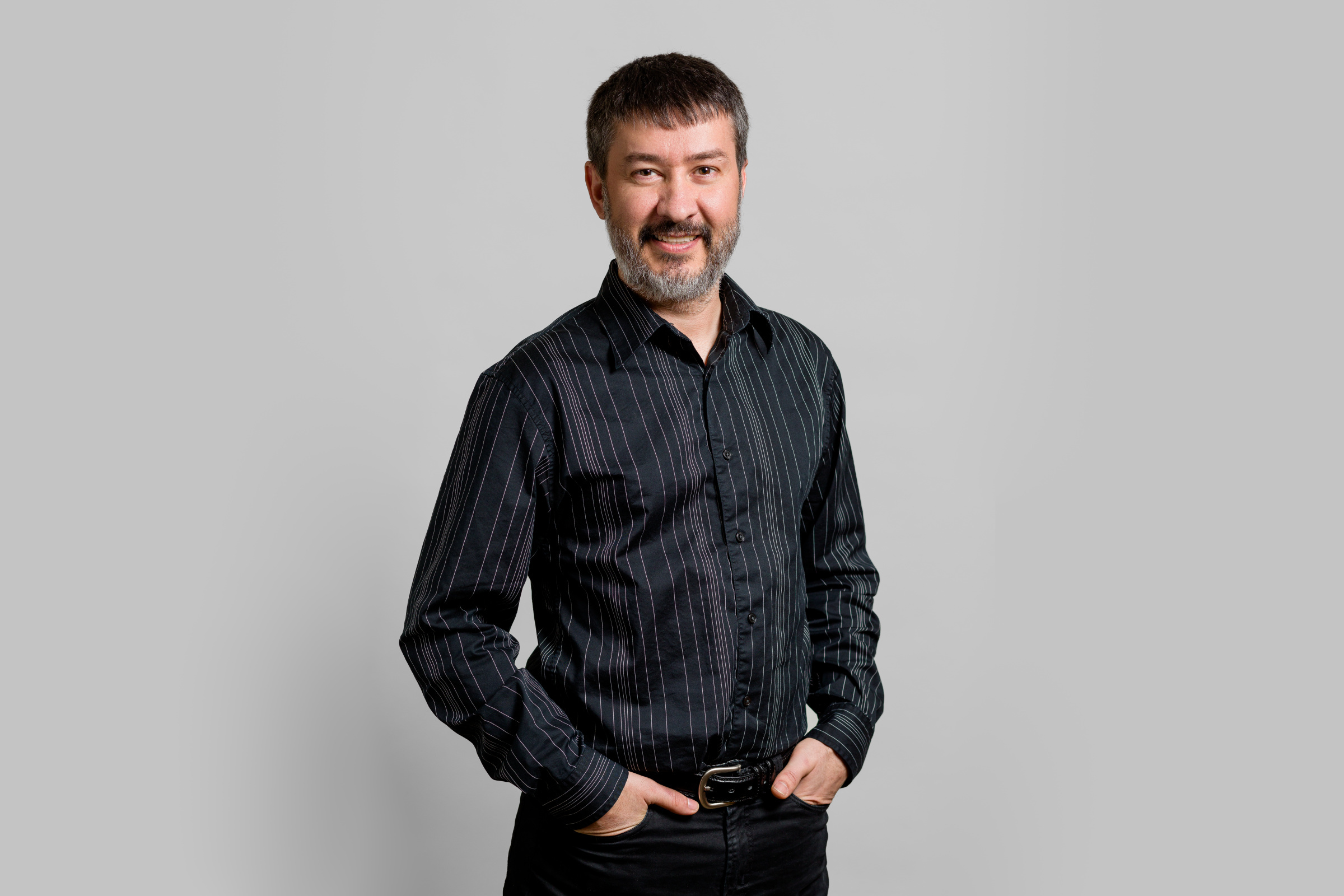
Martijn Wienk is an Assistant Professor at Eindhoven University of Technology (TU/e) in the Department of Chemical Engineering and Chemistry. He is affiliated with the Molecular Materials and Nanosystems (M2N) research group and the Institute for Complex Molecular Systems (ICMS Core), with his office located at Helix-west 4.36. His research focuses on the optimization and characterization of solution-processed hybrid polymer-metal oxide solar cells, with particular emphasis on perovskite solar cells. Dr. Wienk investigates how morphology of active layers affects device performance, especially in ZnO:polymer hybrid systems where polymer hydrophilicity controls ZnO distribution. His current work addresses critical challenges in photovoltaics including interfacial losses, non-radiative recombination mechanisms, and stability issues in narrow-bandgap perovskite materials. Analysis of his recent publications reveals significant contributions to perovskite solar cell technology. His research demonstrates how additives like glycine hydrochloride improve narrow-bandgap perovskites by retarding Sn²⁺ oxidation and enhancing crystallization. He has also developed substrate functionalization techniques using compounds like 1,6-hexylenediphosphonic acid to reduce nonradiative losses, and investigated interface engineering strategies for tandem solar cells used in solar water splitting applications achieving 17.8% solar-to-hydrogen efficiency. His scientific contributions include: Investigating bulk and interface contributions to voltage losses in perovskite solar cells Developing effective passivation strategies for narrow-bandgap perovskites Advancing understanding of degradation mechanisms in all-perovskite tandem systems Improving fundamental knowledge of charge carrier dynamics in hybrid photovoltaic materials Dr. Wienk collaborates extensively with Professor René A.J. Janssen and other researchers at TU/e. His work is supported by funding from the Dutch Research Council (NWO), the European Research Council (ERC), and industry partners including HyET Solar BV. He contributes to UN Sustainable Development Goals related to affordable and clean energy through his research on next-generation photovoltaic technologies. Within the Molecular Materials and Nanosystems group, Dr. Wienk leads research activities focused on developing stable, high-efficiency photovoltaic materials while mentoring students and contributing to educational programs including 'DBL Energy', 'Nanomaterials: chemistry and fabrication', 'DBL Nanotechnology', and 'CBL Molecules and Materials'.
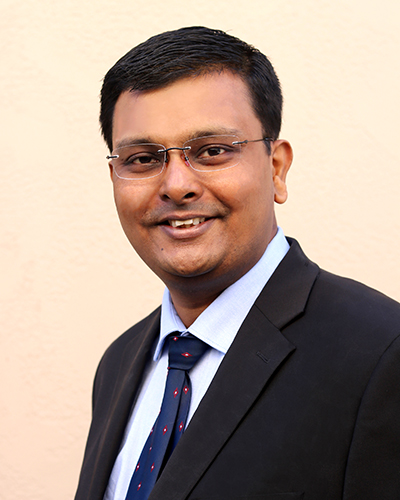
Dominic Deslandes is a Professor in the Department of Electrical Engineering at École de technologie supérieure (ETS) in Montreal, Canada. His research focuses on RF and microwave circuits, antennas, high-frequency interconnections, and wireless system integration. He is a member of the LACIME – Communications and Microelectronic Integration Laboratory, which conducts research from the smallest devices and circuits to complex communication systems. Dr. Deslandes earned his B.Ing. from Université de Sherbrooke, and his M.Sc. and Ph.D. from Polytechnique Montréal. His research expertise includes: RF and microwave circuits Antennas and wave propagation High-frequency interconnections and signal integrity Wireless system integration Analog filters and transmission lines RF circuit modeling His research spans both theoretical and applied aspects of microwave engineering, with applications in wireless communications, sensing systems, and medical devices. Dr. Deslandes has made significant contributions to substrate-integrated waveguide technology, leaky-wave antennas, and ultrasonic transducer systems. His work often involves interdisciplinary collaborations, particularly in biomedical applications where microwave and ultrasonic technologies are applied to healthcare monitoring and diagnostics. Dr. Deslandes has been involved in numerous patents related to ultra-wideband communication systems, working with Frederic Nabki and others. His research group has developed innovative solutions for wireless sensor networks, antenna systems, and ultrasonic transducers. The practical applications of his research include fall detection systems for elderly care, cardiopulmonary monitoring, and high-frequency communication technologies. As an educator, Dr. Deslandes teaches courses in electromagnetism and electromagnetic waves, contributing to the training of the next generation of electrical engineers. His recent work has begun incorporating AI techniques to enhance engineering education, particularly in the domain of electromagnetism. Dr. Deslandes has supervised numerous graduate students working on projects related to antennas, wireless communications, and ultrasonic systems. His research has been supported through collaborations with industry partners, reflecting the practical relevance of his work.
William Iain Leonard Lawrie is an Assistant Professor at the Niels Bohr Institute , University of Copenhagen , specializing in Condensed Matter Physics . His research focuses on quantum technologies, particularly semiconductor spin qubits, quantum dots, and low-temperature quantum systems. Recent publications highlight advancements in: Quantum dot engineering in germanium Exciton transport mechanisms High-fidelity two-qubit gates in silicon Charge noise mitigation in semiconductor systems His work intersects quantum computing, nanotechnology, and material science, with applications in fault-tolerant quantum systems and quantum information processing.
Maitreya Dutta is an Associate Professor in the Department of Electrical and Computer Engineering at the University of Texas at San Antonio (UTSA), affiliated with the Klesse College of Engineering and Integrated Design. His research bridges semiconductor device engineering, quantum physics, and materials science. Ph.D., Electrical & Computer Engineering, University of California, Davis M.S., Electrical Engineering, University of Cincinnati His research focuses on semiconductor devices , particularly diamond-based electronics for power applications and neutron detection, alongside quantum transport phenomena in quantum point contacts . Recent work explores spintronic devices like all-electric spin valves and doping strategies for diamond semiconductors. The 15 most recent articles highlight advancements in wide bandgap semiconductors , including high-voltage diamond diodes, neutron sensors, and quantum transport hysteresis. Keywords span Electrical Engineering , Materials Science , and Quantum Physics , with subfields like Spintronic Devices , Device Characterization , and Radiation Detection .
Yogesh Singh is a Postdoctoral Researcher at Aalto University , affiliated with the Department of Chemistry and Materials . His research focuses on advancing material science through innovative work in Atomic Layer Deposition (ALD) , memristors , perovskite solar cells , and photoconductive materials , addressing challenges in renewable energy and nanotechnology. Education Ph.D. in Material Science from CSIR-National Physical Laboratory Research Interests His work spans thin films , device fabrication , and process development , with a strong emphasis on sustainability. Key contributions include advancements in heterojunction solar cells , NO2 gas sensors , and memristive technologies for next-generation electronics. Publications & Collaborations Yogesh has published extensively in journals like ACS Applied Materials & Interfaces , Solar Energy , and RSC Advances , focusing on materials like SnSe , Sb2Se3 , and transition metal dichalcogenides . His research often involves collaborative efforts with colleagues such as Dr. Vidya Nand Singh and Dr. Ashish Kumar. Research Group Member of the Inorganic Materials Chemistry research group at Aalto University
Petko Petkov is a Professor at the Faculty of Chemistry and Pharmacy , Sofia University "St. Kliment Ohridski", specializing in theoretical chemistry and computational material science . He leads research in metal-organic frameworks (MOFs) , zeolites , and quantum chemical modeling of nanomaterials. PhD in Theoretical Chemistry (Sofia University, 2009) MSc in Computational and Theoretical Chemistry (Sofia University, 2004) BSc in Chemistry (Sofia University, 2002) His research focuses on: Ab-initio molecular dynamics of hydrogen bonding DFT simulations for porous materials (MOFs/COFs/zeolites) Structure-property relationships in 2D conjugated frameworks Catalytic mechanism modeling for NO conversion and ceria surfaces Recent publication trends demonstrate expertise in: Electronic structure engineering of 2D MOFs Redox state control in conjugated polymers Kagome lattice design for metallic states Structure-directing agent dynamics in germanosilicates Hydrogen isotope transport in layered materials He teaches advanced courses on: Computational modeling of organic compounds Hybrid QM/MM methods Molecular modeling of functional materials Linux/Bash for scientific computing Prof. Petkov collaborates with leading institutions including: Jacobs University Bremen (PostDoc, 2014-2016) University of Leipzig (Scientific Assistant, 2016-2017) Max Planck Institute (co-author network)
Minjoo Lawrence Lee is a Professor in the Department of Electrical and Computer Engineering at the University of Illinois Urbana-Champaign's Grainger College of Engineering. He serves as Director of the Holonyak Micro and Nanotechnology Laboratory (HMNTL) since January 2023 and holds the Intel Alumni Endowed Faculty Scholar position. Previously, he was Associate Professor at UIUC (2016-2021) and Assistant/Associate Professor at Yale University (2008-2016). Lee earned his Sc.B. from Brown University in 1998 and Ph.D. from MIT in 2003. His research focuses on developing materials and devices for integrated photonics, solar energy, electronics, and sensing, with particular expertise in III-V and III-N compound semiconductors. His work emphasizes direct growth of these materials on silicon substrates to enable heterogeneous integration and scalability. Lee's research group explores photonic technologies, quantum technologies, and solar energy conversion, with special emphasis on III-V solar cells on silicon, visible lasers on silicon, and advanced epitaxial growth techniques. His recent work has achieved record efficiencies in III-V/Si tandem solar cells and visible lasers on silicon substrates. His publication record shows a strong focus on advancing solar cell technology, particularly wide-bandgap III-V materials for multi-junction solar cells. His most recent 2025 review in Applied Physics Reviews highlights the state of the art in wide-bandgap III-V solar cells, which play a crucial role in high-efficiency multi-junction solar cells by efficiently converting visible photons into electrons at high voltage. Optica Fellow (2025) for pioneering contributions to molecular beam epitaxy growth of III-V optoelectronic devices on silicon Intel Faculty Scholar (2023) Dean's Award for Excellence in Research (2021) IBM Faculty Award (2016) NSF CAREER Award (2010) Lee has mentored numerous students who have received multiple best presentation awards at major conferences. His group is expanding its capabilities with III-nitride growth starting in 2025. He teaches courses including ECE 210 (Analog Signal Processing), ECE 211 (Analog Circuits & Systems), ECE 329 (Fields and Waves I), and ECE 444 (IC Device Theory & Fabrication), and has been repeatedly ranked as excellent by students.
Professor Volodymyr Mykhailovych Matyushin is a distinguished faculty member at Zaporizhzhia Polytechnic National University, serving in the Department of Physical Materials Science within the Engineering-Physics Faculty. With over four decades of academic experience since 1981, he has established himself as a leading expert in surface physics and thin film technology, particularly in atomic hydrogen interactions with solid materials. Education: Zaporizhzhia Machine-Building Institute named after V.Ya. Chubar (1978) - Design and production of radio equipment PhD in Physics (1982, Donetsk State University) - "Low-temperature chemostimulated heterodiffusion in germanium" Doctor of Physics and Mathematics (2005, Kharkiv Institute of Physics and Technology) - "The influence of atomic hydrogen on mass transfer processes from thin metal films in systems with limited solubility" Professor Matyushin's research focuses on the intricate interactions between atomic hydrogen and solid surfaces, particularly examining how these interactions affect thin film properties and semiconductor behavior. His work bridges fundamental physics with practical applications in materials science, with special emphasis on low-temperature diffusion processes, surface modification techniques, and the development of advanced measurement methodologies. His expertise has contributed significantly to understanding how atomic-scale phenomena translate to macroscopic material properties, with applications in semiconductor manufacturing and electronic device development. His publication record demonstrates a consistent trajectory from fundamental research on hydrogen-semiconductor interactions to applied work in metrology and educational materials. The most recent publications show an expansion into curriculum development and practical training materials, reflecting his commitment to education alongside research. His scholarly output spans multiple disciplines including physics, materials science, and engineering education. Professor Matyushin teaches courses including Technological Fundamentals of Electronics, Thin Film Technology, Production Technology of IC/GIS/VET, Functional Electronics, and Physics of Hydrogen Technologies, shaping the next generation of engineers and scientists through both classroom instruction and laboratory work.
Professor Joy Mitra is a distinguished faculty member in the Department of Physics at the School of Physical Sciences, Indian Institute of Science Education and Research (IISER) Trivandrum, Kerala, India. She has served as Professor since December 2022, having previously held positions as Associate Professor (June 2017 - December 2022) and Assistant Professor (May 2010 - May 2017) at the same institution. She also maintains a Visiting Research Professor position at the International Research Centre for Experimental Physics, Queen's University Belfast, UK since 2015. Professor Mitra received her academic training at the Indian Institute of Science, Bangalore, where she earned her PhD in Physics in 2005 and MS in Physics in 1999. Her undergraduate education was completed at Presidency College, Calcutta, where she graduated with a BSc (Physics Honours) in 1996. Her research focuses on the intersection of nanophotonics, plasmonics, and 2D materials, with particular expertise in scanning probe microscopy techniques. Professor Mitra's work explores light-matter interactions at the nanoscale, electrical plasmonics , exciton physics in 2D systems , and noise spectroscopy . Her group investigates phenomena such as STM light emission, Schottky junction devices for hydrogen sensing, and the optoelectronic properties of materials like ZnO and transition metal dichalcogenides. She has made significant contributions to understanding epsilon near zero systems and their applications in infrared photonics and sensing technologies. An analysis of Professor Mitra's recent publications reveals a strong emphasis on epsilon near zero materials and their applications in photonics and sensing. Her work spans fundamental studies of light-matter interactions in 2D materials to practical applications in hydrogen sensing and optoelectronic devices. The research demonstrates a consistent trajectory toward understanding and manipulating nanoscale optical phenomena for technological applications, with particular focus on plasmonics, 2D materials engineering, and novel sensor development. Invited to deliver the prestigious Raja Ramanna Lecture (2025) at JNCASR SPARC-UKIERI grant for Functionalizing next-gen 2D materials using Ion Irradiation (2024-2026) SERB-CRG grant for exploring extreme light-matter interactions in epsilon near zero regime (2024-2027) STARS Grant for investigating Excitons in TMDC (2023-2025) Multiple student awards including EPS-QEOD Best Student Presentation Award (2025) Professor Mitra has successfully mentored numerous PhD and Master's students, many of whom have gone on to prestigious postdoctoral positions and faculty roles. Her research program is supported by multiple grants from SERB, DST, UKIERI, and other funding agencies, totaling millions of rupees. She has established strong international collaborations with institutions in the UK, Poland, and the US, facilitating student exchanges and joint research projects focused on advanced materials characterization and development. Her research group, the Joy Group, maintains state-of-the-art facilities for scanning probe microscopy, optical characterization, and nanomaterials synthesis. The group actively collaborates with researchers across India and internationally, contributing to the advancement of nanophotonics, 2D materials science, and sensor technology.
Jakub Zázvorka is a researcher at the Institute of Physics, Charles University , focusing on semiconductor physics and magnetism. His work bridges materials science with spintronics and optoelectronics, particularly in CdTe-based materials and magnetic skyrmions. Current projects: Magneto-Optical Sensor Development , Spintronic Applications of Antiferromagnetic Structures Teaching: Electron Transport in Quantum Systems , Introductory Optics Seminar His research explores chiral magnetic structures for spintronic devices and semiconductor defects in radiation detectors. Recent publications analyze skyrmion dynamics and optical/magneto-optical properties of advanced materials. Grants: GACR 23-06691S : Sensor development using magneto-optical diffraction PRIMUS/20/SCI/018 : Antiferromagnetic multilayers for spintronics
Arsalan Hashemi Petrudi is a Visiting Professor in the Department of Applied Physics , with expertise in Multiscale Statistical and Quantum Physics . His academic qualifications include a Doctor of Technology (Tekn. toht.) in Technical Physics and a Master's degree in Natural Sciences from Isfahan University of Technology. He contributes to the United Nations Sustainable Development Goal (SDG) for Education through his research and academic work. Research Focus: Density Functional Theory (DFT) , electrochemical reactions, surface science, and water purification technologies. Key Themes: Quantum mechanical modeling of materials, redox-active compounds for energy storage, and interfacial energy manipulation. Recent publications highlight his work on nitrate removal membranes , boron isotope effects , and superhydrophobic surfaces , aligning with applications in environmental engineering and quantum materials. Collaborations span institutions in computational chemistry and applied physics.
Dr. Amy Gandy is a Senior Lecturer in Nuclear Materials Engineering at the Department of Materials Science and Engineering, University of Sheffield, where she has been affiliated since 2011. She was previously a Lecturer in Nuclear Engineering at the same department (2015-2019) and a Research Associate (2011-2015). She holds a PhD from the University of Salford and the University of Poitiers, France (2009), and an MPhys in Physics and Space Technology from the University of Salford (2003). Qualifications: MPhys (2003), PhD (2009) Current Role: Senior Lecturer (2020–present) Previous Roles: Lecturer (2015–2019), Research Associate (2011–2015) Amy’s research centers on understanding radiation-induced damage and recovery mechanisms in poly-crystalline oxide-based materials and advanced multicomponent alloys for nuclear fission and fusion. She specializes in electron microscopy (including in-situ ion irradiation and thermal annealing), X-ray diffraction, and spectroscopic methods to characterize materials. Her work includes developing low-activation high entropy alloys and Li-ceramics for nuclear applications. Article Trends: Amy’s recent publications focus on high entropy alloys, radiation damage tolerance, ion implantation effects, and ceramic wasteforms. Her work spans materials characterization, computational modeling, and interdisciplinary collaborations with institutions like CCFE and NNL. Scientific Awards: Rising Star award (Frontiers in Materials, 2018) Advising: Amy supervises PhD students Dhinisaben Patel (processing routes for HEAs), Samuel Waters (ceramic breeder materials), Enrique Casanas Montesdeoca (Li-ceramics), and Kavi Sharma (AGR cladding behavior). She collaborates with PDRA Dr. Hamed Shahmir on HEAs. Professional Activities: Amy serves on the Royal Society’s International Exchanges Committee, the EPSRC Fusion Advisory Board, and the editorial team for the UK Fusion Materials Roadmap. She co-led the Horizon 2020 FIT4NANO COST Action and leads the project Development of Radiation Damage Resistant High Entropy Alloys (EPSRC, EP/R021864/1).
Professor Julie Cairney is a leading materials scientist at The University of Sydney , holding a professorship in the School of Aerospace, Mechanical and Mechatronic Engineering . She earned her B.Met.Eng. and PhD in Physical Metallurgy from UNSW, followed by research roles at the University of Birmingham and Max Planck Institute. Currently, she serves as Pro Vice-Chancellor (Research - Enterprise and Engagement) and CEO of Microscopy Australia , while maintaining active research in atomic-scale materials characterization. PhD in Physical Metallurgy, UNSW (2002) B.Met.Eng., UNSW (1998) Her research focuses on advanced microscopy techniques to analyze materials at atomic resolution, connecting microstructure to macroscopic properties. Key applications include superalloys , hydrogen-resistant steels , and nanomaterials for energy and biomedical sectors. Her work enables the development of lighter high-strength alloys and high-temperature materials with environmental and industrial benefits. Recent publications highlight innovations in hydrogen trapping analysis , cryo-atom probe tomography , and ferroelectric domain characterization . Collaborative projects span renewable energy materials , bioceramics , and additive manufacturing . She supervises students working on topics like hydrogen embrittlement , high-entropy alloys , and bioelectronic materials . Scientific Contributions ARC Future Fellow Co-author of Atom Probe Microscopy (Springer Series) Leadership in Microscopy Australia and Sydney Nano Institute She teaches Materials 1 (AMME2302) and Introduction to Mechanical Engineering (MECH1560) . Her lab develops correlative microscopy methods and 3D atom mapping for material optimization, with applications in aerospace , renewable energy , and biomedical systems .