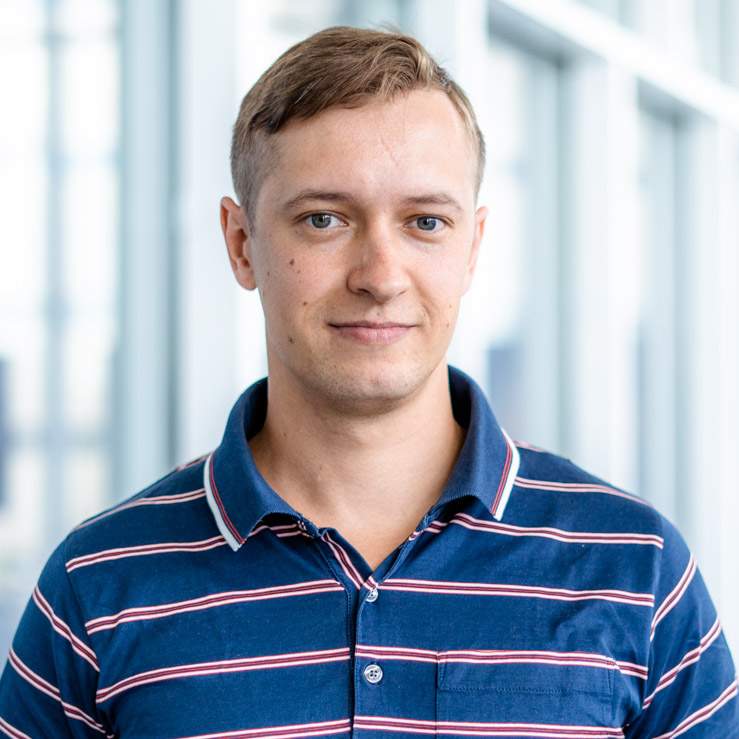
Mohammed Abdelbassit is a Research Fellow at the University of Auckland's School of Chemical Sciences, New Zealand. His expertise spans inorganic chemistry, crystallography, and materials science, focusing on the synthesis and structural characterization of novel cluster compounds for energy-efficient technologies like hydrogen storage and LEDs. Education: PhD in Chemistry (University of Canterbury, 2021) MSc in Chemistry (King Fahd University, 2014) BSc (Hons) in Chemistry (Sudan University, 2009) His research explores: 1. Transition metal oxide clusters with mixed Ru/In/Sn species; 2. Electrophotocatalysis for light-driven energy conversion; 3. Lead-free perovskites for optoelectronics; and 4. Nonlinear optical materials. Publications highlight innovations in cluster bonding, halogen interactions, and adsorption materials. He teaches core courses in physical chemistry, nanomaterials, and analytical chemistry, and co-supervises PhD students while maintaining active collaborations across universities and industry partners.
Pererik Andreasson is a Lecturer at the Academy of Information Technology , Halmstad University. His research focuses on 3D printing, materials science, electromagnetic compatibility testing, and wireless communication. Key contributions include optimizing 3D-printed radar lenses, advancing phase-change material characterization via femtosecond x-ray diffraction, pioneering augmented reality methods for electromagnetic field visualization, and developing substrate integrated waveguide antennas for IoT devices. 3D printing of optical components Dynamic processes in phase-change materials Augmented reality for electromagnetic testing IoT antenna design His recent work on frequency-adjustable SIW antennas (2024) and AR-based EMC visualization (2021) demonstrates cross-disciplinary innovation. While no scientific awards are documented, his 15+ publications since 2007 highlight sustained expertise in material science and wireless technologies.
Vesna F Mitrovic is the L. Herbert Ballou University Professor of Physics and Chair of Physics at Brown University. She joined the department in 2003 after completing her Ph.D. at Northwestern University and postdoctoral work at Grenoble High Magnetic Field Laboratory. Her research focuses on experimental condensed matter physics, particularly quantum phenomena in materials under extreme conditions using nuclear magnetic resonance techniques. Education: Ph.D. in Physics, Northwestern University (2001) M.S. in Physics, Northwestern University (1996) B.S., Illinois Institute of Technology (1995) Research Interests: Professor Mitrovic investigates quantum properties arising in strongly correlated electron systems. Her work spans three primary areas: (1) Quantum Magnetism exploring exotic phases in systems with strong spin-orbit coupling; (2) Unconventional Superconductivity examining the role of magnetism and nematicity; and (3) Topological States studying spin-dependent transport properties. Her research employs low-temperature and high-magnetic-field techniques to probe materials like heavy fermion superconductors, frustrated magnets, and topological insulators. Research Trends: Mitrovic's publications predominantly focus on nuclear magnetic resonance studies of quantum materials, with recurring themes including unconventional superconductivity (particularly CeCoIn 5 systems), quantum magnetism in frustrated spin systems, metal-insulator transitions, and topological phenomena. Her work consistently combines advanced experimental methodology with fundamental questions in quantum condensed matter physics. Awards and Honors: A. P. Sloan Fellow Fellow of the American Physical Society National Science Foundation CAREER Award Manning Assistant Professorship, Brown University Richard B. Salomon Faculty Research Award, Brown University Research Funding and Collaboration: She leads multiple funded projects including NSF Quantum Leap Challenge Institutes, DOE HEP-QIS grants, and EPSCoR collaborations. Her group utilizes international facilities like LNCMI-Grenoble, CINT-Sandia, and NHMFL-Tallahassee. Key collaborators include John Marston (Brown Physics), Shouheng Sun (Chemistry), and Li-Qiong Wang (Chemistry). Research Group: Mitrovic directs the CMP-NMR Group at Brown, specializing in ultra-low temperature (0.01K) measurements. Her team investigates quantum phase transitions, unconventional superconductivity, and topological states using customized NMR instrumentation.
Gabriela Ambrožić is an Associate Professor at the Department of Physics, Faculty of Physics, University of Rijeka, Croatia, where she leads the Laboratory for Synthesis of Functional Materials. With a PhD in Chemical Sciences from the University of Ljubljana, Slovenia, she has built an extensive research career spanning materials science, nanotechnology, and chemistry. Education: 2003-2004: Postdoctoral Fellow, European "EMMMA" Program, University of Trieste, Italy 1997-2002: PhD in Chemical Sciences, University of Ljubljana, Slovenia 1989-1997: University Degree in Chemistry, University of Ljubljana, Slovenia Professor Ambrožić's research focuses on the synthesis and characterization of advanced functional materials, particularly semiconductor thin films, hybrid materials, and zinc oxide nanoparticles. Her work combines experimental chemistry with materials engineering to develop innovative solutions for environmental and biomedical applications. She specializes in Atomic Layer Deposition (ALD) techniques, polymer/ZnO nanocomposites, and photocatalytic materials for water purification and antibacterial applications. Her recent publications demonstrate a strong focus on semiconductor thin films, particularly zinc oxide-based materials with enhanced photocatalytic properties. Her research shows consistent innovation in surface functionalization techniques, hybrid material synthesis, and the development of novel nanomaterials with specific structural and functional properties for environmental applications. Scientific Awards: 2023: Award for the Best Scientific Paper in 2022, University of Rijeka, Faculty of Physics 2020: Award for the Best Scientific Paper in 2020, University of Rijeka, Department of Physics Professor Ambrožić has mentored numerous undergraduate and graduate students across physics, biotechnology, and environmental science programs. She has secured significant research funding, including an HRZZ project worth 977,485.50 HRK for developing porous thin-film materials for water purification using ALD techniques, and has participated in multiple EU-funded research initiatives. She leads the Laboratory for Synthesis of Functional Materials at the University of Rijeka, where her team specializes in developing advanced nanomaterials using Atomic Layer Deposition and other thin-film techniques. Her research group collaborates extensively with international partners and has made significant contributions to the fields of photocatalysis, hybrid materials, and semiconductor thin films.
Dr. Kazimieras Nomeika is a Senior Researcher at the Institute of Photonics and Nanotechnology (IPN) of Vilnius University, Lithuania. His work focuses on semiconductor optoelectronics, particularly III-nitride materials and perovskite-based devices. Research Interests: His expertise spans InGaN quantum wells, carrier diffusion and dynamics, quantum efficiency optimization, and photoluminescence spectroscopy. He investigates structural and optical properties of LEDs, solar cells, and radiation detectors using advanced techniques like MOCVD and transient absorption. Publications & Projects: His 15 most recent articles highlight trends in carrier localization, alloy disorder effects, and novel epitaxial methods. Key topics include improving light-emitting diodes, understanding Auger recombination in InN, and developing radiation detection technologies. Advising: Dr. Nomeika has supervised 7 theses on non-equilibrium carrier dynamics in optoelectronic materials, including topics on N-polar InGaN, (Al,Sc)N layers, and CsZn x Pb 1-x I 3 perovskites.
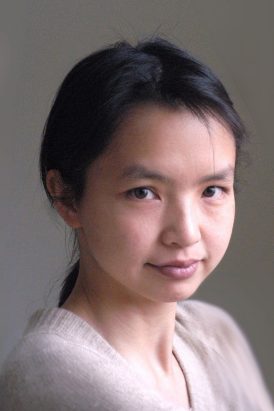
Hui Deng is an Associate Professor in the Department of Physics at the University of Michigan. Her research focuses on quantum states in matter-light coupled systems, particularly exciton-polaritons in semiconductors and 2D materials. Education: Ph.D. (2006) and M.S. (2003) from Stanford University; B.S. (1999) from Tsinghua University. Current projects include: Quantum phenomena in open cavity-QED systems Quantum photonics and plasmonics with wide bandgap materials Optical vortex generation and detection Her recent publications highlight advancements in 2D material photonics, polariton engineering, and quantum control techniques. Research trends emphasize moiré physics, ultrafast optical circuits, and topological photonic states. Lab contact details: Office: 4416 Randall Labs: SB187 and SB286 Randall Email: dengh@umich.edu
Prof. Dr. Selina Olthof serves as a Professor at the University of Wuppertal, Germany, where she is a core member of the Institute for Material and Surface Analysis (CM@S). Her institutional affiliation centers on advanced research in material properties and surface characterization techniques within this specialized research center. Her scholarly work focuses on Materials Science , Surface Analysis , and Material Characterization , employing methodologies critical to nanotechnology and materials engineering. Research in this domain typically involves spectroscopic and microscopic analysis of material interfaces, contributing to innovations in semiconductor development and advanced material synthesis. Prof. Olthof actively participates in academic knowledge dissemination through the CM@S colloquium series, as indicated by recent institutional announcements. She maintains professional correspondence via olthof@uni-wuppertal.de and collaborates within interdisciplinary materials research frameworks at the university.
Doreen Edwards serves as Dean of the Kate Gleason College of Engineering at Rochester Institute of Technology (RIT), appointed in July 2016. Previously, she was Dean of Engineering and Acting Vice President for Statutory Affairs at Alfred University (2009-2016). Education: Ph.D. in Materials Science and Engineering, Northwestern University (1997) B.S. in Chemistry, South Dakota School of Mines and Technology (1985) Research Focus: Her work centers on oxide materials for advanced energy systems, with significant contributions to fuel cell electrolytes , battery electrodes , and thermoelectric generators . She pioneered research on environmental remediation applications and solar energy conversion materials, emphasizing structure-property relationships in ceramics. Publication Trends: Her recent work demonstrates a sustained focus on energy materials processing and defect engineering , particularly in electrochemical systems. The publications reveal expertise in nanoscale characterization and sintering techniques for next-generation energy storage and conversion devices. Scientific Recognition: NSF CAREER award (2001) State University of New York Chancellor Award for Excellence in Teaching (2004) Fellow of the American Ceramic Society Research Leadership: As principal investigator on multiple NSF-funded projects, she secured over $2M in research grants focusing on oxide ion conductors and nanomaterial synthesis. Her work has yielded 60+ publications and two U.S. patents in energy materials. She actively mentors junior faculty while leading RIT's semiconductor initiatives through the G7 partnership. Professional Impact: Edwards chairs Incubator Works' board, driving tech commercialization in upstate New York. Her leadership in Women's History Month initiatives and profile in Successful Women Ceramic and Glass Scientists highlights her commitment to diversity in engineering education.
Assistant Professor in the Electrical and Computer Engineering Department at the University of Hawaii at Manoa's College of Engineering since January 2025. Teaches advanced solid-state devices and physical electronics courses. Research focuses on semiconductor detector development for radiation detection, photovoltaics, and quantum applications. Expertise includes silicon pixel sensors using atomic layer deposition for resistive/dielectric layers, precision timing sensors, and readout electronics characterization. Interdisciplinary work bridges particle physics, materials science, and electrical engineering. Radiochemistry & Inorganic Chemistry (BSc, University of Helsinki) Advanced Materials & Photonics (PhD, Helsinki Institute of Physics/Aalto University) Key contributor to ATLAS experiment upgrades and future ePIC/PIONEER experiments. Awards include Finnish Cultural Foundation Postdoctoral Scholarship for semiconductor sensor research. Active in interdisciplinary STEM collaboration across particle physics and engineering domains.
Tobias Kristoffer Boström serves as Professor of Renewable Energy at UiT The Arctic University of Norway within the Department of Physics and Technology. His research focuses on developing sustainable energy solutions specifically adapted to Arctic conditions, with particular expertise in integrating solar power systems with electric vehicle infrastructure. He maintains an active research program through the Arctic Center for Sustainable Energy (ARC) and contributes to the Smart Senja/RENEW project. Boström's research interests center on renewable energy systems in high-latitude environments, with major contributions to solar energy potential assessment in the Arctic, vehicle-to-grid integration, battery technologies for extreme conditions, and optimization of hybrid renewable energy systems. His work addresses the unique challenges of implementing renewable energy solutions in northern regions where conventional approaches often fail due to extreme weather, limited sunlight during winter months, and sparse population centers. Analysis of his publication record from 2015-2025 reveals a strong focus on practical applications of renewable energy technologies in challenging environments, with increasing emphasis on system integration rather than component-level research. His work demonstrates a progression from fundamental material science studies toward comprehensive energy system modeling, reflecting the maturation of renewable energy technologies from laboratory concepts to real-world implementations. Boström actively collaborates with researchers across multiple disciplines, frequently working with colleagues in electrical engineering, materials science, and environmental studies. His research has practical applications for communities across northern Norway and other Arctic regions seeking sustainable energy solutions that can withstand extreme conditions while maintaining economic viability.
Dr. Thinh Le is a Postdoctoral Research Fellow at the School of Computer Science , University of Technology Sydney , where he works at the Centre for Quantum Software and Information (since 2023). His academic journey includes research fellowships at the Institute for Quantum Optics and Quantum Information Vienna (2020-2023) and Leibniz University Hannover (2019-2020). He earned his PhD in Physics (2015) and BSc in Physics (2011) from the National University of Singapore . Thinh's research focuses on quantum information science , bridging theoretical foundations and experimental implementations. His work addresses critical challenges in quantum computing (error correction, fault tolerance), quantum tomography (device-independent characterization), and quantum software stack development. He investigates quantum randomness generation, Bell nonlocality, and entanglement distillation for quantum networks, with applications in quantum cryptography and secure communication. His recent publications examine advanced topics like trapped-ion lattice surgery (2025), quantum correlation boundaries (2025), and quantum backflow phenomena (2023). Earlier work established foundational limits for real quantum theory (2021) and developed practical entanglement distillation protocols (2018). Scientific awards include the Lise Meitner Postdoctoral Fellowship (2020-2023) and Humboldt Postdoctoral Fellowship (2019-2020). His funded research projects focus on quantum computing error correction and device-independent quantum tomography , aligning with his theoretical expertise guided by experimental applications.
Antonino Buttacavoli is a Researcher (PHYS-06/A) at the Department of Physics and Chemistry - Emilio Segrè at the University of Palermo. He maintains regular office hours on Wednesdays from 11:00 to 13:00 at the Department of Physics and Chemistry, Viale delle Scienze, Building 18, Palermo. His research is primarily conducted in collaboration with the DAΦNE collider facility. Dr. Buttacavoli's research focuses on kaonic atoms and X-ray spectroscopy , with particular expertise in CZT (Cadmium-Zinc-Telluride) detector technology . His work bridges particle physics, nuclear physics, and advanced detector development, with a strong emphasis on precision measurements of exotic hadronic atoms. He has made significant contributions to the SIDDHARTA-2 experiment at the DAΦNE collider, investigating kaonic atoms across various elements from helium to lead. Analysis of his recent publications reveals a clear research trajectory centered on advancing precision measurements of kaonic atoms through innovative detector systems. His work on CZT detectors represents a critical technological advancement for X-ray spectroscopy in challenging collider environments. The research spans fundamental tests of quantum electrodynamics in exotic systems, precision determination of kaon properties, and investigation of strong interaction effects in hadronic atoms. Dr. Buttacavoli's experimental approach combines sophisticated detector development with precision spectroscopy techniques, contributing to our understanding of hadron-nucleus interactions at low energies. His publications demonstrate a consistent focus on improving measurement precision and developing novel detection methodologies for challenging physics measurements.
Eric Pop is a Professor of Electrical Engineering and (by courtesy) Materials Science & Engineering at Stanford University's School of Engineering, where he leads the SystemX Heterogeneous Integration focus area. Previously, he served on the faculty at the University of Illinois at Urbana-Champaign (2007-2013) and worked at Intel Corporation (2005-2007). His academic background includes a PhD in Electrical Engineering from Stanford University (2005) and three degrees from MIT: MEng and BS in Electrical Engineering, and BS in Physics. His educational credentials: PhD in Electrical Engineering, Stanford University, 2005 MEng in Electrical Engineering, MIT BS in Electrical Engineering, MIT BS in Physics, MIT Professor Pop's research centers on the intersection of electronics, nanomaterials, and energy, with pioneering contributions to 2D materials (particularly transition metal dichalcogenides), semiconductor device physics, and thermal management. His work addresses critical challenges in contact engineering for atomically thin semiconductors, stability of oxide transistors, and energy-efficient neuromorphic systems. Current projects explore solvent doping techniques, strain engineering, and machine learning-assisted device characterization to enable next-generation electronics. Analysis of his 2023-2025 publications reveals dominant themes in 2D semiconductor transistors, oxide device reliability, and neuromorphic computing architectures. Key trends include the integration of hyperspectral microscopy for rapid material characterization, Monte Carlo simulations for thermal-electrical transport, and phase-change materials for artificial neurons. His research consistently bridges fundamental material science with practical device engineering, emphasizing industrial scalability and low-power operation. His scientific honors include: Presidential Early Career Award for Scientists and Engineers (PECASE) Young Investigator Awards from ONR, AFOSR, NSF, and DARPA Multiple best paper and best poster awards at international conferences with students Professor Pop actively mentors PhD and Master's students through directed research courses (EE 190/191/390/391), fostering award-winning projects in semiconductor device innovation. His research program is supported by substantial grants from federal agencies including NSF, DARPA, and the Department of Defense, with recent work focusing on heterogeneous integration and thermal management for 3D circuits. As Editor of 2D Materials and former General Chair of the Device Research Conference, he significantly influences the semiconductor research community. He directs the Pop Lab (poplab.stanford.edu), which maintains advanced nanofabrication and characterization facilities for semiconductor research. Current initiatives include developing flexible radio-frequency transistors exceeding 100 GHz, scalable production of transition metal dichalcogenide solar cells, and AI-accelerated thermal simulation pipelines for integrated circuit design. The lab's collaborative environment bridges electrical engineering, materials science, and computer science to address semiconductor industry challenges.
Prof. Greg Hughes is a Full Professor at the School of Physical Sciences , Dublin City University, with a career spanning over 30 years in semiconductor surface science. Holding a B.Sc in Chemistry and a PhD in Semiconductor Physics from the University of Ulster, he conducted postdoctoral work at IBM’s Yorktown Heights lab and held sabbaticals at Technical University of Berlin (Alexander von Humboldt fellowship) and Boston University. Research Focus : Surface interactions on semiconductors, including Schottky barriers, heteroepitaxy, and dielectric layer characterization for transistor technology. His work bridges fundamental surface chemistry and applied semiconductor device engineering, with recent emphasis on novel materials for interconnects and sensors. Academic Leadership : Served as Vice-President for Research and Innovation at DCU for five years and contributes to the European Consortium of Innovative Universities (ECIU) alliance. Scientific Contributions : Authored over 170 papers, with expertise in synchrotron radiation-based XPS, scanning tunneling microscopy, and electrical-chemical interface analysis. Key collaborators include institutions like IBM, Boston University, and Humboldt University. Awards : Alexander von Humboldt Research Fellowship (1994). Contact : greg.hughes@dcu.ie
Jason Kawasaki is an Assistant Professor in the Department of Materials Science & Engineering at the University of Wisconsin-Madison, College of Engineering. His research focuses on heteroepitaxy, Heusler compounds, magnetism, topological states, shape memory alloys, surfaces and interfaces, and advanced characterization techniques like MBE, STM, and ARPES. PhD, University of California-Santa Barbara (2014) BS, Princeton University (2009) His work explores strain and strain gradient engineering in quantum materials, remote epitaxy through graphene barriers, and synthesis of Heusler compounds with applications in superconductivity, flexomagnetism, and topological materials. Recent publications highlight trends in molecular beam epitaxy of oxide films, strain-gradient superconductivity, and graphene-based nanomesh synthesis. Awards include the 2024 Peter Mark Memorial Award, 2024 Vilas Associate Award, and multiple early-career recognitions from AVS, NSF, and DARPA. NSF CAREER Award (2018) DARPA Young Faculty Award (2019) AFOSR Young Investigator (2021) Kavli Postdoctoral Fellowship (2014) Materials Research Society Graduate Student Gold Award (2012) He teaches graduate courses in materials synthesis, surface properties, and research/thesis work. His lab emphasizes experimental techniques like MBE and STM for probing quantum and nanoscale phenomena.