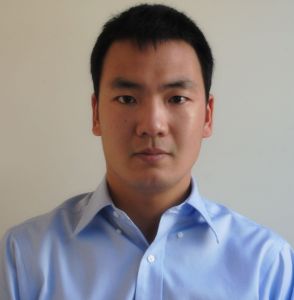
Maria De Iorio is a Professor at the Yong Loo Lin School of Medicine and holds a joint appointment at the Faculty of Science , both at the National University of Singapore. Her work bridges statistics, epidemiology, and clinical sciences through advanced Bayesian modeling and computational methods. Key research areas: Statistics, Epidemiology, Genetics, Clinical sciences, Medical biochemistry Primary affiliations: Paediatrics department (YLLSoM) and interdisciplinary projects in Science faculty Recent publications focus on extreme value theory, digital numismatics, metabolomic simulations, and maternal-child health Her statistical innovations include: Repulsive mixture models for interpretable clustering Bayesian semi-parametric approaches for longitudinal studies Novel prior distributions for graphical models Application domains span: Pediatric oncology (ALL treatment response modeling) Metabolic syndrome analysis (obesity, diabetes, bone health) Digital humanities (coin distribution patterns, ceramic artifact analysis) Financial forecasting (discrete survival methods for invoice prediction)
PD Dr. Fabian Scheipl is the Head of the Department of Statistics at Ludwig-Maximilians-Universität München (LMU). His work focuses on cutting-edge statistical methodologies, particularly in Functional Data Analysis, and he leads the Functional Data Analysis research group. He specializes in developing advanced statistical models and open-source software tools for data science applications. His research bridges theoretical statistics with practical implementations, emphasizing reproducible research and educational resources. Dr. Scheipl’s research interests include functional additive mixed models, cluster analysis, and high-dimensional data techniques. He has contributed significantly to R package development, including refund , gamm4 , and lme4 , which are widely used in statistical computing. His work spans diverse fields such as healthcare (e.g., analyzing critical care outcomes), environmental science (e.g., earthquake dynamics), and computational biology (e.g., epigenetic studies). His publications highlight innovations in statistical methodology, such as improving cluster validation metrics and advancing topological approaches to outlier detection. While no awards are explicitly listed, his impactful contributions to statistical software and theory are widely recognized in academic circles. He actively engages in advising doctoral candidates and contributes to teaching and mentorship in statistical education. Labs/Teams: Leads the Functional Data Analysis group within LMU’s Department of Statistics, fostering interdisciplinary collaborations across computational, biomedical, and environmental research domains.
Claudia Neves is a Senior Lecturer in Statistics at King's College London, Department of Mathematics, since 2023, having previously held positions at the University of Reading (2015–2021) and the University of Aveiro, Portugal. She holds a Visiting Associate Professorship at the University of Lisbon (2024–present). Her research focuses on extreme value theory, spatio-temporal processes, and asymptotic statistics, with applications in climate science, environmental hazards, and finance. She leads the EPSRC-funded project on multivariate max-stable processes for hazard forecasting and serves on editorial boards, including REVSTAT-Statistical Journal and the Royal Statistical Society's Environmental Statistics Section. Education: PhD in Statistics and Operational Research (2006, University of Lisbon). Teaching since 1997. Awards: EPSRC Innovation Fellowship (2015–2021). Research highlights include modeling African flood drivers beyond El Niño and developing statistical tools for space-time extreme events. Collaborates with institutions globally, including the Centre for Sustainable Business at King’s and the Net Zero Centre. Active in interdisciplinary initiatives like EPRI Climate READi. Publications emphasize methodological advancements in extreme value analysis and applications to environmental risks. Ongoing work includes advancing spatio-temporal models for climate extremes and fostering sustainable research through King’s Net Zero initiatives.
Kjell Gunnar Robbersmyr is a Professor at the University of Agder's Department of Engineering Sciences and director of the Top Research Center in Mechatronics. With a Ph.D. in mechanical engineering from NTNU (1992), his career spans academic leadership, research management at Agder Research, and active contributions to IEEE. His work focuses on mechatronics, machine design, and condition monitoring, with special emphasis on fault diagnosis in electric motors and vehicle crash modeling. Senior Member of IEEE Member of Norwegian Academy of Technical Sciences Member of Agder Academy of Sciences Research interests include: Advanced fault diagnosis in electric drives using AI and signal processing Vehicle crashworthiness modeling with lumped parameter and finite element methods Optical measurement technology for machine monitoring Digital twin applications for infrastructure and wind energy systems Condition monitoring of low-speed bearings and rotating machinery Recent publications demonstrate expertise in: Deep learning for imbalanced motor fault datasets Transformer networks in power electronics diagnostics 3D reconstruction techniques for mechanical systems Multi-classifier decision fusion in power systems Dynamic operations modeling for electric vehicles Scientific contributions include: Over 50 peer-reviewed articles Leadership in the Intelligent Monitoring research group Development of novel inverter topologies Innovations in wind turbine condition monitoring Advancements in laser-based mechanical diagnostics
Didier Nibbering is an Assistant Professor (Lecturer) in the Department of Econometrics and Business Statistics at Monash University, Faculty of Business and Economics, Melbourne, Australia. His research lies at the intersection of econometrics, statistics, and computational methods. Research Interests: His primary research areas include high-dimensional inference, forecasting, and semi-parametric Bayesian inference. He works on developing and applying advanced statistical models for complex economic and financial data, particularly in contexts involving large-dimensional datasets and latent variable structures. The recent publications indicate a strong focus on Bayesian computational techniques, state space models, variational inference, and forecasting applications in economics and environmental modeling. His work combines theoretical rigor with practical applications in policy-relevant domains such as carbon emissions forecasting. Scientific Contributions: Developed novel hybrid MCMC methods for high-dimensional latent variable models. Advanced variational approximations for state space models using importance sampling. Proposed asymmetric grouping methods for improved forecasting of carbon emissions. Contributed to a comprehensive modern review of Bayesian forecasting in economics and finance. Introduced high-dimensional extensions to multinomial logit models. Advising and Grants: While specific details about PhD students or grant funding are not provided in the text, his active publication record and collaborations suggest ongoing research supervision and external funding involvement typical for early-career faculty. He has collaborated with prominent researchers in econometrics such as Gael Martin, David Frazier, and Richard Paap. Labs and Teams: There is no explicit mention of lab affiliations or research teams, but his work appears to be part of the broader econometrics and statistics research group at Monash University, with international collaborations including Stanford University.
Chixiang Chen is an Associate Professor in Biostatistics at the Department of Epidemiology & Public Health, University of Maryland School of Medicine, with joint appointments in the Department of Neurosurgery and the University of Maryland Institute for Health Computing. He is a NIH-funded principal investigator whose research spans theoretical and applied statistics, focusing on causal inference, data integration, machine learning, and single-cell analysis for aging, Alzheimer’s disease, and clinical trial design. Education: PhD in Biostatistics (2020), Pennsylvania State University Postdoctoral Researcher (2021), University of Pennsylvania Research Interests: Developing robust statistical frameworks for real-world data integration (e.g., Medicare claims, UK Biobank). Innovative causal inference methods for observational studies and clinical trials. Single-cell RNA-seq and bulk data deconvolution for aging and disease studies. Machine learning in multi-modal biomedical data and federated learning. Grants: NIH/NIA R01 (2024-2029) for post-fracture recovery analysis. Johns Hopkins ICTR grant (2024-2025) for Alzheimer’s disease risk factors. OAIC CC Flexible Early Career Faculty Award (2023-2024). NIH R01 collaborations in aging, neuroscience, and surgery. Scientific Awards: 2024: Honorable Mention (ICSA), Early Career (ACTStat), Pepper Pilot Grant. 2023: RCCN Travel Award, OAIC CC Flexible Early Career Faculty Award. 2021: Dean’s Scholarly Achievement (Penn State). 2019: Alumni Society Award (Penn State), JSM Student Paper Award. Labs & Collaborations: Director of the SILVER Lab (Statistical Information Integration and Learning for Health Data). Collaborations in gerontology, cardiology, neuroscience, and oncology. Developed R packages: DRDNet, InteRD, MultiRD, ELCIC, eMultiMR.
Ján Drgona is an Associate Professor in the Department of Civil and Systems Engineering at Johns Hopkins University's Whiting School of Engineering and a member of the Ralph S. O'Connor Sustainable Energy Institute (ROSEI). Previously, he served as a Principal Investigator and Research Data Scientist at Pacific Northwest National Laboratory (PNNL) and held a postdoctoral position at KU Leuven in Belgium. Dr. Drgona earned his BSc, MSc, and PhD in control engineering from the Slovak University of Technology. His research centers on differentiable programming and scientific machine learning (SciML) for dynamical systems, optimization, and control, with particular applications to building energy systems and industrial process control. He is the lead developer of the Neuromancer SciML library in PyTorch for solving constrained optimization, physics-informed machine learning, and optimal control problems, which became PNNL's most popular open-source repository within two years of its release. Dr. Drgona's publication record demonstrates a strong focus on bridging machine learning with physical systems and control theory. His recent work spans differentiable predictive control, physics-informed neural networks, optimization algorithms, and applications to energy systems. A recurring theme across his publications is the integration of domain knowledge with data-driven approaches to create more efficient, reliable, and interpretable systems for real-world applications, particularly in sustainable energy and building systems. As an active member of the scientific community, Dr. Drgona regularly serves as a reviewer for prestigious journals including Applied Energy, Automatica, IEEE Control Systems Letters, IEEE Transactions on Control Systems Technology, IEEE Transactions on Industrial Informatics, Control Engineering Practice, Journal of Process Control, Energy and Buildings, Journal of Control Automation and Electrical Systems, and Electric Power Systems Research. Dr. Drgona has been involved in several high-impact projects, including developing AI models that slash HVAC energy costs while predicting them with precision. He has participated in Johns Hopkins' International Energy Summit to accelerate clean technology innovation and has presented at major conferences including ACC 2025 where he co-organized workshops on Physics-Informed Machine Learning in Control and Safe Physics-Informed Machine Learning for Dynamics and Control.
Yuan Wu is an Associate Professor in the Department of Biostatistics & Bioinformatics at Duke University and a member of the Duke Cancer Institute. His research focuses on survival analysis, sequential clinical trial design, machine learning, causal inference, and statistical computing. Ph.D., University of Iowa (2010) His work spans clinical trial methodology , biostatistical modeling , and cancer genomics , with recent papers on ordinal outcome measures and RNA splicing mechanisms. Articles trends include machine learning in medical imaging , immune biomarker discovery , and epigenetic therapies . NIH R01 funding for AYA STEPS (2024-2029) DoD Clinical Consortium grants (2021-2025) NIH grants for biofluidic diagnostics (2020-2025) Dr. Wu mentors students through courses like BIOSTAT 903 and BIOSTAT 713, emphasizing advanced survival analysis techniques.
Elena Vladimirovna Kossova is an Associate Professor at the Department of Applied Economics within the Faculty of Economic Sciences at the National Research University Higher School of Economics (HSE). She has been with HSE since 1995, accumulating 30 years of scientific and teaching experience. Her academic background includes a Candidate of Physical and Mathematical Sciences degree from Lomonosov Moscow State University. Educational Background: 1995: Candidate of Physical and Mathematical Sciences, Lomonosov Moscow State University, specialty 01.01.05 "Probability Theory and Mathematical Statistics" 1995: Postgraduate study, Lomonosov Moscow State University, Faculty of Computational Mathematics and Cybernetics 1990: Specialty in Applied Mathematics, Lomonosov Moscow State University, Faculty of Computational Mathematics and Cybernetics, qualification "Mathematician" Elena Kossova's research focuses on Microeconometrics, Probability Theory, Mathematical Statistics, and Applied Econometrics. Her work particularly emphasizes microeconometrics of qualitative data, models with qualitative and limited dependent variables, and the application of advanced statistical methods to economic problems. She has developed expertise in handling complex data structures including non-random selection and endogeneity issues. Her teaching portfolio includes Probability Theory and Mathematical Statistics courses alongside specialized microeconometrics courses for both undergraduate and graduate students. Her publication record shows a consistent focus on applying econometric methods to analyze health economics, consumer behavior, and social policy issues in the Russian context. A significant portion of her recent work examines the relationship between alcohol consumption, health outcomes, and socioeconomic factors, as well as the impact of education on health. Her methodological contributions include developing and comparing various approaches to handling sample selection bias and endogeneity in microeconometric models. Scientific Awards and Recognitions: Diploma "Founder of the Higher School of Economics" (November 2022) Honorary title "Honorary Worker of Education of the Russian Federation" (November 2022) Medal "Recognition - 25 years of successful work" (August 2021) Honorary Badge of the 2nd Degree of the Higher School of Economics (December 2018) Medal "Recognition - 20 years of successful work" (January 2018) Certificate of Honor of the Ministry of Education and Science of the Russian Federation (November 2012) Multiple Academic Work Allowances (2012-2018) Publication Bonuses for international journal articles (2018-2022) Best Teacher awards (2012-2025) Professor Kossova serves as a scientific supervisor for the educational program specialization in "Economy and economic policy." She has supervised doctoral research, including Potanin B.S.'s 2020 dissertation on extending regression models with endogenous switching and non-random selection. She is actively involved in research projects, including as project leader for the Russian Science Foundation grant No. 21-18-00427 on "Development and application of econometric estimation methods for economic models considering endogeneity and non-random observation selection." Her work demonstrates strong collaboration with colleagues both within HSE and internationally. Professor Kossova maintains active participation in academic conferences, particularly the annual "Applied Econometrics" conference series at HSE and international econometrics events. Her consultation hours are held via Telegram chat for students taking her courses in TViS (Probability Theory and Mathematical Statistics) and Microeconometrics.
Antonio Cosma is a faculty member at the Department of Business Sciences, University of Bergamo. He holds a Doctorate in Economics and a Master’s in Financial Economics from Université catholique de Louvain. His research focuses on microeconometrics, financial econometrics, and semi/non-parametric statistical methods. Doctorate: Economics, Université catholique de Louvain Master’s: Financial Economics, Université catholique de Louvain His work analyzes conditional moment restrictions, tail dependence in global markets, and wavelet-based estimation techniques. Publications appear in journals like Journal of Financial and Quantitative Analysis and Bernoulli , with a focus on computational finance and statistical modeling for economic data. Recent articles investigate stochastic volatility in American options, stratification effects in econometric inference, and diversification risks in hedge fund markets. He teaches Elementi di Matematica and Strumenti per la Misurazione del Rischio at the University of Bergamo.
Jiabin Wu is a researcher at the Chair of Computing in Civil and Building Engineering, Technical University of Munich (TUM), specializing in Building Information Modeling (BIM) and AI-driven solutions for building design compliance. His work focuses on automating regulatory adherence in early design stages through computational innovation, with contact via j.wu@tum.de and +49 (89) 289-23147. His research centers on automated code compliance checking, design adaptation, and BIM conflict resolution using artificial intelligence techniques. Key methodologies include reinforcement learning for conflict resolution, graph-based semantic enrichment, and parametric modeling to enhance IFC (Industry Foundation Classes) models. This work addresses critical gaps in construction informatics by enabling self-healing building designs that dynamically adapt to regulatory requirements while preserving design intent. Analysis of Wu's 2022-2025 publications reveals a cohesive trajectory toward intelligent BIM ecosystems. Core themes include the 'Design Healing' framework for automated compliance, spatial logic integration in IFC models, and machine learning applications for conflict resolution. His research bridges civil engineering with computer science, emphasizing practical implementations that reduce manual review cycles and improve design efficiency in architectural workflows. Wu actively mentors graduate students, supervising theses on BIM-based issue resolution, circulation design optimization, and egress compliance. He contributes to TUM's educational mission through teaching 'BIM.fundamentals' in summer semesters 2022 and 2023, focusing on scalable assessment methods for large student cohorts. His academic service extends to developing pedagogical frameworks that integrate industry standards with computational thinking. As part of TUM's research infrastructure, Wu collaborates within the BIM-Lab and specialized groups including Information Management and Digital Twinning. His work leverages the university's Robotic Fabrication Lab resources and aligns with cross-departmental initiatives in spatial computing, advancing the integration of physical construction processes with digital model evolution.
Bin Gu is a professor at Mohamed bin Zayed University of Artificial Intelligence (MBZUAI), specializing in machine learning and artificial intelligence. Previously affiliated with institutions including Nanjing University of Information Science and Technology (former position) and Nanjing University of Aeronautics and Astronautics (PhD 2011). His research focuses on optimization algorithms, spiking neural networks, federated learning, kernel methods, adversarial robustness, and neuromorphic computing. Education: PhD in Computer Science (2011) from Nanjing University of Aeronautics and Astronautics. Prior affiliations include Tianjin University, Boston University, University of Science and Technology of China, and Southeast University. Research Interests: Extensive work on machine learning theory and applications, including robust learning, federated systems, neural architecture design, and privacy-preserving techniques. Over 200 publications in top venues such as AAAI, NeurIPS, ICLR, ICML, KDD, and IEEE journals. Publications Trends: Recent focus on spiking neural networks (SNNs), federated learning frameworks, and optimization methods for handling adversarial attacks and privacy constraints. Notable contributions include scalable algorithms for kernel-based learning, robust SVM formulations, and neuromorphic computing architectures. Labs/Teams: Active in AI research groups focused on neural networks, optimization, and distributed learning systems. Collaborates with industry and academic partners on applied AI solutions.
Xibin Zhang is a Professor in the Department of Econometrics and Business Statistics at Monash Business School, Monash University, Australia. He has been a faculty member since 2004, progressing from Lecturer to full Professor in 2021, and has established a strong research profile in econometrics and applied statistics. Educational Background: PhD in Econometrics, Monash University, Australia Doctoral Degree in Systems Engineering, Tianjin University, China MSc in Probability and Statistics, Nankai University, China BSc in Mathematical Statistics, Nankai University, China Research Interests: Professor Zhang’s research focuses on advanced econometric methodologies, including Bayesian inference, semiparametric and nonparametric estimation, panel data models, and hypothesis testing. His work extends into financial econometrics, actuarial studies, and energy economics, with a strong emphasis on empirical applications related to climate policy, energy transition, and economic sustainability. He applies sophisticated statistical techniques to real-world data, contributing to both methodological development and policy-relevant insights. Publication Trends: His recent publications (2019–2025) reveal a consistent focus on nonparametric and Bayesian methods in econometrics, with applications in energy economics, stochastic frontier analysis, and financial modeling. He frequently publishes in top-tier journals such as Journal of Econometrics , Energy Economics , and Economic Modelling , often in collaboration with leading researchers. A notable trend is the integration of kernel-based methods and Bayesian bandwidth selection across various modeling frameworks. Scientific Awards: Dean's Award for Excellence in Research (2009) Dean's Commendation for Excellence in Research Publication (2007) Advising and Grants: He has supervised over 15 PhD and Master’s students to completion and currently supervises multiple PhD candidates. His research is supported by competitive grants, including four Australian Research Council (ARC) Discovery Projects (2006–2016) and a DFAT-funded project (2017–2018) on Chinese tourism dispersal in regional Australia. Labs and Research Teams: While no formal lab is mentioned, Professor Zhang collaborates extensively within econometrics and business statistics research groups at Monash, particularly with colleagues like M.L. King, Jiti Gao, and Russell Smyth. He also engages in interdisciplinary work involving energy policy, finance, and actuarial science.
Dr. Wei Bai is a Reader in Mathematics at Manchester Metropolitan University's Department of Computing and Mathematics, specializing in computational marine hydrodynamics. He holds a Ph.D. in Port, Coastal and Offshore Engineering from Dalian University of Technology. Research focuses on: Numerical modeling of wave-structure interactions Offshore renewable energy systems Sloshing dynamics and hydrodynamic stability Computational fluid dynamics development His extensive publication record demonstrates consistent innovation in numerical methods for marine applications, with recent emphasis on moonpool hydrodynamics, floating wind turbines, and advanced CFD techniques. Research integrates theoretical modeling with practical offshore engineering challenges. Dr. Bai serves on editorial boards for Applied Ocean Research, Ocean Engineering, and Journal of Marine Science and Application. He has supervised multiple doctoral students in marine hydrodynamics and offshore engineering.
Dr. Kanchana Nadarajah is a Lecturer in Economics at the University of Sheffield's School of Economics. Previously, she served as a Research Fellow at Monash University's Department of Econometrics and Business Statistics in Australia and as an Assistant Lecturer at the University of Colombo's Department of Statistics. Her academic journey includes a PhD in Econometrics (2019) from Monash University, an MPhil in Econometrics, and a BSc (Hons) in Statistics from the University of Colombo. Her research focuses on time-series econometrics, with applications in economics and finance, semi-parametric and non-parametric statistics, and partial identification in average treatment effects. She develops methodologies for estimating fractional integrated models, addressing model misspecification and bias correction techniques. Her work emphasizes advancing theoretical and methodological frameworks for fractional differencing parameters and exploring partial identification issues in econometric models. Kanchana has been recognized with the Postgraduate Publication Award from Monash University and the Endeavour Postgraduate Scholarship from Australia's Department of Education. She teaches the ECN340 Further Econometrics course at the University of Sheffield and supervises PhD students in time-series econometrics aligned with her research interests.