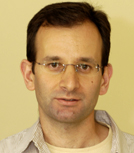
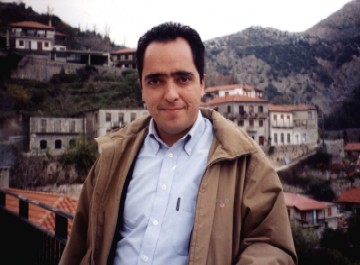
Dr. George Stamou is a Professor at the School of Electrical and Computer Engineering of the National Technical University of Athens (NTUA), serving as Director of the Artificial Intelligence and Learning Systems Laboratory (AILS). His expertise spans knowledge representation, machine learning, neural networks, and semantic technologies. He leads interdisciplinary initiatives such as the postgraduate program 'Data Science and Machine Learning' (2018–2022). Research Interests: Focuses on knowledge graphs, interpretable AI, semantic web applications, and multimodal learning. His work integrates formal logic systems (e.g., description logics) with modern deep learning techniques, addressing challenges in explainability, bias detection, and ethical AI applications. Publications: Over 150 articles in AI journals/conferences with an h-index of 34 (Google Scholar). Notable contributions include datasets like CHORDONOMICON (music analysis), GOSt-MT (gender bias in MT), and methodologies for counterfactual explanations in machine learning. Awards & Committees: Active in W3C and RuleML standardization bodies. Co-organized major AI conferences. Recognized for contributions to semantic interoperability and knowledge-based systems. Labs & Teams: Directs AILS-NTUA lab and collaborates with CISRI (Computer & Information Systems Research Institute). Engages in EU projects like CultureLabs (cultural heritage digitalization) andsmarty4covid (health data analysis).
Ion Androutsopoulos is a Professor of Artificial Intelligence in the Department of Informatics at Athens University of Economics and Business (AUEB), where he also serves as Head of Department. He is founder and co-director of AUEB's Natural Language Processing Group and an Adjunct Researcher at the Digital Curation Unit and "Archimedes" Research Unit of the Research Centre "Athena". His research spans multiple dimensions of Artificial Intelligence with a focus on Natural Language Processing. Key interests include: Machine learning in NLP, particularly deep learning and large language models Question answering and retrieval augmented generation for document collections Dialog systems for new languages and knowledge domains Sentiment analysis and emotion recognition from text and speech Detecting toxic posts and disinformation online Image-to-text generation for medical diagnostics NLP applications in biomedical, legal, and financial domains His recent publications demonstrate strong activity across medical AI (particularly ImageCLEFmed Caption competitions where his group consistently ranks 1st-2nd), legal NLP (LexGLUE benchmark), financial NLP (EDGAR-CRAWLER), and multilingual challenges. His work shows increasing emphasis on large language models, explainability, and practical applications. Notable awards include: Top 2% scientist worldwide (Stanford University database, 2023) Multiple AUEB Excellent Teaching Awards (2017-18, 2021-22, 2023-24) Three consecutive BioASQ awards (2018-2020) Multiple 1st/2nd place rankings in ImageCLEFmed Caption competitions (2021-2025) He actively organizes major events including the Athens Natural Language Processing Summer School (AthNLP) and SemEval tasks. His group maintains strong industry and research collaborations, particularly in medical AI applications where they've developed systems that generate diagnostic captions from medical images with state-of-the-art performance.
Manos Kapritsos is an Associate Professor in the Department of Computer Science and Engineering at the University of Michigan's College of Engineering. He leads the GLaDOS research group focusing on reliability of distributed systems through formal verification and fault-tolerant replication techniques. His research spans: Formal verification of concurrent and distributed systems Fault-tolerant replication protocols beyond client-server models Automation of verification processes for complex systems Performance verification including latency properties Reliable cryptographic code implementation Analysis of his publications reveals strong emphasis on: developing automated verification tools (Armada, Vale, IronFleet), creating novel replication protocols (Aegean), verifying performance characteristics (Performal), and improving specification reliability (IronSpec). His work consistently bridges theoretical formal methods with practical systems implementation. Awards and honors include: Jay Lepreau Best Paper Award at OSDI 2025 Jon R. and Beverly S. Holt Award for Excellence in Teaching (2022) NSF CAREER Award (2021) Distinguished Paper Award at PLDI 2020 Google Faculty Award (2017) Distinguished Paper Award at USENIX Security 2017 Grant support includes NSF FMitF grants (2020, 2023), NSF Large grant (2021), DARPA grant (2020), and Google Faculty Award (2017). He advises PhD students through the GLaDOS group, focusing on distributed systems verification. He directs the GLaDOS lab at University of Michigan, developing verification frameworks and reliable distributed systems. Current projects include automated proof generation (Basilisk) and efficient communication protocols (Scrooge).
Nikoletta Kanavou is an Associate Professor of Ancient Greek Literature at the University of Athens. She has taught at prestigious institutions including Oxford, Cyprus, Crete, Heidelberg, and the Cypriot/Hellenic Open Universities. Her research spans fictitious prose narratives, archaic poetry, comedy, literary theory, papyrology, epigraphy, and onomastics. BA, MSt, DPhil in Classics (Athens, Oxford) Recipient of IKY, Leventis, Voudouri, IPEP, Humboldt, and DFG fellowships Published 3 monographs, 2 co-authored books, and ~50 peer-reviewed articles Her work analyzes the intersection of Greek novel traditions, satirical elements, and legal narratives in antiquity. She explores intertextuality in Homeric adaptations and the evolution of comedic naming conventions. Scientific awards include: IKY scholarship A.G. Leventis foundation Lilian Voudouri foundation Humboldt fellowship DFG fellowship
George Vasilakopoulos is a Professor in the Department of Digital Systems at the University of Piraeus , where he also serves as Vice-Chancellor for Academic Affairs and Personnel. By law, he is President of the Quality Assurance Unit (MODIP) and the Employment and Career Structure (DASTA) of the university, overseeing the development of modern information systems. He earned his PhD from the University of London and has held leadership roles including Department President, Director of Postgraduate Programs, and Scientific Director of the Digital Health Services Laboratory. PhD: University of London Current Roles: Vice-Chancellor, Department of Digital Systems Professor Labs: Digital Health Services Laboratory His research focuses on Health Informatics , Cloud Computing , and Medical Data Security , with key contributions to: Emergency healthcare process automation Privacy-preserving personal health record systems Context-aware authorization models Cloud-based medical service frameworks Machine learning in clinical data analysis Interoperable health information systems The trends in his 15 most recent articles (2010-2015) reveal a consistent emphasis on integrating cloud infrastructure , semantic technologies , and mobile platforms to enhance emergency care, chronic disease management, and patient data security. His work bridges biomedical engineering , software architecture , and public health policy . He has held advisory roles for the Minister of Health on IT issues, served on hospital boards, and contributed to national committees for healthcare technology standards. His professional activities include project evaluation for Greek and European research programs and authoring three books on health informatics.
Todd Millstein is a Professor in the Computer Science Department at the University of California, Los Angeles (UCLA). He served as the Computer Science Department Chair from 2022-2025 and is also an Amazon Scholar. His research focuses on making software systems more reliable through programming languages techniques, with significant contributions to network verification and probabilistic programming. Millstein received his Ph.D. from the University of Washington Department of Computer Science, where he was a member of the Cecil group led by Craig Chambers. Prior to that, he completed his undergraduate studies at Brown University under the guidance of Paris Kanellakis and Pascal Van Hentenryck. Millstein's research spans several areas of programming languages and systems with a focus on reliability. He has made significant contributions to network verification, developing the Batfish network configuration analyzer which is now managed by Amazon Web Services and forms the basis of Oracle Cloud's Network Path Analyzer. His work has been recognized with the ACM SIGCOMM Networking Systems Award in 2025. He also works on interactive program verification through lemma synthesis and scalable reasoning methods for probabilistic programming languages. His research bridges programming languages theory with practical systems challenges, as highlighted in his SPLASH/OOPSLA 2024 keynote "Everything is a Program (even if it's not)". Millstein's recent publications demonstrate a consistent focus on verification and reliability across multiple domains. His work shows a progression from foundational programming language techniques to practical applications in networking and probabilistic systems. Key themes include data-driven approaches to program analysis, synthesis of verification artifacts, and applying programming languages techniques to non-traditional domains like network configuration. Millstein's scientific achievements have been recognized with numerous prestigious awards including an NSF CAREER Award, an ACM SIGPLAN Most Influential PLDI Paper Award, an ACM SIGCOMM Networking Systems Award, IEEE Micro Top Picks selection, best-paper awards from PLDI, OOPSLA, and SIGCOMM, a Microsoft Research Outstanding Collaborator Award, an Okawa Foundation Research Grant, an IBM Faculty Award, and a Facebook Research Award. He has also received both the Northrop Grumman Excellence in Teaching Award (for junior faculty) and the Eon Instrumentation Inc. Excellence in Teaching Award (for senior faculty) from UCLA Engineering. Millstein advises several Ph.D. students including Ana Brendel, Poorva Garg (co-advised with Guy Van den Broeck), Rajdeep Mondal (co-advised with George Varghese), and Rathin Singha (co-advised with George Varghese). His research has been supported by various grants including an NSF CAREER Award, Okawa Foundation Research Grant, IBM Faculty Award, and Facebook Research Award. He has also been a Co-Founder and Chief Scientist of Intentionet, which was later acquired by Amazon Web Services. Millstein is actively involved in the Batfish project, an open-source network configuration analyzer that has had significant practical impact. Batfish is now managed by AWS, powers Oracle Cloud's Network Path Analyzer, and is used by dozens of companies. His research group continues to work on network reliability, developing techniques for scalable BGP policy verification and behavioral testing of protocol implementations.
David Naumann is Professor and Department Chair of Computer Science at Stevens Institute of Technology. His leadership in the department and active research program positions him as a key figure in programming languages and formal methods research. Naumann's research focuses on formal methods and software security, with particular emphasis on relational and hyperproperty verification , fine-grained confidentiality/integrity policies , and program analysis and verification . His work bridges theoretical foundations with practical applications in security-critical systems. He has developed novel program logics and verification techniques that enable precise reasoning about information flow and security properties. His recent publications (2022-2025) reveal a strong trend toward modular relational verification techniques with applications to pointer programs, distributed systems, and concurrent applications. The research spans theoretical foundations (algebraic structures for alignment) to practical tools (WhyRel prototype), demonstrating both depth and breadth in addressing verification challenges. Naumann has served as program committee co-chair for IEEE Computer Security Foundations Symposium (2021-2022) and has been active on committees for POPL, CCS, CSF, ECOOP, and other top venues. His editorial service includes ACM Transactions on Programming Languages and Systems, Formal Aspects of Computing, and Journal of Object Technology. He leads the Cypress research group at Stevens Institute of Technology and has secured significant funding from NSF, Microsoft Research, and Siemens. His mentoring extends to numerous PhD students who have gone on to successful careers in academia and industry.
Fei He is an Associate Professor at Tsinghua University's School of Software, where he leads the THUFV research lab focused on formal verification and program analysis. His research spans formal methods, automated reasoning, and program verification, with applications in concurrent systems, networking (P4 programs), and probabilistic systems. Education & Employment: PhD from Tsinghua University (2008) Visiting Scholar at Carnegie Mellon University (2010-2011) and Politecnico di Milano (2006-2007) Faculty positions at Tsinghua since 2008 (Assistant Professor 2008-2011, Associate Professor 2011-present) Research: He's developed innovative techniques in SMT solving for concurrency verification, termination analysis, and regression verification. His tools like Deagle have won gold medals at SV-COMP. Current work focuses on probabilistic program verification and network program analysis. Publications: His 80+ publications demonstrate consistent contributions across formal methods (PLDI, OOPSLA, ICSE), networking (NSDI, INFOCOM), and software engineering (TSE, TOSEM), with recent emphasis on data-driven verification and automated invariant inference. Awards: Gold Medals in SV-COMP ConcurrencySafety (2022, 2023, 2025) Best Paper Awards at PPoPP 2022 and SETTA 2022 Advising: Mentors 13 PhD/Master's students in THUFV lab, with graduates joining Huawei, MPI-SP, and research institutions. Secured multiple NSF China grants for trustworthy software research. Service: Associate Editor for Theory of Computing Systems, program committees for PLDI/ICSE/OOPSLA, and former Local Chair for ISSTA 2019.
Yannis Theodoridis is a Professor at the Department of Informatics, University of Piraeus, leading the Information Systems Laboratory (InfoLab). He specializes in spatiotemporal databases, mobility analytics, and maritime data science. His research focuses on trajectory analysis, location-based services, and big data frameworks for transportation and maritime surveillance. Key projects include the MOD (Moving Objects Databases) initiative, the ARGOS framework for real-time trajectory prediction, and contributions to the HERMES trajectory database engine. He has advised 7 PhD students and co-authored numerous papers in IEEE and ACM venues. His work addresses challenges like vessel collision risk assessment, urban mobility optimization, and maritime event detection. He serves on the editorial board of the International Journal of Data Warehousing and Mining and contributes to conferences like PCI and ECML PKDD. His labs emphasize interdisciplinary approaches to mobility data science, integrating machine learning with domain-specific analytics.
Professor Gregoris Mentzas is a faculty member at the National Technical University of Athens, School of Electrical and Computer Engineering, where he directs the Division of Industrial Electric Devices and Decision Systems. His research focuses on AI-enabled decision systems, knowledge management, and semantic technologies applied to digital enterprises and e-government. With over 350 publications, he ranks among the top 2% most cited scientists globally. Research Interests: Artificial intelligence for decision augmentation, big data analytics in personalized health and smart mobility, semantic web technologies, and industrial internet of things. Current projects investigate trustworthy AI frameworks and hybrid intelligence systems for Industry 5.0. Teaching: Leads courses in Digital Enterprise Management, Strategic Information Systems, and Project Management at undergraduate and postgraduate levels, incorporating industry case studies and experiential learning approaches. Awards & Leadership: Top 2% Highly Cited Scientist (PLOS Biology 2021) 5 Best Paper Awards in international conferences Director of Information Management Unit (1997-present) Board Member of Institute of Communication and Computer Systems (2006-2009) Projects & Funding: Secured over €18 million in research grants through 60+ European projects with industry partners including SAP, IBM, and Siemens. Research outcomes led to three technology spin-offs.
Nikitas Karanikolas serves as Professor in the Department of Informatics and Computer Engineering at the University of West Attica since March 2018, following a distinguished career progression from Assistant Professor (2004) to Associate Professor (2010) and Professor (2014) at the Technological Educational Institute of Athens. His professional trajectory includes significant roles as Systems Head of TEI Athens Library (1996-1997) and Chief of Informatics at Aretaieio University Hospital (1997-2004), alongside leadership positions in the Greek Computer Society as Board Member (2004-2006) and Secretary General (2006-2008). His academic foundation includes: Bachelor's in Statistics and Informatics from Athens University of Economics and Business (1988) PhD in Applied Informatics from Athens University of Economics and Business (1994) with thesis "Technological and Linguistic approaches in Natural Language Understanding" Dr. Karanikolas maintains an exceptionally broad research portfolio spanning Natural Language Processing , Computational Linguistics , Medical Informatics , and Green Energy systems. His work consistently bridges theoretical computational frameworks with practical healthcare applications, particularly evident in recent dementia care technologies and Greek language processing systems. The interdisciplinary nature of his research connects computational phonology with medical diagnostics and e-government applications. Analysis of his 15 most recent publications reveals a pronounced shift toward AI-driven healthcare solutions (particularly dementia patient monitoring), multilingual NLP systems (Greek and Polish), and urban safety applications . His work demonstrates consistent methodology development in ontological representations and multimodal fusion techniques, with increasing emphasis on real-world clinical and governmental implementations since 2023. No scientific awards were documented in the source materials. With 16 journal papers, 68 conference publications, and six authoritative Greek university textbooks, Dr. Karanikolas maintains an active research trajectory. His advising capacity is evidenced through extensive publication mentorship, particularly in medical informatics and NLP projects. While specific grant details are unavailable, his hospital information system implementations and textbook authorship suggest successful research funding acquisition. Current research activities focus on multimodal aggression prediction systems for dementia care, Greek language ontological frameworks, and urban navigation safety applications, primarily conducted through the University of West Attica's informatics infrastructure.
George Vouros is a Professor in the Department of Digital Systems at the University of Piraeus, Greece. He is the head of the AI Lab (http://ai-group.ds.unipi.gr/ai-group/) and director of the MSc in Artificial Intelligence program in collaboration with the Institute of Informatics and Telecommunications at NCSR Demokritos. He completed his BSc in Mathematics (1986) and PhD in Artificial Intelligence (1992) at the University of Athens. His research focuses on Expert Systems, Knowledge Management, Multi-Agent Systems, Reinforcement Learning, and Mobility Analytics. He has served as program chair and committee member for major conferences (AAMAS, AAAI, IJCAI) and editorial roles in journals like Discover Artificial Intelligence (Springer Nature) and Information (MDPI). He has supervised 13 PhD students and currently oversees 4. His work spans EU-funded projects and national initiatives, emphasizing scalable mobility analytics, air traffic management automation, and ontology engineering. He is also President of the Hellenic A.I. Society and actively promotes interdisciplinary applications of AI in healthcare, transportation, and environmental monitoring. Recent research highlights include deep reinforcement learning for tactical air traffic conflict resolution, LLM-integrated ontology engineering, and multimodal generative adversarial imitation learning for flight trajectory modeling. His work bridges theoretical advancements with real-world applications in critical infrastructure systems.
Stavros Demetriadis is a Full Professor at the School of Informatics, Aristotle University of Thessaloniki, Greece. His research focuses on Learning Technologies, including Conversational Agents in Education, Learning Analytics, Computer-Supported Collaborative Learning (CSCL), Computational Thinking, and Massive Open Online Courses (MOOCs). He has led EU-funded projects like colMOOC and developed educational tools such as 'pytolearn' for Python instruction and 'Cubes Coding' (winner of Open Education Challenge 2014 and NUMA Competition 2014). He has supervised 5 completed PhD theses, 4 ongoing PhDs, and over 60 Master’s theses. Academic Appointments: Full Professor (2020–present), Associate Professor (2015–2020), Assistant Professor (2012–2015), Lecturer (2002–2008), Informatics Teacher (1989–2002) Education: PhD in Multimedia Technology in Education (2000), MSc in Electronic Physics (1986), BSc in Physics (1983) His work bridges AI and education, with over 161 publications and an h-index of 27. Recent research explores ChatGPT integration, ethics in Learning Analytics, and AI-driven assessment tools. He has delivered invited talks at institutions like the University of Valladolid (2024) and coordinates the 'Teachers' Fast-paced Distance Training on Tele-education' project. Awards include three international best paper awards and recognition for his 'Cubes Coding' project. Key Research Contributions: Developed frameworks for Conversational Agents in CSCL Innovated Computational Thinking pedagogy through robotics Explored ethics and culture in Learning Analytics adoption Created Python-based MOOCs for non-programmers He has taught courses like Human-Computer Interaction and Learning Analytics, and led short programs on Conversational AI. His collaborations span institutions in Spain, Denmark, and Greece. ORCID: 0000-0002-1561-6372; Google Scholar, Semantic Scholar, and Scopus profiles list his extensive output.
Heather Miller is a tenure-track Assistant Professor in the Software and Societal Systems Department within Carnegie Mellon University's School of Computer Science. Her academic journey includes prior roles as an Assistant Clinical Professor at Northeastern University's College of Computer and Information Science and as Executive Director of the Scala Center at EPFL. Miller's research centers on distributed and concurrent computation through the lens of programming languages, with particular emphasis on data-centric systems, big data processing, and edge computing. A defining theme throughout her work is composability - enabling construction of complex distributed systems through composition of components that are correct by construction. Her projects span distributable closures, flexible serialization techniques, futures and promises for asynchronous programming, and deterministic concurrent dataflow models. Her recent publications demonstrate strong trends in applying programming language theory to practical distributed systems challenges, with increasing focus on WebAssembly instrumentation, microservice resilience, and language model pipelines. This evolution reflects her commitment to bridging theoretical foundations with real-world system requirements. Dahl-Nygaard Junior Prize (2023) Mentorship forms a significant component of Miller's academic work. She actively supervises multiple PhD, MS, and undergraduate researchers at CMU, including Christopher Meiklejohn, Matthew Weidner, Huairui Qui, Ria Pradeep, and Luke Dramko. Her service contributions span numerous top-tier conferences including PLDI, SPLASH, ECOOP, and ICSE where she has served as committee member, chair, and keynote speaker. Miller co-founded the Curry On conference to foster industry-academia dialogue, hosting successful editions in Prague, Rome, Barcelona, Amsterdam, and London. She leads research groups focused on distributed programming models and maintains strong industry connections through Two Sigma, where she holds an affiliation. Her work consistently emphasizes practical open-source implementations, primarily within the Scala ecosystem where she's been a core contributor since 2011.
Manolis Koubarakis is a Professor and Director of Graduate Studies at the Department of Informatics and Telecommunications, National and Kapodistrian University of Athens. He is affiliated with the Archimedes Unit at Athena Research Center and is a member of ELLIS. His research focuses on Artificial Intelligence and Data Science, particularly in Linked Geospatial Data, Earth Observation, and Knowledge Graphs. Education: PhD in Computer Science (National Technical University of Athens), M.Sc. in Computer Science (University of Toronto), and B.Sc. in Mathematics (University of Crete). Research Interests: His work spans AI applications in geospatial data, entity resolution, ontology-based data access (OBDA), and semantic web technologies. He leads projects like ExtremeEarth (AI for Copernicus data) and LEO (linked Earth Observation data). Awards: 2015: Fellow of the European Association of Artificial Intelligence (EurAI) 2022: Best Demo Award at CIKM for Copernicus App Lab Advising & Grants: Supervises students in AI and data science. Collaborates on EU-funded projects like BigDataEurope and participates in initiatives like the Standing Scientific Committee for AI in Greece's justice system. Labs & Teams: Heads the AI Lab (ai.di.uoa.gr) and contributes to the MaDgIK group, focusing on data and knowledge management systems.