Dr. Shahin Mehdipour Ataee is an Assistant Professor at the State University of New York at Fredonia with teaching experience since 2007. His office hours are held Tuesdays (12:30-2:00 PM), Wednesdays (3:30-5:00 PM by appointment), and Thursdays (12:30-2:00 PM). Education: Ph.D. in Computer Engineering - Information Systems Track, Eastern Mediterranean University (2018) M.S. in Software Engineering, Qazvin Azad University (2010) B.S. in Computer Engineering - Software Track, Mazandaran University of Science and Technology (2007) His research focuses on Machine Learning , Deep Learning , and Semantic Web technologies, with applications in AI problem-solving, multimedia pattern recognition, and web service frameworks. Recent publications demonstrate expertise in logic-based systems and computational methods. Awards: Teaching Excellence Award 2024-2025 Teaching Excellence Award 2023-2024 Research Excellence Award 2022-2023 He teaches a broad spectrum of computer science courses including core subjects like Algorithms, Operating Systems, and specialized topics in AI/ML. While no active lab or grants are mentioned, his publication record indicates ongoing scholarly activity.
Nicholas Evangelopoulos is an Associate Professor in the Information Technology and Decision Sciences department at the University of North Texas. His academic career spans over a decade with consistent research contributions in information systems and text mining methodologies. Dr. Evangelopoulos's research focuses on Latent Semantic Analysis (LSA) and its applications across various domains. His work bridges theoretical methodological developments with practical applications in areas including: Text mining and analysis of unstructured data Quality management and customer feedback analysis E-democracy and citizen engagement Information systems research methodology Sentiment analysis and public agenda setting His publication record from 2007-2014 demonstrates consistent scholarly output with a focus on methodological innovations in text analysis and their practical applications. Dr. Evangelopoulos has contributed to understanding how textual data can be leveraged for quality control, government decision support, and analyzing public discourse on social issues like human trafficking. Notable contributions include: Methodological improvements to Latent Semantic Analysis including orthogonal rotations Applications of text mining to e-democracy and citizen feedback analysis Integration of LSA with quality control methodologies Studies on research diversity within the information systems discipline Dr. Evangelopoulos frequently collaborates with researchers like Anna Sidorova, suggesting a collaborative research approach. His work demonstrates both theoretical contributions to methodology and practical applications across multiple domains, positioning him as a researcher who effectively bridges academic theory with real-world problems.
Byron Cook is Professor of Computer Science at University College London (UCL) and Director of Automated Reasoning at Amazon Web Services. He leads Amazon's Automated Reasoning Group (ARG) and has driven the broad adoption of formal methods across AWS services. His career spans academia and industry, with significant contributions to program verification and automated reasoning. His research focuses on verification, automated reasoning, program analysis, computer/network security, programming languages, theorem proving, logic, and applications to hardware design, operating systems, and biological systems. Cook's work bridges theoretical foundations with practical applications in cloud security and system reliability, particularly through his leadership in applying formal methods to AWS infrastructure. Cook's recent publications demonstrate a strong focus on applying automated reasoning to cloud security challenges, particularly around access control policies, network reachability, and cryptographic implementations. His work shows a clear trajectory from theoretical program verification toward practical security applications in large-scale cloud environments, with emphasis on making formal methods accessible to developers through "one-click" verification tools. Scientific Awards: FREng (Fellow of the Royal Academy of Engineering) As an academic advisor, Cook has mentored numerous PhD students and interns who have gone on to significant careers in programming languages and verification research. His work at Amazon has secured substantial research funding for developing and deploying automated reasoning tools across AWS services. Cook founded and leads Amazon's Automated Reasoning Group (ARG), which develops tools like IAM Access Analyzer, Tiros, Zelkova, and T2. Previously, he managed the Programming Principles and Tools (PPT) group at Microsoft Research Cambridge, where he co-founded projects including TERMINATOR, SLAyer, and the Bio Model Analyzer (BMA).
Nadia Polikarpova is an Associate Professor in the Computer Science and Engineering Department at the University of California, San Diego. She leads the Programming Systems group and serves as a member of IFIP Working Group 2.8 on Functional Programming since 2022. Her academic journey includes a PhD from ETH Zurich (Switzerland) under Bertrand Meyer's supervision in 2014, followed by postdoctoral work at MIT CSAIL with Armando Solar-Lezama. Her research interests center around program synthesis, program verification, and type systems, with a focus on building practical tools that enhance software security and reliability. Polikarpova's work bridges theoretical foundations with real-world applications, particularly in the emerging area of AI-assisted programming. Her recent publications demonstrate a strong trajectory in program synthesis techniques, with increasing integration of machine learning approaches. The research spans from foundational type-driven synthesis methods to practical applications for validating AI-generated code and synthesizing heap-manipulating programs. Her work frequently appears in top-tier programming languages venues including PLDI, POPL, ICFP, and OOPSLA. 2020 Sloan Fellow 2020 Intel Rising Stars Award 2020 NSF CAREER Award Distinguished paper awards at PLDI'21, ICFP'20, and POPL'19 Best paper award at FM'15 Polikarpova actively mentors PhD students and has advised numerous graduates who now work at Microsoft Research, University of Michigan, and various tech companies. She teaches core programming languages courses including CSE 130 and specialized graduate courses on program synthesis (CSE 291). Her service to the community includes program committee roles for major conferences and co-chairing the Haskell conference in 2022.
Klaus Böhm serves as a Professor at Mainz University of Applied Sciences within the School of Engineering, affiliated with the i3mainz institute (Institute for Spatial Information and Surveying Technology). His research bridges geospatial technologies with artificial intelligence, focusing on practical applications in urban planning, healthcare, and educational environments through projects like BAM (Big Data Analytics) and TOPML (Machine Learning). His primary research domains include geospatial explainable AI (GeoXAI), mixed reality decision support systems, and health informatics applications. He pioneers methods for visualizing uncertainty in AI models, developing geoparsing techniques using LLMs, and creating spatial navigation frameworks for VR environments. His work consistently addresses real-world challenges in elderly mobility, smart city infrastructure, and medical education through spatial analytics. Analysis of his 2022-2025 publications reveals three dominant trends: (1) Integration of XAI with geospatial data for transparent decision-making in urban planning, (2) Development of mixed reality tools for STEM education and dermatology training, and (3) Spatio-temporal correlation analysis for smart city applications like parking optimization and public transport accessibility. His methodology emphasizes interactive visualization of complex spatial relationships and uncertainty quantification. Dr. Böhm leads multiple funded research initiatives including AIMR (AI-based decision support in mixed reality), RAFVINIERT (spatial intelligence for senior care), and FlexGeo (geo-service integration). These projects demonstrate sustained grant acquisition capability across EU and national funding programs, typically involving interdisciplinary teams from computer science, urban planning, and healthcare sectors. As a core member of the i3mainz research institute, he contributes to Germany's geospatial technology ecosystem through collaborative projects with municipal authorities and healthcare providers. The institute's work focuses on translating academic research into operational tools for spatial data infrastructure, particularly in environmental monitoring and public service optimization contexts.
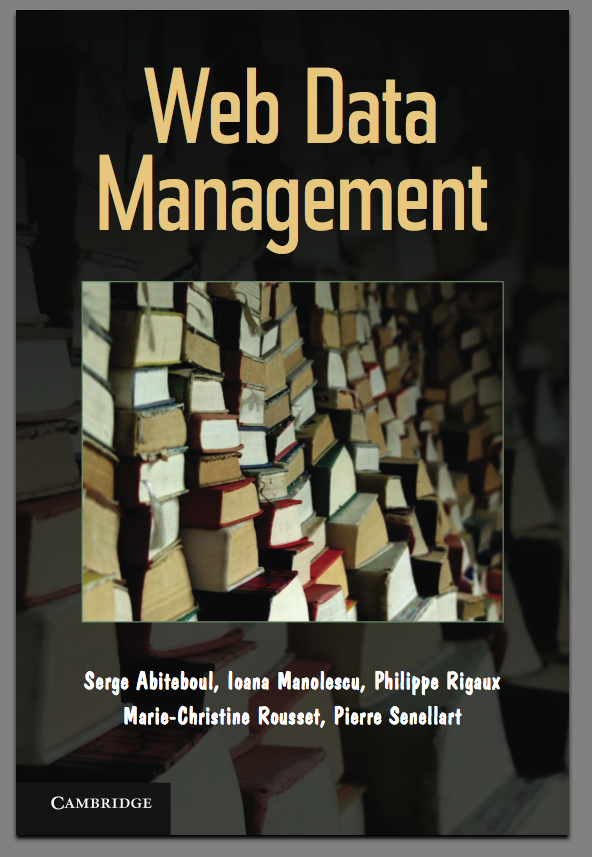
Marie-Christine ROUSSET is a Professor of Computer Science at the University of Grenoble Alpes (UGA) in France, where she is a member of the LIG (Laboratoire d'Informatique de Grenoble) in the SLIDE group. Previously affiliated with Paris-Saclay (LRI), she has established herself as a leading researcher in Knowledge Representation and Information Integration. She holds the distinguished position of Senior member of the Institut Universitaire de France (IUF) (2011-2016, renewed for 2016-2021) and serves as co-responsible for the chair Explainable and Responsible AI within MIAI Grenoble Alpes. Her research focuses on ontology-based data access, logic-based mediation between distributed data sources, query rewriting using views, data linkage, and distributed reasoning for the Semantic Web. She skillfully combines artificial intelligence and database techniques to address complex information integration challenges, with applications spanning biomedical informatics, educational technology, and trustworthy AI. Her work demonstrates consistent innovation from foundational research to practical implementations, as evidenced by her co-authorship of the book 'Web Data Management' published by Cambridge University Press. Professor ROUSSET's recent publications (2019-2022) reveal a growing emphasis on data privacy, RDF graph anonymization, and interactive ontology engineering, while maintaining her strong contributions to semantic web technologies and knowledge representation. Her research shows increasing attention to trustworthy AI concerns, aligning with her leadership roles in relevant projects. Scientific Recognition Senior member of Institut Universitaire de France (IUF) (2011-2016, renewed for 2016-2021) Junior member of Institut Universitaire de France (IUF) from 1997 to 2002 Chevalier de l'Ordre National du Merite (July 11, 2011) EurAI Fellow (nominated ECCAI Fellow in 2005) Best Paper Award at AAAI'96 for 'Verification of Knowledge Bases based on Containment Checking' Professor ROUSSET maintains an active role in the scientific community through editorial work and organizational leadership. She serves on the Editorial Board of Communications of the ACM (CACM) and has held significant roles including PC chair of EGC 2019, Workshops co-Chair of WWW 2018, and Area Chair of IJCAI 2017. Her consistent service on program committees of major international conferences demonstrates her standing in the field. Her laboratory, the SLIDE group within LIG, focuses on semantic web technologies, knowledge representation, and data integration. The group maintains strong connections with the international research community and participates in collaborative projects addressing cutting-edge challenges in artificial intelligence and data management, with particular emphasis on trustworthy and explainable AI systems.
Dr. Jörg Waitelonis serves as Scientific Co-Worker at FIZ Karlsruhe – Leibniz Institute for Information Infrastructure and Senior Researcher at Karlsruhe Institute of Technology's Institute of Applied Informatics and Formal Description Methods (AIFB), working under Prof. Dr. Harald Sack. His career spans over 15 years in semantic technologies research, beginning at Hasso-Plattner-Institute (2009-2018) and continuing at KIT/FIZ Karlsruhe. Dr. Waitelonis' research focuses on practical implementations of Semantic Web technologies across diverse domains. His work bridges theoretical knowledge representation with real-world applications in cultural heritage informatics, materials science, historical document analysis, and sports science. Key contributions include developing domain-specific ontologies (CourtDocs, PMD Core), advancing FAIR data implementation within Germany's NFDI framework, and creating knowledge graph solutions for cross-disciplinary research data integration. His publication record demonstrates consistent output in top Semantic Web venues (ISWC, SEMANTiCS) with recent work (2023-2025) emphasizing practical ontology engineering for national research data infrastructure projects. Current research directions show increasing focus on materials science ontologies, historical document processing, and BFO-based knowledge representation frameworks. As founder of yovisto GmbH since 2012, Dr. Waitelonis maintains strong industry connections while pursuing academic research. His work demonstrates the practical application of semantic technologies to solve real-world data integration challenges across multiple scientific domains.
Dr. Sven Hertling serves as Substitute Professor at the University of Mannheim while maintaining a reduced research role at FIZ Karlsruhe's Information Service Engineering group. His career spans institutional affiliations including DFKI GmbH and the University of Mannheim's Data and Web Science Group. His educational background includes: PhD from University of Mannheim (2017-2023) Master of Science in Computer Science from TU Darmstadt (2012-2015) Bachelor of Science in Computer Science from TU Darmstadt (2009-2012) Dr. Hertling's research integrates Knowledge Graphs, Semantic Web, and Machine Learning with Natural Language Processing. His work transitions from foundational contributions like SPARQL endpoint discoverability (ISWC 2013 Best Poster) to contemporary applications including LLM-based climate data extraction and ontology alignment systems, consistently targeting practical implementations in GUI search and knowledge engineering. His 2024-2025 publications reveal a strategic shift toward leveraging large language models for standardizing scientific repositories while advancing core Semantic Web techniques through machine learning datasets. This evolution demonstrates both technical depth in graph algorithms and responsiveness to emerging AI paradigms. Major recognitions include: ESWC 2021 Best Demo (kgextension package) AICA 2017 Best Paper (GUI search engine) ESWC 2016 Top-K Shortest Paths Challenge Winner ISWC 2013 Best Poster (SPARQL endpoints) As an emerging supervisor, Dr. Hertling leverages his Software Campus leadership training and active conference participation (serving on 12+ ESWC/ISWC program committees) to foster student development. His current roles at Mannheim and FIZ Karlsruhe indicate robust institutional support for his research trajectory, though specific grant details remain undisclosed in the source material. He operates within FIZ Karlsruhe's Information Service Engineering framework and maintains ties to Mannheim's Data and Web Science ecosystem, facilitating interdisciplinary work at the intersection of knowledge representation and AI-driven data analysis.
Mary Ann Tan is a PhD student and Junior Researcher at Karlsruhe Institute of Technology (KIT) and FIZ Karlsruhe – Leibniz Institute for Information Infrastructure, working within the Information Service Engineering group and the Institute of Applied Informatics and Formal Description Methods (AIFB). Her academic background includes: PhD candidate at KIT/FIZ Karlsruhe (2020–present) MSc in Computational Linguistics, Ludwig-Maximilians University, Munich (2018–2020) MSc in Computer Science (NLP specialization), De La Salle University, Manila (2002–2004) BSc in Computer Science, De La Salle University, Manila (1997–2001) Tan's research integrates Natural Language Processing, Knowledge Graphs, and Deep Learning to solve challenges in Cultural Heritage digitization. She develops methods for cross-lingual embeddings, knowledge graph refinement, multimodal search, and transformer-based workflows – transforming legacy cultural data into structured, AI-processable formats. Her work bridges technical AI innovation with practical heritage preservation needs, emphasizing under-resourced languages and multimodal cultural artifacts. Her 11 publications (2021-2025) reveal a cohesive trajectory: starting with bibliographic knowledge graphs (2021), advancing to multimodal art search and audio ontologies (2022-2023), and recently focusing on LLM integration for cultural data and mathematical semantics (2024-2025). This progression demonstrates increasing technical sophistication while maintaining consistent application to cultural heritage challenges. As an active collaborator in large international projects (e.g., the 50+ author Semantic Web and Creative AI report), Tan contributes to team-based research while developing her independent expertise. Her industry experience in software engineering informs her practical approach to research implementation within the Information Service Engineering group.
Dr. hab. inż. Julian Szymański serves as Associate Professor at the Department of Computer Architecture within the Faculty of Electronics Telecommunications and Informatics at Gdańsk University of Technology. He concurrently holds the position of Deputy Director at the Industrial Doctoral School, demonstrating dual leadership in academic instruction and doctoral program administration. His research spans artificial intelligence applications across diverse domains including sustainable agriculture, healthcare monitoring, and privacy-preserving systems. Key focus areas include natural language processing, blockchain implementation for sensitive data services, and multi-modal signal analysis. His work bridges theoretical computer science with practical applications in agritech, medical diagnostics, and secure service provision. Recent publications reveal a strong trend toward interdisciplinary AI solutions, particularly in sustainability (2025 smart farming chapter), human-AI alignment techniques, and privacy frameworks compliant with GDPR. His respiratory rhythm classification research demonstrates methodological rigor through multi-sensor data fusion. Academic contributions include: ERASMUS+ funded Modena MoltiMondi project as project manager Development of EditPrefs methodology for cost-effective preference dataset creation Gold-standard multi-genre datasets for entity linking evaluation As an educator, he has taught 185 courses since 2018 across artificial intelligence, deep learning, and intelligent information systems, mentoring students through diploma projects. His laboratory work focuses on IoT-based healthcare frameworks and blockchain implementations for privacy-sensitive services, with current projects exploring AI-driven sustainability solutions.
Alexander Bolotov is a Professor at the University of Westminster's School of Computer Science and Engineering, where he serves as the Software Systems Engineering Research Group Leader and the Doctoral Researchers Development Programme Coordinator. He teaches Level 4 Mathematics for Computing and Level 5 Software Engineering Principles and Practice modules. His research spans Automated Reasoning, Graph-Based Reasoning, Specification and Verification of Complex Reactive, Concurrent and Distributed Systems, Formal Methods in Software Engineering, Logic, Temporal Logic, Proof Theory, On-Line Knowledge Repositories, and Ontologies. His expertise includes Formal Methods, Mathematical Modelling, Software Architecture, Program Reasoning and Logic Engineering. His recent publications demonstrate a strong focus on branching-time temporal logics, formal verification methods, ontology-based e-learning platforms, and applications in digital health evidence generation. His work bridges theoretical computer science with practical applications in healthcare, finance, and educational technology. Bolotov has successfully secured multiple research grants including Innovate UK projects RADIANT Implementation and RADIANT: Regulatory Science Empowering Innovation in Transformative Medical Software and AI, as well as funding from the Alan Turing Institute for developing frameworks for literature evaluation. He actively supervises doctoral students working on topics including ontology-driven frameworks for system integration, rich web applications, cloud computing load balancing, wireless sensor networks, and semantic selection of internet sources. His research group is involved with the Distributed and Intelligent Systems, Software Systems Engineering, and Centre for Parallel Computing.
Dr. Huseyin Dagdeviren serves as Senior Lecturer and Director of Employability in the School of Computer Science and Engineering at the University of Westminster, where he actively contributes to the Centre for Parallel Computing (CPC). With over two decades of academic experience, he bridges theoretical research with industrial applications through major EU-funded initiatives. His educational foundation includes a BA (Honours) in Business Administration and MSc in Information Systems. This interdisciplinary background informs his research approach, combining technical cloud computing expertise with strategic business perspectives. Dr. Dagdeviren's research centers on complex information systems, with specialized focus on Cloud Computing, Requirements Engineering, and Strategic Management of IT. His work drives innovation in cloud-to-edge orchestration and digital manufacturing through Horizon 2020 projects like CloudiFacturing and DIGITbrain, addressing critical industry challenges in SME digital transformation. Analysis of his 2004-2023 publications reveals an evolving trajectory from foundational database and UML education research toward cutting-edge distributed systems. Recent work (2021-2023) dominates in cloud/edge computing, demonstrating strategic alignment with funded projects and industrial relevance in manufacturing simulation and digital twin deployment. As Director of Employability, he oversees career development programs while securing substantial EU grants including CO-VERSATILE (2020) and DIGITbrain (2020). These multi-institutional projects provide robust funding for the CPC lab and create direct industry pathways for students. The Centre for Parallel Computing operates as his primary research hub, facilitating international collaboration across 10+ European countries. Students benefit from exposure to large-scale EU consortia, industry partnerships with Siemens/Bosch, and hands-on development of production-grade cloud orchestration platforms.
Héctor Gibrán Ceballos-Cancino serves as Director of the Living Lab & Data Hub of the Institute for the Future of Education (IFE) at Tecnologico de Monterrey and is a full-time faculty member of the Computer Science Graduate Program (DCC). Previously, he led the Scientometrics office at the Research Vice-Rectory of Tecnologico de Monterrey for 18 years, establishing himself as a key figure in research evaluation at the institution. His educational background includes: Computer Systems Engineer from Instituto Tecnológico De Veracruz Master of Science with specialization in Intelligent Systems from Tecnologico de Monterrey PhD in Information Technology and Communications from Tecnologico de Monterrey (2010) Dr. Ceballos-Cancino's research program bridges artificial intelligence with practical applications in education and organizational contexts. His work spans Social Network Analysis, Machine Learning, Process Mining and Agent theory, applied specifically to Research Analytics and Educational Data Mining. He has developed significant expertise in applying AI techniques to solve real-world problems across multiple domains, with particular focus on educational improvement and research evaluation. Analysis of his recent publications reveals a strong trajectory toward quantum machine learning applications for education, learning analytics in Latin American contexts, and sophisticated student success prediction models. His work demonstrates consistent innovation in applying advanced computational techniques to educational challenges, while also maintaining strong contributions to scientometrics and building technology applications. His scientific recognition includes: Premio Tecnos 2023 conferred by Gobierno de Nuevo León Mexican Researcher Certification - Level 1 Member of the Mexican National System of Researchers (SNI) Adherent member of the Mexican Academy on Computing (AMEXCOMP) Dr. Ceballos-Cancino has supervised thesis work as evidenced by his teaching activity in 'Design of Intelligent Agents Thesis II.' His research has been supported by institutional initiatives at Tecnologico de Monterrey, including predictive analytics platforms for public administration evaluation. He has also provided expert consulting services for banks and IT companies, and promoted Semantic Web technologies adoption across multiple sectors. As Director of the Living Lab & Data Hub, he leads initiatives focused on 'Engaging and Motivating Learning Models,' connecting his technical expertise with educational innovation. His work aligns with multiple UN Sustainable Development Goals, particularly Quality Education (SDG 4) and Industry, Innovation and Infrastructure (SDG 9), demonstrating his commitment to technology for social impact.
Christy Jie Liang is an Associate Professor at the School of Computer Science, University of Technology Sydney (UTS), where she leads the Data Visualisation Research Lab in the Visualisation Institute. With extensive experience in both academic and industry settings, including appointments at IBM and Peking University, she has established herself as a leading researcher in data visualization and visual analytics. Dr. Liang earned her PhD in Data Visual Analytics from UTS, where she was awarded the University Medal with First Class Honours. Her educational background includes a Bachelor of Information Technology (First Class Honours) also from UTS. Professor Liang's research focuses on data visualization and visual analytics, with particular emphasis on information visualization, narrative visualization, and the application of these techniques to real-world problems. Her work spans multiple domains including finance, food safety, biomedical applications, smart cities, and social media. She has developed novel visualization techniques and owns five intellectual properties in this field. Her recent publications demonstrate a clear trajectory toward more sophisticated visualization techniques that integrate machine learning, with increasing focus on narrative visualization, user engagement across demographics, and practical applications in domains such as public health and education. The interdisciplinary nature of her work is evident in collaborations across computer science, behavioral science, and domain-specific applications. Dr. Liang has received significant recognition for her work, including: University Medal with First Class Honours from UTS Capital Markets CRC Honours scholarship Australian Postgraduate Awards As an educator, Professor Liang coordinates core subjects for Bachelor of Information Technology, Bachelor of Computer Science with Honours, Master of Interaction Design, and Master of Business Analytics programs. She has recently developed enterprise learning courses including short courses and micro-credentials in data visualization education. Her leadership extends to service roles as associate editor for JVLC and Journal Visual Informatics, program committee member for numerous conferences, and advisory board member for the Australian Computer Society and Peking University Medical Visualization Centre. Professor Liang leads the Data Visualisation Research Lab, which focuses on developing innovative visualization techniques and applying them to real-world problems. The lab maintains strong industry connections, with collaborations spanning government agencies, academic institutions, and commercial enterprises across multiple continents.
Prof. Dr. Ralf Bruns is a full-time Professor in the Department of Computer Science at the Faculty of Business and Information Technology, Hannover University of Applied Sciences and Arts. His office is located at Ricklinger Stadtweg 120, 30459 Hanover, with direct contact available via phone (+49 511 9296 1817) and email. His research focuses on cutting-edge computational methodologies including: Real-time data stream processing systems Bio-inspired algorithms ( evolutionary and swarm intelligence ) Machine learning applications in enterprise systems Semantic Web technologies for knowledge representation Software architecture patterns for event-driven systems Complex Event Processing (CEP) frameworks His publications demonstrate a consistent focus on event-driven architectures applied to logistics, healthcare, IoT, and urban mobility systems. Recent work emphasizes agent-based modeling and real-time analytics for decision support in dynamic environments. Prof. Bruns leads two key research initiatives: the Software Architecture Working Group (AG SWA) and the Smart Data Analytics Research Cluster . He also serves as faculty representative in the Fachbereichstag Informatik (FBTI) and contributes to academic selection committees.