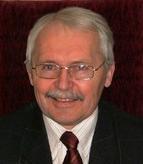
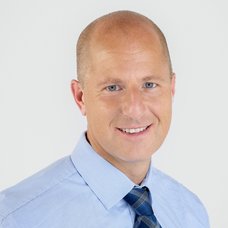
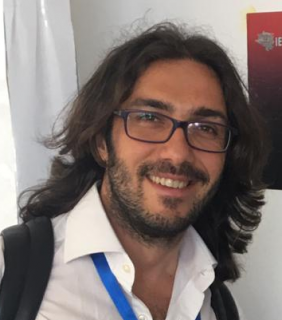
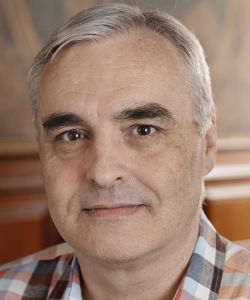
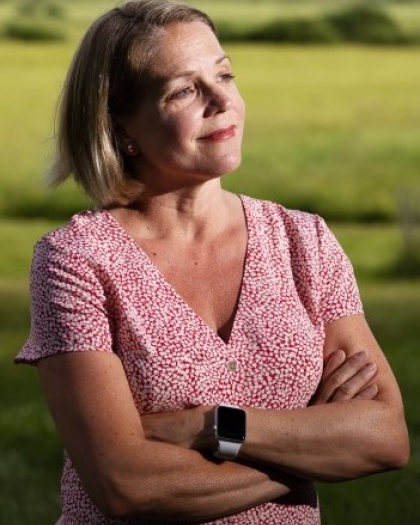
Ekaterina Gilman, D.Sc. (Tech), is a Researcher at the University of Oulu's Center for Ubiquitous Computing, Faculty of Information Technology and Electrical Engineering. She is supported by the Academy of Finland and has collaborated with Northern Finland Biobank Borealis and the Centre for Health and Technology. Her research spans Data Analytics Ubiquitous Computing Machine Learning Internet of Things Smart Environments with applications in intelligent urban environments, stream reasoning, and wireless communications. Recent publications highlight trends in Edge computing architectures Concept drift detection Social distancing monitoring Well-being measurement Smart city data challenges . She has participated in projects funded by the European Regional Development Fund, Business Finland, Academy of Finland, and EU Horizon 2020. She serves as a reviewer and organizer in scientific communities and has over 30 publications.
Petko Staynov is an Assistant Professor at the New Bulgarian University (NBU) , affiliated with the Department of Informatics . His career spans academic roles in Bulgaria and France, with expertise in informatics, linguistics, and educational technology. Education : M.Sc. in Applied Information and Communication Technologies in Education and Learning, Louis Pasteur University, Strasbourg, France (2004) B.A. in Philology (Bulgarian Language and Literature), Sofia University "St. Clement of Ohrid" (1982) Dr. Staynov's research focuses on the intersection of computer science , linguistics , and multimedia technologies . His work explores ethnopragmatics , language-cognition relationships , and computer-assisted translation , while developing online courses and national information systems . Publications highlight his contributions to semantic theory , archaeological computing , and pedagogical resource sharing . At NBU, he teaches courses in French for Administration , Professional Correspondence , and Informatics . His professional experience includes directing master's programs (since 1998) and teaching multimedia and internet technologies (since 1997). Earlier roles in France involved new technologies management , advertising analysis , and multilingual engineering projects.
Ahmet Feyzi Ateş is an Assistant Professor at FMV Işık University 's Faculty of Engineering and Natural Sciences, Department of Computer Science and Engineering. He previously served as an Assistant Professor at İstinye University, where he founded the Department of Software Engineering. His research focuses on Semantic Web technologies, Multi-Agent Systems, Data Mining, and Telecommunications protocols. PhD, Ege University (2008): Thesis on Semantic Web and Multi-Agent technologies for telecommunications services. MSc, University of Southern California (1994): Specialization in Data Communications and Computer Networks. MSc, Bilkent University (1993): Thesis on Formal Protocol Specifications and Conformance Testing. BSc, Yıldız Technical University (1990): First in class, Department of Computer Science and Engineering. Dr. Ateş's research integrates Semantic Technologies with Agentic AI to develop autonomous systems. His work in Data Mining applies to Call Center Text Analysis and Network Problem Detection. He explores Formal Methods for Protocol Verification and has contributed to Mobile Network Integration through Crowdsourcing. Recent publications highlight trends in Telecommunications , Software Engineering , and AI , with sub-fields like Agent-Based Services, Multimedia Synchronization, and Entitlement Management. His Semantic Technologies Lab drives innovation in Agentic AI systems. 2017 : Eşik Üstü Teşvik Ödülü (TÜBİTAK) for H2020 privacy-preserving big data projects. 2017 : Eşik Üstü Teşvik Ödülü (TÜBİTAK) for H2020 critical technology research. Dr. Ateş has held leadership roles in industry, including Project Manager at Turk Telekom and R&D Group Manager at Defne Communications. He holds a national patent for a data privacy query system and advises startups in algorithmic trading and influencer marketing.
Prof. Dr. (HP) Saulius Gudas is an Affiliated Professor in the Cybersocial Systems Engineering Group of the Institute of Data Science and Digital Technologies at Vilnius University . His office is located at Akademijos St. 4, room 603, Vilnius, Lithuania. Education & Background: While explicit degrees are not listed in the provided source, his long-standing professorship and extensive publication record spanning over a decade indicate advanced doctoral training and senior academic status. Research Interests: Prof. Gudas focuses on the intersection of software engineering, enterprise modelling, and knowledge-based systems . Core themes include: Causal knowledge modelling to enhance agile enterprise application development. Model-driven approaches for ensuring business-IT alignment. Deep knowledge-based evaluation and interoperability of enterprise applications. Quality modelling of web services and financial process mining. Publication Trends: Across the most recent works (2017–2024), a clear trajectory emerges from foundational enterprise modelling and interoperability assessment toward leveraging causal models and data analytics to improve agile development processes, service quality, and financial anomaly detection. Doctoral Supervision & Training: Prof. Gudas has successfully supervised the following PhD projects: Andrius Valatavičius – “Assessment of application program interoperability using autonomous computing technologies” (defended 2019). Mindaugas Jusis – “Research on synchronization methods for autonomous port loading processes” (2016–2020). Karolis Noreika – “Evaluation of the application development process using an improved Agile project management method” (2019–2023). Laboratory & Team Involvement: As a senior member of the Cybersocial Systems Engineering Group, he contributes to interdisciplinary projects that integrate software engineering methodologies with socio-technical system analysis within the larger Institute of Data Science and Digital Technologies.
Shawn Bowers is a Professor in the Department of Computer Science at Gonzaga University, with prior roles as an Associate Project Scientist at the UC Davis Genome Center and Postdoctoral Researcher at the San Diego Supercomputer Center. His educational background includes: BS in Computer Science from the University of Oregon MS and PhD from the OGI School of Science & Engineering at OHSU Dr. Bowers' research centers on conceptual modeling and data provenance in scientific workflows, with significant contributions to ontology-based frameworks for ecological data semantics through NSF-funded projects like Semtools and SONet. His work bridges computer science with environmental science to enhance data discovery and integration. His publication record reveals a sustained focus on workflow provenance systems, including the development of the Query Language for Provenance (QLP) and visualization tools for workflow dependencies. These contributions demonstrate interdisciplinary applications spanning ecological research, e-science, and data management infrastructure. Dr. Bowers maintains extensive research collaborations with UC Davis (30 shared outputs), the National Center for Ecological Analysis and Synthesis (9 outputs), and the San Diego Supercomputer Center (9 outputs), supported by NSF grants including Kepler/CORE and Processing PhyloData. He teaches undergraduate courses in software development and database management systems at Gonzaga University.
Paruyr Sergey Efendyan serves as Professor in the Department of Cartography and Geomorphology at Yerevan State University's Faculty of Geography and Geology since 2020, with prior institutional memberships at YSU (2021-2023) and Armenian National Agrarian University (2009-2023). His academic foundation includes a Certified Specialist degree in Urban Construction from Kiev Engineering and Construction Institute (1969-1974) and postgraduate studies in Applied Geodesy at Moscow Institute of Geodesy and Cartography (1982-1987), culminating in a 2016 Doctor of Science degree from Armenian National Agrarian University for research on Armenia's unified land information system. Professor Efendyan's research centers on Geodesy, Land Construction, and Cadastre, addressing critical challenges in spatial data infrastructure, land valuation methodologies, and geodetic applications for earthquake monitoring and agricultural land management. His work bridges historical land survey practices with modern technological solutions. His 2022-2025 publications reveal strong thematic cohesion around national spatial data infrastructure development, with recurring emphasis on AI integration, legal frameworks, cadastral revaluation, and satellite-based topographic mapping. Key trends include Python-based quality control systems for road data and anthropogenic impact analysis on soil composition. He actively participates in international forums including Geoforum-2023 (Ukraine), Environmental Protection conferences (Russia, 2022), and Land Management summits (Kyrgyzstan, 2021), demonstrating global engagement despite no explicitly listed scientific awards. Professor Efendyan advises students and manages research grants focused on Armenia's spatial data infrastructure modernization, particularly through Python-based quality control frameworks for road network datasets, though specific grant details remain unlisted in available materials.
Francesco Leotta is a Tenure Track Assistant Professor in the Department of Computer, Control and Management Engineering at Sapienza University of Rome, specializing in ubiquitous computing, human-computer interaction, and digital humanities with applications in smart spaces, smart manufacturing, and cultural heritage. His educational background includes a PhD in Engineering in Computer Science (2014), Master Degree in Computer Science Engineering (2010), and Bachelor Degree in Computer Science Engineering (2006), all with honors from Sapienza University of Rome. He has been qualified to practice as a Computer Science Engineer since 2010. Leotta's research pioneers 'habit mining' for learning human behaviors from unlabeled sensor data, focusing on usability for technicians through readable process models and for end users via accessible interfaces including chatbots and solutions for people with disabilities. His recent work centers on Industry 4.0, developing AI-driven digital twin architectures for industrial automation. Key projects include privately funded Rotalaser Fustella 4.0 and publicly funded initiatives FIRST and ElectroSpindle 4.0. Analysis of his 2024-2025 publications reveals strong interdisciplinary trends bridging business process management with IoT and AI, particularly in smart manufacturing maturity models, digital twin composition, and multimodal human-robot interaction. His work consistently integrates theoretical frameworks with practical industrial applications. Scientific recognition includes: Best Paper Award at IEEE International Conference on Web Services (ICWS 2019) Leotta actively contributes to research groups in Human-Computer Interaction, Data Management, and Semantic Technologies, with current projects focusing on adaptive smart manufacturing systems. His grant portfolio demonstrates successful collaboration between academic research and industrial applications in the manufacturing sector. He maintains active involvement in the computing continuum ecosystem through projects like DataCloud, addressing big data pipelines and dark data utilization in industrial contexts.
Maria Isabel Calapez Cabrita Leal Seruca serves as an Associate Professor at Portucalense University's Science and Technology Department in Porto, Portugal, where she teaches Information Systems and coordinates the Informatics Engineering and Information Systems for Management programs. She additionally holds the role of Department Coordinator for the Erasmus+ Programme. As a Senior Researcher at Universidade do Minho's Centro Algoritmi, she contributes to the IST R&D Group and ISTTOS R&D Lab, bridging academic and research domains across institutions. Her academic foundation includes a degree in Applied Mathematics and Computation from Portucalense University, complemented by an MSc and PhD in Computation from the University of Manchester Institute of Science and Technology (UMIST). This technical background underpins her research trajectory in digital systems and organizational transformation. Her research focuses on Information Systems with specialized expertise in Business Intelligence, Data and Web Mining, Digital Transformation, and Reuse and Patterns. She has pioneered models like E-swim (Enterprise Semantic Web Implementation) and ToOW (Training of Organizations in the Web) to address organizational challenges through technology adoption. Her work consistently integrates practical applications in educational settings and industry contexts, particularly through international Erasmus collaborations. Analysis of her 2019-2025 publications reveals a dominant emphasis on Digital Transformation in educational mobility systems (notably Erasmus+ projects), alongside applied Data Mining in domains including tourism, pharmaceutical distribution, and waste management. Her scholarship demonstrates a trajectory from foundational semantic web research toward contemporary organizational digitalization challenges, with increasing focus on sustainable development frameworks. While no major individual scientific awards are documented in the source material, her research output includes 41 publications with an h-index of 7 and 164 citations, reflecting steady scholarly impact in Information Systems journals and conferences. She actively leads Erasmus+ initiatives including the KA220 project 'Data Science We Teach Data' and has coordinated multiple Erasmus Intensive Programmes on Sustainable Digital Transformation (2022-2023), Business Intelligence (2008-2010), Web Mining (2011-2013), and Data Science (2014). Her grant work consistently targets curriculum development for digital competencies in higher education. Within research infrastructure, she contributes to the Digital Transformation and Innovation in Organisations (DTIO) Group at REMIT (Portucalense University) and the ISTTOS Lab at Centro Algoritmi (Universidade do Minho), focusing on organizational agility through technology adoption and pattern-based solutions.
University of Illinois Urbana-ChampaignUnited States
Michael Norman is an Associate Professor in the University Library at the University of Illinois at Urbana-Champaign . As the Discovery Services Librarian and ILS Coordinator , he specializes in improving access to library resources through innovative discovery systems and metadata standards. Email: manorman@illinois.edu Office: 450G Main Library, Urbana, IL His research focuses on library science , digital libraries , and user experience , particularly in: Bento discovery systems Copyright renewal analysis MARC to schema.org conversion User behavior in library gateways Herbicide interactions with plant physiology (past work) Recent publications highlight his work on transaction log analysis, federated journal access, and Primo system testing. Earlier studies (1990s–2000s) explored herbicide resistance mechanisms and photosynthetic pathways in plants. He has contributed to advancements in library data analytics, system usability, and digital resource integration, while earlier collaborations addressed agricultural science challenges like Spartina control and clomazone herbicide selectivity.
Anna Wessman is a Professor of Iron Age Archaeology at the Department of Cultural History, University Museum of Bergen. Her research spans Late Iron Age Finland and the Baltic region, burial archaeology, metal-detecting cultures, citizen science, and museum studies. She has led major projects like the Levänluhta water burial analysis and co-developed the semantic portal FindSampo , integrating public finds into open-access databases. PhD in Archaeology (University of Helsinki, 2010) with a focus on Iron Age burial rituals Acting University Lecturer in Museum Studies, University of Helsinki (2015-2017) Adjunct Professor in Iron Age Studies, University of Turku (2022 onwards) Her research combines ethnographic methods with isotopic analysis, examining topics like the Finnar in sagas, cremation practices, and the role of citizen scientists in archaeology. She collaborates across disciplines, including genetics (e.g., Levänluhta isotope studies) and digital humanities ( FindSampo platform). Recent articles highlight her work on metal-detected artifact networks (2025), Viking Age magic interpretations (2025), and cremation studies (2024). Her projects have been funded by the Kone Foundation, Academy of Finland, and Emil Aaltonen Foundation, focusing on community archaeology and digital heritage platforms. Wessman actively bridges academic and avocational communities, advocating for structured collaboration with metal-detectorists to enhance archaeological data. Her publications address ethical dilemmas in displaying human remains (2021) and methodological innovations like 'archaeological object interviews.' Key affiliations: University of Bergen (current), University of Helsinki (PhD), University of Turku (Adjunct Professor) Founding member of the European Public Finds Recording Network and Cultural Heritage Crime Network
National and Kapodistrian University of AthensGreece
James Cheney is a Personal Chair of Programming Languages and Systems at the University of Edinburgh, working in the Laboratory for Foundations of Computer Science within the School of Informatics. He leads the Principles of Provenance research group and has been a Turing Fellow from 2018 to 2023. His educational background includes a PhD in Computer Science from Cornell University (2004), an MS in Mathematics from Carnegie Mellon University (1998), and a BS in Computer Science and Mathematics from Carnegie Mellon University (1998). Cheney's research focuses on the intersection of databases and programming languages, with particular emphasis on data provenance. His work spans several key areas: Databases and data provenance Programming languages and compilers Generic programming Logic and automated theorem proving Compression and information theory XML and related technologies His recent publications demonstrate a strong focus on language-integrated query systems, type systems for programming languages, and formal approaches to data provenance. These works often bridge theoretical foundations with practical applications in database systems and programming language design. Cheney has received several notable awards and recognitions: Royal Society University Research Fellowship (2008-2016) Turing Fellow (2018-2023) ERC Consolidator Grant for the Skye project (2016-2021) Google Research Award for Language-integrated provenance As an advisor, Cheney has supervised numerous PhD students and postdoctoral researchers who have gone on to positions at institutions including New York University, LSE, University of Southampton, Meta, and others. His research has been supported by various grants from DARPA, EPSRC, AFOSR, EU FP7, and industry partners including Google, Microsoft Research, and Huawei. Cheney leads the Principles of Provenance group, which conducts fundamental research on data provenance and its applications in security, data curation, and scientific computing. The group has worked on projects including Skye (a programming language for scientific data curation), ADAPT (a DARPA-funded project on advanced persistent threat prevention), and language-integrated provenance systems.
Dr. Eng. Joanna Strug is a lecturer at the Department of Automation and Computer Science within the Faculty of Electrical and Computer Engineering at Cracow University of Technology. Her research focuses on software testing methodologies, machine learning applications in test automation, and database technologies. Specialization in mutation testing and fault injection Expertise in UML/OC validation and business process testing Active researcher in relational and non-relational database modeling Recent research trends indicate a focus on database technology performance analysis, including: Comparative benchmarking of relational vs. NoSQL databases Cost optimization in mutation testing using machine learning Structural similarity applications for test classification Validation frameworks for service-oriented architectures Model-based testing of business processes Bytecode-level mutant classification Her work appears in prominent venues including: Information Systems Architecture and Technology Artificial Intelligence and Soft Computing Journal of Engineering International Conference on Software Engineering (ENASE)
David Massey serves as an Assistant Professor in the Department of Archivistics, Library and Information Science within the Faculty of Social Sciences at Oslo Metropolitan University. He is actively affiliated with the Information Systems based on Metadata (METAINFO) research group, contributing to metadata-driven information system development. His research focuses on: Metadata systems and standards implementation Subject cataloging practices in Norwegian libraries Semantic web applications for cultural heritage Record management for emerging technologies like IoT Digital library infrastructure and user experience Interdisciplinary metadata case studies (e.g., Norwegian black metal) Publication analysis from 2012-2023 reveals consistent contributions to metadata standardization and practical implementations in Norwegian institutional contexts. His work bridges theoretical frameworks with real-world applications in public libraries, government agencies, and academic settings, frequently appearing in leading journals like Cataloging & Classification Quarterly and Code4Lib Journal . Within the METAINFO research group, Massey collaborates on advancing metadata interoperability and developing innovative solutions for information organization, with recent projects including syllabi analysis platforms and IoT data governance frameworks for public sector institutions.
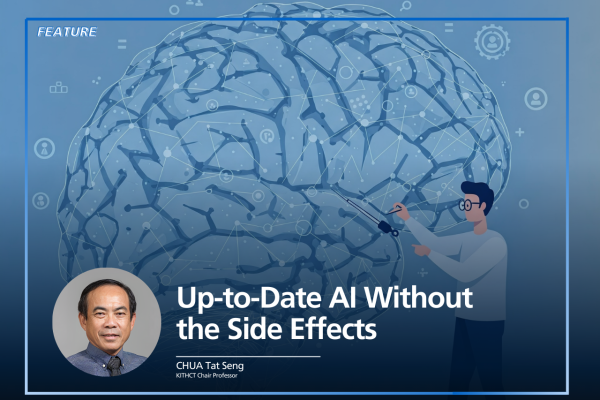
Professor Chua Tat Seng is a distinguished academic at the National University of Singapore's School of Computing, serving as KITHCT Chair Professor and Director of the NUS-Tsinghua Extreme Search Center (NExT). He also holds Distinguished Visiting Professorships at Tsinghua and Zhejiang Universities in China. PhD in Computer Science (University of Leeds, 1983) Founding Dean of School of Computing (1998-2000) Co-founded ViSenze and 6Estates technology startups His research focuses on unstructured multimodal data analytics, with particular emphasis on multimedia information retrieval, social media analytics, recommendation systems, and trustworthy AI. He has pioneered work in computational wellness and fintech applications, establishing the Lab for Media Search and leading NExT++ research initiatives. Over 300 publications in leading venues (CVPR, SIGIR, WWW, AAAI) Recipient of ACM SIGMM Technical Achievement Award (2015) Supervised 37 PhD students since 2004 Editorial leadership in ACM Transactions and IEEE Multimedia Recent work explores multimodal LLMs, knowledge editing techniques (AlphaEdit), and 3D generation frameworks, reflecting his commitment to advancing web intelligence and user empowerment.
Ullrich Martin is a Professor and Head of the Institute of Railway and Transport Engineering at the University of Stuttgart, Germany. His work spans railway systems, infrastructure modeling, and transport policy. Key areas include fault diagnosis, simulation-based optimization, and capacity evaluation. Contact: Pfaffenwaldring 7, 70569 Stuttgart, Germany Office Hours: By agreement Research Trends: Recent publications focus on GAN-based data augmentation for railway fault detection, high-speed maglev systems optimization, and early instability detection in ballast tracks. His team explores discrete element modeling, operational risk analysis, and machine learning applications for track condition monitoring. Infrastructure Innovation: He drives digitalization in railway planning through graph-based knowledge databases and automated compliance tools. Projects address dwell time forecasting, electromagnetic suspension design, and accessibility solutions like the Sinn²-App for visually impaired passengers. Operational Modeling: His work includes tabu search algorithms for dispatching, reinforcement learning for timetable calibration, and multi-scale simulation frameworks. He investigates interactions between track irregularities and vehicle dynamics, with a focus on safety and efficiency.