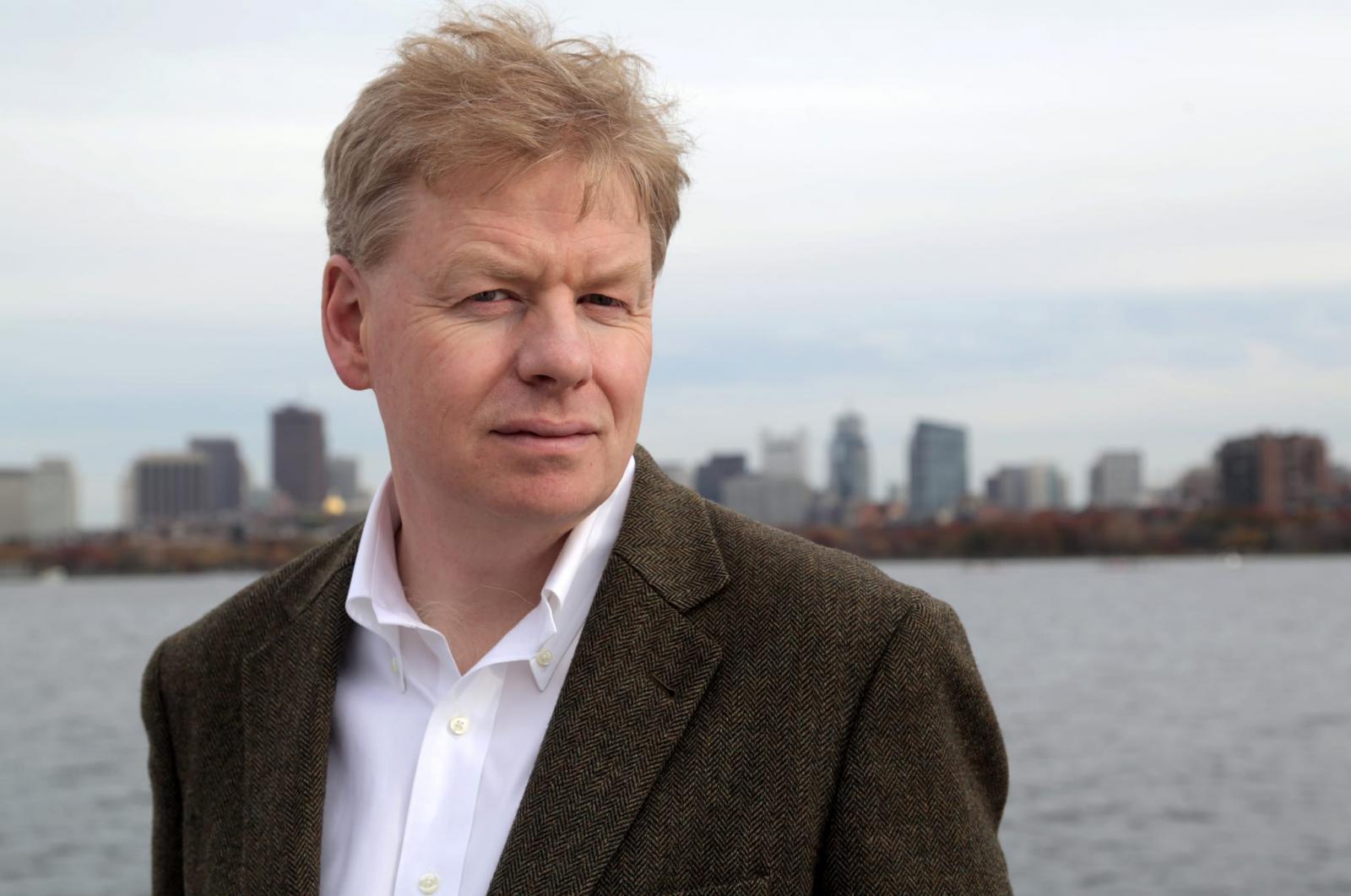
John J. Leonard is the Samuel C. Collins Professor of Mechanical and Ocean Engineering at MIT, serving as Associate Department Head for Research in the Department of Mechanical Engineering. His work focuses on navigation and mapping for autonomous systems, particularly self-driving cars and underwater robotics. He pioneered research in Simultaneous Localization and Mapping (SLAM), addressing uncertainties in robotic navigation. Leonard holds a B.Eng. from the University of Pennsylvania (1987) and a Ph.D. from the University of Oxford (1991). His research interests include long-term visual SLAM in dynamic environments, autonomous vehicle safety, and human-robot collaboration. He leads projects funded by institutions like Toyota, exploring Level 2.99 autonomous systems that enhance safety through advanced perception and decision-making. Notable contributions include work on trajectory prediction, underwater scene reconstruction, and certifiable robot perception algorithms. Leonard’s research bridges academia and industry, addressing societal challenges like traffic safety and underwater exploration. He emphasizes ethical considerations in autonomous systems and collaborates with policymakers to shape regulations. His educational efforts focus on training the next generation of robotics engineers through courses and mentorship.
Liam Paull is an Associate Professor at Université de Montréal’s Department of Computer Science and Operations Research, affiliated with Mila and the CIFAR Canadian AI Chair program. He co-leads the Montreal Robotics and Embodied AI Lab (REAL) and directs the Duckietown Foundation. His academic roles include teaching courses on autonomous vehicles (IFT6757) and operating systems (IFT2245). Education: PhD (2013, University of New Brunswick), Postdoc (MIT Marine Robotics Group), Research Scientist (MIT CSAIL/Toyota Autonomous Car Project). Research focuses on robotics, emphasizing representations for SLAM, uncertainty modeling, and embodied AI workflows. Key projects include the AI Driving Olympics, curriculum learning for robotics, and safety-critical policy optimization. He leads grants from CRSNG, MITACS, and others, with over $5M in funding. Notable awards include the 2024 Computer Science Canada Early Career Award and the 2019 CIFAR AI Chair. Supervised 16+ graduate students, with thesis topics ranging from generative models in robotics to uncertainty calibration in neural networks. Labs/Teams: REAL Lab, Duckietown Foundation, collaborations with MIT CSAIL and IVADO. Active in tech transfer and outreach, including public robotics education initiatives.
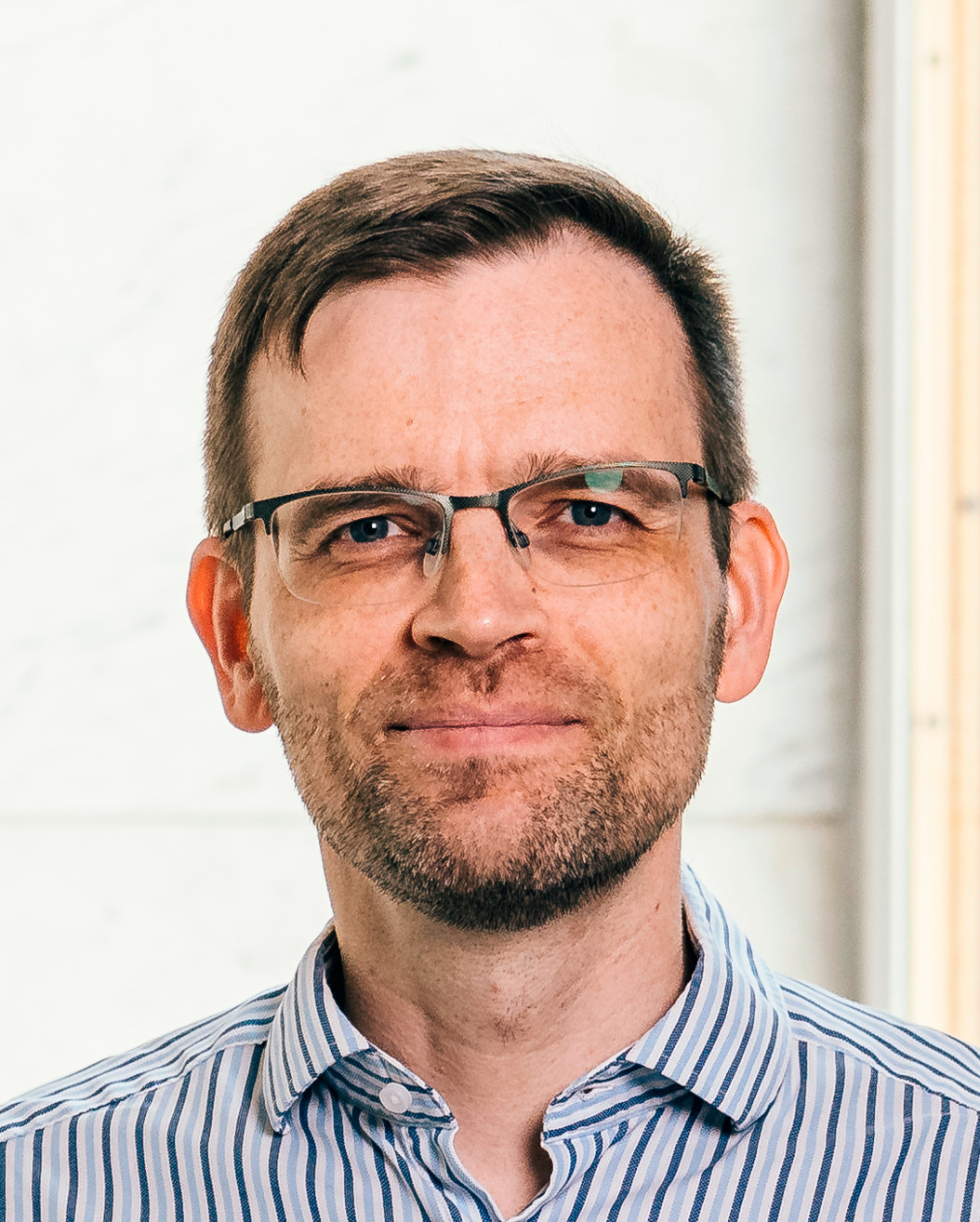
Professor Ville Kyrki is a Full Professor at Aalto University's School of Electrical Engineering, leading the Intelligent Robotics research group. His work focuses on intelligent robotic systems, particularly addressing challenges in imperfect knowledge and uncertain sensory data. Key research areas include computer vision, tactile sensing, robotic manipulation, and machine learning applications in robotics. Education details are not explicitly provided in the text, but his academic trajectory includes a progression from Associate Professor (appointed 2012) to Full Professor at Aalto University. Research interests span feature extraction, visual servoing, sensor fusion, and planning under uncertainty. He has pioneered methods for deformable object manipulation, including data-driven grasp synthesis and imitation learning approaches for dynamic tasks like cloth folding. His work integrates reinforcement learning with domain adaptation techniques to bridge simulation-to-real gaps. Awards include the 2022 Best Paper Award and a 2024 nomination for the Best Safety, Security, and Rescue Robotics Paper. His contributions address critical challenges in robotics such as safe human-robot collaboration and autonomous decision-making in dynamic environments. Lab activities center on the Intelligent Robotics group, which develops advanced systems for industrial automation, autonomous navigation, and human-centric robotics. Current research emphasizes scalable solutions for UAV localization, multi-agent coordination, and robust policy learning in uncertain conditions.
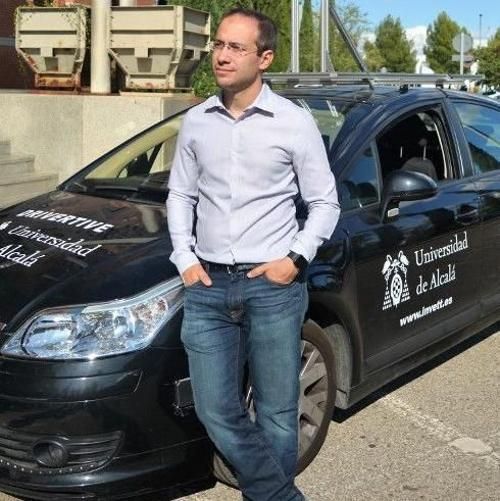
Augusto Luis Ballardini is a Researcher at the Department of Automatic Control, Universidad de Alcalá (UAlcalá), Spain, within the INVETT Research Group focusing on Intelligent Vehicles and Traffic Technologies. He holds a PhD in Computer Science from the University of Milano-Bicocca (2017) and an MSc from the same institution (2012). His work integrates machine learning, computer vision, and sensor fusion for autonomous vehicle localization and decision-making systems. Key awards include a Marie Skłodowska-Curie Actions grant (GET-COFUND fellowship) and a Spanish Ministry grant under Maria Zambrano/NextGenerationEU. His research spans LiDAR-based localization, intersection classification, and uncertainty-aware neural networks. Education: PhD in Computer Science, University of Milano-Bicocca, 2017 MSc in Computer Science, University of Milano-Bicocca, 2012 Research Interests: Autonomous vehicles, sensor fusion, LiDAR and vision-based systems, machine learning for localization, traffic modeling, and safety-critical decision-making. His work emphasizes practical applications such as fail-aware odometry, knowledge graph-driven prediction, and urban scene understanding. Awards & Grants: Marie Skłodowska-Curie Actions research grant (2019) Maria Zambrano/NextGenerationEU project grant (2022) Lab & Collaborations: His research is conducted within the INVETT group at UAlcalá, focusing on interdisciplinary projects that bridge robotics, computer vision, and transportation engineering. Recent work includes benchmarking point cloud registration algorithms and developing explainable AI for autonomous driving.
Suchendra Bhandarkar is an Adjunct Professor at the University of Georgia, affiliated with the School of Computing within the College of Engineering. His expertise spans computer vision, machine learning, and robotics. He has contributed to advancements in deep learning model compression, medical imaging analysis, and environmental monitoring systems. His work often intersects with interdisciplinary applications in agriculture, healthcare, and robotics. Research interests include: Deep learning for image and video analysis Neural network optimization and acceleration Medical imaging and surgical reconstruction Robotics perception and autonomous systems Zero-shot and low-shot learning techniques Notable trends in his recent publications (2021–2025) focus on: Efficient neural network architectures for edge computing Applications of computer vision in agriculture and environmental science Medical imaging for fracture detection and surgical planning Multi-modal data fusion for robotics and biology His research emphasizes practical implementations in resource-constrained environments, such as mobile devices and IoT platforms.
Yulun Tian is an Assistant Professor in the Robotics Department at the University of Michigan, where they direct the Scalable Spatial Intelligence Lab. Their research focuses on developing scalable and trustworthy autonomy for long-term operation without human intervention, integrating tools from nonlinear/distributed optimization, machine learning, and graph theory to create robust spatial perception , navigation, and multi-agent systems with theoretical guarantees. PhD, MIT AeroAstro (2023) SM, MIT (2019) BA, UC Berkeley (2017) Research spans robotic perception (e.g., learned representations, robust estimation), distributed autonomy for multi-agent systems, and optimization algorithms for navigation. Key projects include Kimera-Multi (2022 IEEE T-RO award) and MISO (RSS 2025), emphasizing neural implicit reconstruction and Laplacian solvers for rotation averaging. Selected publications highlight trends in distributed SLAM , multi-agent coordination , and learning-based spatial intelligence . Awards include the 2024 IEEE RAS TC Best Dissertation Award and 2022 IEEE T-RO Best Paper Award. They served as Associate Editor for IROS 2025 and IJRR since 2024. Prospective PhD students are encouraged to apply with interests in optimization for autonomy , spatial perception , and distributed systems . The lab emphasizes theoretical guarantees and real-world applications in autonomous systems.
Dr. Haimei Helen Zhao is a Research Fellow and ICT Director at the School of Biomedical Engineering, University of Sydney. She holds a PhD from the Sydney AI Centre (2024) and an M.Eng. from Tsinghua University (2020). Her research focuses on AI-driven biomedical technologies, including generative AI, digital health diagnostics, and translational research. Current projects include SmartClot-AI, a blood coagulation testing platform, and generative AI models for stroke prediction. Education: PhD in Computer Science (University of Sydney, 2024), M.Eng. in Computer Science (Tsinghua University, 2020). Research interests span multimodal machine learning, biosensing, and low-cost diagnostic systems. Awards include the 2024 PERIscope Commercialisation Award and 2024 Faculty of Engineering Career Advancement Award. Leadership roles: ICT Director of School of Biomedical Engineering, interim Snow Manager of Ju-Snow Lab, and former DEI Committee Chair. Active in grant development and industry partnerships.
Xipeng Wang is a Lecturer in the Department of Computer and Information Science at the University of Michigan-Dearborn's College of Engineering. He holds a Ph.D. in Computer Science from the University of Michigan-Ann Arbor (2019), an M.S. from the University of Michigan-Dearborn, and a B.S. from Xi'an Jiao Tong University. Ph.D. (2019): University of Michigan-Ann Arbor M.S.: University of Michigan-Dearborn B.S.: Xi'an Jiao Tong University His research focuses on robotics, with specific expertise in robot localization and mapping, autonomous vehicles, and algorithm optimization. He has developed open-source tools like AprilSAM, FLAG, and MOSS for applications in transportation and exploration robots. His work bridges theoretical advancements in SLAM algorithms with practical implementations in autonomous systems. Notable projects include: Zippy: Autonomous low-speed mail delivery vehicle CyberSees: Long-term localization for landfill robots SquadMATE: Battlefield localization system for heterogeneous robots SmartCarts: Campus autonomous shuttle He contributes to open-source robotics frameworks and maintains a strong focus on real-time performance and cross-platform integration of localization algorithms.
Konstantinos Alexis is a Professor at the Department of Engineering Cybernetics within the Faculty of Information Technology and Electrical Engineering at the Norwegian University of Science and Technology (NTNU). He leads the Autonomous Robots Lab and serves as Principal Investigator for major international projects including the DARPA Subterranean Challenge. His research focuses on developing resilient autonomous systems capable of operating in extreme environments through resourcefulness, robustness, and redundancy. His research interests span resilient robotic autonomy with emphasis on aerial robotics , underwater robotics , robot control , path planning , robot learning , and Simultaneous Localization and Mapping (SLAM) . He takes a holistic approach across these disciplines to enable autonomous systems to navigate challenging environments including subterranean spaces, underwater operations, and extreme terrestrial conditions. Recent work demonstrates significant advances in collision-tolerant navigation, degradation-resilient state estimation, and semantic-aware inspection planning. Professor Alexis has secured substantial funding from diverse sources including US agencies (DARPA, NSF, DOE, USDA), EU Horizon programs, and the Research Council of Norway. His research portfolio includes field deployments in nuclear environments, aquaculture operations, and planetary exploration scenarios. Principal Investigator for DARPA Subterranean Challenge Major grants from NSF, DOE, USDA, and EU Horizon programs Research Council of Norway funding for multiple projects He actively supervises numerous PhD and Master's students, with recent graduates leading publications in top robotics venues. His lab maintains strong collaborations with international research groups and industry partners for real-world deployment of autonomous systems. Current initiatives include the ResiFarm project for underwater operations in fish farms and advanced exploration systems for Martian lava tube environments.
Pengcheng Shi serves as the Associate Dean for Research and Scholarship and PhD Program Director at the Golisano College of Computing and Information Sciences at Rochester Institute of Technology (RIT). He holds a prominent position within the Department of Computing and Information Sciences, where he oversees research initiatives and doctoral programs while maintaining an active research profile across multiple disciplines. Dr. Shi completed his educational journey with a BS from Shanghai Jiao Tong University (China), followed by MS, M.Phil., and Ph.D. degrees from Yale University. His academic foundation spans both Chinese and American institutions, providing him with a diverse educational background that informs his interdisciplinary research approach. Dr. Shi's research spans an impressive breadth of computational disciplines, with particular focus on artificial intelligence applications in biomedical contexts. His work integrates bioinformatics, data science, and health informatics to develop computational approaches for medical imaging analysis, cardiac electrophysiology modeling, and diagnostic reasoning processes. Recent publications reveal an expanding research portfolio that now includes significant contributions to battery technology, materials science, and advanced 3D computer vision techniques for robotics and autonomous systems. His research demonstrates a unique ability to bridge theoretical computer science with practical applications in healthcare and energy storage. Dr. Shi's scholarly output shows a clear evolution from biomedical imaging and computational physiology toward broader applications in materials science and autonomous systems. While his early work focused primarily on cardiac modeling, medical image analysis, and diagnostic reasoning processes, his recent publications indicate a strategic expansion into energy storage technologies, particularly battery chemistry and interfacial engineering, alongside continued work in 3D computer vision and point cloud processing for robotics applications. As Associate Dean for Research and Scholarship, Dr. Shi plays a critical leadership role in shaping the research direction of the college while actively mentoring doctoral students through his PhD program director responsibilities. His teaching portfolio includes advanced courses such as CISC-810 Research Foundations, CISC-890 Dissertation and Research, and CISC-896 Colloquium in Computing and Information Sciences, indicating his commitment to developing the next generation of computing researchers. Dr. Shi's laboratory work appears to focus on computational biomedical imaging, with recent expansions into battery technology research and 3D vision systems. His interdisciplinary approach connects computer science with biomedical engineering, materials science, and robotics, creating a research environment that bridges traditionally separate domains. This cross-pollination of ideas across disciplines has positioned his work at the intersection of multiple rapidly advancing technological fields.
Kailai Li is a tenure-track Assistant Professor at the University of Groningen's Bernoulli Institute, where he leads the Agile Sensing and Intelligence Group (ASIG). His research develops novel methods for robotic perception, including continuous-time state estimation, sensor fusion, and visual navigation. Recent publications focus on Gaussian process representations for motion estimation and multi-robot collaboration using vision-language models. Dr. Li's lab maintains open-source projects like LiLi-OM (LiDAR-inertial odometry) and SFUISE (UWB-inertial fusion). Collaborations include Linköping University and industry partners. Current projects investigate trustworthy perception for autonomous systems under uncertainty and efficient representations for high-dimensional state estimation.
Michael Furlong is an Adjunct Assistant Professor at the University of Waterloo. His research bridges neuroscience and computer science, focusing on neuromorphic computing , vector symbolic architectures , and autonomous robotic systems . He has contributed to frameworks like Neurobench for evaluating neuromorphic algorithms and developed models for cognitive processes such as visual attention and action specification. Email: michael.furlong@uwaterloo.ca Research Interests : His work explores biologically plausible computation , spiking neural networks , and Bayesian optimization . Publications highlight autonomous exploration , terrain classification , and information-gathering strategies for planetary missions. Collaborative projects emphasize fair benchmarking and robust adaptive recovery in robotic systems. Recent Trends : Recent articles focus on hyperdimensional computing , probabilistic neuromorphic programming , and multi-modal active perception . These studies integrate category theory , dynamic modeling , and semantic processing to advance neuromorphic hardware and cognitive architectures. Key Collaborations : Participated in planetary exploration initiatives, including lunar rover simulation and icy moon landing site selection , combining Wald's sequential probability ratio test for fault tolerance and neural predictive control for robotic chassis reconfiguration.
Boying Li is a Research Fellow in the Department of Data Science & AI at Monash University. Their research focuses on advancing computer vision, robotics, and remote sensing technologies. Key contributions include developing SLAM algorithms using semantic planar text features, self-supervised depth estimation systems, and SAR datasets for ship interpretation. Research interests span neuro-symbolic AI frameworks, autonomous navigation, and sensor data fusion. Their work contributes to the UN Sustainable Development Goals through applications in maritime surveillance and autonomous systems. Collaborations involve structural regularities in indoor environments and satellite imagery analysis. Notable outputs include the OpenSARShip dataset (2017–2018) and recent advancements in Hier-SLAM++ (2025). Awards and grants are not explicitly listed in available texts. No lab affiliations or future works are detailed.
Peyman Moghadam is a Principal Research Scientist at CSIRO Data61 and an Adjunct Professor at Queensland University of Technology (QUT). He leads the Embodied AI Research Cluster at CSIRO, focusing on robotics and machine learning intersections. His roles include former Group Leader of Robotic Perception and Acting Leader of the Spatiotemporal AI portfolio within CSIRO's MLAI Future Science Platform. Education: PhD in Robotics from Nanyang Technological University (2012). Professional experiences include Visiting Professorships at ETH Zurich (2022) and University of Bonn (2019), alongside leadership in multidisciplinary projects. Research interests span self-supervised learning, embodied AI, 3D perception, and agricultural robotics. Awards include CSIRO's Julius Career Award, Collaboration Medal, and national/state iAwards for innovation in robotics. He has held adjunct roles at QUT and the University of Queensland. Current roles emphasize AI-driven solutions for scientific challenges, such as Great Barrier Reef conservation and autonomous systems in agriculture. Key projects include the DARPA Subterranean Challenge (2nd place), Hovermap LiDAR technology, and collaborations with industry partners like Emesent and Georgia Tech. His work bridges foundational research with real-world applications in mining, agriculture, and environmental monitoring.
Zhen Tang is an active researcher with a prolific publication record spanning from 2007 to 2025, primarily in computer science and engineering disciplines. Their work appears consistently in high-impact venues including IEEE Access, IEEE Transactions, and major conferences in computer vision and systems engineering. Research interests span computer vision, control theory, biomedical image analysis, machine learning, and multi-agent systems. Tang's work demonstrates a strong interdisciplinary approach, connecting theoretical control systems with practical applications in medical imaging, distributed computing, and emerging technologies like DNA computing. Recent publications show a growing interest in large language models, blockchain applications, and ethical considerations in technology design. The publication trends reveal an evolution from foundational work in image processing and pattern recognition (2010-2015) to more complex systems involving multi-agent control and deep learning (2016-2020), and most recently expanding into large language models, blockchain healthcare applications, and technology ethics. The research shows strong connections between theoretical control systems and practical applications across multiple domains. Zhen Tang has established long-term collaborations with researchers including Yanli Wan, Zhenjiang Miao, Wei Wang, and others, suggesting stable research group affiliations. The consistent publication output across 18 years indicates an established academic career with significant contributions to multiple subfields within computer science and engineering.