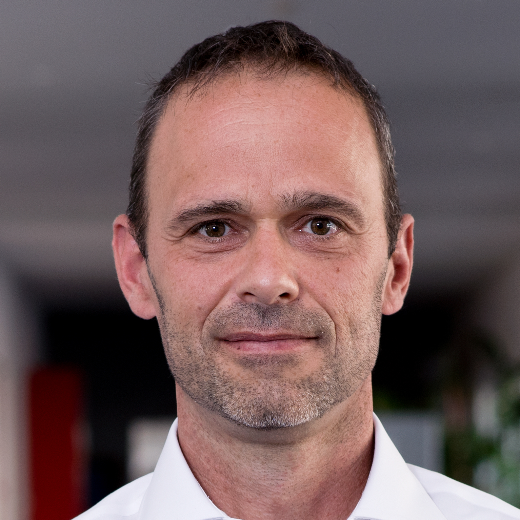
Barbara Caputo is a Full Professor at Politecnico di Torino, leading the VANDAL Laboratory and directing the AI@PoliTo Interdepartmental Lab. She holds a double affiliation with the Italian Institute of Technology (IIT) and has held roles at Idiap-EPFL and Sapienza University. Her research focuses on AI, computer vision, domain adaptation, and federated learning. She contributes to national AI policy, including the Italian Strategy on AI and the National PhD on AI for Industry 4.0. She is an ERC Laureate and ELLIS Fellow, co-founding ELLIS society. Her work spans visual place recognition, action recognition, and cross-domain learning. Education: PhD in Computer Science from KTH Royal Institute of Technology (2005). Major roles include Rector’s Advisor on AI at PoliTo, Board Member of ELLIS, and coordinator of the AI & Industry 4.0 vertical in the National PhD program. Awards include ERC Laureate (2017), ELLIS Fellow (2019), and Inspiring Fifty Italy (2018). Her research emphasizes federated learning, domain adaptation, and AI ethics. Recent articles explore domain generalization, resource-efficient federated models, and AI-environment interactions. She collaborates with institutions like MUR, CNR, and the European Commission on AI policy and tech initiatives.
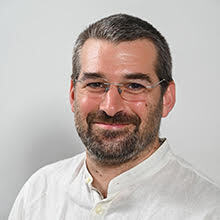
Oswald Lanz is a tenured full professor at the Faculty of Engineering of the Free University of Bozen-Bolzano , leading the Visual Computing Lab . He holds a Ph.D. in Computer Science and a Mathematics degree from the University of Trento. Prior to his current role, he was a researcher and head of research at FBK Trento. He is an endowed professor collaborating with Covision Lab , an AI hub in Bressanone, and coordinates the board of professors for the PhD in Computer Science program since 2025. His research focuses on Computer Vision, Deep Learning, and Video Analytics , with applications in sports technology, medical imaging, and industrial automation. Key achievements include the Amazon AWS Machine Learning Research Award (2020) , ACM Multimedia Best Paper (2015) , and Best Student Paper at ICIAP (2007) . He co-organized the ELLIS-VISMAC Winter School (2025) and chaired ICIAP 2019 . His work spans novel view synthesis, action recognition, and anomaly detection, supported by patents in video tracking and detection. He teaches courses like Deep Learning and Artificial Intelligence in undergraduate and graduate programs. Recent projects such as 5VREAL integrate 5G, edge computing, and AI for sports analysis. His collaborations bridge academia and industry, exemplified by his role in Covision Lab and multidisciplinary initiatives like DSS4LCO for food supply chains. Lanz’s publications emphasize spatiotemporal modeling, neural architecture search, and hybrid machine vision systems.
Giuseppe Bruno Averta is a Fixed-term Researcher at the Department of Control and Computer Science (DAUIN), Polytechnic University of Turin, and a member of the Interdepartmental Center SmartData@PoliTO - Big Data and Data Science Laboratory. He is affiliated with the College of Computer, Film and Mechatronics Engineering and contributes to national and international research in artificial intelligence and robotics. Averta has held a Visiting Researcher position at the Massachusetts Institute of Technology (MIT) from January to June 2019. His research interests include Computer Vision, Deep Learning, Robotics, Neural Architecture Search, Egocentric Vision, Embodied Intelligence (Edge/Tiny ML), and Human-Robot Collaboration . His work is aligned with ERC sectors in Artificial Intelligence, Machine Learning, and Robotics, and contributes to UN SDGs such as Good Health and Well-being, Industry Innovation and Infrastructure, and Responsible Consumption and Production. The recent publication trends highlight his focus on vision-language models (e.g., CLIP), egocentric action recognition, efficient neural architectures (e.g., BiSeNet, MaskFormer), and robust deep learning. His research bridges theoretical advances with practical robotics applications, including grasping and manipulation. Scientific Awards and Recognitions: Georges Giralt PhD Award (euRobotics AISBL, 2021) Wiley Best Reviewer (Wiley, Italy, 2021) Best Paper Award, ICUMT 2015 (2017) Fellow, ELLIS Network of Excellence (2022–) Fellow, DAAD AInet (2022–) DAAD AInet Fellowship Advising and Grants : Averta supervises multiple PhD students in the Artificial Intelligence and Computer and Systems Engineering doctoral programs at Politecnico di Torino. He is involved in teaching at both the master’s and doctoral levels, including courses on Robot Learning and Machine Learning and Deep Learning. He is also a co-inventor on a national and international patent for a method and algorithm for the automatic design of neural networks through machine learning, indicating active research funding and innovation. Labs and Research Groups : He is a member of the SmartData@PoliTO center and contributes to research in the VANDAL PoliTO lab (as indicated by his student Davide Buoso). His work is deeply integrated with teams working on egocentric vision, embodied AI, and neural architecture search.
Antonia Teresa Spano is a Full Professor at the Department of Architecture and Design (DAD) of Politecnico di Torino, Italy. She serves as Vice Coordinator of the PhD Program in Architectural Heritage and is a member of the Future Urban Legacy Lab (FULL). Her research focuses on geomatics, 3D modeling, and digital documentation for cultural heritage preservation. University: Politecnico di Torino Department: Department of Architecture and Design (DAD) Spano's work integrates advanced geomatic techniques like LiDAR, UAV photogrammetry, and SLAM-based modeling to address challenges in architectural and archaeological heritage documentation. Her expertise spans GIS, digital photogrammetry, and machine learning applications in conservation processes. Her recent publications emphasize multi-sensor 3D surveys for Pier Luigi Nervi's structures, AI-driven decay detection, and semantic classification of LiDAR data. These works align with SDG goals for sustainable cities and quality education. Scientific Awards: Premio Giovani CNR (2005) Miglior Poster at GISTAM (2016) and GEORES (2019) Fellow of CIPA Heritage Documentation (2023-2033), CIRAAS ETS (2020-2030), and ISPRS (2017-2024) Spano supervises PhD students in architectural heritage programs and leads numerous research projects, including collaborations with institutions like the Pompeii Archaeological Park, CRAST, and international universities. She has contributed to editorial boards and program committees of journals and conferences such as Virtual Archaeology Review and ISPRS symposiums.
Fabrizio Falchi is a researcher at the Artificial Intelligence for Media and Humanities (AIMH) Lab of the Institute of Information Science and Technologies (ISTI) within Italy's National Research Council (CNR). He also maintains an associate position at the Biorobotics Institute of Scuola Superiore Sant'Anna. His work focuses on developing advanced multimedia retrieval systems, with the VISIONE platform being his most notable contribution, which has won international competitions including the Video Browser Showdown in 2024 and placed second in 2023. Falchi's educational background includes: Ph.D. in Information Engineering from University of Pisa (Italy) Ph.D. in Informatics from Faculty of Informatics of Masaryk University of Brno (Czech Republic) M.B.A. from Scuola Superiore Sant'Anna in Pisa His research spans deep learning, convolutional neural networks, deep features extraction, similarity search algorithms, distributed indexing systems, multimedia information retrieval, computer vision applications, and peer-to-peer systems. Falchi has made significant contributions to fine-grained visual understanding, cross-modal retrieval (particularly image-text matching), and robustness of deep learning systems against adversarial attacks. His work demonstrates a strong focus on practical applications of these technologies, particularly in video retrieval systems and safety monitoring solutions. Analysis of Falchi's recent publications reveals a strong focus on video and image retrieval systems, with the VISIONE platform being central to his work. His research shows increasing emphasis on fine-grained understanding in computer vision, cross-modal retrieval, and addressing practical challenges like cross-resolution face recognition. Recent work demonstrates innovation in making these systems more efficient through techniques like knowledge distillation (ALADIN) and leveraging virtual worlds for training data. His publications consistently bridge theoretical advances with practical applications in surveillance, safety monitoring, and multimedia search. Falchi's work has received significant recognition: Best paper award at CBMI 2024 for 'Is ClLIP the main roadblock for fine-grained open-world perception?' VISIONE 2024 won the Video Browser Showdown competition in Amsterdam VISIONE obtained second place at Video Browser Showdown 2023 in Bergen Best Paper Award for 'Learning Safety Equipment Detection using Virtual Worlds' at CBMI 2019 Falchi collaborates extensively with researchers at ISTI-CNR, particularly within the AIMH Lab. His work on VISIONE involves collaboration with Giuseppe Amato, Paolo Bolettieri, Fabio Carrara, Claudio Gennaro, Nicola Messina, Lucia Vadicamo, and Claudio Vairo. As co-chair of Ital-IA 2023, the 3rd National Conference on Artificial Intelligence, he plays an active role in the academic community. He is a member of ACM (since 2012), the Computer Vision Foundation, the Italian Association for Computer Vision Pattern Recognition and Machine Learning (CVPL), and the CINI Lab on Artificial Intelligence and Intelligent Systems. Falchi is a key member of the Artificial Intelligence for Media and Humanities (AIMH) Lab at ISTI-CNR, where he leads research on video retrieval systems. The lab has developed the award-winning VISIONE platform, which combines multiple scientific results in content-based video retrieval. His team focuses on developing systems that enable users to search for target videos using textual prompts, drawing objects and colors, or images as query examples. The lab's work demonstrates strong interdisciplinary collaboration, bridging computer science with practical applications in media, safety monitoring, and urban environments.
Prof. Tomaso Fontanini is a researcher at the Department of Engineering and Architecture, University of Parma. His academic contributions span multiple disciplines, including computer science, artificial intelligence, and computer vision. 2025/2026: Deep Learning and Generative Models (Master's in Computer Engineering) 2024/2025: Processing Systems (Bachelor's in Prevention Techniques) 2023/2024: Processing Systems (Bachelor's in Prevention Techniques) 2022/2023: Processing Systems (Bachelor's in Prevention Techniques) Research Focus: His work primarily explores generative models, image synthesis, and style transfer with a strong emphasis on semantic control and attention mechanisms. Recent research has advanced state space models for efficient style transfer (Mamba-ST), semantic image synthesis via class-adaptive cross-attention, and diffusion model acceleration through U-shape architectures. Scientific Contributions: Publications include breakthroughs in controllable face synthesis, mask-based generative modeling, and video anomaly detection. His work bridges theoretical advancements in neural architectures with practical applications in remote sensing and educational technology. 2025: FLAV (audio-video generation), Swin2-MoSE (remote sensing) 2024: MARS (text-based person search), MCGM (mask conditioning) 2023: FrankenMask (face part editing), Student attendance systems
Dr. Shervin Shirmohammadi is a Professor at the University of Ottawa's Faculty of Engineering, specifically within the School of Electrical Engineering and Computer Science. With an impressive h-index of 41 and over 6,800 citations across 473 publications, his research has made significant contributions to the fields of computer vision, biomedical instrumentation, and health monitoring systems. His academic journey spans over two decades, beginning with work on communication architectures for virtual environments in 2001 and evolving toward practical healthcare applications. Dr. Shirmohammadi's research interests center on Computer Vision , Image Processing , and Embedded Systems with a strong focus on healthcare applications including nutrition monitoring, mental health assessment, and driver safety systems. His most influential work examines computer vision applications for health monitoring, particularly food calorie measurement systems that use smartphone cameras to analyze nutritional content. His research has evolved to include EEG-based systems for ADHD detection and serious games for autism therapy, demonstrating a consistent trajectory toward practical healthcare solutions using advanced instrumentation techniques. Dr. Shirmohammadi maintains active collaborations with researchers including A. Yassine (118 joint publications), D. Ahmed, Ali Asghar Nazari Shirehjini, and B. Hariri. His publications appear primarily in IEEE Transactions on Instrumentation and Measurement, reflecting his strong connection to the instrumentation and measurement community.
Angelo Corallo is an Associate Professor at the Department of Experimental Medicine, University of Salento, specializing in technologies and methodologies for collaborative processes in industrial systems. His research spans Digital Business Ecosystems , Cybersecurity , and Collaborative Product Design , focusing on the interplay between technology and organizational dynamics. He leads interdisciplinary research divisions in Open Networked Business Management , Learning and Innovation , and Collaborative Product Design . Research Interests : Corallo's work integrates Information and Communication Technologies (ICT) with Business Management, particularly in Digital Twins for healthcare and manufacturing Knowledge Modeling and Ontology Engineering Industry 4.0 and Smart Manufacturing Agri-Food Sustainability through digitalization Scientific Contributions : His recent articles explore trends in Cybersecurity for Industrial IoT Metaverse Applications in business models Traceability Systems in food supply chains Collagen-Based Biomaterials from aquaponics
Vincenzo Della Mea is an Associate Professor of Information Processing Systems at the University of Udine's Department of Mathematical, Computer and Physical Sciences. His research focuses on medical informatics, digital pathology, biomedical ontologies, and AI applications in healthcare. He holds abilitation to full professorship and is a member of the WHO Italian Collaborating Centre for International Classifications (WHO-FIC), ICHI Task Force, and ESDIP's Executive Board. He leads the EU MSCA Doctoral Network BosomShield (2022-2026) and previously managed the AIDPATH Marie Curie project. As an editor for journals like Digital Health and Journal of Pathology Informatics , he bridges academia and practice. Beyond academia, he is a poet with awards, including the Nelle terre dei Pallavicino Prize for his 2004 collection Algoritmi , and organizes interdisciplinary events merging science and literature. Education & Roles : Holds a professorship in Computer Science and teaches courses on web technologies, medical informatics, and AI across multiple degree programs. Previously served as Vice-President of SIBIM (Italian Biomedical Informatics Society). Research Interests : Specializes in digital pathology, medical AI, telemedicine, and standardization of health classifications like ICD-11 and ICF. His work emphasizes ontology harmonization and machine learning for clinical decision support. Recent Contributions : Published on WHO classification harmonization, AI-driven pathology tools, and energy-sector LLM applications. Active in editorial roles and international collaborations, including the HEROHE Challenge for breast cancer analysis. Awards & Recognition : 2023 – Poetry collection Clone 2.0 (neurally generated) 2005 – Nelle terre dei Pallavicino Award Grants & Projects : Led EU-funded projects (AIDPATH, BosomShield) and contributed to initiatives like the ICD-11 Mortality Coding System. Collaborates with institutions like AcegasApsAmga on AI for utilities. Labs & Initiatives : Involved in digital pathology workflow optimization and educational platforms for medical coding and AI ethics.
Marco Buzzelli is an Assistant Professor at the Department of Informatics, Systems and Communication (DISCo) at the University of Milan-Bicocca, where he also obtained his PhD in Computer Science in 2019. His academic career is centered around cutting-edge research in signal, image, and video processing with a specialized focus on color imaging and machine learning applications. Dr. Buzzelli's research interests span multiple interconnected domains within computer vision and image processing. He has established himself as a leading researcher in color constancy, with numerous publications exploring illuminant estimation, white balance algorithms, and perceptual aspects of color imaging. His work extends to video restoration, particularly addressing challenges in low-light conditions and HEVC-compressed video processing. Additional research areas include hyperspectral imaging applications for historical document analysis, food authentication technologies, and neural architecture search for various computer vision tasks. His publication record demonstrates a clear evolution from foundational work in logo recognition and saliency detection toward increasingly sophisticated approaches to color science and video processing. Recent work shows strong emphasis on uncertainty estimation in color constancy, Bayesian optimization for night photography, and multimodal approaches combining spectral information with traditional RGB imaging. His research often bridges theoretical advances with practical applications across diverse domains including cultural heritage preservation, food safety, and computational photography. As an active ELLIS member, Dr. Buzzelli maintains significant European collaborations with institutions including Universitat Autònoma de Barcelona, Universidade Nova de Lisboa, Université Jean Monnet, and Universidad de Granada. His research group participates in major challenges such as the NTIRE series on night photography rendering and spectral recovery, contributing both methodological innovations and comprehensive surveys of the field. His laboratory work focuses on developing practical imaging solutions with real-world applications, particularly evident in projects addressing food authentication, historical document analysis, and vision-based monitoring systems. The integration of traditional image processing techniques with modern deep learning approaches characterizes his methodological approach across multiple research domains.
Lyndon Estes is an Associate Professor in the Graduate School of Geography at Clark University. His research focuses on the drivers and impacts of agricultural change, utilizing Earth Observation technologies and modeling techniques such as neural networks. He has contributed to interdisciplinary studies in conservation biology, agricultural economics, and geospatial analysis, with a particular emphasis on African ecosystems and smallholder farming systems. Dr. Estes' work spans multiple domains, including landscape connectivity for wildlife conservation, transportation infrastructure impacts on agricultural supply chains, and the application of advanced machine learning methods to remote sensing data. He has authored over 19 publications, with recent contributions appearing in journals like Remote Sensing , Field Crops Research , and Agricultural Systems . In editorial roles, he serves as Specialty Chief Editor for 'AI in Food, Agriculture and Water' at Frontiers in Artificial Intelligence . His research integrates technical innovation with practical applications, addressing global challenges in sustainability and food security.
Sebastiano Vascon is an Associate Professor at Ca' Foscari University of Venice's Department of Environmental Sciences, Computer Science and Statistics (DAIS), and affiliated with the European Center for Living Technology. He earned his PhD in 2016 from the Italian Institute of Technology and University of Genoa, focusing on evolutionary game theory in pattern analysis and computer vision. His postdoctoral work spanned institutions like the Technical University of Munich and ETH Zurich, where he specialized in Active Learning and multi-object tracking. His research merges AI with interdisciplinary challenges, including climate change, environmental science, and cultural heritage preservation. Key areas include graph neural networks, computer vision, and game-theoretic models. He leads projects like RePAIR (AI for cultural heritage reassembly) and EasyWalk (AI-driven mobility solutions), and contributes to initiatives like MEMEX (digital storytelling). Teaching spans courses in Deep Learning, Machine Learning for Environmental Applications, and AI in Cultural Management. Research projects include: RePAIR: AI-driven 3D puzzle solving for artifact reconstruction EasyWalk: Socially-aware navigation systems MEMEX: AI for inclusive digital storytelling Climate modeling with IceBoost framework Publications highlight innovations in trajectory forecasting, environmental risk assessment, and graph-based methods. He actively reviews for top conferences (CVPR, ECCV) and journals.
Federico D'Asaro is a researcher and PhD student at Politecnico di Torino, affiliated with the Department of Control and Computer Science (DAUIN) and the Computer Graphics & Vision Group (CGVG). He works as an external lecturer and teaching assistant for the Applied Data Science Project course in the Data Science and Engineering program. His research focuses on Vision-Language Models (VLMs), particularly addressing the Modality Gap in multimodal feature spaces and their applications in downstream tasks like semantic segmentation and speech emotion recognition. Education: Master's degree in Data Science and Engineering (2021), currently pursuing PhD in Computer and Systems Engineering (39th cycle, 2023-2026). His research at the intersection of Natural Language Processing and Computer Vision investigates how reducing the Modality Gap improves crossmodal performance. Recent work applies Large Speech Models (LSMs) to cross-lingual emotion recognition and non-verbal vocalization tasks. He collaborates with researchers like Andrea Bottino, Giuseppe Rizzo, and Juan José Márquez Villacis on projects involving multimodal deep learning and feature extraction. The trends in his publications highlight expertise in multimodal learning (Vision-Language Models, speech-text alignment), deep learning for segmentation and emotion recognition, and crossmodal adaptation in speech processing. His 2025 work focuses on contrastive alignment and non-verbal vocalization, while 2024 studies explore transfer learning of speech models across languages. Teaching Contributions External lecturer for Applied Data Science Project (2025/26) Course collaborator for Applied Data Science Project (2024/25) Federico is part of the Computer Graphics & Vision Group (CGVG) , contributing to interdisciplinary projects that bridge Computer Vision , Natural Language Processing , and Speech Emotion Recognition . His work emphasizes practical applications of multimodal models in real-world scenarios.
Alessandro Dal Palu' is an Associate Professor at the Department of Mathematical, Physical, and Computer Sciences at University of Parma. He holds a PhD in Computer Science from University of Udine and has been with University of Parma since 2005, transitioning from Researcher to Associate Professor in 2014. His teaching portfolio includes courses on Computer Architecture, Constraint Programming, and Algorithms & Data Structures. His research spans computational logic, bioinformatics, and GPU computing. Notable achievements include the 2007 GULP award for his Ph.D. thesis and the ICLP 2010 best paper award. He has led Italian INdAM-GNCS research projects on GPU applications (2011) and Logic Programming in cancer genomics (2016). Recent publications focus on explainable AI frameworks, bioinformatics applications, and sustainable logistics solutions. His work integrates Answer Set Programming with biomedical challenges like protein structure analysis and cancer genome evolution. He chairs the International Conference on Logic Programming (ICLP 2018) and has organized multiple international workshops on constraint programming. 2007 GULP Award ICLP 2010 Best Paper PI for INdAM-GNCS projects (2011, 2016) Program Committee member for international conferences
Martina Pastorino is a Researcher in the Department of Naval, Electrical, Electronic, and Telecommunications Engineering (DITEN) at the University of Genoa. Her work focuses on integrating machine learning with probabilistic graphical models for advanced remote sensing image analysis , particularly in multiresolution classification using satellite and UAV data. She teaches courses on Machine Learning for Pattern Recognition and Remote Sensing in master’s programs related to Internet and Multimedia Engineering and Energy Engineering . Research Interests : Remote Sensing, Machine Learning, Image Segmentation, Data Fusion, Hyperspectral Imaging, UAV Applications. Key Techniques : CNN-MRF Hybrids, CRFNet, Probabilistic Graphical Modeling, Multiresolution Analysis. Her recent publications explore applications in wildfire mapping , urban land-use analysis , and hyperspectral-panchromatic fusion , with a focus on improving semantic segmentation accuracy through hybrid deep learning frameworks. She is available for office hours on request via email at martina.pastorino@unige.it .