
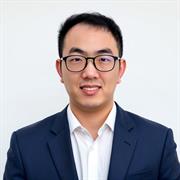
Dr. Zhuang Li is a Lecturer at RMIT University's School of Computing Technologies, specializing in Natural Language Processing (NLP), machine learning, and trustworthy AI. He earned his PhD from Monash University (2023), focusing on semantic parsing in low-resource conditions, and previously worked at Microsoft on Cortana and Bing. His research bridges NLP, computational social science, and cultural alignment of AI systems, emphasizing data-efficient training and LLM safety. Education: PhD in NLP, Monash University (2019–2023) M.Comp in AI, Australian National University (2014–2015) B.Eng in Electrical Engineering, Wuhan University of Science and Technology (2009–2013) Research Interests: Data-efficient learning, culturally-grounded AI, large language models, computational social science, and ethical AI deployment. Collaborations: Active in industry partnerships and academic collaborations with Monash University, TU Darmstadt, Microsoft Research India, and Ant Group. Recent work includes ACL 2025 papers on LLM safety and peer review analysis. Supervision: Open to PhD students in low-resource languages and culturally-aligned LLMs. Collaborates with senior faculty at RMIT and Monash.
جستجوی استاد راهنمای دانشگاهی
برای مسیر پژوهشیتان، استاد راهنما، استاد دانشگاه و پژوهشگر مناسب را پیدا کنید و با آنها ارتباط بگیرید.
نمایش ۱۶-۳۰ از ۳۴ استاد راهنما
اطلاعات پروفایلها از صفحات عمومی دانشگاهها گرفته شده و ممکن است بهروز نباشد.

Guanfeng Liu is the Vice Dean at the NNU-MQ Joint Institute, Macquarie University, within the Faculty of Science and Engineering. His research focuses on Recommender Systems, Privacy-Preserving Technologies, Graph Neural Networks, and Data Analytics. He leads projects like the 'Intelligent Health Data Analytics Platform' and 'Data-intensive Scheduling Optimisation in Database Systems.' His work emphasizes ethical AI, with contributions to trust prediction, spatio-temporal data analysis, and privacy-aware algorithms. In 2023, he won the Faculty of Science and Engineering Award for Inter-School Collaboration. Liu has published extensively in top journals like IEEE Transactions and ACM Conferences, with over 200 publications and a h-index of 34. Key projects include scalable document intelligence platforms and confidentiality preservation in graph learning. His research bridges theoretical advancements with practical applications in smart cities and healthcare, leveraging collaborative filtering and contrastive learning techniques.
John Shepherdمشاهده پروفایل
مدرس ارشد
- Data Management
- Information Retrieval
- Web Search
- +۴ مورد دیگر
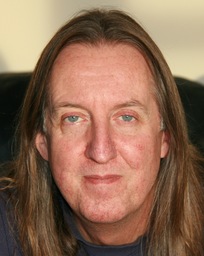
Dr. John Shepherd is a Senior Lecturer in the School of Computer Science and Engineering (CSE) at UNSW, Sydney, Australia. His research focuses on data/information/knowledge management, including data modeling, query processing, multimedia retrieval, web search, and text mining. Current projects include RAM (Research Area Mapper) for research data management, and educational tools like ORE (Online Role-Play in Education), CMap (Curriculum Mapping), and WebCMS (Course Management System). His work spans interdisciplinary areas such as database systems, information retrieval, and educational technology. Notable contributions include the TEXUS framework for PDF table extraction and understanding, and collaborative projects with industry partners. Dr. Shepherd’s publications (e.g., on popularity forecasting, automated table understanding) reflect his expertise in machine learning, data systems, and applied research. He actively engages in curriculum development and educational innovation, leveraging technology to enhance learning experiences.
Shlomo Gevaمشاهده پروفایل
استاد مدعو
Shlomo Geva is an Adjunct Professor in the School of Computer Science at Queensland University of Technology's Faculty of Science. His research focuses on information retrieval systems, particularly in specialized areas including XML search engines, text search engines, link discovery, and document computing. His academic work spans multiple disciplines within computer science, with particular emphasis on information retrieval technologies and their applications. Professor Geva's research interests include clustering algorithms, cross language information retrieval, focused information retrieval, information retrieval systems, link discovery mechanisms, search engine technologies, text indexing and retrieval methods, and XML indexing and retrieval techniques. His work demonstrates a consistent focus on improving the efficiency and effectiveness of information access systems across various data formats and domains. His recent publications reveal a trend toward applications of information retrieval techniques in diverse fields including remote sensing, bioinformatics, and data stream processing. The research shows an evolution from traditional information retrieval problems toward more specialized applications requiring advanced clustering algorithms and efficient data processing techniques for large-scale datasets. Professor Geva has successfully supervised numerous doctoral students whose research topics include indoor environment mapping by robots, cross-language information retrieval, natural language query interfaces for XML, evolvable hardware, and autonomous robot behavior systems.
Shane Culpepperمشاهده پروفایل
استاد مدعو
Shane Culpepper is an Adjunct Professor in the School of Computing Technologies at RMIT University, where he also serves as Director of the Centre for Information Discovery and Data Analytics and a Vice-Chancellor's Principal Research Fellow. His research focuses on building efficient search systems, measuring answer quality, and human-driven data science transformation of heterogeneous data. Key areas include algorithms, machine learning, distributed computing, and statistical modeling. Teaching interests span space-efficient data structures, data compression, bioinformatics, natural language processing, and combinatorics. His research interests include information retrieval, artificial intelligence, and computational theory. Supervision projects include topics like query performance prediction, inferential risk measures, and efficient cascade ranking. Over 100 research outputs are listed, with recent work on query optimization, multimodal feature extraction, and trajectory data analytics. Collaborations and a personal website ( https://www.culpepper.io/ ) highlight active engagement in the academic community.
Amin Abkenمشاهده پروفایل
مدرس ارشد
- Artificial Intelligence
- Data Management and Data Science
- Distributed Computing and Systems Software
- +۸ مورد دیگر
Dr. Amin Abken is an Associate Teaching Fellow at the School of Information Technology, Deakin University, where he contributes to academic instruction and research in artificial intelligence, data management, and distributed computing. He holds a Ph.D. from Deakin University and is affiliated with the Faculty of Science, Engineering, and Built Environment. His research spans Context-Aware Computing , Reinforcement Learning , and Internet of Things (IoT) , with a focus on adaptive caching strategies, group activity recognition, and intelligent transportation systems. His recent publications highlight advancements in context caching techniques and reinforcement learning for IoT environments. Dr. Abken's collaborative work includes co-authored articles in journals like ACM Transactions on Internet of Things , IEEE Internet of Things Magazine , and IEEE Transactions on Intelligent Transportation Systems . He employs methodologies in probabilistic analysis , dynamic system optimization , and edge-cloud platforms for urban IoT ecosystems. His articles demonstrate a consistent focus on IoT-based systems , context-aware algorithms , and distributed computing since 2014, with recent trends emphasizing reinforcement learning and smart city applications like carparking simulations. Dr. Abken collaborates frequently with researchers such as Weerasinghe , Zaslavsky , and Loke SW , addressing challenges in context caching , group activity recognition , and edge computing across publications in ACM, IEEE, and SpringerOpen.
Du Huynhمشاهده پروفایل
دانشیار
- Computer Vision
- Machine Learning
- Object Detection
- +۷ مورد دیگر
Du Huynh is an Associate Professor at the School of Physics, Mathematics and Computing, Department of Computer Science and Software Engineering, The University of Western Australia (UWA). She holds a 0.8 FTE appointment and has served as Graduate Research Coordinator since 2013. Her research focuses on Computer Vision, Machine Learning, Object Detection, and Video Analytics with applications in mineral processing, intelligent transportation systems, and medical imaging. She has secured over $3M in ARC grants and is a Chief Investigator in the Australian Centre for Quantum Growth ($18M funding). Education: BSc (Hons) and PhD in Computer Science from UWA. Prior to UWA, she lectured at Murdoch University for five years. Research Highlights Developed algorithms for automated mineral ore analysis, pedestrian trajectory prediction, and surgical instrument detection. Received three Best Paper Awards (ICPR2014, Kenneth Clarke Journal 2019, AusDM2022) and multiple award nominations. Editorial roles include PLOS One, Journal on Artificial Intelligence, and guest editorships for special issues in CVIU and Electronics. Grants & Projects Lead investigator in quantum computing algorithms for real-time optimization ($3M ARC funding). Collaborations with industry (e.g., Main Roads WA) on traffic video analytics and drone-based prediction systems. Academic Contributions Developed courses in Computer Vision, Machine Learning, and Java Programming. Supervised numerous HDR students and served on technical committees for WACV, ICCV, and DICTA conferences.
John Wangمشاهده پروفایل
دانشیار
Assoc Prof John Wang is an Associate Professor at the School of Information and Communication Technology , Griffith University. His work spans Data Management and Analysis (graph, text, spatial-temporal data), Machine Learning , Knowledge Representation , and Algorithm Design . He has published extensively in top venues like ACM Transactions on Database Systems , IEEE Transactions on Knowledge and Data Engineering , and conferences including SIGMOD , VLDB , and ICDE . Appointments : Member of the Institute for Integrated and Intelligent Systems (2003–2024). Education : PhD in Computer Science (Griffith University, 2003). His research has led to real-world implementations in Graph Data Processing , including techniques for shortest distance queries and temporal reachability. He actively contributes to program committees of conferences like VLDB and ICDE , and his funded projects include "Developing Soil Knowledge..." (ACIAR, 2024–2029) and "Harnessing Social Media..." (QLD Inspector-General, 2020). Recent publications focus on Graph Indexing , Causality Detection , and Spatial-temporal Querying . Examples include optimizing road network queries (2023), 2-hop labeling for shortest paths (2021), and geospatial skyline algorithms (2020). Co-authored works appear in venues such as IEEE Transactions on Knowledge and Data Engineering and Neurocomputing . Consultancy : Delivered commercial research on pandemic-related data analytics (2020). Supervision : Mentored 15+ PhD/Master’s students, including projects on deep learning, data leakage prevention, and XML querying. Teaching : Directed programs like Graduate Certificate in Information Technology and Diploma of Information Technology .
Professor Joseph Davis is a Professor of Information Systems and Services at the University of Sydney's School of Computer Science. His research focuses on knowledge management, semantic technologies, crowdsourcing, and service computing. He holds a Ph.D. from the University of Pittsburgh and has been recognized with the IBM Faculty Research Award (2008). Davis leads the Knowledge Discovery and Management Research Group and is involved in projects like the Network Data Reliability initiative with Data61 and DST. His work spans interdisciplinary areas, including ontology development, service innovation, and digital preservation of cultural heritage. He has served on editorial boards and conference committees, such as the International Conference on Information Systems and the Australasian Web Conference. Education: Ph.D. in Information Systems, University of Pittsburgh (1985). Research Interests: Extracting knowledge from data, semantic technologies, crowdsourcing systems, service computing, and organizational knowledge management. His recent work explores hybrid human-machine systems and the application of big data in service systems. Awards: IBM Faculty Research Award for IT services-related research. His research has been funded by the Australian Research Council, Carnegie Bosch Institute, and IBM Research Labs. Current Projects: Defense Science and Technology Group's Next Generation Technology Fund project on network data reliability, detecting anomalous citation practices, and IoT ontologies. Professional Roles: Director of the Sydney Accelerator Network (SAN):IT, Board Member of the Service Science Society of Australia, and Theme Leader for Service Computing at the Centre for Distributed and High Performance Computing.
Maria Orlowskaمشاهده پروفایل
دانشگاهی
- Workflow Management
- Database Systems
- Data Mining
- +۳ مورد دیگر
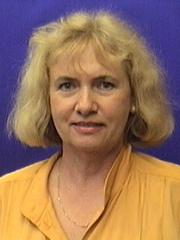
Honorary Professor Maria Orlowska is affiliated with the School of Electrical Engineering & Computer Science at the University of Queensland. Her research focuses on workflow systems, database integration, data mining, and wireless sensor networks. She has contributed extensively to collaborative business process technologies, flexible workflow modeling, and RFID data management. Her work spans theoretical foundations in process constraints, distributed systems, and practical applications in enterprise integration and real-time data analytics. Key research areas include workflow exception handling, multidatabase integration methodologies, and optimization of dynamic processes. Her studies on sensor networks address routing algorithms and telemetry systems. She has collaborated on projects involving smart shop floors, e-learning platforms, and spatial data management. Notable contributions include methodologies for business contract compliance and service-oriented architecture advancements. Publications emphasize interdisciplinary applications of computer science principles, with a focus on real-world system implementations. Her work bridges theoretical computer science with practical engineering challenges in distributed environments.
- Geospatial AI
- Spatial Algorithms
- Geovisualisation
- +۵ مورد دیگر
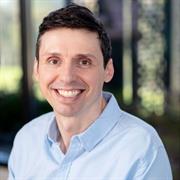
Matt Duckham is a Professor in Geospatial Sciences and Director of the Information in Society Enabling Impact Platform at RMIT University. He has held previous academic roles at the University of Melbourne as an Australian Research Council Future Fellow and at the University of Maine's National Center for Geographic Information and Analysis. His work bridges theoretical and applied GIScience, with a focus on AI integration and spatial knowledge infrastructure. Academic Leadership: Director, Information in Society EIP (2021–present); Acting Dean, STEMM Diversity and Inclusion (2020–2021) Research Themes: Geospatial AI, Qualitative Spatial Reasoning, Decentralized Geosensor Networks, Spatial Data Trusts Recent Publications demonstrate his commitment to advancing spatial computing through machine learning integration and explainable AI frameworks. His teaching resources include open-access textbook materials and practical exercises spanning relational spatial databases and data visualization. Professional Contributions include co-founding the Journal of Spatial Information Science and developing open educational resources under a Creative Commons Attribution license. His work addresses critical issues in data ethics , urban resilience , and emergency response systems .
Mohammed Eunus Aliمشاهده پروفایل
مدرس ارشد
Mohammed Eunus Ali is a Senior Lecturer in the Department of Software Systems & Cybersecurity within the Faculty of Information Technology at Monash University, Australia. He holds a PhD in Computer Science and Software Engineering from the University of Melbourne and has previously served as a Professor at the Bangladesh University of Engineering and Technology (BUET), where he led a research group in Data Science and Engineering for over a decade. He has also held research positions at Monash University, Swinburne University, the University of Melbourne, and RMIT University. PhD : Computer Science and Software Engineering, University of Melbourne (2010) M.Sc. Engg. : Computer Science and Engineering, Bangladesh University of Engineering and Technology (2002) B.Sc. Engg. : Computer Science and Engineering, Bangladesh University of Engineering and Technology (1999) Dr. Ali’s research spans data management, analytics, and learning , with a strong focus on spatio-temporal data, geo-social networks, and multimodal high-dimensional data . His work enables applications in urban computing, intelligent transportation systems, and smart, sustainable cities . In recent years, he has expanded into Generative AI and large language models (LLMs) , exploring their role in enhancing geo-spatial query processing, SQL generation, and data engineering tasks. His publications appear in top-tier venues such as ACL, TKDE, VLDB, ICDE, SIGSPATIAL, and IEEE Access . His recent publications reflect a strong trend toward AI-driven solutions for real-world spatial and health problems , including blood glucose prediction for diabetics, seismic intensity forecasting, eco-friendly route planning, and LLM-based code generation. These works demonstrate a convergence of deep learning, spatio-temporal analytics, and real-world system design . Scientific Awards: Bangladesh University Grants Commission Award (2012) ADC Best Poster Award (2016) SSTD Best Demo Award (2017) ADC Best Paper Award (2022) Dr. Ali actively contributes to the research community as a Program Committee Member for premier conferences including SIGMOD, VLDB, ICDE, and SIGSPATIAL . He is a Senior Member of the ACM and currently supervises PhD students, focusing on cutting-edge topics in data science and AI. His collaborative research network spans institutions in Australia and Bangladesh, contributing to advancements in both academic and applied domains. His work aligns with the UN Sustainable Development Goals , particularly in the areas of sustainable cities, innovation, and quality education.
Professor Mingsheng Ying (University of Technology Sydney) is a Distinguished Professor specializing in quantum programming , quantum verification , and the foundations of artificial intelligence . He leads the Centre for Quantum Software and Information and co-founded the Quantum Lab . His work bridges quantum computation with formal methods and reasoning under uncertainty. Education : Mathematics, Fuzhou Teachers College (1981) Research Interests His research spans: Quantum programming languages and verification techniques Model checking quantum systems and cryptographic protocols Quantum machine learning robustness Entanglement theory and distributed quantum computation Recent Publications Key contributions include: Quantum error correction verification frameworks Quantum register machine architecture Hamiltonian simulation parallelization Symbolic execution for quantum debugging Robustness tools like VeriQR Awards & Editorial Roles NSF China Distinguished Young Scholar Award (1997) China National Science Award (2008) Co-Editor-in-Chief, ACM Transactions on Quantum Computing Vice President, International Fuzzy Systems Association (2005) Leadership & Grants He oversees 14 active grants (2010–2029) from: Australian Research Council (ARC Discovery Projects) National Natural Science Foundation of China Sydney Quantum Academy Baidu Contract Research His grants fund research in quantum program verification, entanglement classification, and distributed quantum protocols.

Sergio Rodriguez Mendezمشاهده پروفایل
پژوهشگر ارشد
Sergio Rodriguez Mendez is a Research Fellow in Knowledge Graph Engineering at the School of Computing, Australian National University. His work focuses on advancing ontology engineering, linked data, semantic web technologies, and their applications in domains like astronomy, brain-computer interfaces, and IoT. He is a member of the Australian Government Linked Data Working Group (AGLDWG) and the W3C Knowledge Graph Construction Community Group, and holds a senior role at the Software Innovation Institute (SII). His research interests include Knowledge Graphs, Ontology Engineering, Linked Data, Data Science, Machine Learning, Natural Language Processing, Brain-Computer Interfaces, IoT, Cloud/Fog/Edge Computing, and Software Engineering. He has contributed to frameworks like pathfinder for astronomical literature review and Doc-KG for document-to-KG conversion. Recent work emphasizes integrating large language models (LLMs) with knowledge graphs, such as AstroLLaVA for astronomical data unification and hybrid frameworks for entity linking. His publications span conferences like WWW, JCDL, and the ACM/IEEE Joint Conferences. He actively supervises research students and is involved in initiatives like the ASKG project for enriching scholarly knowledge graphs. His work addresses challenges in semantic data representation, automated query processing, and syntactic complexity reduction, with a focus on domain-specific applications in science and cultural heritage.

Wei Xiangمشاهده پروفایل
استاد مدعو
Wei Xiang is an Adjunct Professor and Founding Chair of Electronic Systems and Internet of Things Engineering at James Cook University. He leads the development of Australia's first accredited IoT Engineering program and conducts research at the intersection of IoT, machine learning, and big data analytics. Research encompasses: IoT systems for environmental monitoring Machine learning applications for sensor data Edge computing architectures Wireless communication protocols Smart agriculture technologies Publication analysis reveals focus areas: Smart transportation systems (25%) Agricultural IoT (20%) Medical AI applications (15%) Industrial IoT (15%) Network optimization (25%) Honors include Pearcey Entrepreneurship Award, Engineers Australia Cairns Engineer of the Year, and TNQ Innovation Award for establishing Australia's first IoT Engineering degree. Current projects include closed-loop irrigation systems for sugarcane farms and marine monitoring using distributed deep learning.