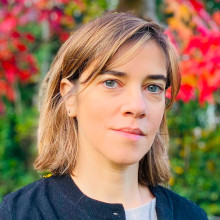
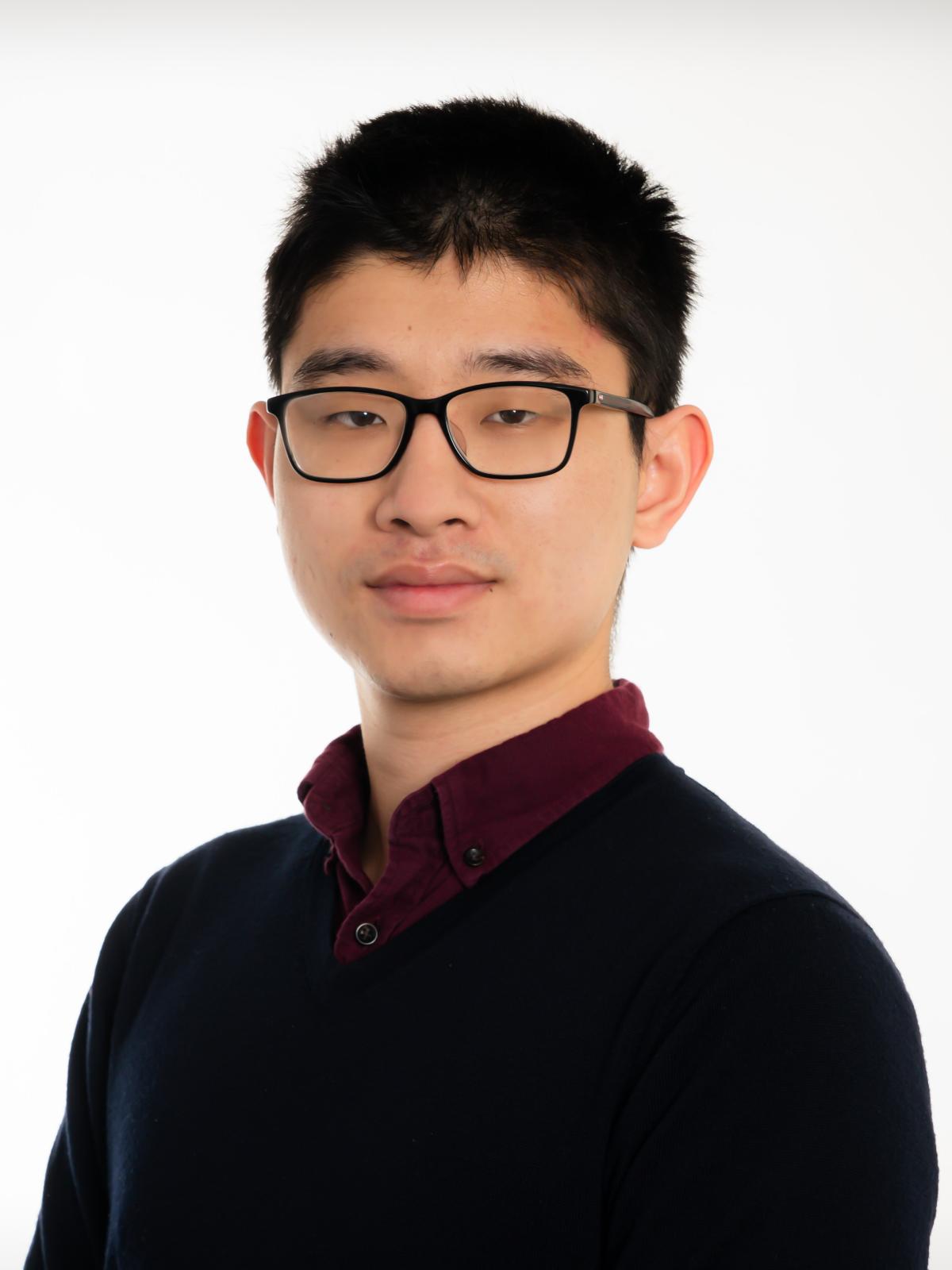
Mirian HALFELD-FERRARI is a Professor at the University of Orleans , where she serves as Director of the Pamda Laboratory, member of the Sustainable Development Working Group, and International Relations Manager. Her research focuses on database systems, semantic web technologies, and graph data management. Key contributions include graph rewriting systems , RDF database evolution , and data consistency frameworks . Recent work explores clinical text-to-knowledge graphs , XML schema evolution , and context-driven urban data analysis . She collaborates with researchers across Europe on projects involving graph data science , service composition refinement , and semantic web sanitization . Her leadership roles include organizing workshops at conferences such as ADBIS and serving on editorial boards for international journals.
Luis Sanchez Fernandez is a Full Professor at the Department of Telematics Engineering, Carlos III University of Madrid. His research focuses span Smart Cities, Semantic Web, and Distributed Systems. Contact information includes email luis.sanchez@uc3m.es and office location 4.1.F08 in Leganés. His research program integrates Blockchain Governance , Urban Mobility Analysis , and Complex Systems Modeling . Recent work examines approval-based voting mechanisms in decentralized networks and fractional transport equations for physical simulations. Publications demonstrate a strong emphasis on fair algorithm design for societal applications. Key article themes show convergence of Smart City Data Integration Multiwinner Election Algorithms Cellular Automaton Dynamics Semantic Annotation Frameworks As Deputy Director of Teaching Affairs, he leads curriculum innovation in Telematics Engineering. His educational background includes a Doctorate from Universidad de Salamanca, focusing on Wikipedia as a teaching resource in higher education.
Prof. Camilla Miglio is a full-time Professor of German Literature at the Department of European, American and Intercultural Studies , Sapienza University of Rome. She specializes in 20th-century German poetry, translation studies, and intercultural geopoetics. PhD in German Literature from Pisa (1996), focusing on Paul Celan Key research areas: Literary Geography, German-Italian Cultural Dialogue, Jewish-German Literature, and Poetics of Translation Her work interrogates the interplay between nature, memory, and poetic form in German literature from the 18th to 21st centuries. Recent projects include Europe as a Space of Translation (EACEA 2007-2013) and the ongoing PRIN A Physical Geography of German-speaking Literature (2023-2025). Scientific Awards include: Ladislao-Mittner-Preis (2005) Bundesverdienstkreuz (2010) Corresponding Member, Accademia Nazionale dei Lincei (2023) She leads seminars on German elegy, nature poetry, and intercultural translation , with guest collaborations from poets like Jan Wagner and scholars from Leipzig University. Classes held in Lab 4, Marco Polo Building, Rome.
Ivan Chorbev, Ph.D. is an Assistant Professor at the Institute for Computer Science and Engineering , Faculty of Electrical Engineering and Information Technologies (FEIT), Ss. Cyril and Methodius University in Skopje, North Macedonia. Since 2009 he has taught courses ranging from Structured Programming to Computer Animation and consulted on numerous EU and national ICT projects. Education B.Sc., Faculty of Electrical Engineering, Skopje, 2004 M.Sc., Faculty of Electrical Engineering, Skopje, 2006 Ph.D., Faculty of Electrical Engineering and Information Technologies, Skopje, 2009 Research Interests His work integrates combinatorial optimization and machine learning to solve complex real-world problems. Core themes include designing heuristic algorithms and constraint programming models for scheduling, resource allocation and telemedicine systems, developing medical expert systems that leverage knowledge extraction and predictive modeling, and creating web-based platforms for e-health, smart living and educational services. Publication Trends Over 70 peer-reviewed works (2005-2014) reveal a clear trajectory from foundational optimization and constraint-solving research toward interdisciplinary applications in telemedicine , social media analytics , and assistive technologies . A notable 2011-2014 surge focuses on cloud-supported e-health systems, 3-D printing for assistive devices, and mining social media for epidemiological insights. Scientific Awards Golden engineering ring – awarded by the Organization of Engineers of Macedonia for best student of his generation. Projects & Funding Risk Assessment for Customs in Western Balkans – FP6 COST IC0602 Algorithmic Decision Theory – management committee member (FP6) COST IC1002 MUMIA – management committee member (FP7) E-HFISN – e-Health applications using folksonomy & social networks (FP7) TEMPUS – Innovation and Knowledge Management toward eStudent Information System Laboratory & Team He conducts research within the Institute for Computer Science and Engineering laboratories, supervising graduate projects in optimization, medical informatics and smart environments.
Professor Panagiotis Demestichas serves as a faculty member in the Department of Digital Systems at the University of Piraeus, where he has been a Professor since April 2012. He heads the Laboratory of "Telecommunication Networks and Integrated Services" and has held significant leadership positions including Chair of the Department of Digital Systems from 2011 to 2015. His academic journey began with Bachelor's and Doctoral degrees in Electrical Engineering from the National Technical University of Athens. Professor Demestichas' educational background includes: Bachelor's Degree in Electrical Engineering, National Technical University of Athens Doctoral Degree in Electrical Engineering, National Technical University of Athens His research spans the forefront of telecommunications and network technologies, with particular expertise in 5G and emerging 6G systems. Professor Demestichas focuses on smart/cognitive/autonomic management and convergence of ICT infrastructures, SDN/NFV technologies, cognitive radio networks, and cloud and Internet of Things solutions. His work addresses critical challenges in spectrum management, network architecture design for beyond 5G systems, and the integration of artificial intelligence into network management frameworks. His research has significant implications for vertical industries including transportation, manufacturing, and smart cities, where reliable high-speed connectivity is essential. Professor Demestichas' publication record demonstrates a consistent focus on next-generation network technologies, with recent work emphasizing 6G architecture, sustainable network design, and industry-specific applications of advanced telecommunications. His research trajectory shows a clear evolution from 5G foundational work toward pioneering 6G concepts, with increasing emphasis on AI integration, sustainability, and cross-industry applications. The collaborative nature of his research is evident through participation in major European projects. Throughout his career, Professor Demestichas has held leadership positions in numerous significant research initiatives including: Project Coordinator of the OneFIT project (2010-2012) Technical Manager of the E3 project (2008-2009) Chairman of WWRF working groups, most notably the WGC "Communication Architectures and Technologies" (2004-2015) Technical Programme Committee Chair for the European Conference on Networks and Communications (EUCNC 2016) Active participation in European research programs including RACE II, ACTS, BRITE/EURAM, EURET, IST/FP5, IST/FP6, and ICT/FP7 As an educator, Professor Demestichas has made substantial contributions to academic development. He has supervised ten completed PhD theses and currently guides three additional doctoral candidates. He teaches Computer Networks I & II at the undergraduate level and has contributed to the development of research capacity through his leadership roles. His laboratory's research activities are partly funded by the European Union under Horizon 2020, reflecting the significance and impact of his work in the international research community. Professor Demestichas leads the Laboratory "Telecommunication Networks and Integrated Services" (http://tns.ds.unipi.gr), which serves as a hub for advanced research in telecommunications. The laboratory focuses on cutting-edge projects related to 5G/6G technologies, network virtualization, and intelligent network management. Through this laboratory, Professor Demestichas fosters collaboration between academia and industry, particularly in the areas of vertical industry applications of advanced networking technologies.
Stefan Luther is a Professor and Max Planck Research Group Leader at the Max Planck Institute for Dynamics and Self-Organization's Biomedical Physics group (Göttingen, Germany). His work spans cardiac dynamics, optogenetics, and biomedical data infrastructure. Current Affiliation: Max Planck Institute for Dynamics and Self-Organization, Biomedical Physics Research Themes: Cardiac arrhythmia control, excitable media dynamics, optogenetic interventions, and semantic data management systems Research Interests : Luther's research focuses on controlling cardiac arrhythmias through advanced pacing techniques (optogenetic, resonant feedback), modeling spatiotemporal chaos in cardiac tissue, and developing data management systems like CaosDB for scientific workflows. His work bridges computational modeling, experimental validation, and clinical translation. Article Trends : Recent publications emphasize low-energy defibrillation (2023), optogenetic pacing (2024), and hierarchical data integration (2024). The 2025 papers highlight high-throughput imaging systems and electromechanical wave analysis for transmural activation patterns. Labs & Teams : He leads the Biomedical Physics group at the Max Planck Institute, working on interdisciplinary projects combining cardiology, physics, and data science. His team develops tools like the CaosDB system for managing complex research data workflows.
Maurice Fallon is a Professor of Engineering Science at the University of Oxford and a Royal Society University Research Fellow, leading the Dynamic Robot Systems Group (Perception) at the Oxford Robotics Institute. His research focuses on robust probabilistic methods for localization and mapping in challenging environments through advanced sensor fusion. Education: Electronic Engineering, University College Dublin PhD in Acoustic Source Tracking, University of Cambridge Research Interests: Dr. Fallon specializes in probabilistic state estimation , legged robot navigation , and dynamic motion planning for autonomous systems operating in vision-denied or complex natural environments. His work emphasizes robustness through multi-sensor integration , with applications spanning disaster response, forestry, and industrial inspection. Key innovations include terrain-aware locomotion and long-term autonomy frameworks. Publication Trends: Recent work (2024-2025) demonstrates a strategic shift toward forest robotics and long-term industrial inspection , leveraging legged and aerial platforms. There is strong emphasis on vision foundation models for place recognition, scalable 3D reconstruction using neural radiance fields, and open-vocabulary scene understanding . The research consistently addresses real-world challenges like lighting variations, sensor dropout, and environmental dynamics. Scientific Awards: Royal Society University Research Fellowship 4x Best Paper Awards at ICRA Nominations at Intelligent Vehicles, AAAI, and Humanoids conferences Advising and Grants: Dr. Fallon has secured major funding as PI/Co-I for EU/UK projects including ORCA, RAIN, THING, MEMMO, and the DARPA SubT-winning CERBERUS team. Current initiatives include the Horizon Europe DigiForest project and UKAEA collaborations. He mentors PhD students and postdocs in robotics systems development, though specific advisees aren't listed in source materials. Labs and Teams: He directs the Dynamic Robot Systems Group, which achieved global recognition through DARPA Robotics Challenge participation and SubT Challenge victory. The team operates specialized facilities for legged robot testing and maintains partnerships with nuclear energy and forestry sectors for field deployment.
Dr. Procheta Sen is a Lecturer in Computer Science at the University of Liverpool's Faculty of Science and Engineering, Department of Computer Science, where she joined in 2022 as part of the Natural Language Processing research group. Her work focuses on developing transparent, fair, and accessible AI language models through explainability research. She earned her PhD from Dublin City University, Ireland (2021) under supervisor Gareth J.F. Jones, with affiliation at ADAPT Centre Ireland. Prior to Liverpool, she conducted postdoctoral research with Emine Yilmaz in University College London's Web Intelligence Group. Dr. Sen's research spans three explainability categories: post-hoc methods (feature attribution, counterfactuals), mechanistic interpretability (neural network circuit mapping), and intrinsic interpretability (human-readable model design). She targets diverse end-users including clinicians, legal experts, and laypersons, with applications in bias mitigation and socially responsible AI systems. Her work bridges Natural Language Processing, Machine Learning, and Information Retrieval to address real-world challenges in transparency and equity. Analysis of her 2023-2025 publications reveals dominant trends in LLM bias analysis, legal document processing, and adaptive conversational systems. Key themes include mechanistic interpretability for bias detection, retrieval-augmented generation for dialogue systems, and multilingual knowledge extraction—demonstrating consistent focus on making AI both technically robust and socially beneficial across domains like law and finance. Dr. Sen actively advises PhD student Lingfang Li (AAAI 2025 accepted work) and emphasizes compassionate talent development. Her open-source research has been deployed in legal sector applications, and she organizes the annual NLP for Social Good symposium fostering interdisciplinary collaboration for responsible AI. She leads initiatives including the 2025 virtual NLP for Social Good Symposium and collaborates with institutions like Nokia Bell Labs Cambridge, maintaining active research momentum in transparent AI systems.
Katsushi Arisaka is a Distinguished Professor in the Department of Physics and Astronomy at the University of California, Los Angeles (UCLA), within the College of Physical Sciences. His research spans multiple disciplines including particle physics, cosmology, biophysics, and neurophysics. Dr. Arisaka began his academic journey at the University of Tokyo in 1979 as a graduate student under Professor Masatoshi Koshiba, working on the development of the world's largest 20-inch photomultiplier for the Kamiokande Experiment. He moved to the United States in 1985 and established his research group at UCLA in 1988. His educational background includes a Ph.D. from the University of Tokyo, though specific dates are not provided in the available materials. Professor Arisaka's research interests center around answering fundamental questions about the universe and life itself. His work explores three primary areas: the origin of the universe through dark matter research and cosmic ray studies; the origin of life through biophysics and molecular tracking; and the origin of consciousness through neurophysics. His approach consistently leverages advanced photon detection technologies across these diverse fields. Early in his career, he focused on rare decay processes of kaons to understand CP-violation at BNL and Fermilab, then shifted to cosmology in 1998, participating in the Pierre-Auger Cosmic Ray Observatory and CMS Endcap Muon Chambers for LHC at CERN. Since 2007, his main focus has been dark matter experiments including XENON100 at Gran Sasso in Italy and its successor XENON 1Ton, while also collaborating with DarkSide and MAX projects. His recent publications (2020-2023) reveal a strong trend toward interdisciplinary research, particularly at the intersection of physics, neuroscience, and consciousness studies. The 2022-2023 publications show a significant focus on visual perception, neural holographic tomography, and the grand unified theory of mind and brain. Earlier works (2017-2020) demonstrate continued activity in dark matter detection with experiments like XENON and DarkSide, as well as applications of advanced photon detectors to biological imaging. Grand Unified Theory of Mind and Brain (2022 series) Visual Perception of 3D Space and Shape (2022 series) Transverse sheet illumination microscopy (2023) DarkSide direct dark matter search (2017) Dr. Arisaka has been actively involved in major international collaborations including the CMS experiment at CERN's Large Hadron Collider, the XENON dark matter project at Gran Sasso in Italy, and the DarkSide experiment. His laboratory has developed innovative imaging techniques such as the Spatio-Temporal Multiplexing (STEM) microscope for multiple plane imaging and high-speed confocal microscopy systems capable of capturing 1,000 frames per second. The STEM microscope, developed with Adrian Cheng, allows simultaneous scanning of multiple planes using time differences between beams. At UCLA, Professor Arisaka has established productive collaborations across campus, particularly with the Medical School, where his advanced photon detection technologies have been applied to neuroscience research. His laboratory has contributed to significant discoveries in hair cell oscillation measurements and neural development studies. He teaches several physics courses including Physics 6B, 6C, 89 for 6B, 89 for 6C, and Physics 19, and regularly seeks graduate and undergraduate students interested in his research directions. His group has developed virtual reality systems for rats to study spatial recognition in the hippocampus in collaboration with Prof. Mayank Mehta's group. The Arisaka Lab maintains state-of-the-art facilities including a Photon Detector Lab and collaborates with multiple research groups on campus. Current research directions include the development of Transverse Sheet Illumination Microscopy (TransIM) and continued work on dark matter detection with next-generation XENON experiments. His lab's philosophy centers on using physics principles to answer the fundamental questions: 'Where do we come from? What are we? Where are we going?' through experimental approaches rather than philosophical speculation.
Dr. Abolghasem Sadeghi-Niaraki is an Associate Professor in the Department of Computer Science and Engineering at Sejong University's College of Engineering, where he has served since 2017. He leads the eXtended Reality (XR) Research Center and holds a Research Professor position at the Super-Realistic XR Technology Research Center (2022-2030). Previously, he was an Assistant Professor at INHA University's Department of Geo-Informatics Engineering (2009-2017). Recently appointed as a Fellow at Harvard University's Spatial Data Lab (SDL), he conducts collaborative research in spatiotemporal data analytics and geo-AI. Dr. Sadeghi-Niaraki's research spans Geo-AI, XR technologies, Machine Learning, Metaverse applications, and IoT. His work focuses on applying AI to geospatial problems, developing immersive technologies for education and cultural heritage, and creating predictive models for natural hazards. He has secured significant funding for XR Metaverse research from the Ministry of Science and ICT, focusing on Real-Virtual integration. His interdisciplinary approach combines computer science with environmental science, urban planning, healthcare, and education. His research portfolio demonstrates strong trends in geospatial AI applications for environmental monitoring, particularly in natural hazard prediction (floods, wildfires, earthquakes), as well as innovative educational applications of VR/AR. Recent work shows increasing integration of large language models with immersive technologies and a growing focus on healthcare applications within virtual environments. Dr. Sadeghi-Niaraki has received significant recognition including: Top 2% Scientist Worldwide (Stanford-Elsevier 2024) Fellow at Harvard SDL, Center for Geographic Analysis Australian Endeavour Fellowship Recipient Member of IEEE & AAG (American Association of Geographers) He has led over $9.3 million in research funding, supervised 40+ Master's and 6+ Ph.D. students, and collaborated with 14 universities across 8 countries in immersive technology development. His laboratory work centers on the eXtended Reality Research Center at Sejong University, where his team develops patented methods for context-aware AR/VR systems applied to tourism, cultural heritage, and smart city planning.
Rizwan Bulbul is a researcher at the Institute of Geodesy , Graz University of Technology (TU Graz), Austria. His work bridges geodesy, geographic information systems (GIS), and computational modeling. Research Interests : Bulbul's research focuses on geospatial modeling, artificial intelligence integration, and sustainable urban development. Key areas include smart tourism simulations, energy transition policy analysis, and off-road robotic navigation using machine learning. His work also addresses forest fire prediction uncertainty, vertical photovoltaic potential, and cattle tracking in alpine environments. Publications : His research spans spatial optimization, 3D city modeling, and semantic routing. Recent projects involve leveraging AI for tourism simulations and energy policy evaluation, demonstrating interdisciplinary applications of geospatial technologies. Contact : Email: bulbul@tugraz.at Office: TU Graz, Steyrergasse 30/I, Room ST01122
Valeria Burgio is a Research Fellow at Ca' Foscari University of Venice's Department of Philosophy and Cultural Heritage. She teaches Communication, Visual, and Interior Design at the university's School for International Education. Previously, she was a tenured researcher at the Free University of Bolzano for six years. Her research spans: Microbiome visualization in scientific research (ERC Health-X-Cross project) Graphic design processes and uncertainty representation Infographics critique, data semiotics, and visual journalism Pandemic diagrams, border visualization, and cultural semiotics Her 15 most recent publications (2014-2024) demonstrate consistent focus on: Semiotic analysis of scientific visualization Diagrammatic representations of ecological and social systems Critical studies of infographics in public communication Interdisciplinary approaches bridging design, semiotics, and cultural studies She holds a PhD in Theories of the Arts from Iuav University, Ca' Foscari, and Venice International University, following an honors degree in Communication Sciences from the University of Bologna. She completed postdoctoral work at EHESS/CNRS Paris and Iuav University.
Prof. Dr. Michael Martin is a Professor at the Professorship of Data Management , Faculty of Computer Science , Chemnitz University of Technology . His work focuses on Knowledge Graphs , Large Language Models (LLMs) , and Semantic Web Technologies , with specific emphasis on RDF/SPARQL optimization , geospatial data integration , and dataset versioning . Keywords: Knowledge Graphs, Semantic Web, LLMs, GeoSPARQL, Dataset Versioning Collaboration: Co-authors include Lars-Peter Meyer, Claus Stadler, Sara Todorovikj, and Claus Stadler Research Trends Recent publications demonstrate his leadership in LLM-KG-Bench benchmarking frameworks and CoyPu knowledge graph projects for resilience research. His work bridges Apache Spark with semantic technologies for scalable knowledge graph construction and develops domain-specific ontologies for industries like steel and copper manufacturing. Projects & Tools Martin's team created open-source platforms such as: Quit Store for distributed RDF dataset management CubeViz.js for statistical data visualization Structured Feedback protocol for decentralized data governance
Christoph Reuter is a Professor in the Department of Musicology at the University of Vienna. His work spans systematic musicology, psychoacoustics, and crossmodal perception, with a focus on auditory cognition, timbre analysis, and sound-environment interactions. As Director of Studies for Musicology and Linguistics, he oversees academic programs and teaches courses ranging from systematic musicology to auditory perception. His research explores the intersection of music, technology, and human perception. Key themes include crossmodal associations (e.g., sound-color mappings), acoustical analysis of natural and synthetic sounds, and auditory environments in healthcare and education. He has developed VR tools like the Incubator Experience and SOFA Native Spatializer Plugin to advance immersive audio research. The 15 most recent articles highlight his expertise in timbre studies, crossmodal perception, and medical/environmental acoustics. Topics range from the neuroscience of chord progressions to the psychoacoustic impact of neonatal ventilation sounds and metal music lyrics. His work bridges empirical experimentation with interdisciplinary applications in technology and health. Reuter contributes to musicological education through initiatives like the MediaLab of the Faculty of Philological and Cultural Studies, integrating digital methods into teaching. His collaborations span neurology, engineering, and cultural studies, reflecting a holistic approach to sound research.
Dr. Ye Hong is a Researcher affiliated with the Institute of Cartography and Geoinformatics at ETH Zürich, specifically within the Department of Geoinformation Engineering. Their work focuses on geospatial data analysis, urban mobility modeling, machine learning applications in transportation systems, and sustainable urban planning. They contribute to open-source tools like Trackintel for mobility analysis and have published extensively on topics such as mobility data synthesis, traffic prediction, and privacy-preserving techniques. Research interests emphasize integrating multi-source geospatial data with deep learning to address challenges in urban sustainability, poverty reduction, and transportation efficiency. Their articles highlight innovations in trajectory generation, uncertainty quantification, and contextual-aware neural networks for spatial-temporal prediction. Dr. Hong’s publications explore the interplay between urban infrastructure, human behavior, and environmental impact. Key themes include accessibility measurement in cities, carbon footprint analysis, and the ethical implications of tracking mobility data. Their work bridges theoretical advancements in geoinformatics with practical applications in urban policy-making and infrastructure design. Notable contributions include frameworks for causal intervention in mobility data, methods to estimate poverty reduction efficiency using remote sensing, and analyses of tracking duration effects on location privacy. These efforts demonstrate a commitment to leveraging geospatial technologies for socially impactful research.