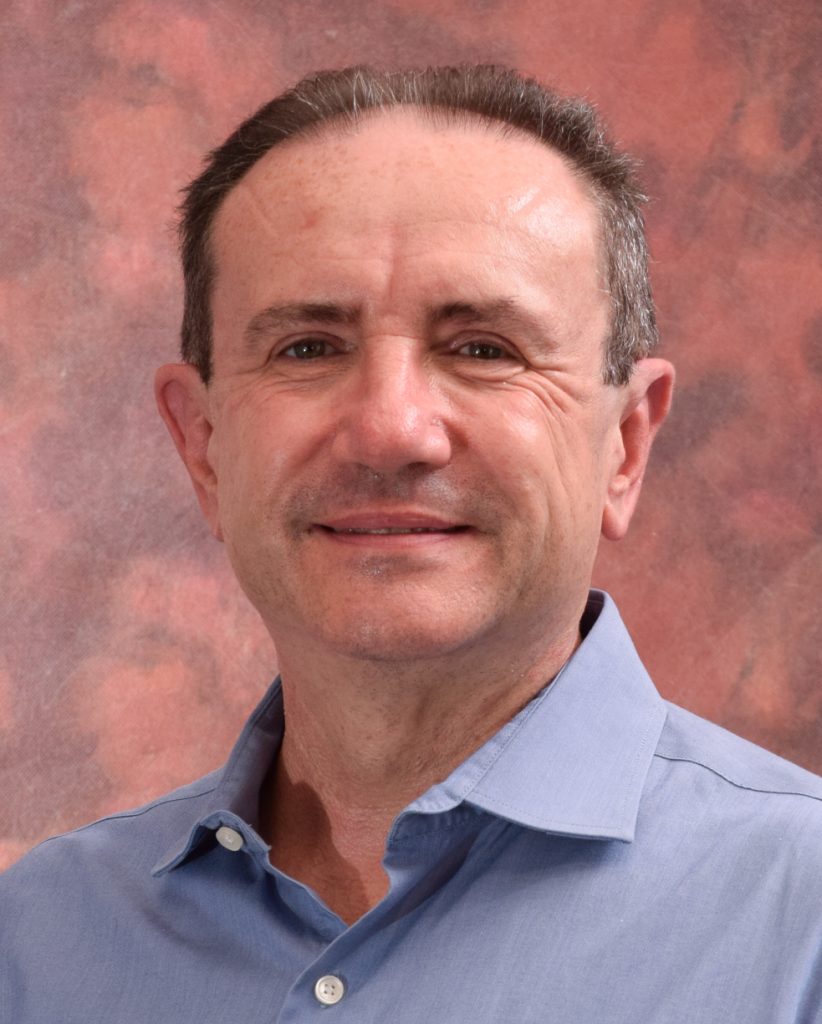
Gabriella Casalino is an Assistant Professor at the University of Bari Aldo Moro, Department of Computer Science, and a key researcher at CILAB - Computational Intelligence Lab. Her work focuses on Computational Intelligence methods for interpretable data analysis, particularly in eHealth, Data Stream Mining, and eXplainable Artificial Intelligence (XAI) within medical and educational domains. She has contributed to innovative approaches in smartphone-based health monitoring, fuzzy logic applications, and remote vital sign detection via photoplethysmography. Education : Ph.D. in Computer Science, with advanced training at institutions like Universitat de Girona and Université de Mons. Research Trends : Recent publications highlight applications of evolving granular computing, neuro-fuzzy systems, and explainable AI in hypertension prediction, bipolar disorder monitoring, and educational data analysis. Key subfields include remote health monitoring, medical data streams, and hybrid AI models. Grants : Research funded by AIRC (Italian Cancer Research Foundation), focusing on computational methods for healthcare challenges. Labs & Collaborations : Active in CILAB, collaborating on projects involving mHealth solutions, cardiovascular risk assessment, and intelligent educational systems.
Fabrizio Falchi is a researcher at the Artificial Intelligence for Media and Humanities (AIMH) Lab of the Institute of Information Science and Technologies (ISTI) within Italy's National Research Council (CNR). He also maintains an associate position at the Biorobotics Institute of Scuola Superiore Sant'Anna. His work focuses on developing advanced multimedia retrieval systems, with the VISIONE platform being his most notable contribution, which has won international competitions including the Video Browser Showdown in 2024 and placed second in 2023. Falchi's educational background includes: Ph.D. in Information Engineering from University of Pisa (Italy) Ph.D. in Informatics from Faculty of Informatics of Masaryk University of Brno (Czech Republic) M.B.A. from Scuola Superiore Sant'Anna in Pisa His research spans deep learning, convolutional neural networks, deep features extraction, similarity search algorithms, distributed indexing systems, multimedia information retrieval, computer vision applications, and peer-to-peer systems. Falchi has made significant contributions to fine-grained visual understanding, cross-modal retrieval (particularly image-text matching), and robustness of deep learning systems against adversarial attacks. His work demonstrates a strong focus on practical applications of these technologies, particularly in video retrieval systems and safety monitoring solutions. Analysis of Falchi's recent publications reveals a strong focus on video and image retrieval systems, with the VISIONE platform being central to his work. His research shows increasing emphasis on fine-grained understanding in computer vision, cross-modal retrieval, and addressing practical challenges like cross-resolution face recognition. Recent work demonstrates innovation in making these systems more efficient through techniques like knowledge distillation (ALADIN) and leveraging virtual worlds for training data. His publications consistently bridge theoretical advances with practical applications in surveillance, safety monitoring, and multimedia search. Falchi's work has received significant recognition: Best paper award at CBMI 2024 for 'Is ClLIP the main roadblock for fine-grained open-world perception?' VISIONE 2024 won the Video Browser Showdown competition in Amsterdam VISIONE obtained second place at Video Browser Showdown 2023 in Bergen Best Paper Award for 'Learning Safety Equipment Detection using Virtual Worlds' at CBMI 2019 Falchi collaborates extensively with researchers at ISTI-CNR, particularly within the AIMH Lab. His work on VISIONE involves collaboration with Giuseppe Amato, Paolo Bolettieri, Fabio Carrara, Claudio Gennaro, Nicola Messina, Lucia Vadicamo, and Claudio Vairo. As co-chair of Ital-IA 2023, the 3rd National Conference on Artificial Intelligence, he plays an active role in the academic community. He is a member of ACM (since 2012), the Computer Vision Foundation, the Italian Association for Computer Vision Pattern Recognition and Machine Learning (CVPL), and the CINI Lab on Artificial Intelligence and Intelligent Systems. Falchi is a key member of the Artificial Intelligence for Media and Humanities (AIMH) Lab at ISTI-CNR, where he leads research on video retrieval systems. The lab has developed the award-winning VISIONE platform, which combines multiple scientific results in content-based video retrieval. His team focuses on developing systems that enable users to search for target videos using textual prompts, drawing objects and colors, or images as query examples. The lab's work demonstrates strong interdisciplinary collaboration, bridging computer science with practical applications in media, safety monitoring, and urban environments.
Andrea Maurino is a Full Professor at the University of Milano-Bicocca and leads the Insid&s LAB. His research focuses on data quality, knowledge graphs, machine learning, and their applications in healthcare, finance, urban planning, and organizational analysis. He explores cutting-edge techniques like Large Language Models (LLMs) for decision support systems and semantic annotation of tabular data. Key research interests include improving data quality frameworks for large RDF datasets, developing enterprise knowledge graphs for organizational insights, and applying AI to social media analysis and hate speech detection. His work bridges theoretical advancements with real-world applications such as smart city mobility prediction and nutritional strategies for healthy aging. Notable contributions include scalable tools like ABSTAT-HD for knowledge graph profiling and the 3d-clost mobility prediction model. Maurino’s interdisciplinary approach integrates data science with fields like psychology (ICD-11 decision support) and environmental science (ESG activity detection in financial texts). His lab collaborates on projects like Food NET, combining nutrition science with social network analysis. While no formal awards are listed here, his prolific publication record reflects sustained innovation in data-driven methodologies.
Marco Picone is an Associate Professor at the Department of Sciences and Methods for Engineering (DISMI) of the University of Modena and Reggio Emilia. He leads the Distributed and Pervasive Intelligence (DIPI) Group and holds a PhD in Information Technology from the University of Parma. His postdoctoral research at the University of Parma (2012-2015) and a visiting scholar position at the University of Cambridge (2011) further enriched his expertise. He is nationally qualified as an Associate Professor by MIUR (2020). Education: PhD in Information Technology, University of Parma (Italy) M.Sc. (cum Laude) in Computer Engineering, University of Parma Visiting Researcher, NetOS Group, University of Cambridge (UK) His research focuses on Distributed Systems , IoT , Edge Computing , and Digital Twins , emphasizing their applications in smart industries and cities. He has supervised postdocs (e.g., Matteo Martinelli) and PhD students (e.g., Enrico Rossini) on topics like Digital Twin Continuum and Edge-Cloud Systems. Teaching spans courses on Intelligent IoT , Distributed IoT Software Architectures , and Edge Computing , with a focus on lab-based learning and industry-relevant projects. He actively contributes to open-source frameworks like the White Label Digital Twin (WLDT) and collaborates on initiatives such as the Web of Digital Twins (WoDT). Research collaborations include projects on smart city data fusion, livestock waste management, and Industry 5.0 human-centric systems. His work bridges theoretical advancements with practical implementations in cyber-physical environments.
Fabrizio Riguzzi is a Full Professor at the Department of Mathematics and Computer Science of the University of Ferrara, Italy. His academic career spans over two decades at the same institution, having served as Associate Professor (2014-2020) and Assistant Professor/Ricercatore (1999-2014). He is an active researcher in the fields of Logic Programming and Statistical Relational Artificial Intelligence with numerous publications and leadership roles in international conferences. His educational background includes: PhD in Electronic and Computer Engineering from the University of Bologna (1999) Laurea in Computer Engineering from the University of Bologna (1995) Riguzzi's research focuses on probabilistic approaches to artificial intelligence, particularly probabilistic logic programming and statistical relational AI. His work bridges symbolic reasoning with probabilistic methods, developing frameworks for uncertain knowledge representation and reasoning. He has made significant contributions to probabilistic answer set programming, neuro-symbolic integration, and applications in areas like network intrusion detection and knowledge graph completion. His research demonstrates how logical formalisms can be enhanced with probabilistic reasoning to tackle real-world problems with uncertainty. An analysis of his recent publications reveals a strong trend toward integrating neural and symbolic approaches in AI, with significant work on probabilistic answer set programming frameworks. His research spans theoretical foundations of probabilistic logic programming, practical implementations, and applications in cybersecurity, knowledge graphs, and decision-making under uncertainty. The interdisciplinary nature of his work connects computer science theory with practical AI applications. His notable awards include: Alain Colmerauer 10-Year Test-of-Time Award at ICLP 2021 Best Paper Award for "BUNDLE: A Reasoner for Probabilistic Ontologies" at RR-2013 Highly Commended Paper Award for "Probabilistic declarative process mining" at KSEM 2010 Riguzzi has supervised several PhD students to completion, including Elena Bellodi, Riccardo Zese, and Giuseppe Cota, who have gone on to win prestigious awards for their theses. He has served in numerous editorial roles, including Associate Editor of the Journal of Artificial Intelligence Research and Editor in Chief of Intelligenza Artificiale. His leadership extends to organizing major conferences like ILP 2018 and serving on program committees for top AI venues including IJCAI, AAAI, and ECAI. He is a member of the ML@unife research group and has developed several online systems including cplint, TRILL, and an Online AUC calculator. His work has fostered collaborations across the AI research community, particularly in the areas of probabilistic logic programming and neuro-symbolic AI.
Dr. Shervin Shirmohammadi is a Professor at the University of Ottawa's Faculty of Engineering, specifically within the School of Electrical Engineering and Computer Science. With an impressive h-index of 41 and over 6,800 citations across 473 publications, his research has made significant contributions to the fields of computer vision, biomedical instrumentation, and health monitoring systems. His academic journey spans over two decades, beginning with work on communication architectures for virtual environments in 2001 and evolving toward practical healthcare applications. Dr. Shirmohammadi's research interests center on Computer Vision , Image Processing , and Embedded Systems with a strong focus on healthcare applications including nutrition monitoring, mental health assessment, and driver safety systems. His most influential work examines computer vision applications for health monitoring, particularly food calorie measurement systems that use smartphone cameras to analyze nutritional content. His research has evolved to include EEG-based systems for ADHD detection and serious games for autism therapy, demonstrating a consistent trajectory toward practical healthcare solutions using advanced instrumentation techniques. Dr. Shirmohammadi maintains active collaborations with researchers including A. Yassine (118 joint publications), D. Ahmed, Ali Asghar Nazari Shirehjini, and B. Hariri. His publications appear primarily in IEEE Transactions on Instrumentation and Measurement, reflecting his strong connection to the instrumentation and measurement community.
Simone Paolo Ponzetto is an Assistant Professor (Juniorprofessor) at the University of Mannheim since 2013, affiliated with the Research Group Data and Web Science. His research focuses on Semantic Web technologies, Natural Language Processing (NLP), and knowledge acquisition, particularly leveraging collaboratively built resources like Wikipedia. Prior to Mannheim, he held postdoctoral roles at Sapienza University of Rome and research positions at the University of Heidelberg and Stuttgart. His work includes pioneering projects like BabelNet, a multilingual semantic network. Ponzetto earned his PhD in Computational Linguistics from the University of Stuttgart, with interdisciplinary contributions to coreference resolution, semantic relatedness, and ontology learning. Research Interests: Unsupervised/weakly-supervised knowledge extraction Multilingual ontology learning and semantic networks Lexical semantics (word sense disambiguation, semantic similarity) Discourse semantics (coreference resolution, coherence modeling) Professional Contributions: Guest editor for a Artificial Intelligence Journal special issue on AI and Wikipedia Area chair for EMNLP-CoNLL 2012 and EACL 2014 Program committee member for ACL, AAAI, and other top conferences Lab/Team: Active in the Research Group Data and Web Science at Mannheim, advancing AI and NLP applications in collaborative knowledge systems.
Ambra Ferrari is a Research Fellow at the Interdepartmental Center for Mind/Brain Sciences (CIMEC) within the University of Trento. Her work focuses on cognitive development, multisensory perception, and neuroimaging techniques. She teaches courses such as Cognitive neuroscience of infant development and contributes to the Cognitive Neuroscience program in the Department of Psychology and Cognitive Sciences. Her research integrates methodologies from neuroscience and psychology to study infant cognition, social development, and sensory integration. She develops computational tools like the WTools MATLAB toolbox for analyzing infant neural data. Ferrari's work bridges developmental psychology, psycholinguistics, and sensory neuroscience, emphasizing how prior expectations guide perception during communication. In teaching, she employs journal clubs and seminars to foster critical analysis of empirical studies and contemporary theories in cognitive development. Her courses aim to equip students with skills to evaluate experimental research and understand neurobiological foundations of cognition. Her laboratory (CIMEC) focuses on adaptive behavior, cross-modal plasticity, and embodied communication. Current projects explore statistical learning mechanisms, attention modulation in multisensory perception, and the role of gesture-prosody interactions in language comprehension.
Anna Monreale is an Associate Professor in the Department of Computer Science at the University of Pisa and a key member of the Knowledge Discovery and Data Mining Laboratory (KDD-Lab), a joint research group with the Information Science and Technology Institute of the National Research Council (ISTI-CNR) in Pisa. Her academic career is rooted in the University of Pisa, where she completed her Bachelor's, Master's, and Ph.D. in Computer Science. Her research focuses on privacy-preserving data analytics, with core interests in big data analytics, social network analysis, spatio-temporal mining, and explainable AI. She is particularly known for her work on privacy-by-design in data mining and evaluating privacy risks in analytical processes. Her research bridges technical innovation with ethical and legal considerations in data science. Her recent publications reveal a strong trend toward explainable AI, privacy in federated learning, and risk assessment in mobility and health data. She actively contributes to developing methods for explaining black-box models, assessing privacy exposure, and balancing privacy, utility, and fairness in AI systems. Privacy by Design Ambassador (2014) ISTI-CNR Young++ Researcher Award (2014) Monreale has advised and co-chaired several international workshops, including PriSMO, PinSoDa, and MoKMaSD, and serves on editorial boards such as Transactions on Data Privacy. She teaches advanced data mining, big data ethics, and database systems across multiple graduate and undergraduate programs. She is involved in major EU projects like SoBigData, XAI, TAILOR, and HumMingBird, reflecting her leadership in data science and AI ethics. She is affiliated with the KDD-Lab, a prominent research group focused on knowledge discovery, social mining, and big data analytics, contributing to both theoretical advances and real-world applications in privacy-aware data science.
Angelo Corallo is an Associate Professor at the Department of Experimental Medicine, University of Salento, specializing in technologies and methodologies for collaborative processes in industrial systems. His research spans Digital Business Ecosystems , Cybersecurity , and Collaborative Product Design , focusing on the interplay between technology and organizational dynamics. He leads interdisciplinary research divisions in Open Networked Business Management , Learning and Innovation , and Collaborative Product Design . Research Interests : Corallo's work integrates Information and Communication Technologies (ICT) with Business Management, particularly in Digital Twins for healthcare and manufacturing Knowledge Modeling and Ontology Engineering Industry 4.0 and Smart Manufacturing Agri-Food Sustainability through digitalization Scientific Contributions : His recent articles explore trends in Cybersecurity for Industrial IoT Metaverse Applications in business models Traceability Systems in food supply chains Collagen-Based Biomaterials from aquaponics
Violetta Lonati is an Assistant Professor at the University of Milan 's Department of Computer Science since 2005. Her research spans Formal Languages and Automata (operator precedence languages, Wang automata, tiling systems) and Computer Science Education . She co-authored over 15 publications in theoretical computer science and education, focusing on 2D language recognition, logic characterization of automata, and pattern statistics in stochastic models. Education : PhD in Computer Science (2005) and Laurea in Mathematics (2001) from University of Milan Research Groups : ALaDDIn Lab for Didactics and Dissemination of Informatics, Bebras International Initiative Her work on Wang automata established their equivalence to tiling systems while introducing deterministic variants. In education, she designed workshops for schools and contributed to Italy's national computing curriculum proposal (2019). She held leadership roles at ACM ITiCSE (WG5 leader 2022), served as Associate Program Chair (2019-2022), and reviewed for top venues like ICER and SIGCSE TS. She received Google CS[4]HS and Informatics Europe awards for her educational contributions. Key Publications (2017-2001): Input-driven locally parsable languages (TCS 2017) Operator precedence logic characterization (SICOMP 2015) Snake-deterministic tiling systems (MFCS 2009) Graph fibrations and PageRank (RAIRO 2006) Pattern statistics in rational models (STACS 2005) Scientific awards include Google CS[4]HS (2011, 2017, 2019) and the Informatics Europe Best Practices in Education (2016). As part of ALaDDIn, she developed teacher training programs and graduate courses on computing education. Her teaching experience covers Algorithms & Data Structures (2013-2023), Computer Science Teaching (2014-2023), and courses for Biotechnology and Geological Sciences programs (2005-2007).
Daniele Fusi is a Lecturer at the Department of Humanities, Ca' Foscari University of Venice, with a focus on Digital Humanities and Computational Philology. He teaches courses on XML databases and digital/public humanities, bridging classical studies with modern technology. University: Ca' Foscari University of Venice Department: Department of Humanities His research spans digital edition frameworks, metrical analysis, and XML markup for classical texts. Recent works explore AI applications in textual dynamics and forensic linguistic tools for legal corpora, demonstrating interdisciplinary approaches between humanities and computer science. Notable projects include: EpiSearch for ancient inscriptions Chiron framework for metrical analysis AttiChiari digital corpus He actively publishes in journals like Journal of Data Mining and Digital Humanities and Rivista di Cultura Classica e Medioevale , with over 20 years of contributions to digital philology, epigraphic databases, and computational linguistics.
Stefano Ferilli is a Professor of Computer Science at the University of Bari, Italy, where he leads the ARA (Apprendimento e Ragionamento Automatico) research lab within the Department of Computer Science. His academic roles include former Director of the Interdepartmental Center for Logic and Applications (CILA) and current head of the Artificial Intelligence & Intelligent Systems node in the CINI national laboratory. He holds a PhD in Computer Science and has been a key figure in advancing machine learning, logic programming, and digital library technologies. Education: Laurea (MSc equivalent) in Information Sciences (1996), Specialist Laurea in Computer Science (2003), and PhD in Computer Science (2001). His research focuses on foundational aspects of machine learning, multi-strategy reasoning, process mining, and applications in cultural heritage, bioinformatics, and smart environments. Research Contributions: Developed frameworks like INTHELEX (incremental theory learner), WoMan (process mining), and DoMInUS (document management). Over 370 publications, including a Springer monograph and multiple award-winning papers. Active in organizing conferences like ECML-PKDD, ICDM, and IRCDL, and serves on editorial boards of journals like Information Sciences . Projects: Led or participated in over 30 national and European projects, including EU-funded initiatives on digital libraries (COLLATE, DELOS) and AI applications. Collaborates with industries like Samsung and institutions like the Italian Police for traffic analysis and cultural heritage preservation. Awards: Recognized for outstanding peer review (MDPI, ECMLPKDD), best paper awards, and contributions to AI education and cultural heritage. Member of prestigious associations like AI*IA (Italian AI Society) and AICA (Italian Computing Society).
Ivano Bilenchi is a postdoctoral researcher at the Polytechnic University of Bari's Information Systems Laboratory (SisInf Lab). He holds a Master's in Computer Science Engineering (2020) and a Ph.D. in Electrical and Information Engineering (2024) from the same institution. His research focuses on AI, Semantic Web technologies, edge computing, and IoT applications, with notable contributions to embedded OWL reasoners and cloud-edge intelligence frameworks. He teaches courses such as Formal Languages and Compilers, Secure Programming, and Information Systems Security. His work bridges academic research with practical applications, including iCleaner (iOS system cleaner), Tiny-ME (Semantic Web reasoner), and AI-LMD (fleet optimization tool). He actively participates in conferences like ICWE and I-CiTies, and has contributed to initiatives like the sustainable development project HowtUyoga. His awards include a First Prize at the Sustainable Development Festival (2018). Research highlights include developing Cowl (lightweight OWL library for edge devices) and proposing innovative architectures for cloud-edge AI in sensor networks. Collaborations span semantic blockchain marketplaces (RideMATCHain) and UAV autonomy using knowledge representation.
Paolo Buono is Associate Professor at the Department of Computer Science, University of Bari Aldo Moro, Italy. He holds a PhD in Computer Science with specialization in Visual Data Analysis. His research focuses on Information Visualization, Visual Analytics, Human-Computer Interaction, and Mobile Applications. Co-founder and CEO of LARE (2010), a university spinoff providing real-time surgical support through audio-video telestration Member (since 2002) and computer science coordinator at METEA Research Center for environmental protection Visiting scientist at AVIZ (France), University of Maryland (USA), and Fraunhofer IPSI (Germany) His work spans multiple application domains including: Cultural Heritage through interactive exploration systems Healthcare with smart therapeutic devices Environmental Monitoring via CET system IoT-based Smart Interactive Experiences He has contributed to: Dynamic hypergraph visualization techniques End-User Development frameworks (EUDroid) Usability evaluation methodologies Mobile health applications As project leader, he has coordinated: EU-funded VisMaster Coordination Action (2008-2010) Italian Ministry-funded LOGIN project (2014-2015) Apulia Region environmental projects His professional engagements include: Co-chair roles at INTERACT, AVI, IS-EUD conferences Program committee participation in VIS series and HCI conferences Member of ACM, IEEE, and SIGCHI Italy