Johannes Stern is an Adjunct Professor at the Department of Philosophy, University of Bristol. He completed his Master's in Logic and Philosophy of Science at the University of Munich and earned his PhD in 2012 from the University of Geneva under Fabrice Correia and Karl-Georg Niebergall. His work spans philosophical logic, formal theories of truth/modality, paradox, and the philosophy of language and mathematics. Key research areas: Predicate approaches to modality, semantic paradoxes, and the intersection of truth theory with mechanized reasoning. Notable collaborations include Volker Halbach (Oxford) and contributions to debates on Gödel's and Penrose's arguments against computationalism. His publications bridge proof-theoretic and semantic methods, with a focus on reconciling classical reasoning with self-referential truth theories. Recent work critiques and extends Kripke's reduction of modal predicates to truth-modified operators. Selected publications analyze the interplay between axiomatic truth systems and their semantic counterparts, including formalizations of Montague's theorem and reducibility criteria for multimodal paradoxes. His 2018 paper on supervaluation-style truth theories remains among his most cited works.
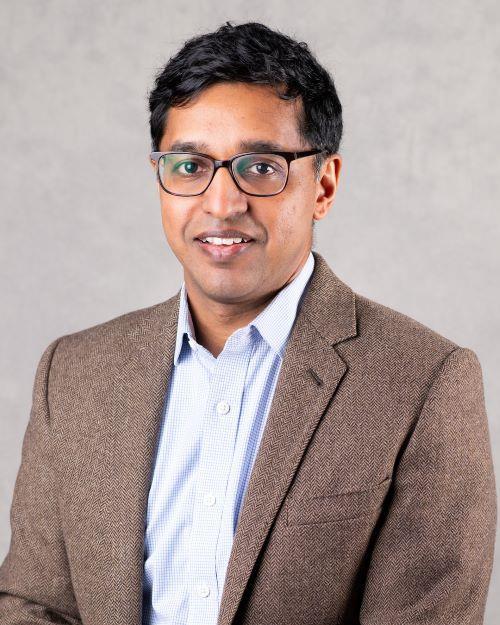
Dilip Ninan is an Associate Professor in the Department of Philosophy at Tufts University, affiliated with the School of Arts and Sciences. He holds a PhD from MIT, a BPhil and MSc from the University of Oxford, and a BA from the University of Western Ontario. Prior to Tufts, he was a postdoctoral research fellow at the University of St Andrews (2015–2018). His research focuses on formal semantics, philosophy of language, metaphysics, and epistemology, with notable work on de se attitudes, personal identity, and epistemic modality. He co-directs the Linguistics Minor at Tufts and teaches courses in semantics, philosophy of language, and modal logic. Notable awards include the Philosopher’s Annual recognition for his 2018 paper 'Quantification and Epistemic Modality' and a 2020–2021 research fellowship at the Paris Institute for Advanced Study. His publications span journals like Philosophical Review , Mind , and Philosophers' Imprint , addressing topics such as assertion norms, branching time semantics, and taste predicates. He has also served as Editor-in-Chief of Linguistics and Philosophy (2019–2024).
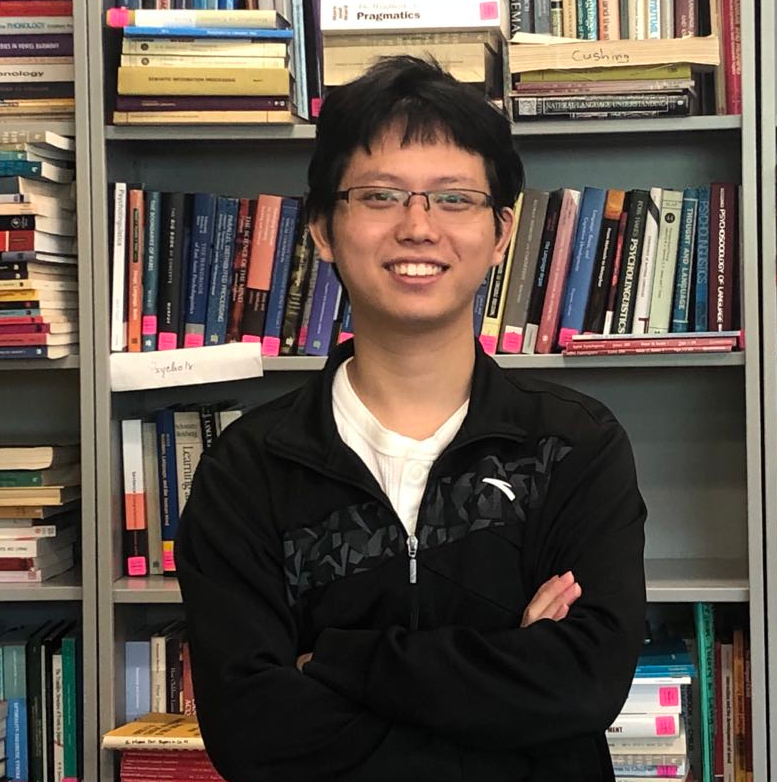
Hangfeng He is an Assistant Professor of Computer Science and Data Science at the University of Rochester , affiliated with the Hajim School of Engineering & Applied Sciences. He holds a PhD from the University of Pennsylvania and focuses on machine learning and natural language processing. His research emphasizes incidental supervision for natural language understanding, interpretability of deep neural networks, and reasoning in natural language. Education : PhD in Computer Science from University of Pennsylvania Research Interests : Machine Learning (especially deep learning theory, generalization, and optimization) Natural Language Processing (incidental supervision, language understanding, and multimodal reasoning) Reasoning (inductive biases, temporal data analysis, and model interpretability) Research Trends : His work spans foundational AI research and applied NLP, with recent focus on large language models, multimodal systems, and constraint-aware methods. He explores how models generalize from limited supervision and mitigate biases in real-world data. Key themes include improving model robustness, understanding inductive mechanisms, and applying AI to financial and social text analysis. Labs/Teams : While specific lab affiliations aren’t listed, his work aligns with the Department of Computer Science’s research clusters in AI, machine learning, and data science.
Dr. Ernie Lepore is a Board of Governors Professor of Philosophy and Cognitive Science at Rutgers University. He specializes in Philosophy of Language , Philosophy of Mind , and Philosophical Logic , with significant contributions to semantic theory, cognitive science, and metaphysics. Education : Not explicitly mentioned in the provided text. His research focuses on the intersection of linguistic meaning and mental representation, emphasizing the role of convention, context, and truth conditions in semantic theory. His work often bridges formal philosophy with cognitive science, exploring how language shapes thought and reality. Key trends in his publications include semantic externalism , pragmatic theories , and truth-conditional semantics , reflecting his collaborations with scholars like Donald Davidson, Herman Cappelen, and Kirk Ludwig. Scientific Awards : Board of Governors Professor As general editor of the Blackwell series 'Philosophers and Their Critics' , he has influenced scholarly discourse. His book What Every College Student Should Know provides practical guidance on academic advising and teacher evaluation.
Prof. Lonneke van der Plas is an Associate Professor in Natural Language Processing (NLP) at the University of Lugano (USI) since October 2024. She leads the Computation, Cognition & Language group at Idiap Research Institute (since 2021) and holds adjunct roles in USI's Faculty of Informatics. Previously, she was an Associate Professor at the University of Malta (2014–2020) and Junior Professor at the University of Stuttgart (SFB 732). She earned her PhD in Humanities Computing from the University of Groningen and an M.Phil in Computer Speech and Language Processing from the University of Cambridge. Her research focuses on cross-lingual NLP, computational creativity, and low-resource languages. Key projects include the NCCR Evolving Language (Swiss National Science Foundation, 2024–2028), C-LING (computational models of creativity), and SEM24 (multilingual skill extraction for HR). She has supervised multiple PhD students and postdocs, including notable advisees such as Molly Petersen and Mete Ismayilzada. Her work spans theoretical linguistics and applied NLP, with collaborations in cognitive science, finance, and healthcare. Awards include the ELSI Best Paper Award (2020) for work on societal impacts of AI ethics. Current initiatives include open PhD positions in NLP for cognitive modeling and mental health applications. Education: PhD (University of Groningen), M.Phil (University of Cambridge) Key Projects: NCCR Evolving Language, C-LING, SEM24, LT-BRIDGE Grants: SNSF, Innosuisse, Hasler Foundation Lab/Team: Computation, Cognition & Language Group at Idiap
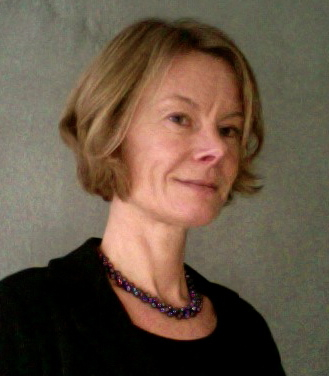
Kathrin Glüer-Pagin is a Professor of Theoretical Philosophy at the Department of Philosophy, Stockholm University, Sweden. Her research focuses on the intersections of philosophy of language, philosophy of mind, and philosophy of perception, with a central emphasis on Donald Davidson's theories. She has held positions at Uppsala University, Humboldt University Berlin, and Rostock University, and has conducted research projects funded by the Swedish Research Council, Spanish Ministry of Science, and EU FP7 Marie Curie initiatives. Education: MA (1991) and Dr. phil. (1997) from Hamburg and Humboldt Universities, respectively. Research Grants: Key projects include 'The Semantics of Experience' (Swedish Research Council, 2006-2008), 'Switcher Semantics' (2010-2012), and 'PERSP' (Spanish Ministry, 2009-2014). Editorial Roles: Editor of Theoria , Section Editor of The Philosophy Compass , and member of editorial boards for Linguistics and Philosophy and Disputatio . Her work on phenomenal intentionalism argues that perceptual experiences are beliefs with 'looks-contents' that explain rational justification without falsity constraints. This framework addresses challenges in perceptual constancy, non-veridical experiences, and the defeasibility of experiential reasons. She has also developed relational modality to reconcile Kripkean intuitions with non-rigid designation in modal semantics. Scientific Awards: Received the Studienstiftung des deutschen Volkes scholarship (1986-1991). Collaborated with the Logos Research Group (Barcelona) and the Institut d'Études Avancées (Paris).
Noortje Venhuizen is an Assistant Professor in the Department of Cognitive Science and Artificial Intelligence at the Tilburg School of Humanities and Digital Sciences, Tilburg University. She serves as Academic Director for the BSc Cognitive Science and Artificial Intelligence program since 2024, and has held academic positions at Saarland University (2015-2022) including roles as Scientific Staff member and Principal Investigator in SFB 1102 projects. PhD in Computational Semantics (University of Groningen, 2015) MSc in Logic (ILLC, University of Amsterdam, 2011) BSc in Artificial Intelligence (Utrecht University, 2009) Her research focuses on expectation-based language comprehension, neurocomputational modeling of semantic processing, distributional formal semantics, and pragmatic reasoning in discourse. Key contributions include PDRT-SANDBOX (Haskell NLP library) and DFS Tools (Prolog implementation of distributional formal semantics). Recent publications (2023-2025) explore multimodal word meaning, informativity in reference production, and neurocognitive models of surprisal processing. Her work combines formal semantics with cognitive neuroscience and computational modeling. LOT Grotevragenprijs essay contest - Second Prize She has presented research at major conferences including CogSci, AMLaP, and Sinn und Bedeutung. Current teaching includes courses on artificial intelligence, statistics, and semantic theory.
Corina Cirstea is a Professor in the School of Electronics and Computer Science at the University of Southampton, where she has been a faculty member since 2003. She holds a DPhil in Computation from the University of Oxford and previously served as a Junior Research Fellow at St. John's College, Oxford. She is the Programme Leader for the BEng/MEng in Software Engineering and teaches core modules including Algorithmics, Theory of Computing, and Automated Software Verification. Education: DPhil in Computation, University of Oxford (2000) Junior Research Fellowship, St. John's College, Oxford (1999–2003) Her research focuses on logic and models of computation, particularly coalgebras and their applications in automated verification and synthesis. She explores coalgebraic temporal logics, trace semantics, and formal modeling of real-time and resource-aware systems, primarily using Event-B. Her work bridges theoretical foundations with practical system verification, especially in safety-critical domains. The analysis of her recent publications reveals a strong trend in formal methods, with consistent contributions to real-time system modeling, refinement techniques, and coalgebraic semantics. Her work integrates theoretical depth with engineering applications, particularly in automated verification and system design. Scientific Service and Recognition: Member of the editorial board, Compositionality journal Member of IFIP Working Group 1.3 Member of CALCO Steering Committee Member of CMCS Steering Committee Program Committee member for SEFM 2021, MFPS 2021, HIGHLIGHTS 2021, ICALP 2021, MFCS 2021, ACT 2020, ICE 2020, CMCS 2020, FOSSACS 2020 She advises PhD students including Chenyang Zhu and Eman Alkhammash, and has been involved in multiple research grants focused on formal verification, real-time systems, and software engineering. She collaborates extensively with researchers such as Michael Butler and Ichiro Hasuo. Her work contributes to both foundational theory and practical tooling in formal methods. She is associated with research groups and initiatives in formal methods and theoretical computer science at the University of Southampton, particularly within the broader context of software engineering and system verification.
Ichiro Hasuo is a Professor at the National Institute of Informatics (NII) in Tokyo, Japan, where he serves as Director of the Research Center for Mathematical Trust in Software and Systems. He holds a joint appointment at The Graduate University for Advanced Studies (SOKENDAI). Since 2016, he has been the Research Director of the JST ERATO Metamathematics for Systems Design Project, and founded Imiron Co., Ltd. in 2024. Education: PhD in Computer Science (cum laude) from Radboud University Nijmegen (2008) MSc in Mathematical and Computing Sciences from Tokyo Institute of Technology (2004) BSc in Mathematics from University of Tokyo (2002) His research focuses on foundational aspects of software science, particularly formal verification techniques using mathematical structures from category theory and coalgebra. He develops methods for ensuring reliability in cyber-physical systems and systems incorporating machine learning components. Current work emphasizes logical frameworks for autonomous vehicle safety and mathematical trust in complex systems. Hasuo's publications demonstrate consistent focus on theoretical foundations with practical applications. His recent work spans coalgebraic verification methods, temporal logic for hybrid systems, quantum programming semantics, and applications to autonomous driving systems. Key themes include compositional reasoning, probabilistic modeling, and the integration of discrete and continuous system verification. Awards and Honors: Best Paper Award at ICTAC 2024 Minister of Education, Culture, Sports, Science and Technology Commendation (2024) Distinguished Paper Award at CAV 2023 Outstanding Reviewer Award at EMSOFT 2022 Best Paper Award at ICECCS 2018 Best Paper Award at CONCUR 2014 Hiroshi Fujiwara Encouragement Prize (2012) PhD cum laude (2008) He leads multiple major research grants including: JST ASPIRE (2024-2029) for international collaboration on software trust JST START (2022-2025) for autonomous driving verification JST ERATO Metamathematics for Systems Design (2016-2025) Several JSPS KAKENHI grants As head of the MMM laboratory (Hasuo-Lab) at NII, he supervises PhD students and postdoctoral researchers in formal methods and mathematical systems design.
Toby Murray is a Professor in the School of Computing and Information Systems at the University of Melbourne, where he serves as Director of the Defence Science Institute and Co-Lead of the Computer Science Research Group. His work bridges formal methods, cybersecurity, and practical system security, with significant contributions to verified security and vulnerability detection. Murray's research focuses on building highly secure computing systems cost-effectively, with expertise in formal verification, information flow security, and vulnerability detection. His current research projects include Verisimilar (Verified, Secure Machine Learning), EDEFuzz (Detecting excessive data exposure in web applications), COVERN (Proving information flow security of concurrent programs), and Time Protection (Proving timing channel freedom for seL4). His work combines theoretical rigor with practical implementation, resulting in multiple open-source tools including SecC, Legion, and Underflow. Murray's recent publications demonstrate a consistent focus on verified security properties across diverse domains, from neural networks to concurrent systems. His work often bridges the gap between formal methods and practical security concerns, with increasing attention to machine learning security and policy implications of technical security measures. His publications span top venues in security, formal methods, and software engineering. Distinguished Paper Award at ICSE 2024 for EDEFuzz work on detecting excessive data exposure in web applications Extensive media commentary on cybersecurity issues including CrowdStrike outage analysis and social media regulation Regular contributions to The Conversation and Pursuit on cybersecurity policy matters Murray has advised numerous PhD students to completion, including Lianglu Pan (EDEFuzz), Zhiyuan Zhang, Mo Zhang, and Renlord Yang. He currently supervises multiple PhD students working on security verification, machine learning security, and web application security. His service includes being Program Chair for CSF'25, Associate Editor for IEEE Security & Privacy and ACM TOPS, and membership in IFIP's WG 1.7 and WG 2.3. His research group has developed multiple significant software tools including SecC (Verified Security for Concurrent C Programs), Legion (Principled Automatic Test Case Generation), and Underflow (Compositional Vulnerability Detection for C Programs), all available under open source licenses. Murray's work often involves discovering and reporting bugs in security analysis tools during his research, demonstrating the practical impact of his verification approaches.
Vera Hohaus is a Senior Lecturer in Linguistics at the University of Manchester, affiliated with the School of Arts, Languages, and Culture and the Department of Linguistics and English Language. She obtained her PhD from Eberhard Karls Universität Tübingen and has trained at the University of Massachusetts, Amherst and the University of British Columbia. Her research investigates how meaning emerges from the interaction of syntactic structure, lexical information, composition principles, and context. She specializes in crosslinguistic variation and its implications for language acquisition and processing. Current projects examine scalarity representation, comparison constructions, tense-modality architecture, and the grammar of alternatives. Recent publications focus on temporal ambiguity processing, crosslinguistic pragmatics, comparative semantics, and modality across languages. Her work demonstrates methodological diversity combining theoretical frameworks with experimental approaches. She leads the Psycholinguistics Laboratory and Fieldwork Hub, mentoring students in research methods and linguistic analysis. Her collaborations span multiple international institutions including the University of Oxford and University of British Columbia.
Claudia Schon is a Researcher at the Institute of Computer Science, Department 4, University of Koblenz-Landau. Her work focuses on automated reasoning, cognitive systems, and knowledge representation. She has contributed to projects like the Corg Project, exploring cognitive reasoning mechanisms and integrating commonsense knowledge into automated theorem provers. Her research bridges logic-based AI with human reasoning models, addressing challenges in uncertainty management, associative reasoning, and deontic logic. Key areas of research include commonsense reasoning, deductive systems, and the application of large language models to knowledge selection. She has published extensively on topics such as negation in cognitive reasoning, concept contraction in description logics, and intentional forgetting in AI systems. Her work often emphasizes interdisciplinary approaches, combining formal logic with cognitive science and philosophy. Her publications from 2019 to 2024 reflect a steady focus on advancing automated reasoning methodologies, integrating human-like cognitive processes into AI systems. Recent work explores the next generation of deduction systems and the use of word embeddings for axiom selection. She has also contributed to workshops on linguistic and cognitive approaches to dialog agents, highlighting her interest in human-AI collaboration. Despite no listed scientific awards, her contributions are recognized through active publication in top-tier conferences and journals. She is affiliated with the E-KRHyper project, developing reasoning tools for description logics. Her advising roles and grants are not explicitly documented in the provided text.
Dr. Denis Paperno is an Assistant Professor of Computational Linguistics at Utrecht University in the Department of Languages, Literature and Communication within the Humanities faculty. He maintains a dual affiliation, working at Utrecht University while on détachement from a researcher position at CNRS (the National Center of Scientific Research). His academic background includes a PhD in Linguistics from the University of California Los Angeles and prior work at the University of Trento in Marco Baroni's research group. Dr. Paperno's research expertise spans several critical domains in computational linguistics: Semantics and meaning representation Artificial Intelligence applications to language Distributional and neural semantic models Word embeddings and semantic compositionality Cross-modal and cross-lingual language understanding Language typology and lexical semantics His research program investigates fundamental questions about computational meaning representation, exploring how word meanings interact to form complex expressions and how to integrate diverse information sources like images, knowledge bases, and linguistic resources into unified frameworks. He has developed significant benchmarks for evaluating language models and made important contributions to semantic typology and quantification theory. Dr. Paperno's publication record demonstrates consistent contributions to top-tier computational linguistics venues, with recent work spanning theoretical linguistics to practical deep learning applications. His articles reveal expertise bridging formal semantic theory and cutting-edge neural network approaches to linguistic problems. He is actively involved in teaching courses including 'Formal and Natural Languages,' 'Machine Learning I,' 'Models for Language Processing,' and 'Semantics.' Current research projects include work with Pablo Mosteiro funded by an Applied Data Science research grant from Utrecht University, and he is scheduled to deliver a keynote at the 16th International Conference on Computational Semantics (IWCS) in Düsseldorf in September 2025.
Eneko Agirre is a Full Professor at the Faculty of Computer Science of the University of the Basque Country UPV/EHU, where he serves as the director of the HiTZ Centre on Language Technology. He is an active member of the Ixa Research Group and has established himself as a leading figure in Natural Language Processing, particularly in multilingual and low-resource language settings. His work bridges theoretical advances with practical applications for language technology. Agirre received his PhD from the University of the Basque Country in 1999 with a thesis on conceptual relationships and ontologies, supervised by Dr. Kepa Sarasola Gabiola and Dr. Arantza Díaz de Ilarraza Sánchez. His academic journey has been marked by significant contributions to computational linguistics and language technology. His research primarily focuses on Natural Language Processing challenges, with special emphasis on Word Sense Disambiguation, cross-lingual transfer learning, dialogue systems, and Large Language Models for low-resource languages. He has pioneered work on Basque language technology and has consistently addressed the challenges of multilingual AI systems, particularly examining how language models perform across different linguistic contexts and cultural settings. Analysis of his recent publications reveals a strong trajectory toward advancing Large Language Models for low-resource languages, with particular attention to Basque. His work spans vision-language models, information extraction techniques, and rigorous evaluation methodologies for NLP systems. A recurring theme is the exploration of how language models handle low-resource languages compared to high-resource ones, with groundbreaking findings about cultural knowledge transfer between languages. Fellow of the ACL (2021), one of only 74 research leaders worldwide National Research Prize on Informatics (2021) Best resource paper award at ACL 2024 Honourable mention paper award (top 1%) at EMNLP (2020) Outstanding Paper award (top 2%) at COLING (2020) Recipient of three Google Faculty Research Awards (2017, 2018, 2019) Agirre has supervised over 25 PhD students, many of whom have received prestigious awards including the EurAI Artificial Intelligence PhD Dissertation Award. His research has been supported by numerous European projects including LIHLITH (2018-2020) on lifelong learning for dialogue systems, and he has served as principal investigator for multiple CHIST-ERA and FP7 projects. His work with Google includes collaborative projects on entity dictionaries and conversational question answering systems. As director of the HiTZ Centre on Language Technology and member of the Ixa Research Group, Agirre leads a vibrant team focused on advancing language technology for Basque and other under-resourced languages. The center has developed significant resources including Latxa, an open language model for Basque, and has established itself as a hub for multilingual NLP research. His group actively collaborates with international institutions including Stanford, NYU, and various European universities, fostering a global network for language technology research.
Anne Bezuidenhout is a Professor in the Department of Philosophy & Linguistics at the University of South Carolina's McCausland College of Arts and Sciences. Holding a PhD from the University of Michigan (1990), she has been affiliated with the Linguistics Program since 1992 and the Institute of Mind and Brain since 2013. Education: PhD in Philosophy, University of Michigan (1990) Affiliations: Core Member, Linguistics Program; Affiliated Member, Institute of Mind and Brain Her research focuses on the semantics-pragmatics interface , particularly: Presuppositions and conversational implicatures Discourse processing in anaphoric pronoun resolution Foregrounding/backgrounding of non-restrictive relative clauses Conversational tailoring and perspective-taking Noun-noun compounds and enriched composition Recent publications examine presupposition theory, discourse prominence, and reference mechanisms. She teaches courses in formal logic, semantics-pragmatics, and philosophy of mind. Service roles include: Co-Editor-In-Chief, Journal of Pragmatics Executive Secretary, American Pragmatics Association (AMPRA) Editorial Board Member, Pragmatics and Cognition Advisory Editorial Board, Palgrave Studies in Pragmatics, Language and Cognition