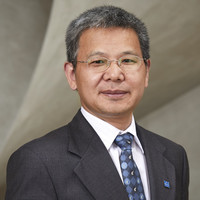
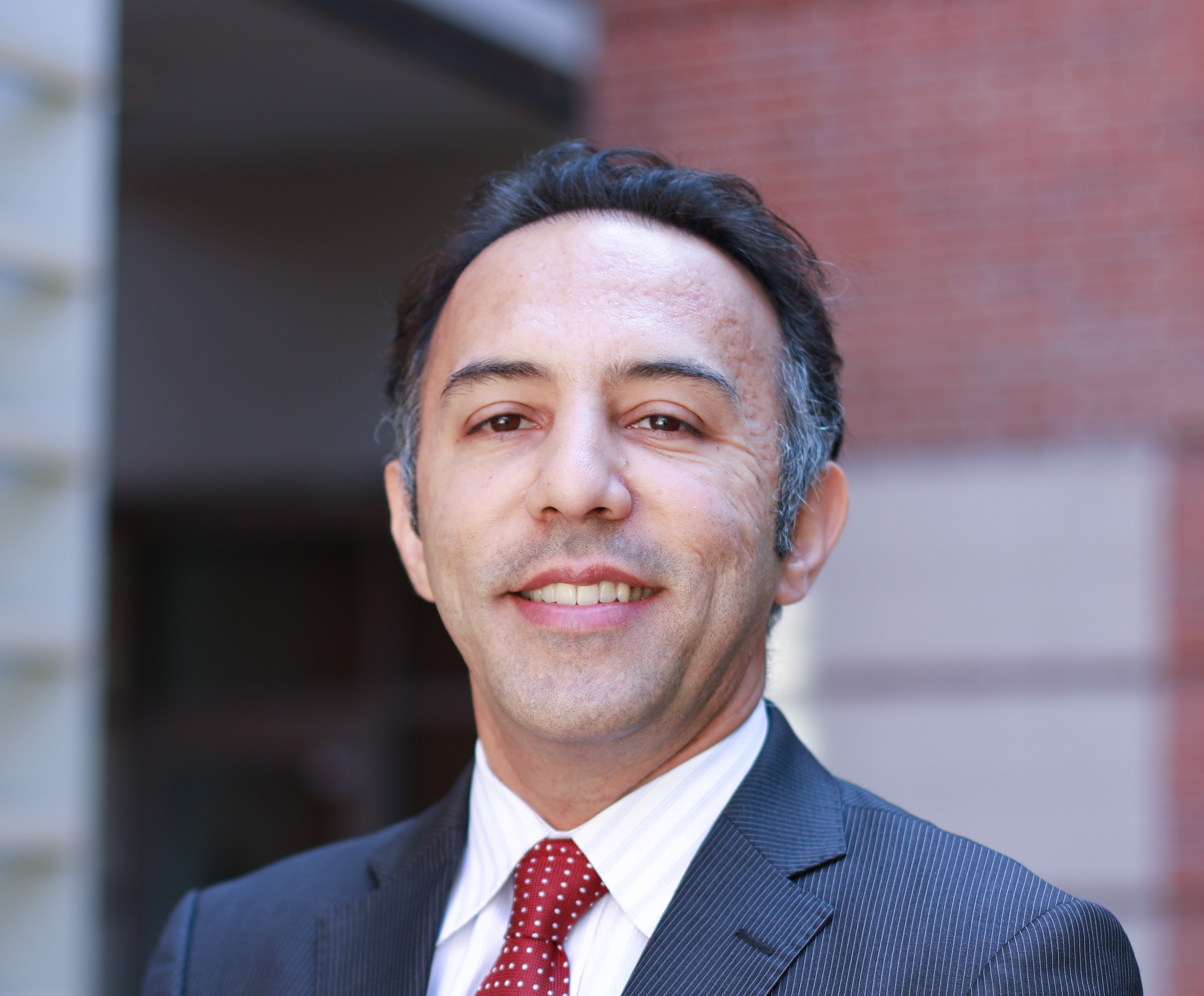
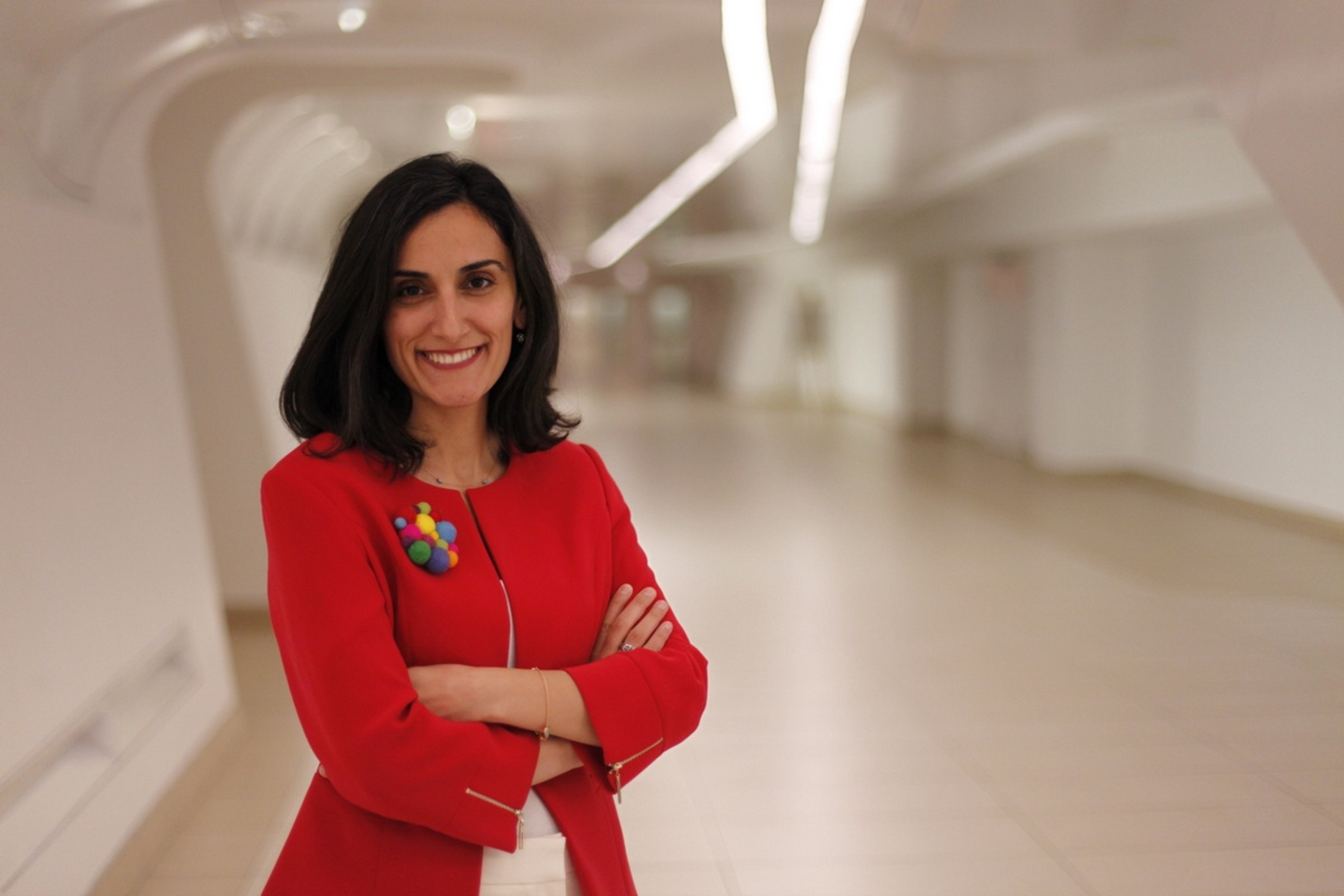
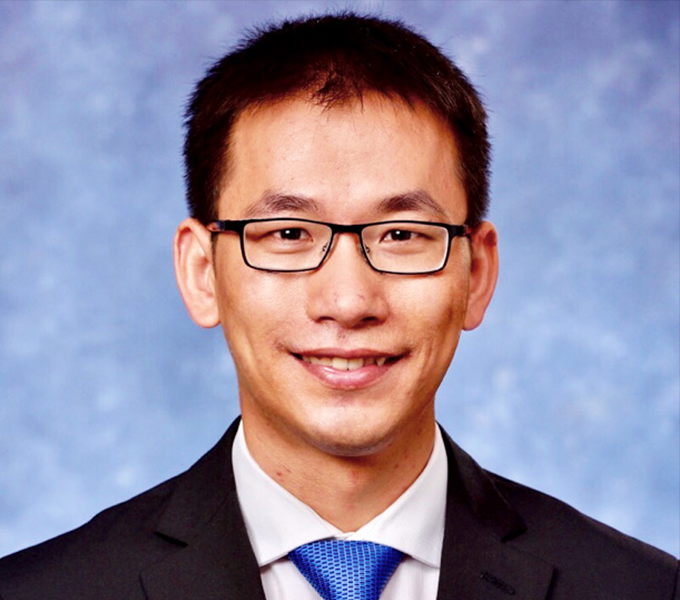
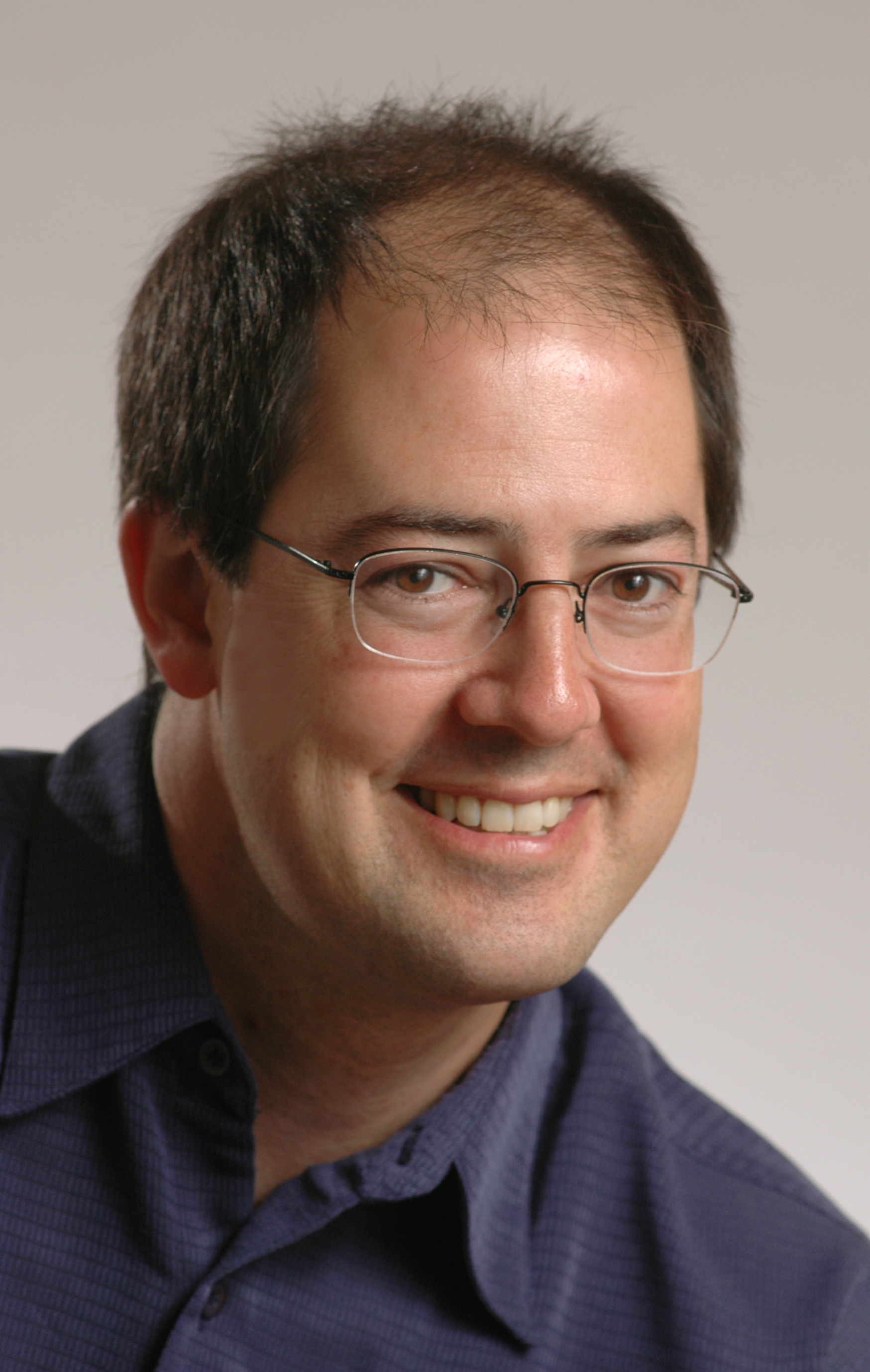
Phuong H. Nguyen is an Associate Professor at the Department of Electrical Engineering at Eindhoven University of Technology (TU/e). He leads the digital Power & Energy Systems (digi-PES) lab, focusing on smart energy systems, distributed control, and IoT integration for future energy grids. His research addresses energy transition challenges, including microgrid optimization, flexibility markets, and data-driven grid management. Nguyen holds a PhD from TU/e (2010) and has held visiting researcher positions at Clemson University. His work contributes to UN SDG goals related to affordable and clean energy. Education: Bachelor's in Electrical Engineering, Hanoi University of Science and Technology (2002) Master's in Electrical Engineering, Asian Institute of Technology (2004) PhD in Electrical Engineering, TU/e (2010) Key Research Areas: Smart Grids and Cyber-Physical Systems Distributed Energy Resource Management Local Energy Markets and Flexibility Provision IoT and Big Data in Energy Systems Awards & Recognition: Best Paper Award SEST 2020 Projects & Grants: REACT-D: Reactive Power Management (Project Manager) Al-driven Applications to Smarten Power System Operation (Project Lead) UNIversity Campus as a Self-Regulated Network (Co-Manager) Labs & Teams: The digi-PES lab develops cyber-physical tools for energy transition, including microgrid simulations, flexibility markets, and grid resilience strategies.
Zhonghai Lu is a Professor of Electronic Systems Design (specializing in Dependable and Autonomous Systems) at KTH Royal Institute of Technology, part of the Department of Electrical Engineering in the School of Electrical Engineering and Computer Science (EECS). He serves as Program Director for KTH's Embedded Systems master's program and Director of Studies at the Division of Electronics and Embedded Systems. His research focuses on Network-on-Chip (NoC), computer architecture, embedded systems, and Prognostics and Health Management (PHM) of power electronics. He leads a research group exploring in-network processing and embedded intelligence, transforming passive networks into active computational frameworks. Lu holds a BSc from Beijing Normal University (1989), MSc and PhD from KTH (2002, 2007), and an MBA in Innovation and Growth from the University of Turku (2012). He has authored over 240 scientific papers, including journal articles and peer-reviewed conferences, with notable recognitions such as Best Paper Awards at NOCS’2015 and EU HiPEAC, and a Featured Paper in IEEE Transactions on Computers (2020). He serves as Associate Editor for ACM Transactions on Architecture and Code Optimization (TACO) and has chaired major conferences like HiPEAC’2017 and NOCS’2018. His research group’s recent work includes integrating AI into hardware acceleration, fault-tolerant neural networks, and RUL estimation for power electronics using recurrent neural networks. Lu has secured grants from the Swedish Research Council and Intel Corporation and developed courses like IL2230 (Hardware Architectures for Deep Learning) and IL2233 (Embedded Intelligence), pioneering embedded AI education at KTH. Education: BSc (Beijing Normal University), MSc/PhD (KTH), MBA (University of Turku) Awards: Best Paper Awards (NOCS, EU HiPEAC), Swedish Research Council Grants, Intel Research Gifts Labs/Teams: Research Group on In-Network Processing and Embedded Intelligence
Özgür Atalay (ORCID: 0000-0003-1050-0685) is an Associate Professor at the Department of Textile Engineering , Istanbul Technical University . His research focuses on Textile-based Engineering with emphasis on Capacitive , Actuator , and Soft Robotics Engineering . Current projects include TexSoRVA (Textile-Based Soft Robotics for VR Applications), SMARTWASTE (Agricultural/Natural Waste Textiles), and TEXWEAROTS (Self-powered Wearable Soft Robotics). Collaborations span EU-funded initiatives, Turkish Scientific and Technological Research Council (TUBITAK), and industrial partnerships. His work integrates Internet of Things (IoT) with Electronic Textiles (E-textiles) , focusing on applications in Telerehabilitation , Wearable Robotics , and Smart Textiles . Key technologies include Capacitive Sensors , Conductive Yarns , and Fog Computing Frameworks . Recent publications highlight advancements in auxetic sensor design , cloud-controlled textile gloves , and self-powered wearable systems . His research output (58 publications) demonstrates a focus on practical implementations in Therapeutic Applications and Human-Machine Interaction . Özgür leads 6 active research projects, including: TexSoRVA : 04/2025-09/2026, EU-funded SMARTWASTE : 01/2023-12/2026, TTO-funded TEXWEAROTS : 11/2022-10/2027, EU-funded With over 1623 citations (h-index 15), his work contributes to Textile Electronics , Soft Robotics , and Wearable Technology fields.
Aydin Babakhani is a Professor in the Department of Electrical and Computer Engineering at the University of California, Los Angeles (UCLA), affiliated with the College of Life Sciences. He directs the Integrated Sensors Laboratory (ISL), which focuses on the design and implementation of integrated sensors and systems. His research spans high-speed wireless communication, terahertz technology, medical implants, radar systems, and industrial monitoring solutions. Research Interests: Prof. Babakhani's work integrates silicon-based technologies with applications across multiple domains. Key areas include: Silicon mm-Wave/THz transceivers and on-chip antennas for communication and sensing Wirelessly powered medical implants for biopotential monitoring and neural stimulation THz radar systems for micrometer-resolution imaging and vibration detection Energy harvesting solutions for batteryless sensors in industrial and biomedical applications CMOS-based optoelectronic systems and photonic computing accelerators His recent publications (2021-2025) demonstrate a strong emphasis on terahertz systems, wireless power transfer, and miniaturized medical electronics. Over 80% of his latest articles involve silicon-integrated solutions for biomedical implants or THz sensing, with emerging focus on AI-accelerated photonic computing and multi-Gbps wireless links.
Prof. Dr. Taner Akbay is a faculty member at Yeditepe University, Faculty of Engineering , Department of Materials Science and Nanotechnology Engineering. He has held academic positions at institutions including Kyushu University, Oita University, and Imperial College London. Education: PhD in Materials Engineering (1993, Imperial College London); Master’s (1989) and Bachelor’s (1986) degrees from Middle East Technical University. His research spans Materials Engineering , Metallurgy , and Solid Oxide Fuel Cells (SOFCs) , with a focus on oxide ion conductivity, laser surface treatment, and phase transformations. Recent work explores photocatalysis , anion intercalation , and CO2 reduction using computational and experimental approaches. Key article trends include SOFC optimization (2004–2009), strain effects on catalysts (2015–2020), and dual-carbon battery technology (2016–2020). His work bridges fundamental metallurgy and advanced energy materials . Scientific Awards: Postdoctoral Research Sponsorship Award (EPSRC, UK) JSPS Fellowship (Japan) Daiwa Adrian Prize (2016, UK) PhD Studentship at Imperial College (European Commission) He has supervised multiple PhD and Master’s theses, including projects on dual-carbon batteries , microwave absorption nanocomposites , and rare earth recovery . Administrative roles include Head of Department (2020–2021). Non-University Experience: Worked with Mitsubishi Materials Corporation (2001), Çolakoğlu Metalurji (2010), and National Research Council Canada (2009).
Yan Liu is a full professor in the Thomas Lord Department of Computer Science at the University of Southern California (USC), serving as Director of the USC Machine Learning Center within the Viterbi School of Engineering. He holds courtesy appointments in the Ming Hsieh Department of Electrical Engineering and the Quantitative and Computational Biology Department. Before joining USC in 2010, he was a research staff member at IBM's T.J. Watson Research Center. He earned his M.S. and Ph.D. from Carnegie Mellon University. His research focuses on machine learning for time series, physics-informed AI, and interpretable models, with applications in healthcare, sustainability, and social media. Notable projects include developing AI for surgical training, analyzing misinformation on social platforms, and predicting cancer treatment outcomes. He has held leadership roles in top conferences like ICLR and ACM KDD, and serves as Associate Editor-in-Chief of TPAMI and Board Member of ICLR. Education: Ph.D., Carnegie Mellon University Affiliations: USC Machine Learning Center, Viterbi School of Engineering Service: General Chair (ICLR 2023, ACM KDD 2020), Program Chair roles across multiple conferences His lab, the Melady Group, emphasizes foundational ML advancements and interdisciplinary applications. Recent work includes physics-aware neural networks and time-series foundation models.
Raquel Fernández is Full Professor of Computational Linguistics and Dialogue Systems at the University of Amsterdam, where she leads the Dialogue Modelling Group at the Institute for Logic, Language & Computation (ILLC). As Vice-Director for Research at ILLC and a Fellow of the ELLIS Society, she bridges computational linguistics, cognitive science, and artificial intelligence through her research on language use in multimodal and conversational contexts. PhD in Computational Linguistics from King's College London Prior research positions at University of Potsdam and Stanford University's CSLI Her work explores how cognitive constraints, social interaction, and perception shape language use, with a focus on: Visually-grounded language processing Multimodal dialogue modeling Model uncertainty and calibration Language grounding in multimodal data Language learning and semantic change Dialogue reference resolution Recent publications analyze multimodal reasoning limitations, cross-lingual knowledge consistency, and uncertainty modeling in dialogue systems. She has received multiple accolades including an ERC Consolidator Grant , NWO VENI/VIDI/Aspasia fellowships , and EMNLP/GenBench awards . Outstanding Paper Award (EMNLP 2023) Best Data Award (GenBench Workshop 2023) ELLIS Society Fellow ERC Consolidator Grant #819455 recipient NWO VENI/VIDI/Aspasia awardee As a leader in academic service, she serves on the SIGDAT Executive Committee and chairs multiple conference committees. Her lab develops models for multimodal dialogue, visual storytelling, and grounded language understanding.
Dr. Canan Dagdeviren is an Associate Professor and LG Career Development Professor of Media Arts and Sciences at the Massachusetts Institute of Technology, where she directs the Conformable Decoders research group at the MIT Media Lab. She joined the MIT faculty in January 2017 and has established herself as a leading innovator in conformable biomedical devices. Education: Ph.D. in Materials Science and Engineering, University of Illinois at Urbana-Champaign M.Sc. in Materials Science and Engineering, Sabanci University, Istanbul, Turkey B.Sc. in Physics Engineering, Hacettepe University, Ankara, Turkey Dr. Dagdeviren's research focuses on creating mechanically adaptive electromechanical systems that can intimately integrate with biological surfaces for sensing, actuation, and energy harvesting. She believes vital information from nature and the human body is 'coded' in various physical patterns, and her work develops 'conformable decoders' to translate these patterns into beneficial signals and energy. Her research spans wearable and implantable medical devices, with particular emphasis on piezoelectric systems that can be twisted, folded, stretched, wrapped, and implanted onto curvilinear surfaces of the human body without damage or significant alteration in performance. Analysis of her recent publications reveals a strong focus on medical applications of conformable electronics, particularly in ultrasound technology for breast cancer detection, deep brain stimulation, and bladder monitoring. Her work consistently bridges materials science, electrical engineering, and medical applications, with increasing emphasis on practical healthcare solutions that can be deployed outside clinical settings. Major Scientific Awards: NSF CAREER Award (2021) 3M Non-Tenured Faculty Award (2021) MIT Technology Review's Top 35 Innovators Under 35 (2015) Forbes' Top 30 Under 30 in Science (2015) National Academy of Engineering US Frontiers of Engineering Symposium participant (2019) Frank E. Perkins Award for Excellence in Graduate Advising Aziz Sancar Science Award Dr. Dagdeviren actively mentors graduate students and has received recognition for her advising excellence. Her research is supported by significant grants including the NSF CAREER award and has resulted in numerous patents and commercialization opportunities. She has developed innovative cleanroom-based courses at MIT that train students in microfabrication techniques for biomedical devices. The Conformable Decoders research group operates a specialized cleanroom facility at the MIT Media Lab, enabling the development and fabrication of novel conformable electronic systems. The group's work has attracted attention from major media outlets including BBC, CNN, and Nature, and has potential applications across multiple medical specialties including neurology, oncology, and urology.
Jingtong Hu is an Associate Professor at the Swanson School of Engineering, University of Pittsburgh, where he also holds the William Kepler Whiteford Faculty Fellowship. His research focuses on Cyber-Physical Systems and Infrastructure Security, with significant contributions to embedded systems, non-volatile memory architectures, and hardware/software co-design for energy-constrained environments. Dr. Hu received his PhD from the University of Texas at Dallas (2007-2013) and his Bachelor of Engineering from Shandong University (2003-2007). His research spans multiple interdisciplinary areas including energy harvesting systems, non-volatile processors, FPGA acceleration, and machine learning at the edge. His recent publications demonstrate a strong focus on algorithm-hardware co-design, particularly for vision transformers, federated learning, and non-volatile memory systems. His work often addresses the challenges of implementing AI on resource-constrained edge devices, with emphasis on energy efficiency, reliability, and performance optimization. The trend in his publications shows increasing focus on sustainable AI processing, heterogeneous computing architectures, and personalized machine learning for IoT applications. Selected Awards: IEEE Transactions on Computer-Aided Design Donald O. Pederson Best Paper Award (2021) ACM SIGDA Meritorious Service Award (2019) Multiple Best Paper Award nominations at top conferences including DAC, ASP-DAC, and CODES+ISSS Dr. Hu's research has been supported by multiple grants focusing on energy-efficient computing, non-volatile memory systems, and hardware acceleration for machine learning. His collaborative work spans numerous institutions and involves interdisciplinary teams working at the intersection of computer architecture, embedded systems, and artificial intelligence. His publications show extensive collaboration with researchers at the University of Pittsburgh, particularly with Albert K. Jones and Yiyu Shi. His laboratory work focuses on implementing practical systems for energy harvesting powered devices, non-volatile processors, and hardware accelerators for machine learning applications. Current projects appear to emphasize sustainable AI processing at the edge, heterogeneous FPGA acceleration, and personalized federated learning for health monitoring applications.
Kristofer Pister is a Professor in the Department of Electrical Engineering and Computer Sciences at the University of California, Berkeley. He co-directs the Berkeley Sensor and Actuator Center (BSAC) and the Ubiquitous Swarm Lab. His career spans groundbreaking innovations in Micro/Nano Electro Mechanical Systems (MEMS), Control Systems, and Low-Power Circuits, with a focus on Smart Dust and synthetic insects. Education: Ph.D. and M.S. in EECS from UC Berkeley (1992, 1989); B.A. in Applied Physics from UC San Diego (1986). His research areas include MEMS , Control Systems , Robotics , and Integrated Circuits , with recent work on self-powered micro-sensors, crystal-free radios, and interplanetary swarm networks. Key awards include the ISA Albert F. Sperry Founder Award (2009) , Alexander Schwarzkopf Prize (2006) , and the NSF CAREER Award (1996) . He has authored numerous influential publications in wireless sensor networks and microrobotics. His lab, Ubiquitous Swarm Lab , explores distributed robotics and swarm intelligence. Pister emphasizes open collaboration in research, ethical conduct in academia, and efficient resource utilization for graduate students.
Dr. Yunjie Yang is an Associate Professor at the University of Edinburgh's School of Engineering, with affiliations at the Edinburgh Futures Institute (EFI), the Edinburgh Generative AI Laboratory (GAIL), and the Edinburgh Centre for Robotics. He previously held the Chancellor's Fellow in Data Driven Innovation (2018-2023) and Bayes Innovation Fellow (2023-2024) positions. His research focuses on AI-powered sensing and imaging, machine learning, and soft sensors & electronics for robotics. Yang received his PhD in Engineering Electronics from the University of Edinburgh, MSc in Control Science & Engineering from Tsinghua University, and BEng in Measurement & Control Engineering from Anhui University. After his PhD, he worked as a Postdoctoral Research Associate in Chemical Species Tomography before securing his lectureship. His research interests center on developing intelligent sensing systems that replicate human perception capabilities for robotics and intelligent systems. He pioneers flexible sensing and imaging technologies across various scales through innovative multi-modal sensors, soft electronics, and their modeling using machine learning approaches. His work aims to enable autonomous physical artificial intelligence by bridging the gap between robotic systems and human-like perception. Analysis of his recent publications reveals a strong focus on soft robotics perception, particularly through electrical impedance tomography (EIT) and transformer-based architectures. His research spans medical imaging applications, digital twin modeling for industrial processes, and machine learning approaches for sensor data interpretation. The trend shows increasing integration of physics-informed deep learning with traditional tomographic techniques to achieve higher accuracy and efficiency. European Research Council (ERC) Starting Grant (2024) IEEE J. Barry Oakes Advancement Award (2024) IEEE I&M Society Graduate Fellowship Award (2015) Multiple Best Paper Awards Senior Member of IEEE Fellow of the International Society for Industrial Process Tomography Fellow of the Higher Education Academy ESI highly cited papers Dr. Yang serves as Associate Editor for IEEE Transactions on Instrumentation and Measurement and holds editorial positions with Scientific Reports and IEEE Sensors Journal. His research has been licensed to overseas research institutes and industry partners and received wide media coverage including BBC, EFE, USA Today, and STV. He has secured significant grant funding including the prestigious ERC Starting Grant. He leads the Edinburgh SMART Lab (Sensing/imaging + Machine Learning + Robotics), which aims to replicate human perception capabilities for robotics and advance flexible sensing technologies through innovative multi-modal sensors and machine learning approaches. The lab focuses on enabling autonomous physical artificial intelligence with applications spanning medical diagnostics, industrial monitoring, and advanced robotics systems.
Jiliang Tang is an MSU Foundation Professor in the Department of Computer Science and Engineering at Michigan State University (MSU), part of the College of Engineering. He holds a PhD from Arizona State University (2015) and previously worked as a research scientist at Yahoo Research. His research focuses on graph machine learning, trustworthy AI, and applications in education and biology. He has received numerous awards, including the 2022 AI's 10 to Watch, IAPR J.K. Aggarwal Award, and NSF CAREER Award. Education: PhD in Computer Science, Arizona State University, 2015 (Advisor: Huan Liu) Research Interests: Graph Neural Networks (GNNs) and Deep Learning on Graphs Trustworthy AI: Safety, Robustness, and Fairness AI+X Applications: Education Technology and Biological Data Analysis His work bridges theoretical advancements and practical applications, with contributions to graph representation learning, privacy in generative models, and educational AI systems. Awards & Recognition: Over 8 best paper awards (or runner-ups) Rock Star Award from Association of Chinese Scholars in Computing Extensive media coverage for innovations in AI education and biology Grants & Projects: NSF CAREER Award (2019) for research on signed networks Co-PI on a $1.7M grant for 5G research Leadership in projects like DSE Lab and Data Science initiatives Labs & Teams: Directs the Data Science and Engineering (DSE) Lab at MSU, focusing on advancing AI for real-world challenges. The lab collaborates with industry leaders and publishes widely in top conferences (e.g., KDD, SIGIR, ACL).
Dr. Yayun Du is an Assistant Professor in the Department of Electrical and Computer Engineering at Vanderbilt University School of Engineering. She holds a Ph.D. in Robotics and System Control (Minor: Solid Mechanics) from UCLA (2022) and was a postdoctoral scholar at Northwestern University's Rogers Group through 2024. Current faculty at Vanderbilt University Ph.D. from University of California, Los Angeles Postdoctoral experience at Northwestern University Her research integrates bioelectronics and robotics through three core directions: 1) Developing multimodal wearable/implantable sensors for health monitoring, 2) Creating human-in-the-loop interaction systems using brain-computer interfaces, and 3) Applying machine learning to medical environment robotics. She has deployed four sensor types across seven hospitals globally, serving users from neonates to elderly patients. Dr. Du's recent publications focus on wireless bioelectronic devices ( PNAS ), sustainable sensor materials ( ACS Sustainable Chemistry & Engineering ), and agricultural robotics ( ICRA , IROS ). She serves as Associate Editor for ICRA 2025 and has received two Best Paper Award final nominations at IROS 2021. Finalist - Best Paper Award in Agri-Robotics (IROS 2021) Finalist - Best Paper Award in Robot Mechanisms and Design (IROS 2021) As head of the Du Group, she leads interdisciplinary research with applications in both healthcare and agricultural contexts, collaborating with Vanderbilt Institute for Surgery and Engineering (VISE) and clinical partners. Her work emphasizes deployable systems that transition from academic research to real-world implementation in medical and industrial environments.
Wei Sun is an Associate Professor in the Department of Electrical and Computer Engineering at the University of Central Florida, where he also serves as the Director of the Siemens Digital Grid Lab. His research focuses on power system restoration, self-healing smart grids, cyber-physical security, and renewable energy integration. Dr. Sun received his Ph.D. from Iowa State University in 2011, and his M.S. and B.S. from Tianjin University in 2007 and 2004, respectively. Prior to joining UCF, he was an Assistant Professor at South Dakota State University (2013-2015), a power system engineer at Alstom Grid (2011-2012), a visiting scholar at the University of Hong Kong (2011), and an intern at California Independent System Operator (2010). His research interests include: Power System Restoration and Self-healing Smart Grid Resilient and Secure Critical Infrastructure Cyber-Physical Systems Renewable Energy and Microgrid Distributed Energy Resources Integration Dr. Sun's recent publications demonstrate strong focus on cyber-physical security in power systems, distributed energy resource integration, and resilient grid operations. His work shows increasing emphasis on AI and machine learning applications for grid security and resilience, particularly in the context of high renewable penetration. His notable scientific awards include: Microsoft Software Engineering Innovation Foundation Award (2014) Best Paper Award, 2019 IEEE PES ISGT Asia Mentor of the Year, UCF Graduate Student Association (2019) Dr. Sun has successfully secured multiple research grants totaling millions of dollars from agencies including the US Department of Energy, National Science Foundation, Florida Center for Cybersecurity, and Microsoft. He currently serves as PI or Co-PI on several major projects including "Secure and Resilient Operations Using Open-Source Distributed Systems Platform (OpenDSP)" funded by the Department of Energy. He leads the Siemens Digital Grid Laboratory at UCF, which is equipped with utility-grade software and hardware including Spectrum Power Microgrid Management System, Power System Simulator for Engineering, and Siemens Distribution Feeder Automation. The lab provides capabilities for both software modeling and hardware-in-the-loop testing of power systems.
Dimitra Psychogiou is a Full Professor of Microwave Engineering at University College Cork and Principal Investigator at Tyndall National Institute's CONNECT Centre in Cork, Ireland. She leads the Advanced RF Technology Group, driving innovation in reconfigurable RF systems for next-generation wireless networks. Her academic credentials include: Dipl.-Eng. in Electrical and Computer Engineering, University of Patras (2008) Ph.D. in Electrical Engineering, ETH Zurich (2013) Prof. Psychogiou's research pioneers reconfigurable microwave filters , non-reciprocal RF components , and additive manufacturing for antenna systems . Her work bridges theoretical microwave engineering with practical implementations in 5G/6G front-ends, emphasizing sustainability through hyperflexible filtering architectures that reduce hardware complexity and energy consumption. Key innovations include acoustic-wave resonator filters and 3D-printed RF components enabling unprecedented miniaturization. Analysis of her 2022-2025 publications reveals a strategic shift toward multifunctional RF integration , where filtering coexists with isolation, amplification, and switching in single modules. This trend addresses critical industry needs for compact, software-defined radio front-ends in satellite communications and IoT networks, with increasing emphasis on reflectionless topologies and spatiotemporal modulation techniques. Her scientific recognition includes: 2023 MTT-S Outstanding Young Engineer Award 2021 Roberto Sorrentino Prize 2021 SFI Research Professorship 2020 NSF CAREER Award 2020 URSI Young Scientist Award UC Boulder Junior Faculty Research Award Prof. Psychogiou actively shapes her field through leadership roles as Chair of IEEE MTT-13 Committee and Secretary of USNC-URSI Commission D, while serving as Associate Editor for IEEE MWCL and IJMWT. Her group collaborates extensively with semiconductor foundries and wireless infrastructure companies to transition lab innovations to commercial applications. The Advanced RF Technology Group operates state-of-the-art facilities for GaAs MMIC prototyping, 3D-printed RF component fabrication, and full-wave electromagnetic characterization, supporting Ireland's strategic position in European telecommunications research.