Andrea Vedaldi is a Professor of Computer Vision and Machine Learning at the University of Oxford's Department of Engineering Science, affiliated with the Visual Geometry Group (VGG). He specializes in unsupervised methods for understanding images and videos, focusing on 3D geometry and semantics. His research bridges foundational AI and practical applications, with contributions to generative models, neural fields, and self-supervised learning. Education: PhD in Computer Science (2008), University of California, Los Angeles MSc in Computer Science (2005), UCLA BSc in Information Engineering (2003), University of Padua Research Interests: Unsupervised learning, 3D perception, generative AI, neural rendering, and scalable vision systems. His work emphasizes ethical, responsible AI aligned with ERC-funded projects like UNION (ERC Consolidator Grant). Key Contributions: Co-developer of VLFeat and MatConvNet libraries Leader in 3D reconstruction and diffusion models (e.g., CatFree3D) Recipient of the PAMI Thomas S. Huang Prize and multiple best paper awards Grants & Service: Principal Investigator on £2.3M ERC Consolidator Grant (UNION) Co-organizer of major conferences (ECCV 2020 Program Chair, CVPR 2023 Area Chair) Reviewer for top journals/conferences (PAMI, CVPR, NeurIPS) Labs & Teams: VGG Group at Oxford, collaborating on projects like Meta 3D Gen and Common Objects in 3D (CO3D).
Swiss Federal Institute of Technology in LausanneSwitzerland
Antoine Bosselut is a Tenure Track Assistant Professor at École Polytechnique Fédérale de Lausanne (EPFL) in the School of Computer and Communication Sciences, where he leads the EPFL NLP group. His research focuses on developing AI reasoning agents that can model, represent, and reason about human and world knowledge, with applications in health, education, and global fairness. His research interests span multiple critical areas in modern AI: LLM Representations of Knowledge: Understanding what language models know and how they represent that knowledge internally Reasoning Algorithms: Developing methods to improve LLMs' reasoning capabilities through symbolic systems, neuroscience, and cognitive science Large-scale AI Development: Creating open-source foundation models with multilingual capabilities AI Democratization: Ensuring equitable access to AI technologies across different cultural and regulatory contexts His recent publications reveal a strong focus on the intersection of language models and cognitive science, with multiple studies examining how LLMs align with human cognition. He's also deeply engaged in practical applications of NLP technology, particularly in education and multilingual settings, as evidenced by his work on evaluating AI's impact on higher education and developing culturally-aware language models. His scientific achievements have been recognized with several prestigious awards: Outstanding Paper Award at NAACL 2025 ELLIS Scholar designation in 2024 Outstanding Paper Award at ACL 2023 Inclusion in Forbes 30 Under 30 list for Science & Healthcare in 2021 Bosselut actively mentors numerous PhD students across diverse NLP research areas and has secured significant recognition for his work in both academic and media circles. His lab has been featured in major publications including Communications of the ACM, The Atlantic, and Quanta Magazine, highlighting the societal impact of his research on commonsense reasoning and AI capabilities.
Rhenish Friedrich Wilhelm University of BonnGermany
Carl Vondrick is a Professor in the Department of Computer Science at Columbia University. His research focuses on creating robust and versatile perception systems that leverage video and interaction with the natural world, with applications in 3D reconstruction, visual question answering, and robot manipulation. Former research scientist at Google Visiting researcher at Cruise Education: PhD (2017) from MIT, advised by Antonio Torralba BS (2011) from UC Irvine, advised by Deva Ramanan His research explores multimodal approaches for cross-task and cross-modal transfer, scene dynamics, audiovisual perception, interpretable models, and spatial awareness systems. The lab emphasizes zero-shot generalization and neuro-symbolic methods while addressing safety and robustness in AI systems. Key publication trends include: 2025: Video generation for robotics 2024: Differentiable rendering and cross-modal reasoning 2023: Robust perception and 3D modeling Scientific Awards: 2024 PAMI Young Researcher Award 2021 NSF CAREER Award Teaching Roles: Teaching Computer Vision II (2021-2025), Computer Vision I (2018-2019), and Representation Learning (2020-2022). Advising: Advises 8 current PhD students and has mentored 5 graduated students now at institutions like MBZUAI and UMD. The lab recruits 1-2 PhD students annually through Columbia’s PhD program. Grants and Collaborations: Funded by NSF, DARPA, Toyota Research Institute, Amazon Research, and Google.
Amir Zamir is a tenure-track Assistant Professor of Computer Science at the Swiss Federal Institute of Technology Lausanne (EPFL) in the School of Computer & Communication Sciences. Previously, he worked at UC Berkeley, Stanford, and UCF with prominent researchers including Silvio Savarese, Jitendra Malik, Mubarak Shah, Rahul Sukthankar, and Leonidas Guibas. He currently leads the Visual Intelligence & Learning Lab at EPFL and serves as chief scientist of Duranta, having previously been the CVML chief scientist of Aurora Solar (a Forbes AI 50 company valued at $4B in 2022) from 2015 to 2022. Dr. Zamir's research spans computer vision, machine learning, and artificial intelligence, with a focus on developing general multi-modal/multi-task vision systems that operate as active agents in the real world. His work emphasizes slow science principles, seeking fundamental understanding over quick publications. Key research areas include embodied vision, multimodal foundation models, computational imaging, and vision-language integration. His notable projects include 4M, Taskonomy, Gibson Environment, Omnidata, and MultiMAE, which have significantly influenced the field of computer vision and embodied AI. Zamir has made substantial contributions to the computer vision community through numerous high-impact publications and leadership roles. His work demonstrates a consistent focus on creating vision systems that go beyond narrow and passive methods toward more general, active, and embodied approaches. The trajectory of his research shows increasing sophistication in handling multiple modalities and tasks within unified frameworks, culminating in recent work on multimodal foundation models that can handle diverse vision tasks. Dr. Zamir has received numerous prestigious awards including the Young Researcher Award 2022 from ECCV, the PAMI Mark Everingham Prize 2022, SIGGRAPH 2022 Best Paper Award for CLIPasso, CVPR 2018 Best Paper Award for Taskonomy, and CVPR 2016 Best Student Paper Award. He is also an ELLIS Faculty Scholar and received the NVIDIA Pioneering Research Award in 2018 for the Gibson Environment. As an advisor, Dr. Zamir has mentored numerous PhD students including Roman Bachmann, Andrei Atanov, Rishubh Singh, Jason Toskov, Kunal Pratap Singh, Zhitong Gao, Mingqiao Ye, and Muhammad Uzair Khattak. His former PhD students include Oguzhan Kar (now at Apple), Alexander Sasha Sax (co-advised with Jitendra Malik, now at Meta FAIR), and Teresa Yeo (now at MIT-Singapore Alliance). Dr. Zamir teaches several advanced courses including CS-503 Visual Intelligence, CS-500 AI Product Management, COM-304 Intelligent Systems, and ENG-615 Topics in Autonomous Robotics. Dr. Zamir leads the Visual Intelligence & Learning Lab at EPFL, which focuses on developing fundamental methods for visual intelligence that can operate effectively in real-world environments. The lab takes an interdisciplinary approach combining computer vision, machine learning, robotics, and cognitive science to create systems that can perceive, understand, and interact with the world. Current research directions include multimodal foundation models, computational imaging, embodied vision, and personalization of generative models.
Dr. Guillermo Amador is an Assistant Professor in the Experimental Zoology department at Wageningen University & Research. His research focuses on understanding how animals interact with complex environments through locomotion, adhesion, and fluid dynamics. He investigates biological systems like insects, plants, and marine organisms to inspire bio-engineered solutions for robotics, microfluidics, and material science. Amador received his PhD in Mechanical Engineering from Georgia Institute of Technology (USA), followed by postdoctoral research at the Max Planck Institute for Intelligent Systems (Germany) and a Marie Sklodowska-Curie fellowship at TU Delft (Netherlands). His expertise spans biophysics, biomaterials, and biomechanics, with a focus on self-cleaning mechanisms and bioadhesion. He collaborates with the 4TU consortium on Dutch Soft Robotics to develop bio-inspired designs. His work bridges fundamental biology with engineering applications, emphasizing interdisciplinary approaches to solve challenges in robotics and environmental science. Amador teaches courses including Biomimetics and Functional Zoology , integrating his research into education. His research highlights include studies on cuttlefish suction cups, stick insect adhesion, and pollen transport mechanisms in pollinators.
University of California , Santa Barbara (UCSB)United States
Professor Omar A. Saleh is a distinguished physicist and materials scientist at the University of California, Santa Barbara, holding appointments in both the Materials and Physics Departments. Since summer 2023, he has served as Chair of the Materials Department and maintains a minority appointment in the Biomolecular Science and Engineering (BMSE) Program, where he previously served as Director from 2013-2017. His educational background includes a B.S. in Physics from MIT (1997) and a Ph.D. in Physics from Princeton (2003), supported by a Hertz Fellowship. Following postdoctoral work at École Normale Supérieure in Paris developing single-molecule techniques for motor protein/DNA studies, he joined UCSB in 2005. Saleh's research centers on fundamental principles of biomolecular behavior through experimental investigation of biopolymer elasticity and biomimetic organelles. His lab pioneers precision single-molecule stretching experiments to study entropic/energetic contributions in soft systems and creates life-like behaviors using reconstituted nucleic acid/protein assemblies. Key focus areas include DNA nanostar phase separation, liquid-liquid phase behavior, intrinsically disordered proteins, and non-equilibrium biomolecular systems. His publication trends reveal a strong emphasis on biomolecular condensates (2023-2025), with recurring themes in DNA nanotechnology, polyelectrolyte physics, and single-molecule mechanics. Recent work explores tension-mediated control of phase separation, transcriptional regulation of biomolecular liquids, and active matter principles in DNA systems. NSF CAREER Award (2008) Bessel Research Award from Alexander von Humboldt Society (2017) Fellow of the American Physical Society (2019) Saleh actively mentors graduate students and postdocs including Sam Wilken, Gabrielle Abraham, Anna Nguyen, and Aria Chaderjian, whose research spans DNA nanostar liquids, active droplets, and complex coacervation. His lab develops innovative instrumentation including high-speed magnetic tweezers and GPU-based tracking systems, supported by grants such as NSF/MCB-BSF: Direct force measurements of intrinsically disordered proteins. The Saleh Group operates at BioE 3006, focusing on creating quantitative models of biological function through physical reconstitution.
Noah Snavely is a Professor of Computer Science at Cornell Tech and the Cornell Ann S. Bowers College of Computing and Information Science. His research spans computer vision and graphics with a focus on 3D scene understanding from image collections. He also works at Google DeepMind in NYC and leads the Cornell Graphics and Vision Group. His research interests include computer vision and computer graphics , particularly in recovering 3D structure from large photo collections, neural radiance fields, image-based rendering, and scene understanding. His work enables applications in mapping technologies, immersive VR experiences, and synthesizing 3D worlds from text prompts with implications for game design and filmmaking. Recent publications show a strong trend toward generative 3D modeling and neural rendering , with significant contributions in neural radiance fields, view synthesis, and dynamic scene reconstruction. His research group explores unstructured photo collections to develop new technology for 3D world modeling and image analysis. PECASE Microsoft New Faculty Fellowship Alfred P. Sloan Fellowship SIGGRAPH Significant New Researcher Award ACM Fellow (2023) IEEE Fellow NSF CAREER Award Helmholtz Prize Snavely has mentored numerous PhD students and postdocs including Ruojin Cai, Qianqian Wang, and Zhengqi Li. His teaching includes CS5670: Computer Vision across multiple semesters. He has received the Cornell College of Engineering Mr. and Mrs. Richard F. Tucker Teaching Excellence Award (2012). At Cornell Tech, his research group develops technology for modeling the world in 3D from online photo collections and analyzing images for computer graphics applications. His work has been featured in major news outlets including the New York Times, New Scientist, and MIT Technology Review.
Tanzeem Choudhury is a Professor at the Jacobs Technion-Cornell Institute at Cornell Tech, specializing in Information Sciences. She co-founded HealthRhythms Inc. and directs the People-Aware Computing lab, focusing on machine learning for human activity and social network analysis. Her work pioneered the 'Reality Mining' field, leveraging mobile sensors to model social interactions. Choudhury holds a Ph.D. from MIT's Media Lab and B.S. in Electrical Engineering from the University of Rochester. Her research spans wearable tech, mental health interventions, and ubiquitous computing. Notable projects include affective touch wearables for anxiety reduction, stress detection systems (e.g., StressSense), and the BeWell app for well-being monitoring. Choudhury has been recognized as an ACM Fellow and SIGCHI Academy member, with impactful contributions to healthcare technology and sensor-based behavioral analysis. Current lab initiatives include developing closed-loop interventions for mental health, equity-driven sensing systems, and exploring AI integration in psychotherapy. She advises PhD students on topics like digital biomarkers, burnout detection in healthcare workers, and smartphone-based mental health assessment. Education: Ph.D. in Media Arts & Sciences (MIT), M.S. (MIT Media Lab), B.S. in Electrical Engineering (University of Rochester) Lab Team: Includes PhD candidates (Dan Adler, Yiran Zhao) and researchers focusing on health AI, wearable devices, and clinical applications. Major Awards: ACM Fellowship (2020), SIGCHI Academy (2018), Best Paper Awards at Ubicomp and MobileHCI conferences. Key Projects: OptoBeat (skin-tone calibrated blood oxygen sensor), EmotionCheck (anxiety intervention), and Affective Touch devices.
Christian Rupprecht is an Associate Professor at the Department of Computer Science, University of Oxford, specializing in computer vision and machine learning. His research focuses on unsupervised learning, 3D reconstruction, and visual understanding. His work includes contributions to conferences such as GCPR'25, ICCV'25, and CVPR'25, with papers spanning topics like correspondence estimation, animal pose modeling, and synthetic data generation. He leads projects within the prestigious Visual Geometry Group (VGG). Notably, his paper VGGT received the Best Paper Award at CVPR'25. His research integrates deep learning and geometric modeling, emphasizing robustness and generalization in visual systems. Best Paper Award at CVPR'25
Alane Suhr is an Assistant Professor at UC Berkeley's Electrical Engineering and Computer Sciences (EECS) department and a member of the Berkeley Artificial Intelligence Research Lab (BAIR). Her research focuses on natural language processing (NLP), machine learning, and computer vision, emphasizing systems that interact with humans through language. She designs models and datasets for language grounding (e.g., NLVR) and develops algorithms for learning through interaction. Education: PhD in Computer Science, Cornell University (2022), advised by Yoav Artzi Bachelor's in Computer Science and Engineering, Ohio State University (2016), with a Linguistics minor Research Interests: Interactive systems for collaborative language use (e.g., CerealBar) Language grounding in multimodal contexts Embodied agents and reinforcement learning Generalization in NLP and the role of language in learning Key Contributions: Developed the NLVR dataset for visual reasoning with natural language Pioneered work on SWE-Gym for training software engineering agents Contributed to research on language models' sensitivity and commonsense reasoning Awards: ACM Doctoral Dissertation Award (2022) Outstanding Paper Awards at ACL 2023 and EMNLP 2021 Professional Activities: Organized workshops at ICML, NeurIPS, and ACL on topics like agents, generalization, and theory of mind Active in academic outreach and conference speaking (e.g., ICML, NeurIPS, CVPR) Labs/Teams: Berkeley Artificial Intelligence Research (BAIR) Lab SWE-Gym research group
Tim Althoff is an Associate Professor at the Paul G. Allen School of Computer Science & Engineering, University of Washington, specializing in Artificial Intelligence and Human-Centered Computing. His research focuses on behavioral data science, combining Data Science Natural Language Processing Social Computing Human-Centered AI Ethics & Fairness to extract insights about health and well-being. Recent publications highlight advancements in: Mental health support through AI Wearable sensor health monitoring Online community analysis Reproducibility in data science Public health interventions with notable papers in ACL, Nature Machine Intelligence, and NeurIPS. Scientific recognition includes: ACL 2023 Outstanding Paper Award WWW 2021 Best Paper Award Double ICWSM 2021 Best Paper Awards SIGKDD Dissertation Award 2019 Fulbright Scholarship German National Merit Foundation Actively mentoring postdoctoral researchers and seeking PhD students in areas like neural representation learning, NLP applications to psychology, and mobile health technologies through his Behavioral Data Science Group .
Massachusetts Institute of TechnologyUnited States
Tomas Palacios is a Professor of Electrical Engineering at the Massachusetts Institute of Technology (MIT) , where he directs the Center for Graphene Devices and 2D Systems and leads the Microsystems Technology Laboratories (MTL). His research focuses on pushing the boundaries of microelectronics through novel semiconductor materials and device architectures, including Gallium Nitride (GaN) and 2D materials like graphene and molybdenum disulfide (MoS2). Professor, MIT Electrical Engineering and Computer Science Director, MIT Center for Graphene Devices and 2D Systems Clarence J. LeBel Professor, MIT Faculty Director, Northeast Microelectronics Internship Program (NMIP) Research Interests span multiple cutting-edge domains: High-frequency electronics (>300 GHz) for 6G and quantum applications High-voltage power devices (600V–10kV) for energy conversion Post-silicon logic devices using 2D materials High-temperature electronics (e.g., Venus rover applications) Distributed neural networks on large-area 2D materials Graphene-based biosensors and chemical detection systems Scientific Contributions include: Double recipient of the IEEE George Smith Award for groundbreaking GaN transistor work Co-invented first MoS2 electronic circuits Developed world’s first Wi-Fi-to-electricity conversion antenna Led MIT’s Microsystems Technology Laboratories since 2021 Advising Philosophy emphasizes cross-layer expertise, with students gaining experience from materials synthesis to system-level prototyping. His lab has incubated startups like Vertical Horizons , focused on GaN power devices for AI and EVs.
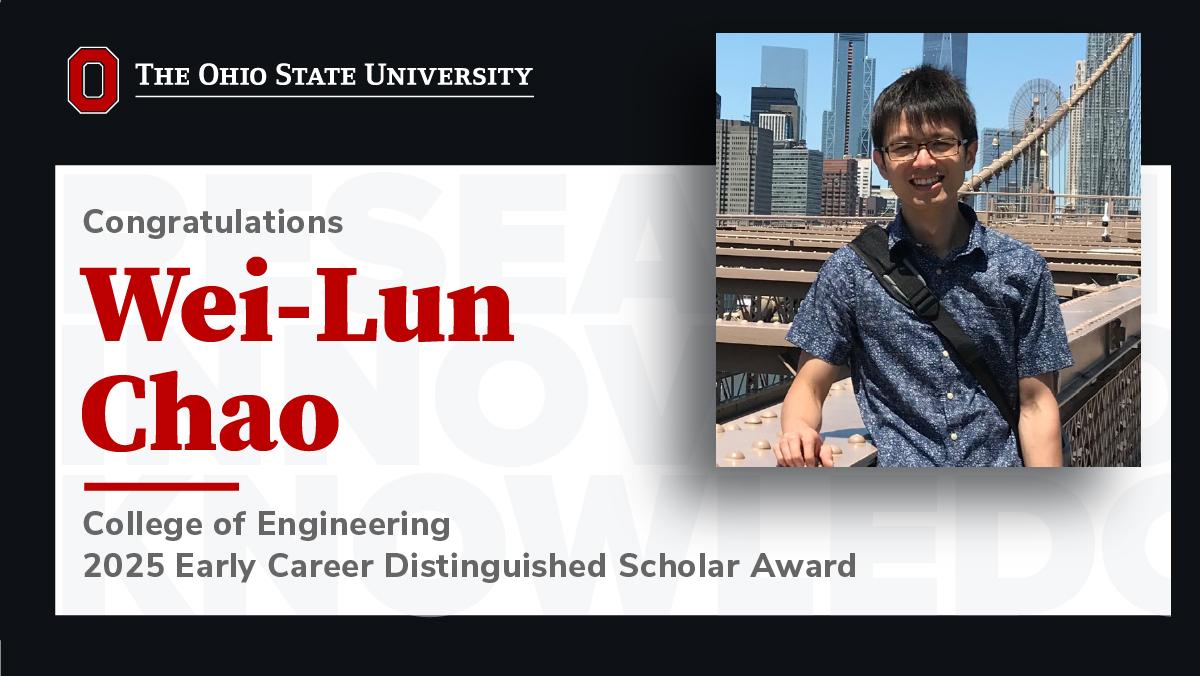
Wei-Lun (Harry) Chao is an Associate Professor in the Department of Computer Science and Engineering at the Ohio State University (OSU), College of Engineering. Promoted to this role in May 2025, he is also an Innovation Scholar and Distinguished Assistant Professor of Engineering Inclusive Excellence. His work spans machine learning, computer vision, and their applications in autonomous driving, healthcare, biology, and natural language processing. Research Focus: Machine learning with imperfect data, interpretable and personalized learning, robust perception for autonomous systems, and visual recognition in real-world scenarios. Awards: 2025 OSU Early Career Distinguished Scholar Award, CVPR Best Student Paper Award (2024), CSE Faculty Teaching Award (2024), Lumley Research Award (2023). Grants: Funded by NSF, NIH, ONR, Cisco, AWS, and Google. Notable Research Trends: The 15 most recent articles highlight his work on vision foundation models, federated learning, diffusion models for biological species generation, interpretable vision transformers, and robust perception systems for autonomous driving. Key subfields include sparse autoencoders, 3D object detection, semi-supervised learning, and anomaly detection in scientific domains. Scientific Awards: 2025 Early Career Distinguished Scholar Award (OSU) CVPR Best Student Paper Award (2024) CSE Faculty Teaching Award (2024) Lumley Research Award (2023) Mentoring & Grants: As an advisor for the OSU Buckeye AutoDrive Team and AI Club, he mentors graduate and undergraduate students. His research is supported by major grants from NSF, NIH, ONR, and industry partners like Cisco and Google.
Hang Lu is a Professor and holds the Cecil J. "Pete" Silas Chair of Chemical & Biomolecular Engineering at the Georgia Institute of Technology. Dr. Lu also holds a Love Family Professorship and leads the Lµ Fluidics Group, which focuses on engineering microfluidic systems and machine learning tools to address complex questions in neuroscience, developmental biology, and cell biology that are difficult to address with conventional techniques. Dr. Lu's research lies at the intersection of engineering and biology, with primary interests including: Microfluidic systems for high-throughput screens and image-based genetics and genomics Systems biology: large-scale experimentation and data mining Microtechnologies for optical stimulation and optical recording Big data, machine vision, and automation Developmental neurobiology, behavioral neurobiology, and systems neuroscience Cancer biology, immunology, embryonic development, and stem cells Her laboratory engineers microfluidic devices and BioMEMS to study neuroscience, genetics, cancer biology, and biotechnology. These miniaturized Lab-on-a-chip tools operate at scales comparable to biological systems, leveraging unique micro and nano-scale phenomena to gather large-scale quantitative data about complex biological systems. Current projects include Microfluidics for Life Sciences, Optical Neuron Recordings and Manipulations, Machine Learning Tools for Neuroscience, Measuring and Modeling Behavior, and High-throughput, High-content Cell-based Assays. Analysis of Dr. Lu's recent publications (2024-2025) reveals a strong trend toward integrating microfluidics with advanced computational methods: Development of deep learning frameworks for biological image analysis Advanced neuron tracking and functional imaging techniques Non-invasive characterization of 3D organoid cultures Sophisticated neuromechanical modeling of locomotion Microfluidic temperature control systems for in vivo studies Label-free imaging pipelines for neural development Dr. Lu's significant professional honors include: Cecil J. "Pete" Silas Chair of Chemical & Biomolecular Engineering Love Family Professorship The Lµ Fluidics Group actively mentors students and postdocs, currently accepting new postdoctoral researchers. The lab receives substantial funding for interdisciplinary projects at the engineering-biology interface, with research implications spanning fundamental biological understanding to therapeutic development. The group operates within Georgia Tech's School of Chemical & Biomolecular Engineering, with specialized facilities for microfluidic device fabrication, biological experimentation, and advanced imaging, maintaining strong collaborative ties across engineering, neuroscience, and biological disciplines.
Swiss Federal Institute of Technology in LausanneSwitzerland
Caglar Gulcehre is a Tenure Track Assistant Professor at École Polytechnique Fédérale de Lausanne (EPFL) and Principal Investigator of the CLAIRE (Caglar Gulcehre Laboratory of Artificial Intelligence Research) lab. Previously, he worked as a Staff Research Scientist at Google DeepMind, Microsoft Research, and IBM Research. His research focuses on reinforcement learning , foundation models , LLM alignment , and sequence modeling . Current Position : Assistant Professor, EPFL Lab : CLAIRE Lab Previous Roles : Staff Research Scientist at DeepMind, MSR, IBM Research His work spans reinforcement learning , deep learning , and neural architecture design , with a focus on safety , trustworthy AI , and real-world applications . He has published in top venues including Nature , NeurIPS , ICML , and JMLR . Scientific contributions include: Best paper award at NeurIPS Nonconvex Optimization workshop Honorable mention for best paper at ICML 2019 Co-organizer of seven workshops at NeurIPS, ICML, and ICLR He supervises PhD students in areas related to AI for algorithm discovery , neural architectures , and foundation models , including: Skander Moalla Justin Samuel Deschenaux Liangze Jiang Xiuying Wei Yitao Xu